Ric visits Château Mangot
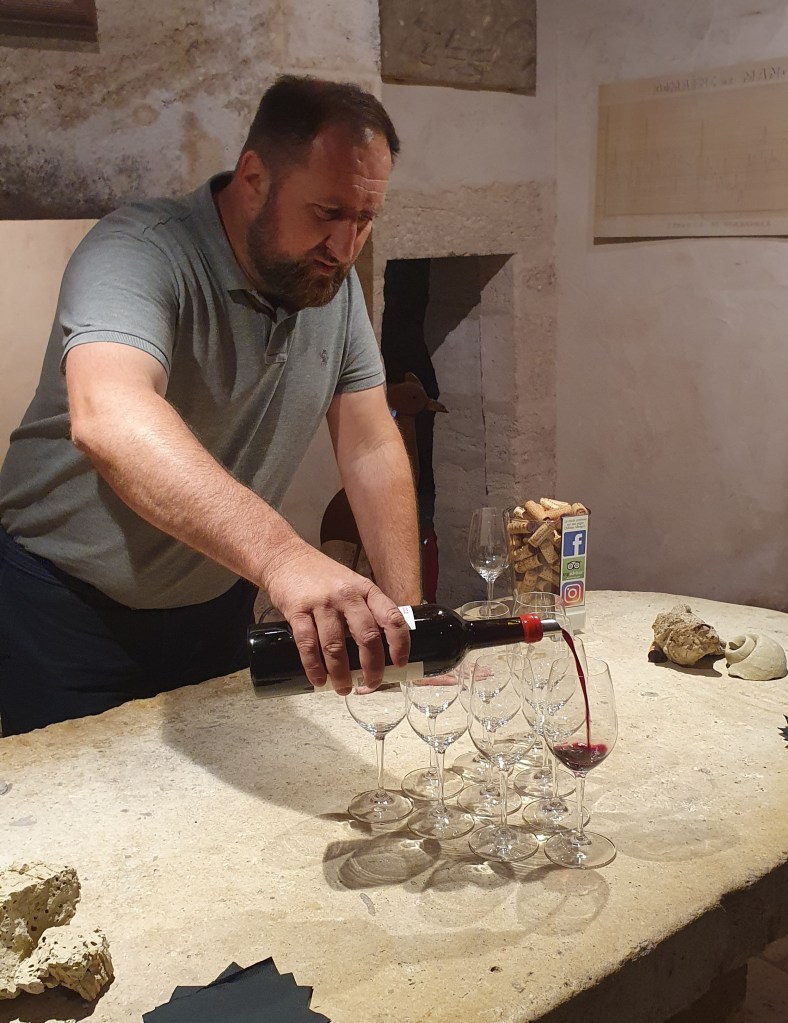
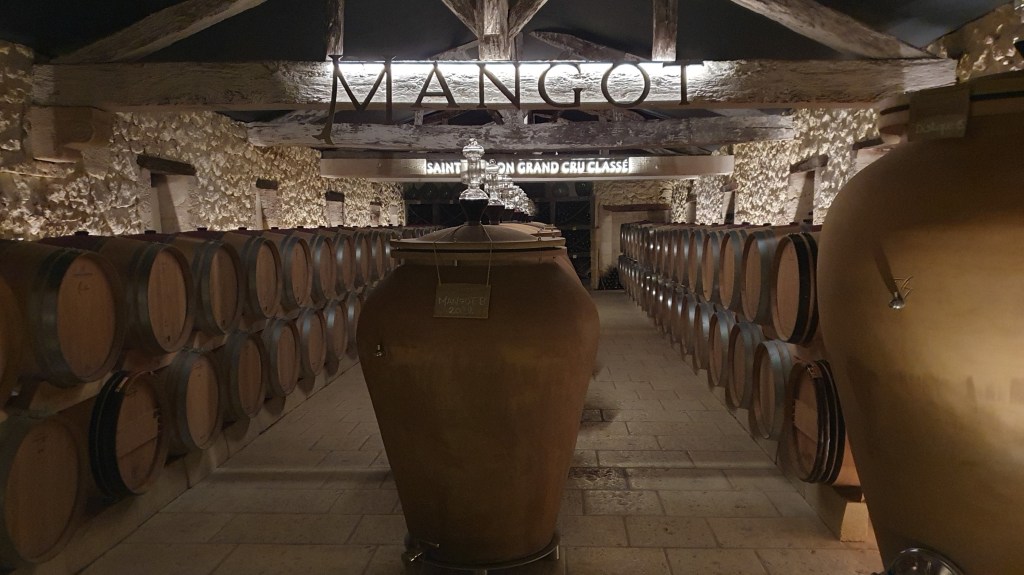
Château Mangot may be counted as one of the unsung châteaux of Saint-Émilion. Founded in the mid-sixteenth century, its modern success is due to the untiring efforts of brothers Karl and Yann Todeschini. Located far east of Saint-Émilion village, the château has some 30 hectares under vines in an uninterrupted stretch covering various elevations and ecosystems, planted with more than 80% merlot. When the Jürade de Saint-Émilion du Singapour visited late on 07 June 2023, Karl himself was on hand to welcome us. The château itself has been thoroughly modernised since 2001, sporting a clean spacious chai with rows of gleaming stainless-steel tanks for fermentation. Interestingly, while Karl utilises biodynamic methods, he is equally unconventional in some ways, ageing his wine in a mix of barrels, amphorae vats as well as stainless steel tanks as he deems fit. The examples tasted are a testament to the quality of its wines, proven beyond doubt by its recent elevation to Grand Cru Classé. Its 2016 grand vin is really outstanding while its special cuvée of Todeschini Distique is one truly for the next generation. Merci Karl, for your time and generosity.
2022 Château Mangot. Deep purple. Cool darkish tones tinged with varnish on the nose. The fullish palate is imbued with ripe fruit and distinct minerals in equal measure, layered with earthy textures amid a distant note of rye, underscored by understated acidity and slightly dryish tannins that impart subdued intensity. Tasted from barrel at the château.
2022 Mangot Rosé. Beautiful pale pinkish hue, featuring light red fruits coolly balanced against a light minerally presence. Highly refreshing, laced with some underlying sweetness to counter the relative austerity. Tasted as a pre-dinner aperitif at the château.
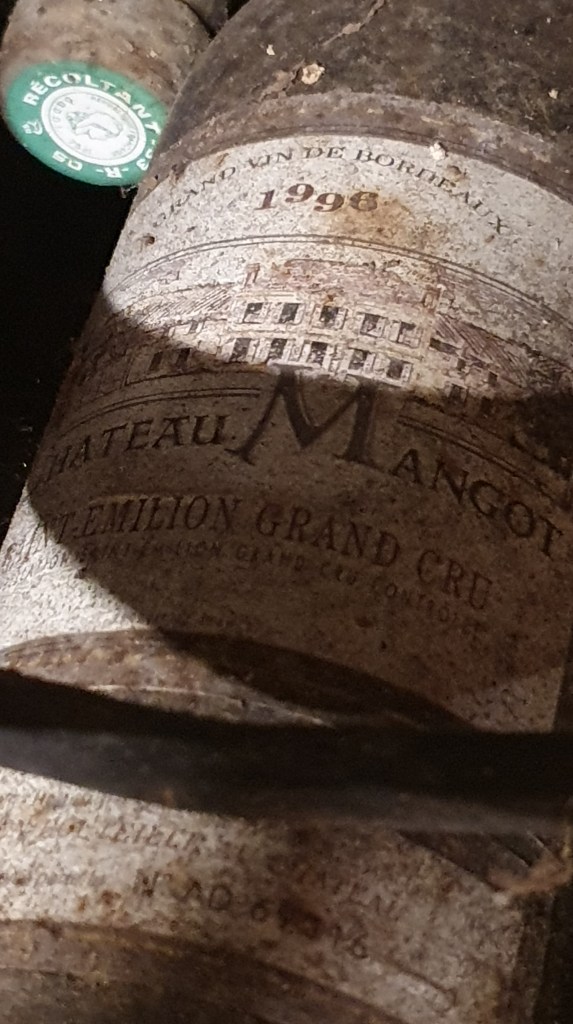
2022 M de Mangot Blanc. From a small 1.5-ha plot in Castillon, comprising almost equal portions of chardonnay, colombard and roussanne. Very light golden luminosity. Nose of distant green fruits, morning dew and wet gravel, more forward over time. Lively but balanced with rounded acidity and a tinge of nutmeg. Very well proportioned with medium presence, developing glowing white tones with growing intensity of fruit over time. Excellent. The 2020 is its inaugural vintage, some 3000 bottles produced. Tasted over dinner at the château.
2018 Château La Brande. Poured from magnum. From vines planted on red clay in Castillon, comprising 75% merlot and the remainder cabernet franc. Very deep garnet. Opens with distant raspberries and mulberries, displaying good energy on the fleshy medium with open detailed tannins though it doesn’t quite plumb the depths. Tasted over dinner at the château.
2016 Château Mangot. Poured from magnum. Comprising 80% merlot, 15% cabernet franc and 5% cabernet sauvignon. Very deep garnet. Promising nose of ultra-deep currants and ripe black fruits with plenty more lurking beneath. Very amply endowed and full with a lithe warm ripeness, traipsing across the palate with great verve and agility. Subtly structured with unobtrusive silky tannins, boasting sublime acidity with fine linearity and precision. Highly successful. Tasted over dinner at the château.
2016 Todeschini Distique 9. Saint-Émilion Grand Cru. Poured from magnum. Impenetrable deep garnet. Effusive nose of mocha, incense and black fruits and currants. Full-bodied. Quite seamlessly integrated although there is a spicy edge. Distinctly masculine with a dark terse palate, structured with sophisticated but slightly dryish tannins. Undisputedly powerful but certainly not over extracted. Needs another two decades of cellaring. Dubbed the Figeac of the East, this wine comprises 40% cabernet franc, 30% cabernet sauvignon and 30% merlot from vines grown on clayey chalk, its inaugural vintage being the 2008. Only 9000 bottles annually. Tasted over dinner at the château.
 Ric's Wine Journal