Ric re-visits Château Guadet
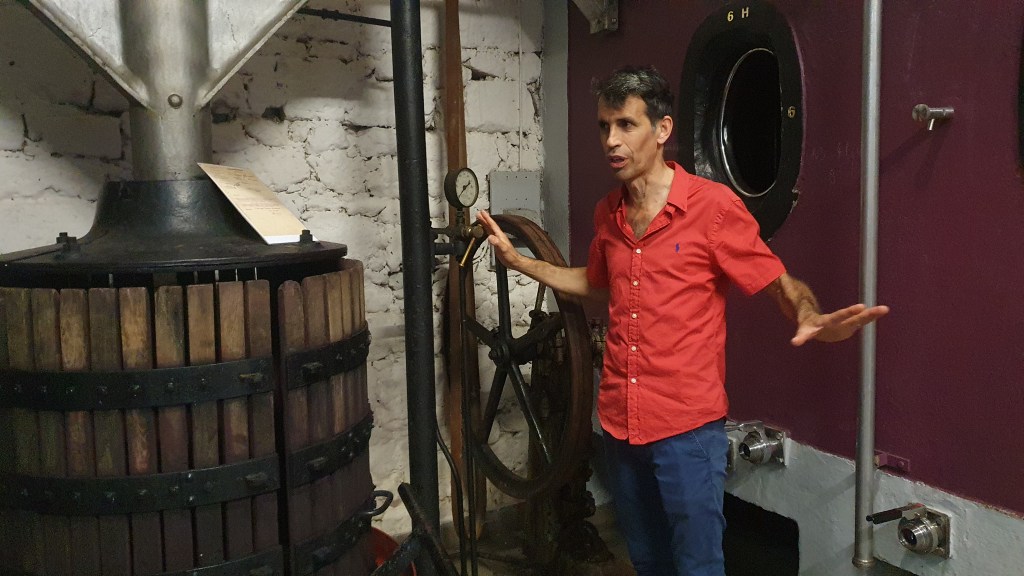
At the edge of the little town of Saint-Émilion, towards the north, is the road Rue Guadet, named in honour of Château Guadet which is sited there and which has been in existence since the 15th century, coming under the ownership of the Lignac family since 1844. The estate was one of those to be listed under the inaugural 1955 classification of Saint-Émilion wines. Nowadays, Vincent Lignac (truly a Mick Jagger lookalike) runs the 4.5-hectare estate that is managed biodynamically but still utilising traditional tools such as the basket press in its very modest chai. The wines are aged in 30% new oak. Only 20,000 bottles are produced annually, all sold through direct private sales which is why you are most unlikely to encounter Château Guadet at your local retailer. Vincent, who has worked at various estates in France (with Dider Dagueneau), USA, Chile and Australia, is more intuitive rather than scientific in his methods. The wines are dark and robust and well-endowed although there is always a bit of rustic tint towards the finish. They can certainly age. When the Jürade de Saint-Émilion du Singapour visited again on 05 June 2023, we had the privilege of tasting its 1971 that was still showing well, just as an ex-château 1962 had been when I had it in December 2020. There is quite an extensive cold dark underground cave system beneath the château housing decades of library stocks. Merci, Vincent, for your time and generosity.
2008 Château Guadet. Good color. Rosy hues of red cherries. Medium weight. Good presence of fruit with a dominant plummy tone underscored by earth, briar and bramble. Very fine acidity, imparting crisp intensity. A little stern and dryish at the finish. Tasted June 2019 at the château. Consistent with a previous encounter in November 2018 in Singapore, also ex-château.
2011 Château Guadet. Deep purple. Rather reticent on the nose though the palate is well-layered with supple black fruits and dark currants within a slim profile, displaying fine presence that tapered to a dryish finish. Tasted June 2019 at the château.
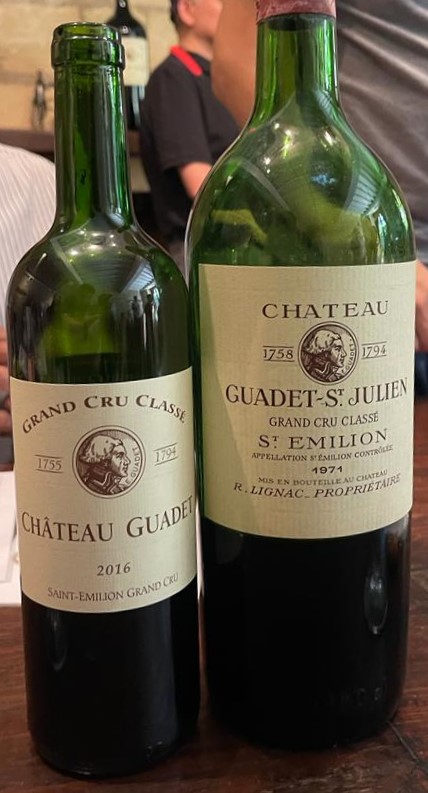
2016 Château Guadet. Still pre-release. Deep purple. Faint rosy hues with overtones of vanillin. Full, expansive presence. Quite generously endowed with darkish ripe fruit, structured with early detailed tannins. Good integration, finishing with a tinge of austerity. Tasted June 2023 at the château.
1971 Château Guadet-St Julien. Poured from magnum. Tasted blind. Clearly evolved in colour though still darkish at the core, evoking distant roses with earthy overtones. Barely autumnal on the palate, still imbued with excellent freshness and very fine intensity of cool darkish characters within a frame of dryish tannins. Minty finish. Very impressive. Tasted June 2023 at the château. The St Julien suffix was dropped in 2005.
Ric visits Château La Confession
I have always wondered how Château La Confession came to be named, but it turns out to be nothing more than a case of religious fervour on the part of Jean-Philippe Janoueix and his family, which established the estate in 2003. The cellars and chai are watched over by a prominent crucifix, while several large paintings and illustrations depicting biblical characters adorn the walls of the modest château. When members of the Jürade de Saint-Émilion du Singapour arrived in the late afternoon of 06 June 2023, the Singapore flag was already hoisted high at the main entrance. The seven-hectare estate is planted with 66% merlot and 32% cabernet franc on clay and limestone soils, aged in 50% new oak. The average age of the vines is forty years. The château was certified organic in 2010 and biodynamic from 2014. Jean-Philippe also deeply admires the wines of Burgundy to the extent that he utilises medium-toast barrels made by ten different cooperages from Burgundy. The wines are aged in a mix of these barrels as well as amphorae and concrete vats. I have fond memories of the 2011 and 2012, which pack real power, layering and expressiveness, totally befitting of its Grand Cru Classé status. Merci, Jean-Philippe, for our time and generosity.

2022 Château La Confession. Barrel sample of only the merlot component. Beautiful deep purple. Highly aromatic, exuding a fragrant floral freshness. Medium-full. Quite amply layered with ripe dark berries, well-structured with clean elegant tannins. Good balanced. Not yet the final blend but this is very promising. Tasted at the château, June 2023.
2019 Château La Confession. Deep purple. Generous bouquet of ripe raspberries and currants tinged with enamel. Medium weight. Good presence of fruit, structured with subtle tannins. Beautifully supple though a tad leaner in balance, showing some early complexity with overtones of cigar box, spice and a touch of savouriness. Good verve. Tasted at the château, June 2023.
2016 Château La Confession. Deep purple with some crimson rim. Effusive in cool red fruits. Medium weight. Structured with soft pliant tannins underpinned by fresh acidity and an unusual note of olive, imbued with distinct earthy minerals in the mid-body that lent a leaner tone. Modest finish. Tasted at the château, June 2023.

Ric arrives at Château Valandraud
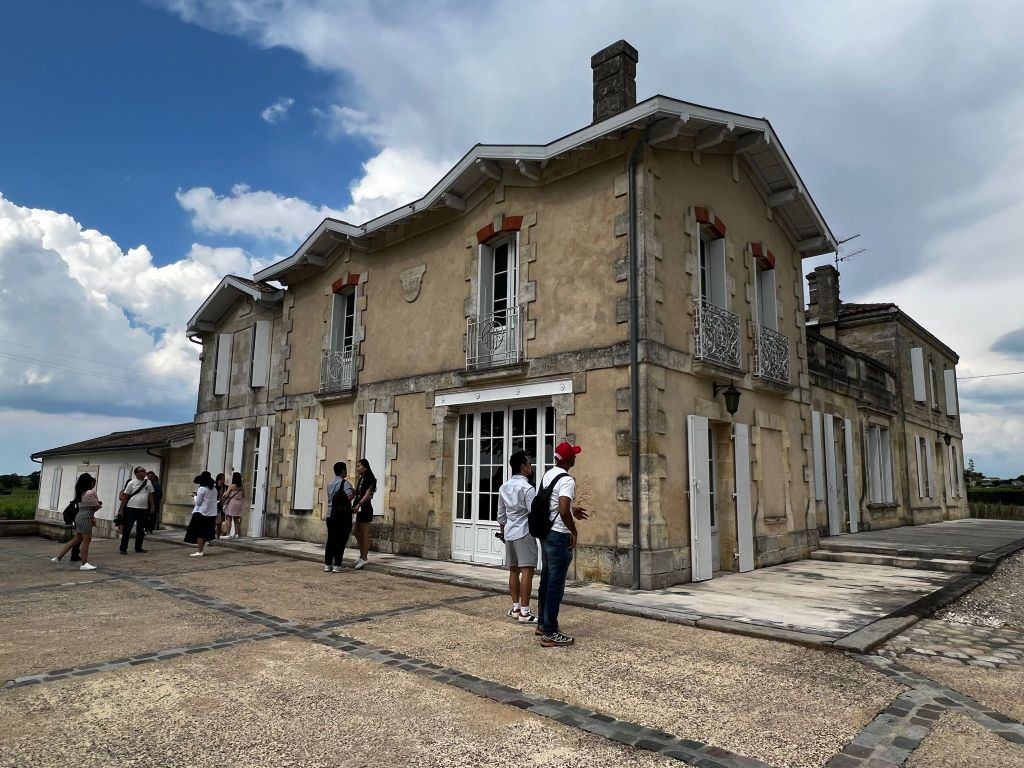
One of the pioneers of the garagiste movement, Château Valandraud has evolved into one of the most successful estates in Bordeaux. Founded in 1991 by self-crafted “bad boy” Jean-Luc Thunevin and Murielle Andraud (Valandraud is derived from “Val” (valley) and her name) and, perhaps, driven by Jean-Luc’s innate rebellious streak, the château has continually challenged conventional wisdom in the pursuit of absolute purity of expression in its wines. Which vigneron from a branded property in Bordeaux would deliberately create a line called Thunevin Bad Boy (a.k.a. marvais garçon in French) or would break A.O.C. rules in order to make wine in extreme weather (like Jean-Luc did in 2000 by covering the vines with plastic sheets to drain off excess water) and still be able to market the de-classified wines successfully (as L’Interdit de Valandraud)? From its humble beginnings as a tiny 0.6-ha in Saint-Émilion village, Château Valandraud now operates from a different location in St-Etienne-de-Lisse, spanning eight hectares of 70% merlot, 25% cabernet franc and 5% cabernet sauvignon planted at a density of more than 8000 vines/ha. The château embraces innovation with feverish passion and employs micro-vinification techniques, fermenting small batches of grapes separately to gain deeper understanding of their respective terroir which, in turns, allows for greater precision in blending to create a complex and harmonious grand vin. The wine is vinified in a mix of stainless steel, oak and concrete vats, and aged in 100% new barrels. Those who feel that such modern approaches would create over-extracted monstrosities would most certainly be surprised by the 2006 Château Valandraud, a model for elegant Right Bank to rival any of the best. The estate’s rare white, Valandraud Blanc, is also another unconventional beauty, made mostly from sauvignon gris. Clever marketing has tremendously increased the château’s visibility; the tiny village of Saint-Émilion is dotted with several self-promoting retail outlets run by the Thunevin company that are only too happy to ship their wines worldwide to your doorstep. Jean-Luc has certainly come a long way, evidenced by the modern buildings and facilities (completed in 2021) at the estate when a few members of the Jürade de Saint-Émilion du Singapour visited in the afternoon of 07 June 2023. And, to top it off after an excellent tasting session, we actually bumped into the man himself as he was enjoying a quiet afternoon by the patio!! Speaking only French, his face lit up when he learnt that we hailed from Singapore, for he remembered with fondness his deep friendship with the late Dr N K Yong who had been a staunch supporter of Jean-Luc since the early days when he was struggling to get Valandraud going. Merci Jean-Luc for a most memorable visit and we wish you good health always.


2016 Virginie de Valandraud. Crimson. Good expanse of fruit and subtle minerals with a warm pebbly glow, structured with sweet tannins that impart fine intensity and attack with sharp definition. Good balance, finishing with good linearity.
2016 Château Valandraud. Deep ruby. Sweet floral overtones of red fruits and plums. Only medium weight, though highly elegant in its supple coolness, delivering lovely mouthfeel with fleeting intensity and fine definition. Not at all heavy.
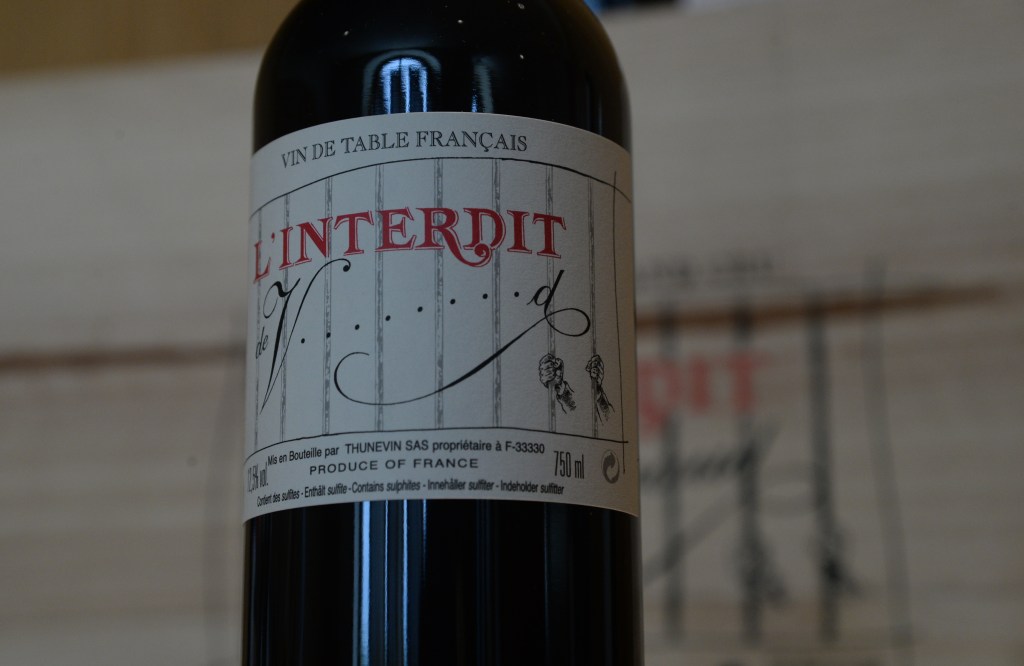
2016 L’Interdit de Valandraud. Deep crimson. Highly aromatic in ripe red fruits laid with a lush warmth. Open with delicious supple intensity. Made from 100% merlot without quite adhering to strict A.O.C. regulations (plastic sheets were used to drain off excess water during viticulture), hence its unique name. Examine the label closely and you’ll see a pair of hands gripping jail bars, a metaphor most apt.
2014 Château Valandraud. Bright crimson. Generous layers of red fruits on a distinct minerally base that added some earthiness, boasting good verve and supple freshness. Finely balanced. A classic Valandraud, yet to peak.
2006 Château Valandraud. Made from 100% merlot. Some evolution is evident with a profusion of haw and translucent red fruits. Very softly contoured and open, totally seamless, exuding quite a heavenly floral glow from its quiet supple depth. Most elegant. At its best.
2020 Virgine de Valandraud Blanc. Pale greenish hue. Condensed palate of zesty tropical fruit that teased with fine agility and intensity, underscored by a highly subtle minerally vein. Very slightly buttery, fanning out with good precision and clarity. Good balance. Mostly semillon.
2019 Valandraud Blanc. Mostly sauvignon gris. Lovely luminosity. Gleaming nose, not too buttery. Delicate medium presence, imbued with cool white tones that exert fine tension and crisp acidity topped with icing, yielding great clarity.
1975 Thunevin-Calvet Maury. Pale brownish. Powerful medicinal glow of autumnal fruit still imbued with fresh acidity, culminating in a warm minty finish.


Vinexpo Asia 2023
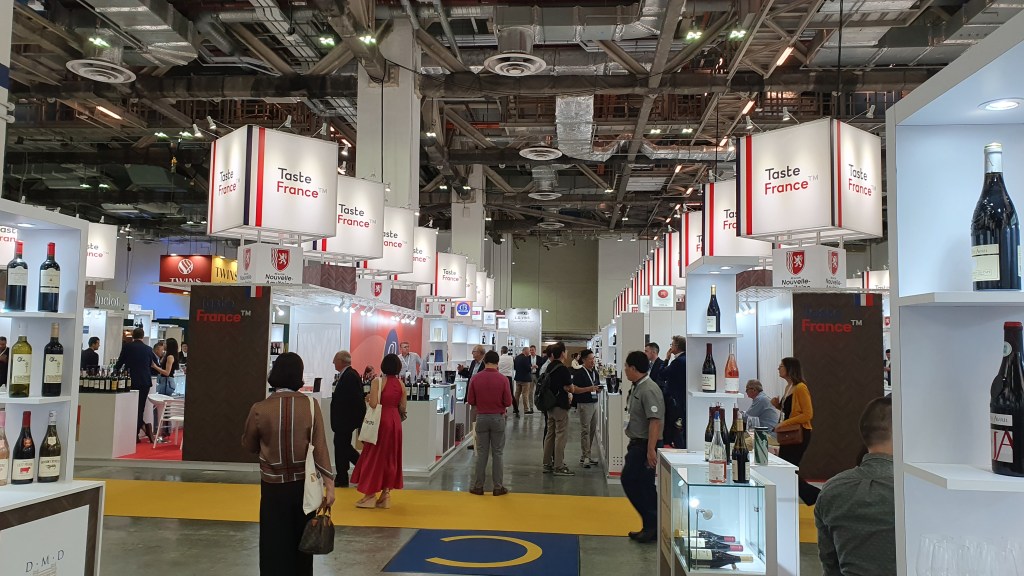
For the very first time, Vinexpo Asia was held in Singapore instead of its usual venue in Hong Kong from 23-25 May 2023 at the Marina Bay Sands Convention Centre, attracting 10,000 attendees from the wine trade, featuring wine and spirits from all over the world. The event also incorporated a one-day tasting of the newly-bottled 2020 Bordeaux vintage by the Union des Grands Crus. Various fringe events were also organised around that week to take advantage of the presence of winemakers, producers and sales directors, not least the Jürade de Saint-Émilion Gala (which inducted the French ambassador) as well as 67 Pall Mall’s Bordeaux tasting. The trade-only event meant there was plenty of room to move around leisurely without any pressure, but there was only so much I could handle over the couple of afternoons that I was there. So here they are, all 116 wines listed in the order tasted. Moving ahead, Singapore will alternate with Hong Kong in hosting this annual event.
2018 Château Brulesecaille. From the Côtes de Bourg. Purplish. Plums, briar and earthy tones. Full, warm, velvety ripeness, structured with well-managed tannins. Shows good intensity and refinement.
2017 Château Laffitte Carcasset. Warm ripe wild berries dominate against a backdrop of bright gravelly tones, laced with fine acidity. Very sleek. Good Saint-Estèphe character.
2018 Château Fourcas Dupré. Briar, red fruits and haw amidst a gentle floral fragrance. Good presence of fruit, showing refined acidity and supple intensity. Good balance. From Listrac-Médoc.
2018 Domaine Bony Gachot Nuits-Saint-Georges Les Damodes. Good color. Glowing warmth of ripe red fruits. Medium-bodied. Distinct NSG sandy signature with fine presence of fruit and acidity.
2015 Château La Cardonne. Deep crimson. Ripe plums and distilled red fruits amid floral overtones. Cool, understated medium palate, structured with soft subtle tannins. Very harmonious. An excellent Médoc.
2018 Château Haut-Logat. Haut-Médoc. Deep crimson. Earthy smoky savoury characters. Medium-bodied. Highly supple and integral with open intensity.
2022 Château de Maligny Chablis. Grassy morning dew, summer hay and floral characters on the nose. Medium-bodied. Very well-balanced and integral with understated elegance, displaying excellent freshness with unobtrusive acidity topped with a dash of salinity. Good stuff.
2022 Maison Jaffelin Chablis. Distinctly floral amidst morning dew. A little dryish, adding clarity to its fresh clear citrus graced with a splash of cinnamon and tropical fruit that contributed further dimension. Highly integral with understated acidity. Good finish.
2021 Domaine Jean Collet et Fils Chablis 1er Vaillons. Light greenish. Very lovely nose of ripe tropical fruits and honeysuckle. Medium-bodied. Plenty of presence but well-integrated with refreshing acidity, displaying great clarity. Highly appealing.
2022 Château de Tracy Pouilly-Fumé. Pale. Dry grassy elements with after-rain aromas. Structured with good presence and clarity. Well-balanced. Good refinement and acidity.
2022 La Perrière La Petite Perrière Sauvignon Blanc. Pale greenish. Grassy elements and green fruits on the nose, slightly sweet. Refreshing clean clarity. Sleek acidity. Rounded warmth. Very fine.
Champagne Paul Goerg Premier Cru À Vertus. Effusive full creaminess. Dense presence of clear and yellow citrus that exert dry intensity. Somewhat narrow but made up for by its very soft refined effervescence. Drinking well.
Champagne Guerlet-Deguerne Brut NV. A premier cru grower champagne from Chamery, farmed organically. Very attractive darkish nose. Cool, smoky, medium-full. Well-layered with refined acidity. Good zest. Drinking well. 40% pinot noir.
Champagne Brocard Pierre L’Égarée NV. A 50-50 blend of pinot noir and chardonnay. Floral nose with a distant sweetness of cane juice. Very soft refined effervescence, not too dry. Structured with a clean feel, displaying very good presence and clarity of fruit.
2020 Domaine François Legros Nuits-Saint-Georges Les Perrières 1er. Deep purple. Forward in raspberries and rose petals. Cleanly structured with fine concentration and balance, just a tad narrow. Well-integrated with good energy and focus.
2022 Domaine Lalande Les Hauts de Lalande. Deep purple. Forward nose of briar and bramble. Softly contoured. Imbued with abundant fruit, displaying good presence and acidity.
2018 Château d’Escurac. Médoc cru bourgeois. Crimson, slightly dusky. Full presence of ripe red fruits and currants. Good attack and tensile intensity, finishing with dryish tannins that impart a bit of austerity.
2020 Château Haut-Maurac. Médoc Cru Bourgeois. Purplish. Earthy nose. Clean, dry presence of fruit, somewhat lean and narrow.
2019 Château Lassus. Médoc. Crimson. Ripe savoury nose, fairly rich, though the medium palate is quite the opposite, distinctly dryish with a dash of ember, showing clean lean definition.
2019 Château La Branne. Médoc. Deep crimson with a discernible touch of vanillin. Medium-bodied. Rounded with teasing supple intensity. Good definition. A little lean but the fruit is there, laced with refined acidity.
2018 Château La Branne. Crimson, exuding a certain warm ripeness though the plump palate is rather cool and darkish. Highly integral between the ample dark fruit, acidity and tannin structure. Very refined, almost to the point of aloofness. Modest finish.
2018 Château D’Arsac. Crimson. Cedary notes and dark currants dominate with a touch of vanillin. Rounded with soft unobtrusive tannins, imbued with a deep core of plummy fruit, yielding fine detail and supple freshness.
2020 Château La Mouline. Moulis-en-Médoc. Crimson. Floral notes of dark roses. Soft, medium palate. Well-integrated with good clarity and understated acidity but somewhat underwhelming.
2019 Château Corconnac. Haut-Médoc cru bourgeois. Abundant red fruits, strawberries and currants, proffering an effusive floral fragrance. Well integrated with controlled supple intensity. Drinking well.
2018 Château Bernadotte. Dark purple. Softly contoured with red fruits and darkish elements. Medium-full. Structured with subtle tannin detail. Very well integrated with refined acidity though a little dryish. Modest finish.
2019 Château Beaumont. Haut-Médoc. Crimson. Highly effusive in rosy floral characters. Excellent medium-full presence of supple dark cherries with traces of alcoholic flash. Good attack.
2018 Château Cissac. Haut-Médoc cru bourgeois. Crimson. Some restraint on the nose. Darkish cool ripeness of black fruits. Fresh and highly supple, showing good delineation with a dash of soy.
2017 Château Clauzet. Saint-Estèphe. Deep crimson. Restrained fruit. Softly contoured with a warm ripeness. Fleshy and agile. Good detail. Medium-bodied. Understated acidity. Good harmony. Modest finish.
2016 Château Sociando-Mallet. Deep purple. Darkish tone of currants, raspberries and mulberries. Good attack. Refined intensity. A little bit of alcoholic heat is evident. Spicy finish.
2019 Château La Tour De Mons. Margaux. Purplish. Light-medium. Youthful fruit. Fine acidity. Could do with more stuffing.
2013 Château Langoa Barton. Crimson. Strong note of soy amidst bramble with splashes of vanillin still evident. Soft medium-full palate, structured with rounded slightly velvety tannins. Good detail. Some herbal elements. Modest finish.
2013 Château Montrose. Crimson. Darkish earthy characters with a hint of smoke. Solidly structured. Good attack. Still tightly wound. Modest finish. Somewhat squarish, not yielding much.
2017 Château Les Carmes Haut-Brion. Crimson. Good ripeness. Early notes of cedar. Supple intensity and acidity. Good integration though the fruit is somewhat recessed. Modest finish.
2019 Château La Commanderie. Saint-Estèphe. Deep crimson. Darkish rosy glow. Medium-full. Very good integration, displaying terse tension and sleek acidity. Good attack.
2019 Château La Croix de Gay. Pomerol. Deep crimson. Sleek presence of red fruits. Medium-full. Still fairly tight though its tannins are very pliant and supple, exerting fine tension.
2008 Château Lynch-Bages. Deep crimson. Restrained early secondary characters on the nose. Medium-full. Cool ripeness. Highly fleshy and supple, imbued with mocha and soy with a touch of briar, displaying understated intensity and acidity. Very refined tannin structure. Full of feminine grace and elegance.
2016 Château Dufort-Vivens. Deep crimson. Aromas of roasted nuts. Medium-full. Open intensity of predominant red fruits, displaying cool ripeness with great verve and understated acidity. Highly integral. Good finish.
2019 Château Pichon Baron Longueville. Deep opaque purple. Classic nose of dense raspberries and mulberries touched with vanillin. Excellent fullness of cool ripe fruit. Fleshy and agile. Beautifully structured with sleek acidity, exerting supple intensity.
2018 Château Figeac. Deeply coloured. Nose of darkish fruit with dark rosy characters. Highly supple and fleshy, boasting a deep expanse of lush succulent fruit that traversed the palate with excellent delineation and linearity. Highly integral. Very successful.
2018 Château Cantermerle. Dark. Restrained nose of cool dark fruit though the full palate possesses a lovely warm ripeness with early cedary characters, structured with sophisticated svelte tannins and superb acidity, exuding great freshness. Finished well. A real revelation! I bought a case.
2018 Domaine Louis Jadot Corton-Charlemagne Grand Gru. Light golden luminosity. White fruits dominant with a glorious clean chalky sheen. Highly harmonious with restrained verve, displaying lovely clarity with a dash of nutmeg and spicy white pepper. Coiled with tight potential but it’s all there. Good finish.
2020 Maison Louis Jadot Beaune Grèves Le Clos Blanc 1er. Light golden hue. Intense distilled presence of white fruits on the nose and palate with a tinge of nutmeg. Layered with excellent fullness. Beautifully nuanced.
2015 Domaine Louis Jadot Clos Vougeot Grand Cru. Good colour. Some discernible vanillin still on the medium-full palate, displaying sharp delineation of cool ripe fruit and sleek acidity. Very well integrated. Highly supple and fleshy.
2020 E Guigal Condrieu. Pale. High-toned floral bouquet with distinct grassy elements on the medium palate. Cool presence. Modest finish.
2019 E Guigal Ermitage Ex-Voto Blanc. Pale. Mild bouquet of brioche and nectarine. Cool, ripe white tones laced with vanillin. Very fine presence and layering with an austere minerally tinge.
2019 Château d’Ampuis. Deep purple. Alluring lightness of glorious fresh fruit. Layered with lovely depth and supple intensity. Harmonious. Great energy. Good finish.
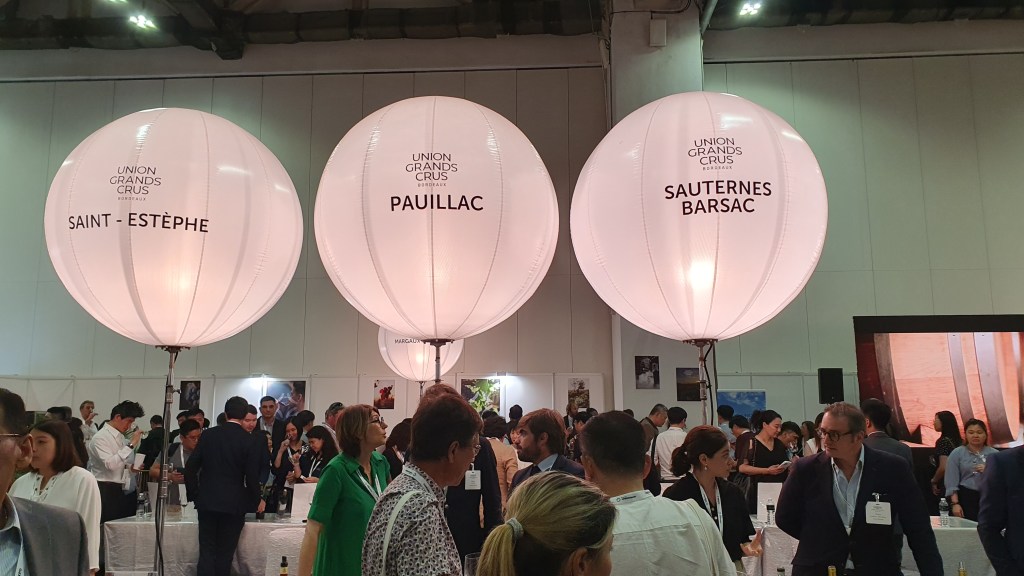
2020 Château Léoville Poyferre at the Union des Grands Crus. Deep purple. Raspberries and mulberries on the nose. Lovely full tensile presence. Excellent concentration and tannin structure. Masculine. Solid refinement and sophistication with subtle power. Punches above its weight.
2020 Château Talbot at the Union des Grands Crus. Deep purple. Nose of rye, malt and raspberries. Good ripeness. Superb integration. Quite full and fleshy but quite unable to shake off that dominant note of rye. Drinking well. Great stuff.
2020 Château Léoville Barton at the Union des Grands Crus. Deep purple. Some rye and malt amid cool ripe fruit that display excellent presence and concentration with understated acidity. Very good balance. Elegantly poised. Good finish.
2020 Château Gruaud Larose at the Union des Grands Crus. Deep purple. Restrained nose of raspberries and wild berries. Medium-full. Good attack and intensity though tannins are a little dryish.
2020 Château Beychevelle at the Union des Grands Crus. Purplish. Not much on the nose though there’s obviously plenty of stuffing beneath. Pebbly soft, layered with fine acidity with a deeper vein of dark fruit.
2020 Château Clerc-Milon at the Union des Grands Crus. Deep purple. Very good lift of red fruits and darkish cherries. Fleshy, supple and highly integral, lit with bright acidity. Shows very fine Pauillac character. Modest finish.
2020 Château Kirwan at the Union des Grands Crus. Deep purple. Lovely floral fragrance. Softly contoured with a cool ripeness, well-structured with detailed velvety tannins.
2020 Château Brane-Cantenac at the Union des Grands Crus. Warm pebbly tones. Good fruit, darkish but well-extracted, slightly angular. A little brambly. Good acidity.
2020 Château La Dominique at the Union des Grands Crus. Deep purple. Warm ripe fragrance. Medium-full. Good transparency and acidity. Slightly stern and assertive. Good depth.
2020 Château Clos Fourtet at the Union des Grands Crus. Deep purple. Dominant note of rye. Great expanse of fruit beneath. Beautifully rounded and polished. Shows great sophistication and elan.
2020 Château Grand Mayne at the Union des Grands Crus. Purplish. Good intensity of fruit. Fleshy but a little sharp and assertive. Good definition and freshness.
2020 Château La Tour Figeac at the Union des Grands Crus. Deep ruby. Some malt on the nose. Warm, ripe and supple. Very good presence. Highly pliant tannin structure, revealing gritty detail. Superb balance. Great stuff.
2001 Gaja Sperss. Nose of complex red fruits and haw. Soft and supple, medium-full. Deep vein of dark fruit and currants. Plenty of charm and feminine power. Yet to peak.
2021 Anthium Bellone Lazio. Floral green fruits. Lovely fullness of crisp citrus and nutmeg with velvety textures, displaying refreshing tensile acidity with good early complexity. Very well integrated. Good finish. Excellent.
2021 Matidia Cesanese Lazio. Aged six months in old oak. Purplish. Dryish nose with distinct notes of bramble. Medium presence of cool ripe fruit and fine acidity, exerting fleeting intensity. Modest finish.
2017 Casale del Giglio Mater Matuta Lazio Rosso. 100% syrah aged two years in oak. Very deep garnet. Restrained nose. Soft rounded medium presence with some bushy characters, layered with fine acidity and a dash of Asian spice. Well integrated. Not heavy or peppery. Good tannin structure.
2015 Borgogno Barolo Riserva. Pale reddish. Gentle red fruits on the nose and fleshy palate. Structured with supple pliant tannins. Very good definition. Subtly layered. Refined acidity.
2020 Borgogno No Name. 100% nebbiolo. Translucent. Soft floral notes. Rounded. Medium-bodied. Restrained in red fruits, a little backwards. Good acidity.
2020 Tenuta Santa Caterina Illegale Monferrato Rosso. 10% nebbiolo. Pale red. Open rosy hues. Clean, lean definition with a reductive back palate, featuring tight density of darker fruit, olives and minerals.
2020 Tenuta Santa Caterina Vignalina. Made from barbera. Clear purplish. Overtones of heated wet gravel. Medium-full. Good intensity. Quite seamless. Soft elegant fruit. Modest finish.
2020 Monte del Fra Cà Del Magro. Very light yellowish. Lovely floral fragrance. Bit forward. Medium weight. Good concentration of light citrus, displaying fine delicate acidity and deft agility.
2022 Zenato Lugana San Benedetto. Pale grassy elements. Medium-full. Fresh delicate fruit, a little forward. Good clarity. Understated acidity. Modest finish. Easy charm.
2018 Zenato Ripassa Valpolicella Ripasso. Evolved red. Plums, rose petals and cherries. Medium-full. Rounded. Quite fleshy with good presence and acidity. Bit earthy. Good tannin structure.
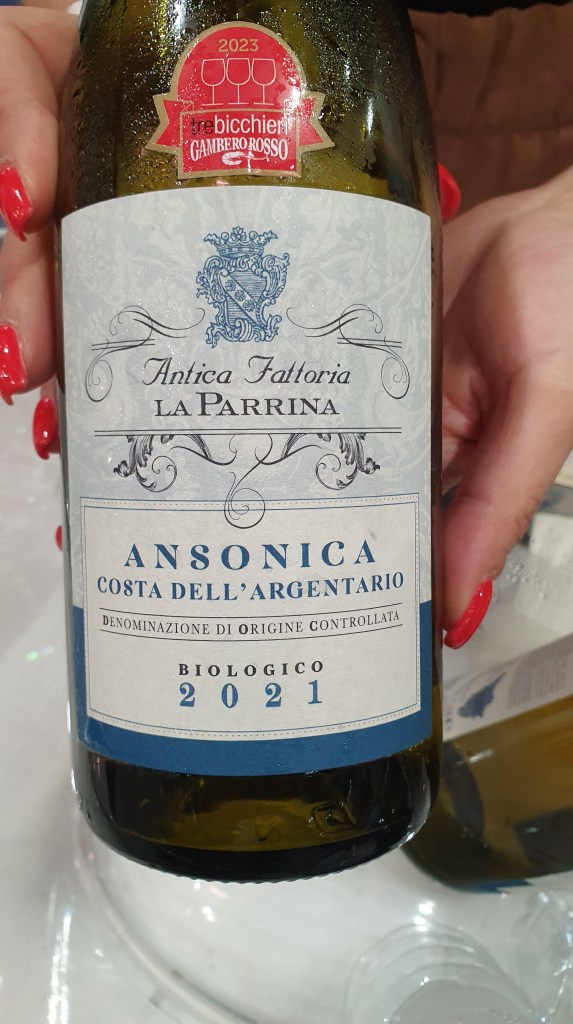
2021 L’Antica Fattoria La Parrina Costa dell’Argentario Ansonica. Light greenish. Cool refreshing feel of green fruits along with olives and nutmeg. Medium-bodied. Good clarity and agility. Fine acidity.
2021 Tenuta Mara Vermentino di Gallura Petrizza Masone Mannu. Pale. Effusive white floral tones and green fruits. Dry medium presence of recessed fruit. Lean definition, laced with ferrous elements. Slightly stern and stemmy.
2019 Cantele Salice Salentino Rosso Riserva. Opaque purple. Delicious raspberries and ripe wild berries on the nose. Medium weight. Soft, understated structure and acidity. Drinking well. From Puglia.
2020 Cantele Amativo. Deep purple. Generous nose of raspberries, mulberries and dark cherries. Quite full. Well-proportioned with tight acidity and controlled intensity. Excellent pliant tannin structure. Good finish.
2020 Kaltern Pinot Bianco Quintessenz. Pale. Effusive bouquet of yellow fruit. Excellent presence of citrus, exerting a high-toned sleek acidity that impart delicate intensity. Good persistence.
2018 Freemark Abbey Cabernet Sauvignon. Deep purple. Attractive reductive tone amid a profusion of red fruits. Wonderfully ripe and delicious. Very well-proportioned, structured with sophisticated refined tannins that exert lovely svelte intensity. A tad forward but balanced.
2014 Staglin Family Vineyard Estate Cabernet Sauvignon. Deep ruby. Restrained on the nose though the medium palate features a generous spread of delicious fruit with a velvety feel, imbued with great acidity and sweetish tannins. Finished well with a dash of minerals.
2016 Viader Red Blend. Deep garnet. Smoky savoury tones with overtones of cedar. Fullish tensile palate, tannins still tight and steely, oozing a bit of sweetness.
2009 Cain Five Proprietary Blend. Deep crimson. Generous delicious lift of delicious currants and ripe plums, a little savoury. Excellent integration. Highly integral with melted tannins, displaying refined balance with a warm ripeness. Not overwhelming. Good finish. From Spring Mountain, Napa Valley.
2016 Burgess Contadina Cabernet Sauvignon. Deep crimson. Generously proportioned with intense warm ripe fruit. Good tannin structure.
2018 Heitz Cellar Cabernet Sauvignon. Deep purple. Deliciously ripe effusive bouquet though the fruit is, surprisingly, set rather backward on the medium-full palate, overshadowed by a distinct minerally presence.
2020 Hudson Vineyards “Little Bit” Chardonnay. Light luminosity. Restrained soft presence, the fruit set a little backward on the agile medium palate, finishing with a menthol lift.
2021 Hudson Vineyards Chardonnay. Luminous. Attractive glowing lift nose. Medium-full. Well-layered with refreshing clarity and good verve, slightly sweet with some nutmeg at the sides. Great balance. Good finish.
2019 Hudson Vineyards Phoenix Napa Carneros. Deep garnet. Dark fruits, currants and sweet meat, evoking savoury tones. Medium-full. Open with a lush warmth, displaying superb integration and excellent definition. Very sleek. Well-balanced.
2020 Hudson Vineyards Phoenix Napa Carneros. Deep garnet. Plums, olives and black fruits dominate, exerting terse dry intensity. Highly supple. Good balance and clarity. Well-proportioned.
2019 Hudson Vineyards Old Master Napa Carneros. Deep purple. Quite generous on the nose. Open, a little fruit forward, showing lean delineation with good tannin structure.
2018 Roy Estate Mr. Evans Proprietary Red. Deep purple. Intense bouquet of dark fruits and currants. Open with delicious supple intensity. Good charm.
2018 Roy Estate Cabernet Sauvignon. Deep purple. Distinct note of lacquer amid savoury characters and ripe raspberries and currants. Medium-full. Integral warm lushness. Good balance. Understated acidity. Good finish.
2015 Roy Estate Cabernet Sauvignon. Deep garnet. Distinct note of eucalyptus amid soft red fruits. Open with controlled intensity. Very well-proportioned with excellent unobtrusive tannins.
2007 Roy Estate Proprietary Red. Deep crimson. Generous bouquet of cedar and eucalyptus with a hint of menthol. Utterly seamless. Medium. Fleshy with lush supple succulence, the tannins having melted. Modest finish.
2019 Shafer Vineyards TD-9, a blend of cabernet sauvignon, merlot and malbec. Deep purple. Aromatic lift with a dash of eucalyptus. Softly contoured and supple, almost velvety, displaying smooth creamy textures with unobtrusive tannins. Good charm. Balanced.
2019 Shafer Vineyards One Point Five. Deep ruby. Generous nose of red fruits and roses in full bloom. Equally captivating palate of ripe cherries laid on succulent velvety warmth. Good subtle intensity. Bit spicy.
2018 Shafer Vineyards Hillside Select. Deep purple. Nose of plummy red fruits cushioned in velvety hues, promising early complexity. Quite full. Good balance and proportion. More minerally on the mid-palate though the tannins are unobtrusive. Good finish.
2021 Avalon Zinfandel. Sweetish note of eucalyptus midst restrained red fruits. Good acidity. Medium presence, rounded but straightforward.
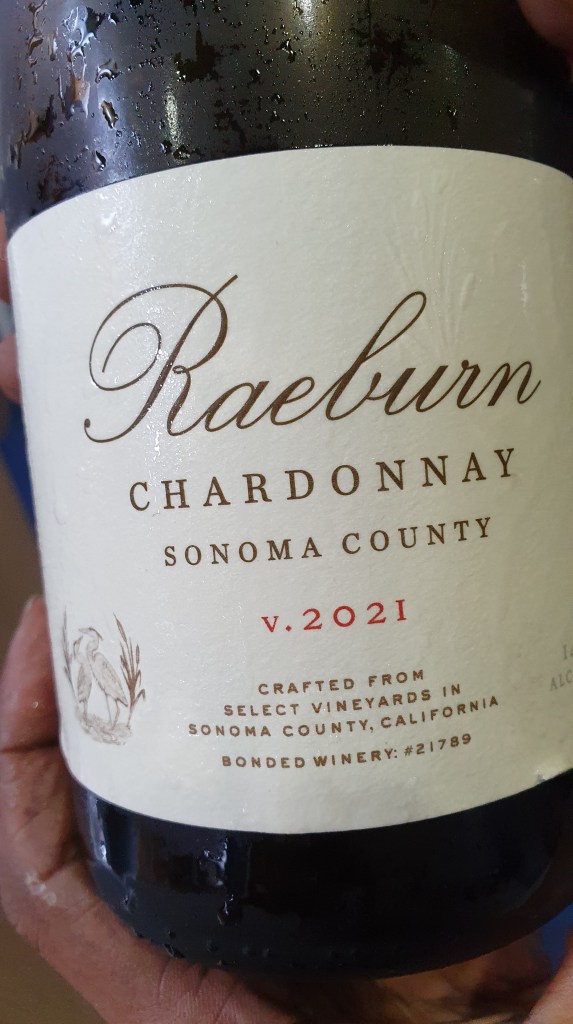
2021 Raeburn Sonoma County Chardonnay. Light greenish. Highly aromatic. Good verve. More fruit forward, yielding excellent detail and clarity. Very refined acidity. Great balance. Oozing with relaxed charm.
2019 Larkmead Vineyards Solari Cabernet Sauvignon. Good colour. Elegant lift of red fruits. Quite full and warm with a tinge of vegetal base. Medium presence. Quite fleshy though the fruit is set a little backward, giving way to more pronounced acidity.
2019 Larkmead Vineyards Cabernet Sauvignon. Good colour. Very correct. Lovely bouquet. Great balance and restraint though there’s plenty going on. Impeccably balanced with supple refined tannins. Highly integral.
2019 Larkmead Vineyards Firebelle Red. Deep crimson. Nose of savoury roast and rosy floral fragrance. Medium-full. Dry intensity. Good delineation and acidity. Understated tannins.
2021 Calera Pinot Noir. Good colour. Gentle floral aromas with distilled red fruits. Medium-bodied. Good intensity, underscored by sweet understated tannins with a warm ripeness. Great balance. Good finish.
2019 Calera Mills Vineyard Pinot Noir. Good colour. Prime bouquet of delicious red fruits. Softly contoured with a medium presence, structured with mild tannins that support the glowing lift of red berries. Fine detail. Very refined. From Mount Harlan.
2020 Duckhorn Vineyards Goldeneye Anderson Valley Pinot Noir. Good colour. Lovely nose of delicious fruit with rosy hues. Medium weight. Highly integral with refined acidity and intensity. Good balance and finish.
2020 Duckhorn Vineyards Decoy Cabernet Sauvignon. Good nose. Glorious fruit. Great balance and refinement. Open with highly supple intensity. Great balance. Good finish.
2021 Duckhorn Vineyards Decoy Alexander Valley Cabernet Sauvignon. Deep purple. Highly aromatic with discernible vanillin. Surprisingly open and supple, displaying great purity and balance. Modest finish.
2021 Duckhorn Vineyards Decoy Alexander Valley Merlot. Deep purple. Highly aromatic. Great presence of fruit. Good balance and acidity.
2020 Duckhorn Vineyards Napa Valley Merlot. Deep crimson. Restrained nose of red fruits and currants though the supple medium-full palate is fruity and delicious, structured with subtle tannins that impart great acidity.
2020 Duckhorn Vineyards Three Palms Vineyard Merlot. Deep purple. Rosy hues and red fruits with a chamfered quality. Softly contoured with good detail and layering with a substantial core of minerals. Very well-integrated. Good intensity. Lovely poise elegance.
2018 Silver Oak Alexander Valley. Deep crimson. Delicious bouquet of warm red fruits and smouldering ember. Medium-bodied. Quite amply layered with good transparency, subtly structured with refreshing acidity.
2018 Silver Oak Napa Valley. Deep purple. Warm red fruits on the nose with a suggestion of heated gravel. Full ripe palate, dressed in svelte tannins with a distinct minerally base. Somewhat dryish, though impeccably balanced and proportioned. Good finish.
2019 Silver Oak “Timeless” Bordeaux Blend. Deep purple. Restrained warmth. Medium presence. Well balanced. Highly supply and approachable. Modest finish.
2021 Wirra Wirra Church Block. Deep purple. Delicious nose of velvety red fruits. Medium-full. Great energy. Very well-integrated with subtle tannins and understated acidity. From McLaren Vale, South Australia.
2021 Wirra Wirra Catapult Shiraz. Deep purple. Medium presence, displaying supple velvetiness with good structure and definition. Very well-balanced. Drinking well.
2021 Wirra Wirra Woodhenge. Deep purple. Velvety medium-full presence. Generously endowed in dark fruits with plenty of depth and energy. Excellent balance. Well proportioned.
2019 Wirra Wirra RSW Shiraz. Quite restrained on the nose though the palate is rather full, imbued with a warm ripeness amid distinct medicinal overtones, layered with velvety depth.
2021 Bleasdale Bremerview Shiraz. Deep purple. Some malt on the nose, leading to a generous warm ripeness of fruit marked by a tensile presence with a bit of alcoholic heat. From Langhorne Creek, South Australia.
2021 Bleasdale Second Innings. Made from malbec. Purplish hues. Warm, soft medium presence. Very well-integrated with structured tannins.
2020 Bleasdale Frank Potts. Good bouquet. Structured with some rustic quality, exuding warm ripeness with a rustic quality amid overtones of mahogany. A cabernet sauvignon from Langhorne Creek, South Australia.
2021 Bleasdale Mulberry Tree Cabernet Sauvignon. Deep purple. Quite effusive in dark fruits, mulberries and currants with a note of rye. Excellent fullness, layered with fine cabernet character with overtones of mahogany. Good acidity.
Ric re-visits Château Clos Fourtet
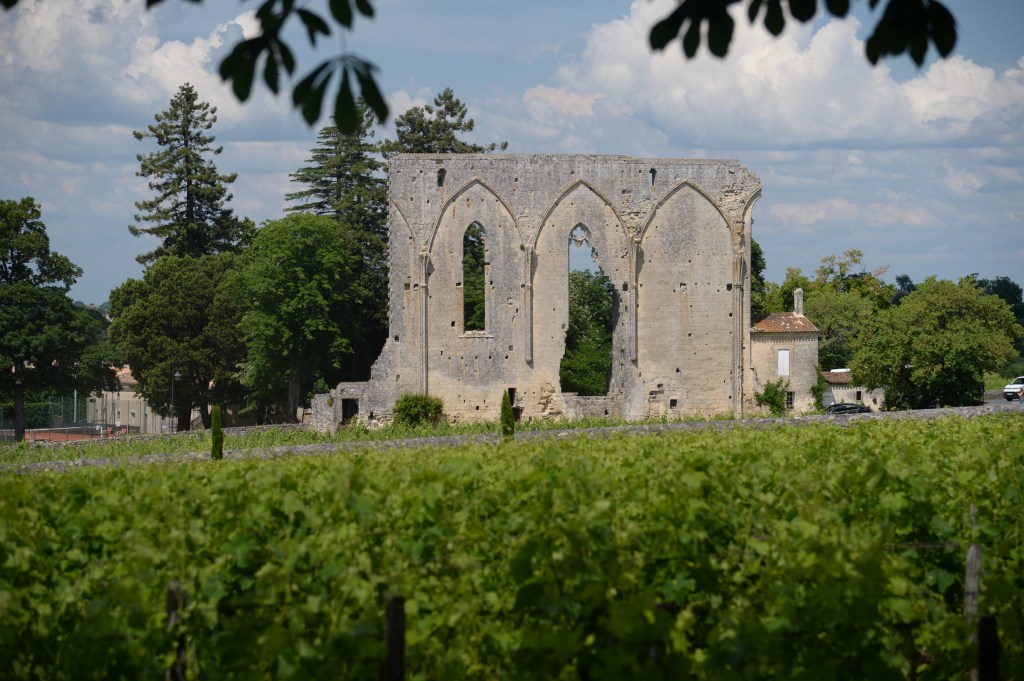
Probably the first château one sees when driving into the village centre of Saint-Émilion is Château Clos Fourtet, announced by a pair of stone pillars holding up its wrought iron gate. Indeed, there is an ancient low wall surrounding the entire property, a reminder of its role as a defensive fort during The Hundred Years War (1337-1453) – hence its name Clos Fourtet. The estate has holdings of 22 hectares after absorbing an adjacent 2-ha of what used to be Château Les Grandes Murailles, a plot just immediately after that tall wall of ruins. The estate was bought over by Philippe Cuvelier in 2001 (who also owns Château Poujeaux) and has been biodynamic since 2011, planted with 85% merlot on soils of clay and limestone, the former being cool soils that helps to retain moisture whilst the latter adds power and freshness to the wine. Members of the Jürade de Saint-Émilion du Singapour were privileged to have visited the château twice, in June 2019 and on 05 June 2023. There is an amazing system of underground caves under the property that stretches 12 kilometres, where countless bottles of back vintages of Clos Fourtet all the way to the early twentienth century lie quietly at stable humidity and temperatures of 12-14 degrees Celsius. Like many other estates, the château has raised its game since the new millennium. Its wines in the last decade have garnered critical acclaim for their excellent precision, layering and sophistication with restrained power, proven by an encounter I had with its 2020 at Vinexpo Asia just a couple of weeks earlier. This has transformed the château into a Premier Grand Cru Classé. Do visit if you can.
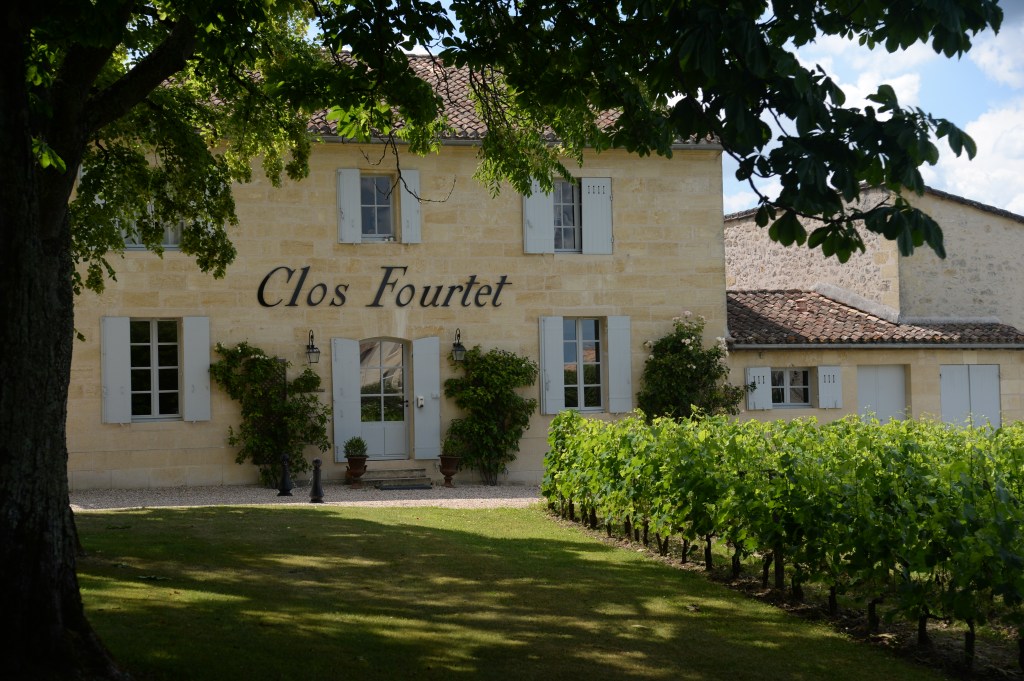
2005 Château Clos Fourtet, comprising 86% merlot, 8% cabernet sauvignon and 6% cabernet franc aged in 60% new oak Deep crimson. Bit of warm alcoholic breath on the nose amid deeper notes of ripe plums, cherries and currants, already displaying early secondary characters of cedar and mahogany. Fleshy and sleek, structured with sublime acidity. Well integrated with very fine inner definition, layered with darker shades of fruit. Not overtly deep nor opulent, finishing with good linearity and sweet tannins without betraying its 14.5% abv. Tasted June 2019 at the château.
2009 Château Les Grandes Murailles. From a 2-ha plot of 100% merlot producing 5000 bottles, aged in 100% new oak. Brilliant crimson. Superb seductive fragrance of delicious dark cherries. Fairly rich as well in bright red fruits, cherries and currants on the softly-rounded, fleshy medium palate, very subtly structured with very fine depth, exuding lovely gentle intensity. Finished well. 14% abv. Tasted June 2019 at Château Clos Fourtet.
2017 Château Clos Fourtet, comprising 86% merlot, 10% cabernet sauvignon and 4% cabernet franc. Deep bouquet of sweet berries, mulberries and raspberries. Excellent fullness, exerting good tensile presence with a distinct minerally mid-palate. Slightly assertive in acidity but it helps with the freshness. Good balance. Tasted June 2023 at the château.
Ric visits Château Troplong Mondot
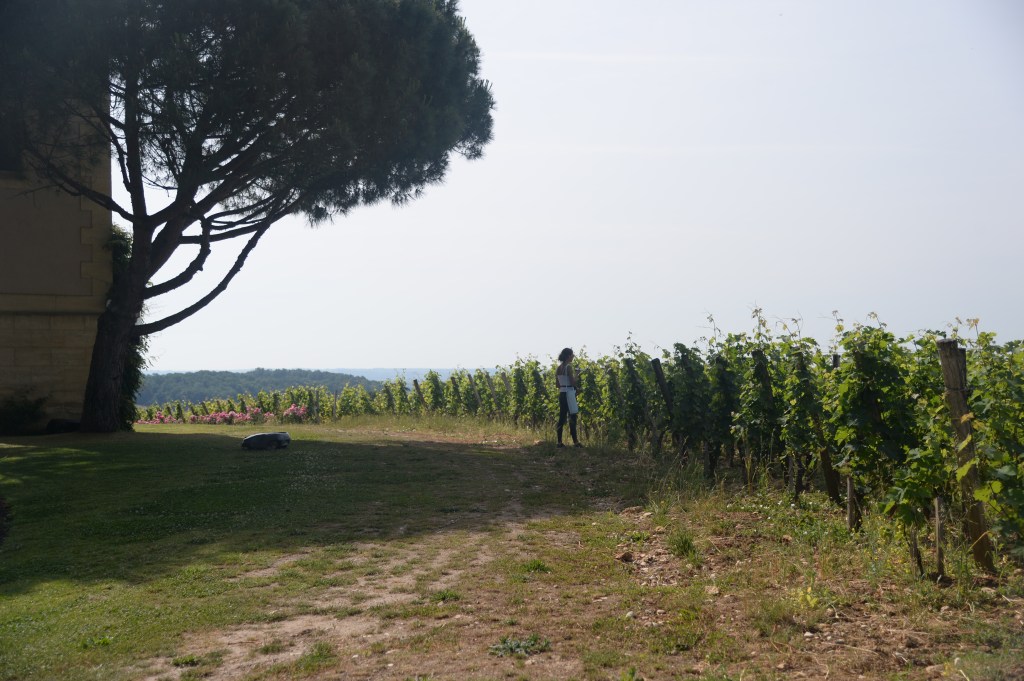
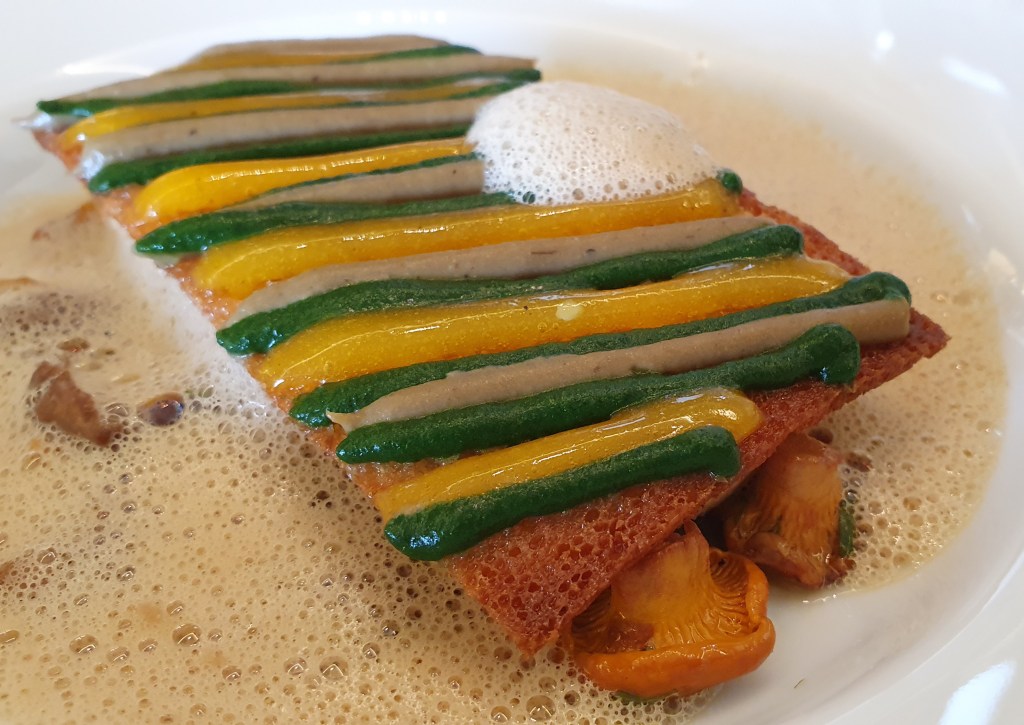
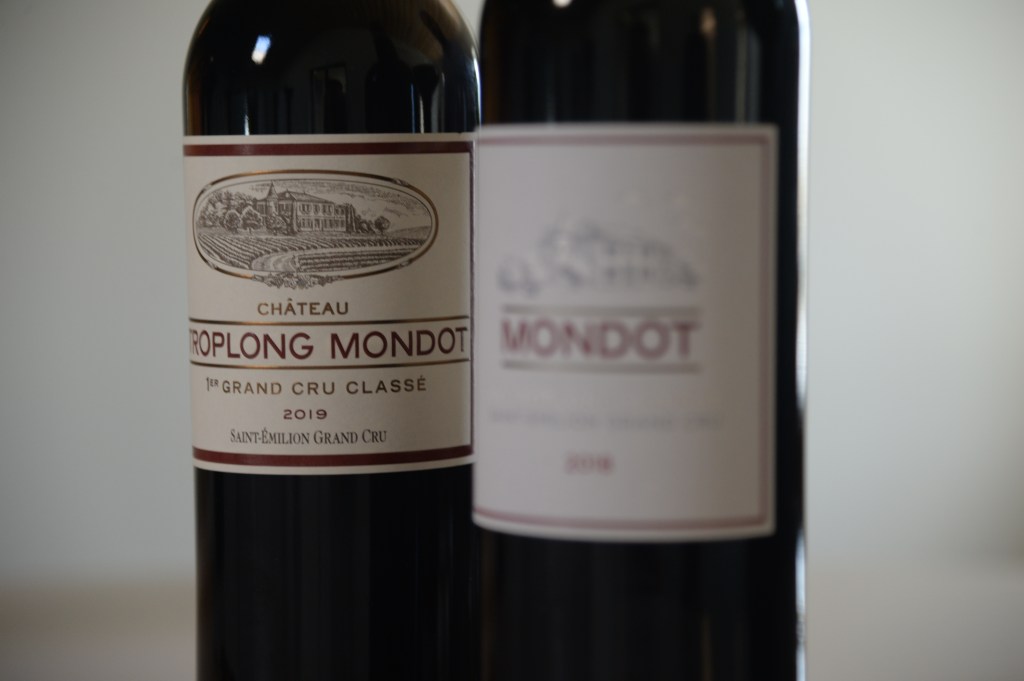
A few members of the Jürade de Saint-Émilion du Singapour paid a visit to Château Troplong Mondot on 07 June 2023 where we were hosted by its Sales Director Ferréol du Founot, who still recalled my first meeting with him at the week-long Troplong Mondot residency in Singapore in February this year. Quality at the estate grew from strength-to-strength under the stewardship of Christine Valette who made the wines from 1980 till her untimely passing in 2014. Although the Valette family sold in 2017 to the French insurance giant SCOR, quality has continued to soar under the guidance of its CEO Aymeric de Gironde who came over from Château Cos D’Estournel in 2012. The estate has 37 hectares under vines – 27 for its grand vin with another 10 at a separate location for its second label Mondot. Planted nowadays with 73% merlot, 16% cabernet franc and 11% cabernet sauvignon (average age close to 30 years), the key to Troplong Mondot’s success lies in its terroir, sited on a gentle mound 110 metres above sea-level where there is a substantial deposit of clay covering the usual limestone. This elevation facilitates even drainage during wet months while the clay helps to retain moisture during the hot months, preventing heat stress. The harder clay also forces the roots of the vines to dig deeper, resulting in greater power and complexity to the wine. The entire estate has been completely renovated under the new owners, boasting state-of-the-art facilities, a futuristic cellar (you walk high above it on a glass bridge), beautifully manicured grounds, guest accommodation as well as a one-Michelin star restaurant Les Belles Perdrix, a real gem helmed by Chef David Charrier. It even has a mini vegetable farm, growing its own greens for the restaurant. A staple of Saint-Émilion Premier Grand Cru Classé for many years, Trolong Mondot is now knocking on the doors of Angélus and Figeac. We didn’t get to taste the 2022 in barrel but it must be outstanding, given how well estates big and small have performed for this vintage. Don’t miss this fabulous address when you visit Saint-Émilion.

2018 Mondot. Saint-Émilion Grand Cru. Made truly as a separate wine in its own right since 2017 from a 10-ha plot of limestone soils, comprising 100% merlot aged in 60% used oak and 40% steel vats. Deep purple. Highly aromatic in red cherries and raspberries with an effusive rosy velvetiness. Medium presence. Beautifully extracted at just right level, producing juicy succulent mouthfeel with great purity and freshness, tinged with a hint of cigar box. Elegant balance. 40,000 bottles annually as a late release.
2019 Château Troplong Mondot. Decanted on-site. Good colour with a bit of crimson at the rim. Good gentle complexity of fig, capsicum, dark fruits and currants, exuding great freshness. Softly contoured, imbued with superb acidity and elegant velvety tannins that impart delicate agility. Impeccably proportioned and balanced, finishing with just a hint of earthiness without betraying its 15% abv. Compared with my first encounter in Singapore in February 2023 where it was brimming with nervous tension, this wine has settled into its groove. Will prove to be outstanding.
2011 Château Troplong Mondot, over lunch at the château’s Les Belles Perdrix, 07 June 2023. Very deep crimson, proffering impressive swathes of ripe raspberries, cherries and currants though, surprisingly, the palate is only medium weight, tightly structured with ample fruit and fresh acidity that took ninety minutes to open up with further detail and supple intensity. Not quite ready.
Short notes from Saint-Émilion 2023
Some wines tasted during my trip to Saint-Émilion in June 2023…

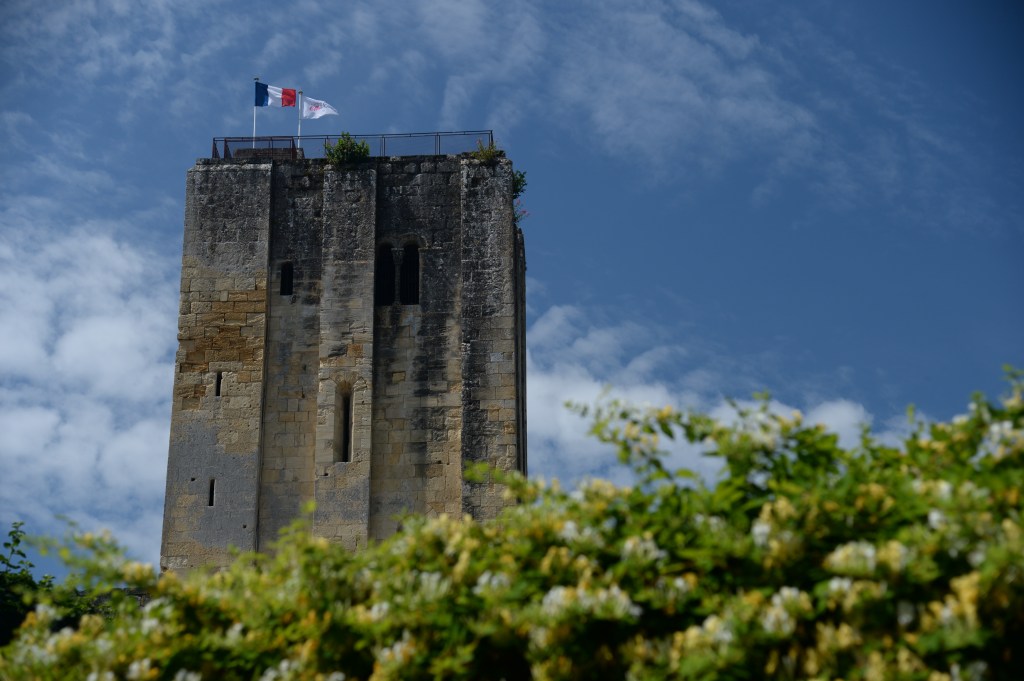
2016 Château Malartic-Lagravière Rouge, by the glass at Vignobles et Châteaux, 04 June 2023. Very deeply coloured. Medium-full even presence, structured with soft tightly knit tannins that exert excellent intensity and tension with fine precision.
2016 Virginie de Valandraud Blanc at Thunevin Girondins, 04 June 2023. Pale greenish. Bit of diesel fumes on the nose. Less weighty than the grand vin but still imbued with good presence of white tones. Good balance.
1994 Château Monbousquet, only €90 from the list of restaurant L’Envers du Decor, 04 June 2023. Still fairly dark. Nose of sandalwood and mahogany with a hint of menthol. Darkish velvety textures. Very good supple presence of mature dark fruits, cedar and cinnamon, displaying rustic attack with a glowing minty finish.
2020 Château Des Landes Cuvée Prestige. From the satellite region of Lussac-Saint-Émilion. Tasted during a masterclass at Maison du Vin, 05 June 2023. Clear purple. Fruit forward with a deeper core of strawberries and cherries while some enamel is discernible along with sweet cedar. Medium-full with refreshing acidity, showing controlled intensity and linearity amid a certain rusticity. Modest finish. Comprises 80% merlot, 15% cabernet sauvignon and 5% cabernet franc. Owned by Nicholas Lassagne.
2019 Château de Puisseguin Curat Gemme Rouge. From the satellite region of Puisseguin Saint-Émilion. Tasted during a masterclass at Maison du Vin, 05 June 2023. Deep crimson. Distinct nose of diesel with reductive oaky flavours but subtly shaded. Concentrated layers of darkish fruit, well-integrated with very fine intensity. Modest finish. Very successful. Comprises 65% merlot, 15% cabernet sauvignon and 20% cabernet franc aged in 50% new barrels. By Jean-François Robin.
2018 Château Guillemot. Tasted during a masterclass at Maison du Vin, 05 June 2023. Deep ruby. Shy, just a glimpse of briar and wild berries. Supple rounded medium presence of cherries, imparting subtle intensity and fresh but understated acidity. Good clarity and balance. Modest finish. From an 8-ha plot owned by Valerie Arnathau, comprising 80% merlot, 5% cabernet sauvignon and 15% cabernet franc.
2016 Château Boutisse. Saint-Émilion Grand Cru. Tasted during a masterclass at Maison du Vin, 05 June 2023. Deep purple. Fairly effusive in ripe raspberries, still imbued with some varnish. Medium weight. Fleshy with fresh supple tannins, yielding fine detail with a hint of mocha. Good length. Comprises 70% merlot, 20% cabernet sauvignon, 5% carmenere and 5% cabernet franc aged in 50% new barrels. A 21-ha estate owned by Xavier Milhade.
2015 Clos de la Cure. Saint-Émilion Grand Cru. Tasted during a masterclass at Maison du Vin, 05 June 2023. Deep garnet with a hint of bricking. Lovely perfumed aromas of red fruits and fig. Carries itself with effortless grace on the medium palate, seamlessly integrated with superb suppleness and balance. Just the right level of ripeness. Understated acidity. Modest finish. Very successful. Comprises 75% merlot and 25% cabernet franc fermented in cement vats, aged in 50% new barrels. A 7-ha estate owned by Pierre et Alexis Bouyer.
2014 Château Larmande. Saint-Émilion Grand Cru Classé. Tasted during a masterclass at Maison du Vin, 05 June 2023. Good colour. Roast meat and other savoury notes amid overtones of cashews and dried fruit mix. Medium-bodied. Fleshy and soft, exuding delicious charm from its gentle restraint. Modest finish. Drinking the vintage. Comprises 65% merlot, 5% cabernet sauvignon and 30% cabernet franc. By Veronique Corporandy et Olivier Brunel.
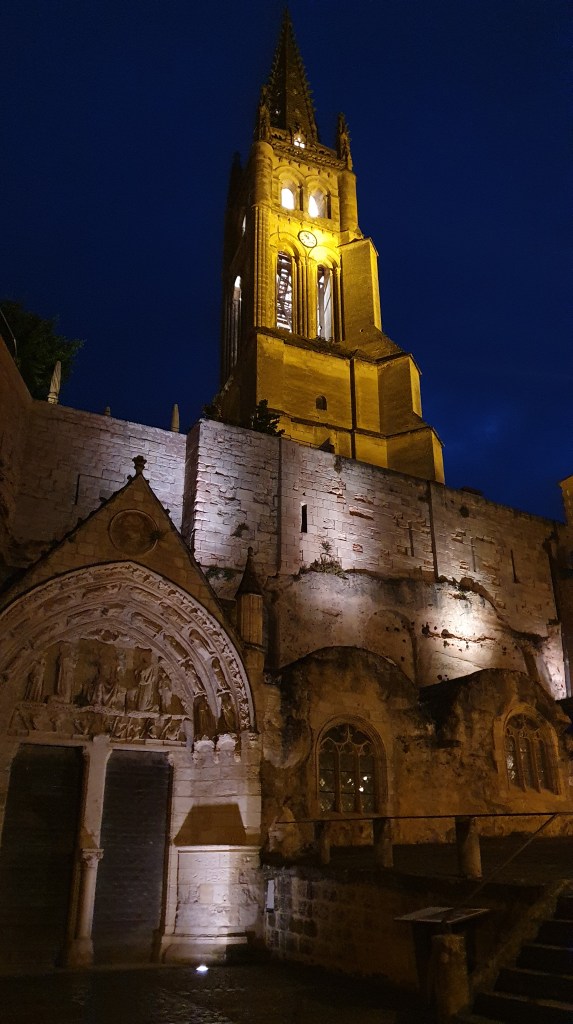
2015 Château La Mondotte. Saint-Émilion Premier Grand Cru Classé. Tasted blind during a masterclass at Maison du Vin, 05 June 2023. Very deep impenetrable purple. Restrained, reductive dark tones of austere minerals amid an exuberance of ripe wild berries, still touched with varnish. Full saturated palate of ample red fruits graced with fine acidity and well-managed understated tannins. Modest finish, just a little gamey with a herbaceous tint. Very modern style. Still primal. Comprises 80% merlot, and 20% cabernet franc aged in 100% new barrels. From a 4.5-ha plot owned by Stephan von Neipperg. I nailed it.
2005 Château Laniote. Saint-Émilion Grand Cru Classé. Tasted over lunch at Clos du Roy, 05 June 2023. Deep crimson. Intense savoury tones on the nose with a suggestion of heated earth, leading to a warm ripeness of wild berries accompanied by some alcoholic heat.
2006 Château de Ferrand. Saint-Émilion Grand Cru Classé. Tasted over lunch at Clos du Roy, 05 June 2023. Crimson hues. Savoury tones tempered by floral notes. Good attack and intensity, laced with sleek acidity. Modest finish.
2000 Château Grand Corbin-Despagne. Saint-Émilion Grand Cru Classé. Tasted over lunch at Clos du Roy, 05 June 2023. Evolved crimson. Tertiary glow of mature red fruits. Supple medium-full palate, open with moderate intensity. Good balance. Quite integral. Modest finish.
Champagne Bollinger Special Cuvée, pre-dinner aperitif at Château Angélus, 05 June 2023. Dull golden. Full rich creaminess overlaid with chromatic tones, imparting superb freshness and sweet intensity. Not too dry.
2017 Château de Buxy Montagny 1er Les Bassets, over lunch at La Terrasse Rouge, 06 June 2023. Golden green. Bold bouquet of green fruits, grassy elements and morning dew. Good freshness, though the medium palate is rather straightforward and rustic.
2000 Château La Dominique, over lunch at La Terrasse Rouge, 06 June 2023. Deep garnet still. Effusive in rose petals and cherries. Very soft tannins, complementing the lush expanse of fruit, yielding lovely elegant detail. Almost voluptuous in its supple intensity. Great balance and length, finishing on a note of spicy capsicum. Excellent.
2019 Château Latour-Martillac Blanc, from the list of Logis de la Cadène, 06 June 2023. Light greenish hue, delivering lithe chromatic white tones that light the palate with elegant charm. Very subtly chalked with agile density, opening up with soft contours, retaining very good definition all the way to its glowing finish.
2015 Domaine François Lamarche Vosne-Romanée Les Suchots 1er, from the list of Logis de la Cadène, 06 June 2023. Classic pinot tint of cherries and floral fragrance. Medium weight with a predominance of red fruits supported by a deeper vein of currants that eventually impart intense darkish shades laced with very fine acidity, finishing with overtones of incense.
2019 Domaine François Carillon Saint-Aubin Murgers les Dents de Chien 1er, from the list of Les Belles Perdrix, 07 June 2023. Light greenish. Effusive complexity of delicate green fruits tinged with varnish, teasing the layered palate of white tones with fleeting fullness and intensity of delicate citrus, replete with a sense of oily density. Lengthy finish of white incense.
2011 Château Cheval Blanc, comprising 53% cabernet franc and 47% merlot. Deep crimson. Early secondary development of red plums and other complex red fruits with a lovely glowing presence. The tannins are still tightly structured with fine detail and excellent precision, imbued with considerable ferrous elements that lend a distinct austerity to the mid-palate. Fairly well integrated but doesn’t quite display the depth and layering of the best years, a little “stemmy” too at the finish although the grapes are completely de-stemmed. Tasted on 06 June 2023 at the château.
2011 Château Figeac. Bright purple. Highly aromatic in cherries, raspberries and red currants. Beautifully structured with excellent presence, the tannins beginning to loosen with svelte supple intensity. Wonderfully fresh and energetic, showing great integration though the cabernet franc component is still discernibly coiled with a hint of varnish. Finished well with traces of graphite. Tasted at the château on 06 June 2023.
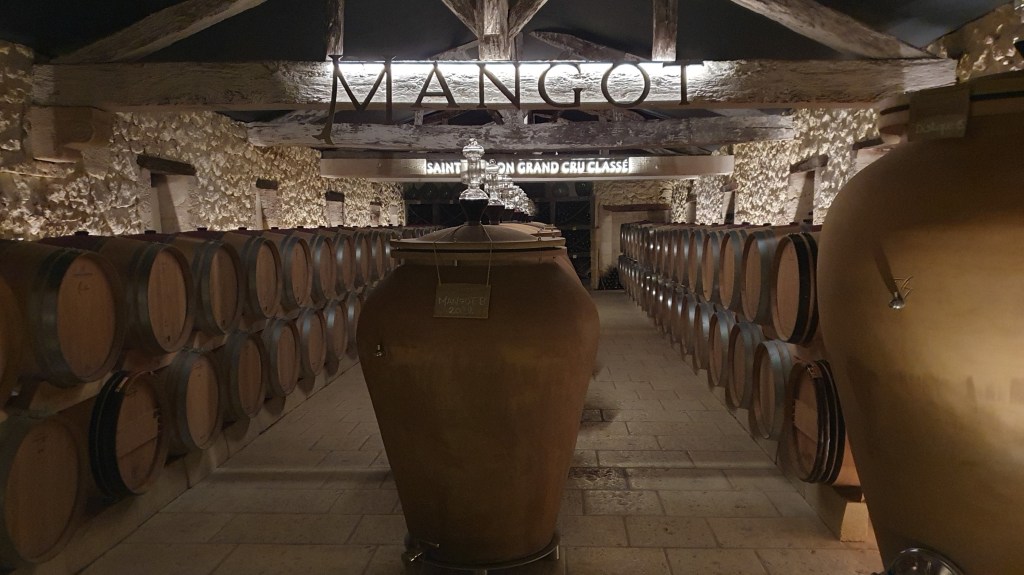
Ric visits Château Mangot
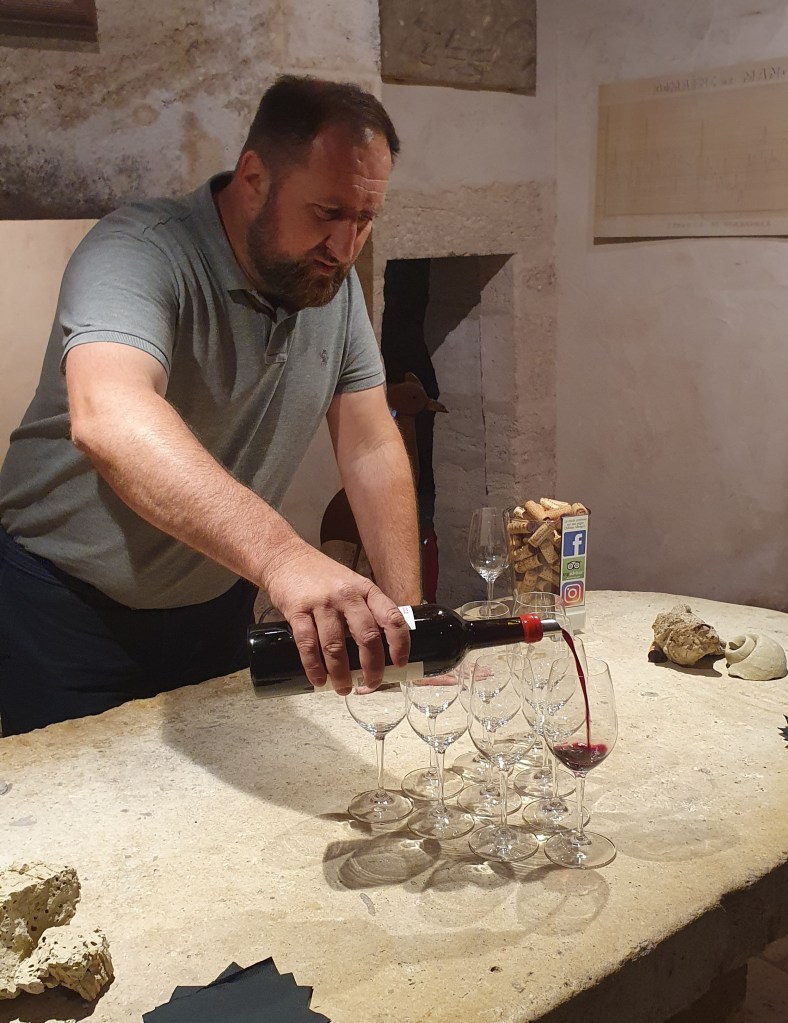
Château Mangot may be counted as one of the unsung châteaux of Saint-Émilion. Founded in the mid-sixteenth century, its modern success is due to the untiring efforts of brothers Karl and Yann Todeschini. Located far east of Saint-Émilion village, the château has some 30 hectares under vines in an uninterrupted stretch covering various elevations and ecosystems, planted with more than 80% merlot. When the Jürade de Saint-Émilion du Singapour visited late on 07 June 2023, Karl himself was on hand to welcome us. The château itself has been thoroughly modernised since 2001, sporting a clean spacious chai with rows of gleaming stainless-steel tanks for fermentation. Interestingly, while Karl utilises biodynamic methods, he is equally unconventional in some ways, ageing his wine in a mix of barrels, amphorae vats as well as stainless steel tanks as he deems fit. The examples tasted are a testament to the quality of its wines, proven beyond doubt by its recent elevation to Grand Cru Classé. Its 2016 grand vin is really outstanding while its special cuvée of Todeschini Distique is one truly for the next generation. Merci Karl, for your time and generosity.
2022 Château Mangot. Deep purple. Cool darkish tones tinged with varnish on the nose. The fullish palate is imbued with ripe fruit and distinct minerals in equal measure, layered with earthy textures amid a distant note of rye, underscored by understated acidity and slightly dryish tannins that impart subdued intensity. Tasted from barrel at the château.
2022 Mangot Rosé. Beautiful pale pinkish hue, featuring light red fruits coolly balanced against a light minerally presence. Highly refreshing, laced with some underlying sweetness to counter the relative austerity. Tasted as a pre-dinner aperitif at the château.
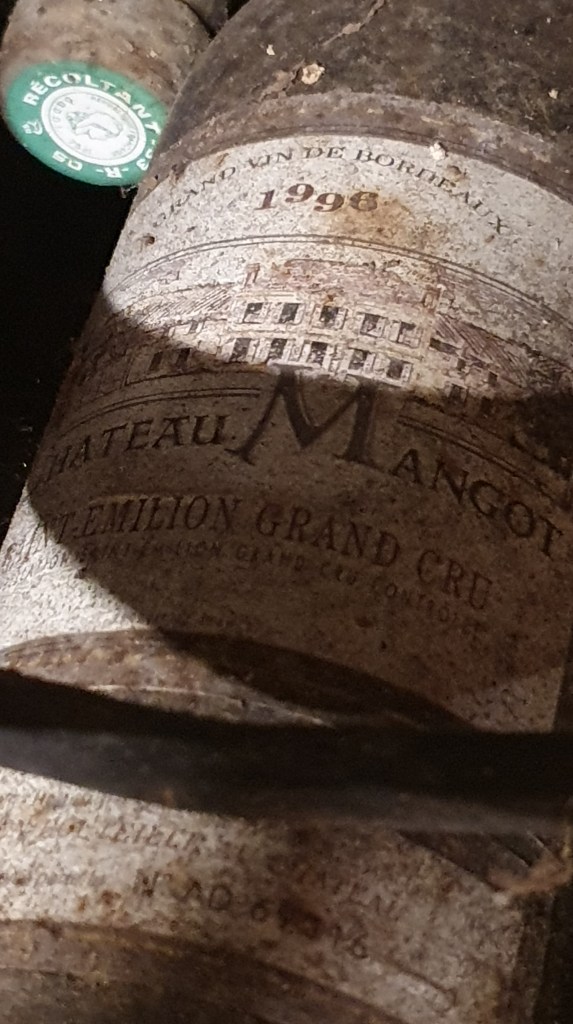
2022 M de Mangot Blanc. From a small 1.5-ha plot in Castillon, comprising almost equal portions of chardonnay, colombard and roussanne. Very light golden luminosity. Nose of distant green fruits, morning dew and wet gravel, more forward over time. Lively but balanced with rounded acidity and a tinge of nutmeg. Very well proportioned with medium presence, developing glowing white tones with growing intensity of fruit over time. Excellent. The 2020 is its inaugural vintage, some 3000 bottles produced. Tasted over dinner at the château.
2018 Château La Brande. Poured from magnum. From vines planted on red clay in Castillon, comprising 75% merlot and the remainder cabernet franc. Very deep garnet. Opens with distant raspberries and mulberries, displaying good energy on the fleshy medium with open detailed tannins though it doesn’t quite plumb the depths. Tasted over dinner at the château.
2016 Château Mangot. Poured from magnum. Comprising 80% merlot, 15% cabernet franc and 5% cabernet sauvignon. Very deep garnet. Promising nose of ultra-deep currants and ripe black fruits with plenty more lurking beneath. Very amply endowed and full with a lithe warm ripeness, traipsing across the palate with great verve and agility. Subtly structured with unobtrusive silky tannins, boasting sublime acidity with fine linearity and precision. Highly successful. Tasted over dinner at the château.
2016 Todeschini Distique 9. Saint-Émilion Grand Cru. Poured from magnum. Impenetrable deep garnet. Effusive nose of mocha, incense and black fruits and currants. Full-bodied. Quite seamlessly integrated although there is a spicy edge. Distinctly masculine with a dark terse palate, structured with sophisticated but slightly dryish tannins. Undisputedly powerful but certainly not over extracted. Needs another two decades of cellaring. Dubbed the Figeac of the East, this wine comprises 40% cabernet franc, 30% cabernet sauvignon and 30% merlot from vines grown on clayey chalk, its inaugural vintage being the 2008. Only 9000 bottles annually. Tasted over dinner at the château.
Ric re-visits Tertre Roteboeuf
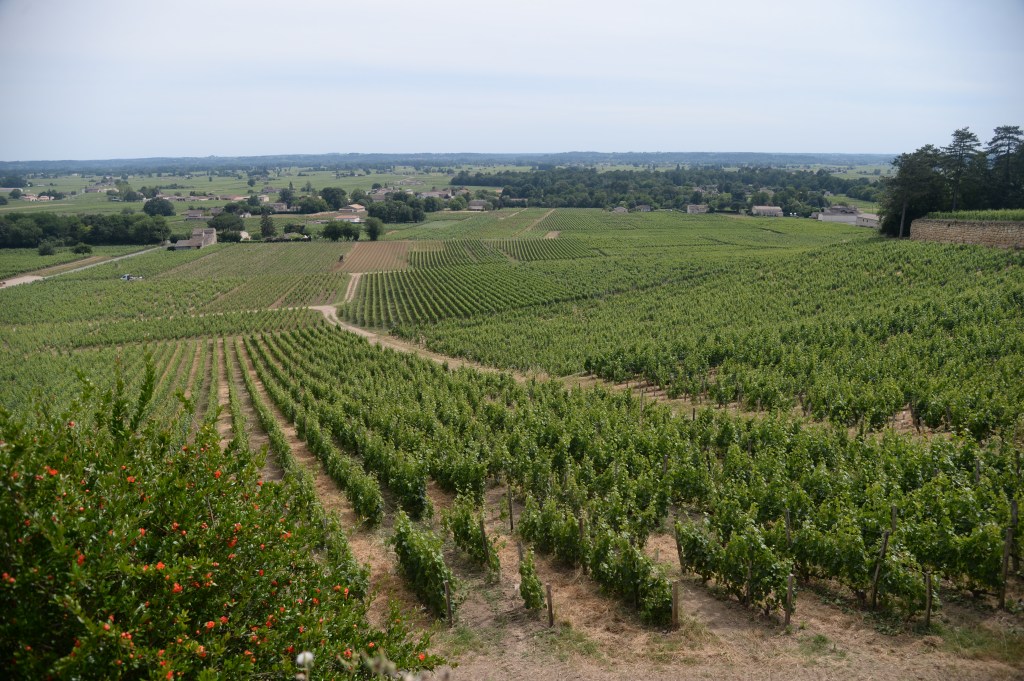
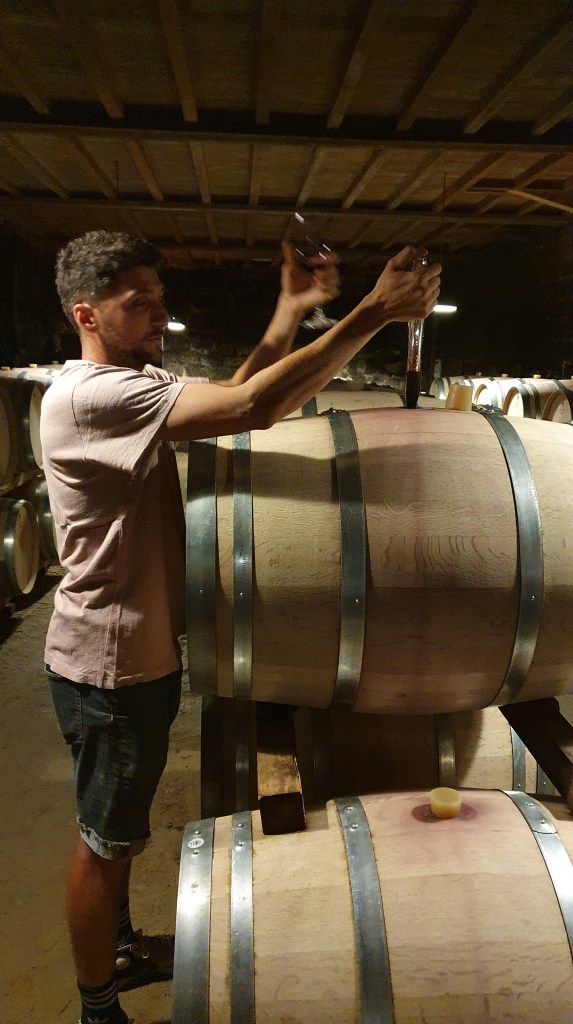
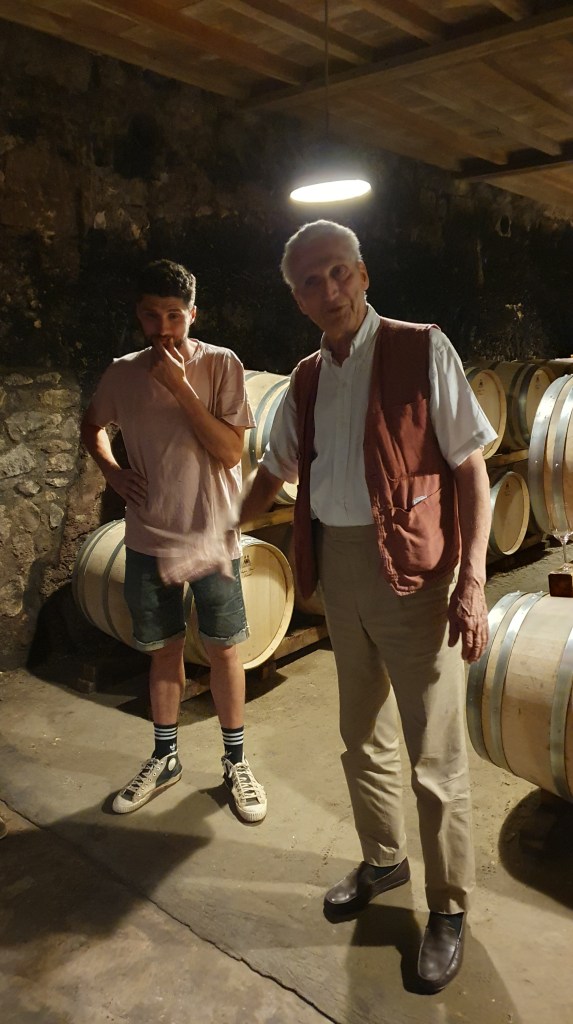
The Jürade de Saint-Émilion du Singapour had the distinct pleasure of visiting Tertre Roteboeuf again on 07 June 2023. Located at a high vantage point on clay and limestone soils, this small estate has expanded to just a shade over six hectares, having recently acquired a small parcel downslope. We were hosted by Henri, son of the legendary François Mitjavile, who seems contented to continue the work of his father without being too disruptive, which I guess is not a bad thing at all for lovers of this estate. François himself did make an appearance later in the cellars, still looking hale and hearty, and it was especially touching to see the close affection between père et fil. François had expounded at length regarding his philosophy about Tertre Roteboeuf during our previous visit which I shan’t repeat here. Henri fulfilled our request to pop a back vintage (we chose the 1985) that is still very much at its peak, while an extended tasting across its range of current vintage proved this estate to still be in very fine form. Merci beaucoup, Henri, for your time and generosity, and to François for gracing our visit and we wish you good health ahead.
2022 Domaine de Cambes. Barrel sample comprising 80% merlot and 20% cabernet franc, made at a location two kilometres from the Côtes de Bourg. Deep purple. Some bush and bramble on the nose, slightly reductive with a distinct humid note that is a nod to its terroir by the river. Concentrated and fleshy, imbued with a savouriness and fine acidity on an earthy base.
2022 Roc de Cambes. Barrel sample comprising 80% merlot and 20% cabernet franc planted on the slopes of the Côtes de Bourg. Deep purple. Fruit forward with a suggestion of heated wet stones, pampering the palate with plush intensity of red fruits on the back of structured dryish tannins, showing good definition.
2022 Tertre Roteboeuf. Barrel sample. Aromatic floral glow of red roses and red fruits. Beautifully ripe, concentrated and savoury, yet impeccably balanced and proportioned, structured with plush tannins that impart velvety textures and good power. Absolutely harmonious. Has just the correct level of extraction. Finished well with glowing intensity. A glorious Tertre Roteboeuf to be.
2017 Tertre Roteboeuf. Deep ruby. Distilled red fruit and rosy hues. Considerably more gentle, highly supple and fleshy with understated soft tannins and acidity yet imbued with tactile intensity. Highly integral. Very harmonious throughout its length, underpinned with just a hint of wild game. Held its ground in spite of coming after the 2022. Highly successful.
1985 Château Tertre Roteboeuf. Deep crimson still. Freshly popped, this wine opens with an attractive funk along with tertiary characters of dried longans and mature wild berries. Still ample in fruit that is a little more forwardly balanced, displaying youthful suppleness and cool easy charm. Absolutely harmonious, developing further overtones of glutinous rice leaves. Superb!
Ric re-visits Château Angélus
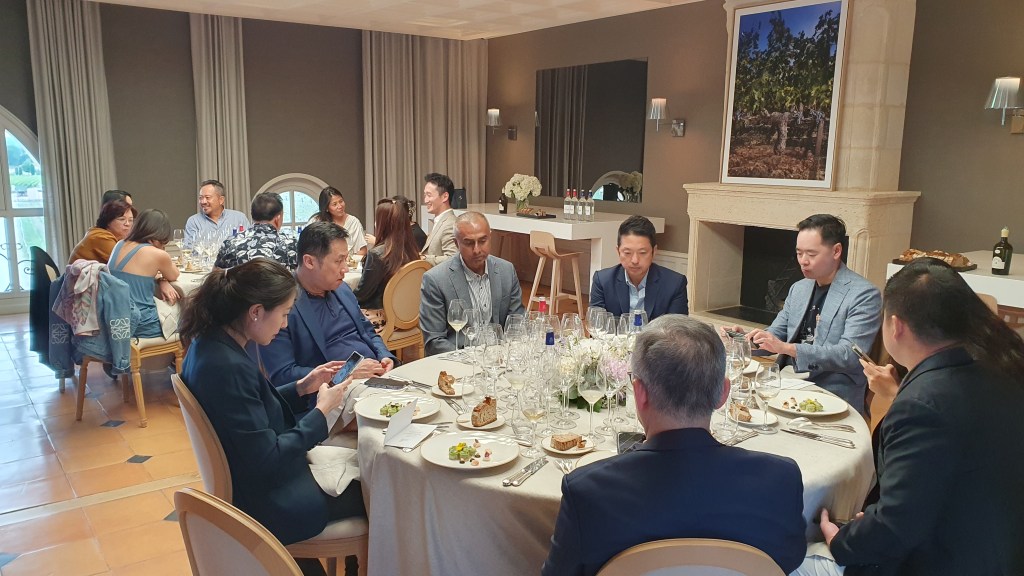
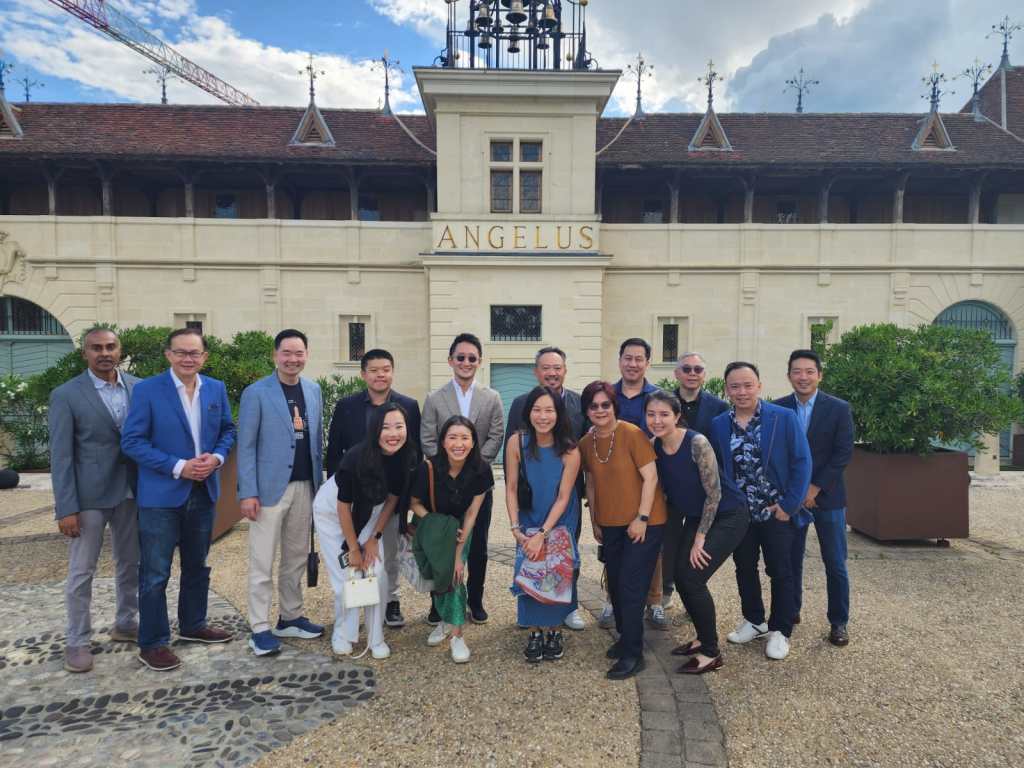
The Jürade de Saint-Émilion du Singapour has had the distinct privilege of visiting Château Angélus twice, first in June 2019 and, almost four years to the date, on 05 June 2023, the bells obliging us with their rendition of Majullah Singapura on each visit. In between, the château has increased its holdings to 40 ha while Stephanie de Boüard-Rivoal has taken an increasing role in setting the château’s future direction from her father, Hubert de Boüard de Laforest, producing a dry white for the first time with the 2020 vintage. For our second visit, the château honoured us with a tasting of the 2017 vintage followed by a private dinner at its tasting room hosted by its Manager for Asia, Ms Bong Grelat-Tram, where we had the privilege of tasting again the impossible-to-find 2020 Angélus Grand Vin Blanc (retailing at €1000 at its restaurant Logis de la Cadène) in as many weeks, as well as the increasingly rare 1988 Château Angélus. All the wines were drinking superbly, a testimony to the château’s rightful place at the top tier of Saint-Émilion. But, of course, Château Angélus has famously removed itself from the Saint-Émilion classification of 2022 (along with Ausone and Cheval Blanc), meaning that 2021 will be the final time one sees Premier Grand Cru Classé A being printed on its label, which will forever be included amongst other interesting trivia about the château: the year when the article L’ was dropped (1989), when church cloisters were removed from the label (2001), when the bottles were embossed with ANGÉLUS (2000). We popped the question to Ms Bong, and it seems the reason is, quite simply, that the château has been there and that it is time to free itself of undue obligations to gain the freedom of deciding its own direction. From its track record under Hubert, and now with fresh visions and goals from Stephanie, one can be sure that the château will continue its unerring course towards even greater heights. Many thanks, Hubert and Ms Bong, for your time, generosity and kind hospitality.
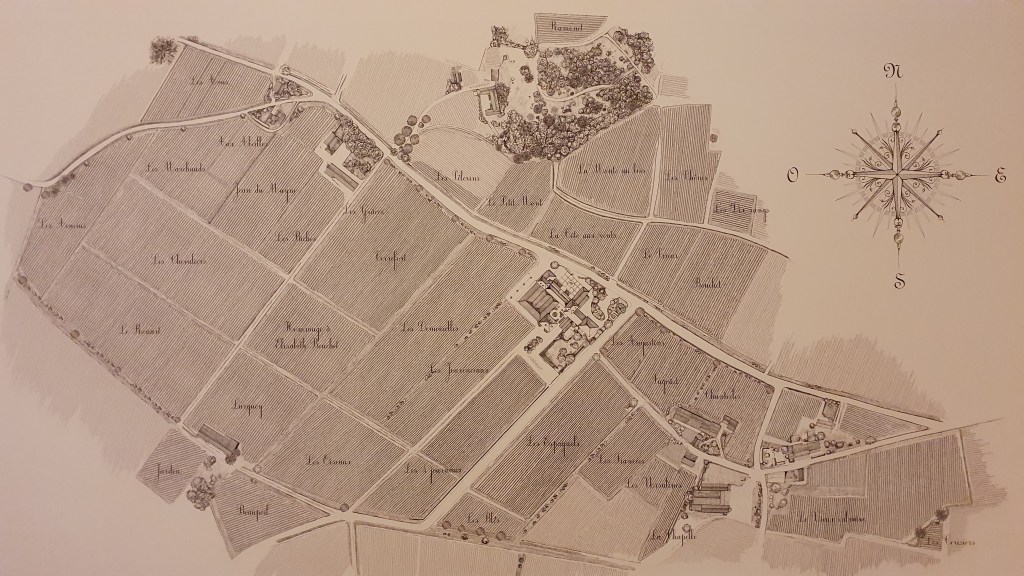
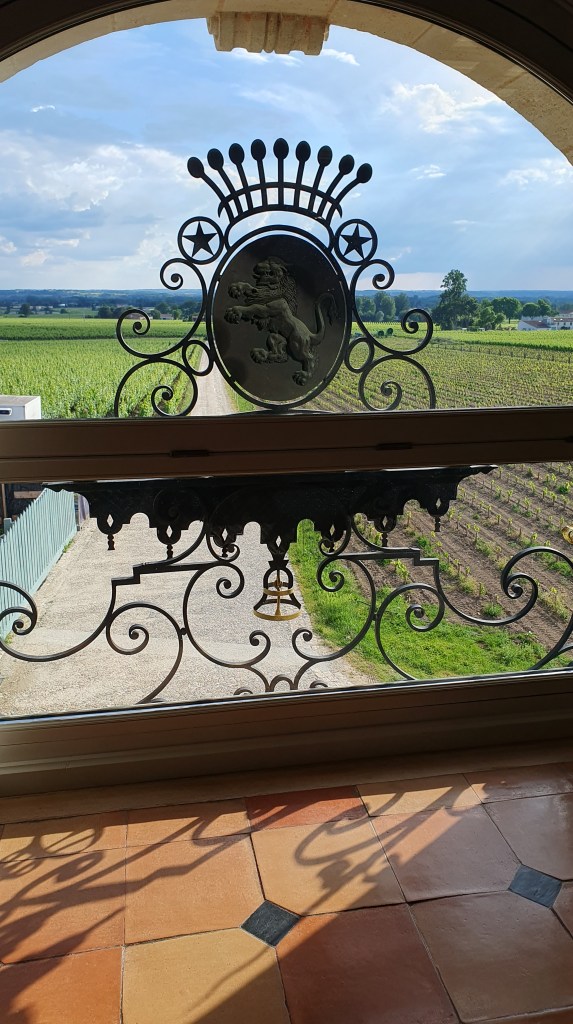
2011 Château Angélus. Deep impenetrable purple. Effusive bouquet of concentrated dark plums, ripe blackberries and dark cherries. Big, ripe and well-extracted, imparting dense layers of warm dark fruits and currants on the rounded medium-full palate that exert taut tension and clean acidity, finishing with traces of licorice. Tasted June 2019 at the château.
2017 Le Carillon d’Angélus. Deep purple. Restrained at first, gradually yielding notes of haw and rosy hues from its discernible cabernet franc. Generously proportioned and full, gelling together very well with supple intensity and superb freshness, turning a little more perfumed with more juicy succulence though there is a hint of stems at the finish, underpinned by very subtle minerality throughout. Highly successful, considering the difficult frosty vintage where the château decided to only pick the first-generation grapes. Tasted June 2023 at the château.
2010 Le Carillon d’Angélus. Deep purple. Fairly effusive in black fruits and dark currants. Medium-full. More forwardly balanced, structured with seamless tannins that exert supple intensity though it doesn’t plumb the depths. Distinctly masculine. Comprises 40% cabernet franc and 60% merlot. Tasted over dinner at the château, June 2023.
2017 Château Angélus. Impenetrable deep purple. Distant ripe fruit of black currants and violets, imparting delicious cool tones. Softly contoured. Medium presence. Very well balanced and supple, graced with understated acidity and seamless smooth tannins that confer delicate elegance. Good delineation. Modest finish. Very fine indeed. Already highly accessible. Tasted June 2023 at the château.
2020 Angélus Grand Vin Blanc. Pale. Nose of crème de la crème with a hint of tropical fruit and distant icing. Medium presence. Very precisely layered with delicate agility and excellent clarity where the various grape varietals are clearly discernible. Has a certain cool aloofness. Tasted over dinner at the château, June 2023.
2015 Château Angélus. Deep garnet. Effusive in dark fruits. Very ample with masculine proportions. Great depth and tight intensity of fruit that exert superb acidity and tension, held together with controlled hedonism. Perfectly balanced. Still primal. Tasted over dinner at the château, June 2023.
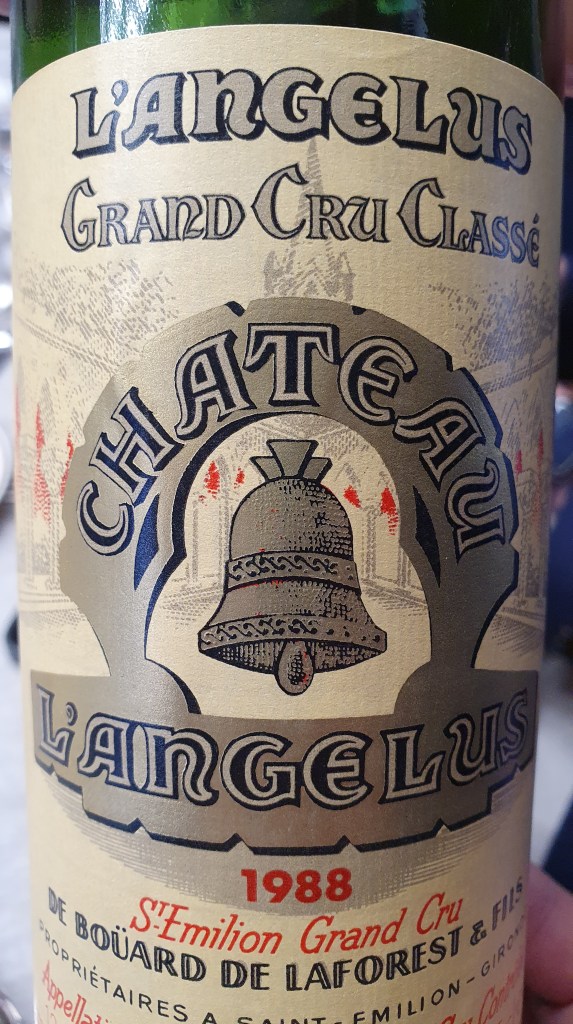
1988 Château L’Angélus. The final vintage to feature the article L’. Deep crimson with bricking. Beautiful tertiary characters on the nose with distinct capsicum and mature ripe berries, exuding exalted lift with overtones of black pepper. The fleshy medium-full palate is still very lively and supple, totally seamless by now, delighting with fresh dark currants tinged with cigar box that finished with a bit of spicy glow, displaying great energy and balance throughout. At its best and will hold. Tasted over dinner at the château, June 2023.
2015 Klein Constantia Vin de Constance. A muscat from Stellenbosch, South Africa, where the château has some holdings. Luminous gold. Effusive in nectarine, honeyed tones and brioche supported by superb acidity. Not too luscious. Well balanced. Tasted over dinner at the château, June 2023.
 Ric's Wine Journal