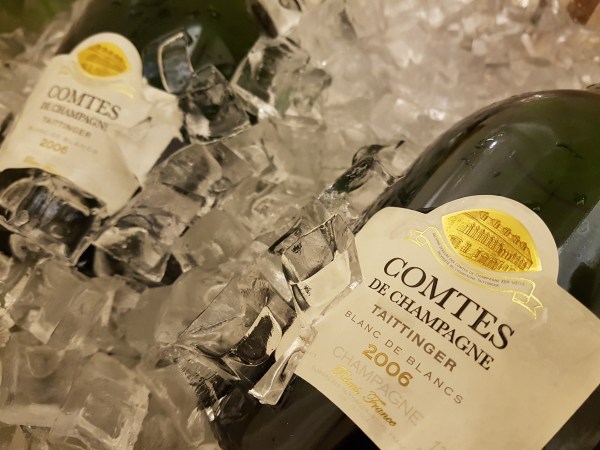
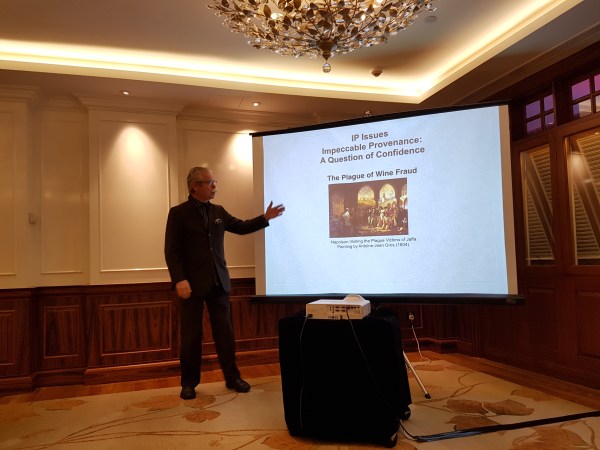
The renowned wine writer Eric Riewer, formerly Director of Wine at Gault & Millot, concluded his visit to Singapore with an insightful lecture on wine fraud at the Intercontinental Hotel, Singapore, on 23 Oct 2017. Emphasising that these confidence tricksters never served any bad wine even if they were fake, Eric proceeded to conduct a blinded tasting over dinner at the hotel’s renowned restaurant Man Fu Yuan, where the wines declared were three Burgundy Grand Cru whites (all from the same producer), four Pauillac reds and two Sauternes. We had to identify each vintage and, if possible, each wine itself. Before we began, we helped ourselves to a liberal flow of the 2006 Comtes de Champagne Taittinger Blanc de Blancs, rather shy on the nose, offering just faint traces of white flowers and crème, though there is a superb presence of crystalline minerals and clear crisp citrus on the palate with an after note of pomelo and bitter lemon, somewhat feminine in demeanour. An excellent start. The blinded wines were revealed only at the end of dinner, but I will detail each of them in the order served.
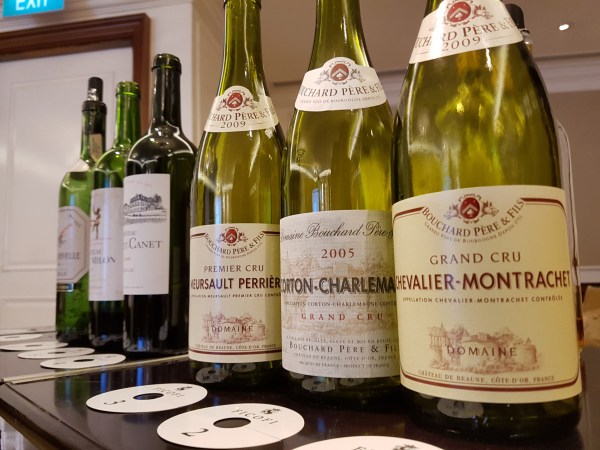
The first white displayed attractive floral aromas with superb creme de la crème on the nose that grew in exuberance over time, rather minerally on the palate but beautifully layered with great opulence and subtle acidity at the sides, producing some lovely intensity and superb mouthfeel though undoubtedly youthful, yet to develop secondary characteristics. Only a Puligny-Montrachet is capable of such sublimity in its youth and it must be Bouchard, judging from the general delicacy in color and feel. I guessed 2010 Bouchard Bâtard-Montrachet. Close, for it turned out to be the 2009 Domaine Bouchard Pere et Fils Chevalier-Montrachet Grand Cru.
The second white displayed a slightly heavier tint of color and hue, appropriately more evolved on the nose and sweeter with more floral characters, deeper as well on the palate where it was rather minerally, smooth and vibrant with plenty of verve but very well behaved, displaying excellent purity though its finish was a bit short. I thought it was a Chevalier but it was the 2005 Domaine Bouchard Pere et Fils Corton-Charlemagne Grand Cru and, in fact, some people got it correct.
The third white proffered highly enticing floral aromas, displaying great seamless integration between fruit and minerals, superbly balanced and harmonious, almost ethereal, bright and lively but poised with absolute control, still youthful. We took a vote whilst still blinded and almost everyone was unanimous in declaring this third white to have the greatest potential. Coming after the first two wines, this surely must be Montrachet itself, I thought. But no….a 2009 Domaine Bouchard Pere et Fils Meursault Les Perrières 1er!!! This was when Eric doubled up as wine fraudster. Remember they are, first and foremost, confidence tricksters? Having served up two genuine superb whites, no one would have doubted if the label on the third wine had read Montrachet Grand Cru and one could have easily unloaded cases of this. A real lesson learnt here and a real revelation.
From there, we moved on to the flight of Pauillac, the first of which was deep in colour with lifted aromas of dark currants and abundant dark berries and black fruits, open and rounded on the palate with good definition, developing more body with time, just a tad feminine in its suppleness with traces of green. I thought a 2000 Pichon Lalande, though it was a 2006 Ch Pontet Canet. Really very fine.
The second Pauillac showed some early evolution in colour, proffering dark plummy fruit on the nose with lifted tobacco notes and mushrooms, yielding excellent definition on the open palate with good intensity and presence though still seemingly youthful, on the verge of secondary development. I thought a 1996 Lynch Bages, but it was the 2005 Ch Clerc Milon, truly an estate that has emerged from the shadow of its godfather Mouton Rothschild.
The third Pauillac was clearly a much older wine, well evolved in colour with an attractive earthy pungency, open and utterly seamless with overtones of Chinese tea leaves, infinitely charming, almost feminine, just a tad short in its autumnal quality. Beautiful. A 1985 Mouton Rothschild? Well, it wasn’t even a Pauillac, but a 1966 Saint-Julien! This goes to prove the power of suggestion: once implanted in one’s mind, it can influence and distort one’s perception and even sense of logic without one even realising it.
The last red was also clearly well evolved with a trace of richness in colour, delicious with a bit of minty port-like character on the palate, finishing well with sweet melted tannins. Most intriguing. I was totally flummoxed. So was everyone. It turned out to be the same 1966 Saint-Julien adulterated with a dash of Quinta do Noval vintage port! Like an old man propped up with anabolic steroids. Again, this exercise serves to demonstrate how easy it is to make a fake wine and to gain the confidence of others. Another lesson learnt is really how good the so-called lesser estates can be especially in good vintages without busting the wallet.
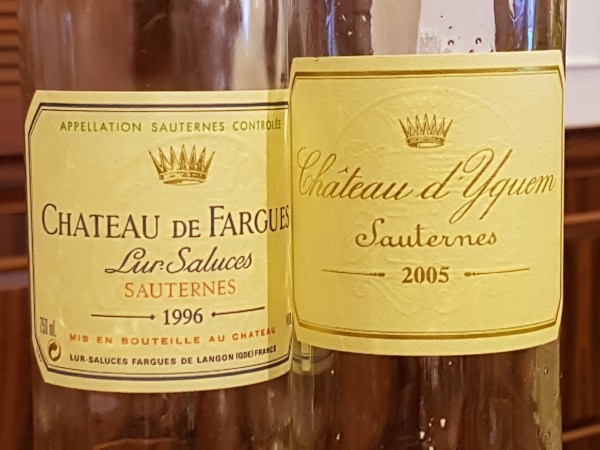
Finally, the Sauternes. The first yielded great concentration of nectarine, peaches and apricot, fabulous in intensity with superb acidity that combined to produce a stellar wine of great freshness, undoubtedly still primal. Definitely a d’Yquem…the 2005 Ch d’Yquem, no less. The last wine was deep golden, indicating significant bottle age, proffering luscious nectarine, honeysuckle and marmalade with a distinct aged quality, the fruit set somewhat backward though there was more complexity than the preceding d’Yquem. I had drunk too much that night to think properly. A Tokay? It was the 1996 Ch de Farques, an inexpensive Sauternes (but also made by Lur Saluces of d’Yquem at that time) that can easily pass off for something far more costly, proving that top quality lurks everywhere if only one knows where to look. This had been a most outstanding and educational evening. More of these please, FICOFI.
Dr and Mrs Wang Kuo Weng hosted yet another dinner again on 21 Oct 2017, this time at the beautifully anointed Dining Room of the Raffles Town Club Singapore. KW was keen to explore wines from vintages overshadowed by the great years of 2000 and 2005, which meant we’d drink between 2001-2004. Not really a cohesive theme, but who cares when there is good wine to be drunk and someone else is paying for dinner? Mrs Wang, as always, had gone the usual length to customise the dinner menu and I must say the food was truly excellent.
 We began with a pair of 2014 Domaine Chateau de Meursault Meursault Les Charmes-Dessus 1er to go with the generous platter of cold prawns, oysters, mussels and crayfish. Displaying a minerally tone with excellent concentration of clear citrus, this wine was a bit closed initially, though it opened up well over the course of dinner, turning more fleshy and creamier with good definition, developing a broad expanse of rich tropical fruits with fabulous intensity, its fine acidity adding immeasurably to the freshness without ever being too cutting.
The reds were drunk in two flights. The 2004 Ch Pichon Longueville Comtesse de Lalande took quite some time to open up, revealing delicious aromas of dense dark berries and currants, quite full on the palate with excellent ripeness of fruit tinged with traces of earth, undoubtedly feminine in character and proportion, finishing with tight svelte tannins but never jarring in any way. Quite a classic claret, as is the case with many of the Left Bank estates of that vintage. The 2003 Ch Bellevue Mondotte (courtesy of WKW and double decanted) was very ripe and pruny on the nose, betraying the excessive heat of that year where the Right Bank bore the brunt of it. The wine has already entered into secondary development on the palate, medium-bodied and supple, suitably expansive with some cedar, mint and a hint of licorice but, like most 2003s, it faded alarmingly towards the finish.
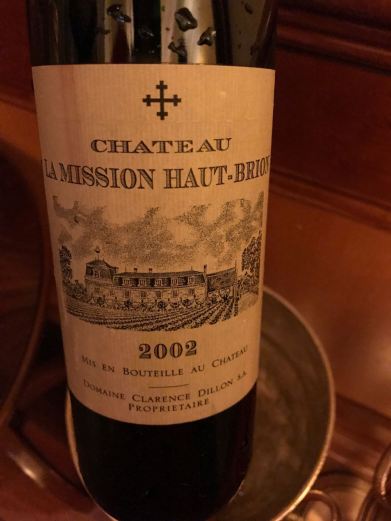
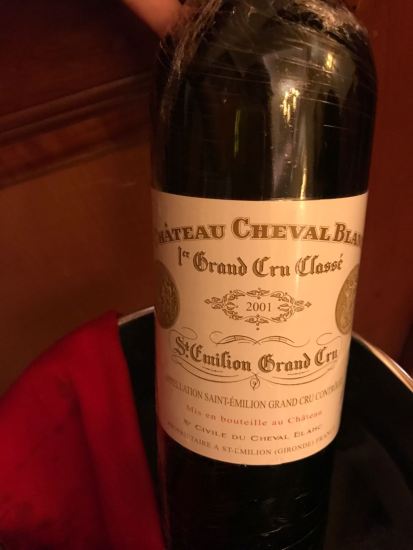 We began the second flight with the 2002 Ch La Mission Haut-Brion (courtesy of Hean Meng, double decanted as well). Initially closed with a mild bottle stink which, thankfully, blew off to reveal aromas of ripe dark berries, the wine medium-full, slightly monolithic with a rustic presence characteristic of this estate, finishing with violets and dark currants but missing in the opulence and layering of the best vintages in spite of its good concentration. The best, as usual, was saved for last, a 2001 Ch Cheval Blanc (courtesy of WKW, double decanted in advance) that was shy at first, just faintly delicious in spite of the deep purple that promised an abundance of fruit beneath though its attack on the palate was rather minerally with a lovely expanse, layered with ripe berries and dark cherries, poised with great elegance and finesse. A feminine beauty still in its adolescence that should blossom beautifully at its peak maturity another decade on, bringing the evening to a lovely conclusion. Many thanks again, Dr & Mrs Wang and to HM as well.
FICOFI: 2010 Leflaive Chevalier-Montrachet, 2007 Cristal, 2000 Palmer, 1995 d’Yquem, 2011 Pavillon Blanc du Margaux…
These are short notes from a very small impromptu tasting that was part of a lecture by renowned wine expert Eric Riewer, organised by FICOFI, at the Four Seasons, Singapore, on 22 Oct 2017. Directed at those already with a keen interest in wine, Eric, who has forty years of experience tasting and writing for Gault & Millot (of which he was Director of Wines) and Decanter magazines, took us through the technicalities of wine tasting and, more interestingly, how he rates wine. Whilst acknowledging that actual tasting notes matter more than scores, Eric favours the 20-point scale. We were made to taste a series of wines blinded and to rate them. I must say Eric and myself are pretty conservative in our scores, and I certainly preferred that approach rather than the outright exuberance that some wine writers tend to favour.
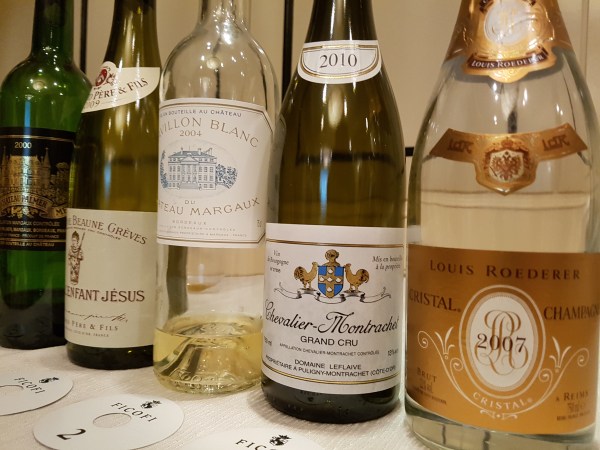
2007 Champagne Louis Roederer Cristal. Generous in clear citrus and fresh morning dew, producing a very clean feel on the palate with lovely fullness and excellent subtle acidity, turning more yeasty and minerally over time with overtones of pears and apricot, beautifully balanced and layered with good definition, tapering to a gentle minerally finish that is slightly steely, yet to produce tertiary characters. Excellent now, but needs further bottle age.
2010 Domaine Leflaive Chevalier-Montrachet Grand Cru. Shut initially, though it gradually opened up well with an effusive bouquet of sweet floral aromas and ripe citrus with traces of crème, very lovely on the palate as well with excellent layering, presence and acidity, its dryish minerally tone announcing, without doubt, its Puligny origin, exuding a mild intensity as it tapered to a long minerally finish. Yet to develop significant complexity. Excellent, but a waste to pop now.
2004 Pavillon Blanc du Margaux. Closed, just displaying faint traces of white flowers with a hint of sweetness, rather backward and reductive on the palate where further notes of icing, apricot and cinnamon are discernible amidst grainy textures, finishing on a long minty note of raw nutmeg. Regrettably uninvolving, though there were some who liked it.
2009 Domaine Bouchard Pere et Fils Beaune-Greves Vigne de L’enfant Jesus. Good colour. The bouquet is absolutely lovely, filled with an abundance of red cherries and rose petals, quite beguiling, more of the same with further notes of camphor on the palate supported by saline minerals, displaying great typicity and presence, very harmonious, finishing well but turning a little soft towards the end, lacking structure. Nevertheless, this is a very fine drop, almost profound.
2000 Château Palmer. Powerful glow of dark plums, ripe dark currants and black berries that literally leapt from the glass, complex and enticing, utterly seamless between its fleshy plush fruit, sublime acidity and superb velvety tannins, distinctly feminine though it needs more precision at the finish. I maintain that the 1999 Ch Palmer is still the better wine, layered with more character and detail.
1995 Château d’Yquem. Effusive aromas of nectarine and aged apricot shrouded within overtones of preserved tropical fruit, its acidity still fresh, producing lovely intensity and tension across the palate that left indelible impressions of marmalade and preserved orange skins. Probably at its peak and should hold.
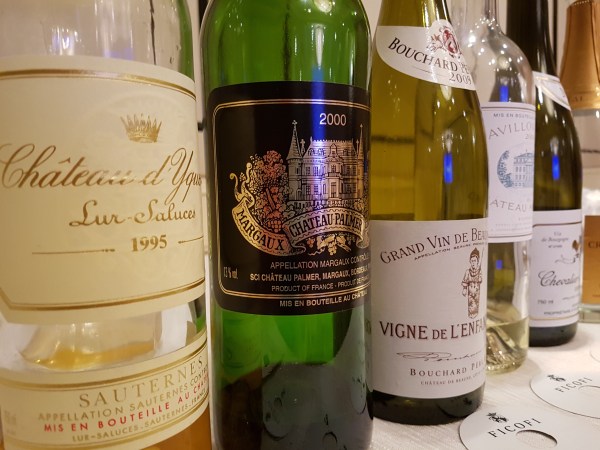
After the event, I joined Eric, Nicolas and CW for a late dinner over some comfort food at the ever-reliable Jade Palace, where we had more wine:
2006 Vieux Château Certan. Good color, open on the nose and palate with the distinctive Pomerol signature of soy-like elements and dense dark fruits that blend seamlessly with well-managed tannins and fine acidity, medium-full, yielding good definition, just a tad spicy towards the finish.
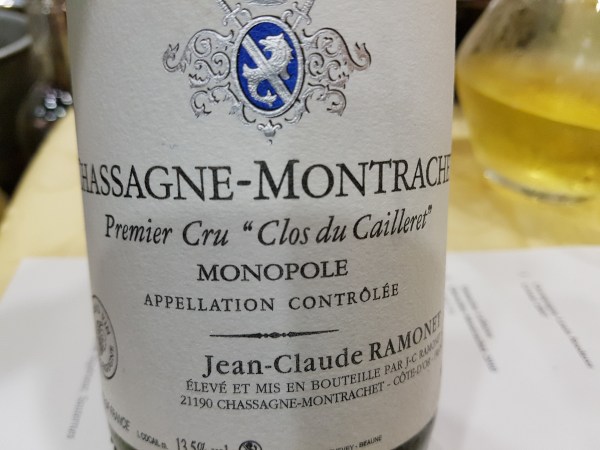
2014 Domaine Jean-Claude Ramonet Chassagne-Montrachet Clos des Cailleret 1er. Whereas this fabulous monopole used to be utterly sublime just earlier this year, it appears to have shut, proffering only faint citrus. Some icing, soft subtle fruit and minerals are present on the medium-bodied palate, suffused with excellent acidity but this wine appears to have retreated into its shell. If you have managed to obtain any, please let them rest for at least 8-10 years post vintage.
2011 Pavillon Blanc du Margaux. Lively with a great abundance of green fruits, showing good vibrancy and some early complexity with traces of vanilla still present, absolutely lovely in its striking freshness with further notes of green mint and cane sugar, building up inexorably in intensity towards a climatic burst of complex floral tones. Truly a revelation. Gorgeous!
2014 Weingut Egon Muller Scharzhofberger Spatlese. This producer never disappoints, proffering a glorious bouquet of diesel fumes, rich tropical fruits and complex minerals, superbly supple in its intensity of flavours with its fruit and minerals presented in great definition and wonderful depth. Outstanding.
FICOFI: Syrah vs Shiraz
FICOFI kept up its series of impromptu events in Singapore with a superb masterclass on Old World syrah pitted against Australian shiraz, conducted by Michael Hill Smith, M.W. who is no stranger to experienced oenophiles. Having attained his Master of Wine way back in 1988, he has gone on to helm his own winery – Shaw & Smith of the Adelaide Hills, South Australia – in addition to keeping busy with his countless classes and wine publications. Indeed, Michael charmed the small group at the Four Seasons Hotel, 13 October 2017, with his vast knowledge and hands-on experience with Rhone wines and Aussie shiraz, all delivered in his clear, authoritative yet affable and self-deprecating manner. FICOFI had laid on a generous vertical of various well-known Rhone producers while the shiraz flag was flown by three examples of Michael’s own wine, though it was all rather one-sided in favour of Old World syrah, hardly representative of the many different styles of Aussie shiraz. Nevertheless, there was already too much wine to go around and certainly nobody is complaining when there were generous refills of such great stuff, ensuring that we were all happily in La-La Land (literally!!) by the time we ended some two hours later.
As usual, we began with a champagne aperitif, the 2007 Delamotte Blanc de Blancs on this occasion displaying very good presence of clear citrus and lime with some chalk at the sides, very fine and delicate with good detail. A lovely start. The first flight of syrah came from the same producer, same hill and same vintage, offering us the opportunity to appreciate purely site differences. The famous house of Chapoutier is both negociant as well as winemaker, owning some 26 ha of Hermitage alone, all 100% biodynamically farmed and de-stemmed, favouring single varietals without any blending for their top labels. Derived from one of the very best plots at the top of Hermitage hill right next to the famous chapel, the 2011 Maison M Chapoutier Ermitage L’Ermite, showed a slightly evolved purple, exuding sweet dark cherries and raspberries on the nose, highly perfumed but imbued with more earthiness as well compared with the Le Pavillon below. Very rich on the palate with superb depth amidst a tinge of forest floor supported by firm earthy minerals and framed by very fine-grained tannins, fresh and bright, culminating in a long minty finish. Excellent.
In comparison, the 2011 Maison M Chapoutier Le Pavillon was brilliant purple, appreciably a bigger wine than the preceding L’Ermite, displaying superb depth of dark cherries and raspberries with a trace of lifted tangerines on the nose whilst a generous abundance of fruit is laid on the palate, more minerally and robust, tight with some brazen intensity and crisp acidity at the edges, filled with overtones of vanilla, medicinal traces and green elements that contribute towards a stern demeanour. Excellent and should surpass the L’Ermite in time to come though the latter is more approachable now.
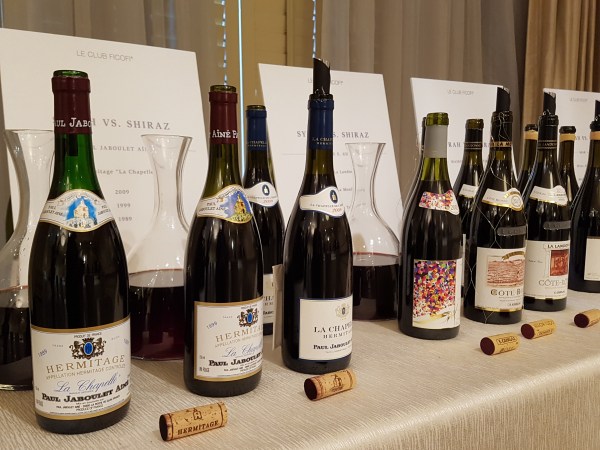
Next came a generous trio of Jaboulet’s Hermitage La Chapelle that spanned twenty years, spaced ten years apart. The 2009 Paul Aine Jaboulet Hermitage La Chapelle, coming from a very warm dry vintage, was essentially closed on the nose although some sweet dark fruits were discernible. On the palate, though, this wine was absolutely singing, imbued with bright red fruits of great freshness and purity with very lovely acidity, framed by supple chewy tannins, beautifully seamless though still primal, finishing with superb linearity. Excellent.
The 1999 Paul Aine Jaboulet Hermitage La Chapelle, hailing from a terrific vintage, has already undergone some evolution in color, offering earth, spice and cedar with some leathery notes amidst traces of port, quite full with raspberries and dark currants, rounded with fine subtle acidity and gentle tannins. Drinking well but yet to fully mature. To me, the 1989 Paul Aine Jaboulet Hermitage La Chapelle was the wine of the night. Still showing an impressive deep dark purple from a ripe vintage, this wine possesses a highly lifted bouquet filled with great tertiary character, open with superb presence and richness, exuding quiet complexity and power with further notes of mint, forest floor and earth, full of finesse and great subtlety. Truly beautiful.

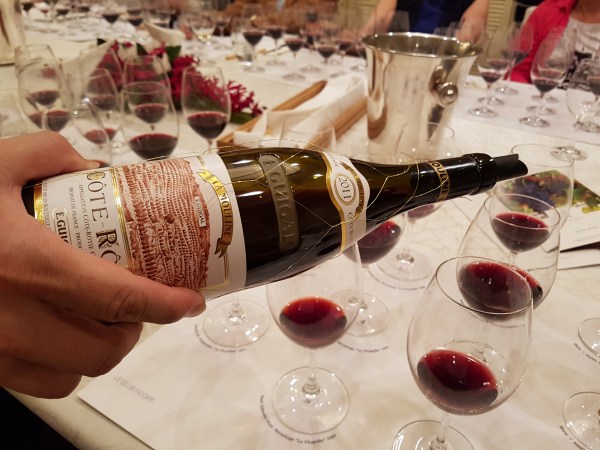
From there, we moved on to a flight of Cote-Rotie wines from Guigal, the famous so-called La-La series of single vineyard syrah. The 2011 Domaine E Guigal Cote-Rotie La Landonne appeared fabulously rich and dark with an impressive glossy sheen, full, masculine and primal, layered with an abundance of dark plums and dark currants that was beginning to open up with great acidity and linearity throughout its wonderful length. In contrast, the 2011 Domaine E Guigal Cote-Rotie La Mouline, coming from a single hectare of the Cote Blanc, proffered a generous swathe of sweet dark fruits with great velvety tannins, very smooth rich and sumptuous with plenty of toasty characters and gravelly earthiness, open and highly supple with excellent linearity. Truly a dark elegant beauty. It was a pity the 2003 Domaine E Guigal Cote-Rotie La Turque wasn’t of the same vintage but one must be grateful for any opportunity to taste any of these. Also displaying a dark glossy sheen, this wine is highly aromatic with a glorious tone of dark ripe berries and black currants with an exciting tangerine core, producing fabulous intensity and grip on the palate, still tight and still cloaked in some vanilla. Great stuff. While that was the order listed, Michael opined that he’d have preferred to taste the Guigal wines in reverse order, starting with the older vintage of La Turque, followed by La Mouline with its more elegant minerality, then the La Ladonne, supposedly the most robust due to its 100% syrah makeup.

We moved to a trio of South Australian shiraz for the final flight, all coming from Michael’s winery based at the Adelaide Hills, a cool climate region with an elevation of about 400 feet. The 2015 Shaw & Smith Shiraz Adelaide Hills was filled generous ripe dark fruits and dark berries with traces of rice wine and some earthiness, covering the palate with excellent fullness and integration, beautifully rounded and highly approachable in spite of its youth, not at all assertive, culminating in a long minty finish. In comparison, the 2009 Shaw & Smith Shiraz Adelaide Hills was similarly fulsome, recalling ripe dark plums with a lovely expanse of warm ripe fruit supported by a minerally floor with some attractive earthiness, the additional years in bottle conferring greater elegance, roundedness and superb integration. Truly a wine of great potential. And, finally, there was the 2014 Shaw & Smith Balhannah Vineyard Shiraz. Having lived in Adelaide for a year and visited the Adelaide Hills many times, I can tell you the Balhannah area is a lovely site, close to Bridgewater and the charming German village of Hanhdorf, en route to the Barossa Valley (if you are planning to enter via Lyndoch). This single vineyard shiraz offered a prominent note of malt and steamed rice on top of the generous presence of ripe dark berries, full but nicely rounded, its freshness, succulence and great acidity conjuring up a superb mouthfeel, finishing with a gentle trace of spice. The choice of these cool-climate shiraz, which are more elegant than the bolder examples of ripe and highly extracted warm Barossa shiraz, was certainly most apt as the northern Rhone syrah that we’d just gone through come from cooler climates as well. And, truth be told, if I’d been blinded, I certainly wouldn’t have known these were all Aussie shiraz, such was the quality and sheer sophistication on display here, bringing the educational evening to a most satisfying conclusion.

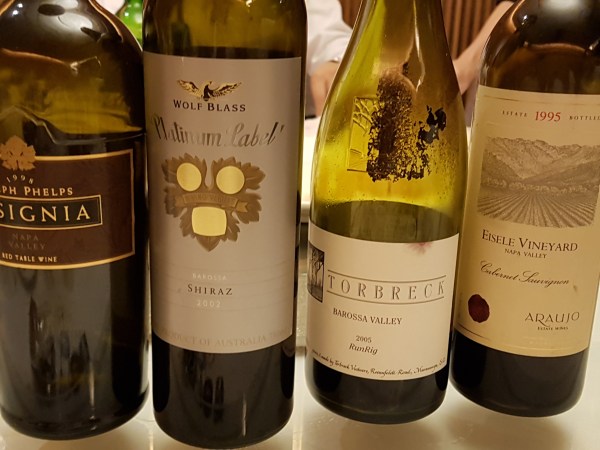
2010 Opus One, 1998 Joseph Phelps Insignia, 1995 Araujo Eisele, 2005 Torbreck RunRig, 1998 Three Rivers, 2013 Ao Yun
These are notes from an entire evening of New World wines at Yan, National Gallery Singapore, on 08 Aug 2017. Many of these are still youthful, fresh and big even after many years of bottle age.
2011 Champagne Marquet La Grande Ruelle. Not a New World, but who is complaining when such intense notes of ripe citrus and powerful yeasty tones seduce the senses with a rich presence of peaches, lime and clear citrus, attractively open and not too dry. Quite excellent.
2010 Opus One, courtesy of Miah Hiang. Deep purple, throwing off an intense bouquet of dark currants and blackberries, still expectedly tight with a dense body of fruit underscored by silky smooth detailed tannins, mellowing rather quickly in the glass to become more open and accessible but obviously still best to lay down for another decade or two.
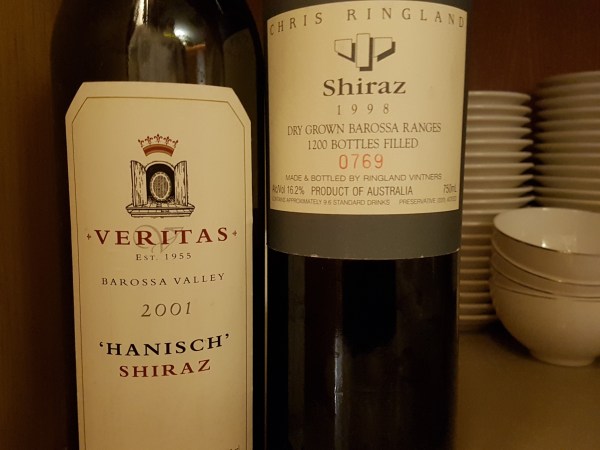
1998 Joseph Phelps Insignia, courtesy of Li Fern. Deep garnet red, throwing off some bottle stink followed by an attractive earthy pungency, rich in dark plums and dark berries on the palate supported by graphite minerals, very full, finishing with ferrous tones.
2012 Sea Smoke Sea Spray, courtesy of Li Fern. A Blancs de Noir, this wine displays a lovely hue with aromas of grapefruit and after burn with excellent depth of ash, ember and yeast on the palate amidst dryish textures.
1995 Araujo Eisele Vineyard, courtesy of Hsiang Sui. Deep dark inky red, this is a big wine possessing an abundance of black fruits, raspberries and red currants of immense depth with traces of enamel, still youthful, opening up well, glowing with great intensity of flavours that culminated in a lengthy finish. Simply quite phenomenal.
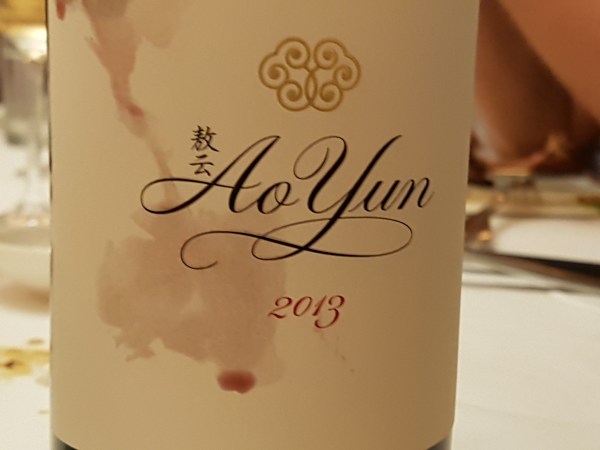
2013 Ao Yun, courtesy of Li Fern, tasted blind. Deep purple, this wine is generous in ripe dark berries that exuded sweet tannins with a tarry quality, rather firm, full and lengthy though without much structure. Still primal with quite a prominence of enamel from the new wood, slightly racy, finishing well with excellent linearity amidst splashes of spice. It reminded me somewhat of a Penfolds Bin 707. Turns out Ao Yun (flying above clouds) is a cabernet grown at very high altitudes of 2600 metres in Yunnan. That’s right…this is a made-in-China cabernet!! 2013 was its inaugural vintage. Highly promising.
2002 Wolff Blass Platinum, courtesy of Vic. Displaying a deep impenetrable red, this wine is stuffed with warm ripe Barossa fruit of great concentration, oozing with sweet dark tannins and overtones of enamel, still primal. Truly a wine of huge proportions, yet satiny smooth with excellent linearity, finishing on slightly spicy note. Still youthful.
 2005 Torbreck RunRig. Showing again an impenetrable crimson, this wine displays deep tones of licorice with a liberal splash of black pepper that imparted an immediate note of spice, framed by sweet bright tannins, its viognier component clearly discernible, positively glowing as it sat in the glass. Excellent.
2001 Veritas Hanisch, courtesy of Mr Young. Again a deep impenetrable red, this wine is still dark and primal, cloaked in spicy tones of menthol and vanilla, saturating the palate with rich ripe syrah that is barely open, decidedly stern at the finish. Looks like this will take many more years to turn the corner.
1998 Three Rivers Shiraz, courtesy of Hsiang Sui. From an outstanding vintage for South Australia, this wine is stuffed with a abundance of ripe shiraz that imparts sheer richness and opulence to match its stern graphite minerals, very full but well structured, turning slightly medicinal towards the finish. Glorious stuff.
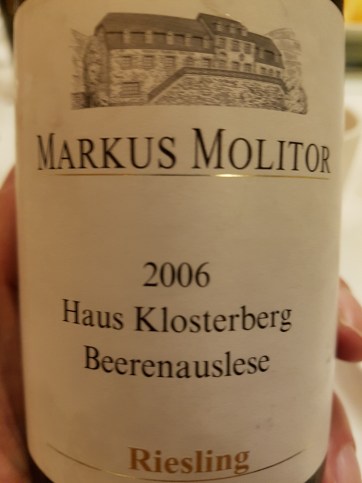
2006 Markus Molitor Haus Klosterberg Beerenauslese. Copious notes of paraffin, nectarine and apricot dominate on the open palate with controlled sweetness and intensity, developing a light floral complex over time with superb deftness. Excellent.
After a brief hiatus, FICOFI resumed its series of impromptu tastings in Singapore at the Four Seasons Hotel on 28 Sep 2017, featuring the wines of Champagne Henriot and a mini-vertical of a rarity from Domaine Leflaive. The history of Champagne Henriot may be traced back to 1640 when its ancestors settled in Champagne (having uprooted from Lorraine), starting first with wine brokering before producing its own champagne in 1808 after many years of quietly acquiring plots of vineyards. While not quite as big as some of the more commercialised and better known names from Reims, Champagne Henriot has holdings in several plots of premier cru and grand cru throughout the Côte des Blancs. The Brut Millésime is a blend of pinot noir and chardonnay, all from grand cru vineyards, while the Cuvée des Enchanteleurs, named after the old days when wine was still vinified in barrels stacked high on wooden beams, is an equal blend of pinot noir and chardonnay also exclusively from grand cru, but declared only in exceptional vintages.
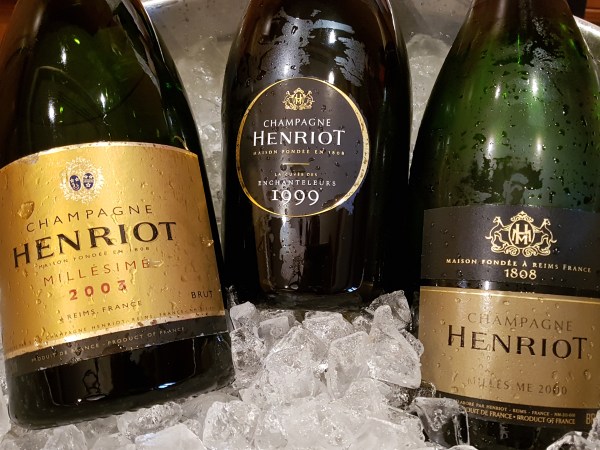
2000 Champagne Henriot Brut Millésime, poured from magnum. Displaying a lovely golden hue with a rich bouquet of enticing citrus and lime that was highly aromatic, quite open and expansive on the palate with notes of lovely toast with gentle nutty and yeasty characters laid on a great minerally floor, suitably complex, producing superb fullness and mouthfeel. Highly elegant. Excellent.
2003 Champagne Henriot Brut Millésime, poured from magnum. This wine is even more lifted, seducing the senses with a generous bouquet of delicate floral notes with lovely delicacy and detail that was missing from the 2000, distinctly more feminine and more perfumed, drier with more toasty characters and a tad yeasty, again supported by a fine minerally floor but marred by a finish that was almost non-existent, betraying the intense heat of that vintage. This wine is all about its bouquet. On the whole, the 2000 is still preferable.
1999 Champagne Henriot Cuvée des Enchanteleurs. Poured from magnum, this wine exudes a deep complex bouquet, highly alluring to its deep dark secrets, revealing fleeting richness of delicate lime and clear citrus on the palate with overtones of what seemed like rice wine, displaying good detail with a lovely feminine elegance, finishing with good linearity and length along with subtle acidity. A second bottle that was popped later in the evening seemed a tad fresher, though much more minerally as well. Still yet to peak, I’d say. Excellent.
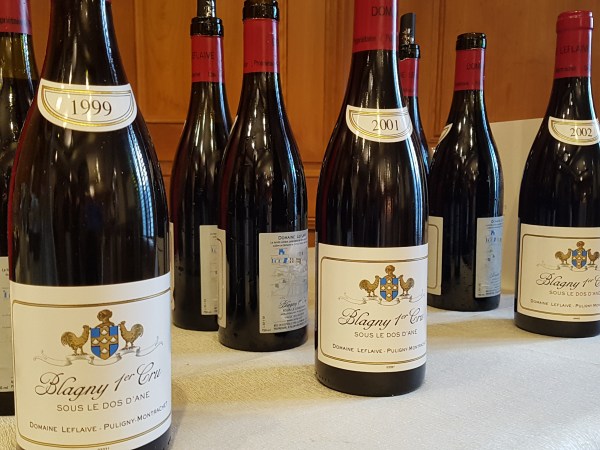
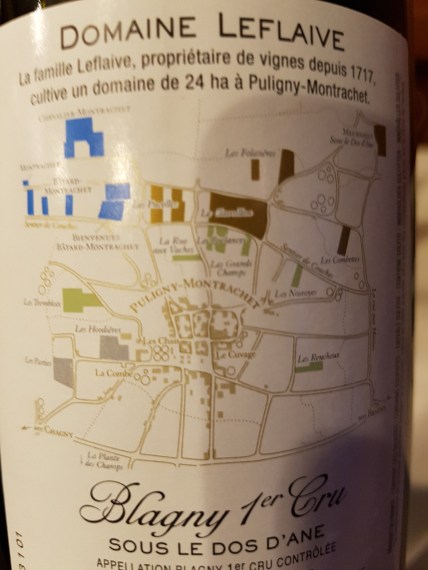 The whites of Domaine Leflaive need no introduction, but a red from Leflaive? Its Blagny 1er Sous Le Dos D’Ane is a rare pinot noir hailing from a plot within Puligny-Montrachet, now made even more rare by the fact that it had been completely uprooted after 2002 and re-planted with chardonnay instead. What prompted the decision is unclear to me but that’s right, the Blagny 1er Sous Le Dos D’Ane is now an extinct wine. We were really fortunate this evening to be able to taste a mini-vertical of this rarity because FICOFI had the foresight to buy up all existing holdings of the rouge from Domaine Leflaive. With the switch to chardonnay, French laws mandate that the wine is now called a Meursault 1er Sous Le Dos D’Ane, even though its terroir remains unchanged. How convenient.
2002 Domaine Leflaive Blagny 1er Sous Le Dos D’Ane. Delicious dark cherries and red fruits dominate on the rich bouquet with a hint of undergrowth, velvety on the palate with good concentration, fine acidity and saline minerals amidst prominent overtones of Asian spices, layered with lovely purity and good complexity, finishing on a long minty note. Truly a wine of power, structure and length. Excellent.
2001 Domaine Leflaive Blagny 1er Sous Le Dos D’Ane. Darker in tint than the 2002, this wine is quite remarkably perfumed with generous notes of aged red fruits, camphor and exotic spices along with dry mushrooms and some earthiness, rounded with very good presence and purity, well structured with crisp acidity and fine linearity though it seemed slightly unsettled at the finish.
1999 Domaine Leflaive Blagny 1er Sous Le Dos D’Ane. This celebrated vintage, now 18 years, possesses lovely color with a rich yeasty pungency, displaying wonderful depth and breadth though, curiously, it seems a little awkward on the back palate where stony minerals seem to cause a little bit of hardness, also a tad short.
2016 Clarendelle Blanc, at MEH Radiology’s quarterly function, 21 Sep 2017. Clean, fresh with faint grassy elements on the nose, essentially closed, though showing well on the palate where it is rounded with gentle minerality and understated acidity, nicely intense and linear but a bit short.
2016 Domaine Pierre Usseglio Chateauneuf-duPape, at MEH Radiology’s quarterly function, 21 Sep 2017. Gentle earthy tones with notes of morning dew, rather closed, imbued with a mild saline minerality but not much else.
2011 Coldstream Hills Reserve Chardonnay, at MEH Radiology’s quarterly function, 21 Sep 2017. Cool, clean and fresh with rich aromas of lime, lemon and clear citrus, glowing with gentle buttery characters, superbly layered with good detail, highly supple with a teasing quality that produced a most seductive mouthfeel, finishing with good length. Still youthful, definitely one for the long haul. Excellent.
2012 Jacques Boyd, at MEH Radiology’s quarterly function, 21 Sep 2017. This second label of Ch Boyd Cantenac is medium-full, rounded with good concentration of wild berries and dark cherries amidst earthy tones, cloaked in soft sweet tannins. Knows its place and doesn’t try too hard. Good table wine.
2013 Clarendelle Rouge, at MEH Radiology’s quarterly function, 21 Sep 2017. Closed on the nose, offering dark berries with a gentle softness that is awkward at best, not helped by a sudden mid-palate drop off.
Philipponnat Royale Reserve NV, over beehoon crab at Ming Kee Live Seafood, 23 Sep 2017. Generous tones of fresh lime and crisp citrus with stony minerals, dry at the finish with traces of bitter lemon.
1996 Domaine Paul Aine Jaboulet Domaine de Thalabert, after hours at Glen, 25 Sep 2017. Cracked from a sealed OWC of half-dozen. Highly evolved in colour, proffering notes of rhubarb and ripe aged plums with a fragrant exuberance of red fruits tinged with incense, clearly at full maturity on the palate but still commanding excellent presence with great acidity, highly supple, finishing with a slight minty trace. Very fine but I wouldn’t wait any longer.
Aug 2017: 2012 Drouhin Criots-Batard, 2001 Mount Mary Quintet, 1982 Penfolds Bin 820, 1990 Ormes de Pez, 1986 Cos D’Estournel…
2005 Chateau de Villars Fontaine, popped and poured over dimsum at Asia Grand, 06 Aug 2017. This Bourgogne Hautes Cotes de Nuits is still surprisingly tight with overtones of aged crème supported by a firm streak of stern flinty minerals and beeswax, notably deeper and more complex than before, opening up with further notes of preserved nutmeg. Quite attractive.
2007 Domaine Valentin Zusslin Pfingstberg Grand Cru, popped and poured at Song Garden, 07 Aug 2017. Effusive aromas of diesel and complex white flowers, quite dense, with a hint of nectarine, layered with gorgeous crème de la crème that added immeasurably to its supple intensity, finishing with stern ferrous minerals. Excellent, but still youthful.
1987 Jean Boillot Puligny-Montrachet Les Pulcelles 1er, popped and poured at Song Garden, 07 Aug 2017. Typical of Les Pulcelles, this wine is dominated by a strong minerally sheen that suggests paraffin, icing and beeswax with overtones of crème and white flowers, imbued with great concentration and vibrant intensity, just a tad stern at its minerally finish. Very fine.
2004 Ch Ducru Beaucaillou (courtesy of Hiok), double-decanted at Song Garden, 07 Aug 2017. This stalwart of Saint Julien is showing very well, exuding a very lovely earthy pungency with abundant depth of dark currants, raspberries and rose petals, well layered with glorious fruit, sublime acidity and high-toned minerals that produced great tension across the palate, fleshy and rounded, finishing with ferrous elements that lent a trace of austerity at the finish. Still far from peaking. Excellent.
1989 Ch De Fieuzal (courtesy of KP), tasted blind at Song Garden, 07 Aug 2017. Well evolved in tone and colour, this wine opened with a lovely rosy fragrance amidst some mild attractive earthy pungency. Soft, seamless and feminine, somewhat short, developing a spicy after note at the finish. I was spot-on in picking out the estate.
2012 Meulenhof Wehlenur Sonnenuhr Auslese (courtesy of Jonny), popped and poured at Song Garden, 07 Aug 2017. Lifted with generous notes of lime, clear citrus, tropical fruits, nectarine and melons, already wonderfully complex in spite of its youth, teasing the palate with supple detail. Excellent.
1982 Penfolds Cabernet Shiraz Bin 820, courtesy of Hsiang Sui at his residence, 09 Aug 2017. Dusty red, fully evolved with weak aromas of aged dark fruits and some licorice, medium-bodied, producing further notes of tangerines amidst its mild port-like demeanour, tapering to gentle minty finish. Past its prime.
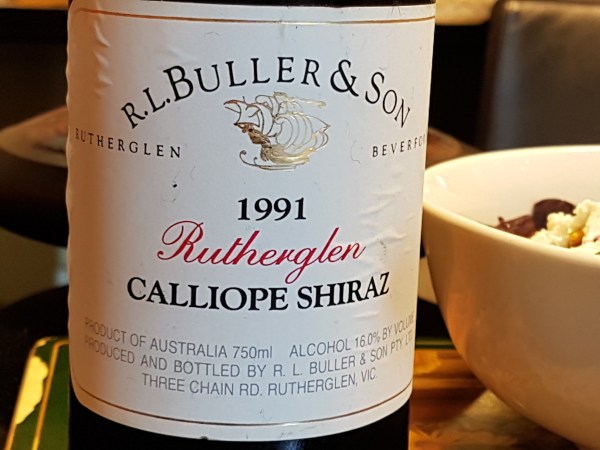
1991 RL Buller & Son Rutherglen Calliope Shiraz, courtesy of Hsiang Sui at his residence, 09 Aug 2017. Well evolved with mild characters of cedar and port, medium-bodied and open with good linearity and spicy tones though without much layering.
2014 Sea Smoke Southing Pinot Noir, courtesy of Hsiang Sui at his residence, 09 Aug 2017. Rather dark in tone, showcasing brilliant dark cherries with lovely intensity and vibrant acidity, yet gentle with some feminine character, well-integrated, just a tad short. Very fine.
1962 Marques de Murrieta Vinos de Rioja Ygay Etiqueta Blanca, courtesy of Hsiang Sui at his residence, 09 Aug 2017. There are distant aromas of misty red fruits in this wine largely dominated by stern medicinal herbal tones, dry and slightly spicy at the edges. Past its prime.
2004 Belle Epoque Perrier-Jouet, courtesy of LF at Glen, 11 Aug 2017. Attractive bouquet of toasty oak with some yeasty pungency, quite deft on the palate, displaying good definition with good presence of clear citrus supported by a lifted minerally spine, finishing well.
2013 Clos Mogador Nelin Priorat, courtesy of LF at Glen, 11 Aug 2017. White flowers with gentle rosy notes of red apples here, displaying good fullness and lovely acidity, finishing with dry gentle intensity. Very fine.
2011 Alejandro Fernandez Tinto Pesquera, courtesy of LF at Glen, 11 Aug 2017. Great lifted earthy pungency on the nose with a good expanse of rose petals, camphor and ripe cherries on the palate, slim in profile, well-structured with subdued tannins but short.
1982 La Rioja Alta S.A. Gran Riserva 904, courtesy of LF at Glen, 11 Aug 2017. Gentle open bouquet of red fruits and cedar that evoked a lovely feminine fragrance, highly supple, still retaining excellent concentration, acidity and length. Very fine.

1982 Faustina V Rioja, courtesy of LF at Glen, 11 Aug 2017. Good colour, exuding a gentle bouquet of cedar, cinnamon and other tertiary characters, displaying good presence with gentle sweetness and fine acidity, quite rounded and seamless but lacking in character.
2000 Malescot St Exupery, courtesy of LF at Glen, 11 Aug 2017. Great colour, open with a lovely lifted fragrance along with some very attractive earthy pungency that immediately suggests a wine of subtle intensity, seamless with very fine detail and excellent depth of glorious dark berries, rounded and fleshy, finishing with excellent linearity. Excellent.
1996 Krug, popped and poured at Chef Kang’s on 18 Aug 2017, courtesy of the newly-anointed one-Michelin start chef himself !! Very lovely bouquet, boasting deep a yeasty pungency with toast characters as well as honeysuckle that produced some lovely intensity, filled with a broad expanse of crème de la crème, rich citrus and clear crystalline minerality on the open palate with good complexity, just a little short. Excellent.
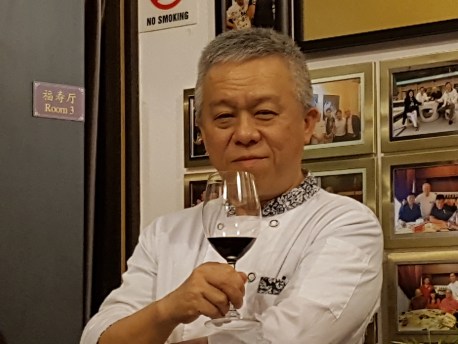 2012 Joseph Drouhin Criots-Batard-Montrachet Grand Cru, courtesy of Vic, popped and poured at Chef Kang’s, 18 Aug 2017. Closed on the nose at this stage, though almonds, white flowers, incense and paraffin tease the palate with sublime acidity, fleshing out beautifully with superb fullness after some time, developing a further dash of ferrous minerals that produced a stern trace, finishing with exotic spices. Excellent. Drunk way too young now, of course, but it is great knowing there is so much wonderful potential from this highly limited bottling.
2001 Mount Mary Quintet, courtesy of Hiok, popped and poured at Chef Kang’s, 18 Aug 2017. Delicious dark berries and dark currants fill the nose and palate, infused with an attractive minerally tone and some gentle earthiness, open, rounded and fleshy, just missing in real complexity which is somewhat unusual for a mature Mount Mary. Also a tad short at the finish. Nevertheless, I’m still a great fan of what is probably Australia’s best cabernet blend.
2007 Ch Ducru Beaucaillou, courtesy of Professor F, popped and poured at Chef Kang’s, 18 Aug 2017. Deep in colour. Open and rounded with good concentration, becoming more plummy and fuller over time with a hint of tea leaves amidst dryish textures and a hint of enamel that left an impression of feminine intensity, its lack of opulence and layering betraying the weak vintage.
1990 Ch Lagrange, popped and poured at Chef Kang’s, 18 Aug 2017. Deep purple. Surprisingly reticent on the nose, taking a long time to develop just a mild complexity, though the abundance of dark currants and ripe wild berries on the palate is apparent right from the outset, open and rounded, slightly dryish, displaying good presence with sweet subtle tannins but underwhelming, lacking opulence and charm, finishing short. I’d expected more, really.
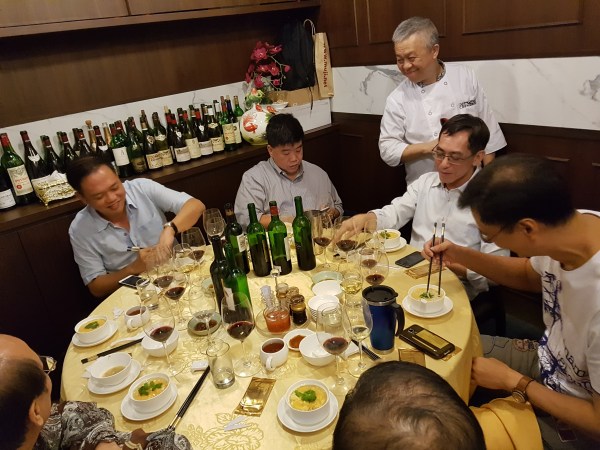
1990 Ch Les Ormes de Pez, courtesy of KP Hui, popped and poured at Chef Kang’s, 18 Aug 2017. Effusive lifted aromas of fresh dark cherries and dark fruits, well replicated on the palate with a smoky dry tarry quality, very lithe and supple, open and delicious with great presence and superb integration.
1989 Ch Brane Cantenac, courtesy of Jing Jih, popped and poured at Chef Kang’s, 18 Aug 2017. This wine exudes delicious cool ripe berries, gentle with open dryish textures and lovely presence, its feminine stance reinforced by silky tannins and subtle detail, very well integrated. Quite the epitome of a wine from Margaux commune.
1986 Ch Cos D’Estournel, courtesy of WCY, popped and poured at Chef Kang’s, 18 Aug 2017. Dark in colour and tone, still rich in dark berries and delicious black fruits at its core that produced some lovely intensity amidst textures of dry tea leaves, distinctly feminine now, still retaining excellent acidity, just a tad short. Excellent, by any standard.
2009 Rockford Black Shiraz, popped and poured at Chef Kang’s, 18 Aug 2017. Deep purple with lifted aromas of bold ripe Barossa fruit, layered with excellent presence and depth, displaying that characteristic liquored after-note that makes this sparkling shiraz so appealing. Excellent.
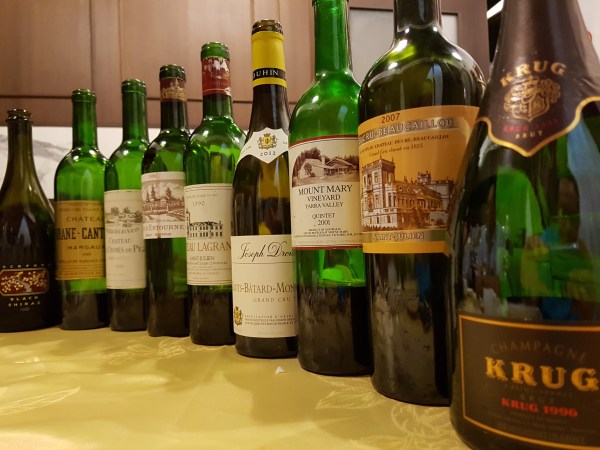
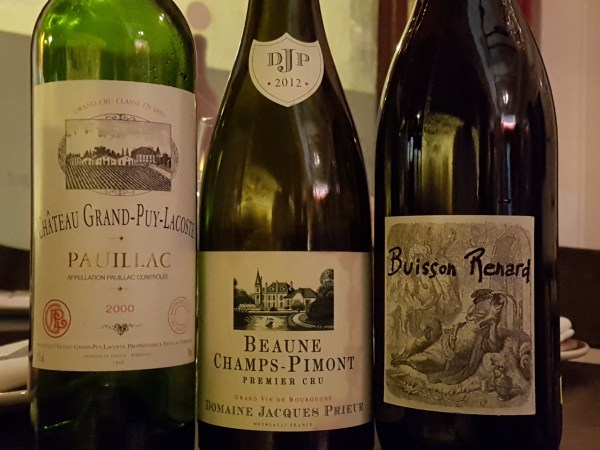
2012 Didier Dagaeneau Buisson Renard, from the list of Bistrot du Sommelier, Singapore, 22 Aug 2017. Closed with just the faintest hint of morning dew, developing more creamy tones over time before exploding with lovely complex of crisp white citrus and bright minerals with a generous sprinkling of bell pepper and gentle exotic spices, displaying excellent depth with great acidity and fine intensity, finishing with a minty glow. Excellent.
2012 Jacques Prieur Beaune Champs-Pimont 1er from the list of Bistrot du Sommelier, Singapore, 22 Aug 2017. Expectedly darker in tone from this source, this wine is generous in ripe dark berries, quite fleshy, eventually producing a wonderful plummy tone of great brilliance and intensity with superb acidity, finishing well. Great stuff!
2000 Ch Grand-Puy-Lacoste, decanted on-site at Bistrot du Sommelier, Singapore, 22 Aug 2017. Superb earthy pungency here, richly layered with evolving dark fruits and mocha, rounded and fleshy with a firm minerally tone amidst some cigar box dryness and gentle secondary nuances, slightly tarry, structured with supple svelte tannins. Still yet to peak. Excellent.
2009 Ch Bernadotte, popped and poured at Ka-Soh, 24 Aug 2017. Showing much better than a previous bottle tasted earlier this year, this wine carries good concentration of ripe dark berries, blackcurrants and cedar and some exotic spices, displaying good secondary development with some biting intensity towards the finish, well integrated, still showing traces of wood. A poor man’s Pichon Lalande.
2005 Carpineto Vino Nobile di Montepulciano Riserva, popped and poured at Otto Ristorante, 31 Aug 2017. Deep ruby red, exuding mild earthy tones with layers of dark and red fruits, toast, violets and blackcurrants with a graphite trace of unprecedented richness, structured with tightly knit sexy tannins, showing some secondary development. Beautifully ripe and delicious, caught at a most exciting phase. Excellent.
Short notes from Portugal
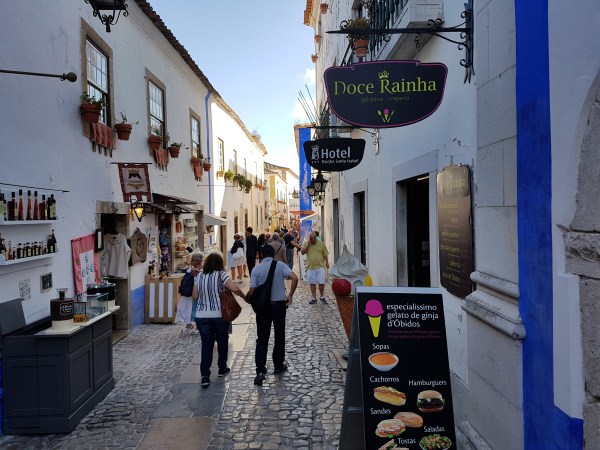
These are wines tasted during a visit to Lisbon, Portugal, between 10-15 Sep 2017. I must admit I was completely floored by the vast array of indigenous grape varietals produced by this country, and a lot of those that I’d tasted were really very good in quality: wines that displayed plenty of presence, layering and structure, replete with well-managed tannins.

- Image by theportuguesewine.com
These wines deserve a place on any table, made all the more appealing by the fact that they are so inexpensively priced, even on restaurant lists. A very good bottle can be had for less than €25. Not surprisingly, it is common to see at least one bottle of wine popped at each table at Lisbon’s vibrant dining scene. Wine has been documented to be made in Portugal since the 5th or 6th century B.C. and its appellation system (Denominação de Origem Controlada), at least for the Duoro region, was introduced some two hundred years before the French had their own. Paradoxically though, it is the sheer range of strange-sounding varietals (to a non-Portuguese speaker like myself), unfamiliar wine-growing regions and the lack of exposure to such produce outside of Portugal that makes Portuguese wines seem intimidating. The best wines come from the northern part of the country, regions such as Vinho Verde, Duoro and Dao, all protected under strict regulation by the D.O.C. The Portuguese don’t seem interested in marketing their wines overseas in a big way, which is great for the ordinary consumer as it avoids any price inflation. Do yourself a big favor by indulging in a holiday in Lisbon.
2015 Divai red, tasted on board TAP Portugal between London-Lisbon, 10 Sep 2017. Deep purple. Saturated with mocha, ripe dark fruit, blackberries amidst a hint of tangerines and dark plums. Quite full and forward, displaying good concentration and freshness, infused with subtle graphite elements that imparted a slightly stern demeanour at its finish. Very fine! I enjoyed it.
2016 Paulo Laureano Classico blanc, tasted on board TAP Portugal between Lisbon-London, 15 Sep 2017. From the southern region of Alentejo, made from grapes such as Antao Vaz, Roupeiro and Fernao Pires. 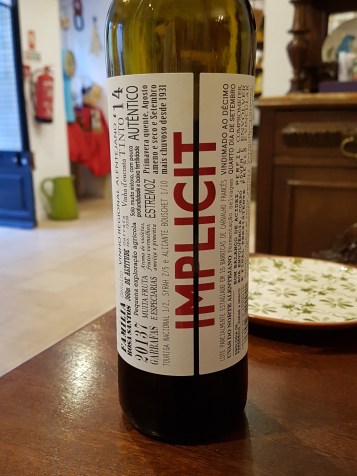 Medium-full, displaying good concentration of clear citrus supported by crisp crystalline minerality, imparting a very clean feel with excellent zest and freshness, finishing well with fine balance and acidity. Good stuff! TAP Portugal can certainly be very proud of its quality offerings.
2016 Familia Rosa Santos Implicit, popped and poured at Quermesse, Lisbon, 10 Sep 2017. From a blend of Touriga Nacional, Syrah and Alicante Bouschet sourced from Alentejo at more than 300 metres above sea-level, this is a junior label to this estate’s “Explicit” range, offering an abundance of ripe dark fruits and blackcurrants, full-bodied, supported by fine stony minerals with some earth and vegetal traces at its stern finish where the 14% alcohol is a tad prominent at this stage.
2015 Duas Quintas, tasted 11 Sep 2017. From the Duoro region. This excellent white displays delicate citrus, creme and chalk with further notes of white flowers and morning dew, excellent in concentration, its crystalline minerality imparting a mildly stern demeanour. Tight, zesty and bright, finishing with white pepper.
2001 Silval port., a half bottle tasted on 11 Sep 2017 after we’d finished the above white. 19.5%. Classic characters of port, nicely ripe and balanced with a long minty finish, not over extracted but neither profound in depth and layering.

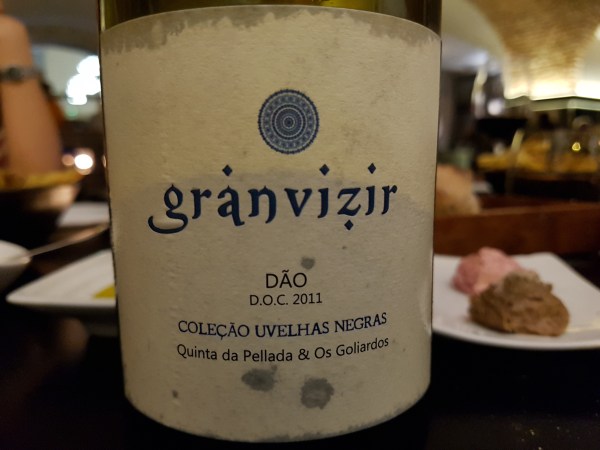
2011 Colecao Uvelhas Negras Granvizir, from the region of Dao, popped and poured at Rib, a meat joint at Lisbon, 12 Sep 2017. Raspberries, red fruits and blueberries dominate with fine concentration along with earthy tones, slightly forward but well-balanced with sweet gentle tannins, revealing good intensity and detail, becoming almost Burgundian after some time as it evolved towards a minerally finish. Very fine.
2015 Borges Quinta da Soalheira, over a seafood lunch at Nazare, 13 Sep 2017. Zesty with an abundance of white fruit and clear citrus supported by limestone minerals, producing crisp acidity with excellent fullness. Open, refreshing and broad, finishing with good length. Highly satisfying.

2016 Soalheiro Alvarinho. At Sea Me restaurant, Lisbon, 13 Sep 2017. Lovely floral aromas with just a hint of sweetness coming from the excellent concentration of tangy citrus and fresh green fruits, open with good detail and understated acidity, easy on the palate, finishing with a cool lingering trace of sweetness. This is so good that we drank two bottles amongst three of us.

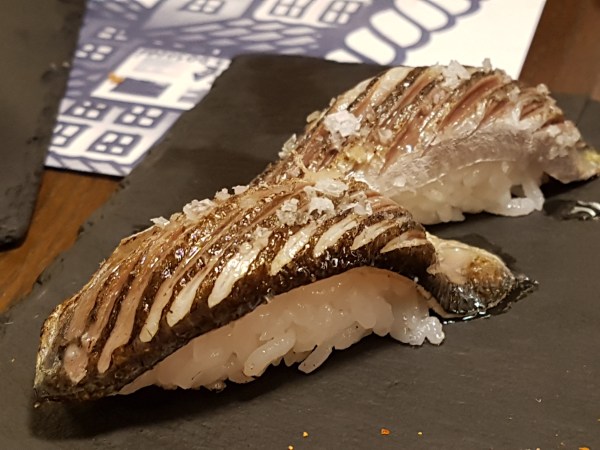
2016 Esporao Riserva Blanc, at La Tagliatella, Lisbon, 14 Sep 2017. Shut on the nose, though there is an abundance of chalky minerals and crisp citrus on the palate, well-delineated with fine acidity and a hint of paraffin.
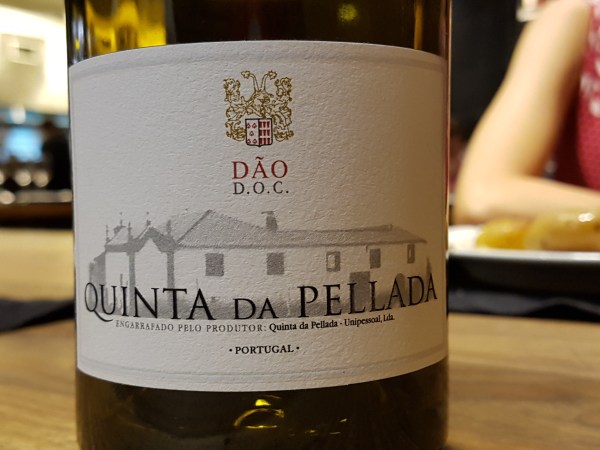
2012 Quinta da Pellada, from the region of Dao, popped and poured at Rubro Avenida, Lisbon, 14 Sep 2017. Red plums, ripe wild berries and earth dominate, rounded and fleshy with excellent acidity and fullness, lengthy with well-integrated tannins that are slightly sweet. Yet to develop. Very fine.
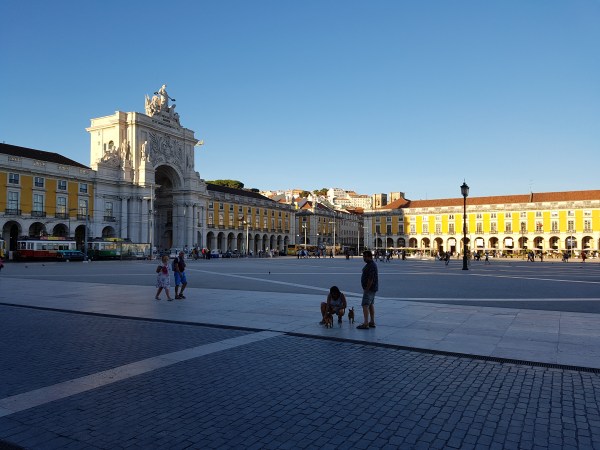
SQ Business Class September 2017
These are the wines served by Singapore Airlines Business Class for September 2017, tasted on board their flights between Singapore-Shanghai and Singapore-London, as well as some of its offerings at the SilverKris lounge at Changi Airport Terminal 3. Its latest refurbishment to Business Class seats in their Boeing 777-300ER and some of its Airbus A380 has been highly successful, and it is good to see SQ maintaining its top-notch in-flight service, food and entertainment.
2014 Kim Crawford Sauvignon Blanc, at the SilverKris lounge, 01 Sep 2017. Full bouquet of white floral aromas, pomelo and nutmeg, producing a most satisfying mouthfeel with attractive oily texture, creme and firm chalky minerals, complete with diesel overtones. I enjoyed it.
2013 Jean-Marc Brocade Chablis, at the SilverKris lounge, 01 Sep 2017. Aromas of white pepper, hot stones and chalk. Medium-bodied and rounded, infused with strong saline minerals with good acidity. Quite fine.
Charles Heidsieck Brut Reserve NV, tasted on board. Deep nutty aromas with lovely yeasty tones along with some earthy pungency, displaying very good concentration and fullness with a forward balance of lime, yellow citrus and traces of bitter lemon, replete with crisp acidity and subtle chalky minerals. Very fine.
2015 Weinhaus Ress Kabinett Riesling, tasted on board. Closed on the nose with just a hint of petroleum, though it is refreshingly cool on the palate with a broad spectrum of tropical fruits and apricot with plenty of verve, depth and acidity.
2013 Joseph Drouhin Rully Blanc, tasted on board. This wine offers a creamy bouquet with complex floral aromas, rather minerally on the palate with good concentration and depth, well-integrated, finishing with defined chalkiness throughout its length. Quite fine.
2016 Wairau River Sauvignon Blanc, tasted on board. Classic characters of dried citrus, grassy elements and nutmeg amidst a herbal trace that some folks would say “sweaty armpit”, dry with a forward balance, displaying great intensity of flavours with plenty of vigour. Good stuff.
2016 Mud House Sauvignon Blanc, tasted on board. Compared with the Wairau River above, this came across as being rather flat, more subtle in its aromas of sweet white flowers, rounded and feminine but lacking zest and character.
2014 Stonier Pinot Noir, tasted on board. Dark cherries and raspberries dominate on the nose, displaying good ripeness with a tinge of forest floor, forward in balance, turning slightly plummy over time but short.
2012 Ch Siaurac, tasted on board. Predominantly woody on the nose with some earthy pungency whilst dark currants and wild berries dominate on the full palate with a mild delicious fragrance. Quite fine and certainly serviceable. From Lalande-de-Pomerol.
2013 Marchesi di Frescobaldi Castello di Nipozzano ‘Nipozzano’ Chianti Rafina Riserva, tasted on board. The nose is marked by earthy tones along with notes of undergrowth and forest floor, medium-bodied with an abundance of red fruits and dark plums that offered good complexity and lift with subtle acidity, finishing with a ferrous trace.
 Ric's Wine Journal