FICOFI: Domaine Faiveley
Domaine Faiveley is a major negociant-cum-producer with a vast portfolio. That Georges Faiveley (4th generation owner of Faiveley) was a co-founder of the Confrérie des Chevaliers du Tastevin demonstrates amply the importance of Faiveley in the history of Burgundy over the last couple of centuries. Established in 1825 and still family owned, now with massive holdings of 120 ha, it is simply not quite possible for anyone with some interest in wine not to have tasted Faiveley before. Wine produced entirely from vines under its direct holdings are labelled under the Domaine, while wine produced from grapes bought from growers come under Joseph Faiveley. Now helmed by its seventh generation owner M. Erwan Faiveley since 2007, this estate has gone from strength to strength, having added the great whites of the Cote de Beaune to the domaine’s portfolio since 2008: Bâtard-Montrachet Grand Cru, Bienvenues-Bâtard-Montrachet Grand Cru and Puligny-Montrachet La Garenne 1er.
It was good, once again, to meet up with Erwan at this FICOFI event held at Golden Peony, Conrad Centennial Singapore, 13 May 2016, where Erwan still remembered about our visit to his cellars last September. Quality at Faiveley has improved over the years through strict pruning of the vines, hand sorting of grapes at harvest and prolonged vatting times. Whereas previously the wines of Faiveley, in my opinion, tended to be somewhat backward, I have noticed that Faiveley now seems to understand the different individual pieces of terroir better and the wines now do reflect very well their origin with no lack of vibrancy and vigour.
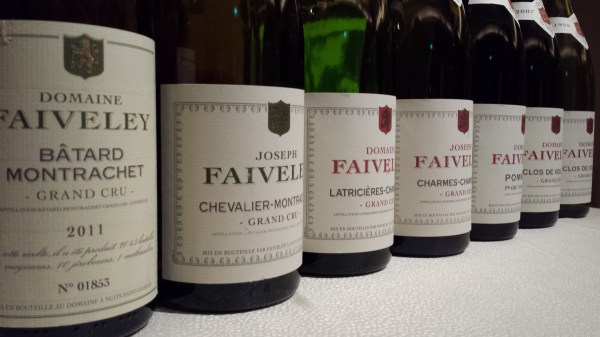
2014 Joseph Faiveley Puligny-Montrachet Champ Gain 1er. Dry with an attractive earthy pungency, slightly grassy, rounded and satiny smooth with a hint of peaches. Very agreeable.
2014 Joseph Faiveley Chassagne-Montrachet Morgeot 1er. Exuberant and highly aromatic, of melons and white roses, quite racy and exciting, excellent in supple intensity, matched by chalky minerals, ending in a persistent finish marked by exotic tropical fruits. Excellent.
2014 Domaine Faiveley Bâtard-Montrachet Grand Cru. Gentle aromas of morning dew sprinkled on white flowers, gleaming with glorious creme de la crème, medium-bodied, already quite open and minerally, very well-proportioned and balanced, slightly stern a the finish. Structured and poised. Not as outwardly muscular, unlike the Batard of Joseph Drouhin, but very correct, nonetheless. A wine of great nuance and promise. Excellent.
2014 Domaine Faiveley Gevrey-Chambertin Les Cazetiers 1er. Great color and intensity with an abundance of red and dark cherries, rounded with plenty of presence, excellent acidity and linearity. Bold and crisp at the moment but likely to develop excellent complexity over time. Excellent potential.
 2014 Domaine Faiveley Mazis-Chambertin Grand Cru. Deep ruby with extended notes of cherries and mulberries and traces of ash. Structured and firm with lovely intensity and tension from the fine acidity, long and minty at the finish. Excellent.
2014 Domaine Faiveley Chambertin-Clos de Beze Grand Cru. Great bouquet of dark cherries, raspberries and camphor, slightly darker in tone. Surprisingly open on the palate, the fruit set a bit backwards to favour a more minerally balance, very well proportioned and somewhat understated. Doesn’t call attention to itself. Needs time to flesh out. Excellent potential.
2014 Domaine Faiveley Clos Vougeot Grand Cru. Quite an intense bouquet of raspberries and dark cherries, smooth, rounded and ripe with a tinge of sugar burnt that doesn’t disguise the fact that this wine lacks dimension and layering, consistent with Clos Vougeot in general.
2014 Domaine Faiveley Corton Clos des Corton Faiveley Grand Cru. One of only nine grand cru monopoles in Burgundy. This wine possesses great layering and intensity, medium-full and already quite open with bright fruits supported by a rich vein of dark currants, rounded and well-balanced, never overwhelming. Far richer and more sumptuous than Corton in general without any vegetal trace. Consistent with a previous tasting from barrel last September in Faiveley’s cellars.
2011 Domaine Faiveley Bâtard-Montrachet Grand Cru. Rather restraint on the nose but the complexity is unmistakable, displaying an abundance of coconut, fig, white flowers and supported by chalky minerality with traces of icing. Excellent in definition, layering and balance. Quite full but not showy. Excellent, but I think the 2014 will surpass this in time to come.
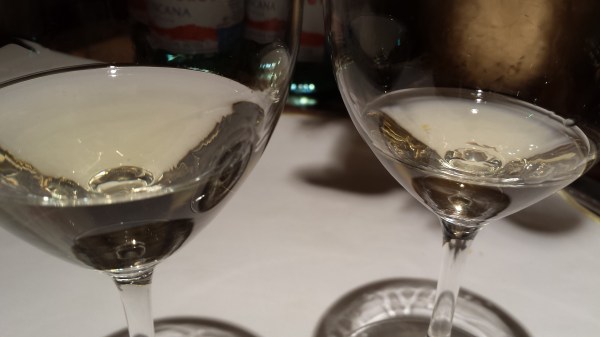
2011 (left) and 2014 Joseph Faiveley Batard-Montrachet Grand Cru
2011 Joseph Faiveley Chevalier-Montrachet Grand Cru. Superb bouquet here. Beautifully aromatic, deeply intense and highly captivating, matched by notes of white chocolate, varnish, coconut, fig and full creme de la creme with understated minerality and cutting acidity that creates a fine tension across the palate, medium to full-bodied, fabulous in intensity and concentration though yet to develop further complexity. This is a confident and luscious beauty, a wine that’s truly singing. Outstanding.
2010 Domaine Faiveley Latriceres-Chambertin Grand Cru. Clear ruby, displaying intense dark cherries, raspberries and some smoke, opening up on the mid-palate where it is layered but lacking in structure and detail.
2010 Domaine Faiveley Charmes-Chambertin Grand Cru. Feminine, as expected from this growth. Pleasant and solid with a forward balance of raspberries and mulberries as if to make up for the lack of layering and complexity.

M. Erwan Faiveley (standing, fourth from right)
2007 Joseph Faiveley Pommard Les Rugiens 1er. Darker in tone and colour with dark cherries and raspberries of great intensity, matched by firm acidity and lovely tension on the palate. Robust but unevolved.
2007 Domaine Faiveley Clos Vougeot Grand Cru. Cool ripe fruit, distinctly autumnal, with good harmony and linearity but lacking in distinction.
1995 Domaine Faiveley Clos Vougeot Grand Cru. Perhaps it is the vintage but this is a much better Clos Vougeot. Deeper with excellent fruit at just the right degree of ripeness, still fresh, open and layered with far greater complexity and detail, finishing on a minty note. Still youthful.
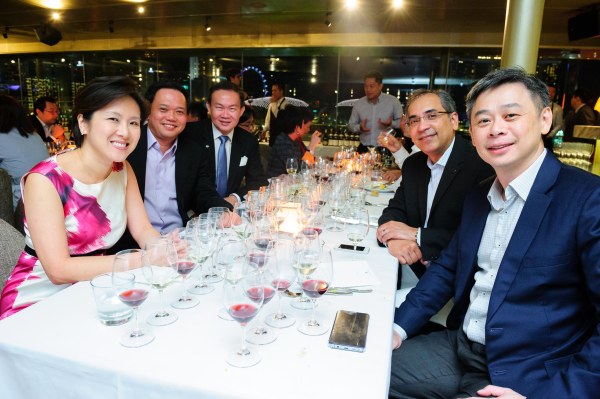
Many will not admit to this, but the fact is most oenophiles in love with Burgundy tend to view negociant-growers with some condescension, claiming that the range of wines offered are usually far too extensive and that it is not possible, under such circumstances, to fully understand each terroir, resulting in a tendency to regress towards a “house” style that robs the wines of individuality and identity, qualities that define Burgundy above all else. And, of course, there is that romantic underdog notion of small independent domaines struggling to survive against the big boys that appeal so much to oenophiles, as is the scarcity of highly-coveted wines made by these indies. These assertions may well be true to quite an extent, but to generalise every negociant-grower likewise is to miss out on some absolute gems that embody the glory of Burgundy. This was amply shown up at a promenade and dinner of Domaine Bouchard Père et Fils and Domaine Joseph Drouhin, both of which I have had the good fortune to visit in Beaune last autumn and it was good, once again, to meet up with M. Jean-Paul Dumond, Sales Director of Joseph Drouhin, as well as M. Luc Bouchard, both of whom were in attendance at this FICOFI event on 04 April 2016, held at Aura at the top of the fabulous new National Gallery, Singapore.
Bouchard Père et Fils was established in 1731 and, through gradual acquisitions, it has become the largest domaine in the Côte d’Or, boasting a grand total of 130 ha of vines, 12 of which are grand cru and 74 premier cru, and its ownership of Montrachet Grand Cru can be traced back to 1838. The wines are transferred by gravity and vinified at a state-of-the-art facility at Savigny-lès-Beaune. A visit to Bouchard’s massive cellars of Château de Beaune is definitely a must, where a bottle of 1846 Meursault Charmes is still lying there. Comparatively younger, Domaine Joseph Drouhin, founded in 1880, has 73 ha of vines, two-thirds of which are grand cru and premier cru, favouring higher density plantings with low yields. Throughout the tasting, I was consistently impressed by the structure, complexity and balance of Joseph Drouhin, how “correct” they all seemed to come across on the palate, and by the delicacy and complexity of the whites of Bouchard Pere et Fils that are certainly on par with, if not better than, other benchmark producers.
2000 Champagne Henriot Millésime. Attractive earthy pungency and toasty oak on the nose with complex citrus, green melons and fine acidity on the palate, slightly short at the dry finish.
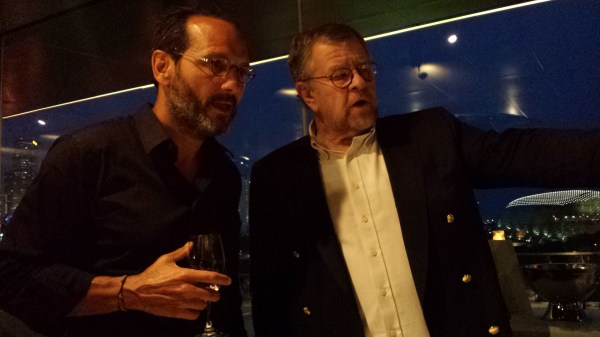
2011 Domaine Joseph Drouhin Charmes-Chambertin Grand Cru. Roses and red fruits dominate amidst some earthy minerality with an attractive pungency. Soft and rounded with good concentration and acidity but lacking in structure, imparting a feminine impression, aided by further notes of camphor and ash.
2011 Domaine Joseph Drouhin Clos de la Roche Grand Cru. Darker in tone and weight with a lovely satiny texture imparted by an abundance of dark roses and raspberries of subtle intensity, medium-bodied, rounded and very well balanced.
2011 Domaine Joseph Drouhin Clos Saint-Denis Grand Cru. Highly aromatic, dominated by a rich complex of violets, dark currants and dark cherries of excellent intensity. Structured and masculine. Almost lush.

2011 Domaine Joseph Drouhin Bonnes-Mares Grand Cru. Highly lifted aromas of dark cherries, raspberries, violets and mulberries enhanced by a beautiful earthy pungency with plenty of fat on the mid-palate. Voluptuous with a lovely balance, structured by velvety tannins and fine acidity, finishing with great persistence. A complete wine.
2011 Domaine Joseph Drouhin Musigny Grand Cru. Whereas the Bonnes-Mares may be a tad showy, this pinnacle of Chambolle is a study in absolute balance where the classical beauty seduces with the perfumed fragrance of incense and camphor from the rich complex of dark roses and ripe dark cherries, yet maddeningly poised with a quiet elegance, almost aloof, glowing with subtle intensity. Beautiful.
2011 Domaine Joseph Drouhin Chambertin-Clos de Beze Grand Cru. Generous in rosy characters, a wine of great exuberance and flamboyance and highly refined as well through velvety tannins, oily textures and very fine acidity, offering plenty of structure, suppleness and presence. Fat, succulent and persistent. Excellent.
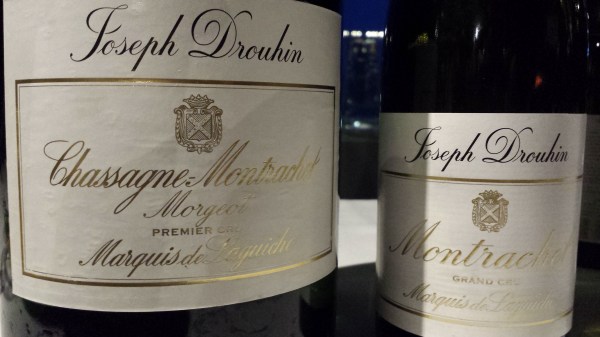
2013 Domaine Joseph Drouhin Marquis de Laguiche Montrachet Grand Cru. Lying firmly on the Puligny side of Montrachet (ie. more northerly), this flagship white is blessed with generous lifted aromas of white flowers, pines and peaches with a faint suggestion of sweetness that hinted at delicacy and harmony, matched by a gleaming tone of gorgeous minerality, incense, supple creme de la creme and understated acidity, open and almost ethereal with great purity and precision, finishing with excellent mouthfeel. Wonderful.
2012 Domaine Joseph Drouhin Chassagne-Montrachet Morgeot Marquis de Laguiche 1er, served from double magnum. Highly aromatic, recalling exotic fruits, pineapples, white flowers and other tropical fruits, displaying good balance though slightly more fruit-forward for a Chassagne. Rather placid on the palate with subdued acidity, lacking the last ounce of divinity that would elevate it into grand cru.
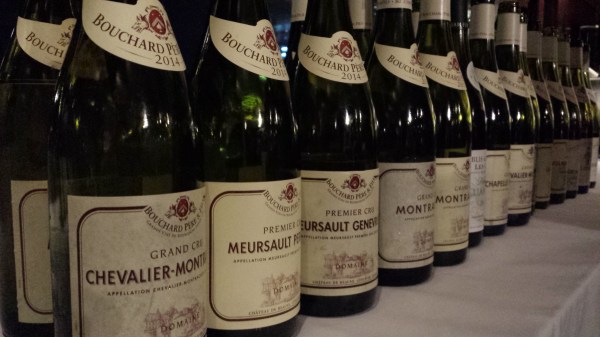
2011 Domaine Bouchard Père et Fils Corton-Charlemagne Grand Cru. Complex, perfumed bouquet of fig, white flowers and seared caramel. Harmonious and beautifully balanced but tight with traces of tropical fruits at the finish, just a tad short.
2011 Domaine Bouchard Père et Fils Montrachet Grand Cru. Highly lifted floral complex on the nose, matched by excellent concentration of gentle pomelo, clear citrus and minerals that exuded lightness and real delicacy with a lovely feminine balance and proportion, still tightly-knit with a bit of sternness that enhanced the complexity. Although Bouchard’s 0.89 ha of Montrachet lies on the Puligny side, it is actually bordering on the Chassagne side of this hallowed plot, and this is very well reflected by the wine’s minerally balance. Consistent with my memories of a similar bottle tasted within the domaine’s cellars last year. Superb.
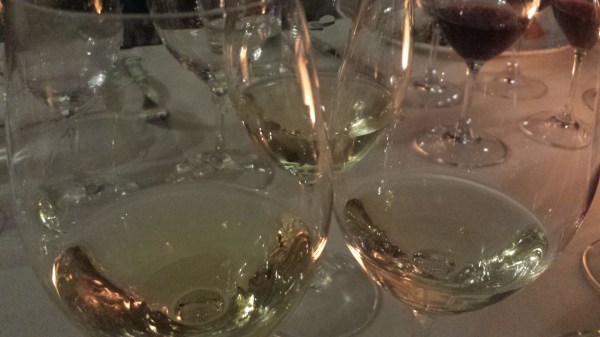
Side-by-side: 2011 & 2014 Bouchard Pere et Fils Montrachet Grand Cru
1976 Bouchard Père et Fils Le Corton Grand Cru, poured from magnum. Displaying a dusky red with a mild medicinal glow of licorice and raisins on the nose, this wine is still amazingly alive with notes of dried mushrooms, ash and prunes with a trace of sweetness, not at all heavy.
2009 Domaine Bouchard Père et Fils Beaune Greve Vignes de L’Enfant Jesus 1er. A monopole of Bouchard named after Maugerite du Saint Sacrement who predicted the birth of King Louis XIV even though his mother, Anne of Austria, was supposedly sterile. Somewhat reticent and backward, medium-full, marked by vanillin oak with a spicy edge. Not distinctive.
2014 Domaine Bouchard Père et Fils Montrachet Grand Cru. Grassy tone with an overlay of morning dew. Again, there is something inherently feminine about Bouchard’s Montrachet, an expansive floral beauty, full-bodied yet highly enticing with great acidity and a wonderful sense of lightness from the open minerality and delicate intensity, unceasingly teasing, drawing one in sip after sip. Superb and, with time, may surpass the 2011.

With M. Luc Bouchard
2014 Domaine Bouchard Père et Fils Corton-Charlemagne Grand Cru. Lovely aromas of white flowers and grassy elements dominate on the nose, leading to a rich, exuberant full-bodied wine, laced with acidity and delicate minerals. A Corton-Charlemagne to match the best of Bonneau du Martray. Excellent.
2014 Domaine Bouchard Père et Fils Chevalier-Montrachet Grand Cru. Lovely bouquet of white pepper, mild grassy elements and white flowers with fabulous concentration and great acidity, very fresh and vibrant. Supple, focused and detailed. Almost on par with Montrachet. Outstanding.
2014 Domaine Bouchard Père et Fils Meursault Les Genevrières 1er. Lifted with top-notch crème de la crème. Well-proportioned, rich, yet delicate with understated chalkiness. Highly attractive.
2014 Bouchard Père et Fils Chapelle-Chambertin Grand Cru. Nose of earthy red fruits with tangerines. Medium-full, crisp, racy and exciting on the palate, slightly forward in fruit balance but a tad short in structure and finish.
1967 Vega Sicilia Unico
A unique opportunity arose to taste some very old Spanish wines, in particular the tantalising prospect of a 1967 Vega Sicilia Unico, on 19 April 2016, courtesy of Kenny. I suppose “old” for this venerated estate is somewhat relative, considering that every new release of Vega Sicilia Unico has already seen ten years of bottle age, and Vega Sicilia Unico is truly renowned for its aging ability. Memories of a 1942 Vega Sicilia Unico tasted almost ten years ago are still fresh in my mind, the wine still unbelievably vibrant, fleshy and delicious. As a prelude, we began with a 1970 Bodegas Riojanas Vina Albina Gran Riserva (courtesy of Hiok) as an aperitif, sporting a dirty faded tone of red but highly aromatic, recalling red roses, peaches and camphor with traces of varnish that seems to accompany all these old wines, still retaining good acidity with further notes of kumquat and tangerines but the fruit was clearly drying out, inevitably short, turning slightly angular an hour later.
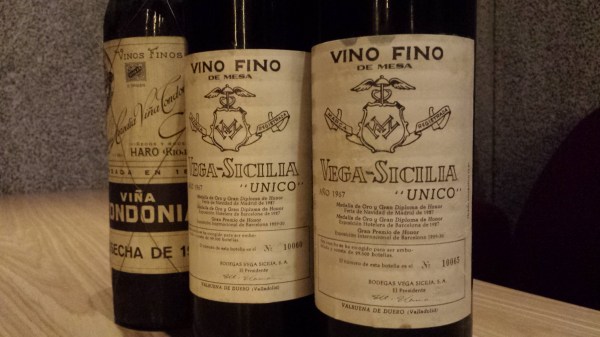
We moved to Otto Ristorante to begin the tasting proper, starting with a 1947 R Lopez de Heredia that was paired with the restaurant’s signature dish of foie gras and wagyu beef tagliatelle. This Rioja displayed a dense port-like character on the nose with notes of choco peppermint and some medicinal traces, weighty but alive, full-bodied and balanced, still retaining excellent acidity that imparted a certain tension and a hint of astringency, turning rather pruny and savoury towards the end of dinner. While this wine still has the legs to carry on for some time, it is clearly past its drinking peak.
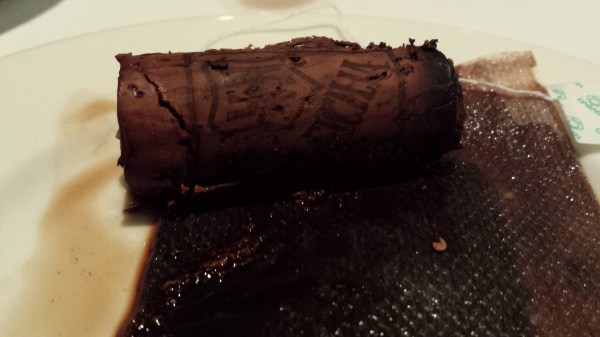
Cork of the second bottle of 1967 Vega Sicilia Unico Riserva
Next came the highlight of the evening, a pair of 1967 Vega Sicilia Unico that seemed to come from the same batch, bearing serial numbers 10600 and 10605. Both bottles showed a lowish ullage at mid-shoulder level. Twenty years younger than the preceding wine, the 1967 Vega Sicilia Unico possessed effusive red fruits and notes of coffee and mocha shrouded by a mild port-like character without the density, far more open on the palate where the wine was medium-full with excellent acidity, though the spectrum of flavours was narrowed to strawberries and tangerines. As good as this was, the second bottle (10605) was significantly fresher even though the cork on this bottle was thoroughly soaked through and in danger of fragmenting. Amazingly beautiful, the wine showed a lovely clear ruby with bright red fruits and an attractive earthy pungency, lively and layered on the palate with lightness and delicacy, beautifully feminine, balanced and harmonious, proving once again the age-worthiness of Vega Sicilia Unico. My thanks to Kenny for the kind generosity.
We concluded the evening with a 2005 Markus Molitor Zeltinger Sonnenuhr Beerenauslese (courtesy of Jon) that exuded a smoky tone of pineapple, melons and nectarine laced with petroleum fumes, beautifully intense with controlled sweetness, precision and linearity, developing an irresistible complexity over time. Excellent.
Apr 2016: 2014 Domaine Seguinot Bordet, 2013 Robert Groffier Chambolle-Musigny Les Haut-Doix 1er…
2013 Domaine Robert Groffier Chambolle-Musigny Les Haut-Doix 1er (courtesy of Chee Wee), popped and poured at Glen after hours, 01 Apr 2016. Exuding notes of dark cherries and red fruits of excellent purity, this wine is delicate on the nose, yet exerts considerable power and layering on the palate supported by saline minerals and understated acidity, all very well-balanced. Robert Groffier never fails to satisfy. Excellent.
2011 Tobelos Rioja, from the restaurant list of Binomio, 02 Apr 2016. Popped and poured. Forward balance of violets, blueberries and dark currants with splashes of red fruits. Good concentration. Chewy and succulent, slightly lean towards the finish with traces of graphite and new oak still discernible. I enjoyed it.
2004 Château Latour-à-Pomerol, popped and poured at Al Borgo, 05 Apr 2016. After showing well during the first ten years after vintage, this wine appears to be drying out, more woody and pruny on the nose while dusty textures dominate on the palate, lacking complexity and conviction. Disappointing.
2011 Réserve de la Comtesse, popped and poured at Jade Palace, 10 Apr 2016. This wine offers dark currants and black fruits with a vegetal trace characteristic of this estate, appropriately soft with tame tannins to facilitate early drinking. Slightly lean though there is no lack of concentration, enough to convey its Pauillac character.
2010 Château Sociando-Mallet, a half-bottle popped and poured at home after airing in bottle for 45 minutes, 13 Apr 2016. Attractive bouquet of rich dark currants, black fruits and raspberries. Good concentration on the palate, marked by woody and dusty characters, slightly lean, finishing with a peppery trace. Not quite up to the best standards of this estate. Could do with more fat and sumptuousness. May need more time in bottle.
2014 Domaine Seguinot Bordet, 14 Apr 2016 at Au Petit Salut. Pale lemon with a delicate bouquet of morning dew and flint. Stern, dry and minerally at first before turning more crisp, detailed and intense with notes of tropical citrus after being paired with some succulent Alaskan King crab.
2012 Weingut Wilhelm Sitzius, 14 Apr 2016 at Au Petit Salut. Light golden with an intense bouquet of tropical fruits, peaches and seared caramel, caressing the palate with a deep burnished tone, medium-bodied with understated acidity and a slight metallic trace.
2014 A. Cailbourdin cuvee Boisfleury, 14 Apr 2016 at Au Petit Salut. Earthy pungency with aromas of wild flowers and nutmeg, medium-full, crisp with characters of clear citrus, white pepper, icing and vanilla leading to a persistent finish.
2006 Château Bernadotte, 14 Apr 2016 at Au Petit Salut. A very decent effort with notes of mulberries, raspberries, vanillin and ash, supported by earthy minerality with a graphite tone but lacking in true complexity, its tannins yet to be fully integrated.
2014 Moscato d’Asti Zagara, 14 Apr 2016 at Au Petit Salut. Generous in peaches and pears with understated sweetness and acidity. Refreshing but lacking in complexity.
Champagne Charles Hiedsieck Brut NV, at Changi Airport T3 Silver Kris Lounge, 15 Apr 2016. Aromas of pungent citrus. Dry and dense on the palate with some chalky minerality. Too one-dimensional. Needs better resolution.
2013 Domaine William Fevre Chablis Champs Royaux, at Changi Airport T3 Silver Kris Lounge, 15 Apr 2016. Classic flinty minerality with some delicate citrus notes, but too light and unconvincing on the palate. Could do with a more forward fruit balance.
2007 Champagne Taittinger Brut Millésime, on board Singapore Airlines Business Class, 16-17 Apr 2016. Tasted twice in two days. Quite a lovely bouquet of white flowers with some earthy pungency followed by crisp yellow citrus, green apples, understated yeasty tones and stony minerality. Surprisingly gentle within a fairly narrow spectrum though ample enough in concentration. Good potential but yet to develop.
2014 Devil’s Lair Hidden Cave Chardonnay, on board Singapore Airlines Business Class, 17 Apr 2016. Aromas of white flowers with some cream and mild buttery notes, rather lean with austere citrus on the palate, understated in minerality and acidity.
2010 Château Peyrabon, on Singapore Airlines Business Class,16 Apr 2016. Refreshing notes of ripe wild berries, raspberries and violets, displaying good concentration and well-managed tannins but marred slightly by a sandy texture.
2014 Château Doyac, on Singapore Airlines Business Class, 17 Apr 2016. There is no lack of quality berries and dark currants, pretty decent in concentration with a plummy tone without any vegetal notes but somewhat lean, missing in richness and opulence, slightly dry at the finish.
2012 Joseph Faiveley Bourgogne blanc, popped and poured at Ming Kee Live Seafood, 29 Apr 2016. Displaying appropriate nutty and buttery overtones with substantial chalky minerality, slightly understated on the palate where it finishes with a ferrous trace and notes of bitter citrus. Dependable.
These tasting notes stem from a dinner hosted by the great Dr & Mrs S S Ngoi at their residence on 06 Apr 2016 where Zach (sommelier formerly from Les Amis who also excels in the kitchen) had customised a menu to suit the line-up of wines, all sourced entirely from the great man’s cellar.
2005 Dom Perignon. Good concentration of citrus and green apples with a soft fragrance. Gentle, somewhat lean and slightly stern with further notes of pomelo on the palate. More lifted over time but still short.
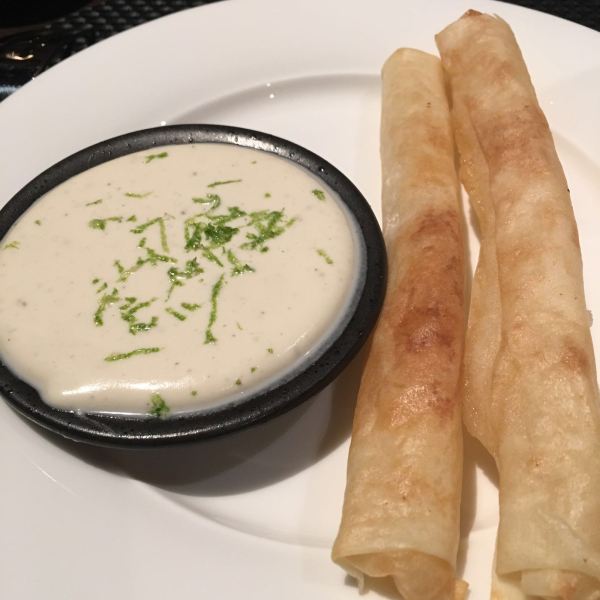
2009 Henri Boillot Corton-Charlemagne Grand Cru, poured from magnum. Rich gleaming tone of crème de la crème with notes of white roses and fig that blossomed beautifully over time, quite full, layered with stern bitter lemon and traces of varnish, imbued with great acidity and early complexity, becoming more aromatic over time. Superb.
2011 Jacques-Frederic Mugnier Chambolle-Musigny. A village, no doubt, but you wouldn’t have known from the very lovely bouquet suggesting dark roses of wonderful depth, richness and intense fragrance, absolutely fabulous. Medium-bodied, open with good depth and concentration, yet to develop further complexity. Quite the epitome of elegance and understated power. Beautiful!
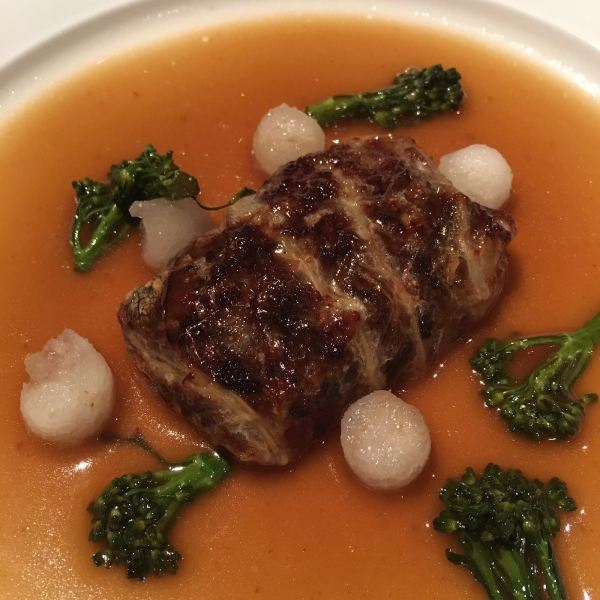
2006 Comte Georges de Vogue Chambolle-Musigny. From the eponymous producer of Chambolle with the added advantage of bottle age, this is another over-achieving village, possessing an intense bouquet of dark cherries, equally rich and layered on the palate with overtones of tangerines. Lively, vivacious and inviting. Delicious.
2006 Jacques-Frederic Mugnier Musigny Grand Cru. Highly aromatic bouquet with a great sense of depth, expressing red cherries, dark roses and camphor, very well-proportioned on the palate, possessing some fat and opulence with traces of kumquat amidst its gravelly gritty texture, displaying remarkable balance (a consistent feature of all top cru such as DRC Romanee-Conti and Comte de Vogue Musigny) though still somewhat closed. Requires several more years of cellaring but what a privilege it was to have had this tasting opportunity.

2001 Ch Pavie. This wine exudes a lovely earthy pungency with a powerful lifted bouquet of red fruits, mulberries, redcurrants, cinnamon and soy, medium-full in body but imbued with excellent concentration and savoury characters, velvety with subtle intensity, mellowing over time with further notes of chocolate emerging. Sophisticated, detailed and utterly complex. Superb!
2001 Ch Cheval Blanc. Tasted right after the 2001 Pavie, the Cheval Blanc of the same vintage stood its ground, opening with notes of almonds and white chocolate complemented by a superb bouquet of complex red fruits, soy, incense and ash on the palate, medium-bodied, open, lush and very well balanced, the 40% cabernet franc imparting a distinct feminine character to the wine. Outstanding.
2007 Henri Boillot Bienvenues-Batard-Montrachet Grand Cru. This wine displays striking proportions of chalky and stony characters, highly minerally (not surprising, considering it is separated from Les Pulcelles by only a lane), matched by complex citrus and pine tree fragrance of great definition and balance, tapering towards a lengthy complex finish with further notes of understated tropical fruits.
Thank you, Dr Ngoi, for your time and generosity.
Alsace Wine Festival Singapore 2016
These notes come from the inaugural Alsace Wine Festival held at the American Club, Singapore, on 05 March 2016, organised by the Alsace Wine & Gastronomy Society of Singapore, graced by the presence of Leon Beyer himself. The AWGS was founded only two years ago and this event would not have been possible without the energy and enthusiasm of its founding President Julian Teoh and the organising committee. Please contact me through this blog if you wish to join the Society.
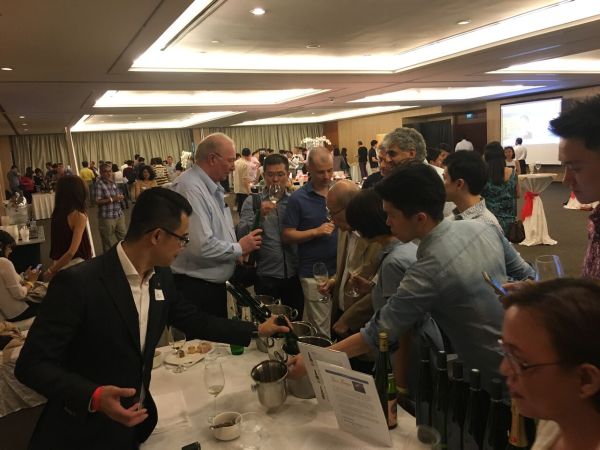
2014 Leon Beyer Sylvaner. Grassy elements, light-bodied citrus, delicate, refreshing, easy-going.
2011 Leon Beyer Riesling. Great riesling character. Highly aromatic hinting at petroleum fumes. Dry with crisp acidity and generous citrus, lengthy finish. Bouquet is absolutely wonderful. Almost hedonistic.
2013 Leon Beyer Pinot Gris. Gentle with the lifted fragrance of white flowers. Medium-bodied. Great balance. Subtle acidity. Good length.
2013 Leon Beyer Gewurztraminer. Grassy elements with the complex fragrance of lychees, light-medium weight, gentle with understated acidity.
2012 Josmeyer Pinot Gris Auxerrois VV. Understated sweetness. Solid core of tropical fruits and grassy notes, excellent definition, displaying good acidity and attack, great persistence, lingers on long after its finish.
2012 Josmeyer Dragon Riesling. Possesses some classic oily character of rieslings with a hint tropical fruit underscored by saline minerals. Dry.
2011 Marcel Deiss Riesling. Lovely nose. Gentle fragrance of white flowers. Rather dry, austere in demeanour. Short.
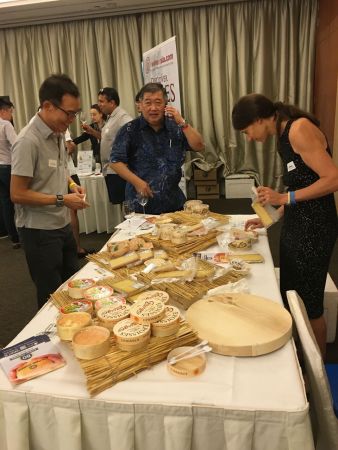 2012 Marcel Deiss Riesling. Understated bouquet, medium-bodied with mild minerality. Not quite as characterful. Underwhelming.
2012 Marcel Deiss Berckem. A blend of several fruit varieties. Lovely nose hinting at nectarine with forward fruit balance and grassy overtones. Good presence. Very pleasant.
2008 Marcel Deiss Burlenberg Pinot Noir. Gentle aromas of dark roses with a mild earthy pungency, light-medium, dry with dusty textures. Not quite distinguished.
2007 Marcel Deiss Altenberg de Bergheim Grand Cru. Medium-bodied, gentle on the palate with floral aromas and subtle sweetness, displaying good delineation.
2007 Hugel Gewurztraminer. Generous aromas of apricot, seared caramel and mild nectarine on the nose and palate. Rounded, open and fairly ample with a burnished tone. Lovely.
2008 Hugel Gewurztraminer. Lovely aromas of a summer garden with flowers in full bloom, rounded with excellent balance and understated sweetness and persistent finish. Beautiful.
2014 Hugel Riesling. Open with grassy elements, rounded, rather minerally and dry at the finish.
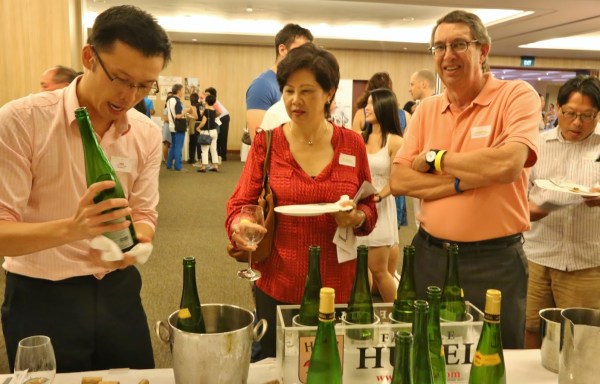
Julian loves Hugel. Photo by Peter Wong
2014 Hugel Estate Riesling. Lovely fragrance melons tropical fruit minerally dry good fullness
2013 Hugel Pinot Gris. Lovely bouquet of citrus and lemongrass. Amply proportioned, zesty and vibrant with subtle intensity, displaying excellent definition and linearity. Great mouthfeel. Excellent.
2013 Marc Kreydenweiss Riesling Andlau. Forward bouquet of red apples. Dry and minerally on the palate.
2008 Marc Kreydenweiss Kastelberg Grand Cru. Attractive aromas of minerals and white roses on the nose, but dry and intense on the palate. Stern finish driven by minerals.
2008 Schlumberger Riesling Kitterle Grand Cru. Notes of apricot and subdued nectarine, very minerally on the palate, dry with subtle intensity, finishing with a saline afternote. Attractive.
2012 Schlumberger Riesling Verdanges Tardives. Lovely seductive bouquet of tightly-knit apricot and nectarine, quite ample, displaying excellent linearity and definition, finishing with great persistence. Excellent.
2006 Schlumberger Riesling Ketterle. Lifted aromas, chromatic tone, minerally and stern, softened by understated sweetness.
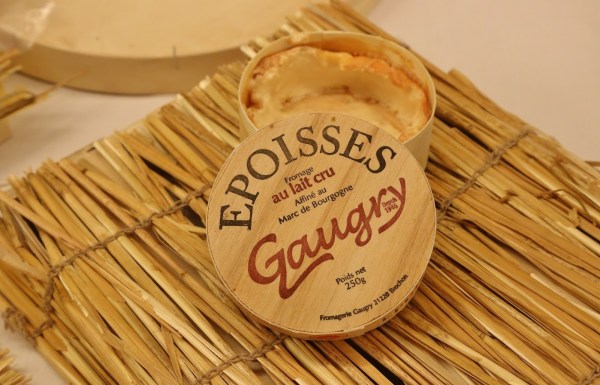
Photo by Peter Wong
2007 Trimbach Cuvee Frederic Emile Riesling. Lovely riesling character. Abundance of white flowers and petroleum fumes, highly lifted and intense, driven by dry saline minerals on the palate, spicy and tight. Excellent.
2013 Trimbach Pinot Gris Reserve. Mild incense, citrus and grassy elements. Good intensity, understated sweetness, smooth lingering finish. Great mouthfeel.
2014 Weinbach Riesling Schlossberg. Fragrance of white flowers. Highly aromatic. Gentle with good presence and understated acidity. Great balance. Excellent.

Even Dr NK Yong is here! Photo by Lyndie Tang
2014 Weinbach Gewurztraminer. Highly aromatic though somewhat subdued on the palate with controlled tones of apricot and caramel, displaying good linearity with subtle intensity.
2009 Zind-Humbrecht Brand Riesling. Very attractive deep bouquet of lychees and tropical fruit, good complexity, sprightly and very well-balanced with subtle intensity and acidity. Excellent.
2013 Zind-Humbrecht Gewurztraminer. Aromatic but awkward at this stage, as if it cannot decide between itself and riesling.
FICOFI: Domaine Prieuré Roch
Right after the masterclass on Prieure Roch’s Nuits-Saint-Georges 1er “Le Clos des Corvées” at the Tower Club, 15 March 2016, was a full-course dinner featuring other wines of Domaine Prieuré Roch, organised by FICOFI. It was good to meet up again with its brilliant winemaker and co-owner Yannick Champ, who still remembers that wonderful lunch we had together at Aupres du Clocher in Pommard six months ago. Even though this domaine was founded only a relatively short time ago in 1988, it has attained an almost cult-like following.
Yannick & Ric
One obvious reason, no doubt, is because production is so limited. Excluding its monopole Clos des Corvées, the holdings of Prieure Roch amount to only about 9 ha. Or it could also be that the combination of Yannick’s youthful passion, individual philosophy and, perhaps, – dare I say – rebellious streak against establishment, culminating in wines that exude wonderful purity, grace and power, appeals directly to oenophiles seeking true Burgundian spirit without busting the bank. Where else would one find a “borrowed” Egyptian hieroglyph (the upper yellow eye representing natural forces, the lower yellow one symbolising the human, who with his limited knowledge, sees what’s around, the three different-sized red globes individual grapes which are the building blocks of winemaking, the green leaf representing vegetation and the scribe who records his observations) as the domaine’s logo on its wine labels? Whatever it is, Prieuré Roch is an insider’s wine. To know Prieuré Roch is to gain ascension into a higher realm of oenology. And it must be so, for there were no empty seats at dinner and some members had specially flown in just for this dinner.
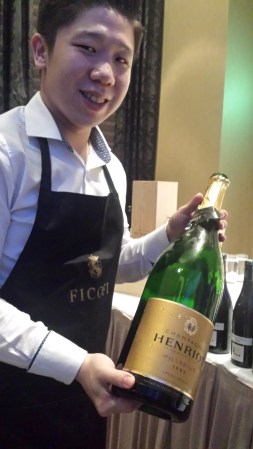 We began with a 1989 Henriot Millesime, poured from double magnum. This champagne displayed a very lovely earthy pungency with an abundance of green melons and complex citrus on the palate where it was gentle and still remarkably fresh even though its acidity had become slightly subdued with age, supported by chalky minerality and a dash of cream.
Opening the line-up proper was the 2010 Domaine Prieuré Roch Nuits-Saint-Georges Clos des Argillieres 1er that exuded a beautiful intense bouquet of red cherries and rose petals, open but slightly darker toned on the palate though its purity is quite excellent, very harmonious, detailed and linear, just a tad short. Next, the 2005 Domaine Prieuré Roch Vosne-Romanée Les Suchots 1er displayed a wonderful floral fragrance, sweet and highly perfumed with overtones of red and dark cherries, most fabulous indeed, elegant and poised on the palate with controlled intensity, definition and excellent ripeness, slightly feminine, structured without being intrusive. Still with the same vintage, the 2005 Domaine Prieuré Roch Nuits-Saint-Georges Vieilles Vignes 1er (average age of vines about 50 years grown on plots rented from Domaine de la Romanée-Conti) was overshadowed by the preceding Les Suchots, displaying a dark quiet intensity amidst aromas of rose petals, more restrained without as much depth on the palate, and more minerally as well.
The next flight saw a 2010 Domaine Prieuré Roch Vosne-Romanée Les Suchots 1er PURE pitted against a conventional bottling. The former has been bottled directly from barrel to bottle without oxygen contact and, hence, 100% free of sulphites, which translated into a very lively wine of dark roses, exuding freshness and lovely fragrance lively with fine acidity, depth and excellent balance. Naturally, this is made in very limited quantities and near-impossible to source on the open market. In contrast, the conventional 2010 Domaine Prieuré Roch Vosne-Romanée Les Suchots 1er displayed a fine balance of red fruits and soil characters, notably quieter on the palate with a bit less soul and depth though it did grow in intensity over time, marked by an earthy tone throughout its length. This exercise goes to show that Yannick is consistently challenging established practices to improve the quality of his wines by avoiding any kind of unnecessary interference.

Photo by FICOFI
To close, the 2005 Domaine Prieuré Roch Chambertin-Clos de Beze Grand Cru was poured, exuding a powerful glow of dark cherries and red fruits of fabulous intensity, structure and concentration on the palate, highly detailed with great definition and linearity, masculine yet elegant enough to avoid overt hedonism. Yet to develop further complexity, this is a fabulous wine that fully justifies its lofty price tag, requiring plenty of patience. The 1999 Domaine Prieuré Roch Nuits-Saint-Georges Le Clos des Corvées 1er monopole came from the same batch served at the Le Clos des Corvées vertical earlier that evening, but it was showing better here, displaying better fruit quality with a stern medicinal tone, a unique wine in its own right but far overshadowed by the outstanding Clos de Beze.
Mar 2016: 2009 Ch de Marsannay Volnay Clos des Chene, 1993 Guigal La Mouline, 1996 Grand Puy Lacoste, 2001 R Mondavi
Louis Roederer Brut Premier NV, popped and poured over dimsum at Asia Grand, 13 Mar 2016. Somewhat restrained on the nose, but generous notes of white flowers, ripe yellow citrus and buttery characters dominate on the palate with refreshing zest and vibrancy to match the dryness, well integrated with the stony minerality without much of the usual yeasty overtones.
Napoleon Rose Brut NV, popped and poured at Glen after hours, 16 Mar 2016. Good concentration of peaches and grapefruit. Aromatic but rather dry and steely where the cutting acidity can be obtrusive.
2009 Ch de Marsannay Volnay Clos des Chene 1er (courtesy Chee Wee), popped and poured at Glen after hours, 16 Mar 2016. This wine is surprisingly lovely, boasting the fragrance of rose petals, ample in ripe red and dark cherries of excellent purity and definition, beautifully balanced with gentle tannins and fine acidity. Highly enjoyable.
2012 Saint Pierre Chablis, after hours at Radiology’s reception, Mt Elizabeth Orchard, 17 Mar 2016. Generous in lime and citrus notes, highly aromatic, displaying lively acidity with a crisp minerally finish. Very enjoyable.
2007 Caves Jean & Sebatien Dauvissat Chablis Vaillons 1er, after hours at Radiology’s reception, Mt Elizabeth Orchard, 17 Mar 2016. Lovely floral fragrance with a fine aged quality, driven by ample citrus, crème de la crème and varnish. Good presence. Crisp and persistent finish. Quite excellent.
2011 Weingut Friederich Becker Rechenbacher Spatburgunder, after hours at Radiology’s reception, Mt Elizabeth Orchard, 17 Mar 2016. German pinot noir, sporting an easy-going rosy floral fragrance, rounded with good purity of fruit, missing in real complexity and layering.
2011 Weingut Friederich Becker Sankt Paul Spatburgunder, after hours at Radiology’s reception, Mt Elizabeth Orchard, 17 Mar 2016.Supposedly the flagship pinot of this German domaine. Powerful aromas of rose petals and camphor floated easily, rounded and gentle and detailed with good concentration and a mild intensity. Very enjoyable.
2010 Kistler Hudson River Carneros (courtesy of Dr Robert Kwok) after hours at Radiology’s reception, Mt Elizabeth Orchard, 17 Mar 2016.. Lifted aromas of white flowers, melons and peaches. Excellent in concentration with a rich complex of creme de la crème with an oily buttery texture, caressing the palate with quiet intensity and understated acidity. Excellent.
2011 Domaine Martelet de Cherisey Puligny-Montrachet Hameau de Blagny 1er (courtesy of Dr Robert Kwok), after hours at Radiology’s reception, Mt Elizabeth Orchard, 17 Mar 2016.An enticing nose of peaches and traces of pineapples, quite exciting. Rather dry on the palate where white flowers and incense dominate with some sweet and creamy characters, open but a tad short.
2007 Kistler pinot noir (courtesy of Dr Robert Kwok) after hours at Radiology’s reception, Mt Elizabeth Orchard, 17 Mar 2016. Grown from in California from Burgundy grand cru cuttings with an average age of 20 years, this pinot noir is highly aromatic with a lifted feminine fragrance, displaying rich dark and red cherries on the palate, rounded with an oily texture but lacking layering and detail.
2014 Argento, popped and poured at Shinyeh restaurant on the 85th floor of Taipei 101, 18 Mar 2016. Deep purple, this full-bodied wine is driven by intense ripe fruit with overtones of raisins, prunes, blueberries, dark currants, enamel and traces of burnt, taking its time to open up, revealing some tarry textures with plummy tones and graphite elements but lacking in complexity.
2012 Yalumba “The Y Series” cabernet sauvignon, popped and poured at Shinyeh restaurant on the 85th floor of Taipei 101, 18 Mar 2016. Open and accessible from the start with predominant notes of red plums, tangy orange, grapefruit, fleshy and chewy on the palate with well-managed tannins amidst traces of tobacco, mocha and earthy tones. Enjoyable but its lack of complexity hits home after some time.
2011 Domaine Emilian Gillet Quintaine, served after about 45 minutes of aeration in bottle at a Japanese restaurant in Taipei, 19 Mar 2016. Delicate notes of white flowers, incense and chalk within a fairly narrow spectrum, slightly tight on the palate, good concentration but short, finishing with gentle minerals. Could do with better fruit definition.
2013 Louis Jadot Macon Villages, popped and poured at Otto Ristorante, 23 Mar 2016. Upfront notes of dense citrus and pomelo with traces of lemongrass and green melons matched by chunky chalky minerals, slightly brusque at the edges and stern at the finish. Good to go with robust seafood.
2003 Ch Pavie Decesse (courtesy of John), decanted on-site at Otto Ristorante, 23 Mar 2016. This is a Saint-Emilion done in the modern style, full-bodied with a warm medicinal glow, concentrated and dense with a certain hardness and a mid-palate that needs further resolution, finishing with an alcoholic trail. Could be better.
1996 Ch Grand Puy Lacoste, a bottle I’ve cellared for many years, decanted on-site at Fleur de Sel (genuine traditional French cuisine along fashionable Tras St, Singapore), 26 Mar 2016. Stunning bouquet of dark roses and dark cherries along with attractive traces of earthy pungency, mushrooms, anise, cassis and ash, densely packed, highly complex and seductive. Beautifully harmonious with a slightly feminine predisposition, this medium-bodied wine is layered with red and dark currants framed by velvety tannins that caressed the palate with growing intensity, underscored by saline minerals, savoury tertiary characters and subdued acidity that suggests this wine still has the legs to carry on for another twenty years, at least. Outstanding.
2001 Robert Mondavi cabernet sauvignon (magnum), decanted on-site for about 45 minutes prior to serving at the Grand Hyatt, Singapore, on the occasion of the EMSS AGM, 29 Mar 2016. This wine offers a fantastic bouquet of roses, raspberries and mulberries, superbly aromatic, almost to the point of intoxication. On the palate, the wine is medium-bodied, open and layered with very good concentration of red and dark berries, peppered with mocha and spice, framed by silky smooth tannins, well-balanced and elegant, ending with traces of graphite and vanillin at its persistent finish. Highly satisfying. At around SGD106 for a magnum, this is a bargain.
Bruno Paillard Blanc de Blancs NV, popped and poured at Bedrock Bar & Grill, 30 Mar 2016. Rather reticent on the nose, but ample and remarkably generous in notes of citrus, melons, green apples and honeysuckle to match the searing intensity and dryness of the 100% chardonnay, turning a shade stern and metallic at the finish. Excellent, but may not suit all tastes.
1993 E Guigal La Mouline (courtesy of Samuel), decanted on-site for almost an hour prior to tasting at Bedrock Bar & Grill, 30 Mar 2016. Displaying an evolved rose tint, this iconic wine offers a bouquet of camphor, rose cordial, raspberries and traces of incense, remarkably gentle, smooth and rounded on the palate, almost placid without any notion of heaviness normally associated with syrah, missing in layering and intensity and somewhat short, perhaps reflective of the weak vintage. One yearns for more character. Will not improve with further cellaring. Still, it has been a privilege to have this with a New York steak.
Compared with many other producers in Burgundy, Domaine Prieuré Roch is a relatively young start-up that came about in 1988, started by Henry-Frédéric Roch, nephew of Lalou Bize-Leroy and himself a co-director of Domaine de la Romanée-Conti. Through a complicated process of selling vines in Échezeaux and Grands-Échezeaux in order to finance purchases of other plots (while re-leasing the vines they had sold), Domaine Prieuré Roch began at first in Vosne-Romanée, gradually increasing in size to 14 hectares, encompassing plots in Chambertin-Clos de Beze, Clos Vougeot, Nuits-Saint-Georges and Les Suchots 1er in Vosne-Romanée and, now, Henry is assisted by his co-owner and winemaker Yannick Champ.
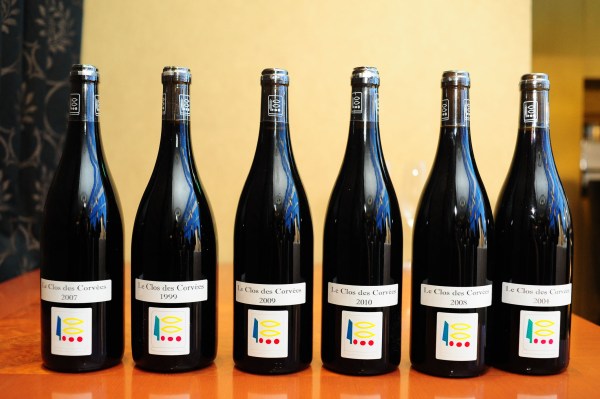
Photo by FICOFI
Domaine Prieuré Roch is certified biodynamic. While the domaine isn’t entirely hardcore about this, it adopts a minimalist approach to winemaking, utilising natural yeast, minimal temperature control, avoidance of pumping and, naturally, neither filtration nor fining. Interestingly, Yannick prefers to ferment the grapes (which are harvested in full ripeness as far as possible) together with stems, followed by maceration. The wines are aged mostly in 100% new oak, the total élevage lasting about 18 months. I certainly won’t pretend to understand the whole process of winemaking, but when one speaks with Yannick, one senses his total commitment and passion in everything he does and this certainly translates into wines that are, at once, highly individualistic.

Courtesy of http://www.allaboutburgundy.fr
Amongst the domaine’s holdings since 1995 is a 5.2 ha monopole named “Le Clos des Corvées”, the only premiere cru in this tiny commune of Premeaux that is actually, strictly speaking, outside of Nuits-Saint-Georges, being located just beyond its southern boundary. However, as Premeaux per se is not recognised as an appellation d’origine contrôlee, it rides piggyback on Nuits-Saint-Georges, not a bad thing at all. I must admit not having encountered this cuvee before, perhaps because only some 2000-8000 bottles are produced annually, until Yannick conducted a masterclass on this wine at the Tower Club, Singapore, on 15 March 2016 organised by FICOFI. These wines bear the hallmarks of Domaine Prieuré Roch, displaying lightness in color but instilled with generous aromas on the nose, coupled with a unique power and robustness in its youth, yet sensuous and feminine when mature.
Yannick silhouetted against the afternoon light
2010 Domaine Prieuré Roch Nuits-Saint-Georges “Le Clos des Corvées” 1er. Highly aromatic, of cherries and darker tones. Excellent purity of fruit on the palate, dominated by saline minerals, displaying well-controlled tannins and great acidity. Closed up after some time. Carries great promise and potential.
2009 Domaine Prieuré Roch Nuits-Saint-Georges “Le Clos des Corvées” 1er. Distinctly feminine aromas, more of rose petals and camphor. Darker toned on the palate, marked by a certain intensity and richness with dry textures though somewhat tough and slightly awkward now, shutting down after some time.
2008 Domaine Prieuré Roch Nuits-Saint-Georges “Le Clos des Corvées” 1er. Very lovely aromas with a lifted medicinal note, driven by ripe berries with bright characters, superb in concentration and intensity, supported by abundant saline minerals, displaying excellent linearity and definition right down to its lasting finish. Superb.
2007 Domaine Prieuré Roch Nuits-Saint-Georges “Le Clos des Corvées” 1er . Harmonious notes of camphor, red fruits and tangerines with secondary nuances of cinnamon. Expansive and rounded, very open and sensuous with a beautiful feminine glow that was absolutely lovely. Most captivating.
2004 Domaine Prieuré Roch Nuits-Saint-Georges “Le Clos des Corvées” 1er. Lifted tones of floral fragrance recalling roses and tangerines. Fully evolved on the palate where it is highly harmonious and homogenous, rounded with excellent purity and fresh acidity. Excellent.
1999 Domaine Prieuré Roch Nuits-Saint-Georges “Le Clos des Corvées” 1er. Not showing well, unfortunately. Dusty red. Gentle aromas of red and dark roses, open on the palate but backward, too placid in demeanour, not helped by dusty textures that clouded definition, missing in fruit character and rather short.
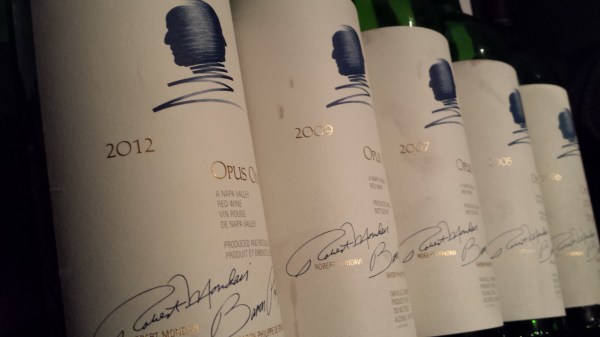
FICOFI: Opus One 2012, ’09, ’07, ’05 & 1996
When one speaks of the influence of terroir on the style of wine, the focus is usually on the geological elements of soil composition and weather or micro-climatic changes. However, a third factor is often overlooked: the Human element in winemaking. No matter where the location or what the weather pattern may have been, Man must always decide on which appropriate strategy to adopt in winemaking.
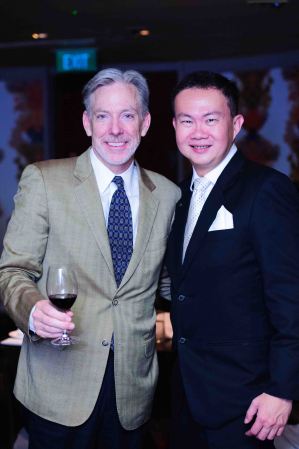
With David Pearson
And as the behaviour, tastes and preferences of Man are inevitably shaped by the cultural influences of individual Lands, the style of wine made will always reflect the intrinsic nature of the Land and its people. This is the fundamental reason why any attempt to compare a New World Bordeaux blend with an actual claret always breaks down. When tasting a wine, one must always accept this individualistic streak that is part and parcel of terroir. Thus, a claret will always reflect the French taste for subtlety and balance in its cuisine, as much as an Italian vino would incorporate its colourful culture, a Spanish red the outward passion of its people, the brawn of Down Under in an Australian red, the methodical, industrious and frank exposition of the American in a Napa cabernet. I was reminded of the above during a dinner of Opus One vertical organised by FICOFI on 07 March 2016 at Prive Grill, Keppel Marina Singapore, when David Pearson, its CEO since 2004, spoke about its mission to find the Californian expression in its wines. For me, it was great to be able to meet up again with David, whom I had been acquainted with since a lunch at Club 33, OCBC Centre, back in 2006 that was washed down with a trio of Opus One. Since then, David and I have never failed to exchange greeting cards every year, with Opus One now printing its very own Chinese New Year cards.
In the world of exquisite fine wines, Opus One is a relative newcomer, having been formed only in 1979 as a joint partnership between the great Robert Mondavi and the flamboyant Baron Philippe de Rothschild of Mouton Rothschild. 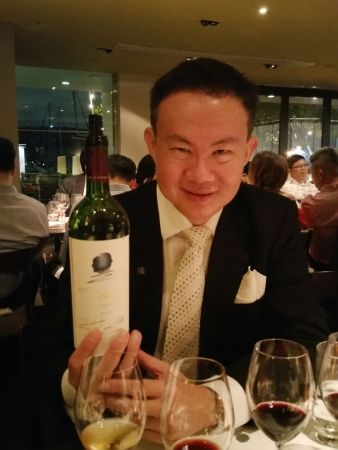 While the initial releases were, indeed, a conjoint collaboration, Opus One has long since been 100 percent made in USA since 2005, when the Opus One Accord was reached between its parent company and the Rothschild family, allowing Opus One full independence in its winemaking and administration. Opus One is a true Bordeaux blend farmed in four vineyards totalling 68 hectares, although the proportion of cabernet sauvignon is considerably higher (more than 80 percent) than a true claret. An attack of phylloxera (ironical, since it was the phylloxera-resistant rootstock from America that had resurrected Bordeaux in the 19th century after this deadly bug had inflicted vast damage) mandated extensive replanting of its vines, such that the present average age of the vines is only 19 years. While tasting these wines, what struck me consistently was how well they reflect the American character: solidly crafted wines with bold structures and powerful masculine lines, yet capable of giving way to a softer, brighter orchard-driven complex that quite perfectly defines the energetic sun-soaked Californian disposition. In that sense, Opus One truly fulfils its mission of capturing the Californian terroir in its wines.
2007 Delamotte Brut Blanc de Blancs. Made by the sister house of the legendary Salon, this champagne from the Côtes des Blancs of Le Mesnil-sur-Oger fleshes out with ample overtones of clear citrus and white flowers with a forward balance, fairly smooth, broad and gentle on the palate with notes of morning dew, its verve and vibrancy enhanced by understated chalky minerality, never too dry. Quite excellent.
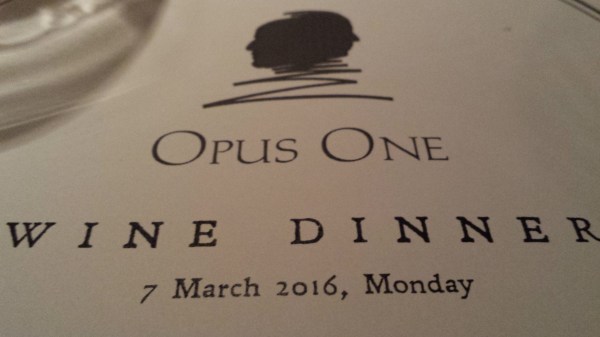
2012 Opus One. This wine opens with a brilliant fragrance that suggests sweet blueberries, violets and enamel, concentrated with fabulous intensity and forward balance on the palate with traces of graphite and earth, framed by tight but very well-managed tannins, finishing with great persistence. It became more open as it sat in the glass, exuding a sharp exciting glow of ripe berries that leapt out of the glass whilst it grew more gentle and lush on the palate. Superb.
2009 Opus One. Arresting aromas of red and dark roses and camphor with a dense core of ripe fruit of excellent depth and intensity, tarry with a mild medicinal and graphite trace, the vanilla from the new oak still evident. Still primal, developing a thrilling silkiness but it began to fade a little after some time. May be the beginning of an awkward period for this wine.
2007 Opus One. Dark roses and raspberries dominate on the nose, leading to dark chocolate, mocha and sweet incense of fabulous intensity on the palate, tapering towards a minty, spicy finish. It became more placid and relaxed after some time as dusty forest tones and wild berries took over with further notes of violets amidst a mild herbaceous trace. Needs more time in bottle.
2005 Opus One. This wine is developing very well, marked by a welcoming tone of warm red fruits, ripe and rounded, very well balanced and proportioned and gentle as well, layered with violets and plush red fruits, more lush, open and minerally over time, just a tad short. Distinctly feminine without being too engaging.
1996 Opus One. Quite a different style of wine, much more in the spirit of the Old World, the only one in tonight’s line-up that represented the conjoint effort then and the only one without petit verdot in its blend. The 1996 is marked by an attractive earthy pungency on the nose with some degree of muskiness, though definitely not corked nor tainted. Dark berries dominate on the palate with some bright spots, sporting a rich vein of fabulous currants and violets with excellent linearity, totally harmonious, beautifully proportioned and balanced. Will some of the later vintages develop into this refined and elegant beauty? I’ll put my money on the 2012.
1996 Ch d’Yquem. This beautiful Sauternes is imbued with an abundance of apricot and cinnamon of outstanding depth with a dash of jackfruit and pineapples, enveloped in a heady bouquet of rich petroleum fumes though it is fairly relaxed on the palate, underscored by powerful tones of nectarine, remarkably balanced, finishing with great persistence. Outstanding.
 Ric's Wine Journal