1990 Gazin & 1994 Mouton Rothschild
These are notes from another super-indulgent dinner at Skirt, W Hotel, Sentosa Cove, 13 June 2013, where each of us ate two steaks of grade 9 marbling. I can just about feel another one of my coronaries shutting up. To accommodate the restaurant’s corkage policy of one-for-one (or a SGD50 fee per bottle), we bought a 2010 Maison Kerlann Pouilly-Fuisse from the expensive (and unimpressive) wine list.  Fairly generous from the first pour with notes of yellow citrus and green apples, crisp and medium-bodied on the palate stuffed with vanilla amidst clear minerality, eventually developing delicious fat in the mid-body over time, tapering to a linear finish. Not bad at all.
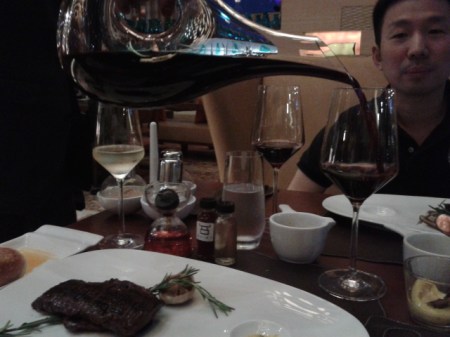
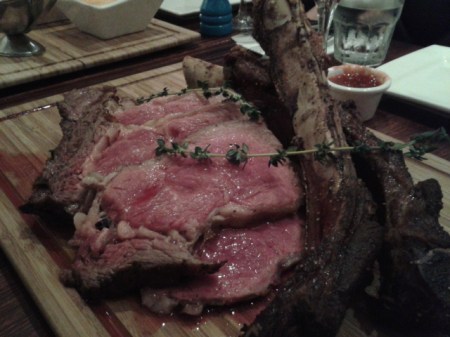
We paired our first steak, a 250g skirt cut, with the 1990 Ch Gazin that was decanted on-site. This came across as dark and vibrant, stuffed with mulberry, cedar and dark currants with a touch of spice, medium-bodied with an attractive dryness at the sides, framed by sweet subdued tannins that transformed over time into a tightly knit texture that oozed sophistication and sexiness, supported by a high-toned minerality. 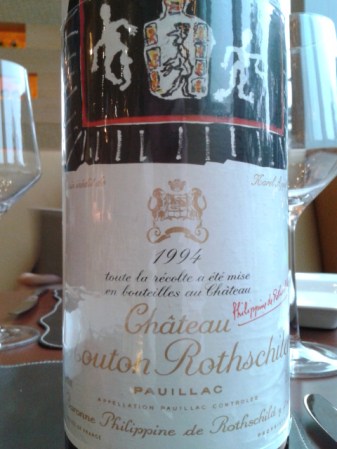 The wine came together very well after an hour, superbly balanced with a fair degree of joie de verve, just lacking in real opulence. Clearly still way off its peak. Again, like most Pomerol, it would have been difficult to place in a blinded tasting, but who really cares when there is so much here to enjoy. Excellent.
The piece de resistance, for what was actually just a casual dinner, was the 1994 Ch Mouton Rothschild, decanted on-site and paired with a 250g dry-aged Tajima Australian crossbred wagyu sirloin. The wine was opaque and surprisingly aromatic for this vintage, its classic Pauillac signature of tobacco, wood shavings, dry mushrooms and a dash of forest floor instantly recognisable, complemented by lovely dark currants, sweet prunes and a mild salty minerality that proved to be highly supple, yielding a very good mouthfeel. To be honest though, it was unlikely one could have identified this as a premier cru if blinded, but it certainly surpasses all expectations for a 1994. Thanks, John, for the wines.
1994 Ch L’Evangile
 The 1994 Ch L’Evangile is one of RWJ’s Best Affordable Reds and today’s tasting at Iggy’s on the occasion of our anniversary lunch, 11 June 2013, amply confirms that view. Decanted on-site, the wine displayed a purplish-red with just a hint of bricking at the rim, already soft and easy-going right from the first pour, throwing up a great deal of earthiness with more than a trace of pungency. This blew off after a short while, allowing more of the predominantly red fruits to emerge, supported by a deeper layer of dark currants along with other notes of soy and a hint of graphite, decidedly soft and relaxed on the palate.
  One certainly could not mistake it for anything other than a Bordeaux, although placing it in a blinded tasting may be problematic. It gradually fleshed out over time with more of blueberries and briar to the fore, the tannins becoming more pronounced with their supple velvety texture, the wine gaining just a little more weight, firming up in the mid-body, though still retaining its remarkable balance and ease all the way to its dry lengthy finish, leaving the palate to bask in the lovely glow of a mature claret. Compared to Petrus of the same vintage, the L’Evangile is just lacking in the last ounce of opulence and richness, but you wouldn’t have realised that without a side-by-side comparison. Even Ignatius himself, who’d never tasted a 1994 L’Evangile, was most impressed.
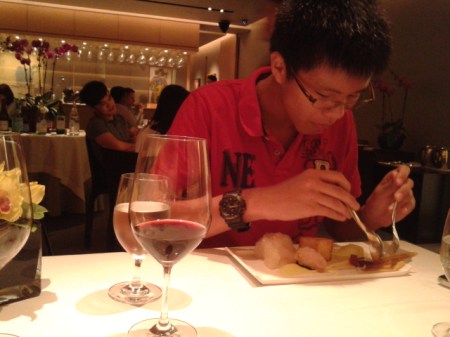
May 2013: 2005 Silver Oak, 1995 Ornellaia, 2003 Sociando Mallet, 1994 Pichon Lalande, 2004 Latour-a-Pomerol…
2011 Ashbrook Estate sauvignon blanc, aired in bottle, 1 May 2013 at Jeremy’s BBQ. Rather steely and narrow in spectrum, veering towards an austere finish. Unattractive.
2008 Frankovka Modra suche, aired in bottle, 1 May 2013 at Jeremy’s BBQ. A Slovakian wine made from an unusual grape, but common in central Europe. Bright purple in color with good transparency, suggesting a light-bodied wine which is exactly that. Gentle on the palate with notes of red fruits and cherries, lightly oaked without any significant complexity, short on the finish. Not far from Beaujolais in character. Could do with greater density.
Charles Heidsieck Brut Reserve NV, aired in bottle and drunk over two hours at Jeremy’s farewell BBQ, 1 May 2013. Surprisingly good, loaded with very good concentration of green and yellow citrus with aromas of green apples, pears and melons, bold enough in body to match the champagne’s dryness, supported by solid minerality.
2010 D’Arenberg Original, a blend of shiraz and grenache, 1 May 2013 at Jeremy’s BBQ. Medium-full, a very successful blend where the chocolate and licorice of ripe shiraz is well-balanced against the leafy earthy notes of grenache, matched to a generous body that was smooth and rounded. Possesed much more character than the Leeuwin below. A very good table wine.
1998 Ch Lanessan, aired in bottle for about an hour on 1 May 2013 at Jeremy’s BBQ. Regular readers will realise that I’m popping the ’98 Lanessan every other month, because it’s such great value and so good to drink now, carrying quality dark fruits and wild berries with substantial weight and secondary nuances of forest floor, dry leaves, old leather and a dash of sweet tannins at the sides. I’m afraid Lanessan will always remain under-rated, which is great for folks who know better.
2004 Ch Latour-a-Pomerol, popped and poured at Jeremy’s BBQ on 1 May 2013. Weighty, saturated with premium dark berries and blackcurrants, traces of vanilla and enamel still discernible but definitely more open in the mid-body compared to previous tastings, eventually settling down into a rounded fleshy wine laced with sweet supple tannins. Yet to develop secondary characteristics. Keep.
2008 Leuwin Estate Art Series Shiraz, popped and poured at Beng Hiang restaurant, 4 May 2013. The fruit is recognisably shiraz, its warm ripe character with a touch of spice, plums and leafy medicinal note is unmistakable. But unlike its South Australian counterparts, this Margaret River shiraz is far too smooth, soft and cool for my liking, bereft of character and complexity, gaining a bit of austere metallic quality at the finish. Too straightforward. Not deserving of its Art Series labelling.
2010 Grosset Polish Hill Riesling, popped at home over a dinner of crepes, 6 May 2013. Generous in aromas of peach, apricot, rock melons and citrus that are well matched on the palate, buzzing with wonderful intensity, supported by dense minerality, slightly angular and steely at the finish. Great ageing potential. Try refraining from popping too many of these prematurely.
2006 Ch Malarctic-Lagraviere, decanted on-site at Burlamacco Ristorante, 14 May 2013. Compared to a previous tasting last year, this wine seems to have shed its vanilla coat, the ripe cabernet coming across with greater purity and milder intensity, imparting initial notes of plums, red fruits and wild berries before being overtaken by a broad salty minerality, carrying with it a touch of earthiness of Pessac-Leognan, softening over time, dry at the finish. Much more accessible than before if given adequate aeration. Perfect with the excellent medium-rare tenderloin with truffle fries.
2009 Ch Bernadotte, popped and poured at Imperial Treasure T3, 15 May 2013, and again at an impromptu tasting after hours at the office (when we’d run out of the 1994 Pichon Lalande), 23 May 2013. Compared to a previous note a year ago, this wine has definitely put on considerable weight, along with a most attractive bouquet of raisins, prunes, raspberries, briar and cedar, dark and attractive with fruit that is perfectly ripe, never before encountered in a Bernadotte. Medium-full and firm on the palate, displaying very good concentration. Developing very well in the right direction. Would have been quite savoury if there was greater fullness in the body. Very good indeed.
2011 Alta Vista Premium, around SGD60 off the list of Salta, 21 May 2013, an ordinary-looking diner (I don’t think it fits my idea of a restaurant) at Gopeng St that serves extraordinary steak at ordinary prices. We need more of these joints around. Popped and poured. Deep purple and full-bodied, saturated with ripe malbec, displaying overtones of enamel, vanilla, dark currants, blackberries and a touch of spice, opening up slightly after some time though it remained rather four-square in character. Utterly predictable but does its job very competently.
2005 Ch Bernadotte, poured from magnum at Otto Ristorante, 22 May 2013, my second of this wine in three months. Dark red with notes of prunes, cedar, dark currants and earth, quietly understated, sitting in the glass with excellent poise and confidence, just revealing a glimpse of early secondary development. A tad shy and may, perhaps, shut down soon. This is a real sleeper. Grab a case if you can.
1994 Ch Pichon Longueville Comtesse de Lalande (courtesy John), decanted for an hour prior to tasting after hours at the office, 23 May 2013. Compared to other more refined vintages, the ‘94 Lalande is more rustic at the edges, distinctly dusty in feel and texture with, perhaps, just a bare hint that the fruit, somewhat unexciting for this vintage, may begin to dry out soon although it offered a generous and attractive bouquet of cedar, cinnamon and licorice as the wine was served from the decanter, certainly very open on the mid-palate without any hollowness. I’m happy to drink this any time.
2011 Castella Pinot Grigio Friuli, SGD45 from the list of Da Mario, 24 May 2013. Popped and poured. Rather underwhelming at first, the backwardness of the fruit and an overwhelming sense of greenness raising fears that this would turn out to be a really cheap drink. Thankfully, it gained weight rapidly, adding layers of intensity, fleshing out very nicely with notes of zesty citrus, kiwi fruit, melons and peppermint supported by excellent minerality that never got in the way. Very good.
2005 Silver Oak Alexander Valley, popped and poured at Jade Palace, 25 May 2013. Regrettably, this bottle is far from ready. Deep dark inky purple, saturated with notes of blackberries, raspberries, dark chocolate and raisins, slightly tarry in texture with undertones of forest floor and a hint of graphite, framed by subtle tannins. But in spite of persuasive coaxing, this wine never really opened at all, remaining stubbornly coiled and undeveloped. Given time, this may turn out to be a real charmer. Don’t touch yours for another 6-8 years, I reckon.
2001 La Poderino Brunello di Montalcino, popped and poured at Imperial Treasure T3, 28 May 2013. In spite of this bottle’s less-than-pristine provenance and storage, it showed great promise when poured, offering a generous bouquet of licorice, dark currants and ripe dark berries with a dash of earth, weighty and structured. However, it never really came together, developing a touch of spice and pepper over time, just too heavy on the palate. Disappointing.
2003 Ch Sociando Mallet, popped and poured at Imperial Treasure T3, 29 May 2013. Ten years on and this wine is turning out very well. Huge, tannic and hard at the first pour, but it settled down rapidly, opening up to reveal some layering in the mid-body that was quite glorious whilst notes of cedar, briar, earth and a dash of violets complemented the ripe dark berries that will find a place in the top drawer of any classified growth, imparting a rich and luxuriant glow, beautifully structured, a wine that carries real sophistication and distinction. It reminded me very much of this estate’s 2001, but the present wine is more exuberant. Nowhere near its full potential at this stage but I imagine it will be absolutely fabulous in another ten years. Excellent.
1995 Ornellaia (courtesy John), decanted on-site at Amarone, 31 May 2013. Still quite impenetrably dark at its core, although signs of evolution are clearly visible at the rim. Sullen, tannic and closed at the first pour, perhaps a tad too cold. With aeration and some gentle coaxing, it gradually opened up, allowing more and more of the luxuriant dark berries to emerge, offering notes of blueberries, blackcurrant, violets and a touch of sur maturite, the bouquet glowing positively with a quiet intensity that eventually leapt right out of the glass, the wine becoming more relaxed and softer, framed by fine supple tannins, displaying excellent depth, concentration and definition such that by the end of the meal, the wine had developed to the extent that it would have been quite impossible to tell apart from a Bordeaux. Yet to peak. Excellent.
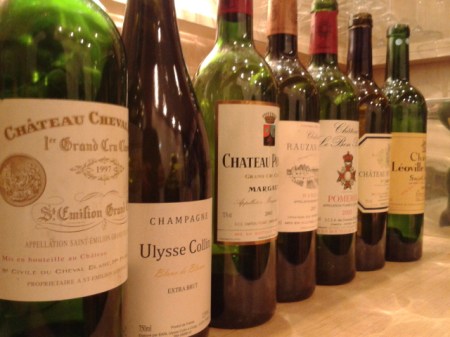
These notes hail from a Bacchus dinner at Jade Palace, 2 April 2013,where, in a bid to assume some degree of austerity, we had opted for a theme of modest Parker points (ie. 86-88) for 2003 Bordeaux. It was difficult to get excited over this but, nonetheless, we gamely showed up. Kieron started us off with a Ulysse Collin Extra Brut Blanc des Blancs that was most alluring with lifted aromas of delicate citrus, tropical fruits, lime, peach and toast, displaying excellent depth right from the outset with just the right degree of dryness. Highly complex, it’s NV status notwithstanding. gaining even greater depth and fullness over time. Quite superb.
The 2003s were generally an undistinguished lot that evening, clearly displaying signs of heat stress from the ultra-hot growing season, and may be dispatched rather briefly. The 2003 Ch Le Bon Pasteur (courtesy Victor) announced itself in a big way on the bouquet, saturated with notes of glycerin and raisins, quite jammy and alcoholic, unable to conceal a trace of burnt at the edges, only smoothening out at the last drop when it’s dryish Bordeaux character finally came through.  The 2003 Ch Feytit-Clinet (courtesy Pipin) was dark and restrained, although there was no shortage of ripe dark fruits imbued with an earthy minerality. However, it was rather disjointed on the palate, with traces of alcohol creating a divide, distinctly austere with a mild medicinal tone. Given its pedigree, the 2003 Ch Rauzan-Segla, aired in bottle for two hours, was appreciably more sophisticated, smooth with a mild even aquiline tone, very pleasant but even its sweet tannins could not conceal the lack of true depth and layering, short at the finish. The 2003 Ch Pouget (courtesy Hiok) was similar in character to the Rauzan-Segla, perhaps just a touch more racy, coating the palate with biting tannins.
The evening, however, was saved by the final pair of reds that brought up the rear, both blinded with the benefit of significant aeration. The first wine appeared reasonably aged at the rim with lovely notes of rose petals and soft plums amidst the classic Bordeaux character of dry leaves, mushrooms and snuff, displaying excellent integration, but definitely not the last word in depth nor complexity although it is certainly charming enough, and drinking very well. Some of us guessed its vintage correctly, but none would have thought of 1997 Ch Cheval Blanc (courtesy Li Fern)! In retrospect, the feminine rosy character, no doubt contributed by its cabernet franc, should have served as a clue. The final red showed up very well too with a predominance of red fruits and wild berries, beautifully integrated and open, framed by chewy tannins. Nobody guessed a 1999 Leoville Poyferre (courtesy Kieron), which simply goes to show that there are gems to be found in every vintage.
2007 Campomaggio Chianti Classico Riserva, popped and poured over lunch at Imperial Treasure T3, 2 April 2013. My experience with Chianti is severely meagre, but this wine will definitely encourage anyone to explore further. Somewhat nondescript initially, but it rapidly shaped up into a very attractive wine with forward notes of red fruits and dark cherries supported by firm minerality, very well-balanced and open, complete with very decent layering, revealing further notes of savoury wild berries. Good stuff.
2010 Domaine des Roches Neuves Saumur-Champigny by the glass at Lolla, 3 April 2013, supposedly voted somewhere as one of the top ten new dining spots in the world but I’m not quite convinced although, to its credit, this wine was served generously in a large Burgundy glass. As expected, notes of strawberries and red fruits dominate although I’d have preferred the fruit to be more forward, marred in this instance by leafy undertones. Corkage is SGD50 and at SGD52 for a 300g ribeye (excluding side dish) that was rather ordinary, I prefer Da Mario anytime (below).
2010 Vincent Girardin Bourgogne rouge, over dinner at home, 10 April 2013. Popped and poured. I had high hopes that this would be as good as the 2009 but, unfortunately, this wine was almost completely shut with just a bare shade of austere dark fruit showing, obscured mostly by the herbaceous notes of damp forest floor, rather too dark as well to be taken seriously as pinot noir. It didn’t really change very much even after warming up to ambient temperature. For sure, there is a lot of fruit lurking beneath but, perhaps, it needs more time to unwind. Will reserve judgement.
1996 Ch Grand Puy Lacoste (courtesy John) at Da Mario, 11 April 2013. Popped and poured. Highly aromatic from the first pour with a lovely bouquet of violets, cedar and sweet mulberries that led to a beautifully structured wine, made gentler by the passage of time, layered with the slight dryish tone of Pauillac but endowed with generous dollops of glorious fruit, well-integrated, displaying excellent definition with just the right degree of depth, eventually developing velvety tannins that sat very comfortably on the palate.  For sure, it has evolved quite significantly from a previous tasting some 3 years ago, but it is still on the ascendency, yet to peak. Perfect with the truffled ribeye. Excellent.
1996 Ch Cos D’Estournel, drunk alongside the above at Da Mario, 11 April 2013. Aired for 30 minutes in bottle before serving. Highly reticent initially, almost completely shut. In fact, I couldn’t make out anything on the nose, probably because it had been served too cold, as I had it chilled on site for quite a while since we were dining al fresco. However, one could easily appreciate that it was a lot softer and smoother than the Grand Puy Lacoste, highly elegant and refined, almost feminine, which is unusual for Cos. Totally seamless. Over time, one could make out its bouquet of dark berries with just barely a hint of sweet tannins, underlined by a graphite note that contributed to an austere undertone. I’d say it is significantly better than a previous bottle tasted in February 2012. Excellent, but I think it deserves to be drunk under conditions that are considerably more ideal.
2008 Altesino Rosso di Toscana, a half-bottle off the list of Garibaldi for SGD50, 12 April 2013. Popped and poured. Dark red with brownish-vermillion tinge, fairly generous on the bouquet with notes of ripe berries, raisins, prunes and sweet plums, soft at the edges, medium-full with tannins kept in check. Highly agreeable and certainly better than I expected.
2010 Mazzei Badiola, SGD100 off the list of White Rabbit, 16 April 2013. Popped and poured. Generous notes of red fruits, wild berries, dark currants, orange peel and a touch of herbaceous mint and spice but it’s all over the place and certainly disjointed on the palate, the tannic grip not helping matters. Didn’t really quite gel together even by the end of the meal.
 Guerrieri Rizzardi Prosecco Extra Dry, SGD60 off the list of Da Mario, 20 April 2013. Popped and poured. Light to medium-bodied, forward with notes of green and yellow citrus that offset the dryness, supported by understated minerality. Fresh, lively and vibrant, just what’s needed for al fresco dining on a hot day.
2002 Elderton Ashmead cabernet sauvignon (courtesy John), at the ward dinner at Pepper, 22 April 2013. Popped and poured. An exuberant bouquet of raisins, enamel, varnish and creme de la creme leapt out from the glass that translated into a huge wine with creamy textures and sweet tannins, soft but weighty, displaying great density and concentration, carrying notes of dark chocolate, licorice, cedar and a tinge of wood and smoke, the alcohol just barely kept in check, threatening to rear its head after some aeration. It’s great if you limit yourself to just a glass or two, but it can be tiresome beyond that.
1997 Kay Brothers Block 6 shiraz (courtesy John), at the ward dinner at Pepper, 22 April 2013. Popped and poured. Another blockbuster but, thankfully, made mellow by time. Smooth with creamy textures, surprisingly open in the mid-body, layered with ripe dark berries with a sprinkling of red fruits that exuded a lovely warmth, slightly tarry but not unctuous with subdued alcohol levels. Again, you can’t have too much of this stuff in spite of its 16 years.
2010 Domaines Leflaive Macon-Verze, popped and poured from magnum at Edge, Pan Pacific Hotel, Singapore, 24 April 2013. Served a tad too warm, but one could still discern the excellent balance between the delicate notes of white flowers, citrus and melons against the clear crystalline minerality. 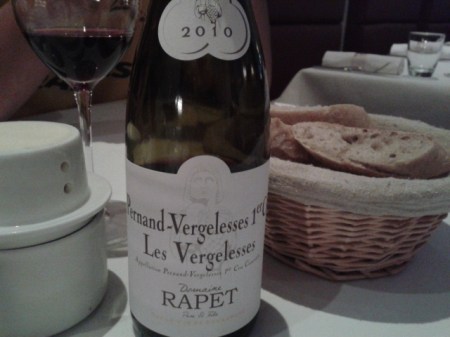 Not as exuberant nor as full in tone and body as the 2009, but it scores better in poise and balance. Very good.
2007 Ch Haut Batailley, decanted on-site at Etna, 26 April 2013. As expected for this weak vintage, this claret is beginning to enter its drinking window, possessing substantial fruit with notes of blueberries, wild berries, raspberries and a touch of violet, soft at the edges, generally pleasant on the palate with a mild grip. Lacks charm and opulence without much of a Pauillac character, but perfectly acceptable at SGD55 during a sale.
2010 Domaine Rapet Pernand-Vergelesses 1er Cru Les Vergelesses, a half-bottle from the list of Brasserie Gavroche, 27 April 2013. Popped and poured. As expected from this plot, this is a darker and slightly heavier pinot noir, darker in tone as well with notes of raspberries and wild berries, supported by understated minerality that began to emerge only after the wine had opened up, allowing more of the salty tone of true Burgundy to come forth, thereby loosening up in texture. It certainly has the potential to be a very good drop. The Frenchie sommelier refused to pour it into a Burgundy glass. Bastard (or should I say Batard).
1994 Ch Larcis-Ducasse, decanted on-site at Burlamacco Ristorante, newly opened by veteran Paolo Colzani (formerly Garibaldi) with a partner, helmed by Ian (formerly Iggy’s), 30 April 2013. I’ve never tasted this estate’s wine before, but I’m quite impressed with the 1994, fully matured in color and glowing with bright red fruits and aromas of rose petals, almost Burgundian in character, beautifully seamless without any tannins in the way, just lacking in opulence, richness and depth that is a symptom of the vintage. But it’s lovely to drink now over lunch. Only SGD88.
Saint Emilion from the Great Vintages
Some brief notes from a seminal department dinner at Edge, Pan Pacific Singapore, 24 April 2013. John came up with the idea of a miniature Right Bank theme, and it turned out the bottles we brought all hailed from Saint Emilion in vintages where the Right Bank did well. These aren’t the usual superstar suspects of that commune but, perhaps, all the better as it may be more representative.
2000 Ch Monbousquet, decanted on-site. Compared to the previous time I had it (most memorable lunch at Saint-Pierre some 3-4 years ago with Kieron), this wine has become noticeably softer and less exuberant, yet more open in the mid-body, achieving a more natural balance where the grapes, at just the right degree of ripeness, offer a seamless blend of red and dark fruits enveloped by secondary nuances of tea leaves, toast and a touch of graphite, displaying excellent definition and delineation all the way to its lengthy finish.  Monbousquet is a much under-rated estate that easily rivals its more expensive peers in outstanding vintages. Some may be wary about Gerard Perse’s preference for high extraction but at least now we know that it can work well, provided there’s enough bottle age. Excellent.
1998 Ch La Gomerie (courtesy John), decanted on-site. This is only the fourth vintage of this estate, having produced its first bottling in 1995. Some have charged that this garagiste operation favours a very forward, full and unctuous style. Surprisingly, however, it turned out to be highly similar in character to the Monbousquet, medium-full, remarkably well-balanced, the 100% merlot having softened over time, possessing substantial fat in the mid-body with a predominance of red fruits and plums, laced with sweet velvety tannins. This wine is just entering its optimum drinking window but I don’t think it has actually peaked. Excellent.
1990 Ch Canon La Gaffeliere (courtesy John), decanted on-site. Another under-rated estate but absolutely lovely. Awashed with notes of rose petals, cherries, raspberries and redcurrants with traces of violets and cedar, almost Burgundian, soft and totally seamless, holding steady at its peak throughout the entire evening without any sign of drying out, the acidity having receded long ago, ensuring an utterly smooth transition from entry to finish. Excellent
2004 Laurent-Perrier Brut Millesime 2000 Latour-a-Pomerol
These are notes from a very lovely (and decadent) lunch thrown by David at Au Jardin, 14 April 2013, to celebrate his big round number. I don’t think I have ever drunk more on a single afternoon but one musn’t waste all these good stuff flowing freely. Because of some difficulty in locating the restaurant, I was almost drenched in sweat by the time I arrived, but the 2004 Laurent-Perrier Brut Millesime was the perfect aperitif to quench my thirst. After gulping down the first couple of flutes, I began taking serious note of this champagne. It was absolutely beautiful, generous on the nose with notes of delicate citrus and white flowers, displaying excellent density and weight with a lovely deftness and lightness of being, a case in point where the gentle bubbles add to the wine’s complexity rather than detract from it. Very lovely. I could just continue sipping this on and on, which was exactly what happened.
Unfortunately, I felt that the 2010 Chateau Fuisse Pouilly-Fuisse Les Clos, served alongside the Laurent-Perrier, couldn’t quite rise above the bar set by the champagne, the softer tone of Pouilly-Fuisse and its classic leafy notes lacked conviction and complexity, the backwardness of its fruit not matching up to the crystalline minerality. It would, perhaps, have been quite pleasant on its own to accompany a light meal but, on this occasion, it was completely left in the shade.
Only one red was served, but as it was a free flow of the 2000 Ch Latour-a-Pomerol, I have no complaints whatsoever. Dark impenetrable red, saturated with notes of dark currants, wild berries and a tinge of raspberries poking through, the superbly ripe fruit exuding sweet enticing aromatics while its silky rich texture proved to be simply luxuriant on the palate, matched by excellent depth and concentration. It opened up further, displaying excellent definition, quite unfazed by the traces of vanilla that still remained, becoming even more aromatic over time but barely developing secondary nuances even after all these years, a wine clearly set for the long haul. I must have had almost a full bottle to myself by 3.00 PM, yet it remained absolutely fascinating without ever a hint of palatal fatigue. Outstanding. Thanks, David.
1999 La Conseillante
This is my only bottle of the 1999 Ch La Conseillante, which was brought to Amarone to celebrate Monster’s 14th birthday, 6 April 2013, where we had practically the entire restaurant to ourselves, with Osvaldo the man himself helming the kitchen. Decanted on-site. 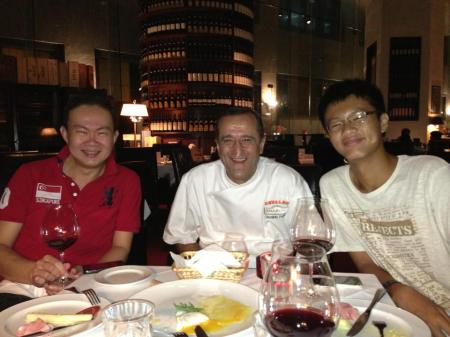 Medium-bodied initially with reticent notes of earth and mild medicinal aromas, rather unresolved in the mid-body. It took a while to open up when predominant notes of red fruits began to emerge and dominate whilst the herbal characters began receding, following which a mild salty minerality developed that firmed up the wine, along with some cedar, violets and blueberries amidst subtle velvety tannins that teased the palate, the whole wine turning into a vibrant, well-integrated, highly attractive proposition with a lasting finish. Typically for a Pomerol, this wine would have been difficult to place in a blind tasting, save ,perhaps, the distinct absence of the dryish tobacco note of the Left Bank. Quite the perfect accompaniment to a quiet meal of spaghetti with bamboo clams and wagyu ribeye, and the wonderful hospitality of Osvaldo and everyone at Amarone that brought the evening to a memorable conclusion.
Notes in brief (March 2013): 2002 Joh Jos Prum Wehlener Sonnenuhr, 1998 Rockford Basket Press, 1996 Calon Segur…
2005 Thibault Liger-Belair Nuits-Saint-Georges “Les Saint-Georges” 1er Cru, popped and poured at Amarone, 8 March 2013. As expected from this producer, a slightly more extracted and heavier pinot noir, saturated with blueberries, redcurrants, raspberries and a dash of wild berries as well, though not as heavy compared with my initial experience with this wine back in 2011. Somewhat dark in demeanour. 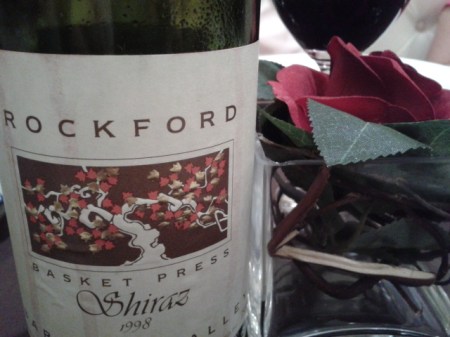 It opened up a bit more to reveal some salty minerality with a touch of earth but it still gave an overall impression of restraint at this stage, clearly a wine that can go very far if one has the patience.
1998 Rockford Basket Press shiraz, popped and poured at Porta Porta (Stanley St), 9 March 2013. Still a deep dark ruby after almost 15 years, coming across as a big wine with alcoholic content that seemed higher than the declared 14.0%, stinging the tongue and palate. However, it settled quite quickly after 30-45 minutes, the alcohol dissipating away, allowing the warm ripe Barossa fruit to emerge, displaying notes of raisins, prunes, dark cherries, dark chocolate and a dash of licorice along with secondary notes of cassis, pepper, mushrooms and a touch of forest floor, very well integrated with plenty of body and depth, leaving a trail of sweet tannins in its wake. It really came together by the final pour some 90 minutes later, highly elegant and almost seamless. Excellent.
2009 Awatere River pinot noir, popped and poured at Jade Palace, 16 March 2013. Unmistakably New World right from the first pour, being darker and weightier than usual for pinot noir, with effusive notes of enamel, vanilla and varnish vying for dominance against raspberries and dark cherries which struggled to emerge from the background, rather tight and almost full-bodied on the mid-palate with an unusual streak of density that would definitely require time for resolution, wearing out the palatal senses by the final quarter. It has its attractions, but think I’ll stay away from it for the next 4-5 years.
2006 Ch Grand-Puy-Lacoste, popped and poured from magnum at the wedding lunch of Donovan & Cherry at the Conrad Centennial, 17 March 2013. 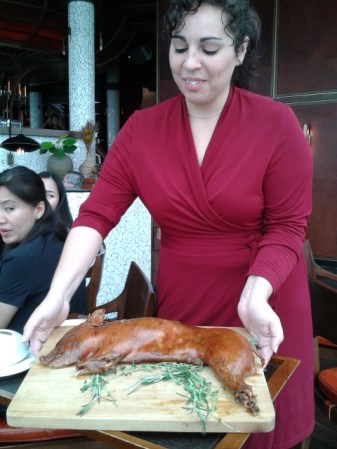 Compared to previous tastings, all similarly from magnum, this wine has gained weight considerably, offering a generous bouquet of predominantly red fruits amd raspberries, imparting a firm and weighty quality on the palate, the sweet tannins building up in definition and intensity over time before settling into a more relaxed wine, displaying excellent concentration and depth, but yet to undergo any secondary development. An excellent bargain.
1996 Ch Calon Segur, decanted on-site at Forlino, 19 March 2013. Beautiful deep crimson with a hint of bricking at the rim, with notes of dark currants, cedar, violets and gravel, fairly intense on the palate before settling into a more relaxed tone tempered by sweet tannins and secondary nuances of plums, tangy citrus and cinnamon that emerged after an hour, the wine transformed into an abolutely harmonious whole. Excellent.
1998 Ch Lanessan, popped and poured at La Barca (still serving the best wagyu truffle Fiorentina in the whole of Singapore), 20 March 2013. Working through a half-dozen of these, and this tasting was, by far, the best Lanessan I’ve had. Generally dark in color and tone but layered with some attractive redcurrants and dark cherries, laced with sweet weighty tannins that shook off the usual greenness and weedy notes that tend to accompany these Medoc wines. Very good indeed.
2011 Oddsocks merlot shiraz cabernet by the glass at Salt Grill by Luke Mangan at ION Orchard, 21 March 2013. A relaxed wine clearly displaying the character of each individual varietal within the blend, soft at the edges, medium-bodied but carrying decent weight, even managing a hint of complexityby virtue of its blend. Not your typical Aussie fruit-bomb. Highly agreeable.
2005 Ch Bernadotte, poured from magnum, at the wedding lunch of Eng Loon and May May, Fullerton Hotel, 23 March 2013. Compared to previous tastings, this wine seemed to be shutting down at this stage, which is about right. 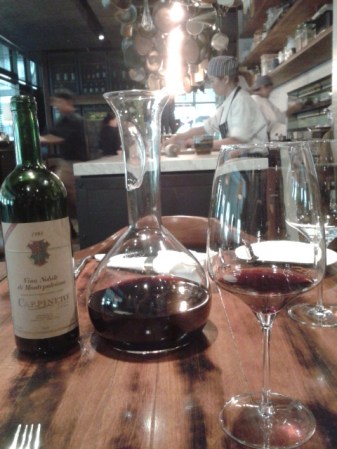 The bouquet of violets and dark berries is more restrained, while its density on the palate has softened considerably with an added touch of earthiness but again, the previous robustness and exuberance has been replaced by a more subdued demeanour. I’d let it rest for a few years before re-visiting again.
1993 Carpineto Vino Nobile di Montepulciano, another bottle of this again at Bedrock Bar & Grill, 25 March 2013. Decanted on-site. Perhaps the best tasting note of this wine so far. Vibrant and lively with a good deal of dark cherries and raspberries framed by subdued tannins, carrying good weight and concentration, offering good layering, not drying out at all. I daresay it’ll continue to hold for quite a number of years.
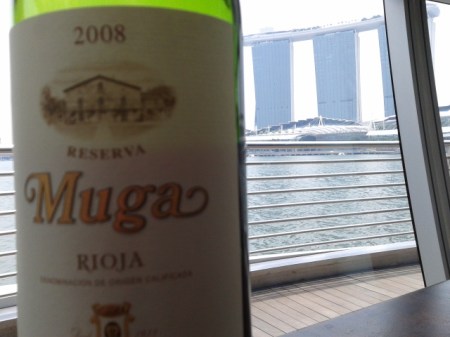 2008 Muga Riserva, at SGD108 off the restaurant list of Catalunya, situated within The Fullerton Pavillion, 26 March 2013. Popped and poured, coming across as being somewhat simplistic, lacking in punch and depth although, admittedly, it was generous in red fruits with a substantial dose of orangey citrus, peach and raspberries, very well-balanced, open and full without any spot of hollowness. It gained weight after 30 minutes, opening up further to reveal fine unobtrusive tannins, very well integrated but short at the finish. A good accompaniment to the restaurant’s signature suckling pig.
2002 Joh Jos Prum Wehlener Sonnenuhr Spatlese, popped and poured at at Ming Kee Live Seafood, 28 March 2013. Already quite lovely from the first pour, the significant passage of time having sapped some acidity off the edges, resulting in a wine that’s extremely comfortable on the palate with generous notes of apricot, tropical fruits. complex citrus and rose petals that flowed effortlessly. A distinct pomelo character emerged over time, adding a highly contrasting austerity of bitter lemon to the crystalline minerality that further enhanced the wine’s complexity. Quite beautiful. I suspect it has actually yet to peak, so don’t reach for your bottles.
2010 Domaine Louis Latour Bourgogne rouge, SGD70 off the restaurant list of Creperie des Art, 30 March 2013. Popped and poured. Not too promising initially, in spite of the supposed stellar vintage, coming across as a tad thin. It fleshed out more convincingly towards the end of the meal, where notes of strawberries, rose petals, plums and a dash of orangey citrus held firm against a backdrop of earthy minerality, highly even across the palate. Could do with greater fruit concentration and depth.
Bacchus met again, all too infrequently, on 28 January 2013 at Shang Palace of the Shangri-la Hotel, Singapore, where the stellar cuisine never disappoints, the wine service impeccable. For his induction into the circle, Pipin had proferred a blinded bottle as starters. It appeared quite well aged based on the color and complexity of its bouquet, highly perfumed with a powerful glow of orangey citrus and red fruits, beautifully focused and linear, utterly seamless, finishing with a trace of medicinal sweetness. 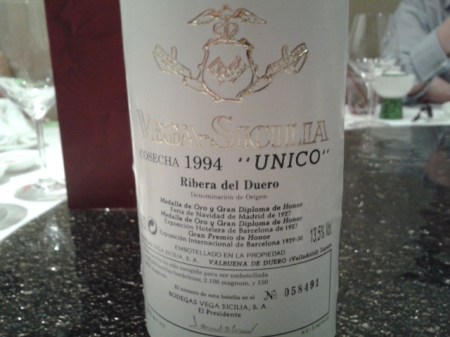 Very lovely. Some guessed pinot, others sangiovese, but old Danny boy was on form, correctly guessing a Spanish wine, which turned out to be none other than the 1994 Vega Sicilia Unico. What a start!
The obligatory white that preceded dinner took the form of a 1999 Louis Jadot Corton Charlemagne Grand Cru (courtesy Danny). It was served a bit too cold initially, though a kaleidoscope of nutty flavors, coconut and soft yeasty characters were evident, the wine still rather tight, to be expected from this stellar vintage even at this stage. gradually developing a rich creamy minerality with excellent depth, just a tad steely at the finish. Pretty much like Bonneau du Martray of the same vintage, clearly yet to peak.
The theme for the evening was to be a vertical of the iconic La Chapelle of Domaine Paul Jaboulet Aine, drunk in two flights of three, from the most recent vintage to the oldest. The 2005 Paul Jaboulet La Chapelle, displaying a beautiful deep ruby (as well as a very different looking label from its predecessors), was obviously youthful and racy with notes of rose petals and a hint of enamel, still cloaked in fresh vanillin. Nevertheless, one could still appreciate the superb craftsmanship that imparted a deft lightness, avoiding any hint of wild hedonism, yet to develop any complexity at this stage, taking on a softer velvety texture after some time coupled with an attractive spicy finish. Perhaps best to lay off for ten years? In contrast, the 1997 Paul Jaboulet La Chapelle (courtesy Pipin), showed a dull evolved red consistent with its significantly greater bottle age, producing a powerful nose of herbal medicinal aromas amidst earthy notes, topped by a prominent petroleum-like character that overlay a broad attractive dryness with a touch of spice on the palate, displaying excellent delineation right through its finish. 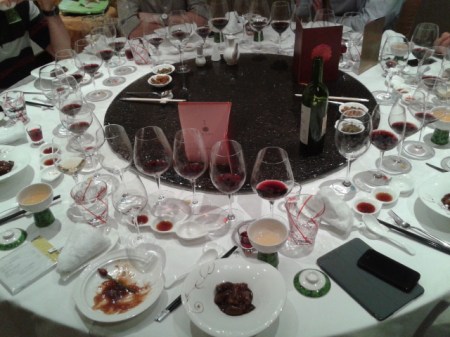 Next to this, the 1996 Paul Jaboulet La Chapelle (courtesy Kieron) displayed similar traits of color and flavour with expansive notes of herbal aromas, red fruits and some earthiness of lowish acidity, turning highly perfumed after some time, superbly seamless, developing a progressively prominent medicinal note over time.
The second and final flight consisted of La Chapelle from much older vintages, and it was a revealation to find that these wines are still very much so at their peak. The 1990 Paul Jaboulet La Chapelle (courtesy Li Fern) was still dark and supremely rich on both the nose and palate, generous in its bouquet of earth, aniseed, cassis and other dark fruits and soy, seething with great concentration and depth, still remarkably youthful without seemingly having undergone any significant development. If La Chapelle from a stellar vintage more than twenty years ago still remains relatively unevolved, would that be the same for its modern-day equivalent, the 2005? In contrast, the 1989 Paul Jaboulet La Chapelle (courtesy Vic) was caught almost at its peak, superbly evolved and integrated with an excellent concentration of predominantly red fruits, while the 1988 Paul Jaboulet La Chapelle (courtesy Hiok) was the undisputed star of the evening’s line-up with its array of attractive earthiness, tinge of dryness, dried leaves, mushrooms and cherries, beautifully developed and balanced, displaying superb delineation and focus. Most sublime.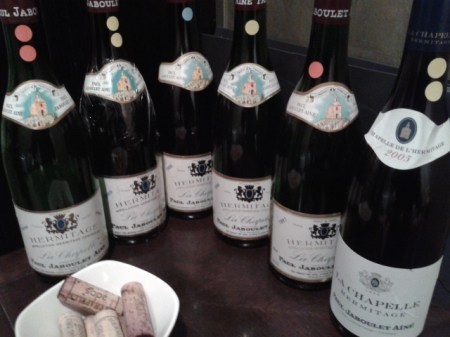
 Ric's Wine Journal