Champagne Pierre Peters & Guy Charlemagne
It’s probably irrelevant to ask what do rich Indonesian women know about wine, particularly if they declare quite nonchalantly that they “buy lots of wine from XXX (name of merchant/retailer) and ship them all back to Jakarta” (pronounced with that tell-tale gutteral “rrr”), something I realised when I found myself at a private wine dinner on 17 May 2010 (through Kieron…how else?) at Kome, along with 15 other high net-worth individuals and private bankers, organised by Mr Boon S Heng, an engineer by training who is better known as the founder of CEC Wine, an enthusiasts’ circle in London that went on to host several eclectic tastings attended by luminaries such as Michael Broadbent, Serena Sutcliffe and Jancis Robinson, no less.
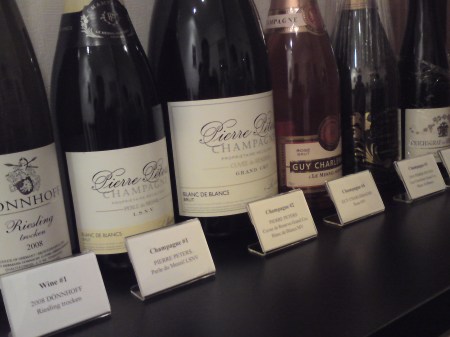
The primary feature that evening was the champagne wines of Maison Pierre Peters, a family-owned estate situated in the Cote des Blancs since 1919, and one of several agency wines carried by Wein & Vin, a wholesaler set up by Boon. We began with a  2008 Donnhoff Riesling Trocken, a pale luminous glow with lifted aromas of citrus, honey, nectar, apricot and peach, suggesting wonderful depth. The floral fragrance carried well onto the palate with a sweet and intense expression without being overbearing, ending in a somewhat short, bitter-sweet pomelo finish, although it grew to become more persistent with time. Paired astutely with deep fried spicy mackerel, bringing out the wonderful freshness in the wine. Quite unique and delightful.
The Pierre Peters Perle du Mesnil LSNV followed next, paired with snow crab in a clear clam soup and sashimi. Pale, light-medium with less fizz but remarkably balanced with substantial wheat, yeast, toasty oak and a suggestion of depth. Not too dry on the finish. Excellent body. Expands further at the finish with biscuity, nutty flavours.
This was followed by Pierre Peters Cuvee de Reserve, Grand Cru, Blanc de Blancs NV (en magnum), paired with sea perch and sea urchin, apparently opened and aired for 24 hours under temperature control. The results are telling. Light-golden, biscuity with deep, crispy notes of toasty walnut, creme de la creme and a substantial oily-texture on the mid-palate. It gradually morphed into a seamless whole, the vibrant acidity ensuring a certain lightness of touch. Quite a complete champagne, I’d say, if it weren’t for the following wine that upstaged it.
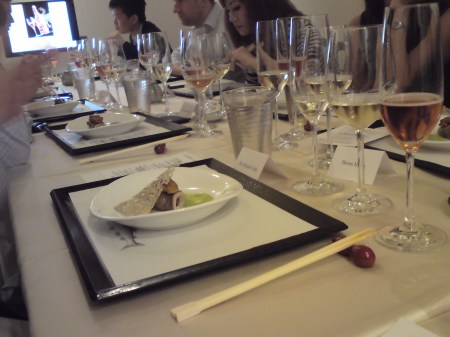 The 2000 Pierre Peters Cuvee de Reserve “Les Chetillons” Grand Cru Blanc de Blancs represented the first time I’ve had champagne served in a white wine glass, and what an educational experience it turned out to be. Supposedly made from old vines over 45 years of age from three plots in the Grand Cru village of Mesnil-sur-Oger that the owners declared as “one of the finest pieces of land in Champagne”, and it shows. Very open. Fantastic bouquet full of secondary aromatics. Lives up to lofty expectations on the palate. Deeply complex and layered, producing a kaleidoscope of flavours and colors, more of yeast, apples, pineapples and peach, smoky, broad, smooth and expansive. Ripe yet elgant, the rich minerality enhancing the purity of the fruit. It reminded me of a Philipponnat. Absolutely beautiful. We paid the ultimate compliment by purchasing a case on-the-spot.
From Pierre Peters, we moved on to another champagne house also located within the village of Mesnil-sur-Oger since 1892: Champagne Guy Charlemagne. We were presented with the Brut Rose NV, made from 100% pinot noir, paired with river eel and mushroom rice. A lovely pinkish tint. Flavours of toasty oak and grapefruit producing that characteristic yeasty note, medium-bodied, the cutting acidity leading on to a dry finish. Developed some pungent barnyard as it sat in the glass, adding to a sense of depth. I’ve always enjoyed rose champagne and this example was without exception.
Next, a “mystery wine“. Powerful nose of petroleum character – reminding me instantly of turpentine as well as childhood days spent sniffing the fumes off the petrol cap of my father’s old Morris Minor. Highly addictive – the wine, I mean – with dense oily textures imbued with principal flavours of fig, nectar and apricot. Open and transparent without being heavy. It turned out to be the Guy Charlemagne Ratafia, made by fermenting the fresh must of pinot noir (from Champagne, of course) with a blend of liquor, 18% by alcohol and typically served as an aperitif in Champagne. Wow. I’m glad this came towards the end of dinner, but I’ll be happy to sip this quietly late at night on its own while watching a great movie.
And, finally, an 1989 Kesselstatt Scharzhofberger Beerenauslese to round off the evening’s proceedings. Deep ash cherry. Heavy, almost smoky, of cooked apples. Slightly resinous, dense, almost medicinal in quality, the low acidity and dry stern finish an instant cue that this wine has spent considerable time well into its maturity. Not unlike an aged sauternes just past its prime but, nevertheless, still enjoyable. I must thank Boon, and Wein & Vin, for such a generous and informative lineup, and I’ll be sure to drink more of these fabulous wines in time to come.
1995 Ch Calon Segur
The wifey and I shared a bottle of 1995 Ch Calon Segur at the restaurant Ember (at the 1929 Hotel) where the food is really quite excellent and reasonably priced (mains below SGD40), and the service prompt, friendly and highly efficient without any pretension, attracting a wine-savvy crowd who’d brought their own bottles, taking advantage of the relatively cheap corkage of only SGD20. 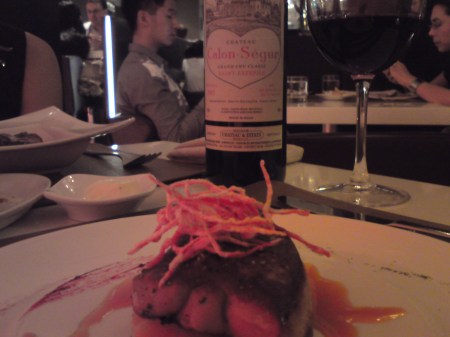 Popped and poured from bottle, the wine showed a deep garnet red with a violet rim, producing a lifted bouquet of blackberries, lovely ripe fruit, cassis and the classic minerality derived from the clay soils of St Estephe that defies accurate description (a trace of chalky firmness in the background), combining into a wine that probably would have been quite hedonistic in its youth. Very harmonious right from the start, soft, yet imbued with the right degree of intensity. It mellowed quite rapidly in the glass, its core opening up to reveal greater depth and transparency. Beautifully integrated, transforming further after 60 minutes, gaining weight and concentration, the fruit being more focused, the wine more complex, developing some velvety tannins as it glides into a savoury, persistent finish. Seemed more youthful and weightier than a bottle drank in Aug 2009 (see blog entry “Ward 48 dinner at Jade Palace”). At its peak now, and will probably still hold for many more years to come. Excellent.
A mostly Morey St-Denis affair
The Burgundy group met again, upon the re-visit of YW, on 27 May at Imperial Treasure Super Duck at Paragon, a venue that hasn’t been entirely convincing as a flgship restaurant: service tends to be slow and indifferent (although it picked up as dinner wore on), and the Peking duck isn’t especially compeling to be self-recommending. When I learnt of the Morey St-Denis theme, set by KG as usual to his lofty standards (he doesn’t need to mention the words Grand Cru…it’s understood), I knew I was in trouble.
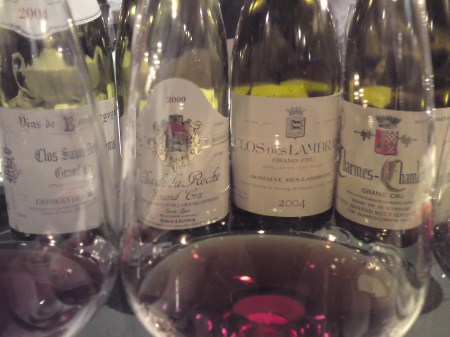
We drank in two flights, beginning with a 2004 Domaine des Lambrays Clos des Lambrays Grand Cru (courtesy of See Lim). Classic pinot tint. Absolutely fragrant on the nose, reminding me of sancha, hinting at wonderful depth, although the initial impression on the palate was disappointing – medium-bodied, undifferentiated, lacking in appreciable depth with a discernible alcoholic tone. Things were completely different 90 minutes later, the wine gaining in weight and intensity, becoming denser, developing a sharp attack on the mid-palate and finishing with flavours of apricot and sweet-sour plums. A couple of guys with olfactory malfunction (I suspect) loudly declared the presence of ginseng (terribly embarrasing), which I disagree. Rather, it was a more linear and focused expression of the pinot noir in relation to its terroir, richer with greater intensity and a trace of minerality. And so it remained until the end of dinner.
The 2004 Domaine Georges Lignier et Fils Clos St-Denis Grand Cru (courtesy of See Lim), drunk alongside the above, was immediately lighter, possessing a high-toned sweetness (from KG; I agree). More feline with broader aromatics. Could easily be mistaken as “thinness”, but actually it possesses a more complex nose than the Lambrays, eventually developing greater weight and color. But the beauty of this wine lay in its great purity of expression of the pinot fruit, deeply layered yet superbly transparent. Full of delicacy and finesse. However, it became less remarkable on the palate after a couple of hours, although its bouquet remained absolutely seductive.
The second flight consisted of the 2000 Domaine Hubert Lignier Clos de la Roche Grand Cru (courtesy of KG). Dusty red, a dense, medium-bodied wine coated with sacharine, rather short on the finish. It became more open upon further airing with some of the density dissipating, becoming more generous with red fruits and sweet plums and some complexity emerging. It continued to evolve as the evening wore on, producing a myraid of flavours. Not the last word in complexity, but very pleasurable, nonetheless.
Not having the time nor resources to procure a Morey St-Denis, I contributed instead a 2003 Domaine Armand Rousseau Charmes-Chambertin Grand Cru, the only wine to be decanted. With the pleasures of an exquisite 2003 Le Chambertin (courtesy Kieron; see “Perfect Dinner @ Iggy’s”, Dec 2009) from this same domaine still lingering in my mind, I knew this Charmes-Chambertin from the same vintage would definitely be drinking well. The deepest pinot color of the evening, with a lovely bouquet promising rich red fruits coated with sweet vanilla, at just the right dgree of ripeness in spite of the unforgivingly hot growing season. Light-medium. Elegant and delicate, yet finely layered with wonderful depth and richness and concentration in the middle, a hallmark of top burgundies. Superbly balanced and crafted without excess, bathing the connoiseur in an infinte cerebral glow long after its finish.
RWJ Anniversary Dinner
I am constantly amazed that people actually hit on my wine journal, intentionally or unwittingly. Either way, I’m simply grateful that RWJ has not languished as a lonely webpage, keeping alive my fantasies that RWJ actually feeds, nourishes and fulfils the curiosity and appetite of oenophiles around the world. Of course, such a milestone deserves a celebratory dinner but, really, it’s just another excuse to pop another lineup of excellent wines. Although it took place on 18 May 2010 at Saint Pierre, the dinner should have happened on 12 April, but I guess it’s better late than never.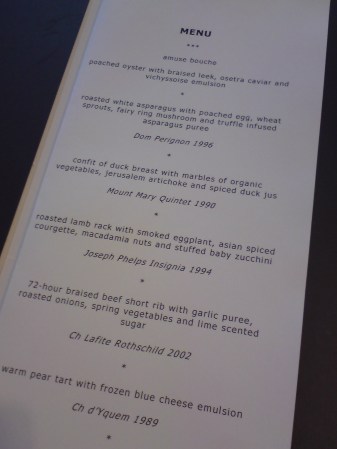
We began with the customary 1996 Dom Perignon (courtesy of David). Dull golden, creamy with plenty of yeasty overtones and bitter citrus, slightly sweet. Great presence. It opened up with time, becoming more transparent and deeper, developing great mineralityand vibrant acidity but never assertive nor domineering. Broader and infinitely more expansive on the palate after the poached egg. It evolved quickly after settling into its temperature window, turning on its power yet remaining elegant and seamless. Most aristocratic. Second time I’m tasting this wonderful champagne, the first occasion in Dec 2009 (also courtesy of D) at the same restaurant, where it’d seemed a bit more multi-dimensional. Perhaps this time we’d drunk it a bit too quickly.
The three reds were tasted simultaneously after the champagne. The 1990 Mount Mary Quintet (courtesy Hiok) represents the first time I’ve tasted an Aussie cabernet blend that’s aged 20 years. Dusty dark red. Powerful bouquet and silky, giving way to dark berries, bit of plum and licorice. Slight herbal medicinal lift. Medium-bodied. Smooth. Not showing much depth nor length initially but it finally hit its groove after a couple of hours, gaining more depth and weight, revealing glorious rich red fruits laced with glycerin, turning on its feminine charm. Absolutely harmonious with no longer any trace of plumminess. Beautiful.
The 1994 Joseph Phelps Insignia (courtesy Kieron) that followed was unmistakably New World right from the start. Very deep red. Undeniably powerful, very ripe and extracted (though not overdone), producing a mild medicinal overtone. Obviously deep, very rich and concentrated. Lost its heaviness after a couple of hours, whereupon it morphed into a very seamless and harmonious whole, not unlike the Mount Mary, but more masculine, no doubt about that.
 And then came the 2002 Ch Lafite Rothschild, a testimony to this famous estate’s skill and resources in producing a wine of exceptional quality in spite of such a poor growing season. I’d double decanted it at around 3.20 PM, leaving the decanted wine (as well as the washed empty bottle) inside my kitchen fridge to maintain temperature integrity, pouring the wine back into bottle 3 hours later. As the bottle was still rather cold when I arrived at the restaurant, the Sommelier wisely allowed it to gradually warm up to ambient temperature before uncorking it. One could not help but notice the intense brooding nose arising from the deep garnet red, very reluctant (as Kieron noted), almost sullen, but there’s no mistaking the rich fruit and dark berries that lay beneath. Gradually, like the proverbial flower that greets the morning sun, it began to bloom. Slowly but surely, the rose-scented fragrance began emerging, matching the sweet blackberries and a deeper vein of raspberries laced with the minerality of creosote. Initially medium-full, a tight masculine Lafite, but it kept developing in the glass, gaining more breadth and weight but, at the same time, becoming more relaxed and softer, and eventually by the final pour, a bit of the quintessential feminity came through within the velvety texture. Obviously we’d drunk this way before its maturity, but that was the whole idea – to gain insight into a developing Lafite, and the lesson learnt is that an off-vintage Lafite can still impress. Perhaps it’s best to let my remaining bottle rest another 10 years.
Finally, the 1989 Ch d’Yquem (courtesy of PS). I am reminded of the 1989 Rieussec – a darker hue of gold, almost orangey, producing a lovely mix of nectarine, apricot, honey and brandied cheries. Still quite lively on the mid-palate although this mature wine has lost a bit of its acidity, enhancing the essence and concentration of the remaining fruit. A lovely end to a wonderful evening of quiet dining, and the beginning of greater things to come for RWJ.
Notes in brief…(May 2010)
2006 Ch Le Conseiller, a Bordeaux Superieur from Jean-Philippe Janoueix, picked up for only SGD36 at Crystal Wines. Decanted for 30 minutes. Dull dark red. Not an insipid wine – there’s quite a bit of fruit, but it is overwhelmed by the oak – lending it a smoky, woody character with dusty tannins and an austere dryness. It’s cabernet sauvignon predominantly (even though the label doesn’t say anything), but rather nondescript. Could easily pass off as a New World straight cabernet varietal.
2000 Domaine Nicolas Potel Maxis-Chambertin Grand Cru, decanted for 90 minutes at Jade Palace. Slightly restrained initially, the fragrance of red cherries and strawberries keeping its distance, resulting in a wine that’s elegant rather than an intense Grand Cru one expects from this producer. Then, like a woman shedding her loose clothing to reveal her lovely figure, it began developing in the glass, gaining a saccharine coat on the nose and a distinctive oily texture on the mid-palate, infinitely deeper although missing the layering and colors that come from top producers. Perhaps it’s a vintage issue, but this Grand Cru is great value at SGD125.
2001 Ch Bernadotte, decanted for an hour at Jade Palace (courtesy Jessica s-a). Dusty red, with some evolution at the rim. I’d expected some toughness of a typical Haut Medoc, but this wine was surprisingly all charm – blueberries, a touch of sweetness, quite gentle on the entry, medium-bodied, rounded, revealing excellent fruit concentration and reasonable depth without any hint of smoky greeness, finishing with very smooth tannins. Elegant and more developed than the La Chapelle de Lafon Rochet (below). I think this confirms previous impressions that the 2001 clarets are absolute steals. In fact, it seems there’s a growing consensus, even amongst the Bordelais, that the 2001s are better wines than the over-hyped and over-priced 2000s. If a Haut Medoc is performing so well, what about a grand cru classe? Better start stocking up.
2005 La Chapelle de Lafon Rochet, decanted for an hour at Jade Palace (courtesy Jessica s-a). Deep purplish red. Somewhat fruit-forward, but it’s lovely – ripe, cool, principally of dark berries. But it is most striking for the prominent minerality on the mid-palate, relating to the predominance of clay in the soils of the St Estephe terroir. Very well balanced. Reminds me to some extent of 2005 Les Hauts de Smith. Very good, but the latter is cheaper, provided you can find it.
2004 Ch La Conseillante, at Infuzi (below). Having tasted some 2004 wines from the Left Bank that were drinking surprisingly well, I was keen to know how those from the Right Bank, with their higher percentage of earlier-maturing merlot, would perform. It turned out to be an astute choice. Aired in bottle for 40 minutes, the wine inspired confidence right from the initial pour with abundant fragrance of raspberries and bluberries at just the right level of ripeness emerging from the purplish-red abyss. 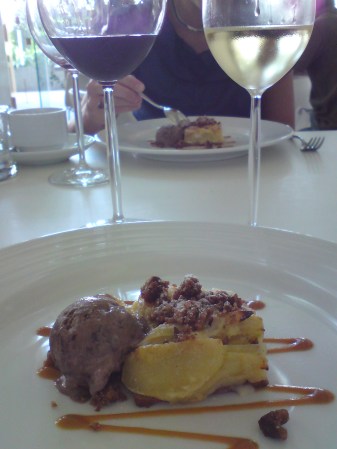 This held up well on the mid-palate, where the wine was surprisingly very soft and accessible, absolutely poised and elegant, revealing a level of sur-maturite normally encountered only in wines greater than 10 years from vintage. Feminine and alluring, making you long for sip after sip. Yet to develop true secondary aromatics, of course, but this is so lovely that it confirms my observation that the 2004 clarets, classic in the traditional manner, are drinking best now amongst the vintages of the current millenium (discounting the washed-out 2002). I’d definitely buy more to drink and to lay down.
2006 Domaine Jean-Paul & Benoit Droin Chablis 1er Cru “Montee de Tonnerre”, over a leisurely lunch at Infuzi at Biopolis (courtesy K). Luminous marble with loads and loads of chalky minerality and background vanilla on the nose and mid-palate, really testing the threshold. But it all held together and, with time, some of the dense flintiness dissipated, resulting in greater depth and transparency, eventually holding steady with more crispy citrus notes emerging. A Chablis of considerable power and body. Excellent.
Crystal Wines MEGASALE, 15 May. Highly popular with its customers for the excellent sale pricing as well as the range of wines available for free tasting. 1999 Bahans Haut Brion: An evolving dusty red. Red fruits and violets, but lacking in depth and development, slightly hollow towards the finish. 2006 Napa Angel cabernet sauvignon: Deep red. Fruit-forward. Loads of blackcurrants, dark chocolate. Sufficiently weighty but nothing to shout about. 2004 Ch Montrose: Dark red. Excellent fruit density and depth, unmistakably Haut Medoc in origin, smooth and seamless but lacking the typicity of a young St Estephe.
2002 Ch Pichon Longueville Comtesse de Lalande, at a party for Residents on 12 May where we booked out the entire Moomba restaurant for a chef’s menu (we began with Domaine Chandon Brut NV, followed by 2008 Grosset Polish Hill riesling). Decanted more than 2 hours. Deep red. Nose of blackberries and dark fruits, deep enough but not distinctive, missing the usual tobacco/ash/pencil shavings. Soft and extremely smooth on the palate, elegant with fairly good body but again lacking the opulence and supple velvety tannins one has come to expect from Lalande’s merlot component, ending in a finish that’s decidedly hollow. A soulless Lalande. Trounced on this occasion by a second wine, the 2005 Les Hauts de Smith (I’d brought 3 bottles as housepour), which offered much better fruit quality, richness and depth as well as the unmistakable earthiness (resembling bitter chocolate) of Pessac-Leognan, culminating in alluring sexy tannins dancing across the palate.
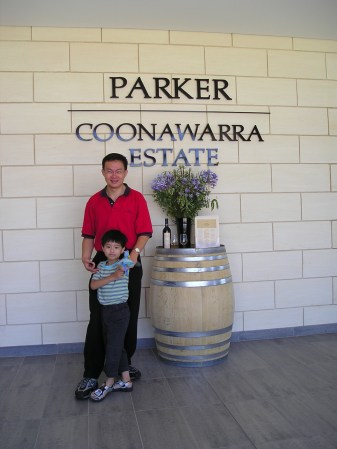 1998 Parker Estate Terra Rossa First Growth, over lunch at Golden Peony. Decanted for an hour. The quality of this Coonawarra estate can be highly variable from vintage to vintage (a recent tasting of its 2000 was off-putting – a huge unctuous monster of a wine). However, I was confident that the outstanding vintage of 1998 would produce an excellent wine, and I wasn’t disappointed. Showing an evolving vermillion, this cabernet sauvignon offered loads of plummy red fruits (a distinctive Coonawarra character) with a fair level of creosote, dried Chinese herbs and mocha, underlined by a deep vein of minerality from the terroir of the famous limestone coast. Slightly disjointed initially, but it gelled together after 45 minutes into a softer wine, quite harmonious, medium-full on the attack with excellent grip, rounded at the edges, structured without being tannic with a persistent finish. Quite excellent indeed, and I felt would have been even better had we given it more time. A wine that’s just beginning to evolve, with a long life ahead. I shall refrain from opening another for the next 5 years. Three more remaining.
2004 Taranga Oliver HJ Reserve shiraz, during happy hour with my Residents. Decanted for 3 whole hours. Still huge, overflowing with abundant licorice, plum, exotic spices. Minty medicinal finish. Full on the attack, almost unctuous, resinous, very ripe fruit fully extracted to the hilt with a trace of alcohol on the nose and finish. All brawn. Well crafted, undoubtedly, but it’s too big at this stage for the various components to come together. 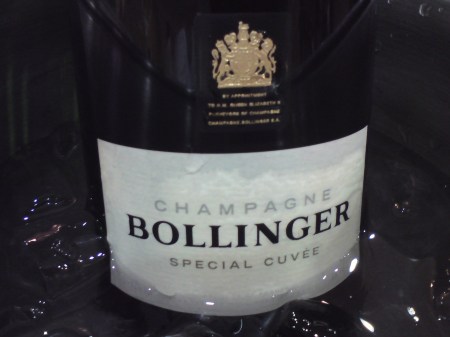 I’m reminded of an Amon-Ra, but that has greater sophistication and integration right from the beginning, and that’s the distinction between a Barossa and McLaren Vale shiraz.
Bollinger Special Cuvee NV, Mother’s Day dinner at Ming Kee. Clear golden. Initially exuding loads of zesty citrus, but this quickly settled down to be taken over by deeper nutty flavours with plenty of malt, yeast and background minerality. Very good body, with an expensive feel. Excellent.
1998 Wynns Michael shiraz, at an impromptu happy hour on 5th May. Decanted for an hour. Deep ruby. Full-bodied with loads of licorice, plum, dried herbs, leather, hint of spice (not overtly pepperish), though the wood is still quite discernible. Developed further complexity and layering with time, with flavours of mocha, chocolate and sweet vanilla emerging, its contours fairly smooth and tannins very well managed. Much more cohesive and integrated than the 1994. This is an excellent example of a cool-climate Coonawarra shiraz (as opposed to cabernet, which that region is renowned for), proving the age-worthiness of Australian shiraz. Only one bottle remaining.
 2006 Ch Smith Haut Lafitte, a half bottle (the other half quickly poured into an empty half-bottle and kept in the fridge) over a simple dinner at Imperial Treasure ION on Labour Day. Rich aromas of dark berries, blackcurrant, and sweet vanilla, slightly oaky but never intrusive. Quite high in extraction, but it softened and mellowed very quickly within 30 minutes, surprisingly becoming very accessible, its tannins remaining very much in the background. A very well-crafted wine, no doubt, that prefers to impress immediately rather than presenting the traditional terroir of Pessac-Leognan, a style not unexpected from this estate. At SGD90 (during a promotion at Carrefour; usual SGD106), I’d buy this but I fancy a Domaine de Chevalier will provide higher cerebral satisfaction.
This review marks a fresh initiative where knowledgeable and experienced oenophiles in this region are invited to submit reviews of notable wine experiences exclusively for RWJ. For the inaugural guest editorial, RWJ is proud to present Dr Kieron Lim, whose astute palate and impeccable taste is held in high esteem by winemakers across the globe from Moss Wood, to Chateau Margaux, to Peter Michael. Here, Dr Lim gets a chance to re-visit Ch Margaux, albeit at The American Club…
 When Chateau Margaux comes to town, you clear your schedule pronto and be prepared to be blown away. That was exactly what I did. I knew instantly that it would be a memorable night even before laying eyes on the menu and wine list. I had great faith in the F&B team at The Club. It is, after all, the only private member’s club with enough kudos to host HRH Robert Parker Jr during his whistle-stop tour of Singapore.
Armed with my Smythson notebook, we arrived punctually at the club at 7.00 pm for a champagne reception. Freshly shucked oysters, grilled scallops, blinis topped with dollops of caviar were served alongside the aperitif: 2000 Dom Perignon. I have tasted this wine at least half a dozen times in the past 6 months and it never fails to put a smile on my face. Aromas of brioche, freshly baked cookies, citrus and toast greet you as you put your nose in the glass. Not as creamy and fat as I remembered it to be on the palate. Medium bodied, poised and elegant. Vibrant acidity keeps it fresh and inviting; making you yearn for the next sip. I find it more enjoyable than the 2 preceding vintages. While the 2000 is not in the same league as the ’85, ’90, ’95 & ’96, it is certainly not far behind.
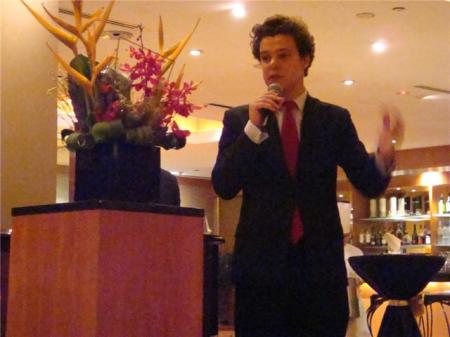 Gracing this event was Thibault Pontallier, son of general manager and chief winemaker, Paul Pontallier. He is the Asian representative for Ch Margaux and is based in Hong Kong. Pontallier Jr had insisted that all the wines served tonight were to be ex-chateau, so he had them specially flown in and generously included a “mystery Margaux” for us. What a champion!
As guests were being shown to their tables, there was a buzz of excitement and chatter coming from the other side of the restaurant. We soon realized what it was about. The most influential wine critic in the world was among us. Robert Parker, who had just concluded a Masterclass for 130 people, decided to do quick walk around the Presidential Room to say hello to his loyal fans. It was a nice touch for someone who was obviously jet lagged and sporting a rather painful limp. The doctors among us were trying to make spot diagnoses (there were equal votes for osteoarthritis and gout!).
Dinner began with an amuse bouche of sea-urchin ravioli followed by my favourite dish of the night : superbly executed white asparagus with a sinfully rich bernaise sauce, topped with an egg with a runny yolk. Simple yet decadent. The first wine of the night, 2004 Pavillion Blanc, was the perfect match. Pale golden. Impressively open nose of lemons, orange peel, grass (?), on a background steely minerality. Almost burgundian but with more density. Full on the attack with an impressive mouthfeel. Expansive mid-palate. It has the oilyness of a grand white burg. Finishes a little short and disjointed after the very promising bouquet and entry. Perhaps we should give it more time before we uncork the next bottle. While very good in its own right, it does not have the complexity and length of the other Premiere Grand Cru Classe white Haut Brion Blanc, which I feel is the benchmark white bordeaux against which all other dry whites are measured.
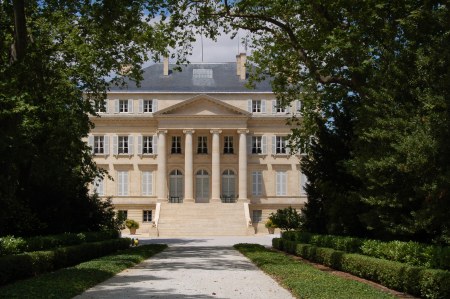 Next came the reds in 2 flights. The 1998 Pavillion Rouge had a rather odd nose of plums with a musky, damp quality which reminded me of “old socks”! Medium and dry on the entry. Hollow mid-palate, with fruit that is drying out and fading. Insipid finish not worthy of its pedigree. A rather uninspiring start to the reds, but perhaps an accurate reflection of the quality of the cabernet in the left bank in 1998 and the result of “declassifying” the lesser grapes deemed unfit to make the grand vin. It is almost the complete opposite to the fabulously rich and concentrated ’98s from the right bank. Drink up if you have any ’98 Pavillion Rouge in your cellar!
The 2003 Pavillion Rouge was deep purple to the rim with exuberant ripe dark fruits that leapt from the glass. A tower of tannins and structure were softened and balanced by an abundance of fruit and well integrated oak. Good concentration with an impressive mid palate (a quality that I find is the hallmark of a good wine). Chocolate and blackcurrents on the palate. Tightly wound. Head and shoulders above the 1998. Very impressive for a second wine. It would be interesting to compare this against the Les Forts and Carruades.
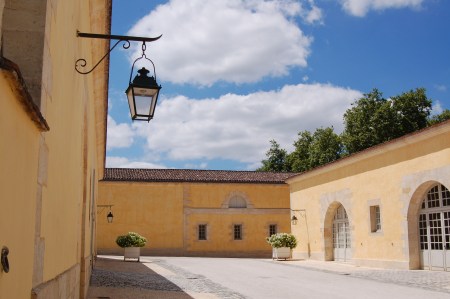 The second flight began with 1999 Ch Margaux. A developed nose with secondary aromas emanate from the glass : violets, red berries with a hint of smoke and old leather(?!). Superbly elegant. Great balance and poise. Sweet velvety tannins counters the fruit perfectly. Great concentration on the mid palate without an ounce of heaviness or excess. Impressive length. This is drinking beautifully now. This wine brought back fond memories. We were served this wine at the chateau when I paid homage to this mecca in 2001. The 1999 will always live in the shadow of the 2000, but my wallet is not complaining.
The 1995 Ch Margaux that followed had lifted aromas of blackberries, white pepper, summer flowers and game that soar from the glass. For me, the most flamboyant wine of the night. It has an extra dimension compared to the 99. Medium to full. Dense and concentrated. Rich without being over the top. Tannins are still prominent. Expansive mid palate that keeps growing in the mouth. I get a slight rustic element in the finish. Can be enjoyed now with extended decanting. But will continue to develop and improve for decades to come. I remember vividly committing infanticide when I foolishly uncorked this wine at a New Year’s Eve dinner to usher in 2005. Even with 3 hours of decanting the wine was closed. It will be fun to track the evolution of the ’95 and ’96 Margaux!
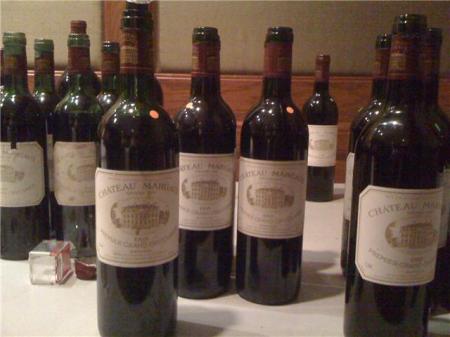 And how about the Mystery Red (en magnum)? Slight browning at the rim. Pure, singular expression of Margaux. This is a classic. A multi-dimensional, kleidoscopic aromatic profile greets you when you put your nose in the glass. Violets, cedar, soy, game play tricks on your olfactory nerve. On the palate, it was sensational. It had the vigour of youth but the balance and elegance of a grand dame. Medium bodied. Good concentration, with a broad mid-palate. Refined tannins but still providing enough structure to see it through at least another decade. Long lingering finish. Intoxicating and aristocratic. My bet was on Margaux ’90 or a ’96. We were floored when it was revealed as the 1983. We had tasted this wine at a Bacchus event at Iggy’s some 4 years ago. Amazingly, it was drinking like it was a good decade younger tonight. Is this the effect of perfect provenance and bottle maturity en magnum? Possibly. Is this why ex-chateau bottles command a premium? Probably. Is it humbling to taste wines blind? Definitely. Thibault Pontallier says that he prefers this wine to the 1982; and not only because it was his father’s first vintage as winemaker!
Finally, a very generous and luxurious end to the evening, the 1997 Ch d’ Yquem. This long-legged gleamingly golden beauty was sheer opulence. Caramel, honey, candied tropical fruits married with enough acidity to keep things in check and not send your pancreas into overdrive just by taking a whiff. Open and accessible. Lush yet serious on the palate. Apricots and candy to the fore. Still very primary. An infant. Forget about it for another 10 years. It had been a wonderful evening of great food and superb wines. Certainly worth writing home (or to RWJ) about. Salut!
In the midst of a mad week where endless items jostled for my immediate attention (not least the impending Residency programme where, perhaps, the best solution between revolutionary change and utter despair lies in a good bottle of red), I found some sanity at a fabulous vertical of the famous Hermitage La Chapelle wines of Domaines Paul Jaboulet Aine on 20 April 2010 at St Regis, presided by the venerable Dr N K Yong and M. Christophe Brunet, account manager of the estate, as well as Ms Lisa Perotti-Brown, MW. Boasting a full attendance that was remarkably punctual, we wasted no time tasting the first flight, consisting of recent releases.
The 2007, of which we were reliably informed by M. Brunet that we were amongst the privileged few to taste this yet-to-be-released vintage, displayed a dull ruby red with flavours of red and dark berries of cool climate fruit, marked by a significant note of undergrowth and earthiness, distinctly oaky but unobtrusive. Medium-full, producing a silky smooth mouthfeel with fine tannins, slightly medicinal towards its moderately long finish without any trace of astringency. A fine example of a wine that’s already quite well-integrated at such an early stage. In contrast, the 2005 was a significant leap forward, brighter in color and much more lifted and expressive on the nose, hinting at once of predominantly red fruits and glycerin offering sweet fragrance. Its medium-bodied, mellow nature was highly appealing, revealing a rich core of ripe fruit. Absolutely harmonious and elegant without sacrificing power, although its finish was rather short. But a lovely wine it is. Excellent. The 2004 that followed, a dull ruby red, seemed a bit manic, initially very open on the nose with bright cherries before suddenly turning rather reticent, more austere on the palate than the preceding 2005 with a touch of earth, dull minerality, game and dank undergrowth. Certainly the fruit was less forward. But as if the wine had sensed that it had delivered negative vibes, its character changed again, becoming more expressive, more nutty with overtones of dried mushrooms and Chinese herbs, undeniably quite attractive in its own way.
The second flight, taking us back more than 10 years, was a major advancement. Here, at last, was the splendour of northern Rhone syrah laid out in all its glory. The 1997, showing an evolved red, was highly expressive, deeply scented with red fruits and perfume. Mellow, soft, revealing excellent levels of concentration with a rich core, layered with complexity, absolutely harmonious and integrated. Slightly dry on the finish but still retaining excellent freshness. Powerful, yet beautifully balanced. The 1991, fully matured, was initially sullen. No doubt there was plenty of glycerin, tropical fruits, cherries and raspberries but it was less exuberant than the 1997. Mellow, but somewhat sharp on the mid-palate and slightly hollow towards the short finish. Within the next hour, however, it staged the most amazing transformation, snapping into sharp focus with superb delineation and definition, the flavours more developed and expansive (whereas by then the 1997 seemed to be fading), becoming absolutely harmonious and infinitely complex. A great syrah, and definitely the Wine of The Night, an opinion shared by the majority. The 1988 that followed, extremely mellow, was marked by tremendous depth, complexity and finesse but in a most feminine manner, giving the impression of utmost delicacy, as if the wine would threaten to fall apart any time. Totally seamless and pure, but its power is yielding. This had definitely been great at one time.
The final flight was interesting for the way these ageing wines still held up to scrutiny. Drinking the 1985 was to taste the distilled essence of the syrah fruit, still showing good concentration and intensity with a sweet finish, although its bouquet was highly elusive where only aromas of kumquat was discernible. The 1982 surprised with a deep vein of orange-scented fruit, still quite full-bodied although clearly fading in freshness. And still hanging on to its last legs was the 1976, minty and bravely defiant, but faded, bringing this wonderful tasting to a most dignified close.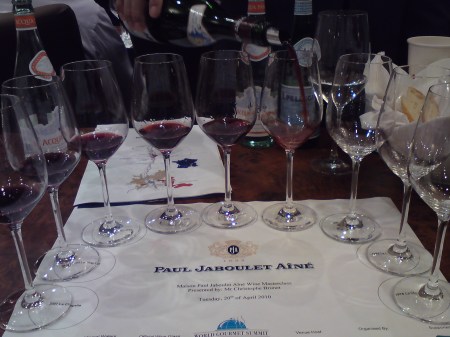
Three shirazes: Fox Creek, Kay Bros & Rockford
Almost every wine-drinker has heard of the Barossa Valley, but McLaren Vale, on the other hand, seems to suffer from an inferiority complex. Certainly, I knew nothing about it in 2002 (when I first became acquainted with Adelaide, South Australia) but my boss was most insistent that I take his car for a drive down Main South Road to McLaren Vale. It was only later during my actual sabbatical in 2003-4 that I came to appreciate the lovely 40-min drive down this picturesque region that produces some of Australia’s most robust shirazes, marked by a forward fruit character of charming rusticity (its cabernet, similarly, is characterised by dusty tannins). 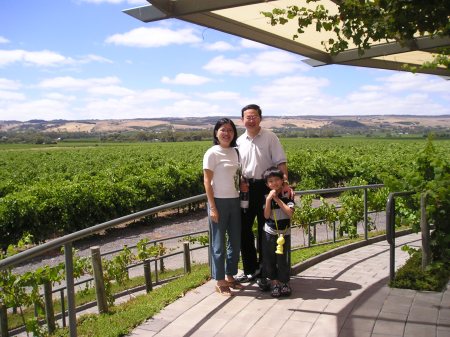 The 2002 Fox Creek reserve shiraz, over lunch at Imperial Treasure T3 on the 23rd, is a premium example of a top quality McLaren Vale shiraz. Dark red with a purplish rim, exuding a bouquet of plum, cassis, pepper and blue- and blackberries. Full-bodied and saturated but not overbearing, imbued with loads of quality ripe fruit coated with svelte velvety tannins, ending in a long minty finish without any of the disjointed alcoholic trail. A shiraz with a cool-climate feel, for a change. Quite harmonious and well crafted, for sure. More sophisticated and less rustic than usual for a McLaren Vale shiraz. Obviously still has a long life ahead.
On the other hand, the 2001 Kay Brothers Amery Hillside shiraz, at a family function at Jade Palace on the 24th, double decanted for 2 hours and aired further in bottle for another 1-2 hours, perhaps best epitomises a McLaren Vale shiraz. In spite of double decanting, this dark inky red was still hugely dense, though perhaps not quite as intense as a Block 6 from the same estate, but this is unmistakably Australian all over – very forward, warm, overflowing with licorice, plum, very ripe dark berries and blackcurrant with a touch of bramble, supported by a tannic back bone and ending with a medicinal minty finish, contributed probably by the still discernible alcoholic bed. Rather one-dimensional, whereas the Fox Creek (above) possessed greater structure and layering. Nevertheless, this wine has managed to shed quite a lot of its rusticity, for I remembered a sample tasted at its cellar door in 2004 was utterly monstrous, tannic and disjointed, almost brutal. I don’t think anything can really be done about the jammy wines produced by such an arid continent. Not my preference, I’m afraid.
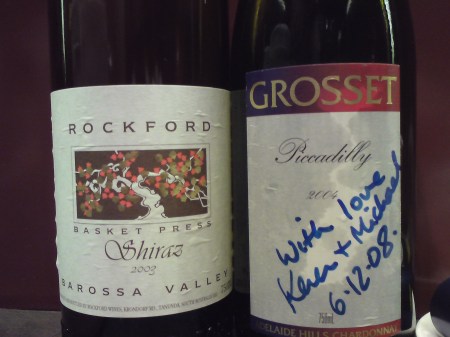 The very best Aussie shirazes still hail from the Barossa, as exemplified by the 2003 Rockford Basket Press shiraz, over dinner with my boss from Adelaide at Imperial Treasure T3 on the 25th. Again this was double decanted for an hour, followed by another hour of decanting at the restaurant. Deep inky red with a purplish rim, the warm shiraz fruit producing flavours of plum, spice, a hint of licorice and ripe blackberries, ending in a mild medicinal finish, but the difference that sets the Rockford apart from other shirazes is that the flavours are much more lifted and deft, managing to avoid heaviness, and the wine infinitely much more well crafted and sophisticated with tannins that are superbly integrated and smooth without any tannic backlash. Little wonder that I’ve kept a vertical going since the 1997 vintage (sans 2000).
And, finally, a note about the 2004 Grosset Piccadilly chardonnay, a gift from my boss that I hand-carried back from Adelaide in 2008 which I’m glad to share with him this evening at Imperial Treasure T3. Piccadilly of Adelaide Hills is well known for its wonderful cool-climate chardonnay (the most famous example being the over-priced Petaluma Tiers), although I must say the first thing one associates with Grosset is its fabulous Polish Hill riesling of Clare Valley. This chardonnay might just make me change my mind: very pale, but the bouquest has unmistakable top drawer minerality, butterscotch and limey biscuity character, aromas that were highly floral and lifted with refreshing acidity. Beautifully integrated and lovely. I’m reminded of a Chassagne-Montrachet, albeit a notch lower in intensity and richness.
Notes in brief…(April 2010)
2007 Hobbs shiraz, a glass courtesy of Augustine Kum at Moomba. This wine is associated with Chris Ringland, who is behind the cult wine Three Rivers and, at one time, Rockford as well, and it shows. Impenetrable inky red. The wonderful shiraz fruit here is absolutely top-class, unmistakably Barossa in style but its density doesn’t compromise the superb definition and depth, still managing to remain quite elegant in spite of layers of ripeness, licorice, cassis, scorched earth and mint. Quite excellent, really.
2005 Les Haut de Smith, over dinner at Moomba. My fourth bottle over the past year. Deep impenetrable red. Aromas of black berries, blackcurrants, violets and roasted herbs. Fruit-forward with plenty of stuffing and grip, well-balanced, slightly dry on its minerally finish. It seemed slightly less intense on this occasion, but it still is a very good wine, no doubt about that, for only SGD60.
2004 The Moorooduc chardonnay, over crab beehoon and mussels at Ming Kee Live Seafood restaurant. Probably the third or fourth time I’ve tasted this wine over the past 12 months, always coming close but never quite making the mark. It finally hit all the right notes on this occasion. Very good levels of citrus, lime and crushed minerality, medium-bodied with soft vanilla textures, fairly lifted aromas, impressively fresh. Lacks the last ounce or two in opulence, weight and intensity, but it is very well balanced and served its purpose very nicely.
2006 Leeuwin Estate Art Series chardonnay, at the combined ward dinner at Long Beach Seafood restaurant on 27th April. Popped and poured. Very lovely right away, showing an excellent balance between the cutting acidity of citrus and a trace of sweetness of tropical fruits, its buttery texture topped with vanilla from the new oak, complete with some oily texture and fat in the middle, quite similar to a Puligny-Montrachet, just a touch lesser in minerality. Not as over-the-top as the 2005 vintage, but time may alter that perception. Bob Rees of WEA offers the best price for this (only SGD88). You’d be a complete idiot not to get any.
2008 Grosset Polish Hill riesling (courtesy PS), at the above dinner. Dry, crisp with very fresh acidity and some flavours of tropical fruit marked by a tinge of licorice that doesn’t really quite match. However, the drinking conditions were suboptimal – freshly popped and far too warm. A second pour was more reassuring, revealing much more body and depth. Nevertheless, this is the third time I’ve tasted this wine over a year and I’m convinced it’s a waste to drink this at this stage. I think it’ll age very well and I’m not gonna touch my remaining 2 bottles, not to mention another 4 bottles of the 2009.
1995 Ch Haut-Bailly, shared with the wifey over an excellent dinner of beef cubes and pork ribs at Asia Grand. This is showing better than an initial bottle 4 months ago at Kome (see “Notes in Brief’ Dec 2009), both sourced from Auric Pacific for SGD110. 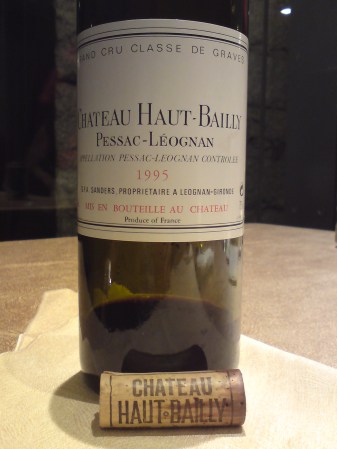 An evolving red with a deep garnet core, not really impressive at the first pour where it seemed rather lean. But it improved very rapidly thereafter with notes of tobacco, dried herbs, and lifted fragrance of red fruits on the nose, corresponding with the impression of raspberries and sweet cherries of considerable intensity and richness on the palate, medium-bodied, grippy, soft, revealing good depth and layering with just a hint of metallic earthiness at the finish. And it simply got better and better, gaining in richness and complexity with each pour. Quite gorgeous, really, even though its character leans very much towards a Medoc, rather unlike a Pessac-Leognan. This, together with previous tastings of Lagrange and Calon-Segur of the same vintage, confirms my opinion that 1995 is the first of the so-called good vintages of that decade that’s drinking very well now, which should continue to remain at the peak for several more years.
2003 Ch Clerc-Milon, over lunch at La Noce at Valley Point. I remembered buying 3 bottles of this for only SGD88 during its en primeur campaign (inclusive of freight/duties). Popped and poured without decanting, showing a deep garnet red with a very inviting bouquet of ripe dark berries, blackberries, tobacco, roasted herbs, and a hint of vanilla. Warm, medium-full, soft at the edges, structured, striking an excellent balance between the generous fruit and the intensity of the finely-knit tannins, displaying great length. Already quite accessible at this stage, confirming my observations, thus far, that the wines of 2003 may be enjoyed now. Even chef Salvatore Catalano liked it. Excellent stuff.
2006 Ch Lalande-Borie, over an excellent dinner at Jade Palace. Many tend to confuse this Saint-Julien cru bourgeois with Lacoste-Borie (second wine of Grand-Puy-Lacoste), but Lalande-Borie is an estate unto itself, run by Jean-Eugene Borie and part of the greater holdings of the Borie family that also owns Ducru-Beaucaillou. 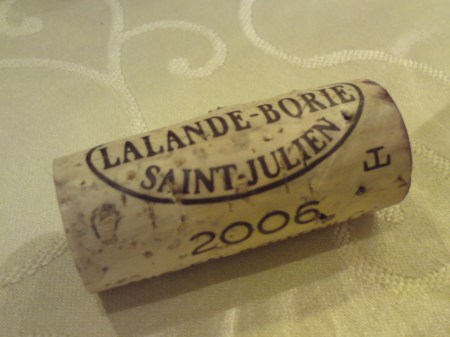 This medium-bodied wine doesn’t give away anything on the nose, but it was at once soft, rounded and smooth, with the excellent Medoc fruit producing its unmistakable notes of dark berries, cedar and a slight graphite hint cloaked within a light coat of vanilla from the oak, finishing on a mild plummy note with unobtrusive tannins. Unlike other wines of the Medoc, there is absolutely no trace of green unripe fruit nor toughness although, I suppose, it’s rather lacking in charm and character. Nevertheless, I enjoyed it. At SGD45 (usual SGD58), this will surely take some beating as a great housepour.
2007 Bliss Mendocino cabernet sauvignon, a gift, over lunch at Imperial Treasure T3. This Californian wasn’t encouraging on the first pour, where the wine, light red in color, seemed flat and hollow on the mid-palate. However, it rapidly gained weight within minutes, showing off flavours of predominantly red fruits and redcurrants, very decent in quality, within a medium-weight structure with well-managed tannins. A good quaffer.
2004 Ch Desmirail, at an impromptu happy hour after work. I was hoping that this would be a good bargain (SGD58) given the excellent experience I’ve had recently with Grand-Puy-Lacoste and Lagrange, all from 2004. But it was not to be. Too much greeness, no doubt from grapes that were less than ripe, and rather one-dimensional with a steely finish. Quite symptomatic of the irregular consistency of the Margaux commune, it’d seem. We didn’t manage to finish the bottle in spite of four of us.
 Ric's Wine Journal