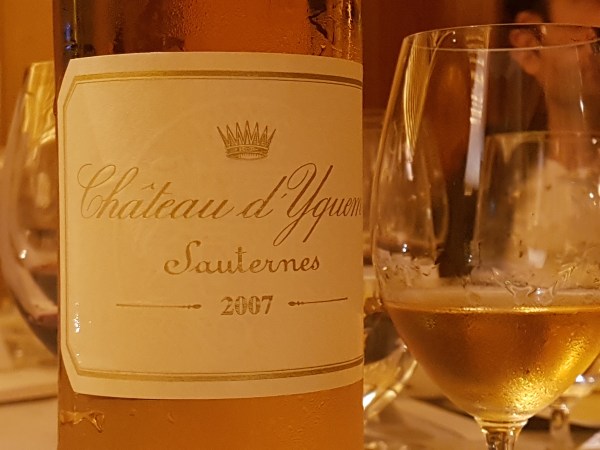
2015 Maison de Montille Saint-Aubin Sur Gamay 1er, popped and poured at Wah Lok, 01 Dec 2018. Ample in green fruits, lime and clear citrus on the nose. Rather full with sharp intensity, filling the palate with a broad expanse of dry minerality, developing a late floral bloom as it finished with traces of nutmeg and white pepper. Excellent value for money.
2012 Domaine Jean-Claude Ramonet Chassagne-Montrachet Les Ruchottes 1er, courtesy of Benjamin Ma at Imperial Treasure Asia Square, 02 Dec 2018. Straw colored. Closed initially, gradually proffering stony minerals that are slightly flinty along with an opague white floral tone. Excellent in concentration, displaying a distinct minerally balance followed by emerging white fruits and nutmeg, fleshing out with lovely oiliness, highly poised and elegant as it finished with notes of white pepper. Excellent.
1989 Olivier Leflaive Gevrey-Chambertin Clos Saint-Jacques 1er, courtesy of Dr Chua Yang at Imperial Treasure Asia Square, 02 Dec 2018. Beautifully evolved vermillion, exuding lifted aromas of incense, sweet cherries and ground minerals that carried well on to the palate with a gentle depth of red plums, tangerines and currants on a ferrous earthy floor, still displaying lovely freshness, acidity and complexity with very fine inner definition but will not improve further. Excellent.
2010 Domaine Georges Mugneret-Gibourg Gevrey-Chambertin 1er, courtesy of Roger at Imperial Treasure Asia Square, 02 Dec 2018. Good colour. Bright nose and palate of red fruits, raspberries and cherries with a lovely gentle lift. Medium-bodied, displaying very good presence and purity with gentle acidity underscored by subtle minerals. Full of feminine grace. Excellent.
2014 Chateau de Marsannay Chambertin Grand Cru, at Imperial Treasure Asia Square, 02 Dec 2018. Glorious color. Intense cherries, red fruits and rose petals on the nose. Medium-bodied. Fleshy and supple, quite rich in tone with fairly transparent textures layered with saline minerals but lacking complexity and character, rather short as well at the finish. Far better on the nose. Perhaps shutting down. Best to lay off for a few years.
2006 Bouchard Pere et Fils Chambertin Grand Cru, courtesy of Alvin at Imperial Treasure Asia Square, 02 Dec 2018. Beautiful vermilion. Effusive in rose petals and red fruits, utterly beguiling. Medium-bodied. Ample in delicious bright fruits and dark currants, underscored by a deeper darker streak with quiet subtle acidity, just a tad short. Still youthful. Made from purchased fruit.
2002 Donnhoff Niedenhauser Hermannscule (375 ml) courtesy of Alvin at Imperial Treasure Asia Square, 02 Dec 2018. Powerful diesel notes amidst sweet incense, dried apricots and light nectarine with some orange peel, medium-bodied, covering the palate with subtle acidity and burnished tones.
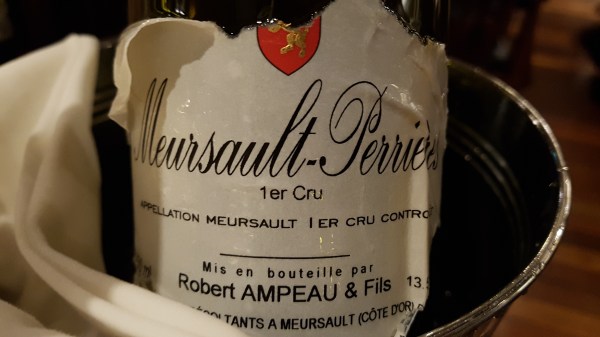
1995 Domaine Robert Ampeau Meursault-Perriere 1er, courtesy of Vic at the Tanglin Club, 4 Dec 2018. Dull golden. There may have been a hint of oxidation as notes of recessed chalky minerals with a bit of musty sheen wafted over. Showing well on the palate though with fine presence and seamless subtle acidity, very smooth, glowing with quiet intensity as it developed broader creamier textures.
2006 Kistler Stone Flat Vineyard Parmelee Hill Chardonnay, courtesy of Robert Kwok at the Tanglin Club, 4 Dec 2018. Light golden, exuding delicate white citrus and lime amid mild diesel tones, coating the palate with a luxurious sheen of rich creamy tones, rather gentle at first, building up in gradual intensity as it developed greater depth and structure with more earthy nuances and raw nutmeg. Very lovely.
2008 Kistler Somoma Coast Cuvee Elizabeth Bodega Headlands Vineyard, courtesy of Robert Kwok at the Tanglin Club, 4 Dec 2018. Delicious dark cherries and rose petals dominate with a lovely perfumed fragrance, imparting a velvety intensity on the palate.
1995 Ch Pichon Longueville Comtesse de Lalande at the Tanglin Club, 4 Dec 2018. Fleshy with matured ripe fruit that exudes tangerines, cedar and glowing dark plums on a backdrop of dried tea leaves, old leather and mushrooms, fleshy with abundant graceful elegance. At its best and will hold for many more years.
1982 Ch Ducru Beaucaillou, courtesy of Kieron at the Tanglin Club, 4 Dec 2018. This wine opens with a superb earthy pungency, still imbued with plenty of youthful vigour and verve from the rich layers of ripe dark fruit amid dryish textures, very correct in its Saint-Julien posturing, still far from drying out. A great classic claret at its very peak.
2010 The Hilt Old Guard Chardonnay Santa Barbara County, courtesy of KP at Il Den, 05 Dec 2018. Clear luminosity, effusive in dense citrus with a lovely sense of oiliness. Excellent concentration of white fruits with a deep ferrous core, very cleanly focused and precise, displaying sharp acidity amidst rich oily textures that developed growing intensity and some early complexity, finishing in a gentle glow. Excellent.
2002 Domaine Leflaive Puligny-Montrachet Les Folatieres 1er, courtesy of John at Il Den 05 Dec 2018. Mature deep earthy tones on the nose, beautifully open with good density of white citrus structured with chiselled chalkiness that imparted a clean, dry austere feel, very lithe and seamless, displaying excellent detail, culminating in a complex lengthy finish. Excellent, but do not hold any further.
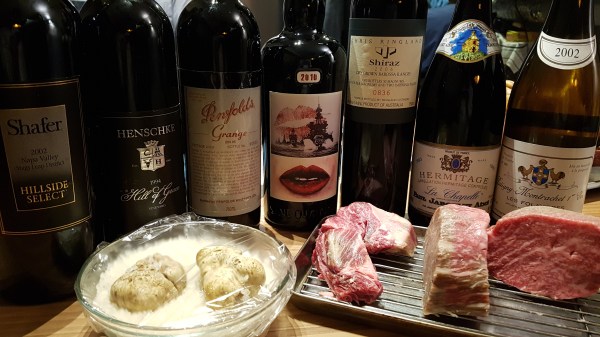
2008 Penfolds Grange, courtesy of Hiok at Il Den, 05 Dec 2018. Deep dark purple. Resplendent bouquet of abundant ripe raspberries, mulberries and dark currants that exude a powerful medicinal glow though the palate, unfortunately, doesn’t quite measure up, rounded and open enough with lovely suppleness and good transparency but, somehow, rather lean and uninvolving, unexpectedly short as well at the finish. I’d expected more.
1994 Henschke Hill of Grace, courtesy of Sea Hing at Il Den 05 Dec 2018. This wine opens with a quiet reticence, revealing dark currants and plummy characters with some ground pepper in the distance, taking on a distinctly mature tone on the palate with more of similar plummy notes, open but lean, finishing with sweet tannins but short as well. Do not keep any further.
2006 Chris Ringland Shiraz, courtesy of Kenny at Il Den 05 Dec 2018. Impenetrable inky blackness from which arose a great funky earthy pungency, leading to a palate imbued with rich layers of warm ripe Barossa shiraz, open with great suppleness and crisp acidity, revealing good detail and excellent sophistication within its sweet structured velvety tannins without any trace of its 14.6% abv. Excellent.
2010 Sine Qua Non Stockholm Syndrome, courtesy of Jon at Il Den, 05 Dec 2018. Impenetrably dark. Quite effusive in ripe black fruits and black currants that are well replicated with great concentration on the palate. Very warm and ripe, almost pruny, massively proportioned with a forward balance of fruit and exotic spices though rounded with sweet pliant tannins, never ever threatening to overwhelm. Superbly crafted. Excellent.
2002 Shafer Hillside Select at Il Den 05 Dec 2018. Impenetrably dark. Ample in soft red plums with a minty tone, fleshy and well-layered with great concentration of ripe fruit, raspberries and currants that exude a smooth sheen of velvety intensity from its soft sweet svelte tannins, beautifully open.
1983 Domaine Paul Jaboulet Aine Hermitage La Chapelle, courtesy of KP at Il Den 05 Dec 2018. Evolved dusky red, proffering classic tones of light tangerines and orange peel with further notes of lychees, slightly past its prime as it became more reductive over time.
2004 Peller Ice Wine, courtesy of Hiok at Il Den 05 Dec 2018. Dense bouquet of longans. Luscious without being cloying, displaying excellent concentration and linearity with subdued acidity. Not much complexity but very enjoyable.
2016 Conchy Y Toro Frontera Sauvignon Blanc, tasted at Changi Airport T3 Krisflyer Gold lounge, 08 Dec 2016. Forward in white fruits with a nice floral bloom. Quite full, layered with creamy textures and gentle minerals with fine presence and detail. Convincing.
2004 R Lopez Vina Tondonia Riserva Blanc, from the list of three Michelin-starred ABaC restaurant in Barcelona, 10 Dec 2018. Displaying a clear golden hue, this wine opens with an alluring complex of nectarine, fig and dense white flowers with a hint of sour plums amidst a gentle oxidative tone. Medium-full. Rounded with subtle nuances and peppery traces, exuding an aged feel and elegance through its refined acidity and sublime minerality, finishing with a gentle lifted intensity. Quite excellent.
Fontallada Brut Nature, a Cava courtesy of Hotel Barcelona Catedral, 12 Dec 2018. Dry. Notes of green fruits, melons and intense citrus that impart crisp cutting acidity, underscored by steely minerals with a bit of mint and icing, slightly sweet. Serviceable.
Champagne Charles de Cazanove Blanc de Blancs NV, on board SQ387 BCN-SIN Premium Economy on 14 Dec 2018. Plenty of lovely freshness, proffering whiffs of green fruit, melons and white citrus, appropriately dry with very good levels of ripeness and fullness, developing a clean forward chalkiness by the third pour. Very fine.
2017 Saint Clair Vicar’s Choice Sauvignon Blanc, popped and poured at home, 16 Dec 2018. Medium-full. Slightly reserved in fruit, exuding more of peaty tones with a certain earthiness whilst the palate displays a predominance of limestone and saline minerals with overtones of raw nutmeg and white pepper laced with a mild spicy edge, becoming better integrated with further aeration. At SGD25, this is highly serviceable.
1991 Poggio Salvi Villa Brunello di Montalcino, a bottle gifted to me by Don Tay and decanted on-site at Otto Ristorante, 19 Dec 2018. Opague dull purple, opening with bright plummy tones and sweet dark currants amid a mild herbal trace. Rounded and fleshy, showing distinct ferric traces at the sides on a rich cedary floor, glowing with excellent presence throughout its length before ending in a soft gentle finish. Caught at its best.
2017 Cloudy Bay Sauvignon Blanc, popped and poured at home, 21 Dec 2018. This wine exudes an amazing bouquet of rich oily textures amidst dense white floral tones and grassy elements, replete with straw notes and nutmeg. Its slightly peaty palate is dominated by a gravelly minerally floor, bearing fine weight and intensity of fruit, finishing with tangy white pepper and lime. Cloudy Bay’s famous flagship is back to its over-achieving old ways. Excellent.
2015 Mud House Sauvignon Blanc, tasted at Changi Airport T3 Silver Kris lounge, 22 Dec 2018. Aromas of white pepper morning dew and grassy elements. Medium-full. Fresh, clean and rounded, showing excellent concentration and presence with peppery characters, finishing with good linearity. Quite excellent.
2017 Antonin Rodet Vire-Cleese L’Epinet, tasted at Changi Airport T3 Silver Kris lounge, 22 Dec 2018. Characters of morning dew and dry Asian spices with a dash of white pepper. Medium-bodied, possessing a light delicate feel with transparent textures. Quite fine.
2016 Ch La Chandelleire, tasted at Changi Airport T3 Silver Kris lounge, 22 Dec 2018. This Medoc exudes earthy tones and dark wild berries amidst a vegetal hint with traces of rose petals at the edges, developing a brighter tone of emerging red fruits and currants after some time, structured with pliant tannins but still too straightforward and undistinguished.
2014 Sebastiani Sonoma County Merlot, from the list of Alto in Hong Kong, 23 Dec 2018. Decanted on-site. Generous spread of ripe raspberries, violets and mulberries, displaying excellent concentration and presence with detailed chewy tannins and fine intensity, highly supple and pliant. Quite agreeable.
2006 Ch Malartic Lagraviere, popped and poured at Teochew City, 28 Dec 2018. Softly rounded, mellow and smooth with good transparency, revealing some earthy characters with a deeper streak of ferrous minerals, turning more intense with pruny tones and licorice. Not quite settled.
2007 Tignanello, popped and poured at California Pizza Kitchen, 29 Dec 2018. Dark, dense, stern and acidic, its firm angular tannins imparting a certain toughness that hindered the fruit beneath, which struggled to break through.
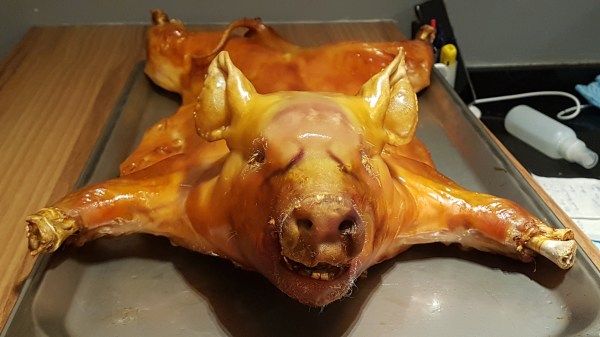
Slow Lunch with Dr Ngoi
These are notes from a slow lunch hosted by Dr S S Ngoi at his residence on 17 Nov 2018 to celebrate the completion of renovation works to his wine cellar. We were invited on condition that we were forbidden to bring any wine of our own. Instead, each of us present was supposed to delve into his cellar and bring out a bottle that we fancy with the guarantee that it would be popped. Knowing the great man, I don’t have to spell out the treasures that abound within the cold walls. Nevertheless, we thought that we’d better still behave ourselves; there is no room for greed even within the bonds of great friendship. Javier Low of Il Den, who is fast becoming a home-grown celebrity chef in his own right, was called upon to mastermind the slow lunch which surpassed all expectations. We began at 1230h and did not end till after 2030h, by which time we’d all been properly hammered. Thank you very much, Dr Ngoi, for your kind generosity and friendship.
1983 Champagne Dom Pérignon. Deeply coloured, proffering a highly complex bouquet of pineapples dried apricot, honeyed toast and roasted almonds that led to a lovely depth and expanse of citrus fruit on the palate that, in spite of its distinctly mature signature, is still wonderfully fresh and vibrant with fine acidity, imparting a lovely firm steely minerally shine. Superb.
Champagne Krug Rosé Brut NV. Grapefruit and orangey citrus dominate amid dryish textures. Medium-full. Rounded and plump, displaying lovely intensity and linearity throughout its length.
2009 Domaine Roulot Meursault-Charmes. Shut on the nose. The palate is softly rounded, very gently layered with white floral tones and recessed chalky minerals and fruit. Took a long time to develop more of the limestone minerality of Meursault along with some floral aromas but still shy. Distinctly feminine.
2014 Château de Puligny-Montrachet Puligny-Montrachet Les Folatières 1er. Closed on the nose while white fruits dominate on the palate with white floral tones amidst a minerally shine, taking it’s time to develop further detail and intensity of wild flowers with mild chalky elements. Highly promising but going through an awkward phase now.
1962 Vega Sicilia Unico. Still alive, exuding a gentle rosy fragrance amid overtones of paraffin and camphor with a predominance of red fruits and cherries on the palate, still so fresh and lively, finishing with lovely biting intensity. Excellent. What a privilege!
2011 Domaine Louis Jadot Saint-Aubin Les Murgers Dent des Chien 1er. Shy on the nose whilst the medium-bodied palate is imbued with cool ripe fruit with a hint of nutmeg and wild flowers, finishing with traces of white pepper and paraffin. Rather cautious and introverted.
2008 Domaine de la Romanée-Conti Vosne-Romanée 1er Cuvee Duvault-Blochet. Evolved colour, exuding an effusive easy charm of red cherries and tangerines on both nose and palate, enhanced by smooth silky tannins and sublime acidity with lovely depth and feminine suppleness, gaining further weight and gentle intensity as it took on a subtle gunmetal minerality over time. Not the usual brooding dark intensity of Vosne-Romanée. Excellent.

2007 Domaine Prieuré Roch Chambertin-Clos de Bèze Grand Cru. Dusky opague brownish red with an enticing fragrance of red fruits. Medium-bodied, softly rounded with a gentle fullness, displaying excellent presence with a deeper intensity of dark fruits over time.
1989 Château Palmer. Evolved in colour with a vermillion rim, exuding a great earthy pungency. The palate is still rather fullish, open and fleshy with superb transparent textures amidst sublime acidity and intensity on a finely-grained dryish earthy floor. Still has an age ahead. Outstanding.
2016 Yamhill Pinot Noir. Deep purple. Closed on the nose though the palate is saturated with excellent concentration of ripe dark cherries with overtones of enamel and vanilla, very well-balanced.
2010 Domaine de la Janasse Châteauneuf-du-Pape Vieilles Vignes. Impenetrably dark, exuding smoky incense on a well-extracted palate rich in glorious ripe raspberries and dark currants on a cedary floor but neither jammy nor pruny.
2006 Domaine Comte Georges de Vogüé Chambolle-Musigny. Fabulous bouquet of intense red fruits and red currants, highly aromatic. Medium-full. Rounded with earthy tones and evolved dark currants on the palate, displaying good linearity throughout its length.
2004 Château Lascombes, poured from magnum. Dark with excellent concentration and dryish textures, fresh but somewhat reticent with subdued acidity although there is certainly some early development.
2015 Littorai Cerise Vineyard. Shut, with a darkish palatal tone of ripe raspberries and dark bitter cherries, showing good presence with understated acidity.
2012 Domaine Faiveley Chambertin-Clos de Bèze Les Ouvrées Rodin Grand Cru. Forward balance of red and dark fruits, displaying an unusual complexity of toffee, mocha, bitter dark chocolate and black cherries on the nose and palate, imbued with brooding deep intense fullness cushioned by sophisticated silky velvety tannins, mellowing a little as it sat in the glass but this is far from ready.
2009 Domaine d’Arlot Romanée-Saint-Vivant Grand Cru. Lovely deep colour. Great attack of delicious dark fruits and currants with razor-sharp definition on the medium-full palate, appropriately darkish in tone with open intensity underscored by a deep ferrous streak. Still fresh and youthful. Very fine.
2011 The Mascot. Dark smooth sheen of dark currants, black fruits, cedar and cinnamon, superb in concentration and intensity yet open with excellent transparency and detail, structured with highly supple tannins. Great potential here. Made from the younger vines of BOND, Promontory and Harlan Estate, all of which are holdings belonging to Will Harlan, its inaugural vintage being the 2008.
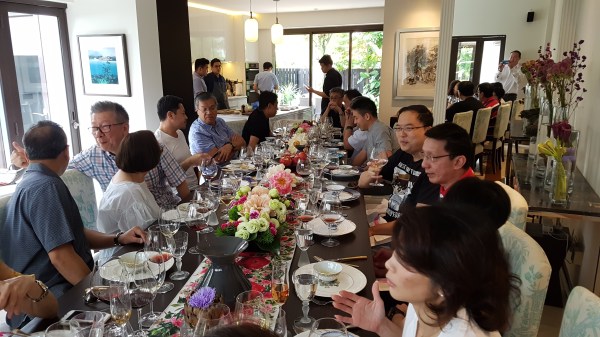
Nov 2018: 1996 Lynch Bages, 2000 Palmer, 1982 Pierre Damoy Chambertin Clos de Beze, 2014 Faiveley Corton Clos des Cortons
Champagne Nicolas Feuillate, on board SQ345 ZRH-SIN Premium Economy, 02 Nov 2018. Dry expanse of dense yellow citrus and chalky minerals, displaying excellent depth, intensity of fruit and acidity, finishing with bitter lemon and pomelo. Excellent.
2013 Carpineto Vino Nobile di Montepulciano Riserva, popped and poured at Bedrock Bar & Grill, 05 Nov 2018. Ample in red plums and dark cherries within a slim defined profile with a deep vein of ripe dark delicious berries, structured with smooth silky svelte tannins, developing more of plummy tangerines over time with plenty of refinement and fine intensity. Excellent.
2014 Domaine Jean-Claude Ramonet Saint-Aubin Les Murgers des Dents de Chien 1er, courtesy of Dr Ngoi at Imperial Treasure Great World on the visit of Pablo Alvarez, 07 Nov 2018. Rather shut on the nose, whilst proffering only glimpses of slivery white citrus on the palate dominated by sharp stern minerally glare with a bare hint of paraffin. Took a very long time to open with gentle white floral fragrance, gradually evolving to produce deeper intensity of fruit, finishing with good persistence. Best to lay down further.
2008 Vincent Girardin Chevalier-Montrachet Grand Cru, courtesy of CJ at Imperial Treasure Great World on the visit of Pablo Alvarez, 07 Nov 2018. Shut on the nose whilst displaying a firm minerally tone with an evolving rich creamy tone on the palate, imbued with subtly intense citrus that exuded a gentle glowing intensity. I’d expected more.
2007 Domaine Pierre-Yves Colin Morey Meursault Les Genevrieres 1er, courtesy of LF at Imperial Treasure Great World on the visit of Pablo Alvarez, 07 Nov 2018. Lovely luminosity but shut on the nose, though it exudes fine presence on the palate, slightly more minerally in balance with overtones of pomelo, its initial sternness turning into recessed chalky tones over time as its fruit became more introspective, probably a reflection of the vintage.
2007 Domaine Henri Boillot Puligny-Montrachet Clos de la Mouchiere 1er, courtesy of Sanjay at Imperial Treasure Great World on the visit of Pablo Alvarez, 07 Nov 2018. Closed, proffering just a glimpse of complex white fruits and citrus though the palate is defined by sharp delicate citrus with gentle tones of honeysuckle and fig, layered with excellent depth of light tropical fruits and jack fruit.
2014 Domaine Faiveley Corton Clos des Cortons Faiveley Grand Cru monopole, at Imperial Treasure Great World on the visit of Pablo Alvarez, 07 Nov 2018. Good colour. Enticing nose of ripe raspberries, rose petals and red cherries. Medium-bodied, surprisingly open with great suppleness and acidity, becoming more plummy with greater intensity over time, exuding lovely charm before tapering with excellent linearity to a glowing finish. Excellent.
1998 Ch Angelus, courtesy of Winfred at Imperial Treasure Great World on the visit of Pablo Alvarez, 07 Nov 2018. Poured from magnum. Dark crimson. Lovely earthy pungency on the nose with a delicious soft rosy fragrance. Ample in dark fruits and black currants on the palate that impart characters of soy and mint, revealing good inner detail with lovely acidity amid further notes of light tangerines. Excellent.
1976 Domaine Robert Ampeau Volnay-Santenots, courtesy of LF at Imperial Treasure Great World on the visit of Pablo Alvarez, 07 Nov 2018. Evolved in colour with a distinct aged plummy tone tinged with licorice. Rounded, seamless and fleshy on the medium-bodied palate, showing excellent lift of orangey tangerines, still retaining good acidity, tapering to a minty finish.
2000 Ch Palmer, courtesy of CW at Imperial Treasure Great World on the visit of Pablo Alvarez, 07 Nov 2018. Deep purple, exuding a lovely deep plummy glow of black fruits and dark currants. Highly seamless and supple in its fabulous integration and nuanced acidity, displaying tremendous charm and ease. Excellent.
1994 Ch Leoville Las-Cases, courtesy of Vic at Imperial Treasure Great World on the visit of Pablo Alvarez, 07 Nov 2018. Deep purple. Effusive in delicious wild berries and dark currants. Medium-bodied. Good concentration. Charming enough but lacks opulence.
2003 Ch Leoville Las-Cases, courtesy of Hsiang Sui at Imperial Treasure Great World on the visit of Pablo Alvarez, 07 Nov 2018. Very deep crimson. Laden with abundant black fruits and black currants on the nose with ash and incense that led to an open sweet cedary floor layered with lovely acidity, structured with svelte tannins that finished with lingering intensity. Quite excellent.
2010 Ch Rieussec, courtesy of Dr Ngoi at Imperial Treasure Great World on the visit of Pablo Alvarez, 07 Nov 2018. Light golden hue, displaying a firm tone of apricot, nectarines and fig with notes of sweet incense and smouldering ember, yet to developed any significant complexity.
2017 Orangeraie Pays d’Oc from the list of Merci Marcel, 16 Nov 2018. Light grassy elements with traces of mint on the nose. Medium-bodied, imbued with minerally elements and green fruits. Quite lively and refreshing, turning more subdued after some time with overtones of toast and burnt cider. Serviceable.
2015 Pascal Jolivet Le Roc Sancerre, at the launch of Montblanc’s new range of tourbillon timepieces at 28 Wilkie, 19 Nov 2018. Suprisingly effusive in white floral bloom with longans amidst light grassy elements, quite racy in character, whilst dried pineapples and apricot dominate on the palate along with mild chalky tones and nutmeg, displaying excellent concentration, presence and balance, finishing with a dryish note of paraffin. Very good.
 2014 Ch de Puligny-Montrachet Saint-Aubin En Remilly 1er, poured from magnum at Jade Palace, 22 Nov 2018. This wine displays a lovely rounded tone and depth, cloaked within a nutty creamy chalkiness that teased the senses with its gentle exquisite intensity of white fruits, turning brighter and more minerally over time with further notes of dry malt and rye and pineapples before suddenly shutting down in the middle of the meal. I’ve observed that the 2014 whites and reds are going through an awkward phase now. Best to refrain from popping these for the next few years.
1982 Domaine Pierre Damoy Chambertin-Clos de Beze Grand Cru, courtesy of Peter Tan at Jade Palace, 22 Nov 2018. Murky brown, exuding an excellent lift of gentle medicinal glow with truffles and complex tertiary notes of ripe cherries and currants on the palate from a superb deep tangerine core, highly supple and sumptuous. Excellent.
1998 Rossignol Trapet Chambertin Grand Cru, courtesy of Stephen Tan at Jade Palace, 22 Nov 2018. Surprisingly closed on the nose though the medium-bodied palate is showing well with very fine old fruit that’s still very much alive, quite fleshy and savoury, still imbued with clean crisp acidity, finishing with a complex of tanned wood and camphor. Very fine.
2003 Ch Cos D’Estournel at Jade Palace, 22 Nov 2018. Deep garnet red. Classic glow of dark currants and dark fruits charged with dense cinnamon and soy. Medium-full. Open with lovely concentration and glow of a classic claret without any trace of the dreaded heat stress of 2003, confirming the superiority of the St-Estephe terroir in difficult vintages.
2011 Etude Carneros Chardonnay, courtesy of Sanjay at Jade Palace, 22 Nov 2018. Shut initially, this wine took its time to open with tangy citrus, white citrus and chalk amidst some crème de la crème, glowing with after tones of nutmeg on the cool palate, becoming more nutty and backward after some time. Yet to develop
2015 Domaine Denis Mortet Gevrey-Chambertin Mes Cinq Terroir at Jade Palace, 22 Nov 2018. Great colour. Open and highly supple with an abundance of red fruits, currants and raspberries, warm and beautifully ripe, cloaked within pliant tannins and superb acidity. Very lovely. We should drink more of these.
2010 E Guigal Hermitage, courtesy of Sanjay at Jade Palace, 22 Nov 2018. Deep colour. Ample in warm ripe fruit with classic characters of orange peel, well structured with deep velvety tannins and crisp acidity amidst some green elements.
Ulysses Collin Rose de Saignee Les Taillons Extra Brut, at Jade Palace, 22 Nov 2018. Lovely golden hue, proffering tangerines, orangey citrus and grapefruit with crisp acidity and dry intensity.
2015 Wynns Black Label Cabernet Sauvignon, popped and poured at Ming Kee Live Seafood, 24 Nov 2018. Deep impenetrable inky red, exuding sweet dark currants, dark cherries and black berries on the nose but the palate is a tad too harsh at this stage, full in bitter dark chocolate, structured with firm tannins that impart great biting intensity. Not ready, but this calling card of Wynns rewards long patience. At SGD45, it’s price has not moved in the last 10-15 years. Aficionados of cool Coonawarra cabernet need not hesitate but be prepared to wait.
2011 Ch Angelus, at a pre-Saint Emilion Jurade tasting, 26 Nov 2018. Dark. Open, soft and highly supple. Ample in dark currants, dark chocolate and mahogany amidst ash and ember cushioned within pliant velvety tannins. Fleshy and rounded, tapering with excellent linearity to a deep minty glowing finish. Drinking very well.
2001 Domaine Paul Aine Jaboulet Hermitage La Chapelle, popped and poured at Jade Palace, 26 Nov 2018. Dusty reddish brown. Dense concentration of red plums and tangerines with gentle medicinal tones, structured with firm tannins that are slightly angular and unyielding. Not ready.
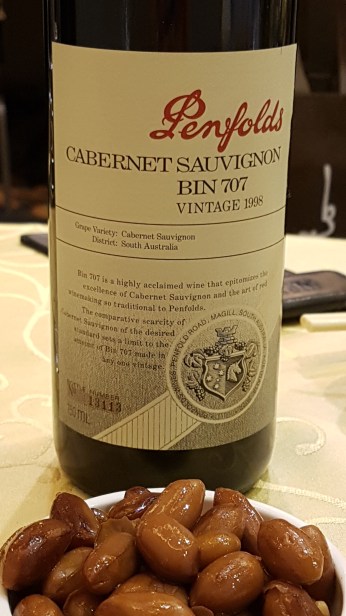
1998 Penfolds Bin 707 Cabernet Sauvignon, courtesy of Kieron at Jade Palace, 26 Nov 2018. Impenetrable dark inky red. Still unbelievably dense and tight after 20 years, this iconic wine exudes generous aromas of eucalyptus, licorice, dark chocolate and mint whilst the palate is amply layered with cool ripe black berries and wild berries that impart a warm alcoholic trace. When will it ever be ready?
Ruinart Blanc de Blancs, courtesy of Mr WB Tay at Hua Ting, 28 Nov 2018. Dry, firm. Full presence of pomelo, bitter lemon and white citrus, slightly sweet, revealing attractive depth, finishing with a burnished tone.
2001 Ch Montrose, courtesy of Mr WB Tay at Hua Ting, 28 Nov 2018. Dark crimson, exuding a mild earthy pungency with secondary characters of cedar and soy. Open with sweet supple tannins with a rich plummy tone, revealing good depth and acidity, finishing with dryish intensity. A classic claret.
2014 Bernard Moreau Chassage-Montrachet, at Hua Ting, 28 Nov 2018. Good lift of dense white floral tones and minerals, displaying good early complexity on the medium-full palate along with some gentle chalkiness, showing good detail and layering with very subtle acidity. Very fine.
1996 Ch Lynch Bages, at Hua Ting, 28 Nov 2018. This wine opens with a highly agile bouquet of great complexity, evoking pungent earthiness with an abundance of dark currants and black berries, revealing a superb expanse of mature ripe dark fruits from its deep layers, exuding very fine intensity and acidity with a rich hallowed glow characteristic of a great claret caught at its peak. Wonderful.
2014 Egon Muller Scharzhofberger Kabinett, courtesy of Vic at Hua Ting, 28 Nov 2018. Dense bouquet of petroleum characters, fig and honeysuckle with distant notes of pineapples and tropical fruits on the palate, dryish with a slightly sweet edge.
Oct 2018: 1996 Etienne Sauzet Combettes, 2005 Lynch Bages, 2004 Torbreck RunRig, 2006 Bouchard Chevalier-Montrachet…
2013 Bonacchi Vino Nobile di Montepulciano, from the list of Ristorante A Mano, Berlin, 01 Oct 2018. Deep vermillion, exuding earthy tones, red plums, dark fruits and mocha on the nose and palate. Open and inviting, rounded and fleshy with refined tannins and acidity, revealing excellent depth and fine intensity. Very fine.
2015 Weedenborn Riesling, at Lokal, Berlin, 01 Oct 2018. Illusion of fizz with notes of icing amidst traces of diesel, blossoming with white floral tones and raw nutmeg after some time, developing lovely fullness with cutting acidity, revealing fine intensity and detail before turning austere as its underlying ferrous textures became more apparent.
2007 Weingut Schembs Spatburgunder at Lokal, Berlin, 01 Oct 2018. Delicate red fruits and rosy tones on the nose. Medium-full, showing good acidity but its fruit is set too far backward. Underwhelming.
2015 Enrico Serafino Barbaresco, from the list of Essenza Ristorante, Berlin, 04 Oct 2018. Transluscent plummy red. Somewhat shut, proffering bright plummy tones on the palate with sharply defined acidity, developing further notes of earthy incense and ash as it grew in supple intensity though still rather tightly coiled within a narrow spectrum. Not ready.
Santa Margherita Rose Brut NV, at Tegel Airport Senator Lounge, Berlin, 05 Oct 2018. Lightly colored. Full but gentle expanse of grapefruit, pink roses and light tangerines. Appropriately delicate. Very refreshing and pleasant. Attractive.
2016 Bouvet Saphir Saumur Brut, at Tegel Airport Senator Lounge, Berlin, 05 Oct 2018 White citrus tinged with green elements on a bed of mild ferrous minerals. Quite full. Not too dry. Serviceable.
Bouvet Ladubay La Petite Bulle, at Tegel Airport Senator Lounge, Berlin, 05 Oct 2018. This Vin Frizzant exudes soft gentle aromas of fresh green melons, fairly smooth, carrying good concentration of fruit, very seamlessly integrated. Very agreeable.
2016 Sankt Annaberg Burrweiler Stannaberg Riesling Pfalz, at Tegel Airport Senator Lounge, Berlin, 05 Oct 2018. Classic diesel fumes with an attractive complex of light citrus and pomelo that carried well onto the palate with faint traces of sweet.
2015 Ch Borie de Noailin, at Tegel Airport Senator Lounge, Berlin, 05 Oct 2018. Predominance of earthy tones, undergrowth and dusty tannins. Full but unremarkable, supported by a spicy acidic spine.
2015 Bodegas Alconde Optimo, at Tegel Airport Senator Lounge, Berlin, 05 Oct 2018. Full bouquet of warm ripe fruit, matched by excellent density of ripe wild berries with a touch of white citrus. Medium-full, quite supple and sprightly with fine acidity.
2017 Vieille Ferme, at Tegel Airport Senator Lounge, Berlin, 05 Oct 2018. Lovely white citrus though rather narrow in spectrum. Very well-integrated with fine acidity and good concentration, just a tad flinty.
2015 Cambria Benchbreak Chardonnay Santa Maria Valley, at Tegel Airport Senator Lounge, Berlin, 05 Oct 2018. Great earthy pungency with exotic spices on the nose, imbued with dense chalky minerals on the palate, rather full with well-developed tones of creme and magnolias. Very well structured, tapering to a lasting finish tinged with nutmeg.
2004 Torbreck RunRig, decanted on-site at Otto Ristorante, 06 Oct 2018. Deep dark ruby, exuding an earthy glow of dark plums and licorice with a suggestion of rustiness. The palate is imbued with fine concentration of delicious red fruits, dark cherries and raspberries that confer abundant freshness with a dash of spice, quite robust and firm as well, revealing secondary nuances of cedar and cinnamon. Still yet to peak.
2005 Champagne Henriot Hemera, at a FICOFI blind tasting conducted by Eric Riewer, 08 Oct 2018. This wine exudes lovely yeasty tones with an attractive earthy pungency, medium-bodied, very rich and refined with smooth gentle bubbles, open with clear transparent crystalline tones and subtle minerality, finishing with a slight ferrous trace. Very fine but a bit too refined. I’d expected more complexity.
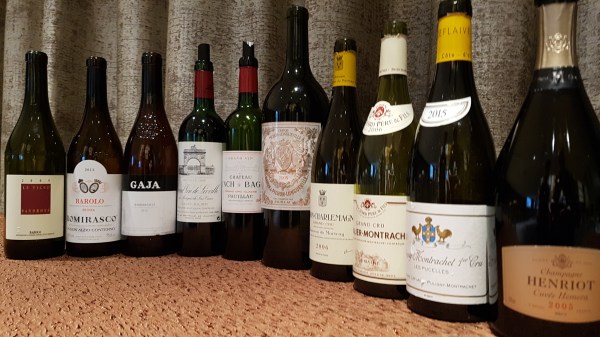
2015 Domaine Leflaive Puligny-Montrachet Les Pucelles 1er, at a FICOFI blind tasting conducted by Eric Riewer, 08 Oct 2018. This wine exudes a great earthy pungency on a concentrated palate of tight distilled citrus with overtones of raw nutmeg and paraffin, less minerally than usual for Les Pucelles, displaying excellent linearity as it finished with quiet intensity. Excellent.
2006 Bouchard Pere et Fils Chevalier-Montrachet Grand Cru, at a FICOFI blind tasting conducted by Eric Riewer, 08 Oct 2018. Lovely bouquet, displaying a broad expanse of deep chalky tones and grassy elements. Excellent in concentration, highly focused and seamlessly integrated, very lively, finishing with great persistence amidst a tinge of green melons.
2006 Domaine Bonneau du Martray Corton-Charlemagne Grand Cru, at a FICOFI blind tasting conducted by Eric Riewer, 08 Oct 2018. Shut at this stage, though the palate is tight with abundant fresh clear citrus, structured with crisp focused acidity. Not ready.
2005 Ch Pichon Longueville Baron, at a FICOFI blind tasting conducted by Eric Riewer, 08 Oct 2018. Dark with abundant density of black fruits and dark currants amidst dryish textures that imparted taut focused acidity and intensity, opening up with further signature Pauillac dryness but shy. Still infantile.
2005 Ch Lynch Bages, at a FICOFI blind tasting conducted by Eric Riewer, 08 Oct 2018. Displaying a bare hint of evolution, this wine has more of an aged feel compared with Pichon Baron of the same vintage, highly fleshy and supple, layered with dark currants and blackberries that conferred excellent presence, depth and silky intensity on a classic Pauillac backdrop. Absolutely delicious and seductive. Excellent.
1995 Ch Leoville Las-Cases, at a FICOFI blind tasting conducted by Eric Riewer, 08 Oct 2018. Deep purple. Ample presence of ripe wild berries, considerably more relaxed and open with supple lean acidity, very well-integrated on a cedary floor with amidst subdued tones of graphite minerals that announce its origins. Excellent.
2013 Gaja Barbaresco, at a FICOFI blind tasting conducted by Eric Riewer, 08 Oct 2018. Shut on the nose, though the palate carries an abundance of racy dark currants and delicious red fruits with plenty of vigour and intensity, taut with tense acidity. Excellent potential but too young at this stage.
2013 Aldo Conterno Barolo Bussua Romirasco, at a FICOFI blind tasting conducted by Eric Riewer, 08 Oct 2018. Amply layered with rich ripe fruit and currants that exude overtones of paint, enamel and varnish – all very racy and exuberant – structured with detailed gritty tannins that lend a spicy edge to the persistent finish.
2009 Sandrone La Vigne Barolo Le Vigne, at a FICOFI blind tasting conducted by Eric Riewer, 08 Oct 2018. Closed on the nose though the palate is richly layered with abundant ripe dark fruit and currants that impart lovely freshness with silky smooth tannins, exuding fair intensity.
2008 Rockford Black Shiraz, over dimsum at Asia Grand, 14 Oct 2018. Gentle but deep herbal and medicinal bouquet that precedes a full rounded palate of warm ripe Barossa shiraz with characteristics of earth and dark wild berries, excellent in concentration and presence with smooth tannins that exude subdued intensity, though the fizz is already beginning to dry out and there isn’t much of the expected complexity. Rather disappointing on this occasion.
2014 Domaine Pierre Damoy Gevrey-Chambertin Clos Tamisot, popped and poured at home on 15 Oct 2018. This wine opens with a severe stern demeanor, layered with a rather thick opaque sheen as a result of its high extraction such that its fruit struggles to shine through. It did become a bit more relaxed after 90 minutes in the glass as more of dark cherries and raspberries came through but it is going through an awkward phase now.
2015 Pierre Frick Riesling, courtesy of Javier at Il Den, 18 Oct 2018. This natural wine, whatever that means, proffers sour plums, nutmeg, olives and mature frangipani on the nose amidst a gentle hint of raw diesel, imbued with tight intensity of white fruits, yellow citrus and clear minerals on the palate, showing good definition but short.
2003 Champagne Henriot, poured from magnum at Il Den, 18 Oct 2018. Open with dry minerality, proffering a soft gentle floral bloom allied with mild ferrous undertones, showing excellent depth and youthful intensity.
1996 Domaine Etienne Sauzet Puligny-Montrachet Les Combettes 1er, courtesy of John at Il Den, 18 Oct 2018. This wines exudes a powerful earthy pungency on the nose with other notes of wild grass and diesel, almost peaty in character whilst broad swathes of gentle chalky minerals with complex undertones dominate on the palate, yielding excellent depth and detail. Absolutely lovely.
2014 Freeman Chardonnay, courtesy of Vic at Il Den, 18 Oct 2018. Shut on the nose, though the palate is covered in rich creamy tones and smooth oily textures, underscored by crisp subtle acidity with forward tones of nutmeg and white floral characters, all very subtly managed with lovely proportions, just a tad short. Quite excellent.
2014 Domaine Bruno Clair Chambolle-Musigny Les Veroilles, at Il Den, 18 Oct 2018. Lovely clear ruby, exuding gentle aromas of rose petals, cherries and red currants with just the right degree of presence and concentration on the palate, beautifully balanced.
1999 Domaine Robert Ampeau Savigny-les-Beaune, courtesy of CJ at Il Den, 18 Oct 2018. Significantly darker, showing good concentration of dark fruits with overtones of undergrowth. Rounded and smooth, structured with silky smooth tannins and fine acidity.
2015 Maison Leroy Bourgogne at Il Den, 18 Oct 2018. Darkly coloured and shut. Well- extracted but done just right, reveling in a lovely intensity of dark currants, raspberries and ripe wild berries, displaying great definition and sublime acidity. Excellent.
2014 Domaine Coquard Loison Fleurot Chambolle-Musigny, courtesy of LF at Il Den, 18 Oct 2018. Superb colour and freshness, imbued with gentle saline minerals and earthy tones underscored by great acidity.
2014 Domaine Coquard Loison Fleurot Gevrey-Chambertin, courtesy of LF at Il Den, 18 Oct 2018. Ample in warm ripe fruit and dark currants, structured with stern minerality amidst sublime acidity. Distinctly masculine.
2012 Jurancon Les Jardins de Babylone at Il Den, 18 Oct 2018. Very deftly balanced with a teasing quality on the cool palate imbued gentle tropical fruits.
2002 Piper Hiedsieck Rare Millesime, tasted at the Silver Kris First Class Lounge of Changi Airport T3, 20 Oct 2018. This wine opens with abundant earthy pungency and toasty oak amidst gentle yeasty overtones, absolutely bone dry on the palate where dense yellow citrus and lime dominate with fine intensity on a backdrop of graphite minerals. Excellent.
2017 Antonin Rodet Vire-Classe L’Epinet, on board SQ346 SIN-ZRH Business Class, 21 Oct 2018. Green elements, white fruits and floral tones proliferate on the nose, possessing a very clean feel and focus within its tight slim profile on the palate. Rather straightforward.
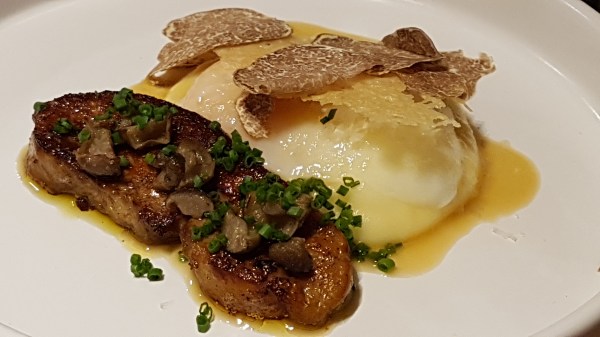
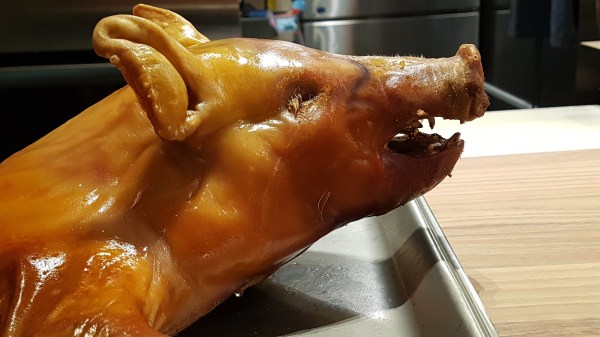
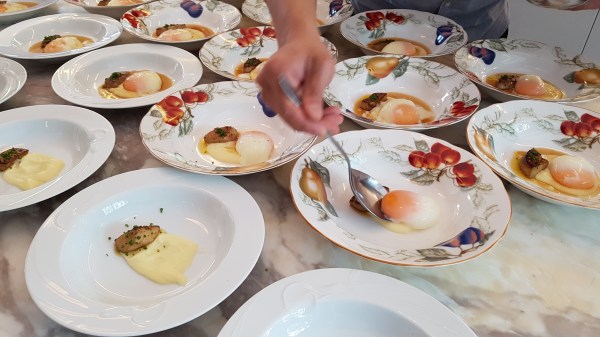
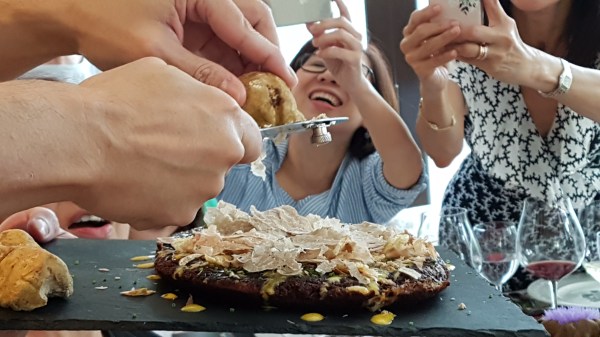
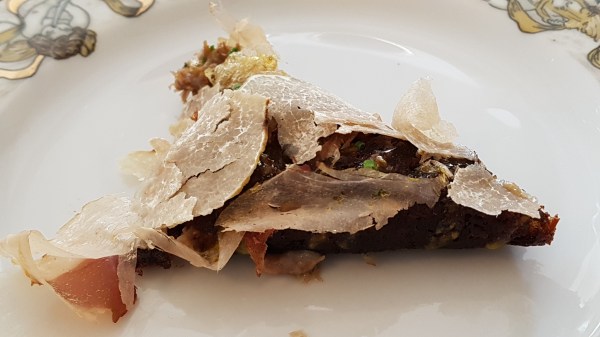
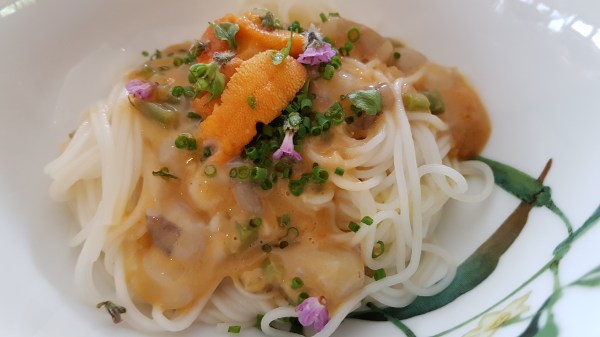
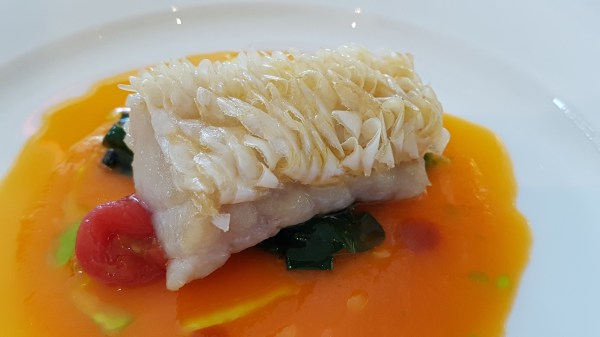
Javier’s creation at Il Den, Singapore.
Truly a month of excesses…so much wonderful wine, so much great company but so little time…
2000 Champagne Henriot Enchanteleur, at LF’s residence, 01 Sep 2018. Luminous gold. Gentle toasty oak with a yeasty pungency. Excellent presence and balance, displaying brilliant clarity, inner detail and depth of chalky minerals, exuding subtle power and intensity. Excellent.
2007 Champagne Salon, courtesy of CJ at LF’s residence, 01 Sep 2018. Darker in tone with a superb breadth and depth of intense citrus, green fruits and dark berries. Rounded, more forward in fruit balance with recessed minerals. Yet to develop significant complexity.
2004 Champagne Billecart Salmon Brut Blanc de Blancs, courtesy of CJ at LF’s residence, 01 Sep 2018. Shut. Excellent concentration of dry yellow citrus without much depth.
2013 Domaine Arnaud Ente Meursault Clos des Ambres, courtesy of LF at his residence, 01 Sep 2018. Shut but what lovely complexity there is on the palate imbued with wonderful depth of delicate citrus, walnuts and white floral tones, open with superb layering, richness and great inner detail that stood out with chiselled presence as it blazed a trail of great intensity throughout its length. Fabulous!
2011 Marcassin Chardonnay, courtesy of LF at his residence, 01 Sep 2018. Most unusual bouquet of aged glue, vanilla and freshly varnished wood, exuding great complexity. Very good concentration Smooth and rounded with a lovely oiliness, glowing with fabulous intensity with overtones of incense and paraffin, finishing well. Excellent.
2004 Domaine de Montille Vosne-Romanee Aux Malconsort 1er, courtesy of Dr Ngoi at LF’s residence, 01 Sep 2018. Well evolved in colour, open with a classic pinot tone, layered with gentle intensity of aged red fruits, red apples and ripe cherries, displaying superb intensity and precision.
1998 Domaine Armand Rousseau Mazy-Chambertin Grand Cru, courtesy of Sanjay at LF’s residence, 01 Sep 2018. Surprisingly quiet on the nose, though the palate is imbued with wonderful sublime acidity with characters of older red fruits, very well integrated with great intensity and power.
2007 Domaine du Clos de Tart Clos de Tart Grand Cru, courtesy of Hsiang Sui at LF’s residence, 01 Sep 2018. Sophisticated bouquet of dark plums and raspberries with traces of earth, medium-bodied, exuding lovely intensity and ripeness, well-layered without quite plumbing the depths of expression. Excellent, nonetheless.
2011 Marcassin Sonoma Coast Marcassin Vineyard, courtesy of LF his residence, 01 Sep 2018. Classic pinot tint, displaying excellent depth and freshness of fruit. Very open, slightly forward in fruit balance, fabulous in intensity and acidity. Superb.
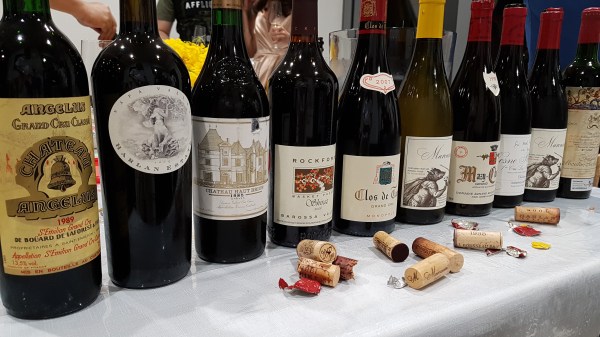
1989 Ch Angelus, courtesy of Vic at LF’s residence, 01 Sep 2018. This celebrated vintage of Angelus is evolving at a glacial pace, still delighting the senses with tertiary nuances of toffee, mocha and light chocolate from the glorious depths of its mature ripe fruit. Utterly sublime in acidity, detail and absolute richness. Outstanding.
1985 Ch Haut Brion, courtesy of Vic at LF’s residence, 01 Sep 2018. This wine is still very much alive, exuding a great earthy pungency on the nose while the palate is beautifully open, fleshing out with great suppleness and sublime acidity, supremely confident in its poised elegance and easy charm without calling attention to any of its parts. Truly at its drinking best. Outstanding.
2004 Harlan Estate, courtesy of Hsiang Sui at LF’s residence, 01 Sep 2018. Impenetrably dark. Complex bouquet of black fruits, understated dark and plums dark berries amidst traces of burnt that carried well onto the palate with great tension, superb in its concentration of fruit and stunning precision of attack, balance and proportion that conferred great definition and delineation. Very correct down to the last finite detail without being too clinical. Outstanding.
2006 Rockford Basket Press Shiraz, at LF’s residence, 01 Sep 2018. Traces of burnt on the nose. Medium-full. Lifted in licorice and mint, layered with dense dark fruits and currants that imparted sweet spicy intensity, finishing with sophisticated silky smooth tannins. Yet to peak. Excellent.
2003 Joh. Jos. Christoffel Erben Erdener Treppchen Auslese**, courtesy of LF at his residence, 01 Sep 2018. Dense characters of diesel and petroleum fumes on the nose. Ample in stunning white citrus and exotic tropical fruit, layering the palate with a lithe oily smoothness before tapering to a long smoky persistence that seemed to linger forever. Superb.
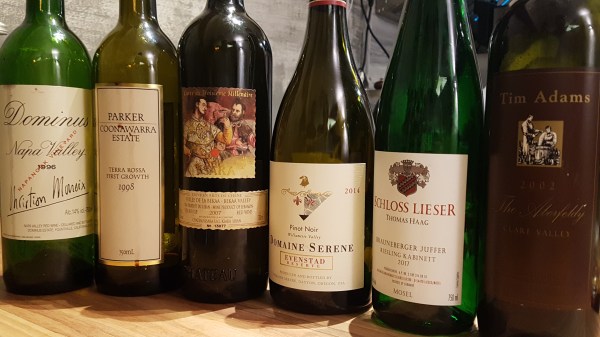
2014 Domaine Serene Evenstad Reserve, courtesy of Hiok at Il Den, 05 Sep 2018. Good color. Forward bouquet of delicious perfumed rosy fragrance. Amply layered on the palate with a mild cedary floor, highly intense though it really lacks true complexity.
2017 Thomas Haag Schloss Lieser Brauneberger Juffer Kabinett, courtesy of Jon at Il Den, 05 Sep 2018. Wonderful weight on the nose, imparting a sense of oiliness and chalky minerals with traces of tropical fruits. Lithe with ethereal poise, exuding wonderful freshness, great balance and restraint with controlled intensity, all the better, finishing well with early complexity. Superb.
1998 Parker Estate Terra Rossa First Growth at Il Den, 05 Sep 2018. Earthy nose, exuding delicious aged dark fruits that carried well onto the palate with juicy dark currants amidst traces of licorice with a suggestion of dirt floor. Fleshy and highly supple, very well balanced, finishing with understated intensity.
2012 Ch Ksara Cuvee du Troisieme Millenaire, at Il Den, 05 Sep 2018. Dark, showing just a bare hint of evolution. Medium-full and open, layered with dark plums and currants with shades of licorice, a tad spicy at the finish. Has a bit of everything.
2002 Tim Adams Aberfeldy Shiraz, courtesy of KP at Il Den, 05 Sep 2018. Reticent, hinting at dark wild berries. Supple and fleshy, rather full, imbued with lovely acidity and concentration of red and dark plums that conferred great velvety intensity.
1996 Dominus, courtesy of John Law at Il Den, 05 Sep 2018. Complex bouquet of attractive earthy pungency with lovely red fruits. Very open and subtly structured with great suppleness, distinctly masculine in character, developing lovely complexity as it sat in the glass. Excellent.
2014 Cape Mentelle Cabernet Merlot, from list of Crystal Jade Paragon, 06 Sep 2018. Deep crimson, proffering cedar, cinnamon and black pepper on both nose and palate. Rather full, displaying crisp acidity, good integration and layering with dryish textures, developing further emerging tones of graphite tones, subtly intense, finishing with a spicy afterglow.
2015 Maison de Montille Saint-Aubin Sur Gamay 1er, at Ming Kee Live Seafood, 08 Sep 2018. Reticent at first with a predominant ferrous tone, slightly stern. Took its time to open with more chalky creamy tones along with delicious concentration of green fruits lime and yellow citrus. Medium-full. Potential complexity. Quite fine.
1999 Paul Aine Jaboulet Hermitage La Chapelle, popped and poured at Eat First, 09 Sep 2018. Generous bouquet of dark fruits, ground pepper, earth, aniseed and dark plums. Rounded and fleshy with fine acidity, finishing with a touch of spice.
2002 Silver Oak Napa, popped and poured at Wah Lok, 14 Sep 2018. Hedonistic bouquet of incense, red and black currants and dark cherries of glorious depth that carried well onto a rich velvety bed of sweet gentle tannins with further overtones of tobacco and dry mushrooms, sculpted with masculine tone and structure, imbued with subtle intensity of fruit with traces of graphite. Became more fleshy and juicier over time, finishing with a long minty glow. Excellent.
2003 Champagne Henriot Millisieme, poured from magnum at our house-warming party, 15 Sep 2018. Full-bodied. Stern, minerally and dry. evolved slowly with more stony citrus to the fore but generally unyielding.
2007 Domaine Faiveley Corton-Charlemagne Grand Cru, at MH’s birthday lunch, Tunglok Signatures Orchard, 17 Sep 2018. Dull luminous gold. Recessed chalky tones amidst dense earthy minerals and complex white fruits and citrus with well-developed floral notes. Rather full on the palate with tones, imparting, slightly reductive with a paraffin glow, showing good transparency and superb seamless integration. Caught at its best. Excellent.
2003 Ch Lagrange, 21 Sep 2018. Raspberries, dark fruits and red currants dominate on the nose with excellent ripeness. Subtly structured with fine tannins and acidity, mellowing further with notes of soy, dark plums and a tinge of mushroom, finishing with growing intensity amidst cedary notes. Very fine.
2012 Ch Senejac, from the list of Merci Marcel, 22 Sep 2018. Opague purple. Classic nose of ripe raspberries, wild berries and dark currants amidst earthy tones. Very good concentration and presence, rounded with fine acidity amidst dryish textures quite appropriate for Medoc, gently structured with delicious sweet tannins. Good refinement. Grew tighter over time with greater intensity and fabulous tension across palate. Quite excellent.


2005 Champagne Henriot Cuvee Hemera, courtesy of Sanjay at Shima Kimura, 27 Sep 2018. Superb peaty pungency on the nose with aromas of after-rain vapour, imbued with delicate minerals and gentle clear citrus that conferred attractive deftness on the palate.
Champagne Suenen C+C Blanc de Blancs Grand Cru, courtesy of CJ at Shima Kimura, 27 Sep 2018. Shut, proffering only some earthy glimpses though the palate is layered with a broad expanse of sweet delicate tones, ample in pomelo and clear citrus that also conferred a bit of austerity amidst the overall complexity, superb in definition, finishing well. Superb.
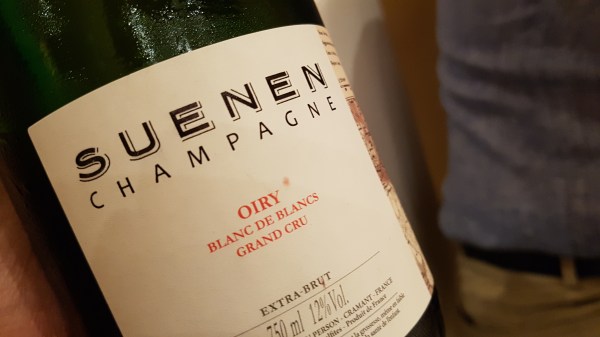
Champagne Suenen Oiry Blanc de Blancs Grand Cru, courtesy of CJ at Shima Kimura, 27 Sep 2018. More exuberant than the C+C above though its minerality is slightly more recessed, cloaked in very fine soft gentle bubbles. Excellent.
2012 Jean-Marc Brocade Chablis 1er, at Changi Airport T3 Silver Kris lounge, 29 Sep 2018. Subdued nose of crème and chalk that belies a broad expanse of white floral tone, nutmeg and stern minerals amidst traces of spice and bell pepper. Quite firm, layered with fine intensity and attack, finishing well. Very fine.
2017 Robert Oatley McLaren Vale Shiraz, at Changi Airport T3 Silver Kris lounge, 29 Sep 2018. Nose of earthy undergrowth, littered with some traces of spice, black pepper and vegetal notes on the palate. Uninspiring.
2016 Coldstream Hills Chardonnay, on board SQ322 Business Class, 29 Sep 2018. Gentle earthy floral tones, slightly creamy with understated minerals, showing good presence of pomelo and a bit of bitter lemon with good definition but stern at its finish.
2014 Ch Cambon La Pelouse, on board SQ322 Business Class, 29 Sep 2018. Dominance of dark plums and undergrowth on the nose and palate amidst dryish textures. Good presence but austere, not helped by traces of green that lingered. Became more intense and fuller, developing further notes of toffee and mocha with rustic detailed tannins.
2014 Domaine Pierre Damoy Gevrey-Chambertin Clos Tamisot, popped and poured at Yan, 03 Aug 2018. This over-achieving village monopole proffers a generous bouquet of old wood, smoke and earthy tones infused with ripe dark fruits, softly focused. Surprisingly open and fleshy though its inner detail was obscured by a bit of minerally glare, softening after some time to reveal more dark plums and dark cherries to the fore, positively glowing, finishing with a trace of austerity. Excellent.
2004 Domaine Henri Gouges Nuits-Saint-Georges La Perriere 1er, popped and poured at Imperial Treasure Fine Teochew ION, 06 Aug 2018. This unusual 100% pinot blanc has a well-aged hue of resin, rye and malt with traces of orange peel, open though its fruit is set rather backward and beginning to dry out, turning more reductive over time with stinging acidity and growing intensity. Very fine but I wouldn’t wait further.
2013 Aubert Laurent, courtesy of Kieron at Imperial Treasure Fine Teochew ION, 06 Aug 2018. Very oaky on the nose but balanced by delicate earthy minerals on the palate, richly layered with notes of peaches, pomelo and white citrus with an aura of smoky incense, not too creamy. Great balance and elegance, finishing with great persistence. Lovely.
2008 Ch Troplong Mondot, courtesy of F at Imperial Treasure Fine Teochew ION, 06 Aug 2018. Deep purple. Highly aromatic, delivering on its promise of delicious dark cherries and black currants with fleshy supple tones ingrained with very fine tannins that stoked the palate with gentle intensity, shaping up towards a glowing finish. Excellent.
2000 Ch La Gomerie, courtesy of Kieron at Imperial Treasure Fine Teochew ION, 06 Aug 2018. One of the original upstarts that kicked off the garagiste movement, this wine of 100% merlot exudes an earthy bouquet imbued with ripe dark berries, highly promising, but let down by a palate that lacked opulence and sophistication particularly for such a glorious vintage, finishing short.
1995 Ch Leoville Las-Cases, at Imperial Treasure Fine Teochew ION, 06 Aug 2018. Great colour, proffering a fabulous earthy pungency on the nose with great elegance on a palate richly layered with dark fruits that oozed gentle sweet tannins on a background of tea leaves, open and smooth, displaying great refinement though it took on a more austere and minerally tone over time. Excellent.
2005 Ch Bellefont-Belcier, courtesy of KP at Imperial Treasure Fine Teochew ION, 06 Aug 2018. Lovely deep purple, rather dense and forward in fruit balance on a bed of dried tea leaves with minty overtones but surprisingly short at the finish. Yet to develop.
2003 Ch Sociando Mallet, courtesy of WCY at Imperial Treasure Fine Teochew ION, 06 Aug 2018. Good color. Classic glow of dark fruits and currants on a cedary floor, highly supple, displaying great acidity and excellent linearity though not quite as layered as the best. Very fine.
1996 Ch Sociando Mallet, courtesy of WCY at Imperial Treasure Fine Teochew ION, 06 Aug 2018. Great color, allied with a wonderful bouquet that is absolutely beguiling, thrilling the senses with a fabulous floral bloom of lovely rosy fragrance. Big, open and infinitely delicious, only just a tad short after all these years. This is what drew everyone to Sociando Mallet in the first place. Superb.
1996 Ch Sociando Mallet Cuvee Jean Gautreau, courtesy of WCY at Imperial Treasure Fine Teochew ION, 06 Aug 2018. This is a special bottling started by its owner-cum-winemaker Jean Gautreau back in 1995, made from the best few barrels (out of more than 1000 barrels per vintage) and aged in 100% new French oak. Compared with the standard bottling above, this special cuvee possesses an equally great bouquet though with appreciably greater depth and definition from the superb layering. Lush, beautifully balanced and integrated. Absolutely stunning.
1996 Ch Saint Pierre, courtesy of WCY at Imperial Treasure Fine Teochew ION, 06 Aug 2018. In spite of the significant bottle stink, this wine is open with dark earthy tones softened by characters of gentle rose petals, somewhat uninspiring.
Laurent-Perrier Cuvee Rose NV, Jade Palace 19 Aug 2018. Dry grapefruit and orangey citrus dominate amidst gentle yeasty tones. Layered with gentle ground minerals. Crisp but slightly stern.
2014 Chateau de Mersault Meursault Charmes-Dessus 1er, 20 Aug 2018 at Osteria Art. Bare tinge of bottle stink. Closed initially but opened up with well-defined dense minerals. Rather sullen and backward though it developed more creamy tones with very even concentration and presence. Going through an awkward phase. Not at its best on this occasion.
2002 Domaine Ponsot Clos Saint Denis Grand Cru, courtesy of MH at Osteria Art, 20 Aug 2018. Mild evolution with a faint rim of bricking. Medium-full. Softly layered with ripe wild berries and raspberries, structured with mild sweet tannins. Relatively dark in tone, exuding quiet intensity and elegance with fresh vivacious acidity. Very fine.
2008 Domaine Alain Hudelot-Noellat Romanee-Saint-Vivant Grand Cru, courtesy of Vic at Osteria Art, 20 Aug 2018. Dusky red. Full bouquet, richly perfumed with ripe dark plums, currants and minerals. Darker palatal tones of cool ripe fruit on a backdrop of complex earthy minerals tinged with traces with salt, rather subtle, finishing with sexy velvety tannins. Excellent.
2013 Pierre-Yves Colin Morey Chassagne-Montrachet, courtesy of Kieron at Imperial Treasure Paragon, 23 Aug 2018. Clear citrus with overtones of vanilla and icing. Immense concentration, displaying good definition of gentle minerals and white fruit with crisp acidity. Developed a lovely floral bloom over time, becoming more smooth and rounded with chiselled minerality. Excellent.
2000 Ch Monbousquet, at Imperial Treasure Paragon, 23 Aug 2018. Deep ruby. Richly layered with ripe dark currants and black berries tinged with enamel. Big bold presence but not overwhelming.
1995 Les Forts de Latour, courtesy of Melvin Choo at Imperial Treasure Paragon, 23 Aug 2018. Deep ruby. Lovely glow of the classic dryish Pauillac signature tone with some early complexity. Fleshy and rounded with excellent presence of tea leaves and tobacco snuff, finishing with a great flourish of nail varnish. Excellent.
2007 Taittinger Comtes de Champagne Blanc de Blancs, at Matter of Taste, Regent Hotel Singapore, 25 Aug 2018. Toasty earthy yeasty pungency. Very fine bubbles. Abdundant clear citrus, softly layered with great clarity and detail. Excellent presence and persistence.
2006 Taittinger Comtes de Champagne Rose at Matter of Taste, Regent Hotel Singapore, 25 Aug 2018. The nose is closed, though the palate is imbued with grapefruit and gentle rose petals with dense earthy ferrous elements in equal measure. Dry.
2013 Muddy Water Pinot Noir, at Matter of Taste, Regent Hotel Singapore, 25 Aug 2018. . Deep colour. Forward. Superb floral fragrance. Excellent presence gently layered with superb tannins, imparting great mouthfeel. Doesn’t bite. Long. Quite excellent.
2014 Magnacosta Tenure di Trinoro at Matter of Taste, Regent Hotel Singapore, 25 Aug 2018. Made from 100% cabernet franc. Earthy rustic dark plums on the nose. Nice entry onto the medium-full palate, ample in ripe wild berries with textures of very finely-grained tannins. Very fine.
2013 Il Pino di Biserno at Matter of Taste, Regent Hotel Singapore, 25 Aug 2018. A classic blend of cabernet sauvignon, merlot and cabernet franc from the Alta Maremma area of Tuscany. Dark, exuding perfumed wild berries. Full-bodied. Layered with superb fruit that produced quite a bit of spicy tones, structured with silky pliant tannins, displaying great acidity, balance and length. Quite excellent. Drinking well but can keep.
2017 Les Sorcieres Clos des Fees, at Matter of Taste, Regent Hotel Singapore, 25 Aug 2018. From the Cotes du Rousillon. Notes of earthy light rose petals. Fresh and gently rounded. Quite delightful. Great for summer.
2013 Mas de Daumas Gassac, at Matter of Taste, Regent Hotel Singapore, 25 Aug 2018. Lovely bouquet of dense ripe wild berries and red fruits with an attractive oily earthy pungency. Quite open and lively on the medium-bodied palate, somewhat rustic with a dash of vegetal elements.
2014 Domaine de la Janisse Chaupin, at Matter of Taste, Regent Hotel Singapore, 25 Aug 2018. From 100% grenache. Rosy. Rounded with a certain lightness, showing good density intensity yet light footed.
2015 Domaine de la Janisse VV, at Matter of Taste, Regent Hotel Singapore, 25 Aug 2018. Excellent depth, density and richness of wild berries, earthy elements and vegetal traits. Structured with spicy tannins. Well-latered, finishing with a minty glow. Very good.
Philipponnat Royale Reserve Brut NV, at Matter of Taste, Regent Hotel Singapore, 25 Aug 2018. Rich tones of white and yellow citrus, crisp and zesty. Not too dry, oozing with sweet tannins. Plenty of verve.
 2015 Carter Cellars Hossfeld Coliseum Proprietary Red, at Matter of Taste, Regent Hotel Singapore, 25 Aug 2018. Impenetrably dark, exuding a full bouquet of enamel and varnish on a deep palate of ripe black fruits, beautifully warm and rounded with tannins that are very well integrated on an earthy cedary floor with just a bare vegetal tinge, finishing well. Quite excellent.
2012 Cameron Fisher Proprietary Red, at Matter of Taste, Regent Hotel Singapore, 25 Aug 2018. Deep full bouquet of sweet dark plums, black fruits and currants. Richly layered, dense and opulent on the palate, subtly structured with seamless subtle ferrous elements and minerals that imparted a spicy peppery finish. Excellent.
2014 Brion Moon Mountain Sonoma County, at Matter of Taste, Regent Hotel Singapore, 25 Aug 2018. Rich dense bouquet of ripe plummy dark fruit with a medicinal tinge on the mid-palate, layered with spice and a touch of liquer. Attractive.
2014 Brion Caldwell Vineyard, at Matter of Taste, Regent Hotel Singapore, 25 Aug 2018. Dark. Richly perfumed on the nose, exuding dense hedonistic aromas. Superb fruit quality and layering. Highly detailed with excellent power, structure and depth, showing sophisticated handling of tannins. Excellent.
2014 Ridge Monte Bello, at Matter of Taste, Regent Hotel Singapore, 25 Aug 2018. Deep opague purple, exuding varnish and enamel. Full palate of ripe raspberries and cherries, excellent in density and inner detail, highly succulent. Surprisingly open. Not jammy at all. Excellent.
1999 E Guigal La Turque, at Matter of Taste, Regent Hotel Singapore, 25 Aug 2018. Good color. Deep earthy pungency. Dryish, showing good concentration of grapefuit characters but not profound.
2005 Duckhorn Cabernet Sauvignon, popped and poured at Otto Ristorante, 25 Aug 2018. Deep purple, exuding a dense bouquet of vanilla and enamel with deep-seated fruit. Structured with crisp tight acidity and subdued minerals, layered with excellent depth of delicious dark currants and raspberries amidst licorice and forest notes, developing a rich creamy glow tinged with cinnamon and cedary tones as it sat in the glass. Excellent.
Charles Heidsieck Brut NV, at Changi Airport T3 Silver Kris lounge, 26 Aug 2018. Dense white citrus. Plenty of brio. Generous spread of fine bubbles but one-dimensional in its bold dry intensity. Took a while to develop more depth and layering with richer tones of intense citrus on a firm bed of earthy ferrous minerals.
2017 Antonin Rodet Vire-Clesse L’Epinet, at Changi Airport T3 Silver Kris lounge, 26 Aug 2018. Quite subdued initially, showing just a glimpse of white pepper and bell hoppers. Took some time to reveal good presence of white and yellow citrus on the palate with a clean minerslly glow, finishing on a note of nutmeg. Needs time in the glass.
2015 Devil’s Lair Chardonnay, on board SQ328 Business Class, 27 Aug 2018. Attractive earthy pungency with strong suggestion of oiliness on the nose whilst the palate is imbued with white pepper and Asian spices amidst delicate citrus and chalky minerals with illusion of fizz. Developed greater density over time with excellent concentration and minerality. Highly successful.
2014 Ch Larose Perganson, on board SQ328 Business Class, 27 Aug 2018. Attractive earthy pungency with Asian spices. Medium-full. Supple and rounded. Nicely open with slightly dryish textures, quite ample in juicy black fruits without the usual burliness of Medoc.
2015 Zonte’s Footstep The Lake Doctor Shiraz, on board SQ328 Business Class, 27 Aug 2018. Ripe warm shiraz with characters of dark and red plums. Big, full and creamy but not overwhelming. Excellent in concentration and presence with smooth rounded tannins. Good stuff.
2013 Ch La Pirouette, Lufthansa Senator lounge, Munich airport, 30 Aug 2018. Fleshy, supple and juicy. Good concentration of raspberries, layered with earth, ash and enamel. Very agreeable.
2017 Weingut Huls Riesling, on board SQ327 Business Class, 30 Aug 2018. Green melons and longans dominate, proffering gentle diesel fumes with a fine oily presence. Pleasant with balanced acidity. Slightly sweet.
2015 Heirloom Shiraz, on board SQ327 Business Class, 30 Aug 2018. Good complexity on the nose. Dense in ripe shiraz with overtones of mocha, licorice and earthy incense. Full-bodied, showing excellent presence and acidity, finishing with good sophistication. From McLaren Vale.
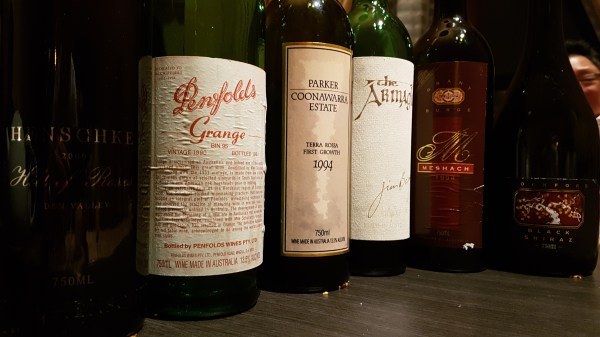
Aussie All-stars: 1994 Grant Burge Meshach, 1994 Parker Est Terra Rossa First Growth, 1993 J Barry Armagh, 1990 Penfolds Grange, 2009 Henschke Hill of Roses…
I know certain people are averse to drinking an all-Australian line-up for fear of the potential after-effects: severe myalgia and headaches. However, when Dr Wang KW invited me to partake in a dinner where a 1990 Penfolds Grange will be popped, all resistance melted. Dinner eventually took place on 10 November 2018 at the Chinese restaurant of Raffles Town Club, Singapore, with the wines (with the exception of Vasse Felix, Rockford and Henschke) being generously sponsored by Ms Jennifer Chia. The reds (except the Henschke) were mostly double-decanted many hours in advance. This was one of the rare occasions where I get to drink Australian reds aged beyond 20 years. If there is anybody who still harbours doubt about the ageing potential of Aussie reds, the evening’s line-up was solid evidence that they do age well. Not only that, they seem to age very slowly, as some still appear relatively youthful. I certainly enjoyed them. Did we suffer any after-effects? Nobody said anything but I can tell you one part of my bodily system didn’t seem to agree with the wines for several days after; I shan’t divulge any further. Nevertheless, a huge thank you, Dr and Mrs Wang, for the dinner and especially to Jennifer for sharing all these gems.
2015 Vasse Felix Heytesbury Chardonnay, courtesy of George. Generous aromas of lead petroleum on the nose while the palate is layered with ample yellow citrus and lime, exuding fine acidity and controlled intensity within a very focused narrow profile, missing in inner detail and succulence.
 2003 Rockford Black Shiraz, drunk from an identical pair that I’ve cellared since buying them direct from Rockford’s cellar door in late 2003. This famous sparkling shiraz opens with an excellent depth of dark currants, ripe blackberries, medicinal herbal tones and licorice on the nose and palate, subtly structured with smooth gentle bubbles and sweet undertones that lent a sense of understated intensity, displaying good complexity though less of its famous liquered finish. Still holding well after 15 years, the oldest Black Shiraz that I’ve ever had.
1994 Grant Burge Meshach. Deep crimson. Complex bouquet of ripe wild berries, dark currants and dark plums. Open with great concentration and excellent depth on a plummy cedary floor, gently structured with good linearity, turning more minty with a spicy glow at its finish. Not much of inner detail but sufficiently compelling and delicious. Still youthful. Excellent.
1994 Parker Estate Terra Rossa First Growth. Still very dark in colour, proffering a delicious nose of ripe dark cherries and blackberries on an earthy palate, supported by very good concentration of fruit. Very well balanced. Still going strong. Excellent.
1993 Jim Barry Armagh. Deep garnet red with a rim of vermillion. Closed on the nose though the palate is right upfront, big and bold, imbued with an abundance of wild berries and dark fruit, very ripe with a distinct vegetal note, rounded with excellent presence and depth, exuding an open spicy intensity. Very fine, but needs plenty of time in the glass to reach its best.
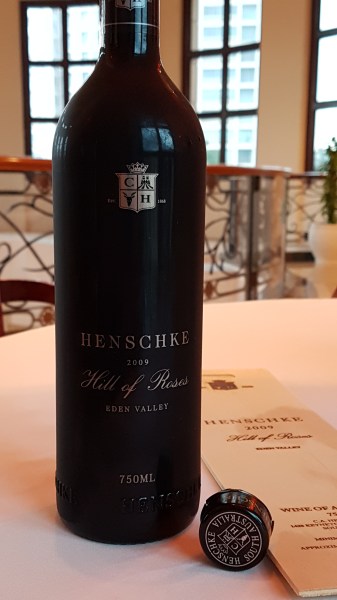
2009 Henschke Hill of Roses, a bottle I’d purchased directly from Henschke’s cellar door. Single vineyard, grown from cuttings taken from the 20 best rows of Hill of Grace in the Eden Valley of the Barossa. Deep purple, exuding a generous bouquet of ripe dark plums and blackcurrants tinged with incense that hinted at wonderful depth. Full-bodied. Richly layered in fruit and earthy minerals, swathed in a luxurious sheen of svelte velvety tannins that oozed with understated sweetness. Highly sophisticated in feel and structure, superbly balanced with feminine grace, opening up with lovely deftness. Surprisingly delicate. A worthy successor to Hill of Grace. Excellent.
1990 Penfolds Grange. Impenetrably dark. Highly generous bouquet of warm ripe Barossa shiraz, beautifully nuanced with characters of dark plums, black currants and bell pepper that carried well onto the palate with lovely expanse and weight, displaying great cohesion, density and fabulous intensity of fruit, structured with great acidity and transparency with superb inner detail and complexity. Still youthful. Outstanding.
FICOFI: Chateau Cheval Blanc 2000-2009 & Chateau d’Yquem 2007, 2013
Pierre Lurton dropped in to Singapore again on 06 November 2018 at the Four Seasons to grace a FICOFI event featuring the estates under his management, Chateau Cheval Blanc and Chateau d’Yquem. Ever the consummate promoter, Pierre waltzed about easily amongst members and guests whilst holding sway whenever he spoke about the wines. It’s always a privilege at such events to be amongst the first persons in the world to get to taste the latest vintage of Y d’Yquem. The line-up of Cheval Blanc, on the other hand, was way too young. Having experienced the full potential of cabernet franc viz. a 1975 Ch Cheval Blanc at the chateau itself and then again from a double magnum on another occasion, I maintain that Cheval Blanc should only be popped after 20 years, at the very least. In its youth, Cheval Blanc tends to be clouded by the darker fruit and weight of merlot, obfuscating the purity of cabernet franc. Even if some of the more classically structured vintages appear to be approachable, they lack true character that can only emerge with the passage of time. Nevertheless, those of us who cannot afford to drink Cheval Blanc or d’Yquem on a daily basis must remain grateful for whatever opportunity that come our way. And so merci beaucoup Pierre and to FICOFI for the organisation (the food that evening was truly outstanding).
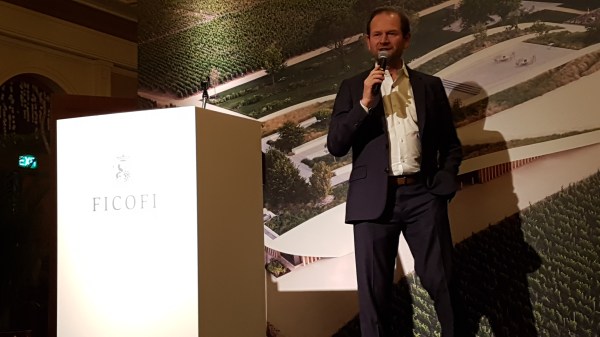
Pierre Lurton
2000 Dom Perignon Second Plenitude. Closed with only just some gentle yeasty tones. Took a long time to develop some sublime acidity and citrus fruit, subtle with taut intensity, finishing with some minerally glare amidst pomelo and bitter lemon. Didn’t really quite got off the ground in spite of persistent coaxing. The 1998 P2 is much preferable.
2016 Y d’Yquem. The unique dry white from Ch d’Yquem made since 1959, usually picked just before d’Yquem itself, comprising a blend of 80% sauvignon blanc with 20% semillon, slightly botrytised. Lightly coloured. Open clear grassy elements imbued with fresh early morning dew on the nose, developing further notes of yellow citrus, white peaches and dried apricots on the palate with a smooth deep gentle glow. Highly detailed and perfumed, continuing to evolve in the glass with overtones of raw nutmeg and cool climate fruit. Only 10,000 bottles. Excellent.
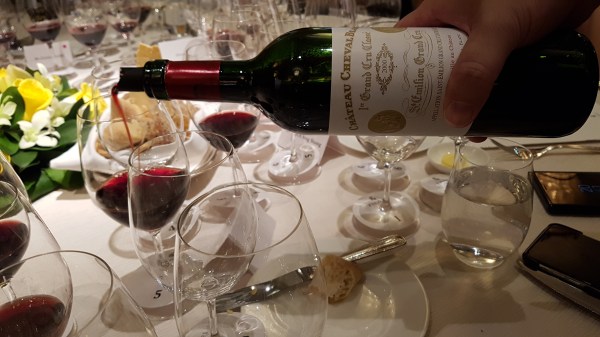
2009 Ch Cheval Blanc. Deep purple, exuding dense aromas of dark cherries, black fruits and dark currants with a great sense of depth. Surprisingly deft and silky smooth on the palate where traces of licorice and enamel are still evident, finishing with good length but this wine has hardly evolved. Not ready.
2006 Ch Cheval Blanc. Dark crimson. More developed on the nose, displaying a lovely glow with a broad open expanse of dark red plums that imparted great concentration and fabulous intensity of fruit with detailed finely-grained tannins amidst deeper tones of soy yet maintaining a lovely transparency in texture, becoming more and more approachable over time. However, knowing how wonderful Cheval Blanc can be given enough bottle age, the 2006 is far from ready although it is likely to reach its drinking window earlier than the 2009.
2004 Cheval Blanc. Poured from magnum. This wine opens with gentle red fruits, dark currants and earthy tones tinged with truffles, more open and lighter than the preceding reds. Medium-bodied, rounded and fleshy, classically structured with good definition and linearity, finishing with gentle intensity, just missing the opulence from the best years. Drinking quite well but I’d let it rest another 3-5 years.
2000 Ch Cheval Blanc. Dark crimson. There’s some early evolution and complexity on the nose, dominated by earthy tones, ripe dark berries, black fruits and soy. Highly supple, fleshy and lithe on the open palate characterised by a full plummy tone with lovely secondary nuances and good complexity, showing great transparency and balance. Developing very well but still youthful, far from its full potential.
2013 Ch d’Yquem. Lovely luminosity. Lifted in nectarine and honey. Luscious and deeply layered with dense apricots and treacle. Sweeter than usual but offset by excellent acidity, achieving great balance. Just a little stern at its lengthy finish. Excellent.
2007 Ch d’Yquem. Brilliant deep luminous molten gold. Rich complex bouquet of dense petroleum with aromas of steamed rice. Luscious, covered in sheer luxurious sheen of sublime acidity with bottomless layers of apricot and exotic tropical fruit, finishing with a rich burnished tone throughout its glorious length. My second tasting in six months, both from FICOFI, but this is even more impressive. Absolutely outstanding.

FICOFI: Maison Joseph Drouhin
Jean-Paul Dumond, Sales Director of Maison Joseph Drouhin, laid on a generous line-up on 20 October 2018 during one of his frequent stopovers in Singapore, where there was a promenade followed by lunch at Capitol Plaza. There didn’t appear to be any particular vintage theme and, regrettably, no Montrachet nor Musigny grand cru but still there was plenty of good stuff to partake in. I tend to be partial towards the whites of Drouhin, always so very correctly poised but, on this occasion, I was also very impressed with how well the older vintages of reds were still holding up.
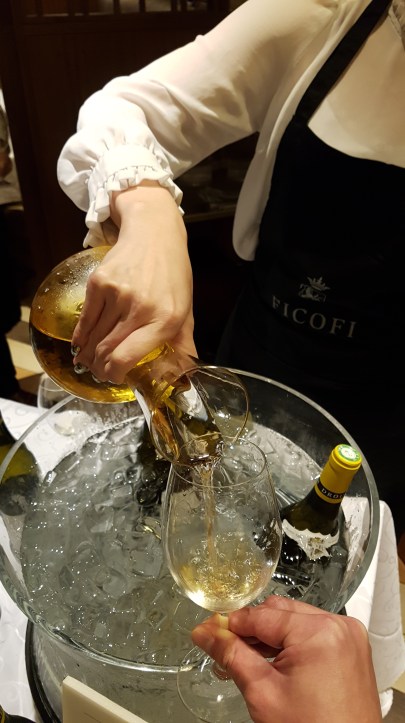
2016 Joseph Drouhin Beaune Clos des Mouches Blanc 1er. Soft gentle bouquet of white floral fragrance. Good depth with earthy tones on the palate, matched by lovely dry intensity and lively acidity. Excellent freshness and length.
2012 Joseph Drouhin Beaune Clos des Mouches Blanc 1er. More relaxed on the nose with recessed tropical fruits. Dry placid palate. More developed and more minerally. Good balance.
2012 Joseph Drouhin Puligny-Montrachet Les Folatieres 1er. Dry minerally glow with white floral overtones, leading to a classic Puligny signature of gravelly depth, richly detailed with very fine acidity and concentration, exuding subdued intensity. Excellent.
2013 Joseph Drouhin Corton-Charlemagne Grand Cru. Shut, just glimpses of gentle white fruits, displaying a minerally glow at the sides amidst traces of chalky minerals. Good tonal fullness. Somewhat reserved as it kept its distance. Took its time to open, revealing subtle tropical fruits layered with rich detail. A classic Corton-Charlemagne. Very fine.
2008 Joseph Drouhin Batard-Montrachet Grand Cru. Poured from jeroboam. Glorious color. Effusive complex floral bouquet with a rich oily tone but surprisingly shy on the palate, exuding a minerally glow with notes of nutmeg within a slim well-defined profile. Opened up with gentle opulence, displaying fine balance and elegance, more nutty with shades of almonds. Excellent.
2009 Joseph Drouhin Beaune Clos des Mouches Rouge 1er. Poured from jeroboam. Herbal medicinal glow tinged with earth. Rounded and soft, well structured with good integration and concentration. Opened up very well with food, displaying lovely opulence and fullness.
2016 Joseph Drouhin Beaune Clos des Mouches Rouge 1er. Good color. Deeper glow with more fruit to the fore and great acidity, lively yet subtly poised with good integration and balance, finishing with excellent linearity.
1996 Joseph Drouhin Beaune Clos des Mouches Rouge 1er. Good color. Generous expanse of raspberries with good levels of ripeness, positively glowing with just a touch of greenness. Good concentration and structure, turning more minerally at the finish.
2012 Joseph Drouhin Chambolle-Musigny 1er. Lovely freshness with a feminine stance. Distant cherries and raspberries. Good balance. Softly rounded. Opened up over lunch with better detail and depth, just a tad short.
2016 Joseph Drouhin Chambolle-Musigny Les Amoureuses 1er. Good color. Dominance of red fruits, ripe red cherries and camphor tinged with earth. Lovely seamless integration and acidity. Feels a bit cautious on the palate. Doesn’t possess the exuberance of Groffier.
1996 Joseph Drouhin Gevrey-Chambertin Champeaux 1er. Correct tint. More of tangerines, bright red fruits and camphor. Rounded with great balance and acidity. Holding up well.
2012 Joseph Drouhin Charmes-Chambertin Grand Cru. Fresh enticing bouquet of red cherries and rose petals. More forward with a lovely soft feminine intensity. Rounded and fleshy. Great integration, balance and acidity. Very correct.
2012 Joseph Drouhin Chambertin-Clos de Beze Grand Cru. Lovely earthy pungency, offering superb complexity and more layering than the preceding reds. Medium-bodied, displaying great presence of ripe raspberries with residual overtones of camphor and paraffin. Very well balanced and integrated with lively acidity. Yet to develop.
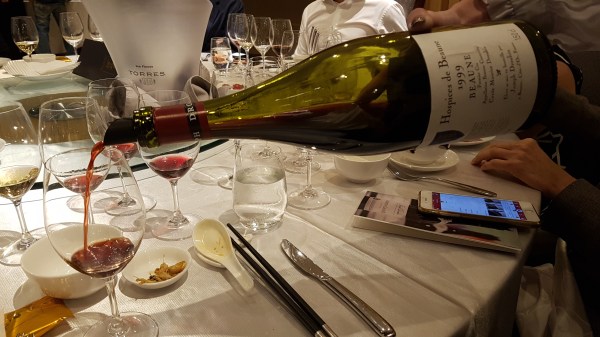
1999 Joseph Drouhin Hospice de Beaune Beaune. Poured from magnum. Still showing good colour. A bit more forward and accented on the nose. Ample in mature red fruits. Bright, rounded and fleshy, carrying good weight and intensity without any heaviness, displaying great balance, detail and definition. Highly successful.
2011 Joseph Drouhin Nuits-Saint-Georges Les Proces 1er. Good colour. Very good in concentration and acidity with plenty of freshness on a bed of classic Nuits-Saint-Georges earthiness. Just a tad short.
1995 Joseph Drouhin Nuits-Saint-Georges Roncieres 1er. Poured from magnum. Lifted tones of bright red fruits. Very good in concentration, slightly denser than usual with classic earthy overtones. Dryish in texture, structured with fine acidity but again short. Lacks opulence.
1978 Joseph Drouhin Vosne-Romanee Beaumonts 1er. Dusky crimson. Still carrying an abundance of delicious mature red fruits on the nose and palate with an earthy edge. Medium-full, displaying very fine acidity with a deeper vein of dark currants and tight intensity that tapered to a long spicy finish. Still has the legs to last another decade. Excellent!
1995 Ch d’Yquem. Glow of aged chalky minerals with enticing notes of honey, nectarine and sweet citrus, showing lovely tension, acidity and structure. Jean-Paul Dumond simply cannot do without an d’Yquem, hence its inclusion in any Drouhin line-up.
FICOFI: Château Palmer 1999-2006
This tasting stems from a FICOFI function held at the Ritz-Carlton, Singapore, on 08 June 2018 in the presence of the CEO of Château Palmer, M. Thomas Duroux. I have never come across anyone who has anything against this excellent troisième cru. Since the 1980s, Ch Palmer has consistently run Château Margaux really close. In certain vintages, particularly in 1983, 1989 and 1999, I’d say that Ch Palmer may even be the better wine, especially when one factors in the price differential. Of course, Ch Palmer is more expensive now than before, but it has consistently pushed the boundaries of its quality such that the gap between itself and Ch Margaux has narrowed tremendously. In particular, it is in the so-called off vintages that Palmer represents great value. For this evening, FICOFI has showcased Ch Palmer from the best years although 2006 is probably more classic rather than outstanding. The 2010 Alter Ego de Palmer is superb but it’s a great pity we didn’t have the 2010 Ch Palmer on hand too to do a side-by-side comparison. Overall, my impression is highly consistent with a recent vertical that I’d reported in November 2017. It would be fascinating to compare Palmer versus Margaux, vintage for vintage. That would be a great wine theme to consider.
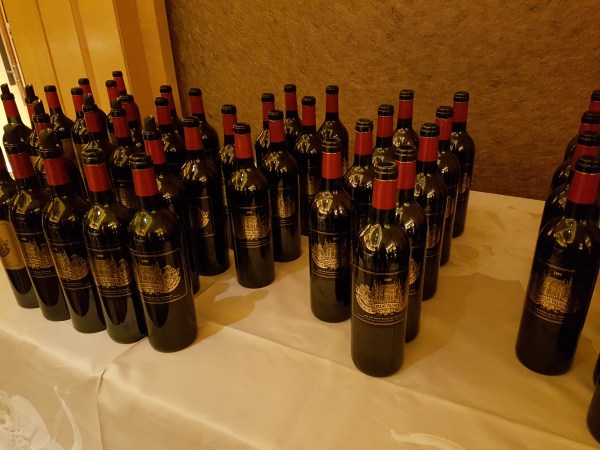
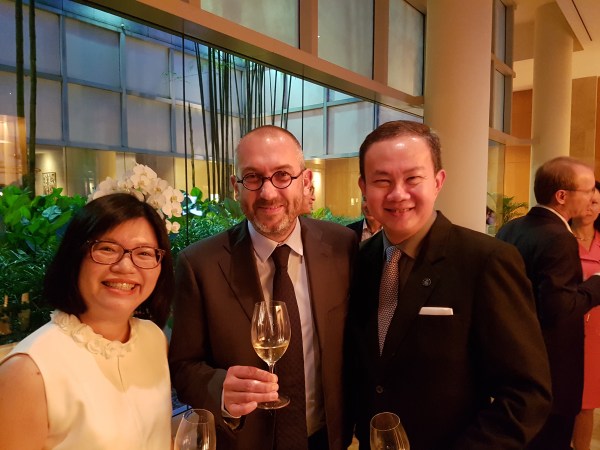
With Thomas Duroux, CEO of Château Palmer
2007 Delamotte Blancs de Blanc. Lovely bouquet of delicate citrus, wild flowers and lime of excellent density. Good presence on the palate, more minerally with characters of aged chalk. Expansive without being opulent, finishing well.
2010 Alter Ego de Palmer. Deep garnet red. Intense complex bouquet of dark plums, black berries, ripe wild berries with traces of licorice, dark chocolate and black currants. Very well replicated on the palate with a luxurious sheen of very warm ripe fruit still coated in some enamel, very well layered with excellent concentration within a delicate tannin structure though not showing much complexity. Highly pleasurable. Probably the most successful Alter Ego ever.
2006 Ch Palmer. Rich ripe bouquet of blackberries and cassis, exuding sweet aromas. Medium-full. Rounded with good presence and definition that benefitted from its transparent textures, still tannic at this stage though the wine is, surprisingly, gentle in intensity, developing more smoky tones over time. Not quite settled yet.
2005 Ch Palmer. This wine has shut down considerably though the medium-full palate is imbued with abundant ripe raspberries and mocha that imparted superb acidity and structure, taking its time to flesh out. Plenty of raw potential, a wine that’s still far from its peak. Best to lay down.
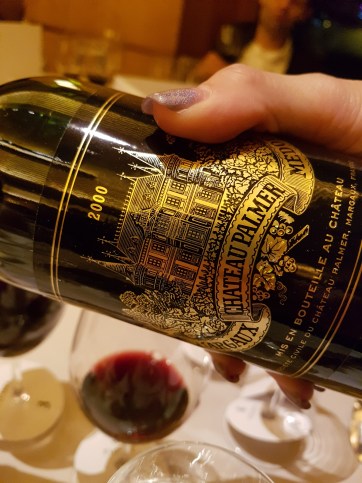
2000 Ch Palmer. This wine exudes a dark earthy pungency amidst aromas of delicious dark currants. Very open and highly supple, richly layered with gorgeous ripe fruit with a rich core of marmalade and soy on a cedary floor within a velvety tannin structure that tapered to a long glowing persistent finish. Highly luxuriant and sophisticated in feel. Superb.
1999 Ch Palmer. Gentle aromas of soy and ripe dark berries on the nose. Medium-bodied. Rounded and feminine in character, showing good transparency but not quite as succulent as I remembered, missing a bit of stuffing. Surprisingly short as well. I’ve always felt that the 1999 Ch Palmer is better than the 2000 but this may have to change as it is beginning to show some of the shortcomings of this vintage.
2007 Ch d’Yquem. This Sauternes from a perfect growing season is fully deserving of all its accolades and more. Deep and luscious, highly lifted in apricot and nectarines with an infusion of sweet incense on a full and concentrated palate, seamlessly integrated with broad swathes of sublime acidity, showing wonderful focus, definition and delineation throughout its superb length. Still infantile but already highly precocious. Outstanding.