Ric’s Big Five-O: 2002 Lafite Rothschild, 2009 Baron Thenard Montrachet Grand Cru, 1966 Chateau Latour
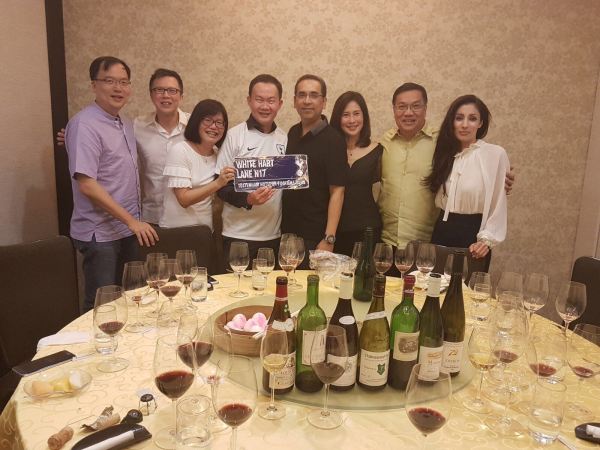
For me, December 2017 is truly the month to let loose as I reach my half-century and I felt it would be great to spend a nice but quiet evening with just a few persons in familiar surroundings. One cannot really go wrong with Jade Palace, venue of so many past glorious wine and gastronomic events, and Mr Ho has, again, personally supervised the customised menu as we gathered on December 4th.
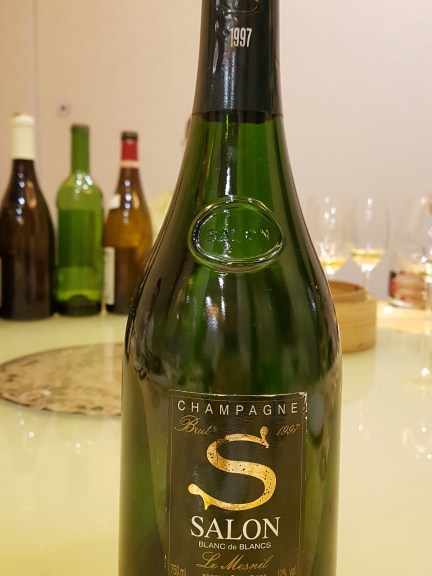 We began the evening with a 1997 Champagne Salon (courtesy of LF), evoking powerful yeasty tones with a mild earthy pungency along with delicate citrus, displaying superb intensity of lime, citrus and tropical fruits on the open palate with excellent depth, detail and balance, not too dry and still far from peaking. A superb start.
The Alaskan King Crab, served cold, is one of the restaurants calling cards and, here, the 1999 Valentin Zusslin Pfingstberg Grand Cru, glowing with citrus, grapefruit and lime amidst recessed chalky minerals and a prominent diesel note, cut through the marine salinity of this crustacean with its robust tone and crisp acidity, showing excellent depth of fruity detail with gentle intensity. As we finished the dish, the 2006 Domaine Roulot Meursault Les Tessons Clos de Mon Plaisir was poured, rather muted on the nose though its delicacy of fruit and clear citrus was clearly evident, gradually opening up to reveal lovely intensity and inner detail with some early complexity supported by subdued chalkiness, carrying good weight. The most famous plot of Burgundy white was paired with rare abalone. Here, the 2009 Domaine Baron Thenard Montrachet Grand Cru, decanted and kept in ice for about six hours prior, exuded a quiet bouquet of gentle crème de la crème with lifted minty tones, thoroughly seamless on the palate where highly delicate white floral tones and gentle soft citrus dominate with understated richness and body, almost ethereal in its elegance though not quite reaching the degree of inner detail that I have come across from Joseph Drouhin’s Marquis de Laguiche Montrachet.
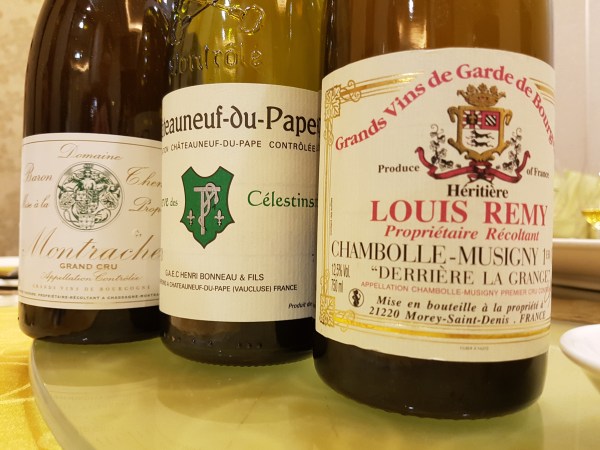
The reds were drunk in two flights to go with the meat dishes. The 1996 Heritiere Louis Remy Chambolle-Musigny Derriere La Grange 1er (courtesy of Sanjay) was lifted in aromas of dark cherries and currants with a dominant plummy tone, medium-bodied with an even deeper streak of dark fruit, thoroughly seamless., caught at its absolute peak. The 2007 Henri Bonneau Chateauneuf-du-Pape Reserve des Celestins (courtesy of Ooi CJ) was quite the perfect wine to follow on, expectedly deep on the nose and palate with lovely warm ripe fruit, its exciting tannins and superb acidity producing great intensity and verve without ever being too weighty.
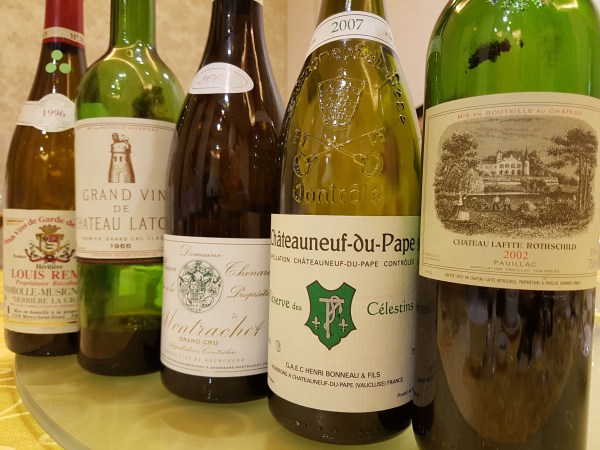
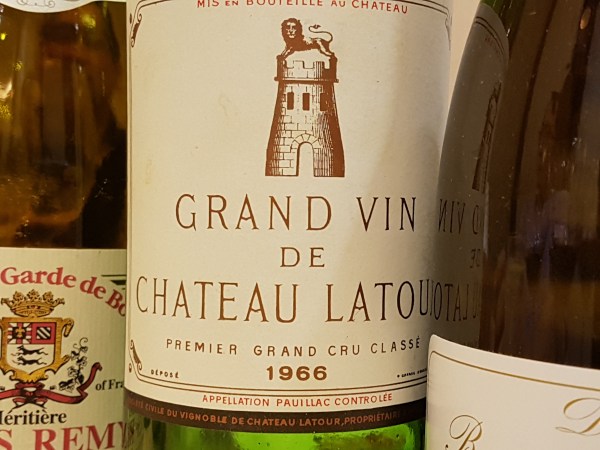
For the final flight, LF produced a blinded red, clearly well evolved in colour and tone, evoking aged dry mushrooms with a lifted earthy pungency, still displaying excellent fullness and depth of ripe dark berries, utterly seamless with melted tannins. Definitely a Bordeaux Left Bank. I guessed aloud a 1970 Latour and was almost spot on…a 1966 Chateau Latour!! Outstanding!! Next to it, the 2002 Ch Lafite Rothschild, an impenetrable deep dark red, was stuffed with ripe dark berries and characters of soy, highly lifted in redcurrants, dark cherries and warm ripe fruit with open chewy tannins, exuding lovely feminine charm. Having emerged from its brooding shell, this wine is much more engaging now than a previous bottle from the same batch tasted in 2010. All in all, I must say the line-up and progression for the evening has been impeccable, so much so that we weren’t even drunk at the end of it. Now for the next ten years…
FICOFI: Palais des Grands Crus 2017
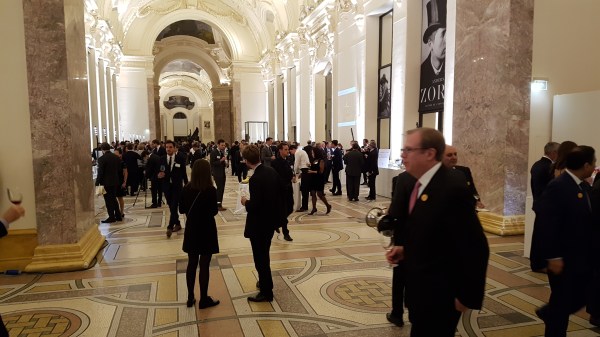
At the end of each year, FICOFI hosts a grand party – Le Palais des Grands Crus – where practically all the estates and domaines associated with FICOFI from around the world assemble in Paris for a massive wine tasting-cum-gala dinner, plus a full programme of fringe activities that include luncheons at various wine estates or private visits to bespoke luxury brands (Cartier and Louis Vuitton feature this year). Members from all around the world fly in specially just to attend the week-long festivities, culminating in the grand Gala that took place this year on 11 December 2017 at Le Petit Palais museum near the Place de Concorde, followed by dinner at the three Michelin-starred Ledoyen within the Champs-des-Elysees.
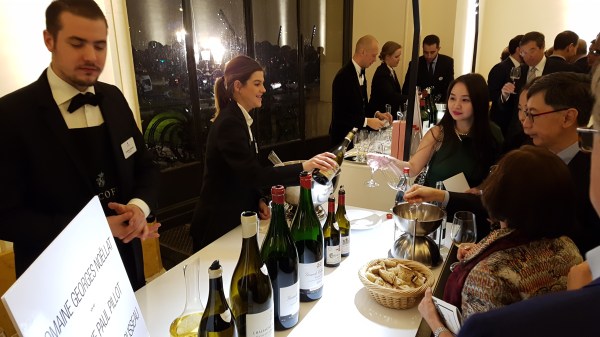
With each passing year, the Palais des Grands Crus gets bigger and bigger and the present 23rd edition is the biggest ever, attended by more than 300 members and their guests while more than 250 different top growths in large (no…make that huge) formats were waiting to be drunk. The front hall of the museum was lined on both sides with all the big names from Bordeaux, Burgundy, Spain, Italy and USA along with their respective owners or representatives and, everywhere, double magnums, jeroboams and 5-litre formats abound. If you’re imagining this to be some kind of an oenophilic mass orgy, you’re spot on. FICOFI usually compiles a full listing to allow members to plan ahead some sort of tasting strategy, for it would be well impossible to sample everything within the space of 150 minutes and I was also lucky enough to have obtained a distilled recommended list compiled by the famous writer and reviewer Eric Riewer who still remembered me from his recent masterclasses in Singapore.

Pierre-Henry Gagey of Domaine Louis Jadot makes a point
I arrived at 1745h to find that the tasting promenade had already begun. Aubert de Villaine and Jean-Charles Cuvelier (both from Domaine de la Romanée Conti) were there while Thibault Pontallier (Château Margaux) and Steven Spurrier (Decanter) were spotted as well. It was also good again to catch up with Pierre-Henry Gagey (Louis Jadot), Yannick Champ (Prieuré-Roch), Pierre Damoy, Jean-Paul Dumond (Joseph Drouhin), Gregory Gouges (Henri Gouges) and Jacques Devauges (Clos de Tart), amongst many others. With so much mouth-watering wines to taste before they run out of supply, I headed straight for the deep end of the long hall, where Domaine de la Romanée-Conti was stationed with two huge methuselahs. The 1979 D.R.C. Romanée-Saint-Vivant Grand Cru was well evolved in colour with lifted tones of aged plums and red fruits, still imbued with so much fruit and acidity, rounded and gentle, displaying remarkable fullness and linearity, highly graceful, suggesting it still has a long life ahead in spite of its full maturity. Quite superb. Next to it, the 1992 D.R.C. La Tâche Grand Cru, also well evolved in appearance, exuded more complex characters with great lift, more marked in cinnamon and cedar in addition to aged plums and tangerines, revealing great detail, acidity and tension, finishing with good length. Thereafter, as the crowd swelled, I had to throw my tasting strategy out of the window as I allowed myself to be swept up by the great line-up of wines within easy reach, simply tasting whatever caught my eye as I slowly worked my way back to the entrance:


2009 Domaine A. et P. de Villaine Bourgogne Côte de Chalonnaise La Digoine. Poured from magnum. Dusty red, proffering a most interesting nose of preserved fruit, cinnamon and red fruits, highly perfumed, most succulent with excellent fullness, acidity and length. Excellent.
1995 Château Palmer. Deep colour, exuding notes of dry mushrooms and forest floor with an earthy pungency. Medium-bodied and fleshy, displaying excellent tone with very finely grained tannins amidst dryish textures, rounded and distinctly feminine. Superb.
2005 Château Palmer, poured from double magnum. Deep dark crimson with, again, the consistent notes of dry mushrooms and dark fruits with a slight herbal trace, showing lovely ripeness, great acidity and presence, yet never overwhelming. Excellent now, but will be outstanding in time to come.


1998 Harlan Estate, poured from double magnum. Very dark, exuding an amazing bouquet of complex dark fruits and blackberries with lifted tones of ripe plums, tangerines and dry mushrooms. Equally lovely on the palate where it has mellowed into an open medium-full proposition, layered with superb acidity and a deeper streak of dark fruits, highly elegant in every way. Outstanding.
2006 Domaine Armand Rousseau Chambertin Grand Cru. Glorious bouquet of perfumed red fruits and cherries, exuding rosy fragrance, its soft feminine character reinforced by seamless acidity and superb gentle balance. Highly elegant, where beauty conceals understated power beneath. Quite outstanding.
2012 Domaine Armand Rousseau Gevrey-Chambertin Clos Saint Jacques 1er. Well developed with a truly glorious bouquet of red fruits, rose petals and bright cherries, exuding amazing fragrance. Quite full and seamless with excellent acidity. Not quite as detailed on the palate though its proportion and balance is faultless. Delicate enough with good power. Superb.

2012 Domaine Armand Rousseau Clos de la Roche Grand Cru. Deep colour. Again quite glorious on the nose with notes of raspberries and gentle red fruits. Full-bodied, displaying excellent concentration and acidity with a slight rasping intensity that I’ve found to be quite typical of this particular plot of grand cru, finishing with a minty flourish.
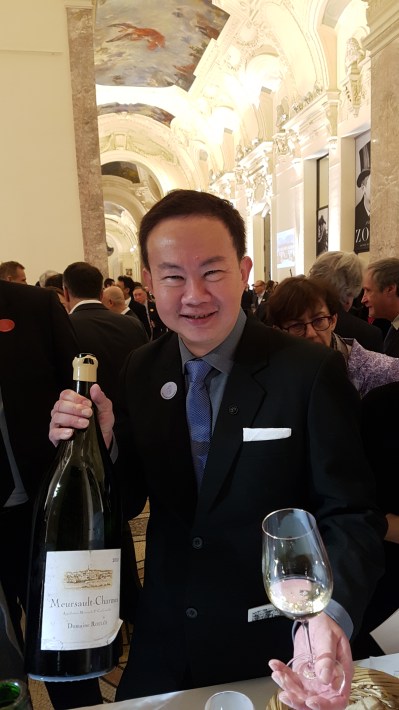
2006 Domaine Roulot Meursault-Charmes 1er, poured from jeroboam. Great bouquet of lifted minerals and delicate crème in equal measure. Medium-full, layered with sublime acidity and finishing with white floral tones, highly poised throughout its length, showing plenty of refined balance, elegance and weight. Excellent.
2007 Domaine Roulot Meursault Le Mon Plaisir. Lifted buttery tones lead to a generous palate, open with a subtle minerally base, displaying superb acidity, concentration, tone and tension that build inexorably towards a tremendous finish. Absolutely delicious, seamlessly combining elegance and power. Outstanding.
2000 Domaine du Clos de Tart Clos de Tart Grand Cru. Poured from jeroboam, exuding lifted minty tones with a suggestion of deep complex red fruits beneath, displaying bright berries with plenty of body and lovely freshness, quite racy, finishing well with sublime acidity and balance. Excellent.

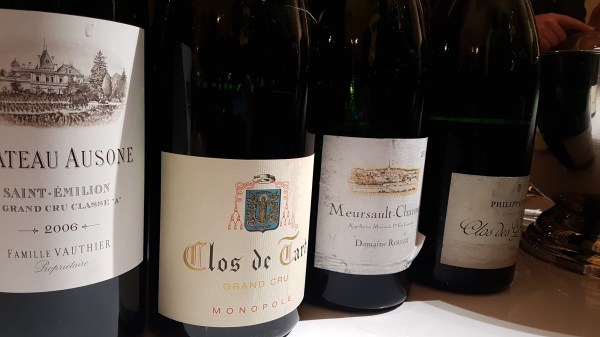
2006 Château Ausone. Deep impenetrable darkness, big and tannic though undoubtedly rich in dark currants, grapefruit and dark cherries with a high-toned earthy minerality, slightly peppery, finishing with medicinal traces. Needs many more years to unravel its enormous potential.
1959 Château Ducru Beaucaillou. Very pronounced tone of dry mushrooms and tobacco snuff, exuding a hallowed glow of distant red fruits and currants, still remarkably fresh and holding up very well with abundant body, flavour and feminine fragrance. Excellent, and what a privilege to have had this!

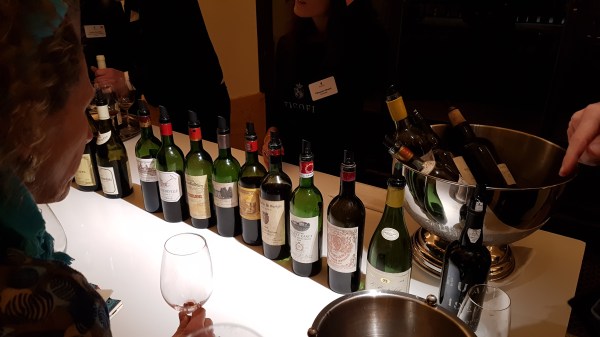
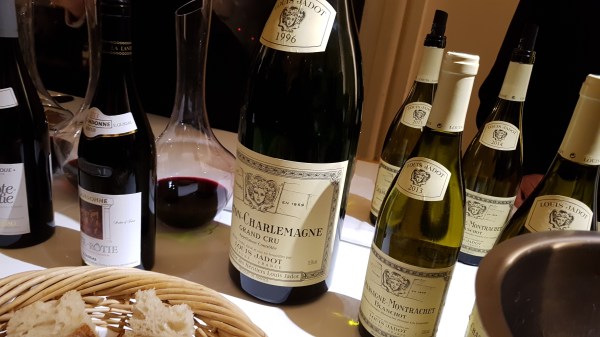
1996 Domaine Louis Jadot Corton-Charlemagne Grand Cru, poured from jeroboam. Sharp bouquet of rich crème de la crème with a most delectable earthy pungency. Medium-bodied, rounded with gorgeous minerally tone and acidity. For those who like their Corton-Charlemagne done in robust fashion with bold strokes.
1989 Château Cheval Blanc, poured from double magnum. Good color. Aromas and textures of dry mushrooms and forest floor dominate with an attractive earthy pungency, highly supple with a lovely glow of aged red fruits and currants swathed in excellent acidity, its tannins having melted over time, resulting in the emergence of a true cabernet franc character of excellent purity, just a shade darker. Excellent.
1996 Château La Mission Haut-Brion, poured from double magnum. Lifted with rich earthy tones and evolved red fruits, exuding an aged feel, medium-bodied with good presence, displaying subtle intensity of aged plums, turning a bit spicy towards the finish.


1988 Château Haut Brion, poured from a 5-litre bottle. Dark earthy pungency on the nose with pronounced graphite minerals, dryish feel with dusty textures recalling mushrooms and forest floor with dry herbal characters, seamless with good acidity though not profound.
2014 Domaine Henri Gouges Nuits-Saint-Georges Les Vaucrains 1er, poured from jeroboam. Good purity, full on the palate with bright red fruits, gorgeous acidity and subtle minerals, displaying excellent presence. Great stuff.
 2003 Château Margaux, poured from 5-litre format. Barely evolved in colour, proffering a great attractive earthy pungency on a full palate layered with prominent deep streak of ripe dark fruit, lifted with great acidity and verve on a backdrop of mild ferrous minerality, finishing with a trace of dusty tannins without any sign of that vintage’s heat stress. Highly consistent with a previous ex-château bottle tasted at FICOFI’s Margaux event in Bali in May 2017. Excellent.
2014 Bouchard Père et Fils Le Corton Grand Cru, poured from jeroboam. Great color and purity, imbued with substantial red fruits, layered with rich oily textures yet superbly delicate in spite of its fullness, never too heavy. Excellent.
2000 Château Leoville Las-Cases, poured from double magnum. Deep tone of ripe black fruits and dark currants with some bright spots, displaying characteristic dryness and subtle tones of cigar box, excellent in concentration and weight with seamless acidity. Still youthful. Excellent, truly for the long haul.
1997 Colgin Cellars, poured from double magnum. Deep dark tones, almost forbidding, delivering generous loads of fresh red and black berries with dark currants, creating huge tension across the palate with its cutting acidity, framed by bold but supple tannins. Crafted with great sophistication but still far from ready.


That is 1996 Château Lafite Rothschild
1996 Château Lafite Rothschild, poured from double magnum. Deep bouquet expressing great earthiness with a mild attractive pungency, almost tarry. The palate is imbued with a great tone of dark currants and black fruits supported by a highly minerally base with sublime acidity that imparts brilliant intensity, attack and precision, though turning stern again as the lengthy finish returns to its minerally roots. Fairly consistent with a previous tasting within the famous circular cellars of Château Lafite Rothschild in 2008 but it has fleshed out over time with superb detail and power. Outstanding but far from ready.
2001 Domaine Leflaive Chevalier-Montrachet Grand Cru. Excellent tone of crème de la crème and chalky minerals, medium-bodied, very well proportioned and open, displaying good transparency with subtle nuances, finishing in a floral flourish.
2001 Domaine Leflaive Bâtard-Montrachet Grand Cru. Lifted exuberance of white flowers and crème de la crème with a pronounced minerally tone on the palate, displaying lovely fullness and balance though slightly stern. There’s plenty going for it, still yet to peak in spite of its 16 years.

2003 Domaine Pierre Damoy Chambertin-Clos de Beze Grand Cru. Well extracted and darkish in tone, revealing great concentration of ripe dark berries and raspberries with gentle biting intensity, finishing with notes of ferrous minerals. Needs time.
2004 Champagne Dom Pérignon, served from methuselah. Full-bodied, open with lifted deep tones of clear citrus and green fruits amidst crystalline minerals with a hint of tropical fruits, rounded with toasty characters, displaying great freshness. Should cellar further.
2008 Champagne Philipponnat Clos des Goisses. Dry, clean, slightly minerally with grassy and crisp cutting acidity. Lovely.
1988 Château Lynch Bages, from double magnum. Lifted bouquet marked by the hallowed glow aged claret, displaying plummy tones with stern ferrous minerals, still retaining good concentration and acidity.


By then, my palate was becoming jaded but the evening was far from over. As the bell rang for dinner, we took a stroll through the museum en route to Ledoyen just next to the museum, where I found myself seated between Mr & Mrs Pablo Alvarez, with Marie-Andree Mugneret of Domaine Georges Mugneret-Gibourg on the same table as well. Naturally, more wines were to follow:
2012 Domaine de la Romanée-Conti Côtes Haut de Bourgogne, specially bottled for FICOFI. Aromas of light morning dew, very clean feel on the palate, recalling white pepper and mint with gentle lean crystalline minerals, finishing with ferrous elements but on the whole rather shy and reserved.
2000 Champagne Dom Pérignon P2. Powerful aromas of fresh citrus and green fruits along with a lovely yeasty pungency. Full-bodied and deep with dry cutting acidity supported by a broad base of ferrous minerals.
Champagne Krug NV, poured from magnum. Deep golden hue, exuding deep yeasty tones of aged crème and clear minerals, quite open, revealing good detail with finely grained textures, just a tad dry.

2016 Weingut Egon Müller Scharzhofberger Kabinett Riesling. Fabulous nose, showing a great deal of pungent earthiness with classic diesel tones, almost peaty, while clear tones dominate the palate with good transparency, understated sweetness and acidity. Excellent.
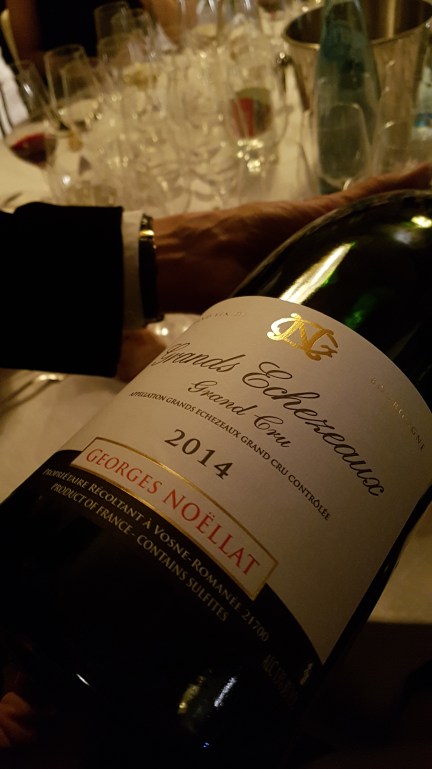 2014 Domaine Georges Noellat Grands Échezeaux Grand Cru, poured from jeroboam. Dusky with characters of grapefruit and dark red fruits amidst some intense earthiness, full-bodied but rather lean on the palate. Too young to be drunk now.
2012 Domaine Georges Mugneret-Gibourg Ruchottes-Chambertin Grand Cru. Drunk in the presence of the estate owner Marie-Andree Mugneret herself. This wine is imbued with generous dark berries and raspberries of good intensity and concentration with lovely purity of fruit supported by sweet tannin structure, infinitely masculine in character (in spite of it being made by women in this family-owned estate), yielding good definition.
2011 Domaine Bruno Clair Bonnes-Mares Grand Cru. Coming from holdings almost adjacent to Clos de Tart, this wine exudes dark cherries and raspberries on the nose and palate with a slight tangerine core, displaying good concentration and fullness with some saline minerality, finishing with good intensity and structure.
2000 Vega Sicilia Unico, drunk with owner Pablo Alvarez and his lovely wife Elisa Kwon de Alvarez sitting next to me. Full-bodied with an abundance of ripe dark berries and dark currants, layered with great acidity and intensity of flavours though generally darkish in tone. Still very youthful. Excellent but a waste to pop now.
1986 Château Figeac. Still remarkably dark in spite of its age, full with pronounced earthy tones and ferrous minerals, still quite intense on the palate but becoming lean, the fruit clearly drying out. Drink up.

Dr & Mrs Sanjay Nalachadran in intimate discussion with Marie-Andree Mugneret

1999 Vega Sicilia Unico, poured from double magnum. Opaque black. Unbelievably full, big and tannic even after almost twenty years, dark in tone, imbued with layers of dark cherries, dark currants and black fruits, yet to develop secondary characteristics.
1994 Château Pétrus, poured from magnum. This is a masculine Pétrus stuffed with deep currants and intense black fruits, framed by a bold structure of austere minerals and dusty tannins that produced a very lovely earthy pungency. So much for so-called off years. Excellent.
2008 Château Ausone. Quiet on the nose, somewhat closed though the palate is dominated by strong ferrous elements with good concentration of fruit and acidity but stern in demeanour, dark in tone throughout its length. Going through an awkward stage now.
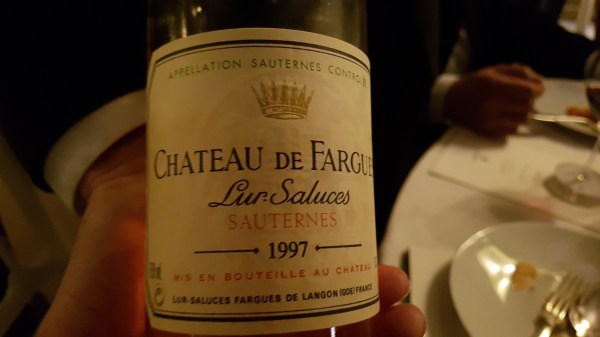
1997 Château De Farques. Overtones of ash and incense, excellent in depth and intensity with a glossy sheen, exuding characters of nectarine and varnish.
Wines that were still remaining from the evening’s promenade were then assembled on a large table where, after dinner, it was free-for-all for anyone to continue with their tasting. But, by then, my palate had truly deserted me. It was way past midnight by the time I staggered along the Champs-des-Elysees and across the Place de Concorde back to my hotel. FICOFI has done very well and the organisation had been outstanding. I’ll be back!

FICOFI: 2015 Ch d’Yquem, 2016 Y d’Yquem & Opus One 2012, 2013, 2014
Some short notes from a FICOFI tasting on 30 November 2017 at the Four Seasons, Singapore, showcasing new releases from Chateau d’Yquem and Opus One (the 2014), generous enough in line-up though it’s a pity the mini-vertical of Opus One was stacked within three of the most recent vintages that were far too young to allow any appreciation of potential complexity.
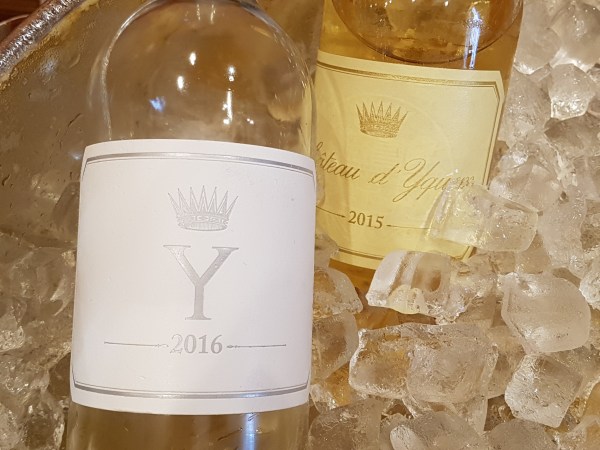
2016 Y D’Yquem. Generally shut, though characters of morning dew, mild grassy elements, rye and malt are discernible. Quite gentle on the palate, displaying good presence and intensity of flavours, layered with a lovely floral bloom and enticing minerals, finishing with quiet intensity. Excellent, but needs plenty of time to express itself properly.
2015 Ch d’Yquem. Deeply luscious with a superb balance of nectarine and smouldering ember, displaying great lift with a gentle brilliance. Magnificent potential here.
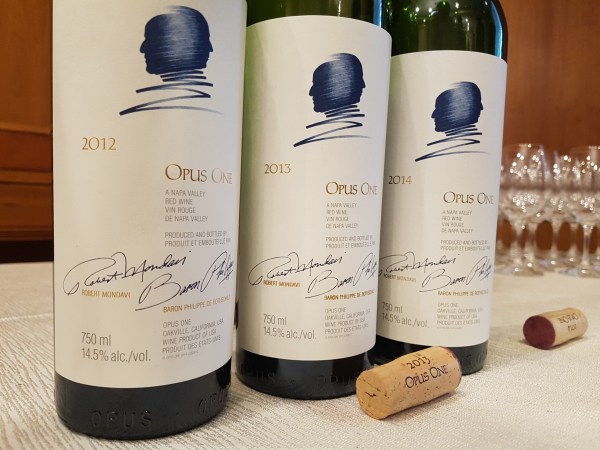
2012 Opus One. Ripe bouquet of dark berries and raspberries with a softer tone of dark plums, somewhat shy, medium-full with good concentration, acidity and freshness. Subtly structured, finishing well. Consistent enough with a previous tasting over dinner with Opus One CEO Dave Pearson in Singapore in April 2016. I like it.
2013 Opus One. Deep impenetrable purple. Totally shut on the nose where it was extremely tight, intense and brooding. More forthcoming on the palate, fleshy with predominant graphite tones, gently structured with lovely acidity, finishing well with a good deal of succulence. Caught at an awkward stage. Needs time.
2014 Opus One. Deep ruby, exuding a bouquet of ripe dark berries and blackcurrants with a tinge of forest floor. Forward in balance, open enough with supple fresh acidity, offering glimpses of inner detail though generally not showing much. A wine of excellent proportion, linearity and length. Needs time.
FICOFI in Paris: Louis Roederer, E Guigal & Louis Jadot
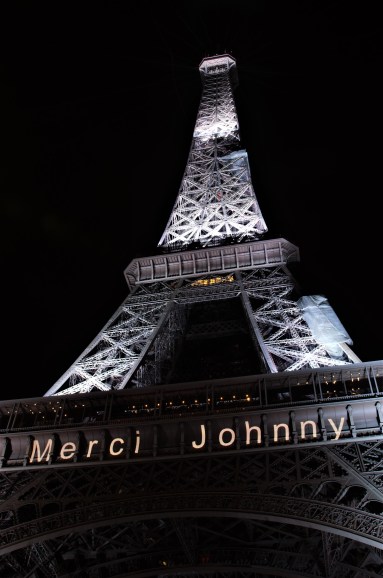
Photo: Ryan Chen
On a weekend that Paris mourned the passing of their pop icon Johnny Hallyday where even the Eiffel Tower was shrouded in darkness, the Palais des Grands Crus convention organised by FICOFI still went ahead, an annual event to sign off the year with a blast. Preceding that, though, was a promenade generously hosted by Louis Roederer, E Guigal and Louis Jadot at the Hotel de Crillon on 09 December 2017 that was well attended by about 300 members and their guests who have specially flown in from all corners of the globe. Both Mr and Mrs Marcel Guigal (the second generation owner after his father Etienne) were in attendance, both absolutely down-to-earth folks without any pretensions who liked nothing better than to share their wines with those who appreciate. It was also good to meet up, once again, with M. Thibault Gagey, son of Pierre-Henry of Louis Jadot. As the evening wore on, the chatter grew louder and, every now and then, one would hear the splintering crash of glasses accidentally smashing onto the expensive parquet, always a good sign of a successful party. In the space of two hours, I think I have managed to cover everything except for the 2013 trio of Guigal’s La La’s. There is only so much one’s palate and senses can absorb on a bitterly cold Paris winter night.
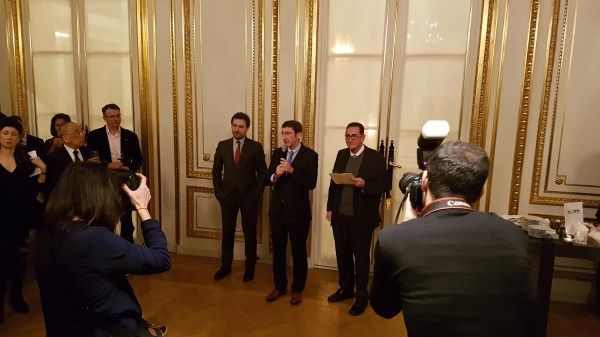
Philippe Capdouze flanked by M. Thibault Gagey and Marcel Guigal

2008 Champagne Louis Roederer. Traditional champagne blend, predominantly pinot noir. Clean, crisp and dry, displaying great concentration of fruit with biting intensity.
2010 Champagne Louis Roederer Blanc de Blancs. Great presence and intensity of white citrus, lime and pomelo supported by understated minerals, displaying great acidity and mouthfeel. Cool and inviting, not too dry. Good finish.
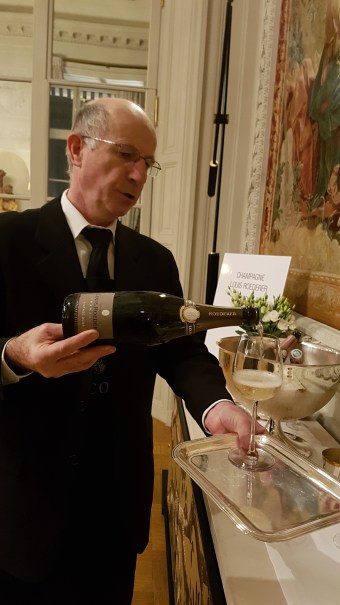 2012 Champagne Louis Roederer Rosé. Excellent presence with notes of grapefruit and complex tangerines, quite full and rounded, displaying great sparkle, brilliance and balance, finishing well. Superb.
2009 Champagne Louis Roederer Cristal. Lifted notes of delicate lime and clear citrus. Tight with smoky tones, very fresh with plenty of vibrant intensity and tension, just slightly stern, finishing with traces of pomelo and ferrous elements.
2014 Domaine Louis Jadot Puligny-Montrachet Les Pucelles 1er. Poured from double magnum. Closed, showing just traces of gentle tropical fruits and banana peel but absolutely wonderful in mouthfeel where it is dry and supple with the distilled essence of delicate crème and white floral fragrance, displaying lovely intensity and acidity, finishing with superb length and lasting mouthfeel. Outstanding.
2013 Domaine Louis Jadot Bâtard-Montrachet Grand Cru. Gentle bouquet of tropical fruits and white flowers with overtones of paraffin, displaying characteristic Bâtard tone on the palate with its placid quiet elegance, understated acidity and minerals. Needed some coaxing but it’s all there.
2014 Domaine Louis Jadot Bâtard-Montrachet Grand Cru. Lifted delicate tones of white pepper, slightly tangy with racy character. Very even and seamless on the palate, displaying lovely lift with understated acidity and quiet intensity from the superb depth and concentration of glorious fruit. Richly elegant. Outstanding.
2010 Domaine Louis Jadot Bâtard-Montrachet Grand Cru. More racy and more developed than the 2014, quite open and lifted, leaning towards a more minerally character with good acidity and structure though not the best in depth nor detail.

1969 Domaine Louis Jadot Charmes-Chambertin Grand Cru. Dusty red, showing dark cherries and ripe strawberries with plenty of great acidity and lift, not drying out. Ageing gracefully and still holding up very well.
2011 Domaine Louis Jadot Chapelle-Chambertin Grand Cru. Smoky tones, sweet incense, ripe cherries and camphor dominate on the nose, though more minerally with earthy tones on the palate, showing good concentration and acidity but somewhat lean and austere, finishing with a spicy feel.

2013 Domaine Louis Jadot Chapelle-Chambertin Grand Cru. Forward balance of cherries and raspberries, slightly angular from the dominant acidity, lacking in layering.
2014 Domaine Louis Jadot Chapelle-Chambertin Grand Cru. Generous in delicate red fruits. Highly supple, showing good presence and acidity, soft and feminine in character..
2013 Domaine Louis Jadot Beaune Clos des Ursules 1er, poured from double magnum. Clear ruby. Lively with excellent fullness and delicacy, exuding ripe red cherries, camphor and strawberries with a dash of earth. Open and accessible, finishing with excellent linearity and structure. A revelation.

2014 Domaine Louis Jadot Clos de la Roche Grand Cru. Lifted tones of red fruits and cherries supported by earthy minerals. Ripe, supple and richly detailed. Well structured with good intensity and concentration. Excellent.
2006 Domaine Louis Jadot Clos de la Roche Grand Cru. Lifted aromas of rose petals, cherries, dark ash and earthy minerals. Well structured but unsmiling, finishing with stern spicy tones.
2009 Domaine Louis Jadot Clos de la Roche Grand Cru. Cherries and red fruits dominate with good lift, displaying the classic structured tone of this plot with good definition. Very clean and lean, finishing with a spicy trace.

Yours truly with Mr & Mrs Marcel Guigal
1999 E Guigal Cote Rotie La Landonne. This wine has developed very well over time, exuding smoke, earth and complex red fruits with a tangerine core, displaying great balance and presence, finishing well. Yet to peak. Excellent.
1999 E Guigal Cote Rotie La Turque. Wonderful earthy pungency with lifted plummy tones, displaying great concentration and depth with excellent definition and focus, finishing with a dash of spice amidst smoky overtones, its melted tannins imparting a distinct feminine tone. Excellent.
1999 E Guigal Cote Rotie La Mouline. Dark red. Lifted aromas of red fruits and dark cherries with an abundance of black pepper and red currants on the palate, showing good tannin structure and intensity though not much in layering, finishing with spicy tones.

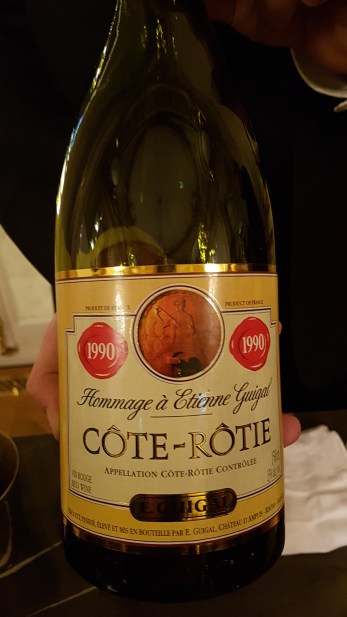 2013 E Guigal Cote Rotie Chateau d’Ampuis. Darkly intense with a generous tone of ripe warm fruit, displaying a marked alcoholic trace, somewhat austere and unsettled at this stage, yet to unfurl its true colours.
2016 E Guigal La Doriane Condrieu. Dominant tones of grassy elements and morning dew, strewn with white pepper and oriental herbal elements, showing good concentration but awkward now. Needs time.
1990 E Guigal Cote Rotie Hommage a Etienne Guigal, poured from double magnum. Marked by savoury tones of smoked meat amidst dark currants and earthy minerals, showing good definition but somewhat stern. Still remarkably youthful.
La Tour d’Argent re-visited
I just returned from my birthday lunch this afternoon, 09 Dec 2017, at La Tour d’Argent, Paris, after an absence of eight years. Still at its original location at Quai de la Tournelle since 1582, some changes are noticeable. The restaurant has set up a bistro across the road as well as a bakery next to it, both looking very enticing. We arrived three minutes before noon to find the front door still locked, of course, for this is France after all.
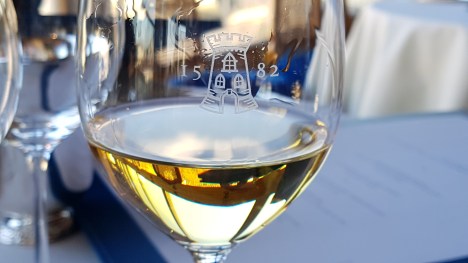
2002 Domaine Roulot Meursault Les Luchets
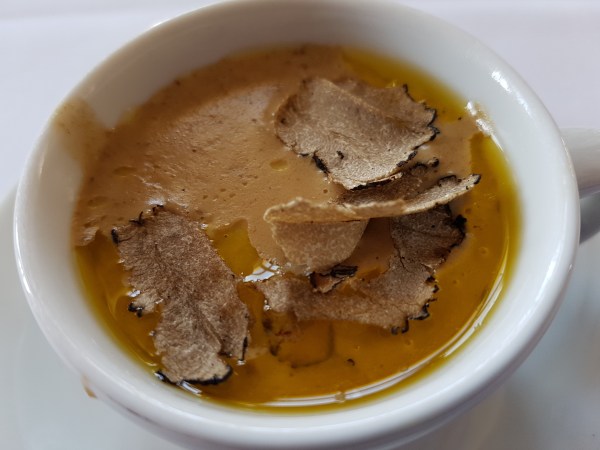
Precisely at noon, the doors were thrown open and I found myself back in the familiar anteroom decked in period décor. After the usual pleasantries with the front manager, I was brought up to the dining room on the sixth floor where the layout and the blue carpet remained unchanged, as is the lovely view of the Seine and the Notre Dame yonder. Nevertheless, some changes are obvious: the lunch crowd is now bigger, meaning the restaurant is much noisier than before while the staff has less time to spend with you at the table, resulting in service that seems a little too perfunctory. The prix fixe three-course set lunch now costs more as well, EUR105 compared with EUR65 back in 2009. To the restaurant’s credit, however, the attention to detail is still there and some of its age-old tradition remain unchanged: the massive carte de vin is still encyclopaedic in proportion (though newly re-organised), the staff hands you a fresh table napkin each time you return from the washroom, the food is still prepared in immaculate fashion and explained to you with admirable patience while, most importantly, Mrs Claude Terrail still goes around the tables making sure that you have been well looked after. The certificate pronouncing the numbered duck that you are eating is still presented though the card now sports a more contemporary (but less important-looking) feel. This time as well, the chef also makes an appearance at each table along with the general manager. A nice touch.

To start…

Dessert actually
Changes are inevitable, I suppose, but I am happy to report that the food at this venerable institution is still outstanding, presented with great imagination with flavours and portions that remain unadulterated. I picked two half bottles to go with the meal. The 2002 Domaine Roulot Meursault Les Luchets, a named village, displayed a glorious golden hue with a rich deep glow of cassis, aged crème, walnuts and almonds, bursting with superb acidity and intensity of white fruits before settling into a medium-bodied proposition, beautifully rounded with the burnished tone of aged limestone minerals, developing greater depth and delicacy over time. Excellent and, in my humble opinion, a steal at EUR105 from such a restaurant list.


For the red, I spotted a 2004 Domaine Armand Rousseau Charmes-Chambertin Grand Cru for EUR160. Well evolved in color and mellowed, this wine featured gentle red fruits, cinnamons and rose petals with a hint of tangerines and earth on the nose, medium-bodied, rounded with tertiary cedary tones that produced a lovely lift of perfumed fragrance, layered with subtle intensity and superb acidity, its tannins having receded long ago, finishing with growing breadth and intensity, distinctly feminine in its elegance and poise. Excellent.

A piece of highly sophisticated tofu
At the end of it, the restaurant discreetly remembered that it’s my red-letter day and laid the complimentary celebratory touch on the table. Well, I really enjoyed my lunch and so did the family. I’ll certainly be back again.


The famous canard filet
Ric visits Domaine de Montille: 2016 wines
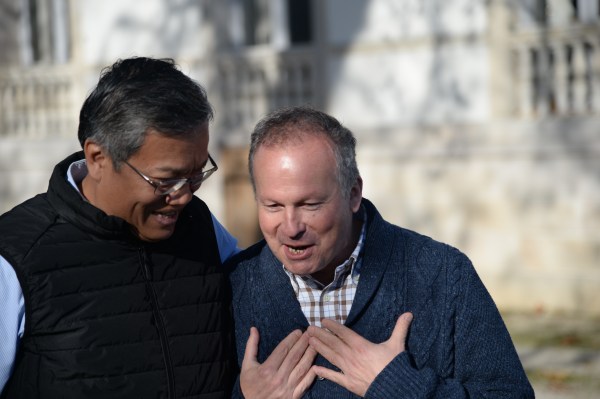
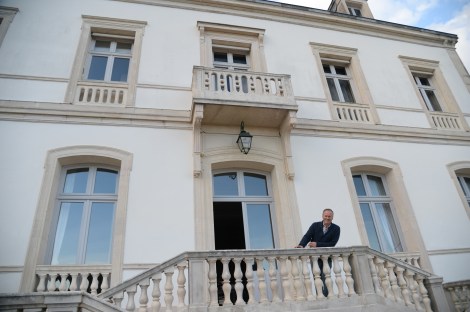 On our final day in Burgundy, we paid a visit to Domaine de Montille in Volnay on the morning of 23 November 2017 where we were welcome by its present owner M. Etienne de Montille. This domaine is one of few in Burgundy represented by a proper chateau, in front of which is planted a sizeable plot of Volnay village vines. It was good to see Etienne once again, a highly affable and easy-going gentleman whose partner is Chinese, which explains for the number of Chinese paintings and calligraphy in the chateau’s hall, including a copy of Chairman Mao’s famous little red book on the coffee table. Domaine de Montille was established in 1863 and has remained within the family since, focusing on the wines of the Cote de Beaune. Because of the high water table in the area south of Beaune, the modest and functional cellars of this estate are housed above ground, where we tasted the 2016 wines from barrel. While most people tend to skip the wines of Volnay and Pommard in favour of the more prestigious communes of the Cote de Nuits, I can assure you that Domaine de Montille is truly a gem of Burgundy. Its whites from Saint-Aubin and Puligny are focused with plenty of delicacy and detail whilst its reds are well-structured and balanced, never overly extracted. Most of all, each individual terroir is well reflected in the wines of Domaine de Montille.
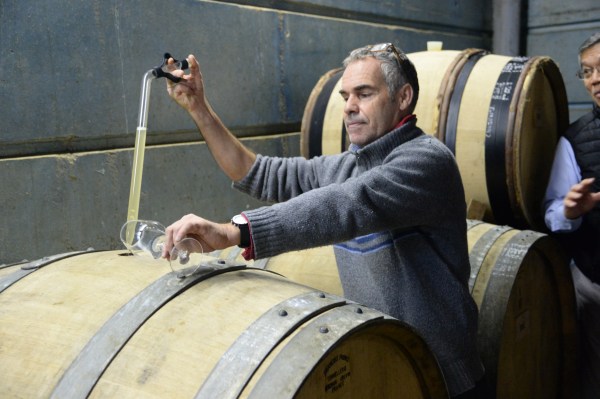
2016 Domaine de Montille Puligny-Montrachet. Village wine. Aromatic with creme and gentle minerals in equal measure, showing good supple acidity, freshness and good delicacy.
2016 Domaine de Montille Saint-Aubin En Remilly 1er. Full bouquet of delicate floral aromas with gravelly minerality, showing good detail on the palate with saline tones and quiet acidity. Harmonious with good zest.
2016 Domaine de Montille Puligny-Montrachet Le Cailleret 1er. From vines located right at the southern boundary of Le Cailleret, just immediately adjacent to Montrachet Grand Cru. Deeply aromatic with a feminine floral character, exuding lovely soft aromas of crème de la crème with understated chalkiness. Open with good presence and excellent mouthfeel supported by delicate soft minerals, showing good purity and definition. Hugely elegant and lively with excellent detail and some early complexity. Dryish finish. Great stuff! Only 600 litres. No new wood. All the better!
2016 Domaine de Montille Puligny-Montrachet Les Folatieres 1er. Strong lifted minerally tones with morning dew, showing good supple intensity and acidity. Well proportioned. Seamless minerally finish.
2016 Domaine de Montille Corton-Charlemagne Grand Cru. Lifted, deep floral nose. Minerally in body, the fruit seemingly backward with more acidity to the fore, though very well integrated with just a bare trace of ferrous element at the finish.
2016 Domaine de Montille Beaune Greves 1er. Dark with a nose of Chinese medicinal tones and herbs, showing good concentration of dark fruits with dusty textures and forest floor characters, finishing with supple tannins. No de-stemming.
2016 Domaine de Montille Volnay Les Taillepied 1er. Dark. Deep concentration of dark fruits with characters of dry Chinese herbs, showing good suppleness and acidity.
2016 Domaine de Montille Pommard Les Pezerole 1er. Deep purple with deep aromas of dark fruits and currants. Big but well proportioned, medium-bodied, displaying supple acidity with dryish textures and a unique tone of cigar tone. Good pliant structure.
2016 Domaine de Montille Pommard Les Rugiens 1er. More open, displaying attractive red fruits and currants. Fleshy with good body and supple acidity. Excellent balance and presence. Distinctly feminine. Very successful. One can see why Les Rugiens is in pole position to be upgraded to grand cru status.
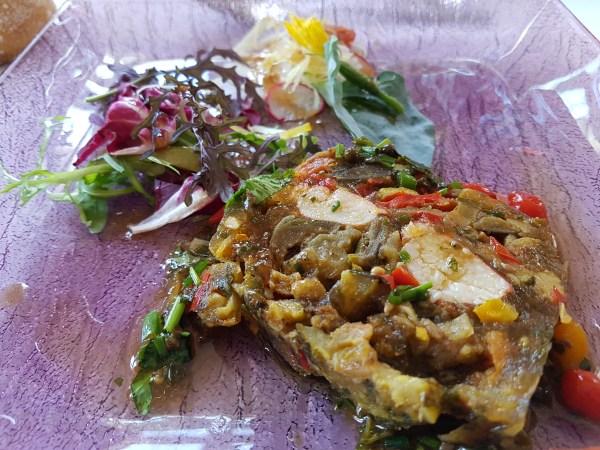
2016 Domaine de Montille Corton Clos du Roi Grand Cru. Dry herbal bouquet with dryish textures. Fleshy, showing good concentration of ripe dark cherries with understated minerals, subtle in tannins and structure. Very successful.
2016 Domaine de Montille Vosne-Romanee Aux Malconsorts 1er Christiane Ghislaine. Deep purple. Rounded, showing great acidity with a touch of dryness. Medium-full, layered with abundant dark berries, dark cherries and raspberries. Generous in body, highly seamless with lovely tone and wonderful length. Excellent. A very special wine named after Etienne’s mother, it comes from a plot of Aux Malconsorts that actually slips well inside La Tache. So, essentially, one is drinking La Tache without the hefty price tag.
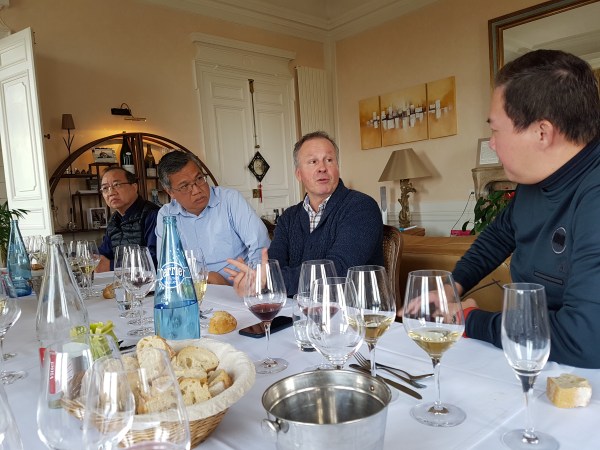
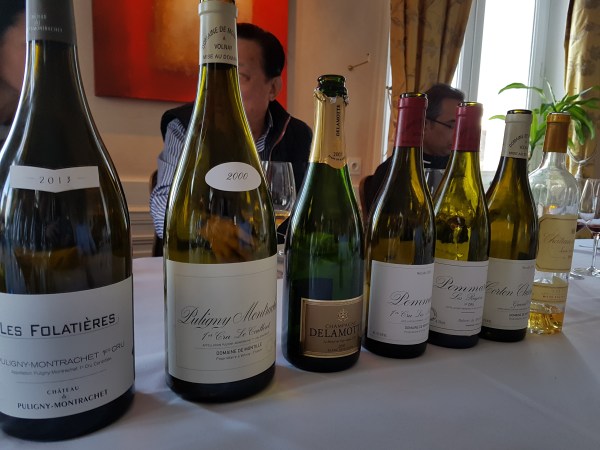
After the barrel tasting, we adjourned to the chateau proper for an exquisite lunch hosted by Etienne himself, where we had more wine:
2007 Delamotte Blancs de Blanc. Great creamy smoothness with excellent depth of green fruits and fresh citrus, detailed with good lift.
2013 Chateau de Puligny-Montrachet Puligny-Montrachet Les Folatieres 1er, poured from magnum. Lifted bouquet, highly intense with notes of creme and floral characters in stunning detail, layered with great presence and superb acidity on the palate, maintaining good minerally delicacy throughout its length. Quite glorious.
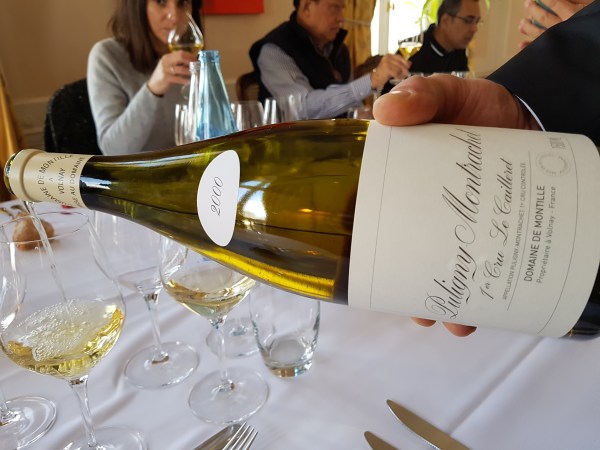
2000 Domaine de Montille Puligny-Montrachet Le Cailleret 1er. From a plot just next to Montrachet Grand Cru, this wine is more delicate than the preceding Folatieres with well-defined complex minerals and white citrus, displaying excellent inner detail and lovely floral characters, perhaps just a tad short but very lovely.
1996 Domaine de Montille Pommard Les Rugiens 1er. Decanted and served blind, this showed an evolved colour with well-developed red fruits and plums amidst a mild medicinal tone. Open, supple and fleshy.
2005 Domaine de Montille Pommard Les Rugiens 1er. Decanted and served blind. Slightly darker than the preceding 1996, displaying an attractive rosy fragrance with red fruits, open with a deeper streak of dark currants with some bright spots. Full-bodied but quietly intense. Still yet to peak.
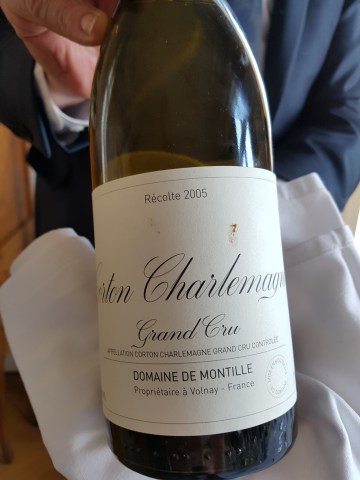 2005 Domaine de Montille Corton-Charlemagne Grand Cru. First vintage ever produced. Only 2 barrels and never released commercially. Subtle notes of sweet nectarine with lifted tones of creme and chalk, substantial in body with fine detail, showing good delicacy. Very special indeed. What a great privilege to have tasted this.
1996 Ch d’Yquem. Rich and luscious, displaying aged nectarine and apricots of understated sweetness and acidity.
With such wonderful wines and food, we were properly hammered by the time we finished lunch at 3.00 PM. Domaine de Montille may not be the first name one thinks of in Burgundy but it is truly a star estate, very much a connoisseur’s wine. Be sure to look out for it. Thank you very much, Etienne, and thanks to FICOFI as well.
Ric visits Domaine des Lambrays
There has been quite a significant upheaval in the small commune of Morey-Saint-Denis in recent times where the well-known Domaine des Lambrays has now come under the LVMH empire while, likewise, neighbouring Domaine du Clos de Tart has changed ownership as well less than a month ago (to Ch Latour’s M. Pinault). Nevertheless, it appears to be business as usual when we visited Domaine des Lambrays on the cold afternoon of 21 November 2017, where we were welcome by its manager M. Boris Champy. This domaine is probably one of the prettiest in the Cote de Nuits, boasting beautiful exteriors with plenty of flora and fauna, including a very well-manicured garden perfect for outdoor parties in summer. Sandwiched between Clos de Tart Grand Cru (to the south) and Clos de la Roche Grand Cru to the north, Domaine des Lambrays is in an enviable position of owning a majority holding of Clos des Lambrays Grand Cru, one of the only four grand crus of Morey-Saint-Denis commune. However, due to the fact that a tiny 400 square metres of this 8.8 hectare AOC appellation is owned by Domaine Taupenot-Merme, Domaine des Lambrays is unable to stake a monopoly. But no matter.


Compared with Clos de Tart, the plot of Clos des Lambrays extends much farther up the steep slope to the west well beyond the western boundary of Clos de Tart, where the soils contain much more limestone, which may explain for the more minerally balance of the wines. Notably, the vines here are planted in north-south orientation, only one of six vineyards in Burgundy to do so (the rest are Clos de Tart, La Tache, La Grand Rue, La Romanee and Cros Parantoux). This allows the vines to capture sunlight evenly and to facilitate the movement of tractors along the slopes.
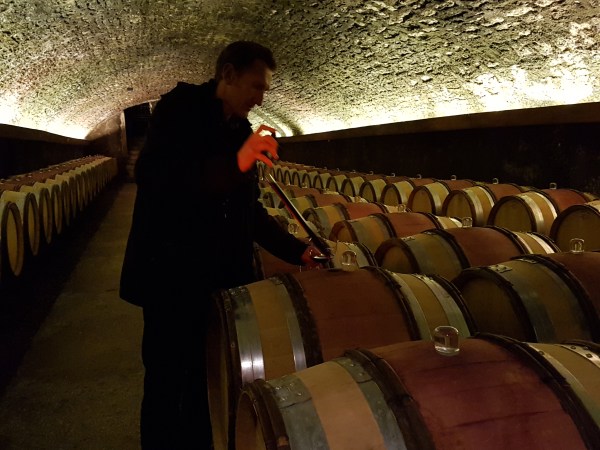
We proceeded with a tasting of the 2016 wines from barrel. The 2016 Domaine des Lambrays Morey-Saint-Denis village was notably darker in tone with a heavier tint and forward balance, delivering ripe strawberries, wild berries and dark cherries, rather full with a trace of hardness on the palate from the earthy minerals and high toned acidity, short at its spicy finish. In contrast, the 2016 Domaine des Lambrays Clos des Lambrays Grand Cru showed a lovely hue of ruby with abundant ripe red fruits, cherries and currants, supple with high-toned acidity and subdued minerals, highly seamless, finishing with good length and spicy earthy tones. Great stuff, considering that the wine has only spent twelve months in barrel and is not yet the final product.
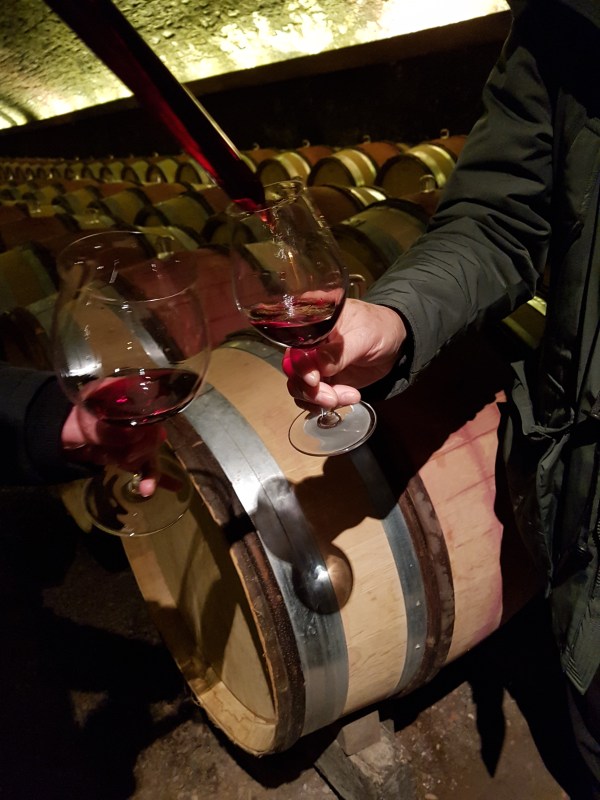
2016 Domaine du Clos des Lambrays Clos des Lambrays Grand Cru aspirated from barrel.
To round up, a 2013 Domaine des Lambrays Clos des Lambrays Grand Cru was poured, showing great colour, really powerful and expressive with a delicious bouquet of ripe red fruits, rose petals, cherries and currants while the palate is open and fleshy with a delightful deftness, utterly seamless between its acidity and understated silky tannins, finishing with superb mouthfeel. Excellent. This short but insightful visit has been made possible by FICOFI and we want to thank M. Boris Champy too for his time.
Ric re-visits Domaine Faiveley: 2016 wines
We were enraptured by a sense of deja vu as the same group of us climbed up the same flight of stairs as we’d done so two years ago at the modest headquarters of Domaine Faiveley at the heart of the little township of Nuits-Saint-Georges on the afternoon of 22 November 2017, where it was very good, once again, to be welcome by its seventh generation owner M. Erwan Faiveley. One of the chief reasons for re-visiting Faiveley again was to inspect its new chai and, indeed, the old buildings have been modernised, now larger, cleaner with an almost chapelle-like building to house the vinification vats which also affords a direct view to a newly-acquired plot of Nuits-Saint-Georges village vines. The extensive cellars beneath now appears brighter as well with newer lighting installations, where endless rows of barrels contain the wines of 2016 and 2017. Three barrels of 2017 Musigny Grand Cru were spotted, seemingly much more than before. Erwan proceeded to spoil us with an extensive barrel tasting of the domaine’s 2016 wines, while lower in quantities due to extensive frost and hail during the growing season, which are outstanding for both the whites and reds even though they have only spent 12 months in barrel at this stage. Thank you very much, Erwan, for your time and generosity and thanks to FICOFI too.

2016 Domaine Faiveley Puligny-Montrachet Champs Gain 1er. White flowers with grassy elements, showing great intensity, concentration and acidity. Refreshing.
2016 Domaine Faiveley Bienvenues Batard-Montrachet Grand Cru. Delicate floral bloom, rich in crème de la crème, showing great focus with plenty of opulence and great minerals with superb seamless acidity. Plenty of verve. Glorious.
2016 Domaine Faiveley Batard-Montrachet Grand Cru. Rich in crème de la creme and earthy minerals in equal measure with traces of nutmeg and exotic spice. Generous with supple acidity. Poised with very good presence, finishing with subtle intensity.
2016 Domaine Faiveley Corton-Charlemagne Grand Cru. Rich, poised and elegant. Abundant clear citrus and crème, quite opulent with quiet intensity. Very clean feel. Less structured at the finish, but Erwan thinks Faiveley’s Corton-Charlemagne is better than the Puligny grand crus.

2016 Domaine Faiveley Nuits-Saint-Georges Les Saint-Georges 1er. Deep purple. Bellpepper, raspberries, dark currants and sandy minerals dominate, showing good Nuits-Saint-Georges terroir character. Medium-bodied. Very fine in acidity with good integration and rounded tannins, slightly sweet, finishing with fine intensity.
2016 Domaine Faiveley Gevrey-Chambertin Clos des Issarts 1er. Deep clear purple. Rich in ripe raspberries and blueberries with clear tangerines, showing excellent presence and depth. Very elegant, finishing with smooth acidity. Distinctly feminine.
2016 Domaine Faiveley Gevrey-Chambertin Les Cazetiers 1er. Good color. Lovely bouquet of camphor, red cherries and tangerines, displaying good supple acidity with understated saline minerals, culminating in a gentle finish.
2016 Domaine Faiveley Clos Vougeot Grand Cru. Deep colour and lift. Fleshy. Good presence of ripe dark berries with earthy tones and ferrous minerals, open without being opulent.
2016 Domaine Faiveley Charmes-Chambertin Grand Cru. Deep colour with an aromatic rosy fragrance. Good concentration of fruit with a light touch, elegant and feminine. Gentle finish.
2016 Domaine Faiveley Latricieres-Chambertin Grand Cru. Slightly reticent on the nose. More minerally on the palate. Rounded with soft subtle acidity. Tinge of austerity at finish.
2016 Domaine Faiveley Mazis-Chambertin Grand Cru. Very dark. Powerful earthy pungency dark red fruits currants tangerines excellent concentration fine acidity intensity very full subtly structured slightly austere finish.
2016 Domaine Faiveley Chambertin-Clos de Beze Grand Cru. Good colour with dark rosy characters. Fleshy with excellent integration of fruit and acidity, subtly structured. Not showy. Excellent.
2016 Domaine Faiveley Chambertin-Clos de Beze Ouvrees Rodin Grand Cru. Dark red fruits tinged with chocolate and mocha, superbly integrated with great intensity of fruit and sublime acidity. Excellent presence.
2016 Domaine Faiveley Corton Clos des Cortons Faiveley Grand Cru monopole. Deep ruby. Deep currants, smoke and dark fruits. Fleshy with great acidity, structured with delicious tannins. Big but well balanced. A perennial favourite of mine.
Understanding Domaine du Clos de Tart
Our visit on the morning of 22 November 2017 to Domaine du Clos de Tart must surely rank as the finest wine educational experience ever. Occupying just 7.5 hectares sandwiched between Bonnes-Mares to the south and Clos des Lambrays to the north, Domaine du Clos de Tart has changed ownership only four times in its 900-year history, the most recent being just three weeks ago when the Mommessin family sold out to M. Francois Pinault (owner of Chateau Latour). However, I am pleased to report that business remains as usual at this monopole estate as we stepped through its famous red oriental doors where we were welcome by M. Jacques Devauges, installed as its Technical Director only three years ago. Genial, friendly and bubbling with quiet confidence and energy, Jacques is certainly the right person to bring the wines of this famous estate, already so highly esteemed and limited in quantity, up another few more notches as he exuded great knowledge about the estate. Trudging up to the vineyard (otherwise not quite visible from the road), it is wonderful to see the entire clos (wall) surrounding the rows of vines sloping gently upward, all planted in north-south orientation after the phylloxera devastation, facilitating even exposure to both the morning and afternoon sun. Apart from Clos de Tart, only five other vineyards in Burgundy are oriented likewise: neighbouring Clos des Lambrays, La Romanee, La Tache, Cros Parantoux and La Grand Rue. Therefore, it is not surprising that some of the very best wines of the Cote de Nuits come from these hallowed plots. The average age of the vines at Clos de Tart is about 60 years, divided into 27 subplots and vinified separately as 8 different cuvees before they are finally blended as the final Grand Cru. It has to be done this way as the subsoil is different from area to area, starting as shallow stony soils at the base (ie. easterly most) to deeper marl at the opposite extreme (ie. westerly most) where the wall stands. Coincidentally, Jacques tells us that the wall happened to be built along the natural geological fault lines of the slope, beyond which the soils are much harder, impeding root penetration. A continuous program of replanting takes place regularly where vines that are past their prime are replaced. Presently, the three youngest plots were replanted in 1999, 2005 and 2011.
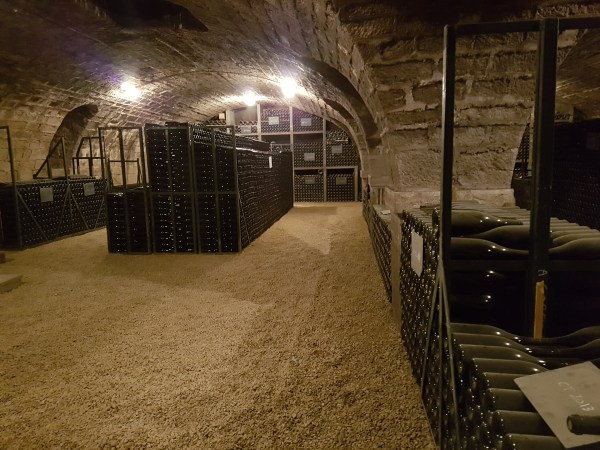
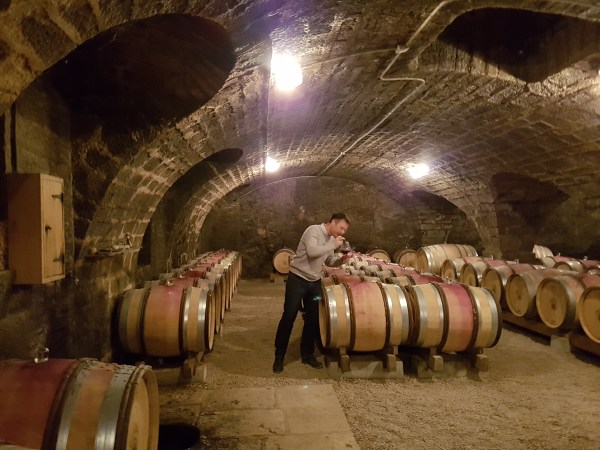
Following this, we moved down to the cool cellars below where precious barrels of the 2016 and 2017 lie undisturbed at a constant temperature of 12ºC with 80% humidity. The yields at Domaine du Clos de Tart are below 35 hectolitres, which translates into 20,000-25,000 bottles per vintage. Eight cuvees, each representing certain terroir characteristics of the vineyard, are vinified per vintage.
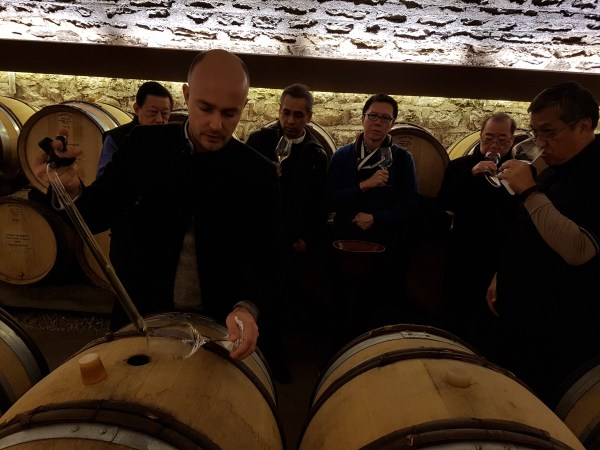
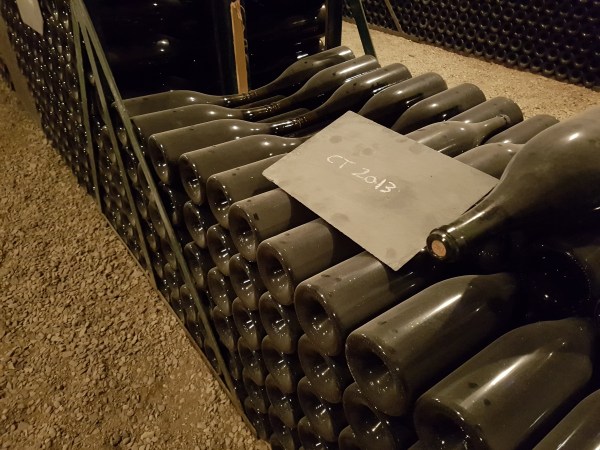
We proceeded with the barrel tasting of the 2016 vintage. First was Cuvee #8, made from three subplots containing the youngest vines as mentioned earlier, planted in 1999, 2005 and 2011. This young cuvee is not included in the Clos de Tart Grand Cru, but bottled separately as La Forge de Tart. Light ruby, the 2016 La Forge de Tart exuded youthful forward characters of raspberries and red fruits, displaying great freshness, purity and precision with fabulous acidity, already seamless, a wine of excellent power, length and elegance. Already complete in itself. As these three subplots happened to be derived from diverse parts of the Clos de Tart vineyard, the La Forge de Tart, rightly, is not a “second wine” but ought to be considered as a young Grand Cru. This insight, to me, is absolutely fascinating.
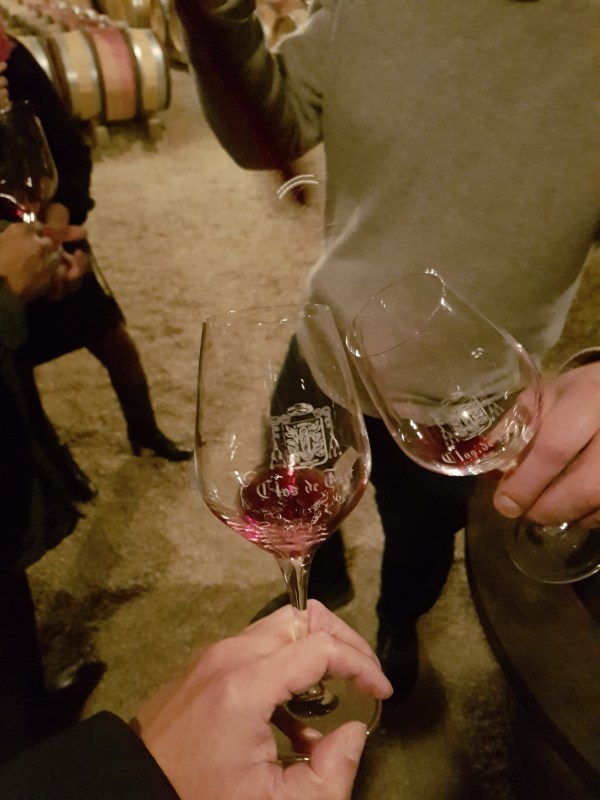
Next was Cuvee #3, from vines located northwards at the lowest part of the vineyard, nearer Clos des Lambrays. This cuvee exuded some earthiness and smoke with fragrant raspberries and gentle currants, showing good delicacy, excellent linearity, very fine presence and acidity, finishing with traces of herbs that added an extra dimension.
In contrast, Cuvee #1, also from the lowest part of the vineyard but southwards, nearer Bonnes-Mares, proffered a softer bouquet, showing good balance between fruit and minerals with traces of smoke. Cuvee #5, coming from mid-slope that has a warmer micro-climate with white soils, exuded red fruits, cherries and roses of fabulous intensity, highly supple with wonderful purity, acidity and concentration all the way to its lengthy finish. Absolutely lovely.
And so how will the 2016 grand vin taste like if we blend all the cuvees together? This was exactly what Jacques proceeded to do, blending all seven cuvees (sans Cuvee #8 which contained vines that are still too young) in equal measure. The hypothetical 2016 Domaine du Clos de Tart Clos de Tart Grand Cru is a wine of outstanding purity and elegance, imbued with vibrant red fruits and cherries with various shades of light and dark, infused with fabulous acidity, elegant intensity, lovely length and wonderful depth, engulfing one totally in its living presence. You never feel the tannins even though they are there. At only 12 months old, and still in barrel, the 2016 Domaine du Clos de Tart Clos de Tart Grand Cru is already a complete wine, sensual and beguiling. Truly the drops of God. But Jacques knows better. The world will await with bated breath until it appears in bottle in 2019. This has truly been a masterclass to end all masterclasses. Thank you very much, Jacques, for giving us so much of your time and to FICOFI too for making possible the visit.
Ric visits Domaine Pierre Damoy
I must admit it was only earlier this year through FICOFI that I came to know about Domaine Pierre Damoy, in spite of the fact that it has the largest holdings of Chambertin-Clos de Bèze, a whopping 5.4 hectares that is practically a third of this hallowed plot. A family-owned business since the 1920s, this estate is now run by the fourth generation, a most affable and unassuming gentleman also called Pierre who is now into his 26th vintage as winemaker. Meeting us in his working clothes at Gevrey itself on the morning of 21 November 2017, one can tell right away Pierre is a 100-percent hands-on person. There is also a perfectionist streak in him too as he lamented that the packaging boxes were not designed to his satisfaction, even though they already appear highly appealing to our eyes. We walked through the small and messy (always a good sign about these smaller producers, in my opinion) technical workshop before trooping down into the cellars, again a smallish place. Here, Pierre had prepared for us ten different wines for tasting, all from 2016.

As he poured for us his wines, Pierre lamented on the small production of yield of that vintage such that he is simply unable to meet demand, as well as, perhaps, the bigger issue of how he is going to pass on the reins. Here, Pierre already has plans for his youngest son. It also appears his lovely teenage daughter has shown a growing interest in the day-to-day running of the estate, which bodes well for him. The domaine makes almost all reds, though there is, of late, a tiny production of Bourgogne blanc. As we tasted through the wines, they struck me as being very well crafted, wines of great extraction and ripeness (but not overdone), subtly structured and well balanced, capable of revealing the subtle differences between different terroir, stuff that Napoleon himself (who loved Chambertin) would have cherished. This is a very fine address in Gevrey-Chambertin. See if you can find his wines in your local retailer.
2016 Domaine Pierre Damoy Bourgogne blanc. Highly aromatic. Very inviting notes of crème and chalky minerals. Crisp in acidity, very generous. Fat. Very correct Refreshing, finished well. Excellent. Only 600 litres made with grapes mostly from Fixin.
2016 Domaine Pierre Damoy Bourgogne rouge. Lovely hue. Robust with dark cherries, rose petals and some bright spots. Well extracted with some wood from the 30% stems. Rounded, subtly structured with good flavours. Very fine.
2016 Domaine Pierre Damoy Fixin Les Mogottes. Clear ruby, showing ripe cherries and dark strawberries with good acidity and concentration, slightly lean. Good linearity with good flavours but not much structure. Fresh mouthfeel. Not at all thin. Good stuff.
2016 Domaine Pierre Damoy Gevrey-Chambertin. Deep colour. Generous aromas of red fruits and dark cherries, showing very good concentration and structure. Harmonious with crisp fine tension. Good length.

2016 Domaine Pierre Damoy Gevrey-Chambertin Clos Tamisot monopole. Deep ruby. Seriously deep on the bouquet and palate showing dark red fruits with some earthiness. Rounded and fleshy with seamless acidity, subtly structured with supple tannins. Truly excellent, regardless that it’s a village.
2016 Domaine Pierre Damoy Chapelle-Chambertin Grand Cru. Deep colour. Delicious notes of ripe dark cherries and currants. Well extracted with lovely concentration, highly supple with sweet subtle tannins, finishing well. Very elegant and feminine in spite of its proportions.
2016 Domaine Pierre Damoy Chambertin Grand Cru. Glorious colour. Ripe in raspberries and cherries. Full and tight, showing great concentration and intensity with fine definition even at this early stage. Superb acidity. Ferrous trace at finish. Well structured without any jarring edges. Only 3 barrels. Excellent.
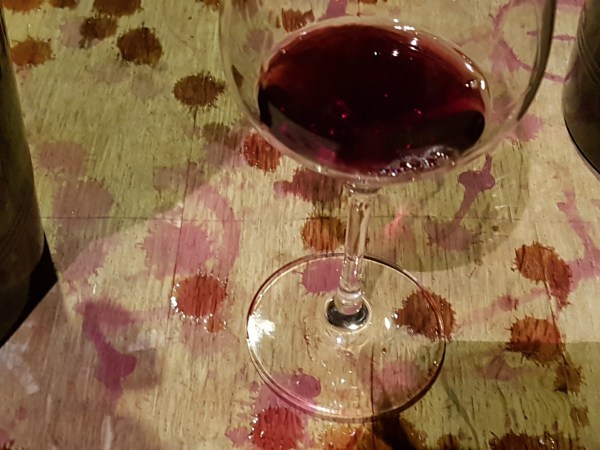
Expensive stains
2016 Domaine Pierre Damoy Chambertin-Clos de Bèze Grand Cru. Beautiful colour with tones of lifted ripe cherries and raspberries, good in concentration with a certain deftness, not heavy at all, showing great balance and acidity with some emerging chocolate, finishing with great integration amidst very fine intensity. Absolutely on song. Should gain greater opulence in bottle. Outstanding.
2016 Domaine Pierre Damoy Chambertin-Clos de Bèze Grand Cru Reserve. Very deep in colour with even deeper sweet delicious flavours, rich in concentration of dark fruits, very well layered, showing excellent ripeness with traces chocolate and mocha, finishing with chewy supple tannins, subtly structured. Only 500 bottles. Comes from certain vines within the plot that Pierre has noticed are distinctly special.
2007 Domaine Pierre Damoy Chambertin-Clos de Bèze Grand Cru. Offered as a bonus, this wine now aged ten years is distinctly more complex in dark currants and dark fruits, superb in layering with deep rich flavours, yet deft and flowing with superb integration of fruit, acidity and refined tannins. Highly sophisticated without calling attention to itself. A wine of great finesse and refinement.
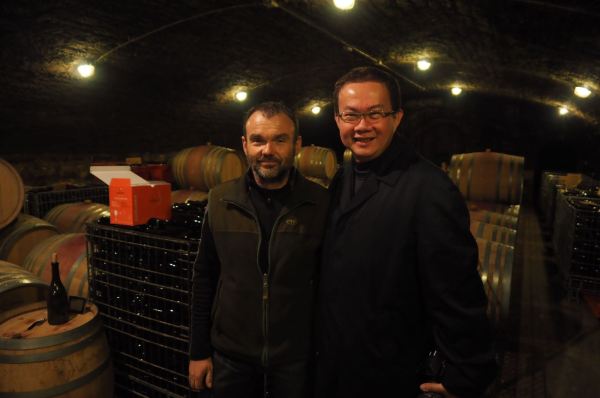
M. Pierre Damoy and yours truly
 Ric's Wine Journal