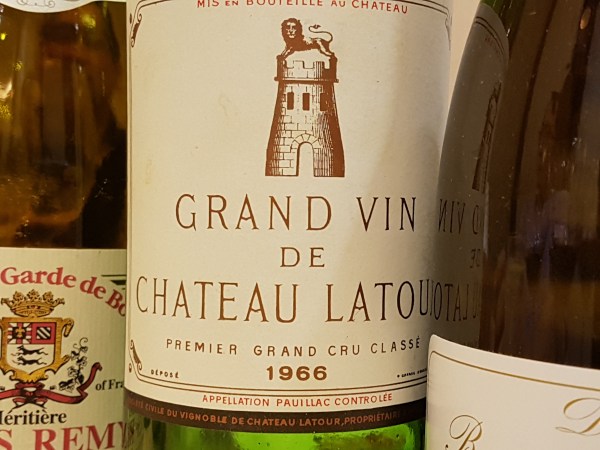
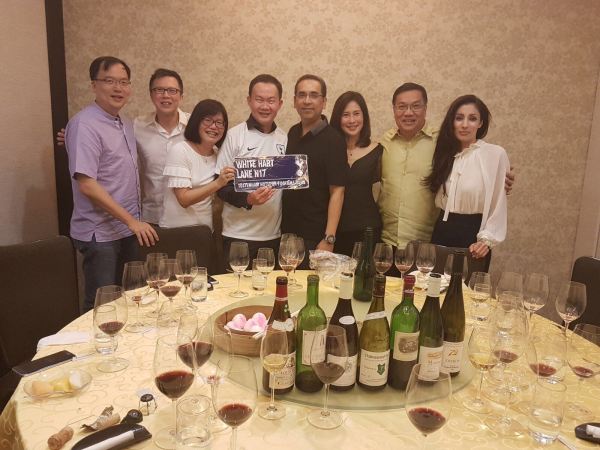
Jan 2018: 1989 Cos D’Estournel, 2002 Salon, 1998 Angelus, 2014 Blanc de Lynch Bages, 2013 Araujo Eisele, 2009 Sauzet Perrieres
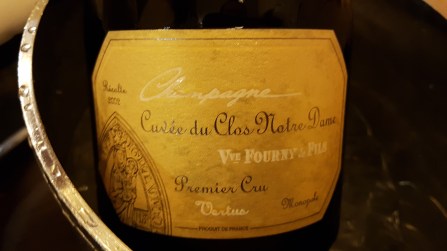 2002 Veuve Fourny et Fils Cuvee du Clos Notre Dame 1er, over dimsum lunch on New Year’s Day, Jade Palace. Forward balance of zesty lime and citrus, showing good expanse with a dry deep tangy presence, rather stern initially as stony minerals dominate, exuding greater elegance with understated tones over time, glowing with lovely depth and toasty characters. Excellent.
2010 Bodegas Lan Reserve, plucked from the list of La Taperia over dinner, 05 Jan 2018. Shut on the nose though the palate is infused with dark cherries, raspberries, charcoal, earth and plums. Soft, rounded, fleshy and open, carrying good weight and balance. Very attractive.
Delamotte Blancs de Blanc Brut NV, poured from jeroboam, courtesy of Kieron at his clinic opening party, 06 Jan 2018. Open with good concentration of green apples, lime and clear citrus supported by crystalline minerals, displaying fine presence with some degree of delicacy. Drinking well.
1989 Ch Cos D’Estournel, poured from double magnum, courtesy of Kieron at his clinic opening party, 06 Jan 2018. Displaying a deep crimson with some evolution, this wine exudes dark plums, cherries and dark currants amidst dry earthy textures on the nose and palate, beautifully open and fleshy, still laced with fine acidity, structure and freshness that indicates plenty of life still ahead for this under-rated vintage of Cos. Not the most profound in terms of complexity but highly compelling as a whole, inviting sip after sip. Excellent.
1995 Ch Leoville Poyferre, poured from double magnum at Kieron’s clinic opening party, 06 Jan 2018. Still dark. The bouquet here is ruined by a mild but distinct whiff of cork taint that imparted a plasticky note though it seemed fine on the palate, robust with good concentration of black fruits, blueberries and dark currants, well structured with fine acidity and pliant tannins but lacking in that extra compelling dimension shown by the Cos D’Estournel above.
2005 Domaine Faiveley Chablis Le Clos Grand Cru, courtesy of Kieron at his office after hours, 09 Jan 2018. Quite evolved in colour, showing good concentration of clear citrus with flinty minerals held together in fine balance and delicacy, almost crisp, somewhat narrow in spectrum but its tone and character is unmistakable for Chablis. Very fine.
2012 La Clarte de Haut-Brion, courtesy of CW at Jade Palace, 11 Jan 2018. Closed, showing just a hint of sweetness while ferrous minerals, grassy elements and icing dominate on the palate, creamy rich with crisp acidity and cool quiet intensity, finishing over overtones of spicy nutmeg. Quite excellent.
2010 Didier Dagaeuneau Blanc Fume de Pouilly, courtesy of Tristan plucked off the list at Jade Palace, 11 Jan 2018. Glorious bouquet of fresh lychees, glowing with raw nutmeg and rich minerally tones on the palate, tightly coiled with cool quiet intensity, opening up gradually to reveal great suppleness with a persistent minerally streak. Excellent.
2012 Domaine Georges Noellat Nuits-Saint-Georges 1er Aux Boudots, courtesy of CW at Jade Palace, 11 Jan 2018. Deep colour with an abundance of intense dark fruits on the nose and palate. Tight, brooding, tense and angular. Not ready.
2013 Araujo Eisele Vineyard, courtesy of CW at Jade Palace, 11 Jan 2018. Deep impenetrable red. Expectedly, this is a big tannic wine with fine detail and biting intensity of dark fruits and blackberries on a backdrop of graphite minerals, quietly hedonistic, displaying wonderful depth and weight, oozing with dark sweet tannins, finishing on a stern dark medicinal tone.
2005 Ch Pichon Longueville Comtesse de Lalande, tasted at the re-opening party of GI Associates, Gleneagles Medical Centre, Singapore, 13 Jan 2018. Dark and brooding, reserved on the nose though the palate is imbued with a rich tone of dark plums, carrying excellent weight and concentration, structured with firm tannins and pliant acidity. Best to lay down.
2014 Domaine du Chateau de Meursault Meursault Les Charmes-Dessus 1er, tasted at the re-opening party of GI Associates, Gleneagles Medical Centre, Singapore, 13 Jan 2018. Shy with a hint of creme and chalk. Far more expressive on the palate, though, where rich clear citrus and earthy minerals vie for attention, displaying good delicacy and purity. A perenial over-achiever. Excellent.
2009 Ch Pontet Canet, tasted at the re-opening party of GI Associates, Gleneagles Medical Centre, Singapore, 13 Jan 2018. Very dark. Rather reticent and brooding in character though there is a good lift of dark plums on a palate dotted with excellent detail, structured with pliant supple tannins that culmibate in a long velvety finish. Yet to evolve any Pauillac signature. Enormous potential here but truly one for the long haul.
2012 Christophe Vaudoisey Volnay 1er Les Caillerets, tasted at the re-opening party of GI Associates, Gleneagles Medical Centre, Singapore, 13 Jan 2018. Dark in tone and rather reserved. Equally denser in tone on the palate with a forward balance of ripe dark fruit and wild berries, exuding powerful plummy tones with fine intensity amidst supple seamless tannins, showing good linearity through to its lengthy finish. Excellent.
2010 Domaine Chanson de Brialles Corton Les Bressandes Grand Cru, tasted at the re-opening party of GI Associates, Gleneagles Medical Centre, Singapore, 13 Jan 2018. Correct pinot color and tone, open with excellent presence of succulent red fruits amidst earthy tones, seamlessly integrated with fine acidity and subtle intensity. Excellent.
2007 Domaine Grand Veneur Chateauneur-du-Pape, tasted at the re-opening party of GI Associates, Gleneagles Medical Centre, Singapore, 13 Jan 2018. Opague rusty red, exuding powerful characteristic earthy tones amidst plummy red fruit, fleshy and rounded with some medicinal hint and licorice amidst sweet supple tanins, culminating in a gentle long spicy finish. Highly enjoyable.
2007 Poggio Antico Brunello di Montalcino Riserva, tasted at the re-opening party of GI Associates, Gleneagles Medical Centre, Singapore, 13 Jan 2018. Showing some evolution of colour and secondary nuances of cedar, red currants and dark fruits, quite sublime in acidity, finishing with a long fabulous intensity of flavours. A Brunello in technicolor.
2012 E Guigal Chateauneur-du-Pape, tasted at the re-opening party of GI Associates, Gleneagles Medical Centre, Singapore, 13 Jan 2018. Mild earthy cedary tones with sandalwood, deliciously open with good intensity, displaying a lovely feminine elegance.
2012 Ch La Mission, a wine from Lalande-de-Pomerol, popped and poured over dinner at Asia Grand which, IMHO, serves the best Peking duck in Singapore, 20 Jan 2018. Displaying a deep crimson, this wine exudes aromas of dark plums, black fruits and dark currants, well-structured with fine concentration and gentle graphite minerals in spite of its fullness, oozing with delicious sweet tannins. Very fine.
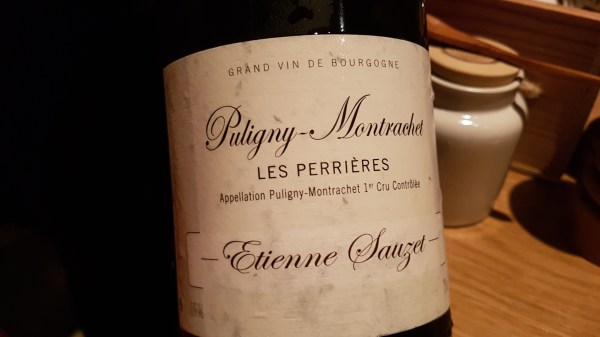
2009 Domaine Etienne Sauzet Puligny-Montrachet Les Perrieres 1er, from the list of Ma Cuisine, Singapore, 24 Jan 2018, just newly-opened by Mathieu Escoffier, son of Fabien of the same famous Ma Cuisine in Beaune. Fabulous bouquet of fresh morning dew and grassy elements that led to great concentration and depth of citrus and lime, caressing the palate with a lovely fluid intensity, displaying superb layering and length with an absolutely gorgeous lingering mouthfeel, turning more delicate over time with emerging chalky tones. Has that added intangible dimension that places this wine right up there at the very top. Outstanding.
2007 Domaine Jacques-Frederic Mugnier Nuits-Saint-Georges Clos de la Marechale 1er Blanc, from the list of Ma Cuisine, Singapore, 24 Jan 2018, just newly-opened by Mathieu Escoffier, son of Fabien of the same famous Ma Cuisine in Beaune. Grassy elements dominate on the nose with a sharper minerally tone, displaying good acidity and zest from the excellent concentration of fruit though it is slightly narrow in spectrum.
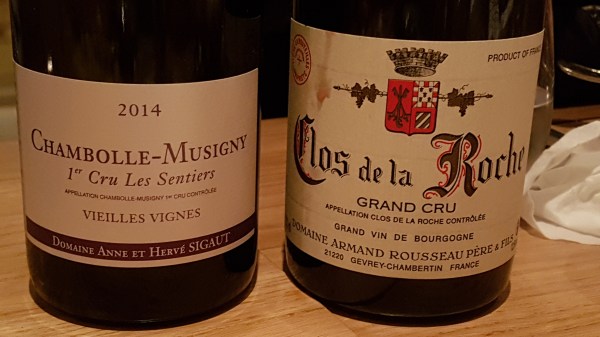
2014 Domaine Anne et Hervé Sigaut Chambolle-Musigny Les Sentier 1er, from the list of Ma Cuisine, Singapore, 24 Jan 2018, just newly-opened by Mathieu Escoffier, son of Fabien of the same famous Ma Cuisine in Beaune. Deep ruby. Rather shy though the palate is lit by generous swathes of bright red fruits and cherries, rounded with good concentration and a hint of tangerines amidst traces of raw intensity that eventually turned a little too astringent as the ambient temperature warmed up. Huge potential but I don’t think we did it justice.
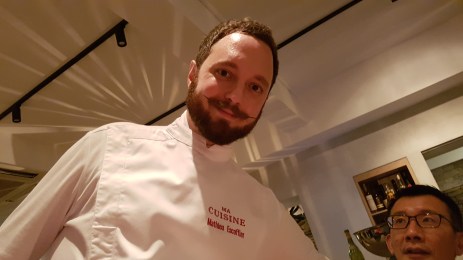
Mathieu Escoffier of Ma Cuisine, Singapore.
2011 Domaine Armand Rousseau Clos de la Roche Grand Cru, from the list of Ma Cuisine, Singapore, 24 Jan 2018, just newly-opened by Mathieu Escoffier, son of Fabien of the same famous Ma Cuisine in Beaune. As usual with Armand Rousseau, this wine proffers a glorious plummy tone of ripe red fruits and dark cherries, beautifully rounded and fleshy, saturating the palate with a lovely deep searing intensity. Excellent.
2015 G D Vajra Barbera D’Alba, tasted at the 15th anniversary party of Asian American Liver Centre, Gleneagles Medical Centre, Singapore, on 25 Jan 2018. Good concentration of red fruits with dark plummy tones, a little too dry and earthy and vegetal though imbued with fine acidity, finishing with a spicy glow. Unremarkable.
2016 Monte Del Fra Soave Classico, tasted at the 15th anniversary party of Asian American Liver Centre, Gleneagles Medical Centre, Singapore, on 25 Jan 2018. Good concentration of clear citrus with light grassy elements and subtle chalky notes. Highly serviceable.
2011 Les Tours de Charmail (courtesy of Dr Lee KH), tasted at the 15th anniversary party of Asian American Liver Centre, Gleneagles Medical Centre, Singapore, on 25 Jan 2018. Deep inky color, rather muted on the nose, showing good concentration of black fruits and ripe wild berries on the palate with dryish textures along with early cedary characters and graphite minerals.
2008 Carpineto Vino Nobile di Montepulciano Riserva, decanted on-site at Otto Ristorante, 27 Jan 2018. Bright purple, rather muted initially but imbued with very good concentration of raspberries, dark wild berries and black currants on the palate with overtones of ash and stern earthy minerals, showing good focus and definition, growing brighter over time with fine intensity though lacking in outright opulence.

2002 Champagne Salon (courtesy of Peter Tan), over lunch hosted by Dr Ngoi at Garibaldi to honour the visit of Jean-Charles Cuvelier of Domaine de la Romanee-Conti, 30 Jan 2018. This wine exudes a clear crystalline tone with gentle toasty characters, open with lifted notes of lime and citrus amidst smoky tones and subdued minerality, displaying fine definition, finishing with traces of bitter lemon. Excellent.
2014 Chateau Chamirey Mercurey La Mission 1er monopole (courtesy of Dr Ngoi), over lunch hosted by Dr Ngoi at Garibaldi to honour the visit of Jean-Charles Cuvelier of Domaine de la Romanee-Conti, 30 Jan 2018. Good colour. Quite reserved on the nose although one discerns delicate tones, layered with superb concentration of fruit on the palate that recalls cinnamon and peaches with subdued chalk and crème de la creme. Huge potential here. A perennial favourite of mine.
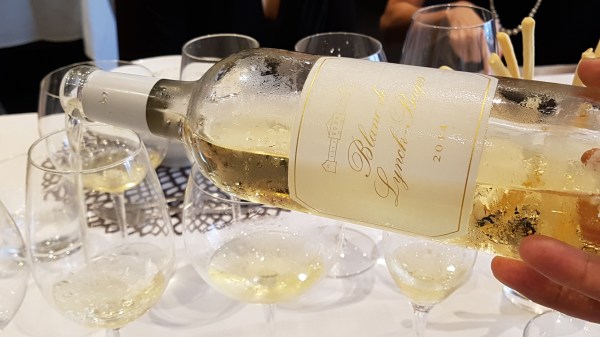
2014 Blanc de Lynch Bages (courtesy of Dr Ngoi), over lunch hosted by Dr Ngoi at Garibaldi to honour the visit of Jean-Charles Cuvelier of Domaine de la Romanee-Conti, 30 Jan 2018. Complex lifted bouquet of smouldering ember, longans and exotic tropical fruits amidst gentle earthy tones and grassy elements, showing great concentration of fruit and detail with superb transparency. Quite unique and outstanding.
2009 Ch Pichon Longueville Comtesse de Lalande (courtesy of Dr Ngoi), over lunch hosted by Dr Ngoi at Garibaldi to honour the visit of Jean-Charles Cuvelier of Domaine de la Romanee-Conti, 30 Jan 2018. Deep purple, exuding lifted tones of earth and ripe wild berries, superb in concentration, highly supple with a slight vegetal trace towards the back palate that imparted some degree of sternness. Elegant but aloof. Most regal. Not ready at all.
1998 Ch Angelus (courtesy of Dr Ngoi), over lunch hosted by Dr Ngoi at Garibaldi to honour the visit of Jean-Charles Cuvelier of Domaine de la Romanee-Conti, 30 Jan 2018. Deep crimson, proffering lovely tones of earth and aged leather with lifted notes of delicious dark currants and dark cherries, excellent in concentration, layered with early complexity and gritty details. Excellent.
2010 Ch Rieussec (courtesy of Dr Ngoi), over lunch hosted by Dr Ngoi at Garibaldi to honour the visit of Jean-Charles Cuvelier of Domaine de la Romanee-Conti, 30 Jan 2018. Copious notes of nectarine and apricot are evident but, on the whole, rather reserved with quiet acidity.
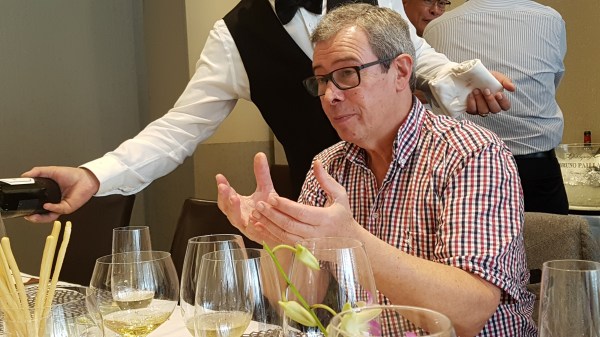
Jean-Charles Cuvelier
Egly-Ouriet
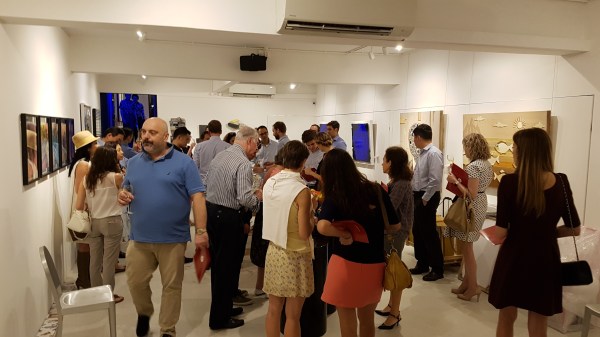
Wine tasting with high art always works well, and the boys from The Vintage Club duly obliged with a tasting of Egly-Ouriet at the Art Porters Gallery, Singapore, on 13 Feb 2018. A movement once scorned by those who were used to the grand marqués but now rightly championed by the cognoscenti looking for the Next Big Thing, Egly Ouriet is now one of the leading lights of Grower Champagne, made by Francis Egly who is continuing the tradition begun by his great-grandfather in Ambonnay. Certainly, the lineup tasted here is right on par with the best champagne: wines with power, delicacy and depth of fruit.
Chateau Minuty Rose D’Or. Notes of dried apricots, dates and perfumed grapefruit on the nose, decidedly light and delicate in tone partly contributed by its recessed tonal palate, showing more of gentle minerals than fruit, distinctly feminine and shy as it tapered to a glowing finish.
Egly-Ouriet Brut Rose Grand Cru. This wine spent 58 months on lees, displaying densely perfumed aromas with good lift, considerably lighter in tonal spectrum on the palate with dryish textures. A rosé that will go well with Asian cuisine.
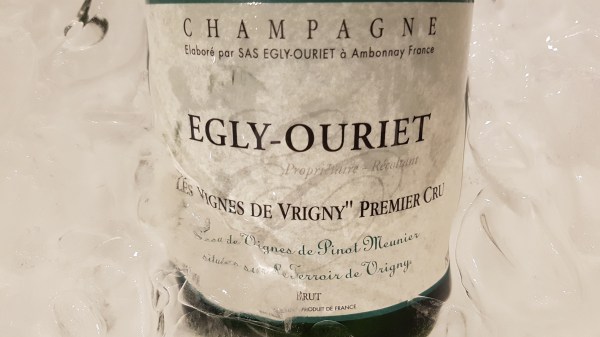
Egly-Ouriet Les Vignes de Vrigny 1er, comprising 100% pinot meunier, aged 36 months on lees prior to bottling. Deep icy bouquet with a superb lift of delicate green fruits and citrus lime, forward in balance with excellent concentration and suppleness, finishing with traces of bitter lemon, understated minerals and toasty overtones. Very fine. Talking to a few people there, I realised pure pinot meunier may not be everyone’s idea of traditional champagne but I liked it.
 Egly-Ouriet Brut Tradition Grand Cru. A blend of 70% pinot noir and 30% chardonnay, this wine exuded a wonderfully deep bouquet of dense citrus and gentle toast with some lovely gentle complexity, opening up with a good expanse of crisp citrus and fresh acidity matched by excellent depth of fruit, finishing well. Excellent.
2007 Egly-Ouriet Brut Millesime Grand Cru. Again blended with majority pinot noir and the rest chardonnay after spending 96 months on lees, the benefit is evident by the generous bouquet of yeasty overtones and toasty characters, rounded with supple mouthfeel enhanced by fine bubbles, poised and elegant with good focus and balance, showing good linearity all the way to its lengthy glowing finish. Excellent.
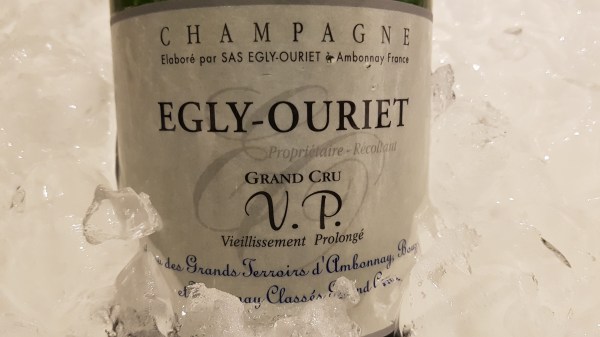
Egly-Ouriet Vieillissement Prolonge (V.P.) Grand Cru. The V.P. designates prolonged ageing on lees, 84 months in this instance, translating into delicious deep minerally tones on the nose, exuding a mild yeasty pungency with recessed white fruits though I found the wine to be rather backward on a palate largely dominated by dry graphite minerals, well-balanced though a tad underwhelming on the whole.
La Paulée de Singapour 2018
Barely two days after the Domaine de la Romanee-Conti Gala came the annual La Paulée de Singapour organised by The Vintage Club on 02 February 2018 at the brand-new Andaz Hotel, Singapore, masterminded by M. Christophe Cazaux-Maleville with his partners Gilles Herr and Antonin Pon. The La Paulée may trace its roots back almost a century ago to Meursault where workers in the vineyards would gather to celebrate after the end of a back-breaking harvest with plenty of food and wine.  In particular, it seemed the vignerons would each bring a bottle to best the efforts of rivals. The tradition still continues but, of course, the event in Singapore was simply a good excuse to indulge in a mad evening of wining. This time, the French Ambassador could not join us but the local French community still showed up in force. The free-for-all promenade that preceded dinner began on time at 1730h but, in spite of the 150 minutes till dinner, I still could not sample all the wines available. All the domaines represented by The Vintage Club were present to show off the 2015 vintage which, I must say, is excellent for both whites and reds in equal measure (though the 2014 whites are still peerless) and it was good for me to be able to catch up again with M. Etienne de Montille soon after my visit to his Domaine last November. The Andaz did a great job in its organisation and service although the hall for the promenade was too small, I feel, and the ambient temperature way too warm though the ballroom was quite perfect. Things became rather loud and riotous quite quickly, which is how it is supposed to be, punctuated by several rounds of the mandatory ban bourguignon. At the end, forty-nine wines in one evening was a little too much for my palate but it was great fun and I’m already looking forward to the 2019 edition where the outstanding reds of 2016 will be featured.
2015 Domaine du Chateau de Meursault Puligny-Montrachet Champs-Canet 1er, poured from jeroboam. Lifted tones of clear citrus with good transparency, presence and focus on the palate, showing fine acidity and intensity with good linearity.
2015 Domaine du Chateau de Meursault Pommard Clos des Epenots 1er. Clear purple but closed on the nose. Equally reserved on the palate where notes of earth and wild berries dominate with good acidity, somewhat short at the finish.
2015 Domaine du Chateau de Meursault Volnay Clos des Chenes 1er. Darker in tint and tone, displaying good attack and intensity of raspberries, dark currants and earthy tones with a spicy glow, somewhat short.
2015 Domaine du Chateau Meursault Beaune-Greves Les Trois Journaux 1er. Good color. Deep aromas of dark roses and raspberries, full-bodied and rounded, showing excellent intensity and layering of fruit with seamless acidity, finishing with excellent linearity and definition. Very lovely.

2015 Domaine du Chateau de Marsannay Clos de Vougeot Grand Cru, poured from magnum. Clear purple with an abundance of raspberries, dark cherries and earth, fleshy with good concentration and fine acidity, seamlessly integrated.
2015 Domaine du Chateau de Marsannay Marsannay Les Favieres. Deep purple, this village exudes sharp intense aromas of sweet ripe berries with a herbaceous trace, forward in balance with excellent acidity and concentration, finishing with splashes of spice though somewhat short.
2014 Domaine Pierre Damoy Gevrey-Chambertin Clos Tamisot. Good colour. Highly effusive with clean forward notes of rose petals, ripe cherries and red fruits. Fleshy and open, showing fine detail, excellent presence and acidity, just a tad short. An over-achieving village. Worth every penny, and more.
2014 Domaine Pierre Damoy Charmes-Chambertin Grand Cru. Deep colour, exuding notes of rose petals and red currants. Rounded with subdued intensity. Distinctly feminine. Highly beguiling and elegant. Excellent.
2014 Domaine Pierre Damoy Chambertin Grand Cru. Good colour, displaying an intense bouquet layered with dark currants and dark roses, highly effusive. Excellent in concentration and poise, hugely understated, subtly structured with superb acidity. Excellent.

2014 Domaine Georges Noellat Grands Echezeaux Grand Cru, poured from magnum. Brilliant bright colour, displaying superb intensity of glorious ripe fruit on the bouquet with great succulence and purity on the palate, glowing throughout its length with supreme elegance in spite of its fullness. Wonderful stuff. A must-have wine.
2014 Domaine Georges Noellat Vosne-Romanee. Correct pinot tint. Superb bouquet with a forward balance of gorgeous ripe fruit amidst gentle saline minerals, highly poised and rounded, displaying great presence and purity. Utterly charming. Beautifully crafted.
2012 Domaine Georges Noellat Nuits-Saint-Georges Aux Boudots 1er. Darker in hue with earthy tones and textures, very correct for Nuits-Saint-Georges, supported by glorious ripe fruit with darkish tones, superbly integrated, tapering to a long glowing finish. Excellent.

2015 Domaine de Montille Volnay En Champans 1er. Highly delicate bouquet, beautifully lifted, showing great colour, purity and ripeness, structured with supple sweet tannins amidst sublime acidity. Superb.
2015 Domaine de Montille Volnay Les Brouillards 1er. Deep color and tone, displaying good lift of raspberries and dark cherries. Rounded with fine detail and concentration, just a tad short.
2015 Domaine de Montille Volnay Les Taillepieds 1er. Deep in colour and tone. Fleshy with excellent earthiness, laced with fresh acidity and fine detail brought about by ripe dark berries with a gentle biting intensity. Plenty of velvety power though lacking in structure.
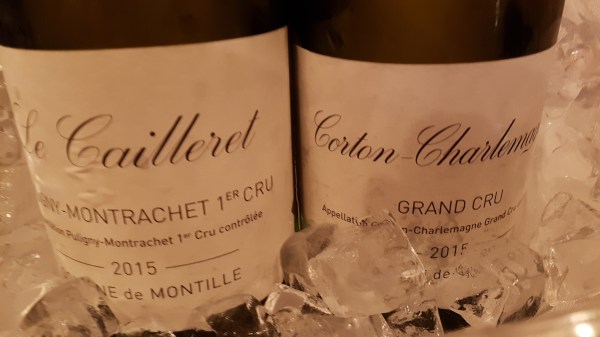
2015 Domaine de Montille Puligny-Montrachet Les Cailleret 1er. Sharp lifted bouquet, stuffed with clear yellow citrus amidst a superb minerally base with mild saline tones, displaying good depth, layering and potential complexity. Excellent.
2015 Domaine de Montille Saint-Romain en Jarrons. Attractive lifted aromas of earthy minerals, showing excellent fruit quality with superb layering and freshness, very well balanced, teasing the palate with great verve and fleeting intensity. Excellent.
2015 Domaine de Montille Corton-Charlemagne Grand Cru. Superb bouquet of complex white fruits, strongly perfumed, layered with excellent fullness, concentration and detail on the palate, producing superb mouthfeel. Excellent.
2015 Chateau du Moulin a Vent Moulin-a-Vent. Deep colour. Big, dark and tannic with a rich abundance of dark plums and currants that is quite unexpected of gamay, brimming with biting intensity.
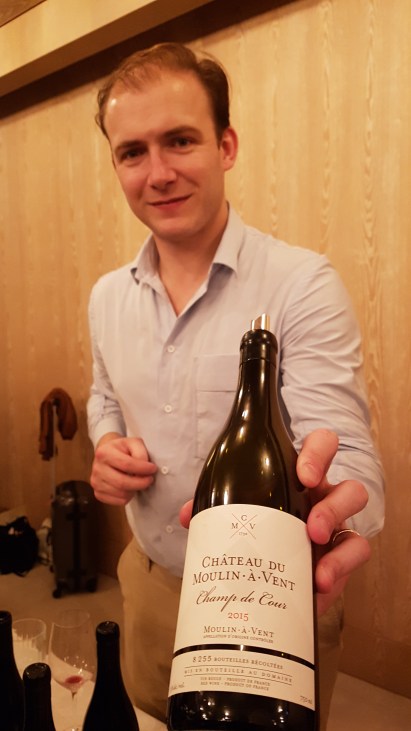
2015 Ch du Moulin-a-Vent Champ de Cour. Coming from a single vineyard gamay, this wine is dark in colour, displaying high extraction of fruit that translates into licorice, wild berries and ripe dark fruits with substantial earthiness, coating the palate with raw biting intensity.
2015 Ch du Moulin-a-Vent La Rochelle. Very dark and full, well extracted with a great concentration of spicy earthy tones.
2015 Chateau de Chamirey Mercurey La Mission 1er monopole. Well-developed bouquet of complex citrus and morning dew with a fabulous palate, superbly layered with lovely richness and purity of fruit underscored by understated minerality. I’m reminded of the outstanding 2014 and, in fact, would be fascinating to compare both side-by-side in a blinded tasting. Superb.
2015 Domaine Comte Senard Corton Grand Cru Blanc. Superb bouquet of complex white flowers and delicate chalk, layered with great transparent textures in spite of the rich tone of fruit and minerals, displaying great elegance and sophistication. Outstanding.
2015 Domaine Faiveley Puligny-Montrachet Champs Gain 1er. Clear grassy elements with a hint of rye, showing good intensity of flavours amidst stern minerals with excellent potential for further complexity.
2015 Domaine Faiveley Corton Clos des Corton Faiveley Grand Cru monopole. Dark in colour with abundant fruit, very ripe, marked by an earthy edge with graphite minerals. Very full, rich and tight, almost opulent.
2015 Domaine Faiveley Gevrey-Chambertin Les Cazetiers 1er. Dark in colour. Rich in ripe dark berries and currants, well-extracted with overtones of licorice, slightly dry.
2015 Domaine Faiveley Nuits-Saint-Georges Les Porets Saint Georges 1er. Saturated with dark chocolate, black currants and ripe dark berries, well-extracted, tight and full with searing intensity, ending in a spicy finish. Still primal.
2015 Domaine des Perdrix Nuits-Saint-Georges 1er Aux Perdrix Cuvee Les 8 Ouvrees. Beautiful colour, exuding a lifted bouquet of dark rose petals with a perfumed fragrance, highly focused on the palate, displaying great concentration and searing intensity of fruit, well-structured at its spicy finish. Excellent.
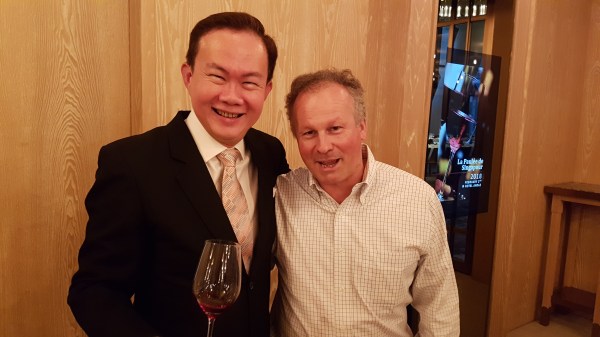
Etienne de Montille loves a good party
Delamotte Blancs de Blanc Brut NV, poured from jeroboam. Rich in toasty yeasty characters, displaying excellent tone of fresh green melons and deep clear citrus to match its dry finish. Quite excellent.
2015 Domaine Vincent Bouzereau Meursault Les Charmes 1er. Poised with great restraint, concealing rich white fruits but absolutely lovely on the palate, displaying gorgeous acidity and concentration with very fine detail, striking a great balance between delicacy and delivery of power. Excellent.
2015 Domaine Vincent Bouzereau Meursault Goutte d’Or 1er. Powerful aromas, rich in melons and lifted ripe citrus and lime on the nose and palate, well balanced against a minerally floor, highly supple with lovely acidity and mouth feel. Excellent.
2015 Domaine Vincent Bouzereau Meursault Les Poruzots 1er. Delicious tones of cider and subtle yellow citrus, laden with cool minerals upon its gentle entry onto the palate, showing good transparency.

2015 Domaine du Chateau de Meursault Meursault Charmes-Dessus 1er, poured from jeroboam (courtesy of Christophe). This wine shows great restraint on the nose though the palate is imbued with great concentration and intensity with lifted clear tones, layered with sharp acidity, finishing with notes of bitter lemon. Excellent, though I feel its 2014 counterpart is more expressive.
2014 Domaine de Comtes Lafon Meursault-Charmes 1er (courtesy of David Tan). Pale in colour, showing great restraint as well though it is quite superb on the palate, very full and tight with a great concentration of clear citrus and white fruits laced with sublime acidity.
2011 Domaine de Comtes Lafon Meursault-Charmes 1er (courtesy of Pipin). Displaying a superb clear golden hue, this wine was just as reticent on the nose, rich in white fruits and citrus on the palate marked by minty overtones with very fine acidity, more expansive towards the finish.

2008 Domaine Bouchard Pere et Fils Chevalier-Montrachet Grand Cru (courtesy of Vic). Great delicacy here with wonderful depth of primarily clear citrus with other subtle nuances of jackfruit, cedar and a hint of durians, quite understated in intensity with overtones of incense, structured with crisp acidity that imparted great freshness and mouthfeel, finishing well. Excellent.
2007 Joseph Drouhin Montrachet Grand Cru Marquis de Laguiche (courtesy of David Tan). Showing great restraint with clear cool fruit on the nose with recessed chalky tones, offering a glowing palate rich in ripe fruit that displayed great sophistication and balance with transparent textures throughout its lovely lengthy. Superb.
2003 Domaine Leflaive Puligny-Montrachet, poured from magnum (courtesy of LF). Surprisingly reticent and backward on the nose, compensated though by very good concentration of fruit with a rich tonal palate amidst dryish textures and some early complexity, highly supple.
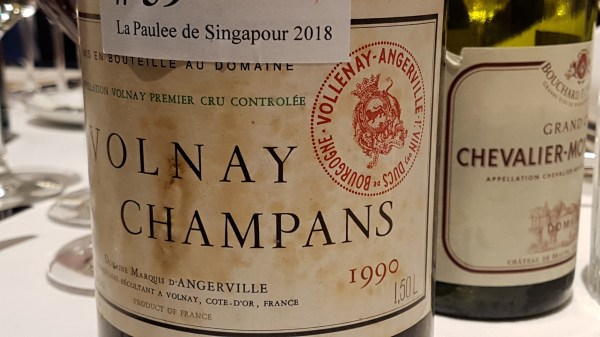
1990 Domaine Marquis D’Angerville Volnay Champans, poured from magnum (courtesy of LF). Opague rusty red, exuding a lovely earthy pungency with a bit of discreet sweetness, displaying excellent fullness of dark plums and currants with a rich fabulous intensity, laced with superb acidity that is still remarkably fresh, ensuring that this wine still has the legs to last the distance. Excellent.
2010 Domaine Anne Gros Echezeaux Grand Cru (courtesy of Hsiang Sui). This wine is imbued with a glorious tone of red fruits, dark berries and dark currants, superbly ripe with exemplary purity, underscored by stern graphite minerals on the full palate laced with crisp acidity and lovely tannins that are remarkably rich and supple. Simply outstanding.
2006 Domaine Robert Groffier Chambolle-Musigny Les Amoureuses 1er (courtesy of CJ). Utterly stunning in its glorious tone of red cherries and fresh rose petals, marked by a beguiling feminine fragrance with wonderful richness, depth and purity. Supremely elegant and seamless in its integration and delivery of power. Should you ever need to understand what the fuss is about concerning Les Amoureuses, go for this wine.
1966 Antonin Rodet Bourgogne (courtesy of Thomas). Murky, but still alive with a remarkably full tone of aged red fruits, still showing excellent ripeness and intensity of flavours. Ageing most gracefully.
1964 Domaine Chanson Beaune Clos des Mouches 1er. Ripe red plums, distinctly aged in character though still retaining excellent concentration and intensity of flavours with fine acidity.
2007 Domaine Georges Comte de Vogue Chambolle-Musigny 1er (courtesy of Kieron). Made from young vines (below 25 years) of Musigny grand cru, this wine exudes great colour with a lovely complex of fresh ripe cherries, smoke and sweet incense, a little forward in balance, displaying excellent presence and structure with fine intensity and integration. Excellent.
2011 Domaine Georges Lignier Clos-Saint-Denis Grand Cru. This wine proffers a predominance of abundant raspberries along with fresh ripe cherries and strawberries amidst earthy tones and sweet incense, showing good typicity of the Morey-Saint-Denis terroir in its rasping intensity and darker tone of fruit. Excellent potential but still raw.
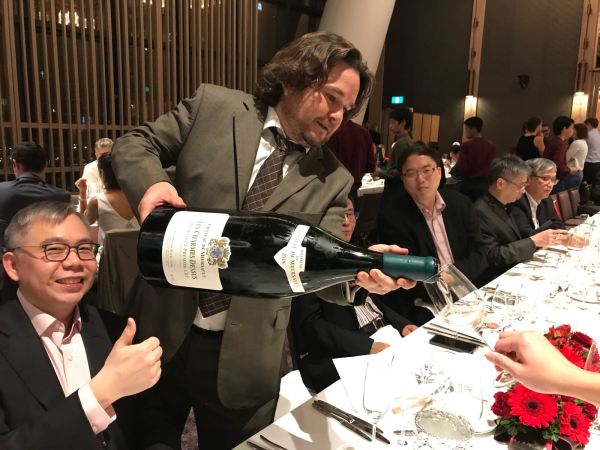
2011 Domaine Francois Bertheau Chambolle-Musigny Les Amoureuses 1er. Quite sublime in its delicate tones of ripe red fruits with overtones of hot stones and open on the palate with delicious succulence and richness of fruit, yet remarkably gentle and subtle in intensity. A superb expression of this famous terroir.
2009 Domaine Mugneret Mugneard Grands Echezeaux Grand Cru. Excellent depth of ripe red fruits, full-bodied with a darkish tone but vibrant with subtle intensity, showing good representation of terroir.
2014 Domaine de Montille Nuits-Saints-Georges Aux Thorey 1er. Well-extracted with abundant ripe dark berries with dry earthy textures, showing good concentration and intensity.
2006 Domaine Robert Groffier Chambolle-Musigny 1er Les Hauts-Doix. Quite glorious on the nose with generous dollops of ripe wild berries and raspberries that exuded a beautiful hallowed glow, delivering on its promise with superb concentration and intensity of fruits supported by earthy minerals, finishing with a stern ferrous trace.
FICOFI Gala: Domaine de la Romanée-Conti 2018
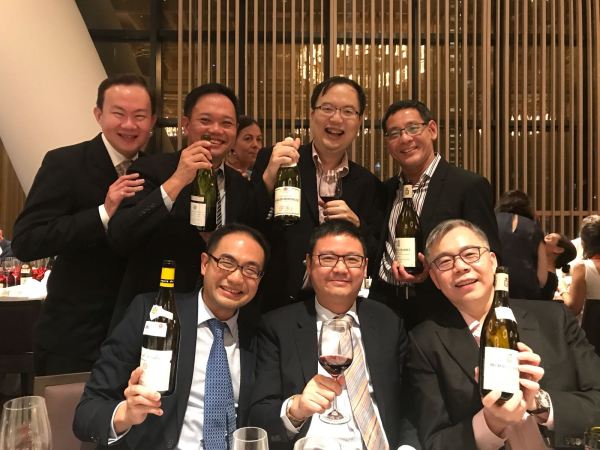
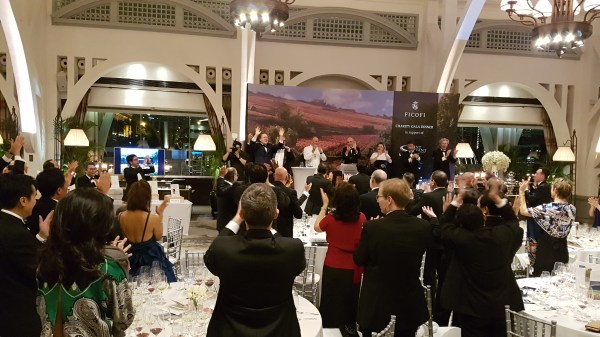
One of the most eagerly anticipated wine events each year in Singapore, limited only to those who are entitled to attend, is the L’Abbaye de Saint-Vivant Gala Dinner that features the wines of Domaine de la Romanée-Conti. This year, the gala was held on 31 January 2018 at its usual venue, The Fullerton Bay Hotel, Singapore, where it was very good, once again, to be able to catch up with the co-owner of Domaine de la Romanée-Conti M. Aubert de Villaine himself as well as Jean-Charles Cuvelier, who has just retired as general manager after spending 24 years at the domaine. The main hall of the hotel, once known as Clifford Pier where passengers of a bygone era travelling by boat would embark or disembark, was transformed into a scene of great elegance as guests in black tie, accompanied by their ladies in daring high fashion, arrived punctually in spite of the preceding torrential downpour.
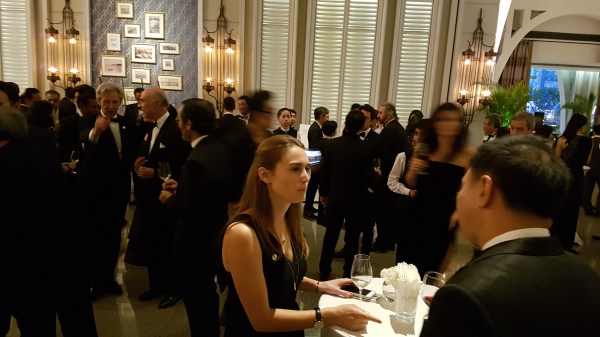
While this event was hosted by FICOFI, one of the main objectives of this Gala was to raise funds for the conservation of the L’Abbaye de Saint-Vivant, once a monastery where the monks acquired and tended to vines that are actually now the various plots of grand cru in Vosne-Romanée owned by Domaine de la Romanée-Conti. Hence, the domaine confers upon itself the moral obligation to preserve an important part of its history.
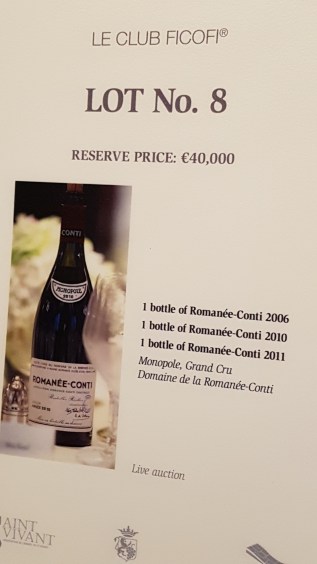
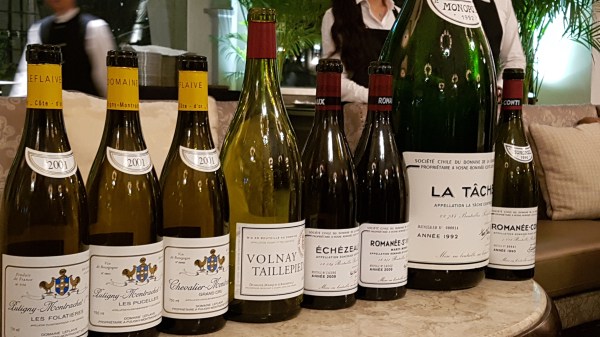
The funds were to be raised through the auction of several parcels of D.R.C. wines, the prime lot being a trio of 2006 / 2010 / 2011 Domaine de la Romanée-Conti Romanée-Conti Grand Cru which eventually went under the hammer for EUR 90,000. The line-up of wines for the evening was pretty impressive as well, with the 1990 Domaine de la Romanée-Conti Romanée-Conti Grand Cru being the absolute highlight, perhaps even stealing the shine (literally!) from the rare super blue moon eclipse phenomenon that took place that same night. If I’d heard Aubert correctly, it seemed the domaine no longer has any stock of the 1990 Romanée-Conti, the bottles supplied this evening coming exclusively from FICOFI’s library. Wow…that’s truly generous, at current market prices. We began with a promenade of wines from Domaine Leflaive and Domaine Marquis D’Angerville before settling down for dinner (prepared by 3-Michelin star chef Christian Le Squer of Le Cinq, Four Seasons, Paris, who had specially flown in) where the reds were exclusively D.R.C., peppered by several rounds of ban bourguignon led by Jean-Charles Cuvelier.
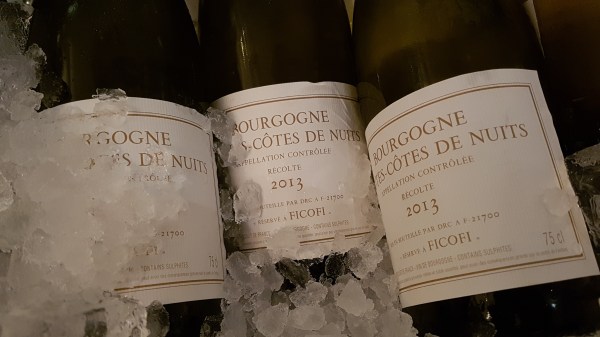
2013 Vin de l’Abbaye de Saint-Vivant Hautes-Cotes de Nuits Bourgogne. Nutty characters on the nose. Tight with good concentration on the palate with a clean feel amidst dry light textures, showing some early complexity but its depth and layering is most impressive, exuding notes of exotic tropical fruit and early cinnamon with a touch of bitter lemon, turning more intense and focused with a distilled essence over time. Better than the 2010 and 2011, in my opinion. Excellent. This is one of only three whites produced by Domaine de la Romanée-Conti, bottled specially and only for FICOFI, certainly not available commercially.
2001 Domaine Leflaive Puligny-Montrachet Les Folatières 1er. Good gentle complexity with a hint of malt on the nose that led to notes of aged crème and recessed chalk underscored by a lively citrus trail, dry but well structured, naturally balanced and seamless, finishing with some unresolved potential, suggesting that this wine still has some way to go before peaking. Very fine.
2001 Domaine Leflaive Puligny-Montrachet Les Pucelles 1er. Displaying a darker hue with an enticing glow of recessed crème de la crème and chalky tones, this wine is layered with great minerality and superb concentration with fabulous intensity of fruit, yet remarkably deft and delicate, well-structured, very correct in its expression of this most characteristic terroir of all premier cru climats of Puligny-Montrachet, finishing with wonderful length amidst minty overtones. Truly superb.

2001 Domaine Leflaive Chevalier-Montrachet Grand Cru. Displaying a darker hue as well, this wine exudes an expansive chalky sheen with great subtlety across the palate where layers of complex fruit and crystalline minerals tease the senses with sharp fleeting intensity, like a beautiful woman who knows what she’s got but offering only a peak-a-boo. Yet to peak. Excellent.
2009 Domaine Marquis D’Angerville Volnay Taillepieds 1er, poured from magnum. Good colour, exuding a delicious bouquet of dark cherries, red fruits and perfumed rose petals. Medium-full, displaying lovely depth, concentration and intensity of ripe berries with understated earthiness. Fleshy and supple, highly elegant in its delivery of power. Excellent.
Yours truly with M. Guillaume d’Angerville
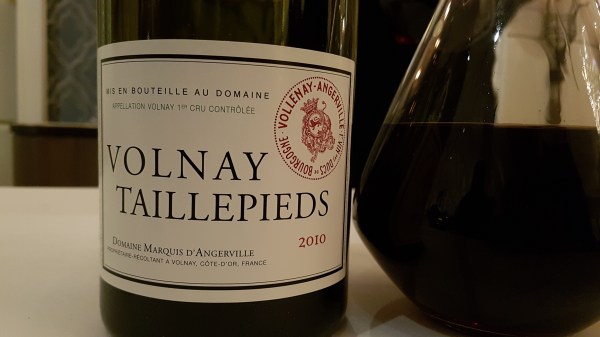
2010 Domaine Marquis D’Angerville Volnay Taillepieds 1er, poured from magnum. Lifted complex aromas of red fruits, raspberries and dark cherries, very lovely with great subtlety, leading to a delicious palate that displayed great definition, focus and balance, laced with sublime acidity with an understated presence that added to its natural balance. Supremely elegant and refined. Outstanding.
2004 Domaine Marquis D’Angerville Volnay Taillepieds 1er, poured from magnum. More complex and developed on the nose with aromas of feminine fragrance, dark roses and camphor with a mild herbal tone, weighty but gently layered, quite excellent in acidity and intensity of fruit though its heavier darker tone may not suit everyone’s idea of Volnay.
2009 Domaine de la Romanée-Conti Échezeaux Grand Cru. There is some early evolution of colour here with enticing aromas of ripe raspberries, cherries and dark roses amidst tobacco snuff and a hint of ember. Openly expansive, showing superb concentration and intensity of fruit with seamless integration of rich earthy minerals and sublime acidity, culminating in a superb lengthy glow. Highly successful.
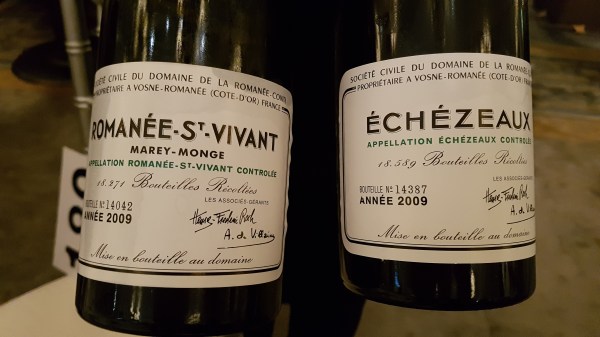
2009 Domaine de la Romanée-Conti Romanée-Saint-Vivant Grand Cru. Showing some evolution of colour, this wine exudes a mild earthy pungency amidst overtones of ripe dark fruit. Open, fleshy and seamlessly layered, rather subtle in nuances. Somewhat reserved and controlled at this stage. Best to lay down.
1992 Domaine de la Romanée-Conti La Tâche Grand Cru monopole, poured from methuselah. Clearly evolved but still showing good colour with a core of sexy tangerines amidst ripe raspberries, dark cherries, wild berries and dark currants that led to a highly detailed palate etched with very fine tannins, swathed in superb concentration and intensity of fruit, highly sensuous and exuberant with plenty of verve, becoming utterly seamless by the end of dinner. Far better than a recent tasting, also from methuselah poured at the 2017 Le Palais des Grands Crus in Paris, and still has the legs to carry on for many more years. Outstanding.
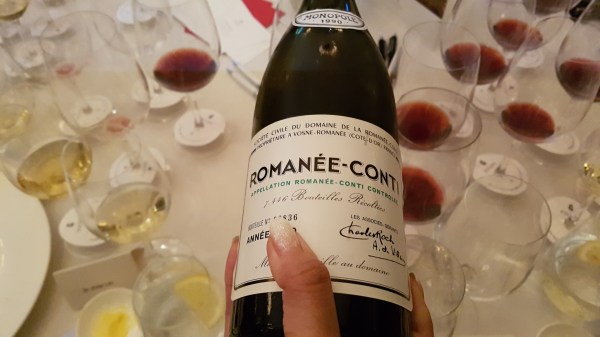
1990 Domaine de la Romanée-Conti Romanée-Conti Grand Cru monopole. Tasted with palpable anticipation, this wine surprised many with its Zen-like absolute refinement and sophistication. Opening with a deep gentle glow of complex fruits and tertiary nuances recalling aged raspberries and dark cherries with a distinct orangey core of citrus, it is still displaying excellent concentration and layering of fruit with fine detail and depth, utterly elegant and seamless with plenty of finesse, reserving its best for the finish as plush velvety textures offered a bed of exciting sexy tannins amidst understated acidity. I must say this 1990 Romanée-Conti has been caught right at its absolute peak and will hold for many more years. Thoroughly outstanding!
We concluded with a 2005 Château d’Yquem. Ubiquitous at FICOFI functions of late, this Sauternes displays superb depth of rich luscious crème de la crème, icing and nectarine with overtones of burnt honey and toast, seemingly developing at a glacial pace, still yet to evolve, drawing the evening to a reluctant close. This has truly been quite an evening of excesses. Thank you, FICOFI, for the immaculate organisation.
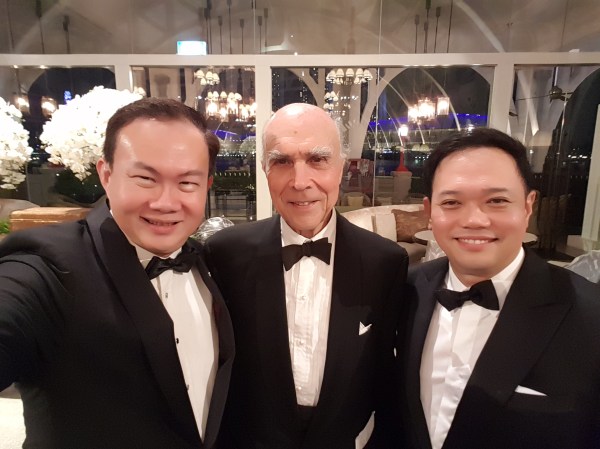
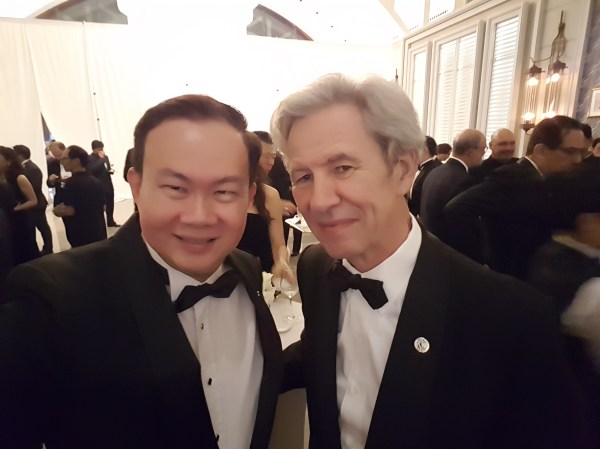
Aubert enjoys the occasional selfie
Restaurant Andre, Singapore.
Helmed by Taiwanese Andre Chiang who cut his teeth in Montpellier, Andre in Singapore has earned pole position as the leading modern French restaurant locally within the relatively short span of seven years since its inception in 2010. Restaurant magazine rates Andre amongst the “The World’s Best 50 Restaurants” while no less a publication than The New York Times has gone even further, proclaiming Andre as one of the “Top 10 Restaurants in the World Worth a Plane Ride”. The Singapore Michelin Guide appears to differ in opinion though, awarding Andre two stars (since the inauguration of the Guide in 2016) while Joel Robuchon at Singapore’s Sentosa Island has been plastered with three, the only establishment locally with that honour.
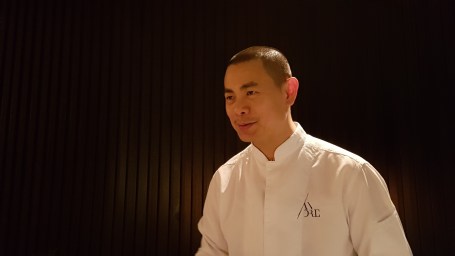
In Singapore, however, where everyone is blessed with discerning palates, nobody needs the Michelin Guide. And it seems everyone who has dined at Andre has had to struggle for superlatives to describe their experience. How does Andre do it? To secure a seat there, one needs to book at least four months ahead which is one of the reasons why I never bothered to discover what the fuss was about…until Andre himself caused a stir late in 2017 by announcing abruptly that the restaurant will be closing for good come 14 February 2018 and that he would, in future, decline to be featured in subsequent editions of the Michelin Guide. Now, that immediately set off a few thoughts: is Andre pissed at not being awarded 3 stars? Is the pressure of having to consistently satisfy lofty expectations getting to him? Or has he already achieved his goals with nothing further to prove? But for foodies, the pressing question is: should one secure a table at all cost before it disappears forever, bearing in mind that from the time Andre dropped the bombshell until the last sitting on 14 Feb, dinner at Andre will cost a whopping SGD800 per head? It didn’t take us long to decide. We simply had to take the plunge to discover restaurant Andre for ourselves. A call to Centurion (thanks Vic!) ensured that we got the reservation on 17 January 2018.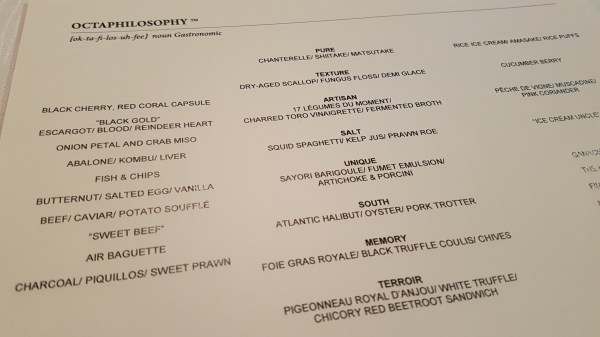
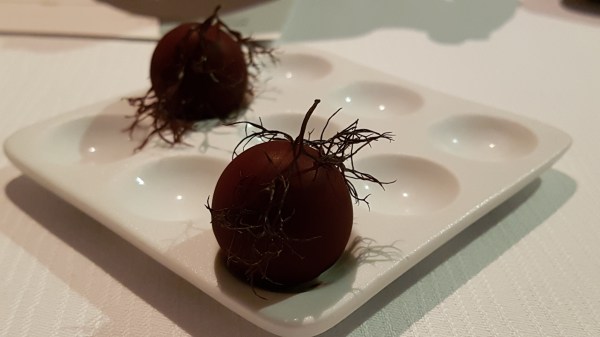
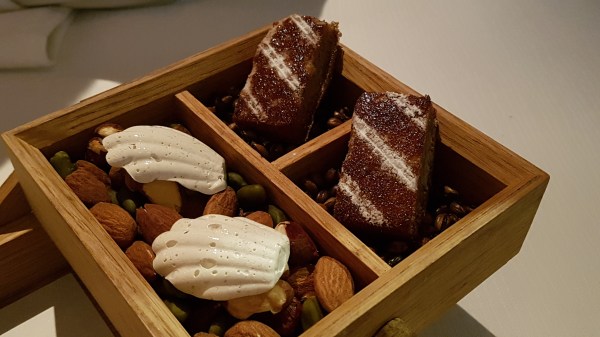
Exploding black cherry…an awesome start
Tucked within a long row of shop houses towards the tail end of Bukit Pasoh Road with its unassuming entrance somewhat recessed, one would most certainly miss Andre if you weren’t looking for it. Every expected guest was received at the door and led upstairs to the main dining hall which appears limited in capacity. The SGD800 farewell dinner menu comes with wine pairing, and the food consists of past and present favourites that Andre had rolled out over the years split into three categories of appetizers, mains and dessert.
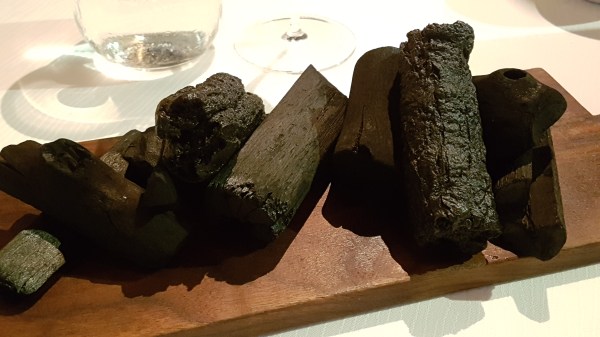
Classic you tiao that looks like charcoal
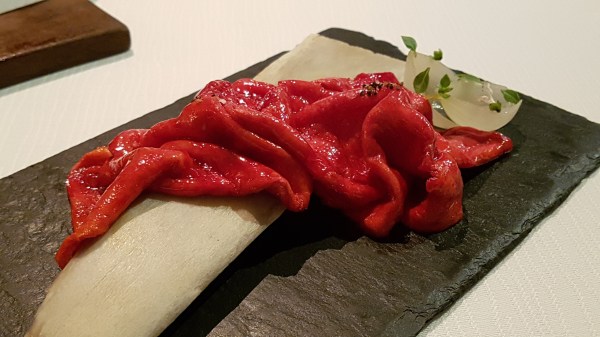
Dehydrated watermelon
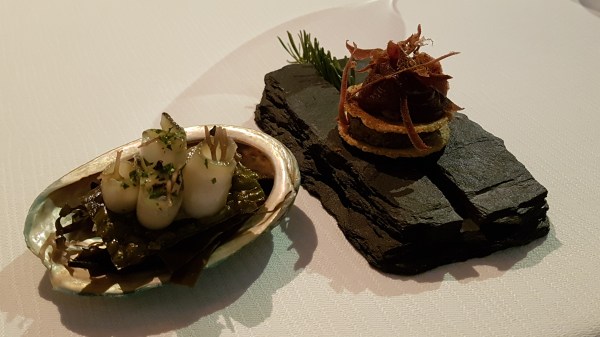
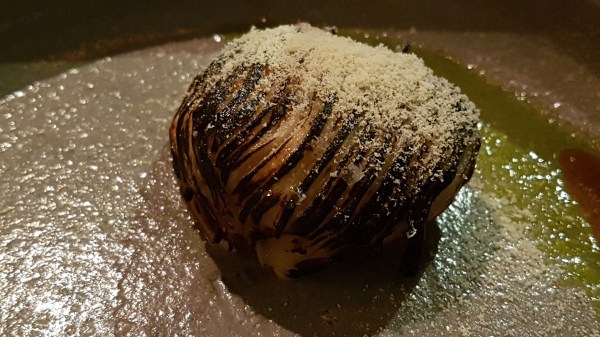
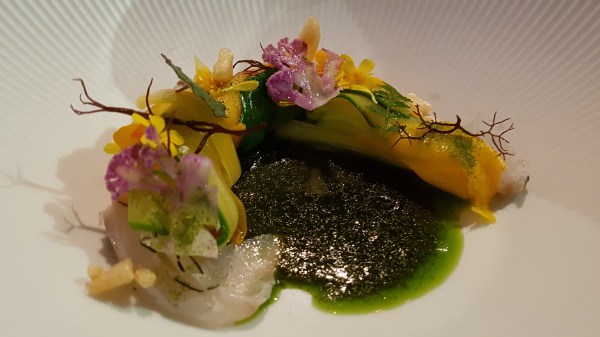
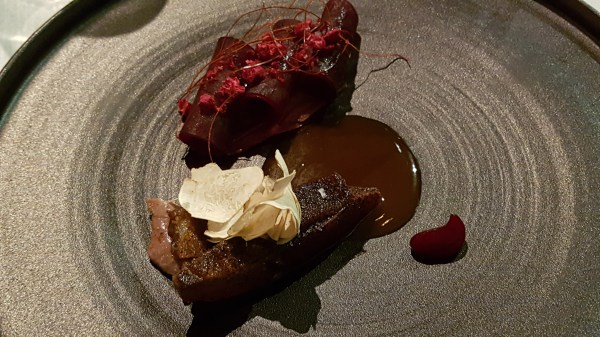
So how did it go? I’m not a food critic and I shan’t try to describe each individual course in detail. Suffice to say though, I same away mightily impressed. Some restaurants try too hard to pull off surprises to the extent that their culinary creations seemed contrived. At Andre, every creation is an effortless surprise and delight, beautifully presented yet unpretentious. There is no unnecessary deconstruction, so popular at other establishments but seldom proves the point. Whatever that is supposed to be eaten generally appears as it is. Rather, it is a case where textures, layering and flavours far exceed your expectations of the form. Such transfiguration of form to a much higher level without adulteration of flavours is where plenty of thought and effort has been spent on. The appetizers tease your palatal senses to no end. What appeared like beef carpaccio proffers vaguely familiar flavours in the mouth yet you cannot quite pin it, only to realise that is actually dehydrated watermelon! Ingredients have been carefully sought to complement the main food item for each course. Textures and flavours are fused seamlessly, never jarring the senses. Such was the subtlety and gentle progression that, in spite of the long degustation that lasted till almost midnight, our palates were never in danger of wear. A breakdown in the central air-conditioning was the only blemish of the evening. When the ambient temperature became appreciably too warm for comfort, the staff quickly installed several portable cooling units until the fault was eventually rectified.
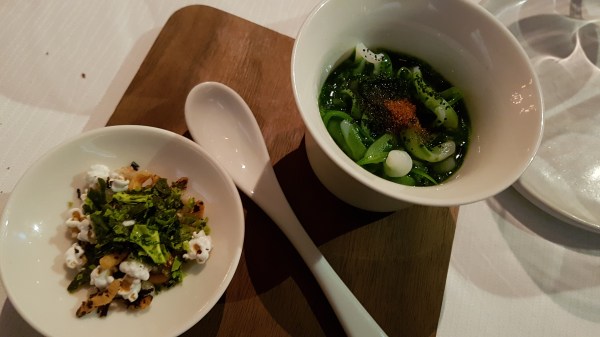
The wine pairing, I must say, was really well thought out, generous in scope and variety, offering wines from regions that one would usually not have ventured into. Here, the wine service was quite impeccable, the progression of flavours complementing the food in perfect unison with fresh stemware produced for each wine.
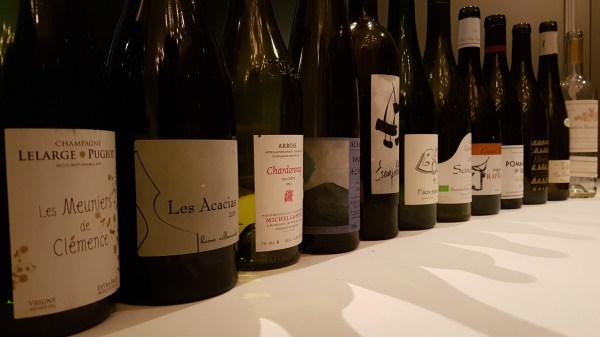
Champagne Lelarge Pugeot Les Meuniers de Clemence. A premier cru bubbly from Vrigny. Deep on the nose with toasty hues and yeasty tones, exploding with a brilliant burst of clear yellow citrus and crystalline minerals on the palate, excellent in concentration with attractive complexity yet sufficiently delicate, finishing with lasting intensity that imparted a superb stinging mouthfeel. Excellent.
2015 Herve Villenade Les Arcacias. This wine from the Loire Valley, though somewhat darker in hue than expected, displayed light tones of grassy elements with lifted aromas of sweet tropical fruits amidst overtones of ginger, recessed chalk and aged crème, excellent in intensity and concentration with a bit of sharp acidity, becoming more relaxed over time. Quite excellent.
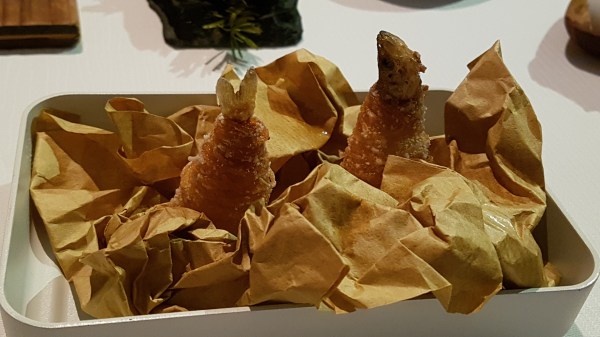
Fish & chips
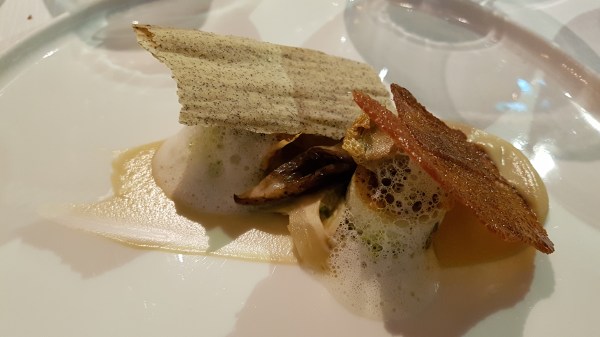
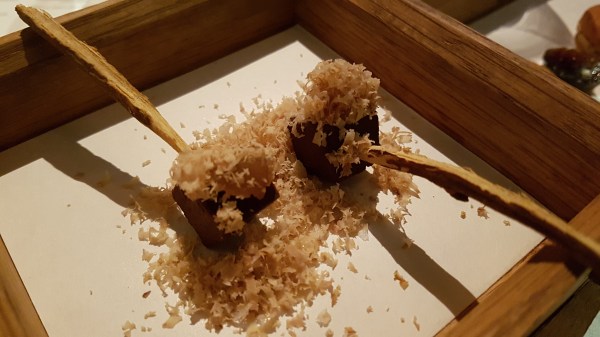
2013 Michel Laghere Arbois Chardonnay Les Crets. Gentle aromas, slightly subdued, but explodes on the palate with brilliant white citrus and floral tones, layered with subtle acidity, showing excellent linearity and length. Very fine.
2006 Hubert & Heidi Hauscherr Vague A L’ame Sunngass. Lovely tones of petroleum diesel, quite expansive, displaying good concentration and integration with some gentle sweetness on the sides.
2015 Domaine L’Escarpolette Escarpolette. A wine from the Languedoc made by Ivo Ferreira with quite a cult following, this is a blend of 60% Cinsaut and 40% Carignan. Usually picked before full ripeness in a bid to maintain freshness, this wine has a forward balance of aged tropical fruit with superb complexity amidst characters of raw earth, sweet incense, peaches and bark. Intriguingly refreshing.
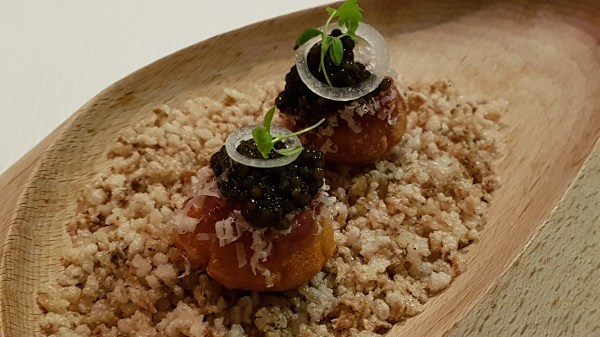
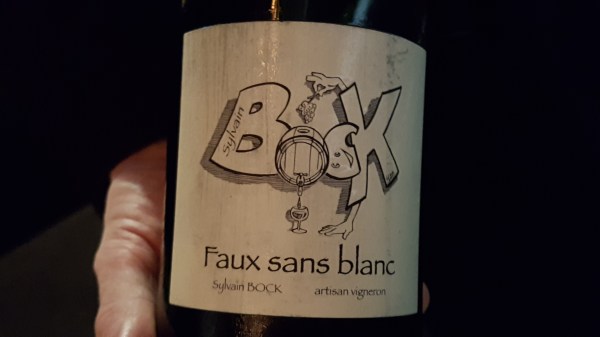
2015 Sylvain Bock Faux sans blanc. This estate produces natural wine (whatever that means) from the Ardeche region of southern France, this particular example being a blend of two-thirds chardonnay and the remainder grenache blanc, vinified most unusually in fibreglass tank. Exuding enticing aromas with a teasing quality, this full-bodied wine shows excellent concentration of fruit with notes of icing, white flowers and burnt cider, displaying good depth and intensity of flavours. Excellent.
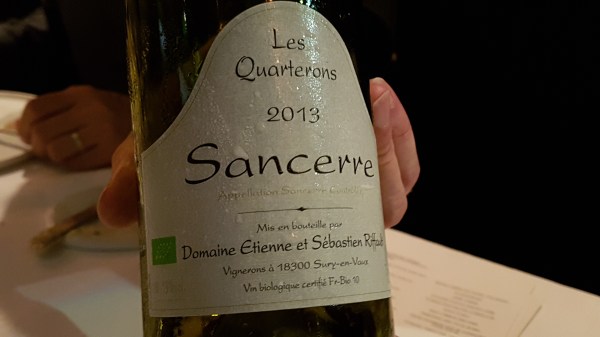
2013 Domaine Etienne & Sebastian Rifaud Sancerre Les Quarterons. Lovely gentle sweet aromas on a light-medium palate, displaying light tangerines with good acidity and intensity, well structured.
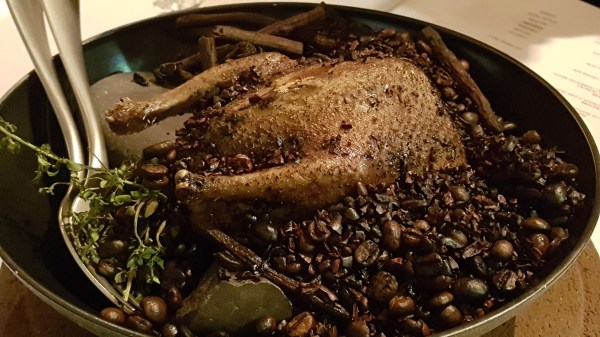
2010 Domaine de Rapatel Cuvee Nadege. Also from Languedoc, this wine is shut, rather one dimensional though superb in concentration and intensity with a rustic feel of aged creme and seaside minerals.
2013 Decelle Villa Morey-Saint-Denis. Dark cherries dominate on the nose though the open fleshy palate is brightly lit with fine intensity and detail with fresh acidity, highly supple, finishing well.
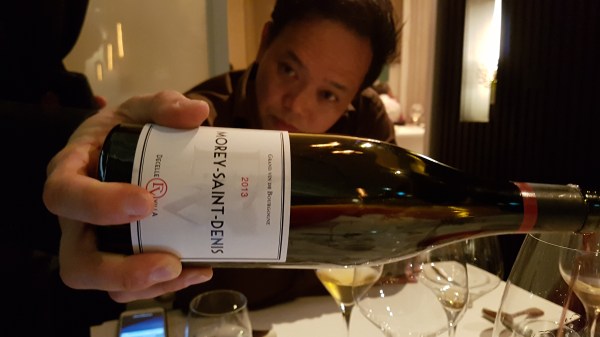
2015 Monts & Merueil Syrah also from Languedoc. Deep dark opague purple, exuding a gentle earthy pungency amidst fragrant dark roses and cherries, rather bright with good concentration and intensity with silky textures enhanced by finely grained tannins.
2000 Ch Tour Grise Les Etourneaux. From the Saumur appellation of the Loire Valley, this wine displays characters of aged plums, raw nutmeg, oriental and medicinal spices and herbs, rather dry in texture with overtones of rye and malt. Drinking well.
We concluded with a rich, smooth and luscious 2004 Vignoble Rousset Peyraguey from Sauternes, displaying smoky tones with characters of aged nectarine and apricot. I only realised at the end that we’d drunk twelve different wines, each generously re-filled throughout the evening.
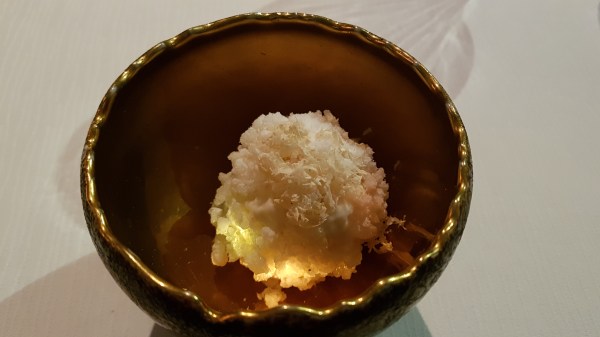
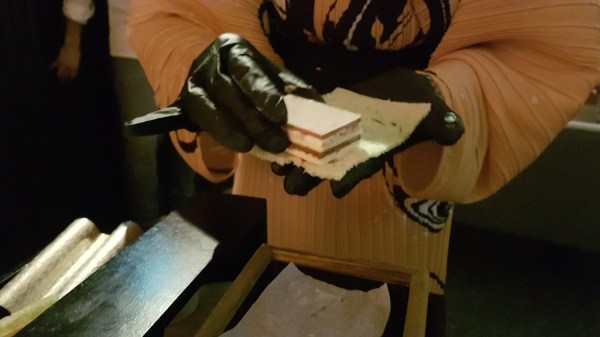
Andre pays tribute to the local ice-cream uncle…a nice touch
Now that I have dined at Andre, I must say it truly deserves its accolades. The food is highly original in its invention, showing off well the master chef’s special talent for combining the right ingredients within the right context such that the whole well exceeds the sum of its parts. In fact, I don’t think I have come across any other top restaurant in my (limited) dining experience that has managed to combine the elements of food, ingredients, imagination and invention with such fluidity, uniqueness and understated flair. If there is an area that may do with further refinement or improvement, it would perhaps be in the area of service where I feel a more relaxed but well-informed kind of engagement with diners (especially regulars who return) works much better compared with a rehearsed but stuffy and hesitant presentation. I know, good staff is hard to come by these days. In fact, Andre the man himself is a highly engaging person, and one can easily see that he really enjoys spending time at the tables talking not only about his food, but just about anything under the sun.
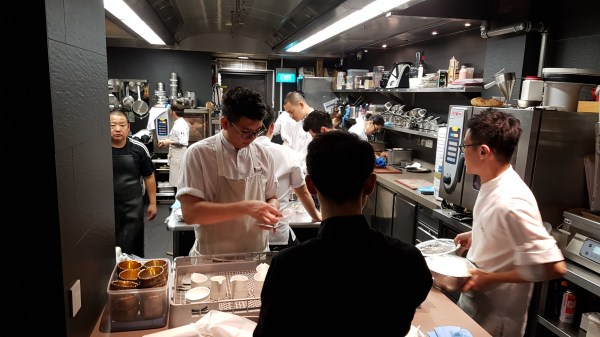
Hardworking staff inside the small kitchen of Andre
In my books, the food at Andre is clearly worth three Michelin stars, no question about that, but it would be absolutely perfect if the supporting staff could loosen up and show that they really enjoy what they do as much as Andre himself does. Sad to say though, the best restaurant in Singapore will no longer be around after 14 February 2018. Dining there had been a distinct privilege and I had enjoyed my experience. Our best wishes to you Andre. We know you’ll be back with a different restaurant later at 41 Bukit Pasoh Road. For sure we’ll be back.
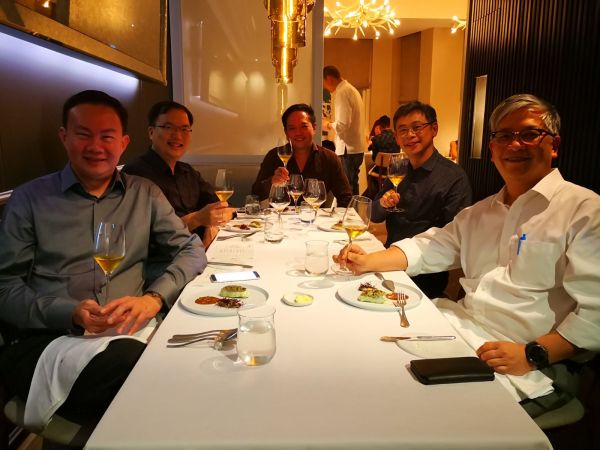
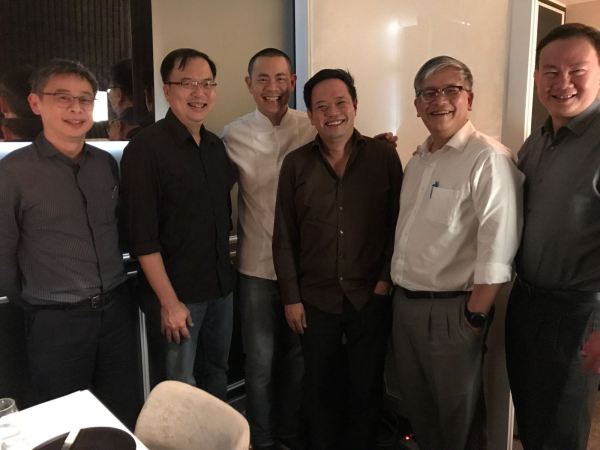
Many happy returns, Dr Ngoi !
Last year, the great man threw a big party to mark the successful completion of the five elements of his zodiac. A year on, we took the initiative to wish the great man many happy returns on the afternoon of 15 Jan 2018 at Jade Palace, where LF had arranged a superbly customised menu, matched only by one of the most outstanding line-up of wines in recent memory with impeccable wine service that is legendary at this favourite dining venue of many.
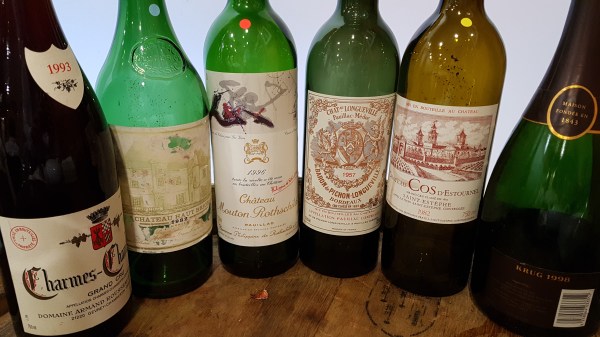
 We began with a 1998 Krug (courtesy of LF), displaying a lovely hue that brought on notes of intense clear citrus and lime with mild yeasty tones, quite gentle on the palate initially with a broad expanse of excellent acidity and concentration before bursting with brilliant crystalline minerality, developing superb depth with more toasty characters emerging to the fore. Compared with a previous tasting six years ago, the 1998 Krug has shed its brazen dryness, now a far more sophisticated and profound proposition though it has yet to peak. Superb.
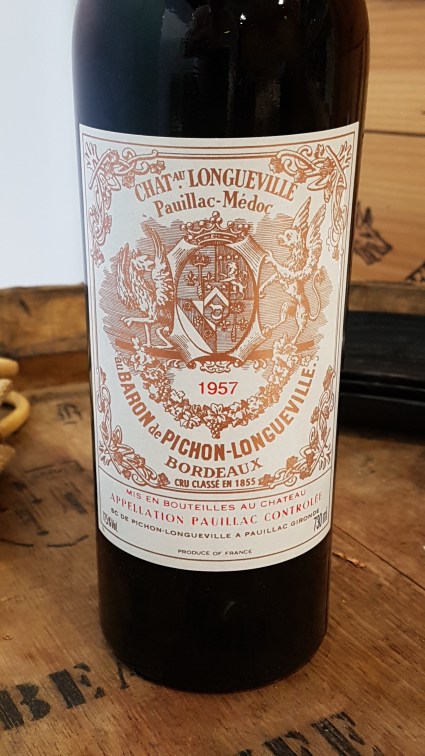
The highlight of the afternoon must belong, literally, to the birthday wine, a 1957 Ch Pichon Baron Longueville, brought by the man himself. Still looking remarkably youthful in bottle and colour, this wine possessed a most beautiful bouquet of earthy characters and dry tea leaves with an aged feel while the palate boasts gentle notes of snuff, distant red fruits, dark plums and tangerines, rather soft, fleshy and rounded though the fruit began to fade a little after an hour, turning more distant and backward amidst overtones of dried mushrooms. Slightly past maturity but it probably still has the legs to hang on for quite some time. What a privilege!
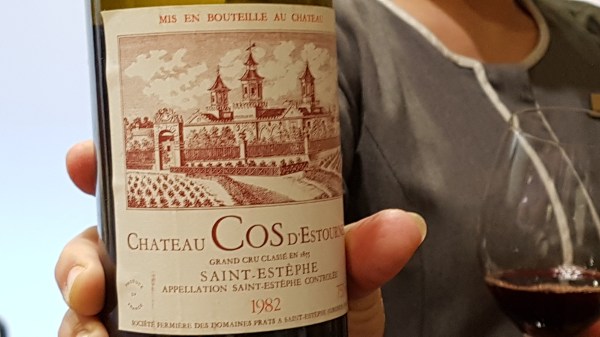
The 1982 Ch Cos D’Estournel that followed (courtesy of Hsiang Sui), though undoubtedly mature, still retained an attractive tarry quality with a rich abundance of ripe dark berries and currants on the nose and palate, showing superb concentration and depth with plenty of verve, rounded with delicious tannins and understated intensity. At its peak but seems likely to hold in this manner for another decade or two. Superb. In contrast, the 1996 Ch Mouton Rothschild (courtesy of Sanjay, decanted on-site), still deep, dark and impenetrable, was absolutely reticent on the nose for quite some time before eventually revealing some notes of soy and dark plums though the palate is quite the exact opposite, infused with fabulous concentration of dark currants and dense black fruits, full-bodied with subtle dark intensity that imparted a huge sense of depth and layering, yet to unravel its full potential. Like its 1986 predecessor, this wine will take forever to evolve. Amazing!
Following on was a 1982 Ch Haut-Brion (courtesy of MH) that exuded a superb bouquet of earthy pungency cloaked in velvety tannins., imbued with delicious dark currants and blackberries that glowed with fine intensity, fleshy and open, still laced with fresh acidity though just a tad short. To round off, Li Fern produced a 1993 Domaine Armand Rousseau Charmes-Chambertin Grand Cru that appeared well evolved in colour, evoking lovely characters of rose petals and red cherries with an enticing fragrance, layered with dark cherries and currants on an open palate cloaked with velvety tannins, displaying great power and intensity of flavours, more masculine and structured than usual for a Charmes-Chambertin, bringing this most memorable lunch of six superb wines to a wonderful conclusion. Happy birthday Boss!!
Short notes from France
These are miscellaneous wines tasted during our trip to Burgundy from 18-26 November 2017, outside of visits to various domaines…
2013 Domaine Hubert Lamy Saint-Aubin 1er Clos de La Chanterie VV, plucked from the list of L’Asperule in Auxerre, en route from Paris to Beaune, 18 Nov 2017. Lovely hue, exuding rich overtones of creme de la crème, chalk and incense whilst the palate possesses a very clean feel of clear crystalline quality and gentle floral lift, finishing in a lengthy minerally glow. Excellent.
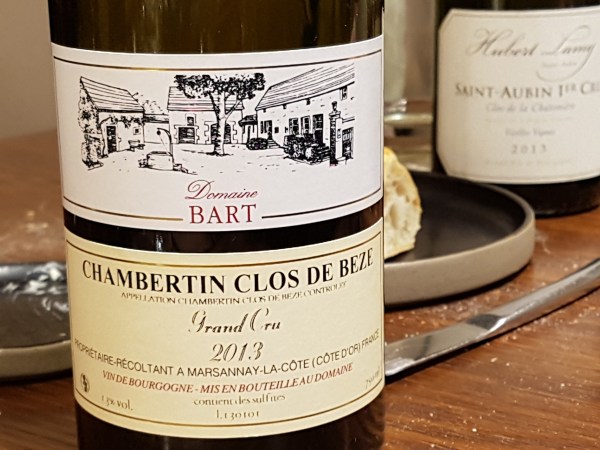
2013 Domaine Bart Chambertin-Clos de Beze Grand Cru, plucked from the list of L’Asperule in Auxerre, en route from Paris to Beaune, 18 Nov 2017. Good colour with a delicate lovely fragrance of raspberries, dark cherries and rose petals. Medium-bodied, surprisingly open and gentle, slightly recessed initially, gaining better weight and intensity after some aeration, finishing with good balance and refinement.
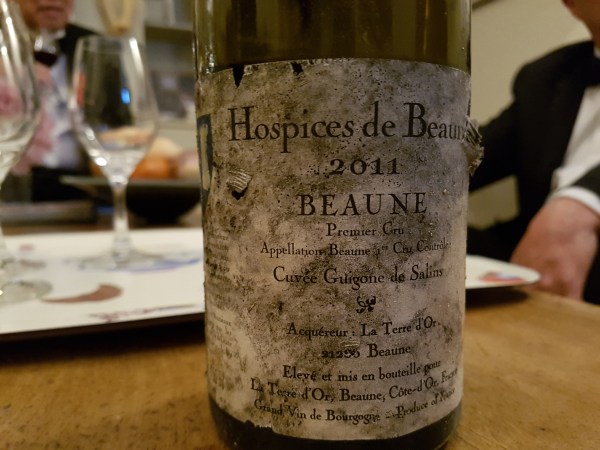 2011 Hospices de Beaune Beaune 1er Cuvée Guigone de Salins, courtesy of Vincent Martin of La Terre d’Or, drunk at its premises in Beaune, 18 Nov 2017. Raspberries, mulberries and strawberries dominate on the nose, medium-bodied with good acidity but missing in true depth and layering, tinged with traces of green.
2012 Vincent Girardin Saint-Aubin Les Murgers des Dent de Chien 1er, from the list of Bistro de L’Hotel, Beaune, famous for its whole roasted chicken Bresse, 19 Nov 2017. Crème, icing and complex minerals dominate with expressive richness, tight at first but loosening up to reveal excellent fullness, detail and structure, turning more minerally over time with fair intensity. Excellent.
2014 Benjamin Leroux Saint-Aubin Murgers des Dent de Chien 1er from the list of Bistro de L’Hotel, Beaune, famous for its whole roasted chicken Bresse, 19 Nov 2017. Compared with the Vincent Girardin (albeit from different vintages), this wine is more poised and reserved, more minerally with good concentration of clear citrus, rounded and crisp with smoky tones. Very well balanced.
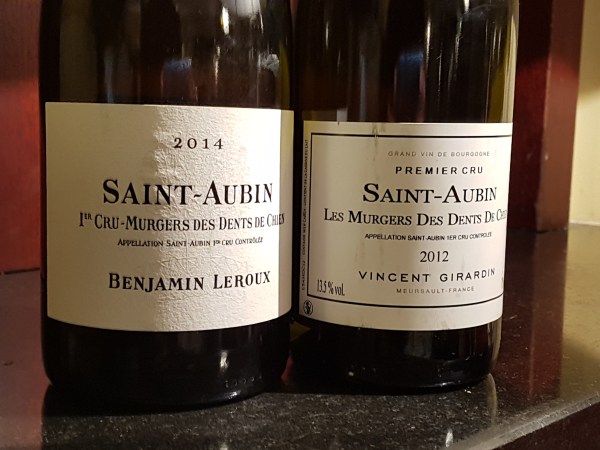
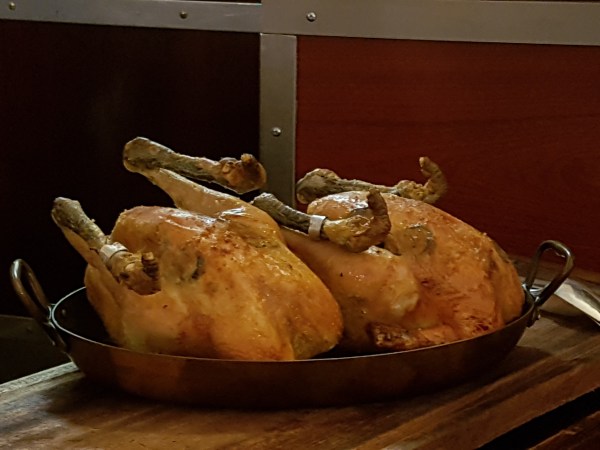
2013 Joseph Drouhin Chambolle-Musigny 1er, poured from magnum at Bistro de L’Hotel, Beaune, famous for its whole roasted chicken Bresse, 19 Nov 2017. Deep tone of ripe dark cherries, camphor and earth, carrying good weight with tight tannin structure. Rather straightforward in character, though.
2015 Domaine Pierre Amiot et Fils Bourgogne Blanc, over a home-cooked dinner at La Terre d’Or, Beaune, 21 Nov 2017. Lifted notes of pears and gentle tropical fruits with lychees, open with good body and presence, showing reasonably good depth and freshness.
2016 Domaine des Lambrays La Rose Du Clos Bourgogne, over a home-cooked dinner at La Terre d’Or, Beaune, 21 Nov 2017. Reticent, showing just some gentle orangey tones and grapefruit. Unremarkable.
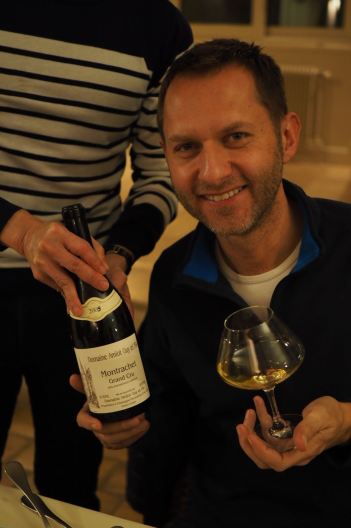
Fabrice Amiot with his 2009 Montrachet Grand Cru
2011 Domaine Pierre Amiot et Fils Morey Saint Denis Les Millandes 1er, over a home-cooked dinner at La Terre d’Or, Beaune, 21 Nov 2017. Deep red with an abundance of dark fruits, stern minerals and crisp acidity, highly intense, though rather dry, shorn of fat.
2011 Domaine des Lambrays Clos des Lambrays Grand Cru, poured from magnum over a home-cooked dinner at La Terre d’Or, Beaune, 21 Nov 2017. Gentle aromas of deep dark cherries and wild berries. Fleshy but lacking in opulence on the palate, marked by dry intensity, spice and earthy tones. Better over time but still uninspiring.
2009 Domaine Amiot Guy et Fils Montrachet Grand Cru (courtesy of the domaine owner and winemaker himself, Fabrice Amiot, who came in person), over a home-cooked dinner at La Terre d’Or, Beaune, 21 Nov 2017. Rich tones of creme de la crème with some chalkiness and early complexity on the bouquet, though there is an unexpected disconnect with the palate that is still tight and reticent with fruit that is set rather backward, showing mainly minerally tones and icing but not much else, rounded with regal elegance but aloof. Probably going through an awkward phase. Needs time to unravel itself.
2013 Domaine Jacques-Frédéric Mugnier Nuits-Saint-Georges 1er Clos de la Marechale, over lunch from the list of Le Millesime, 22 Nov 2017, located adjacent to Domaine J-F Mugnier itself in Chambolle-Musigny. Deep purple, slightly opaque. Medium-bodied. Fresh, open and supple with excellent concentration of ripe raspberries and cherries. Delicious.
2014 Domaine Jacques-Frédéric Mugnier Nuits-Saint-Georges 1er Clos de la Marechale, over lunch from the list of Le Millesime, 22 Nov 2017, located adjacent to Domaine J-F Mugnier itself in Chambolle-Musigny. Delicious aromas of red fruits with a prominence of delicate tangerines and lemon, more minerally on the palate than outright fruit, displaying good balance, freshness and depth, exuding a beautiful glow after some time, finishing with fine detail and supple tannins. Lovely.

Domaine Jacques-Frédéric Mugnier
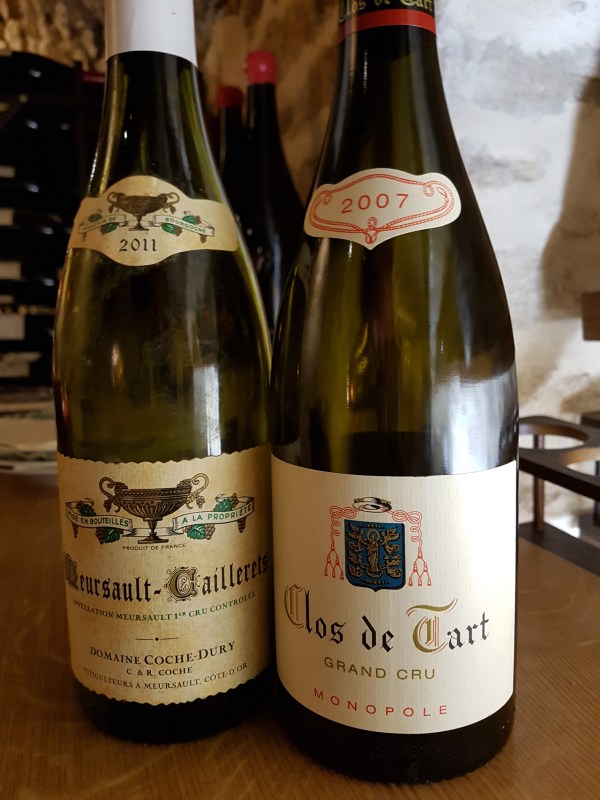
2011 Domaine Francois Coche-Dury Meursault-Caillerets 1er over dinner, plucked from the list of Le Conty, Beaune, 22 Nov 2017, a bistro with a superb wine list strewn with all the great burgundies. Expectations are high for any Coche-Dury and this wine doesn’t disappoint, proffering a rich bouquet of crème de la crème, white flowers and icing with gentle gravelly minerality, displaying lovely concentration and focus of clear delicate citrus held in fine balance with characteristic fine fleeting intensity that seems to be a hallmark of this producer, gaining steadily in weight and proportion over time with glowing detail, almost ethereal, maintaining well its delicacy and depth throughout, finishing with great length. Truly outstanding.
2007 Domaine du Clos de Tart Clos de Tart Grand Cru over dinner, plucked from the list of Le Conty, Beaune, 22 Nov 2017. Lovely bouquet of rosy fragrance that led to a rich oily mid-body, showing very good concentration of fruit with gentle intensity, highly elegant, becoming more lifted and aromatic over time. Excellent.
2015 Domaine du Château de Meursault Clos du Château, drunk over a home cooked meal, 23 Nov 2017. Great freshness with attractive crème and chalky tones, showing plenty of fat in the mid-body underscored by crystalline minerality.
2011 Chateau de Meursault Volnay Clos des Chenes 1er, drunk over a home cooked meal, 23 Nov 2017. Generally dark in tone with a generous spread of dark plums, supple with good acidity.
2012 Domaine Dureault Mercurey 1er Clos Voyens, 24 Nov 2017, drunk outdoors at a picnic at the hilltops of St Romain in the countryside surrounding Beaune. Fresh in cool dark cherries and strawberries, soft and rounded with supple acidity and subtle tannins. Delicious.
2015 Domaine Roulot Meursault Meix Chavaux, over lunch from the list of Le Cellier Volnaysien in Volnay, 24 Nov 2017, a spacious and charming venue. This wine displays a lifted bouquet of light tropical fruits, rich in creme, delicate citrus and finely-grained minerals, open, well-layered and rounded, developing good complexity by the final pour. Excellent, as usual, from this producer.
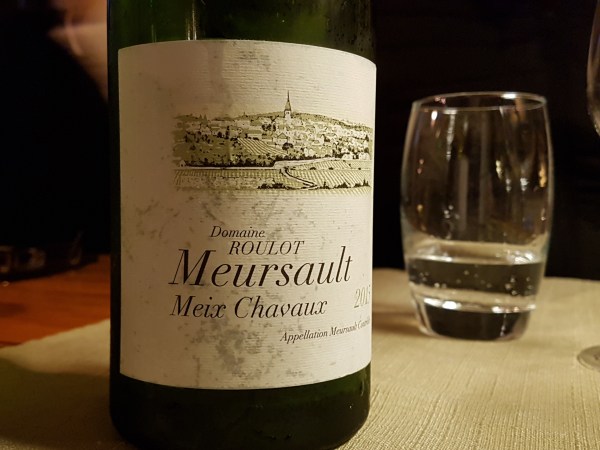
2015 Alex Gambal Saint-Aubin Les Murgers des Dent des Chien 1er, over dinner from the list of Ma Cuisine, Beaune, 24 Nov 2017. This wine proffers soft floral aromas that grew in intensity over time with a deep minerally streak, matched by notes of pomelo, clear citrus and bitter lemon of fine intensity, opening up with good detail though losing a bit of focus at the short finish.
2005 Remoissenet Bienvenues Bâtard-Montrachet Grand Cru, over dinner from the list of Ma Cuisine, Beaune, 24 Nov 2017. Good colour, exuding lovely aromas peaches, lychees, nectarine and aged crème, showing some evolution with good concentration and depth of fruit, subtle in intensity with fine definition, more expansive over time, culminating in a spicy glowing finish. Excellent.
1967 M. Dudet Naudin Corton Grand Cru (courtesy of Dr Ngoi) over dinner from the list of Ma Cuisine, Beaune, 24 Nov 2017. Still quite dark in colour, exuding great pungent earthiness along with aged red plums and game, still fullish with good concentration and fine acidity, better over time with further notes of tangerines though still short.
1967 Louis Voilland Corton Grand Cru (courtesy of Dr Ngoi), over dinner from the list of Ma Cuisine, Beaune, 24 Nov 2017. Equally dark as the Dudet Naudin above, remarkably similar in character as well though more pronounced in earthy pungency, slightly sharper in focus, displaying an evolved tone of dark plums, lychees and sweet melted tannins, short initially but gradually growing in lovely intensity and breadth. Excellent, and what a privilege it has been to have tasted these two grand dames side-by-side.

2013 Domaine de Haut Marchand, at the bar of Les Pavillon des Lettres, Paris, 25 Nov 2017. Hailing from Montagne, Saint-Emilion, this wine proffers dark red plums, wild berries and dark fruits on the nose and palate, showing good concentration and intensity with fine acidity and balance, slightly dryish in texture, finishing with gentle sweet tannins. A good drop.
2014 Domaine Jean Claude Bachelet & Fils Saint-Aubin Les Charmois 1er, over dinner from the list of the 2-Michelin-starred La Clarence, Paris, 25 Nov 2017. Rich and creamy with a gleaming tone, quite glorious, displaying superb concentration and intensity of delicate clear citrus, excellent in depth with well-defined minerals and some early complexity, maintaining great power, delicacy and poise throughout. Outstanding.
2013 Claude Dugat a La Gibryotte Charmes-Chambertin Grand Cru, over dinner from the list of the 2-Michelin-starred La Clarence, Paris, 25 Nov 2017. Deeply aromatic with a forward balance of ripe dark cherries and raspberries, layered with glorious fruit and graphite minerals of fabulous intensity with seamless acidity though yet to develop. Excellent.


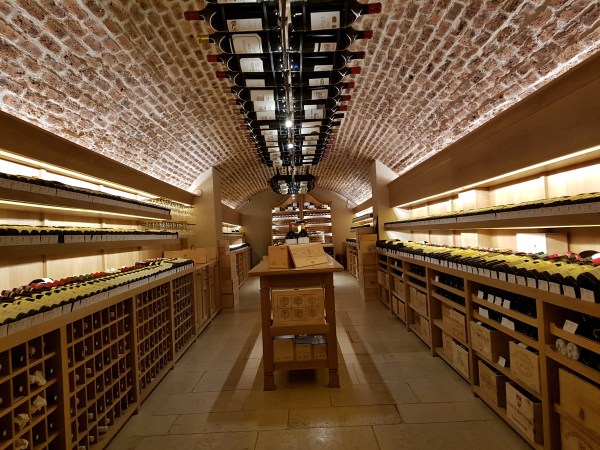
The cellar of La Clarence, Paris Notice the large format bottles hanging from the ceiling.
Nov & Dec 2017: 1986 Ch Lafite Rothschild, 1999 Dom Armand Rousseau Chambertin, 1999 Abreu, 1999 Comte de Vogue Musigny, 1978 Leoville Las-Cases
I can’t believe how much I had eaten and drunk in the final two months of 2017…these are miscellaneous notes outside of major or formal events…
2012 Ch Tour Massac, house pour of Tanglin Club at a company dinner hosted by Stephen Co, 08 Nov 2017. Character in keeping with traditional Margaux, proffering a minerally nose of graphite and earthy elements matched by attractive red currants and rose petals, showing good concentration and smooth textures though finishing with traces of green .
2015 Le Petit Chevalier Blanc, at Crystal Wines megasale tasting, 11 Nov 2014. Attractive forward balance of crisp citrus, white flowers and mild chalky tones, refreshing with good lift and plenty of verve, slightly sweet at the sides.
2012 La Chapelle de La Mission Haut-Brion, at Crystal Wines megasale tasting, 11 Nov 2014. Earthy tones, forest floor, redcurrants and woody characters dominate, displaying good intensity and acidity though its fruit is somewhat subdued and backward, rather tight and minerally, finishing with sweet tannins. Not convincing.
2013 Ch Le Crock, at Crystal Wines megasale tasting, 11 Nov 2014. Forward balance of red fruits and raspberries, medium-bodied with camphor and rose petals, gentle but reserved.
2014 Domaine Hubert Lignier Bourgogne Rouge, at Crystal Wines megasale tasting, 11 Nov 2014. Good colour, revealing delicate red fruits of gentle intensity and gorgeous acidity, seamless with good linearity and lovely balance though not much in terms of structure.
2014 Kim Crawford Sauvignon Blanc, at the SilverKris Lounge of Singapore Airlines, Changi Airport T2, 12 Nov 2017. Highly aromatic with a wild exuberance of white flowers, yellow citrus, sweet tropical fruits and nectarine, almost full-bodied with great vigour and freshness imparted by its dense citrus tones and controlled acidity, finishing well with a trace of stern pomelo. Highly reliable and successful.
2015 Albert Bichot Saint-Veran, at the SilverKris Lounge of Singapore Airlines, Changi Airport T2, 12 Nov 2017. Almost reticent, proffering just traces of citrus and clear minerals, equally reserved as well on the palate with its backward character, again with only traces of citrus fruit towards the back palate. Seemingly undistinguished, but another glass tasted on board SQ336 Business Class on 18 Nov 2017 was considerably better, more forward with better presence, character and intensity. Bottle variation, or was it a matter of differences in atmospheric pressure??
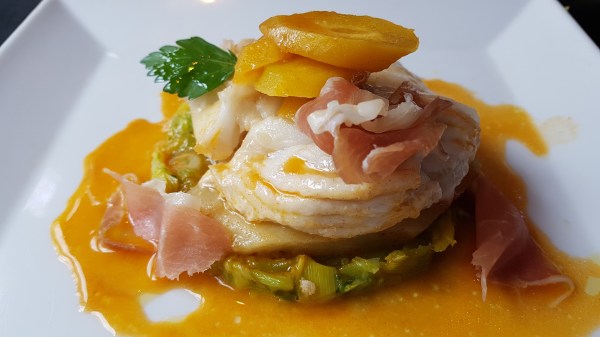
Poisson…at Bistrot du Sommelier, Paris
2001 Leroy Meursault 1er Blagny (courtesy of Stephen Co), at Jade Palace, 14 Nov 2017. Somewhat reticent at first, displaying notes of light morning dew and some lemongrass with a resinous quality. Over time, it developed a great expanse and fullness with a delicate flinty minerality but slightly reductive, losing a bit of focus towards the finish before turning increasingly delicate with delightful deftness though it is paradoxically fuller and richer. Amazing!
1996 Ch Palmer (courtesy of Chee Wee), at Jade Palace, 14 Nov 2017. From its discouraging appearance – a dark opague rusty sheen – one wouldn’t have believed that this wine could proffer such a beautiful hallowed glow of dark berries and delicious dark currants, open with excellent definition and lovely freshness brought on by a deep vein of sublime acidity that culminates in a great tensile tone, fleshy and utterly seamless across its entire length, turning more and more effusive in its bouquet over time with a finish that never seemed to end. Fabulous stuff!!
2009 Peter Michael Les Pavots (courtesy of Kieron), at Jade Palace, 14 Nov 2017. Reticent, just showing some blueberries and sweet dark berries on the nose, though a lovely deep streak of ripe berries cuts across the palate with searing intensity and great succulence, rich in nuances of cedar and dark currants, positively glowing, developing even greater biting intensity and tightness over time, taking on a glossy sheen of dark prunes and blueberries that’s unmistakably New World. Huge potential here but far from ready.
2003 Domaine du Pegau Reservee at Jade Palace, 14 Nov 2017. Darkly opague with some evolution, imbued with gloriously ripe dark fruits with attractive overtones of earth and incense. Rich, expansive and succulent, displaying great acidity and tannins that are highly supple, culminating in a long slow glowing finish. Superb.

2010 Domaine Ponsot Morey-Saint Denis Les Alouettes 1er, from the list of Iggy’s bar, 14 Nov 2017. Good pinot tint with some evolution, exuding intense aromas of camphor, dark cherries and bright red fruits. Rounded and fleshy with lovely acidity and fullness, quite seamless, developing a brighter tone over time, richer with a more glossy sheen yet remaining understated in power. Excellent.
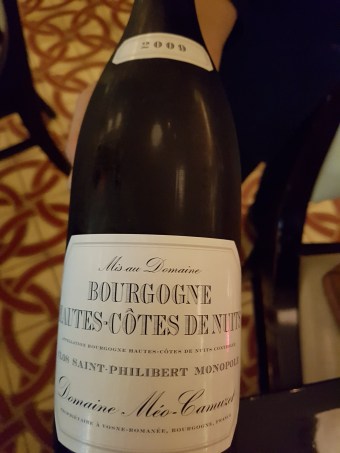 2009 Domaine Meo Camuzet Bourgogne Hautes-Cotes de Nuits Clos Saint-Philibert monopole, courtesy of Dr WKW, plucked from the list of db Bistro, Marina Bay Sands, Singapore, 16 Nov 2017. Light floral tones on the nose lead to a gentle note of crème with characters of faint morning dew on a palate glowing with lovely chalky intensity, excellent in complexity, depth, detail and freshness, finishing with icing and mint. Quite superb.
2012 Ben Glaetzer Bishop, tasted at the First Class lounge of Changi Airport T3, 18 Nov 2017. Big, bold and balanced, exuding a very deep bouquet of dark plums, black fruits and dark cherries, highly supple, displaying great verve and acidity, oozing with sweet dark tannins. Great choice!
2002 Piper Hiedsieck Rare, tasted at the First Class lounge of Changi Airport T3, 18 Nov 2017. Do not be misled by the mild bouquet of gentle yeasty tones and subtle minerals, for the palate is brazen with bone-dry intensity of crisp yellow citrus, very tight, finishing with bitter lemon and slight ferrous trace.
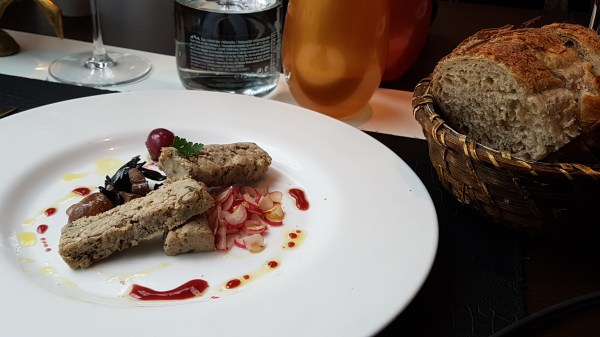
Bistrot du Sommelier, Paris
Charles Heidsieck Brut Reserve NV, on board SQ336 Business Class SIN-CDG, 18 Nov 2017. Brioche, honeysuckle and yellow citrus dominate with mild yeasty tones and chalkiness, slightly dry but refreshing, well balanced, finishing om a note of gentle sweetness but still tight.
2016 Wairau River Sauvignon Blanc, on board SQ336 Business Class SIN-CDG, 18 Nov 2017. Dryish with grassy elements amidst tones of wet heat, earth and chalk, covering the palate with broad expanse of white flowers, finishing with great freshness and vigour.
2012 Ch Siaurac, on board SQ336 SIN-CDG, 18 Nov 2017. This Medoc wine is stuffed with good concentration of earth, mulberries and dark wild berries tinged with green elements and a good dose of ferrous minerals.

Sorry not wine…but SQ Business Class is cool
2015 Ch Haut Mouleyre, at the Star Alliance Lounge of Paris CDG, 26 Nov 2017. Strong hint of forest floor, undergrowth, dark fruits and currants dominate with good concentration and full plummy presence, finishing with spicy tones.
2014 Stonier Pinot Noir, on board SQ335 CDG-SIN, 26 Nov 2017. This wine is saturated with abundant cool fruit, showing red cherries, strawberries and light red fruits of superb ripeness, open with lovely transparency and feminine succulence. Excellent.
1978 Ch Leoville Las-Cases (courtesy of Nicolas Laurent), tasted blind at Otto Ristorante, 29 Nov 2017. Some evolution at the rim with a hint of bricking, exuding a delicious fragrance of red currants and dark cherries with a hint of dryness. Medium-bodied and well-rounded with good depth of fruit, displaying a deep core of orangey tangerines amidst a lovely spread of warm intensity throughout its superb length. Excellent, and still holding on well.
1996 Ch Grand-Puy-Lacoste, tasted blind at Otto Ristorante, 29 Nov 2017. Deep in colour with a bold savoury bouquet of sweet meats and dark cherries, full-bodied and expansive but still youthful, imbued with fabulous intensity of flavours amidst splashes of earthy minerals though without much of the classic Pauillac signature. May not have peaked. Excellent.
1990 Ch Ducru Beaucaillou (courtesy of Alex Olmedo), tasted blind at Otto Ristorante, 29 Nov 2017. Opague purple hinting at some evolution, dominated by a superb earthy pungency on the dryish nose and palate, medium-bodied, displaying good concentration and gentle intensity of fruit with predominant plummy tones, somewhat subdued towards the finish.
1998 Ch Latour-a-Pomerol, popped and poured at Wah Lok, 01 Dec 2017. Deep colour, exuding a deep bouquet of delicious dark currants, sweet black fruits and ripe wild berries. Medium-bodied and fleshy, open with notes of cassis and some lavender amidst secondary development, gelling together over time with a rich core of blackberries cloaked in svelte supple tannins, lovely in intensity with a fabulous earthy pungency though somewhat attenuated in depth. Quite excellent.
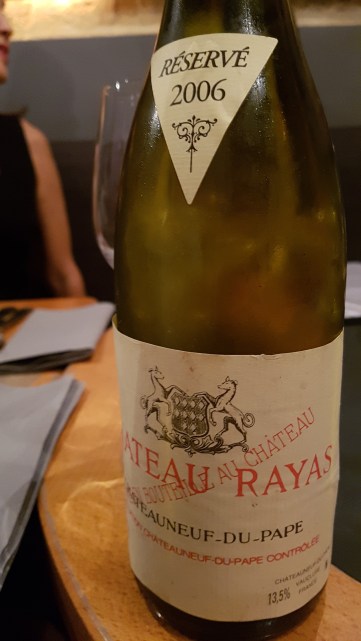 2006 Ch Rayas Chateauneuf-du-Pape Reservé Blanc (courtesy of Dr Ngoi) from the list of L’ardoise, Paris, over a late dinner, 09 Dec 2017. Lifted tones of icing, vanilla, cider and some lychees, developing a growing expanse and intensity of white floral tones and paraffin, excellent in concentration, finishing with a powerful spicy glow. Quite superb, but would be hard to place in a blind tasting.
2013 Domaine de Trevallon (courtesy of Chee Wee) from the list of L’ardoise, Paris, over a late dinner, 09 Dec 2017. Huge in concentration of dark fruits and black currants with smouldering ember and traces of licorice, tight and angular with crisp acidity and assertive tannins. Much more rounded and approachable after forty-eight hours of aeration in bottle, which says a lot.
2014 Domaine Theulot Juillot Mercurey Les Chenaults, at EUR66 from the list of Bistrot du Sommelier, Paris, over lunch on 11 Dec 2017. I have not come across this producer but what a revelation it turned out to be. Lovely in colour with generous creme de la creme and chalky tones, this wine displays superb intensity of fruit with just the right degree acidity, open with excellent detail, depth and delicacy. Outstanding. This superb dining venue has been renovated, now sporting a purple awning (instead of orange) while its dining space remains very limited.

2001 Ch Lagrange, popped and poured at Asia Grand, 16 Dec 2017. Very earthy tones of aniseed and graphite elements amidst dark currants and cool black fruits, darkly delicious and fleshy, displaying great presence and acidity. Very fine. Lagrange of Saint-Julien is always under-rated.
1996 Paul Aine Jaboulet Crozes-Hermitage Domaine de la Thalabert, aired in bottle for an hour at Song Garden, 18 Dec 2017. Deep fragrance of dark berries and red currants with a tinge of tangerines, fully mature, rounded and open with good acidity, more minerally towards the back palate, highly seamless though not profoundly deep. I have worked through almost half a case of this wine. At its peak now and will not improve further.
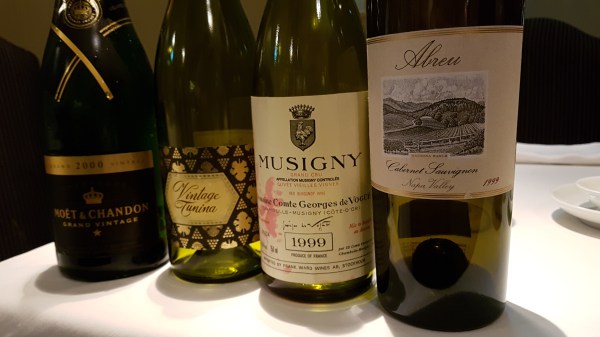
2000 Moet et Chandon Grand Vintage, courtesy of Stephen Co at Senso, 20 Dec 2017. Mild yeasty tones, open with fresh clear citrus and green fruits.
2007 Vintage Tunina, courtesy of Stephen Co at Senso, 20 Dec 2017. Deep golden hue, closed initially with just a resinous trace and reductive notes of crème and chalk, eventually developing emerging notes of nectarine and apricot, satiny smooth with lovely layering and understated acidity, recalling the gentle glow of meadows in full bloom. Excellent.
1999 Domaine Georges Comte de Vogue Musigny Grand Cru, courtesy of Kieron at Senso, 20 Dec 2017. Deep colour. Rather reluctant at first, showing only dark cherries and muted red fruits but gradually opened up well, turning more masculine with great body and presence, deeply layered in glorious fruit of superb intensity and structure. Outstanding but far from ready.
1999 Abreu Cabernet Sauvignon, courtesy of Stephen Co at Senso, 20 Dec 2017. Dark, deeply intense and brooding. Densely concentrated with a hint of licorice and hot stones, attacking the palate with brilliant intensity and sharp acidity though smooth in texture with subdued tannins, becoming more rounded and fleshy over time with plummy overtones. Fabulous potential, but far from ready.
2005 Clos du Marquis, decanted on-site at Osteria Art, 23 Dec 2017. Dark with barely a hint of evolution, quite full and fleshy, imbued with earthy dark fruits, currants and graphite minerals, showing good acidity and integration with fine detail, becoming more masculine and structured over time with a slight tarry quality. On par with classified growths.
Champagne Devaux Cuvee D, popped and poured at Asia Grand, 25 Dec 2017. Forward balance of fresh lively citrus and lime, open and inviting with muted yeasty tones and smoke, turning drier and more minerally with fine concentration. Very fine.
Bruno Paillard Rose NV, at Frankle Widjaja’s Christmas party at his residence, 25 Dec 2017. Distinctly feminine in its gentle characters of grapefruit and tropical fruits, displaying lovely presence with fine balance.
1998 Dom Perignon, at Frankle Widjaja’s Christmas party at his residence, 25 Dec 2017. This wine exudes perfumed aromas of dense tropical fruits with a mild yeasty pungency, quite lovely and delicate, while green fruits and complex citrus dominate on the palate with excellent depth and intensity of flavours, finishing with traces of pomelo, bitter lemon and graphite minerals. Highly refined and elegant.
1998 Ch Pape Clement, the house pour at Frankle Widjaja’s Christmas party at his residence, 25 Dec 2017. At 19 years, this wine is still bold and imposing, covering the palate in broad swathes of delicious dark currants and black fruits with silky textures, deeply intense, culminating in a tannin structure of fine intensity amidst tarry earthy tones. Excellent but still not quite ready.
1999 Domaine Armand Rousseau Chambertin Grand Cru, at Frankle Widjaja’s Christmas party at his residence, 25 Dec 2017. Served blind from decanter. Quite evolved in colour, slightly dusky, though the palate is swept up in a glorious lift of aged raspberries and cherries with deep tangerines at its core, displaying good intensity, presence and remarkable balance with a quiet depth, not showy at all, finishing with overtones of camphor and earth. Excellent, but may have been even better had it been aired in bottle instead. I guessed the wine correctly, though I thought it to be a 2003.
2016 Croix du Marquis, tasted at the SATS Premier Lounge of Changi Airport T2, 26 Dec 2017. Good concentration with notes of fresh grassy elements and morning dew, slightly recessed with a relaxed easy feel, finishing on a minty note. Perfectly serviceable for early drinking.

1999 Champagne Salon, courtesy of Simon Cheong at Buona Terra, 29 Dec 2017. Lovely glow of yeasty and toasty characters with a bright and lively palate lit with citrus and green fruits amidst prominent crystalline minerality, slightly dry, finishing with bitter lemon. Highly refined and elegant.
2006 Domaine Vincent Girardin Batard-Montrachet Grand Cru, courtesy of Dr Ngoi, at Buona Terra, 29 Dec 2017. Good color though reticent and backward, rather minerally at first with a mild reductive character, developing more buttery notes over time with traces of icing. Quite fine but needs some coaxing.
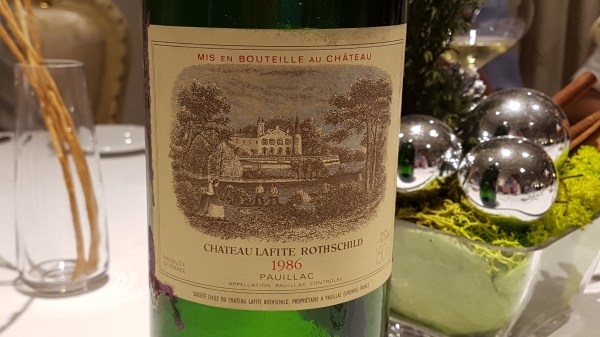
1986 Ch Lafite Rothschild, poured from magnum, courtesy of Simon Cheong at Buona Terra, 29 Dec 2017. From its infinite depth arose a beautiful hallowed glow of rich dark berries, black fruits and dark cherries that led to deep delicious flavours on a palate infused with dark feminine charm amidst the classic Pauillac dryness, fleshy with crisp acidity, blossoming well in the glass with dark luxuriant plummy tones. Has the legs for another few more decades. My final drop for the year. What an outstanding way to end 2017!

I last celebrated my big round number ten years ago at Iggy’s at the Regent Hotel Singapore (a location fondly missed by all who have followed the fortunes of this restaurant) with a most memorable line-up of wines that included a 1988 Haut-Brion, 1964 Cheval Blanc and 1967 Climens. Ten years on, I decided it would be perfect to host dinner again at Iggy’s, now at the Hilton Singapore, on 05 December 2017 with the same small group of close friends who were there back in 2007, albeit with a different line-up of wines, where Iggy himself was also able to join us in the private room. No theme was set but, given the nature of the occasion, I knew we were set to taste some really mature stuff.
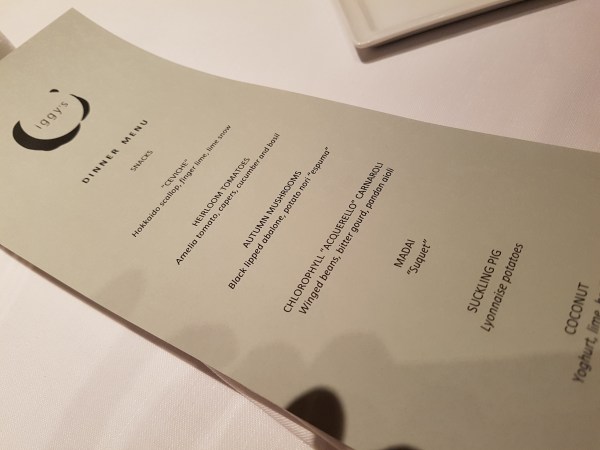
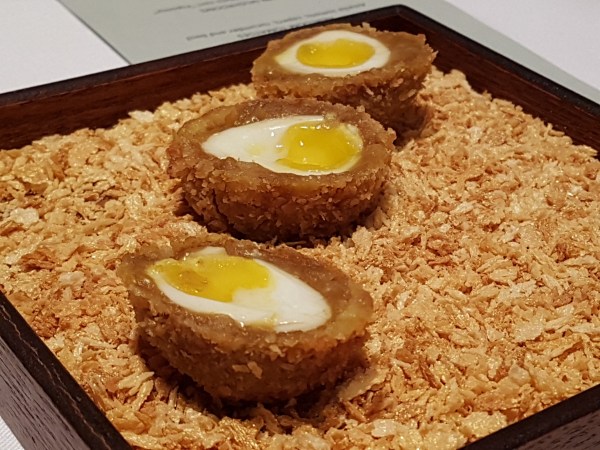
We opened with a 2005 Leroy Meursault Blagny 1er (courtesy of Kieron) that exuded a lovely gentle fragrance of white flowers and delicate crème de la crème, setting an excellent tone with fabulous detail amidst a deeper streak of glorious fruit on the palate, becoming richer and broader and utterly seamless over time with superb complexity. Truly an outstanding start. We followed on with the 1998 Domaine des Comtes Lafon Meursault (courtesy of Kieron), displaying a deep golden hue with aromas of aged honeycomb, crème and cinnamon, slightly reductive though its palatal tone and depth cannot be faulted, growing in intensity and power over the course of dinner whilst turning more minerally and stony as well, finishing with subtle acidity.
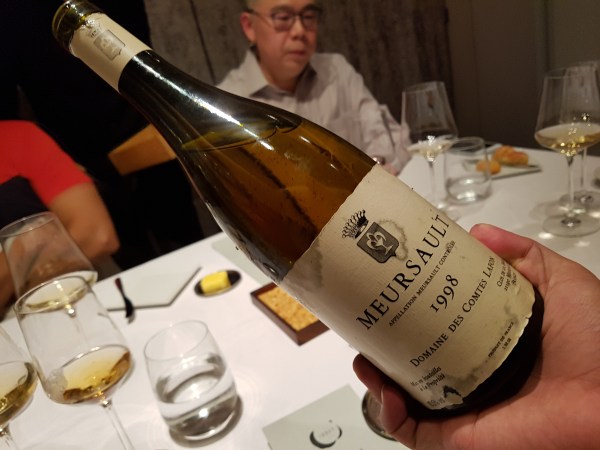
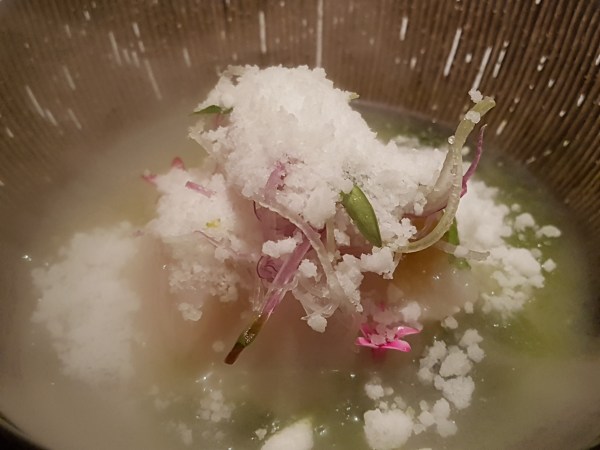
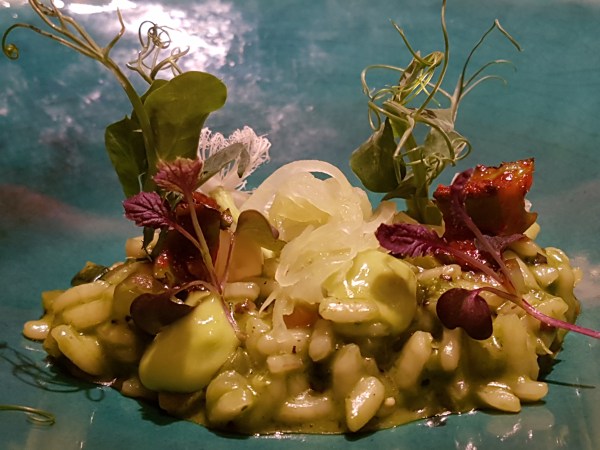
Hiok kicked off the reds with a 1964 Jean Bourdy A Arlay Cotes du Jura, served blind but the distinctive bottle shape and light color of wine gave it away, dominated by saline minerals and high-toned acidity while the red fruits within have receded significantly, leaving some earthiness with mild degrees of sweetness.
Amazing colour of 1967 Ch Mouton Rothschild
The pair of clarets that followed demonstrated amply their true ageing ability. The 1967 Ch Mouton Rothschild from my birth year (thanks Vic !!) belied its age and supposed poor reputation of this vintage, still showing great colour, utterly seamless throughout its length though obviously having shed some cabernet weight over the passage of time, exuding gentle earthy tones with lovely feminine fragrance amidst characters of red fruits and plums without any sign of drying out, coming across as being seemingly younger than its fifty years. Poised with lovely elegance, this is a wine that has aged most gracefully. If only we ourselves can age so well likewise.
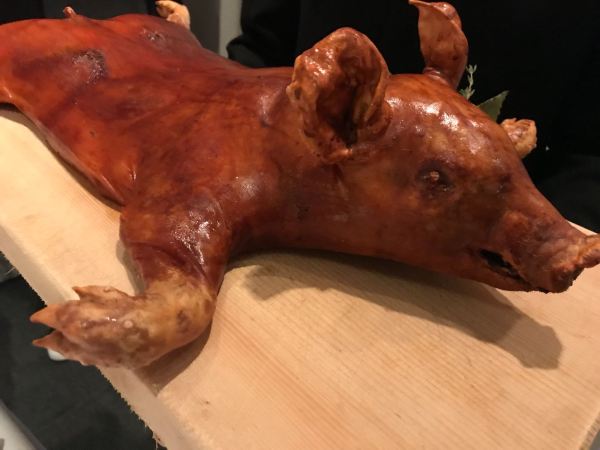
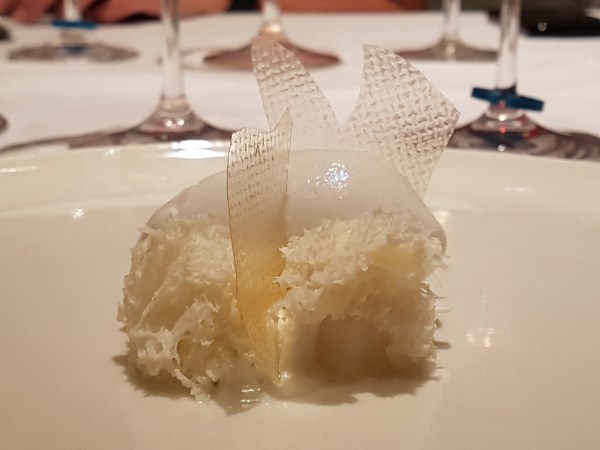

The piece de resistance to close the evening was a 1961 Ch Ducru Beaucaillou (courtesy of Kieron and David). Though its label has faded considerably and its cork thoroughly soaked through, this wine is still full of life, displaying good colour with dominant earthy tones and marked earthy pungency on the nose whilst the palate is infused with dark plums and tangerines of tremendous presence and gorgeous acidity tinged with earthy textures, still holding on well and likely able to continue as such for another couple of decades, just a tad short. Well, truly, great friends are for life, as are great wines. Thank you very much guys !!
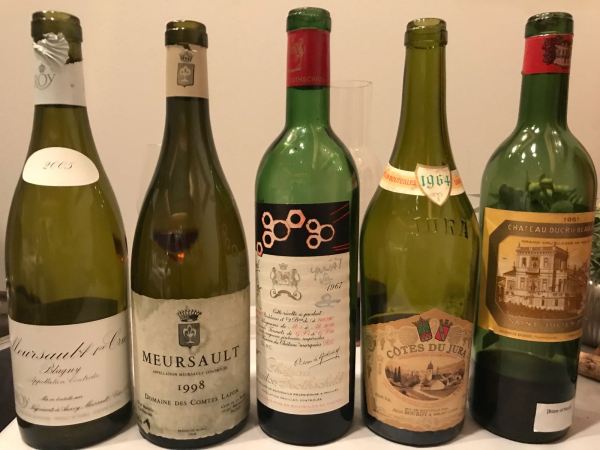
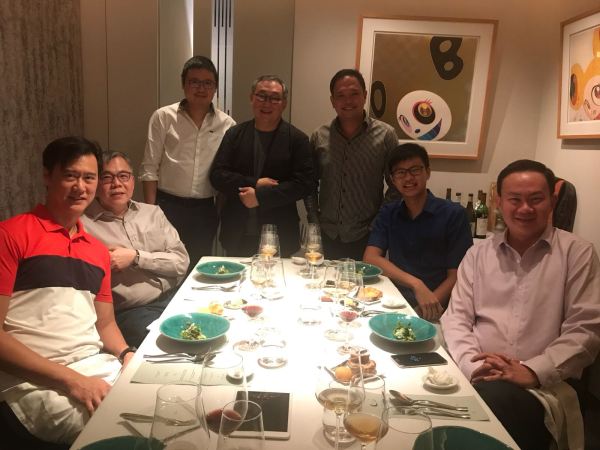
Ric’s Big Five-O: 2002 Lafite Rothschild, 2009 Baron Thenard Montrachet Grand Cru, 1966 Chateau Latour
For me, December 2017 is truly the month to let loose as I reach my half-century and I felt it would be great to spend a nice but quiet evening with just a few persons in familiar surroundings. One cannot really go wrong with Jade Palace, venue of so many past glorious wine and gastronomic events, and Mr Ho has, again, personally supervised the customised menu as we gathered on December 4th.
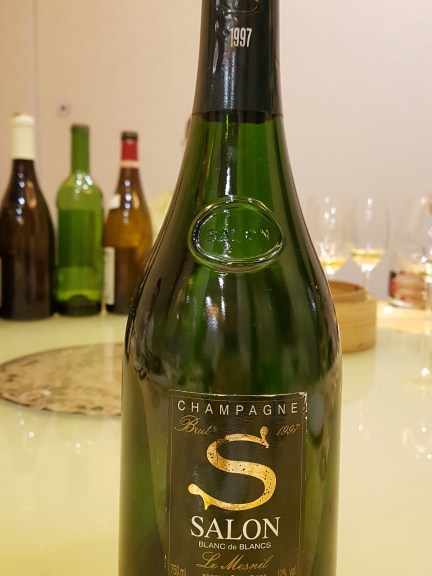 We began the evening with a 1997 Champagne Salon (courtesy of LF), evoking powerful yeasty tones with a mild earthy pungency along with delicate citrus, displaying superb intensity of lime, citrus and tropical fruits on the open palate with excellent depth, detail and balance, not too dry and still far from peaking. A superb start.
The Alaskan King Crab, served cold, is one of the restaurants calling cards and, here, the 1999 Valentin Zusslin Pfingstberg Grand Cru, glowing with citrus, grapefruit and lime amidst recessed chalky minerals and a prominent diesel note, cut through the marine salinity of this crustacean with its robust tone and crisp acidity, showing excellent depth of fruity detail with gentle intensity. As we finished the dish, the 2006 Domaine Roulot Meursault Les Tessons Clos de Mon Plaisir was poured, rather muted on the nose though its delicacy of fruit and clear citrus was clearly evident, gradually opening up to reveal lovely intensity and inner detail with some early complexity supported by subdued chalkiness, carrying good weight. The most famous plot of Burgundy white was paired with rare abalone. Here, the 2009 Domaine Baron Thenard Montrachet Grand Cru, decanted and kept in ice for about six hours prior, exuded a quiet bouquet of gentle crème de la crème with lifted minty tones, thoroughly seamless on the palate where highly delicate white floral tones and gentle soft citrus dominate with understated richness and body, almost ethereal in its elegance though not quite reaching the degree of inner detail that I have come across from Joseph Drouhin’s Marquis de Laguiche Montrachet.
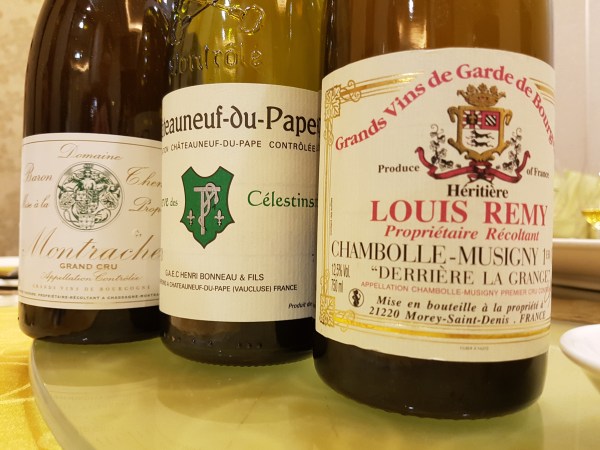
The reds were drunk in two flights to go with the meat dishes. The 1996 Heritiere Louis Remy Chambolle-Musigny Derriere La Grange 1er (courtesy of Sanjay) was lifted in aromas of dark cherries and currants with a dominant plummy tone, medium-bodied with an even deeper streak of dark fruit, thoroughly seamless., caught at its absolute peak. The 2007 Henri Bonneau Chateauneuf-du-Pape Reserve des Celestins (courtesy of Ooi CJ) was quite the perfect wine to follow on, expectedly deep on the nose and palate with lovely warm ripe fruit, its exciting tannins and superb acidity producing great intensity and verve without ever being too weighty.
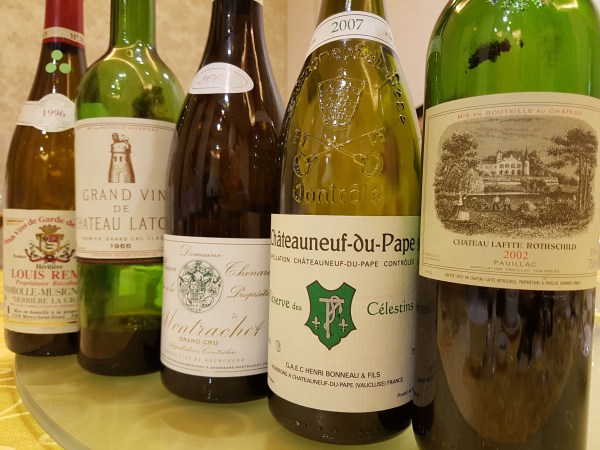
For the final flight, LF produced a blinded red, clearly well evolved in colour and tone, evoking aged dry mushrooms with a lifted earthy pungency, still displaying excellent fullness and depth of ripe dark berries, utterly seamless with melted tannins. Definitely a Bordeaux Left Bank. I guessed aloud a 1970 Latour and was almost spot on…a 1966 Chateau Latour!! Outstanding!! Next to it, the 2002 Ch Lafite Rothschild, an impenetrable deep dark red, was stuffed with ripe dark berries and characters of soy, highly lifted in redcurrants, dark cherries and warm ripe fruit with open chewy tannins, exuding lovely feminine charm. Having emerged from its brooding shell, this wine is much more engaging now than a previous bottle from the same batch tasted in 2010. All in all, I must say the line-up and progression for the evening has been impeccable, so much so that we weren’t even drunk at the end of it. Now for the next ten years…