FICOFI: Domaine de Montille
Domaine de Montille is not a name familiar to all Burgundy lovers but there is absolutely nothing lacking in its quality or breed. The estate pre-dates the French Revolution, but the name Montille only came about in 1863 through the marriage of Marie Eleonore Chauvelot de Chevannes and Etienne Joseph Marie Leonce Bizouard de Montille. It has remained within the family since but it was really through the work of Hubert de Montille (the grandson) in the past few decades that the wines have become better known and more sought-after. Occupying 17 hectares, mainly in the Cote de Beaune (with some parcels in Nuits-Saint-Georges and Vosne-Romanee), the estate has practised biodynamic viticulture since the 1980s but truly certified only in 2012. Today, the estate is helmed by Etienne de Montille who famously holds opposing views on his preferred style of wine from his father Hubert, preferring greater purity of expression with greater precision whilst retaining the character of the unique terroir of each plot.
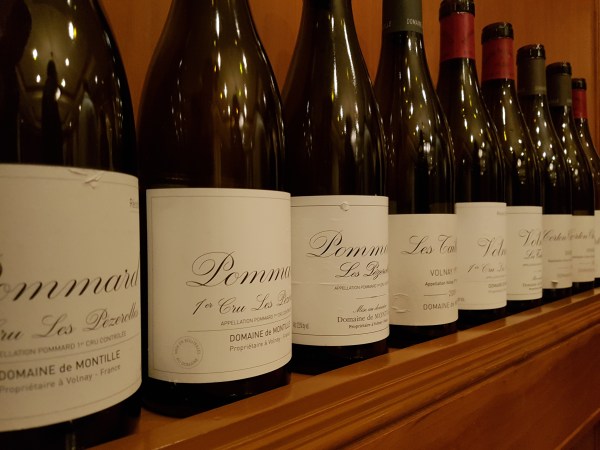
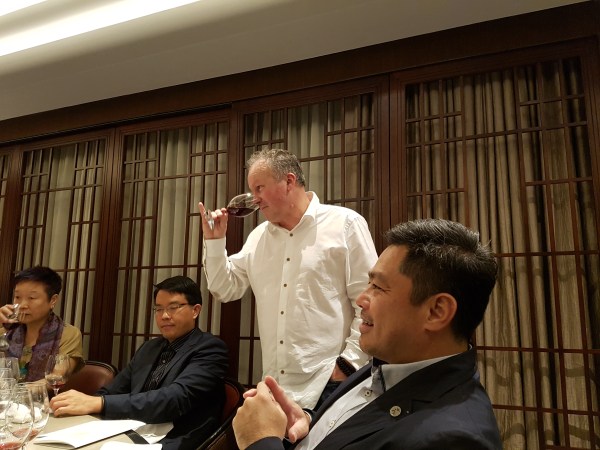
For this evening on 19 Jan 2017 at the Four Seasons Hotel, Singapore, Etienne has organised a tasting focusing on three cool vintages in Pommard, followed by three warm vintages of Volnay, culminating in a final trio of Corton grand cru. The progression turned out to be absolutely spot-on as the initial delicacy gave way to bigger wines, finishing with wines that are structured, robust and masculine. Throughout the tasting, Etienne proved to be the master educator, infinitely knowledgeable, honest and immensely likeable. A real masterclass.
2008 Domaine de Montille Pommard Les Pezerolles 1er. Classic pinot tint with feminine aromas of delicate red fruits, camphor and red plums, very seamless and slightly sweet on the palate where earth and red fruits dominate with good concentration and great linearity, seducing the senses with subtle power. Excellent. Situated at the northen end of the Pommard commune (just beyond the southern boundary of Beaune), Les Pezerolles is considered an aytpical Pommard, more feminine than Les Rugiens or Grands Epenots.
2007 Domaine de Montille Pommard Les Pezerolles 1er. More lifted than the preceding 2008 with aromas of sweet red fruits, medium-bodied, displaying good delicacy and very lovely acidity, less plump. Drinking well.
1998 Domaine de Montille Pommard Les Pezerolles 1er. From a later harvest, hence exuding darker tones of earth and forest floor, medium-bodied, soft and understated, somewhat nondescript with dryish textures and palpable tannins, not really burly, short finish. Definitely from an older style. I’m not sure if this will improve with further cellaring.
2009 Domaine de Montille Volnay Les Taillepieds 1er. Sandwiched between Pommard to the north and Mersault in the south, the domaine’s stronghold of Volnay is appreciably more robust than the preceding trio of Pommard, structured with subtle red fruits and silky tannins that exude floral fragrances infused with tangerines, well integrated with good concentration and balance, finishing with a persistent glow, becoming better with time. Very fine.
2005 Domaine de Montille Volnay Les Taillepieds 1er. Quite dark with a restrained bouquet, not showing much. Similarly reticent on the palate though it is well structured and integrated with good acidity, its tannins still tight, somewhat short at the finish. Many liked this but I’d prefer to cellar it longer.
1999 Domaine de Montille Volnay Les Taillepieds 1er. This wine opens with a gentle fragrance, soft and open with light tannins and gentle characters of earth, camphor and red berries, medium-bodied, displaying good definition, acidity and persistence. Excellent.

2012 Domaine de Montille Corton Clos du Roi Grand Cru. Corton is yet again very different, much bigger in proportion and structure compared with the preceding premier crus. This particular vintage exuded a great earthy pungency with distinct tobacco notes, displaying good concentration and depth with the fruit and acidity well integrated though essentially still a young wine that has yet to develop.
2010 Domaine de Montille Corton Clos du Roi Grand Cru. Shut initially, only to develop a sudden burst of glycerin and ripe red and dark berries along with dark plums and tangerine, still tight with flavours confined within a fairly narrow spectrum, yet to put on fat, delicious with subtle intensity but not ready.
2006 Domaine de Montille Corton Clos du Roi Grand Cru. Notably darker with a lovely sweet fragrance, medium-bodied with excellent concentration and acidity, robust and masculine though its tannins are supple and subtly structured. Very successful.
After the masterclass, we moved on to a delectable dinner at Jiang Nan Chun, complemented by a different selection of wines…
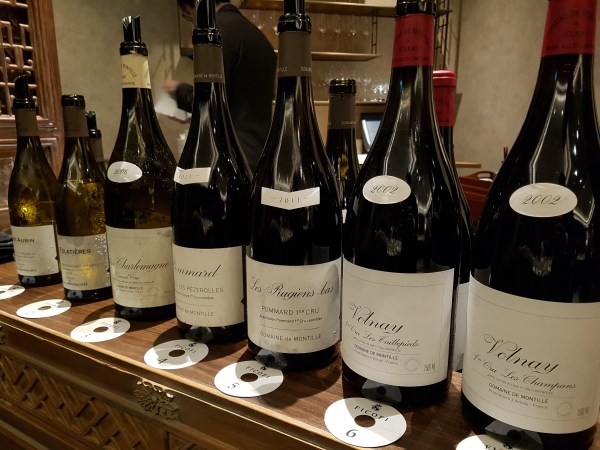
2006 Taittinger Comtes de Champagne Blanc de Blancs. Attractive bouquet of dew, crème de la crème and chalk, forward in fruit concentration and minerality with mild characters of toast and yeasty tones, not too dry.
2014 Chateau de Puligny-Montrachet Saint-Aubin En Remilly 1er. Lifted aromas of morning dew and gentle malt lead to superb concentration and definition with crisp acidity that yielded excellent mouthfeel, fullish with a mild sternness towards the minerally finish, replete with some sweetness at the edges. Excellent.
2013 Chateau de Puligny-Montrachet Puligny-Montrachet Les Folatieres 1er. Sweet floral fragrance, displaying crisp acidity with good concentration and intensity, quite open, more minerally in balance, coming together very well but slightly short.
2006 Domaine de Montille Corton-Charlemagne Grand Cru. From magnum. Made from young vines planted only in 2005 on soil composed of yellow marl, brown clay and small gravel, this wine was shut initially, gradually revealing some dew and morning air, much better on the palate where there is good concentration of white flowers, icing and lemongrass accentuated by crisp acidity, tapering towards a gentle finish. May need more time.
2011 Domaine de Montille Pommard Les Pezeroilles 1er. Gentle nose of red and dark fruits, rounded and accessible, well integrated but nondescript, finishing short.
2011 Domaine de Montille Pommard Les Rugiens-Bas 1er. Dark in tone and color. Very good in concentration, displaying deep notes of dark plums with a mild medicinal quality supported by stern minerals, fleshy and very accessible, finishing well.
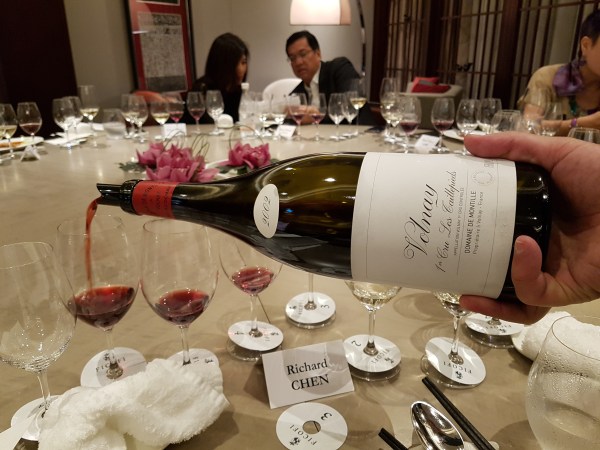
2002 Domaine de Montille Volnay Les Taillepieds 1er. From magnum. This is a big and robust wine with an abundance of red and dark fruits, layered with excellent concentration, very well integrated and fresh. Still youthful. Long life ahead.
2002 Domaine de Montille Volnay Les Champans 1er. From magnum. Saving the best for last, this wine exuded fragrant aromas, medium-bodied, quite open with crisp acidity and good concentration, medium-bodied, displaying good linearity towards its gentle finish. Quite understated in character with plenty of life ahead. Excellent. My favourite of the evening.
FICOFI: Château Haut-Bailly 1982-2012
FICOFI kick-started the year early with a masterclass of Château Haut-Bailly vertical, followed by dinner, on 10 January 2017 at Tunglok Signatures, Orchard Parade Hotel, Singapore, with Mlle. Veronique Sanders, the château’s President & CEO, in attendance. Château Haut-Bailly has always been one of my favourite estates of Pessac-Léognan, its wines always reflective of the unique terroir of Graves without resorting to superficial gimmickry while still remaining reasonably priced. This estate came about in 1630 when it was founded by a banker, Firmin Le Bailly, who lent his name. But it was only in 1872 that Château Haut-Bailly gained true prominence through the stewardship of Éric Bellot des Minières, known as the “King of Vintners” in those times, as quality rose to rival premier cru estates. In particular, Bellot des Minières resisted grafting his French vines with phylloxera-resistant American rootstock, a widespread practice then. Till this day, about 4 hectares of the so-called Old Vines (more than 100 years) are still present on this 30-ha estate which instils the blend with understated power, subtlety and structure.

After the inevitable neglect caused by the two World Wars, Château Haut-Bailly was resurrected by Daniel Sanders in 1955. Today, whilst the estate has since been sold, the excellent work of Daniel is continued by his grand-daughter Veronique, who has literally lived her whole life at the estate. Looking highly elegant this evening, Veronique was in her absolute element as one quickly sensed a fount of knowledge and wisdom from her vast experience and, perhaps, it isn’t surprising that the wines of Château Haut-Bailly from the modern era has always exuded a certain feminine poise, elegance and refinement.
 1998 Champagne Dom Pérignon P2, served as the aperitif for the evening. Just released by the estate, where this is a fresh bottling of wine that has been left on lees all along. There is a fresh lovely bloom on the nose, rich in citrus characters, open and succulent with fine minerality amidst toasty characters and ferrous elements, very lovely in acidity, displaying great persistence with a gentle glow. Excellent.
2012 La Parde Haut-Bailly. Deep color with good concentration of red plums and dark currants. Silky, rounded and very accessible, exposed to only 20% new oak, displaying good presence and sophistication with subtle acidity, slightly short. Second wine it may be but I will happily drink this. Started in 1967, La Parde is derived from the same plots as the grand vin, going through the same selection control and vinification.
2012 Château Haut-Bailly. Closed on the nose though it is appreciably richer with greater depth on the palate with velvety textures, very good in concentration, balance and acidity, quite seamless, a wine of great finesse and elegance. Almost feminine. Excellent potential ahead.
2006 Château Haut-Bailly. Fairly evolved at ten years with dryish textures of earth and dried mushrooms, medium-bodied, displaying good balance with an easy presence, finishing short. Nothing cerebral here. Tasted again at dinner with consistent notes. Start drinking up.
2000 Château Haut-Bailly. Highly attractive bouquet of dried tea leaves and earth, fleshy with an abundance of dark currants, very open with lovely acidity and subtle depth but it is all very understated, finishing well with great persistence. Tasted again at dinner with consistent notes. Will be wonderful in another ten years. Excellent.
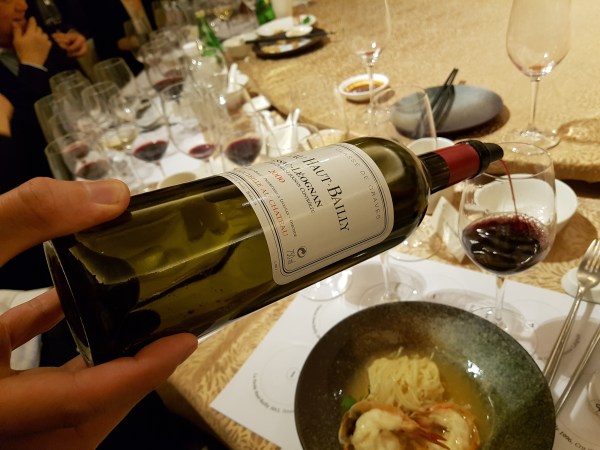
1996 Château Haut-Bailly. This wine harks back to an older style of winemaking that is immediately apparent, exuding great earthy pungency and glow of an aged claret, still very fresh on the palate, displaying excellent definition, structure and layering with textures of aged tea leaves and gravel, very classic, yet subtle with lovely acidity and understated power. Outstanding.
1982 Château Haut-Bailly. Simply quite glorious, exuding a lovely glowing bouquet of sweet berries with cedar, cinnamon and aged plums on the palate, deep and expansive with a particularly rich finish. Absolutely singing. Some members, however, felt differently (bottle variation?) and so a second bottle was popped, which I’m certainly not complaining. The latter was tighter, displaying greater precision and linearity with an added dimension of mocha and chocolate but somewhat stern and minerally towards the finish. Not necessarily better than the former, which I preferred.
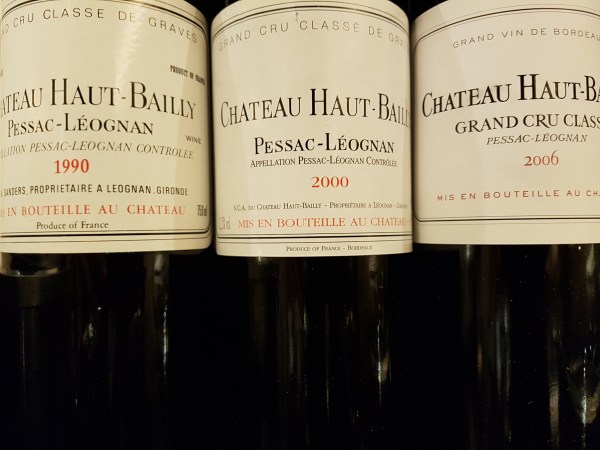
1990 Château Haut-Bailly. Tasted only at dinner. Gentle aromas from the sweet bouquet, fleshy and open with wonderful depth and complexity recalling chocolate, plums and earth, positively glowing with controlled intensity. Splendide!
2005 Château d’Yquem. FICOFI must have tons of this. My fourth tasting in as many months with consistent notes. Great concentration of nectarine, apricot and honeysuckle with traces of earth, creamy smooth with rich textures, displaying some early complexity with understated sweetness throughout its length. Excellent.

Happy Birthday Dr Ngoi!
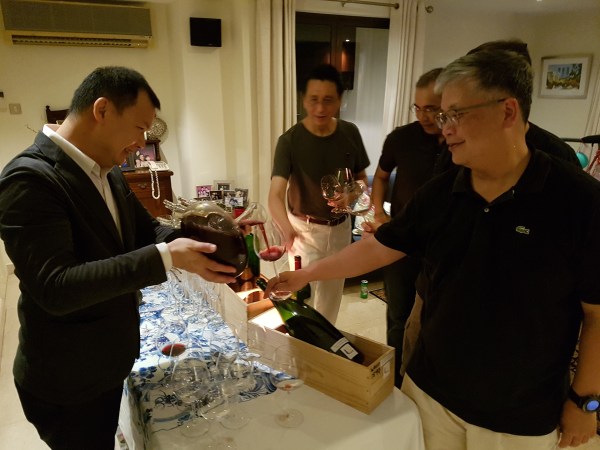
The great man threw a great party to celebrate his most significant big round number at his residence on 08 January 2017 where his cellar was generously open. I arrived to find all the appropriate stemware already neatly arranged with no less than Kok Hong himself (who usually presides over FICOFI events) taking charge of the wines. A wonderful buffet catered by New Ubin Seafood had been set up on the verandah with an on-site kitchen that prepared their signature chilli crab, black pepper crab and beef steak with the obligatory heart-attack fried rice on demand. 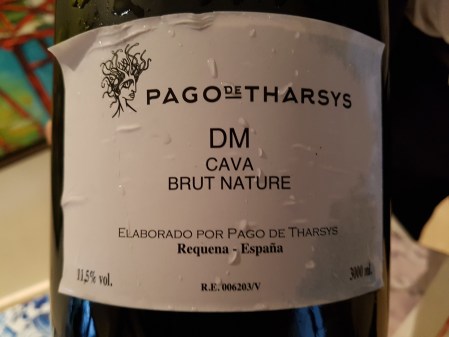 Dr Ngoi has touched and changed the lives of so many around him so much for the better that it would be difficult to imagine otherwise.
We began with a magnum of Pago de Tharsys Cava Brut Nature, sourced directly from Requena, Spain, by Dr Ngoi who knows its owner. This bubbly was rather shut on the nose, but the palate features generous tones of light citrus, lime and some pomelo, medium-bodied with good intensity, fairly robust with good length, just a tad stern at the finish but perfect for a balmy evening. Dr Ngoi had also strewn an entire case of 2012 Château Pape Clement blanc, all appropriately chilled and ready. This wine proffered an enticing bouquet of incense and jasmine, blooming with white flowers and paraffin with surprising gentleness on the palate, displaying apricot and subdued acidity. Good stuff but this wine is really all about its fabulous bouquet.

We kicked off the reds with a magnum of 2011 Château La Fleur-Pétrus, displaying earth, morning dew and light tangerine on the nose, medium-bodied with abundant dark plums and dark cherries, already accessible with subdued intensity and good acidity amidst dryish textures from the mild ferrous minerality, somewhat lean but it suits the overall profile very well.  A jeroboam of 1986 Château Léoville Las-Cases had been promised but the keen anticipation was dashed by unmistakable whiffs of cork taint that robbed the wine of its freshness, a great pity as the dark fruits and currants that lay beneath was certainly rich in concentration and layering with good acidity to match the leathery supple tannins.
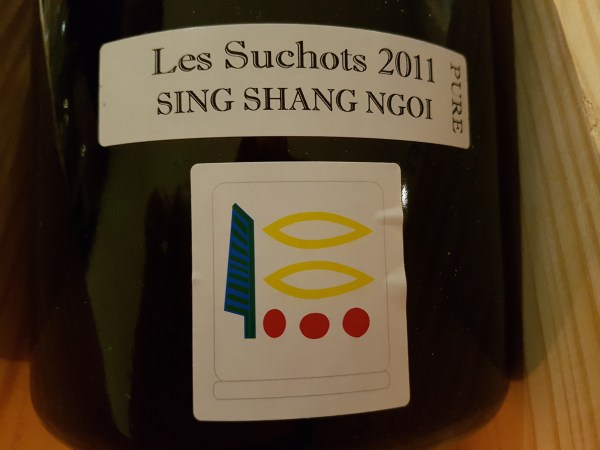
The disappointment was redeemed by the next wine, a double magnum of 2011 Domaine Prieuré Roch Vosne-Romanée Les Suchots “Pure” Sing Shang Ngoi 1er. Our eyes almost popped out when we saw that it was labelled after the great man, no less!! This wine displayed a forward balance of cedar and red fruits with a beautiful tangerine core, exuding great fragrance with an open easy quality, fleshy and superbly integrated with lovely acidity. Very classy and absolutely fabulous. Notice the word “Pure” at one corner? That meant bottling was conducted without the wine coming into contact with free oxygen, as explained by its winemaker M. Yannick Champ when he hosted the Prieuré Roch masterclass last year at the Tower Club, a special technique reserved for only a very small number of bottles and certainly not available off the shelf. This translates into additional freshness and definition compared with standard bottling. In fact, this wine was so good that it remained unsurpassed by the 2007 Domaine Prieuré Roch Chambertin-Clos de Beze Grand Cru, featuring barbecued smoked meat and some tangerines with a lacquered texture, displaying good concentration and depth with great acidity, lovely balance and intensity. Excellent.

A series of Right Bank greats took over the limelight, beginning with a 2000 Château Pavie that recalled scorched earth, ferric elements and graphite minerals, still quite reticent on the nose though the palate is generously endowed with sensational rose petals, red currants and ripe dark berries, yet to really hit its stride for what should really be a very long-lived wine. The 1986 Château Tertre Roteboeuf that followed was caught at its peak, slightly musty with some earthiness, bright with an abundance of rose petals, camphor and predominant red fruits, rounded soft and gentle with excellent presence and well integrated acidity. In contrast, the 1998 Château Angelus, fleshy, delicious and fullish, imbued with gorgeous black fruits and currants with overtones of graphite and white pepper, was far from ready, requiring at least another decade of cellaring.
To close the evening, a 2001 Château Mouton Rothschild was popped for the pièce de résistance, displaying some mild earthy pungency with lovely characters of dark currants, tangerines and blueberries, medium-full with racy acidity, showing some early complexity as it sat in the glass but it is still early days for a classically structured claret that should last the full distance.
All these would not be possible without the kind generosity of Dr Ngoi, to whom we shall always remain indebted. Many happy returns!!
FICOFI: Les Climats du Coeur 2016
These are notes from a FICOFI event held at the Ritz-Carlton Hong Kong on 06 November 2016. Les Climats du Coeur is a charitable organisation founded in 2009 when a group of producers in the Cote d’Or decided to band together during that highly successful and plentiful harvest to donate generously to charities in Burgundy, hence continuing a long tradition dating back to 1453 with the Hospices de Beaune. These producers include Domaine Leflaive, Maison Louis Jadot, Maison Joseph Drouhin, Domaine de la Romanee-Conti, Domaine Faiveley, Domaine Dujac, Domaine Roulot and Maison Louis Latour.
For this evening in Hong Kong, a long promenade for pre-dinner tasting had been set up, many with the respective estate owners in attendance, and I think I managed to complete almost the entire line-up. Most producers have brought their whites of 2014, 2013 and 2009, and the evening reinforced my view that the 2014 whites are truly exceptional. Readers are well advised to stock up as many of these as possible whilst they remain available. Of the rest, those of Ramonet and Dujac were, predictably, outstanding while the Nuits-Saint-Georges of Henri Gouges punched well above their weight.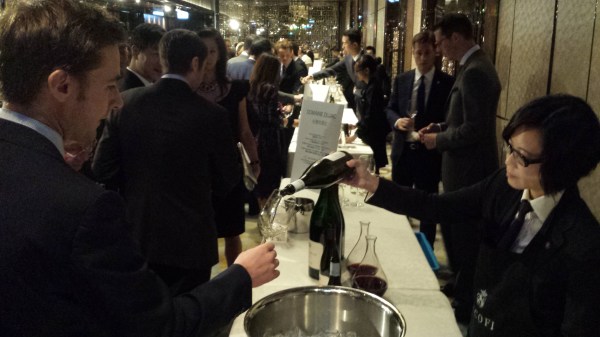 2004 Domaine Leflaive Puligny-Montrachet. Great concentration of complex citrus, creme and sublime acidity with attractive oily textures, slim in profile but certainly not lean, finishing with stern austerity from its ferrous minerality. Drinking well.
2004 Domaine Leflaive Puligny-Montrachet Clavoillon 1er. Compared with the preceding village, this wine possesses a similar profile but with greater depth and concentration of complex citrus and white flowers, displaying excellent precision and definition, more ferrous at the finish which imparted a slightly stern posture. Excellent.
2009 Les Climats du Coeur Puligny-Montrachet 1er, a magnum vinified, aged and bottled jointly by Domaine Leflaive and Maison Louis Jadot. This interesting bottling displays rich oily textures with plenty of opulence, highly aromatic on the nose with a minerally dominance on the palate culminating with a bit of sharp accentuation towards the finish. Will be great but needs time.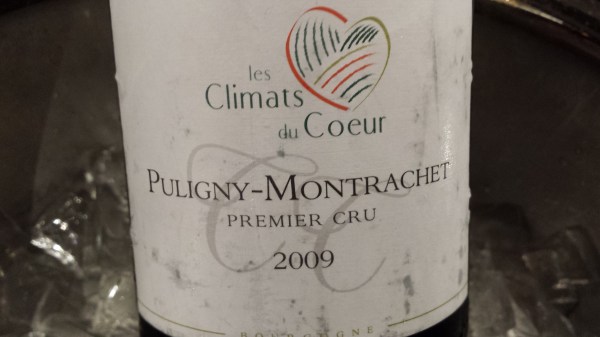 2013 Domaine du Chateau de Meursault Les Charmes-Dessus Mersault 1er, poured from magnum with M. Stephen Follin-Arlebet in attendance. The first vintage of this wine exudes generous aromas of white flowers and vanillin with plenty of fat, crème de la crème and minerals, displaying exciting intensity and great acidity. Excellent.
2014 Jean-Claude Ramonet Saint-Aubin Murgers des Dents de Chien 1er, with the beautiful Mlle Anne-France Ramonet in attendance. This under-rated commune is truly shining here, rich in minerals and crème de la crème, displaying excellent presence, layering and integration between the delicate fruit and minerals. A wine of great precision. Very refined and classy. Just proves time and again that the producer matters most in Burgundy.
2014 Domaine Henri Gouges Nuits-Saint-Georges Clos des Porrets Saint-Georges 1er monopole, poured from magnum with M. Gregory Gouges in attendance. This wine exudes aromas of red berries and incense with a mild earthiness classic for Nuits-Saint-Georges, displaying good concentration, tannic structure and acidity, just a tad firm. Excellent potential. 2014 Domaine Dujac Clos de la Roche Grand Cru. Deep nutty flavours with overtones of wild berries and white pepper, excellent concentration and harmony with very fine tannin structure and definition amidst dryish textures. Lovely.
1998 Domaine Dujac Clos de la Roche Grand Cru, served from jeroboam. Evolved in color and tone with a generous floral fragrance while tangerines, kumquat, ash and incense combine in a lovely complex that is open and seamlessly layered, exuding great finesse and elegance. A classic in every sense. Superb.
2014 Domaine Dujac Puligny-Montrachet Les Combettes 1er. Minerally on the nose with overtones of crème de la crème and white pepper, displaying gentle but excellent concentration of citrus and complex minerals with great subtlety, ending in a mild peppery finish. Very fine.
2014 Domaine Dujac Puligny-Montrachet Les Folatieres 1er. More forward with chalky minerals, clear citrus and white flowers, quite rounded, layered with excellent concentration and displaying good early complexity. Excellent. 2013 Domaine Jean Grivot Nuits-Saint-Georges Aux Boudots 1er. Forward in glorious concentration of dark roses, camphor and dark red fruits along with generous saline minerals, rounded with subtle acidity and structure. Very fine.
2013 Domaine Jean Grivot Clos Vougeot Grand Cru. Good poise and balance with good concentration of classic pinot flavours but, like most wines from this oversized and over-rated Grand Cru, lacks distinction.
2005 Maison Louis Jadot Chapelle-Chambertin Grand Cru. Mild earthiness amidst a generous offering of raspberries and dark roses, medium-bodied with traces of hardness and mint, subtle in acidity but a tad short.
2013 Maison Louis Jadot Beaune Clos des Ursules 1er, poured from jeroboam. Classic pinot aromas with a dash of earth, gentle and rounded in body with good concentration, displaying great subtlety and harmony. Very successful.
2009 Maison Louis Jadot Puligny-Montrachet Les Referts 1er, poured from jeroboam. Great bouquet of icing, vanillin and ash, displaying good intensity, definition and concentration of complex citrus, developing some early complexity, finishing on a persistent minty note with a dash of nutmeg. Excellent
2005 Domaine Faiveley Mazis-Chambertin Grand Cru. Displaying an evolved red with notes of incense and some earthy pungency, structured and masculine with a broad expanse of camphor, dark roses and dark fruits, medium-full with subtle acidity and intensity, yet to peak. Excellent.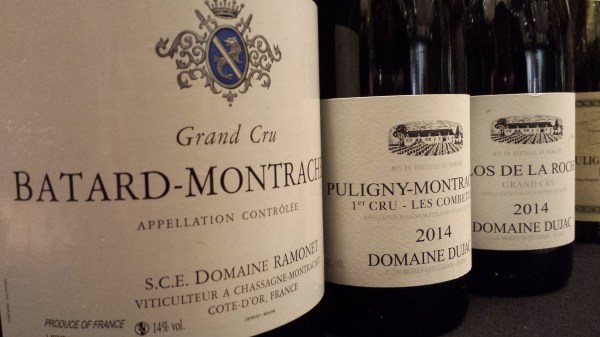 2014 Domaine Jean-Claude Ramonet Chassagne-Montrachet Le Clos du Caillerets 1er Monopole. This wine displays a great concentration of wonderful fruit, deep and minerally with a generous complex of intense citrus, lime, white flowers and chalk, already quite open with great definition, linearity and gentle acidity, slightly nutty and glowing with great persistence. Wonderful stuff.
2012 Domaine Jean-Claude Ramonet Chassagne-Montrachet Le Clos du Caillerets 1er Monopole. More evolved than the preceding 2014, more minerally with graphite and flint and minty overtones, displaying again great linearity and concentration of sublime fruit. Excellent. While 2011 and 2012 are excellent for whites, I’ve always opined that 2014 surpasses them all.
2009 Maison Joseph Drouhin Chassagne-Montrachet Morgeots Marquis de Laquiche 1er. Closed at this stage, revealing some mint and minerals and creme with a gentle icy presence. Needs time.
2011 Domaine Henri Gouges Nuits-Saint-Georges Les Pruliers 1er. Gentle aromas are all one could discern from a wine that is essentially closed, though the palate is subtly structured and poised with classic pinot characters and saline minerals, oozing traces of sweetness with subdued acidity. Will turn out well.
This was followed by a superbly crafted dinner (where I was honoured to be seated next to M. Gregory Gouges) featuring lobster, foie gras, beef tenderloin and an exquisite selection of cheese from the Fromagerie Quatrehomme, and more wine:
2004 Domaine Jean-Claude Ramonet Puligny-Montrachet Champs-Canet 1er. Quite effusive in earthy pungency and icing, minerally with great concentration and quiet intensity, layered with good complexity, displaying plenty of vigour, structure and elegance, ending in a gentle finish. Most lovely.
2004 Domaine Leflaive Puligny-Montrachet Les Folatieres 1er. Some gentle earthy pungency dominate on the nose, minerally and tightly-knit on the palate with lovely acidity and great balance. Very fine.
2011 Domaine Jean-Claude Ramonet Batard-Montrachet Grand Cru, poured from magnum. Minerally and crisp with a lovely concentration of clear complex citrus, fabulous in intensity and sophistication, ending again with a tone of graphite minerals. Excellent.

M Gregory Gouges et moi
2011 Domaine Henri Gouges Nuits-Saint-Georges Les Saint-Georges 1er. Open and attractive, still youthful, almost seductive with its gentle bouquet, displaying good presence with a deep vein of darker fruits, medium-full, not heavy at all, superbly balanced. Very lovely.
2010 Domaine Jean Grivot Vosne-Romanee Les Beau Monts 1er. Deep and effusive floral fragrance from the excellent concentration of red fruits and dark berries, seamlessly supported by saline minerals, turning a tad stern towards the finish with some early complexity. Excellent, with a long life ahead.
2009 Domaine Louis Jadot Corton-Pougets Grand Cru. Gentle with an abundance of bright red fruits and great acidity with traces of citrus, displaying excellent presence and persistence. Excellent.
1995 Domaine Dujac Clos de la Roche Grand Cru, poured from magnum. Quite an ardent bloom of dark fruits on the nose with a teasing fragrance. Open and delicious with a certain deftness on the palate, displaying a rich body of gorgeous fruit with a tangerine core, structured with great complexity and acidity. Superb!
2005 Ch D’Yquem. Nectarine, apricot, cedar, toast and cider vie for attention on the crowded palate, richly layered, complemented by aged acidity and creamy textures, highly aromatic and placid.

2011 Bouchard Pere et Fils Beaune Greves Vignes de L’enfant Jesus 1er (courtesy of Dr Ngoi), popped and poured over lunch on 02 Dec 2016 at Tunglok Signatures, Orchard Parade Hotel. This is certainly my best experience with this special wine from Bouchard, a monopole of 10 ha within the 32 ha plot of Greves, exuding a lovely rosy fragrance with traces of earth, camphor and burnt sugar, generous in depth and purity of fruit with plenty of finesse and elegance, finishing well. Positively glowing.
2004 Rockford Basket Press, two bottles decanted on-site at FOC, a very hip Spanish eatery along Hong Kong Street, Singapore, to celebrate Troy and Linsey’s promotion on 06 Dec 2016. This perennial favourite is drinking superbly on this occasion, displaying savoury tones, sweet meat and cedar on the nose with plenty of verve and vigour from the great body of ripe Barossa fruit, caressing the palate with svelte silky tannins, richly layered with overtones of gentle mocha and subtle licorice with understated acidity and later notes of red fruits and currants, very open and inviting, not at all overbearing. At its peak and will hold for many years to come. Outstanding.
 2005 Ch Du Tertre, popped and poured at Yan, National Gallery Singapore, on the occasion of Vincent’s farewell, 13 Dec 2016. This lesser-known estate from Margaux is showing very well, displaying secondary nuances of earth, cedar, lifted currants, plums and tea, surprisingly full with very good definition and subtle intensity coupled with silky tannins, finishing on a persistent note of olives with a slight vegetal trace. Very fine.
2011 Montevertine (courtesy of CJ), popped and poured at Yan, National Gallery Singapore, on the occasion of Vincent’s farewell, 13, Dec 2016. Dark roses, cherries and raspberries dominate on the nose, gentle and feminine with a rich vein of fruit still tightly coiled within its soft outer body, yet to develop but this will turn out to be most lovely in another 5-7 years.
2005 Ch Rauzan-Gassies, popped and poured at Yan, National Gallery Singapore, on the occasion of Vincent’s farewell, 13, Dec 2016. Compared with the Du Tertre, both from the same vintage and commune, this wine displays greater sophistication with an attractive bouquet of dark red fruits leading to an excellent concentration of ripe dark berries and plums, brimming with quiet intensity, subtly structured with velvety tannins, unashamedly masculine. Quite excellent.
2003 Ch Sociando Mallet, popped and poured at Yan, National Gallery Singapore, on the occasion of Vincent’s farewell, 13 Dec 2016. This particular vintage marked the year that this estate voluntarily pulled out of the re-organisation of the Medoc classification, hence the need for a new label. In spite of its unclassified status, this wine is clearly in the league of classified growths. Displaying a deep dark red, this wine was relatively closed, but the palate is awashed with great concentration of dark fruits and currants, fairly dense with characters of soy with superb tobacco undertones that indicate its close proximity to the soils of Pauillac, structured with sweet subtle tannins. Excellent, but yet to hit its peak.
2006 D’Arenberg Dead Arm, popped and poured at Yan, National Gallery Singapore, on the occasion of Vincent’s farewell, 13, Dec 2016. Still very dark in color, this wine is saturated with dark chocolate with traces of licorice and black pepper, full-bodied with sweet medicinal tones, great concentration and powerful intensity, structured with sweet well-integrated tannins. Drinking well now, but nowhere near its peak.
Guy Charlemagne Blanc de Blancs Grand Cru Brut Reserve NV, bought off the list of Corner House for SGD190 at the Singapore Botanical Gardens, over lunch with Victor and Kieron, 16 Dec 2016. This wine opens with lifted aromas of deep toasty characetrs and nutmeg, quite full with complex sweet citrus contrasted against mild bitter lemon and crystalline minerality that offered excellent definition, enhanced by understated acidity and superb length. Simply outstanding.
 2001 Bass Phillip Premium (courtesy of Kieron), aired for 45 minutes prior to serving over lunch with Victor and Kieron at Corner House, Singapore Botanical Gardens, 16 Dec 2016. This top pinot noir from Mornington Peninsula, Victoria, Australia, appears fully evolved, open and inviting with deep bold characters of camphor, dark plums and incense with creamy overtones, displaying good concentration of red fruits supported by saline minerals with understated acidity, becoming broader and more Burgundian over time though it remained a tad short at the finish. Excellent.
2010 Louis Jadot Chambolle-Musigny (courtesy of KP Hui) over dinner at Jade Palace, 19 Dec 2016. The nose here is dominated by white flowers with overtones of creme and icing, with good presence of complex citrus on the palate, fairly intense and lifted and well-integrated. Louis Jadot is always reliable.
2014 Chateau de Mersault Les Charmes-Dessus 1er, poured after a brief aeration at Jade Palace, 19 Dec 2016. An estate run by Stephen Follin-Arlebet, this wine is broad with an abundance of white flowers and lime of subtle intensity balanced by attractive saline minerality, opening up with some early complexity. Very fine.
2010 Louis Boillot et Fils Pommard Les Fremiers 1er (courtesy of Kenny), poured after a brief aeration at Jade Palace, 19 Dec 2016. This wine is darker in tone for a pinot, offering sweet dark fruits and currants amidst dryish textures of earth and minerals. Not really memorable.
2010 Jacques-Frederic Mugnier Nuits-Saint-Georges Clos de la Marechale 1er (courtesy of Hiok), poured after some aeration at Jade Palace, 19 Dec 2016. This perennial favourite offers an attractive bouquet of sweet dark roses, dark cherries, camphor and incense, quite understated on the palate with excellent depth of glorious red fruits displaying good definition. Very fine.
2009 De Bortoli Noble One (courtesy of Jonny), popped and poured at Jade Palace, 19 Dec 2016. Weighty with a great concentration of complex citrus and aged nectarine, layered with fresh acidity and petroleum characters that persist long after the wine has gone down the hatch. Surprisingly good.
Larnaudie-Hirault Fleur de Singapour NV (courtesy of Hsiang Sui), popped and poured at Otto Ristorante on the occasion of Vincent’s farewell, 22 Dec 2016. Made from premier cru 100% pinot noir from the village of Montagne de Reims, this interesting bottling exudes complex sweet citrus with a mild yeasty pungency and toasty notes, slightly dry, displaying very good concentration of fruit and minerals that imparted a slightly stern demeanour. Drinking well.
2005 Patrick Javilier Corton-Charlemagne Grand Cru (courtesy of Li Fern), aired in bottle for an hour at Otto Ristorante on the occasion of Vincent’s farewell, 22 Dec 2016. Subdued and somewhat closed and awkward, dominated by overtones of malt, wheat and icing with grainy textures and dull minerality, rather backward and reluctant. However, I have long noticed this to be a characteristic of the whites of this noted producer.
2012 Escaleras de Empedrado (courtesy of Hock Foong), aired in bottle at Otto Ristorante on the occasion of Vincent’s farewell, 22 Dec 2016. This Spanish pinot noir exudes earth, dark roses, cherries and medicinal tones with some camphor, displaying good concentration and soft subtle tannins with quiet intensity, producing a lovely mouthfeel.
2010 Henri Bonneau Chateauneuf du Pape (courtesy of Hsiang Sui), aired in bottle at Otto Ristorante on the occasion of Vincent’s farewell, 22 Dec 2016. Displaying a dark brownish red, this wine offers an interesting complex of dark cherries, licorice, peaches and bright fruits amidst some earthiness and vegetal traces, undoubtedly full, becoming more rosy and accessible over time. Good stuff, but needs further cellaring.
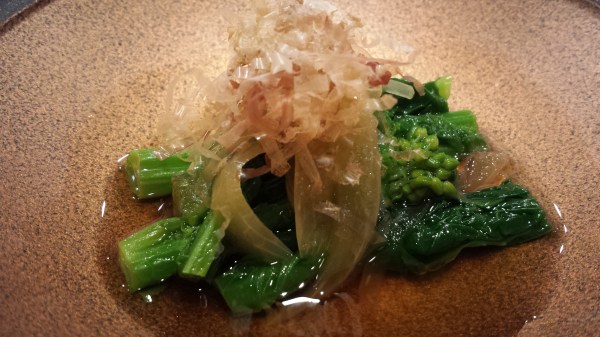
2005 Ch Montrose (courtesy of CJ), aired in bottle for an hour at Otto Ristorante on the occasion of Vincent’s farewell, 22 Dec 2016. Deep inky red, exuding a deep lovely fragrance, open and layered with glorious rich dark berries and redcurrants with a quiet intensity, highly supple with very well-integrated tannins. This will be great in time to come, but needs plenty of time. Excellent.
1997 La Spinetta Barbaresco Gallina (courtesy of Li Fern), aired in bottle for an hour at Otto Ristorante on the occasion of Vincent’s farewell, 22 Dec 2016. True to its Barbaresco roots, this wine is open and feminine with an excellent body of dark red fruits and blueberries, medium-bodied, framed by soft sweet chewy tannins and finishing well. Excellent.
2008 Mount Mary Quintet, a magnum decanted on-site at Otto Ristorante on the occasion of Vincent’s farewell, 22 Dec 2016. Consistent with a previous note a year ago, this wine is surprisingly mellow and open with soft feminine tones of rose petals amidst a lovely floral fragrance, displaying excellent acidity with some lovely intensity, finishing well. Excellent.
2001 Poggio Salvi di Montalcino Riserva (courtesy of Li Fern), . This wine opens with aromas of old wood and almonds, gradually evolving to a more complex bouquet recalling red fruits and rose petals, well-replicated on the palate where it is gently layered and open, cloaked in lithe supple refined tannins, finishing with a spicy trace. Excellent.
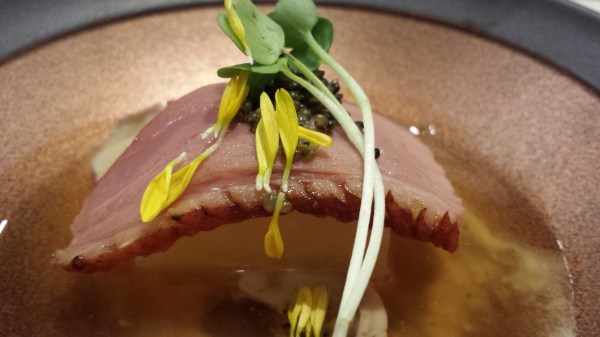
2008 Casanova di Neri Tenuta Nuova Brunello di Montalcino (courtesy of Li Fern), aired in bottle for an hour at Otto Ristorante on the occasion of Vincent’s farewell, 22 Dec 2016. Great presence on the palate from a solid core of dark fruits, cedar, plums and grapefruit, exuding earthy forest floor characters with a lovely fragrance. Excellent.
Louis Roederer Brut Premier NV, popped and poured at Imperial Treasure Crowne Plaza, 24 Dec 2016. Somewhat reticent on the nose with notes of egg tart and some yeasty pungency while an intense concentration of lime, citrus and pomelo attack the palate with abrasive dryness, supported by stony minerals that lingered at the finish. One to go with food.
2012 Kalala Onkanangan Valley Pinot Gris, popped and poured at Dorothy’s Christmas Eve party. Forward with fresh green apples, pears and green melons, quite full with an easy presence from the subdued acidity, finishing with a bit of stern minerality. Drinking very well.
2000 Dom Perignon Rose, courtesy of Hsiang Sui at his Christmas party, 25 Dec 2016. Open with gentle red fruits, grapefruit and tangerines, its feminine tone aided by the fine gentle bubbles, supported by mild ferrous minerality that imparted a slightly stern demeanour at the finish.
2010 AF Gros Richebourg Grand Cru, courtesy of Hsiang Sui at his Christmas party, 25 Dec 2016. Very open with lovely deep notes, beautifully proportioned between the fragrant red fruits and saline minerals with a mild savoury dash without calling attention to itself, utterly seamless with a fine balance. Excellent.
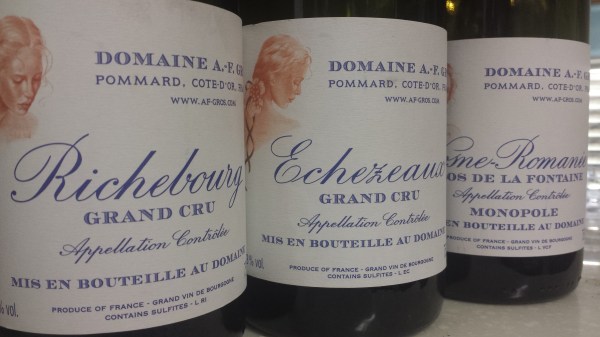
2010 AF Gros Echezeaux Grand Cru, courtesy of Hsiang Sui at his Christmas party, 25 Dec 2016. Broader and richer with a forward balance than the preceding Richebourg at this stage, still somewhat closed on the nose though its excellent concentration of glorious dark cherries and currants is apparent with good purity. Yet to unfurl its full glory but the potential is great. Excellent.
2010 AF Gros Vosne-Romanee Clos de la Fontaine, courtesy of Hsiang Sui at his Christmas party, 25 Dec 2016. This monopole village exudes a lifted floral fragrance of camphor and red fruits, displaying good concentration, depth and purity of fruit with a slight forward balance, structured with sweet subtle tannins. Very fine.
2005 Armand Rousseau Gevrey-Chambertin Lavaux St Jacques 1er, courtesy of Hsiang Sui at his Christmas party, 25 Dec 2016. Notes of sandalwood with a good concentration of recessed fruits, strawberries and subtle saline minerals comb the palate, very correct in its balance and guise, gently structured with lovely integration. Excellent.

2006 Armand Rousseau Chambertin Grand Cru, courtesy of Hsiang Sui at his Christmas party, 25 Dec 2016. Tasted after more than three hours of aeration, this benchmark of the Cote d’ Or is open with great purity and immense complexity from a wonderful body of fruit that exudes nuances of camphor, red plums, cherries and redcurrants, cloaked in sweet supple tannins and lovely acidity that lingered with great persistence. Truly wonderful.
1998 Veritas Hanisch Vineyard Shiraz (courtesy of Chee Foong) at Hsiang Sui’s Christmas party, 25 Dec 2016. This difficult-to-source wine opens with powerful deep dark tones of licorice and medicinal characters, big and bold on the palate, undoubtedly huge in proportion, yet well balanced without overwhelming the senses, saturating the palate with distinctive acidity and supple tannins that impart a biting intensity and persistent mouthfeel, mildly bitter at the finish. I am partial to these well-crafted robust Barossa reds but those who are less open-minded are advised to stay away.
1998 Greenock Creek Roennfeldt Road Shiraz, courtesy of Hsiang Sui at his Christmas party, 25 Dec 2016. Aired in bottle for about 30 minutes prior to tasting, this cult Barossa displays all the hallmarks of Chris Ringland’s craftsmanship, a deep garnet red that opens with powerful tones of ripe dark berries and black fruits, saturating the palate with great concentration, acidity and depth, framed by sweet velvety tannins and held in exemplary balance in spite of its 16% alcohol. Compared with the Veritas of the same vintage (above), this wine is considerably more open and sophisticated in feel, more refined in its spectrum and layering of fruit. Excellent.
2014 Markus Molitor Zeltinger Sonnenhur Auslese (courtesy of Li Fern) at Hsiang Sui’s Christmas party, 25 Dec 2016. This is a understated wine, highly enticing on the nose with notes of aged apples and tropical fruits whilst apricot and subtle nectarine tones dominate the palate, infused with subtle sweetness and acidity that belies its auslese classification. Excellent.
2002 Penfolds St Henri Shiraz, popped and poured at Huat Kee, renowned for its refined Teochew cuisine at RELC Singapore, 26 Dec 2016. I remember buying a case of this with Kieron back in 2006 when it was mispriced at only SGD58. Deep inky red, this wine opened initially with powerful medicinal aromas tinged with licorice, mushrooms and herbs leading to a full-bodied presence, though somewhat stiff and reticent. Over time, it transformed into a more open wine with better definition, recalling black fruits and dark plums on the nose while soy and black tea leaves dominate the palate with fleshy dryish textures, finishing with mild peppery tones. Drinking well but yet to hit its peak.
2003 Clos des Papes Chateauneuf-du-Pape, a bottle I’d cellared for many years, popped and poured at Perle Noire, 27 Dec 2016. Displaying an evolved tint of brownish red, this wine exudes gentle medicinal overtones amidst a complex of earth, undergrowth, sweet wild berries and briar with traces of licorice, medium-bodied, soft and open with good concentration and dryish textures that taper to a peppery spicy finish. At its best now.
Moet et Chandon Brut Imperial, at Shinzo (courtesy of Miah Hiang), 29 Dec 2016. Smoke incense and dry charcoal fill the nose with good presence of sweet citrus and lime characters on the palate, not too dry. Drinking well.
2004 Henri Abele, a champagne blend of pinot noir and chardonnay, popped and poured at Ming Kee Live Seafood, 31 Dec 2016, truly my last drop for the year. Generous aromas of smoke, earthy pungency, charcoal and yeasty tones fill the bouquet, exuding a gentle presence on the palate with soft bubbles amidst an attractive expanse of citrus and lime and subtle minerality, moderately complex but well-integrated and rounded, finishing with good length. Very fine.
Nov 2016: 2011 Sassicaia, 2000 Cos Labory, 2007 Zusslin Pfingstberg, 2006 Peccavi chardonnay, 2004/2006 L’Evangile…
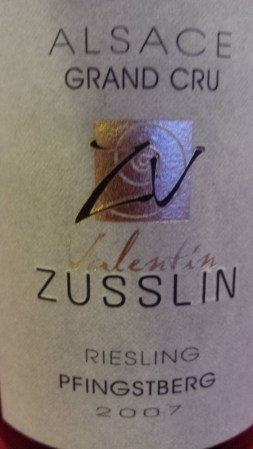 2007 Domaine Valentin Zusslin Pfingstberg Grand Cru, popped and poured at Ming Kee Live Seafood, 05 Nov 2016. This blockbuster riesling is still very youthful, saturating the palate with massive full-bodied concentration and intensity of green fruits and complex citrus along with stern ferrous minerality, evoking a sense of dense petroleum fumes characteristic of top-notch riesling. Long life ahead.
2012 G D Vajra Albe Barolo (courtesy of Vincent), popped and poured at Glen after hours, 11 Nov 2016. Dusty red. Fairly deep bouquet of mint and red fruits, medium-full, fleshy with a clean feel, soft but slightly dry at the edges with subdued tannins tapering to a gentle finish.
2000 Ch Cos Labory, served after a brief aeration at Wah Loke, Carlton Hotel Singapore, on 12 Nov 2016. This Saint-Estephe opened with an earthy pungency with overtones of bush, bramble and wild berries, turning very lovely after 45 minutes with a glorious glow of aged plums and dark currants, slightly gravelly in feel, displaying solid concentration of fruit with a firm tannic structure entirely consistent with its character, ending very well in a long minty finish. Cos Labory is often under the radar, thus representing excellent value but lengthy cellaring is required, a Saint-Estephe trait.
2006 Peccavi Chardonnay, popped and poured over dinner at Asia Grand, 17 Nov 2016. My last bottle from a half-case, and the best. Slightly unsettled at first, this Margaret River white morphed within 30 minutes into a medium-full proposition of generous proportions, stuffed with an alluring complex of floral fragrance and dense tropical citrus covered with broad swathes of chalky minerality, very well integrated and balanced with fine acidity and excellent depth, finishing very well. This has still some way to go before reaching its peak. Excellent.
2014 Cres Ricards, a 187 mL bottle served on board Silk Air flying home from Surabaya, 19 Nov 2016. This Pays d’Oc displays good concentration of wild berries, suitably ripe, with overtones of bush, earth and traces of vegetal elements framed by soft dusty tannins with dry textures. Nondescript but absolutely serviceable.
2006 Ch L’Evangile, tasted at Parkway Pantai’s Doctors’ Cocktail, Shangri-La Hotel, 21 Nov 2016. Generously proportioned, this wine is showing very well ten years post-vintage, opening with a lovely floral fragrance and some earthiness, layered with excellent depth and concentration of glorious ripe fruit with nuances of cedar, rich and savoury with fabulous silky tannins and acidity to match. Excellent, and will become even better with further age.
2012 Bonneau du Martray Corton Charlemagne Grand Cru, tasted at Parkway Pantai’s Doctors’ Cocktail, Shangri-La Hotel, 21 Nov 2016. Closed at this stage, tight with stern bitter lemon on the palate with subdued minerality and acidity without much else. Awkward now. Best to lay off for another few more years.
2010 Dauvissat Chablis Les Preuses Grand Cru, tasted at Parkway Pantai’s Doctors’ Cocktail, Shangri-La Hotel, 21 Nov 2016. Dominated by clear soft citrus and delicate minerality, exuding a gentle demeanour but, essentially, this wine is closed at this stage. Good potential, no doubt, but needs time.
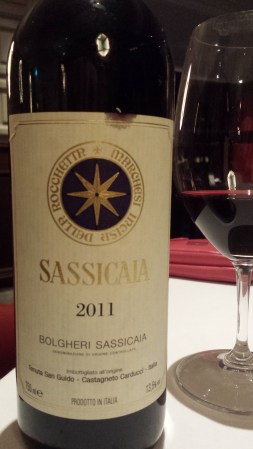 2011 Sassicaia,tasted at Parkway Pantai’s Doctors’ Cocktail, Shangri-La Hotel, 21 Nov 2016, and another bottle at Osteria Art, 26 Nov 2016. Earth, bush, dark roses and dark currants dominate on the nose, led by ripe dark berries on the palate underscored by graphite minerals and sweet silky tannins with excellent depth and concentration, quite fleshy with the fruit, lovely acidity and structure integrated in perfect balance, remarkably deft and already highly accessible, loosening up over time. This will turn out to be wonderful in another fifteen years. Excellent.
2005 Ch Pichon Longueville Comtesse de Lalande, tasted at Parkway Pantai’s Doctors’ Cocktail, Shangri-La Hotel, 21 Nov 2016. In spite of the stellar vintage, this wine has garnered mixed opinions and I can see why. Dark cherries and black currants contribute to a dark muted tone with further notes of bellpepper, camphor and vegetal traces (a characteristic trait of Pichon Lalande), rather firm, finishing with stern tannins though layered with good concentration and acidity. This Comtesse isn’t really engaging right now and it may take another decade for her to turn around.
2004 Ch L’Evangile, tasted from magnum at Parkway Pantai’s Doctors’ Cocktail, Shangri-La Hotel, 21 Nov 2016. The wine opens with a lovely aromatic glow, layered with an abundance of ripe red fruits and dark berries, very well-integrated and balanced, oozing with sweet tannins, great acidity and complexity. A classic claret, quite superb in fact, and still very much on the ascendancy. Great stuff.
2012 Domaine Meo Camuzet Vosne-Romanee Les Charmes 1er, tasted at Parkway Pantai’s Doctors’ Cocktail, Shangri-La Hotel, 21 Nov 2016. Glorious bouquet of lifted camphor, rose petals and bright red fruits of wonderful ripeness and purity with lovely acidity, intensity and concentration on the palate complemented by mild saline minerality. Very delicious now, but the potential ahead is huge.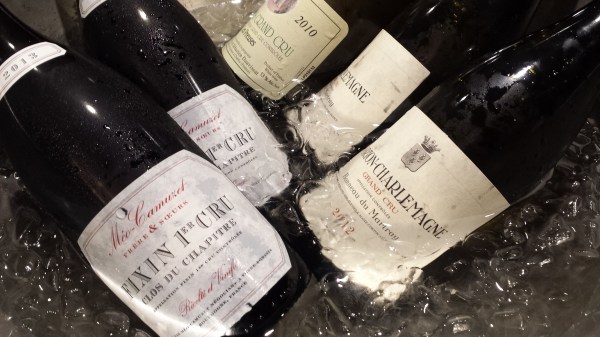 2004 Taittinger Comtes de Champagne Blanc de Blancs Brut (courtesy of Dr Wang KW), popped and poured at Otto Ristorante, 29 Nov 2016. This lovely champagne exudes a lovely deep earthy pungency with a great concentration of citrus and lime with a sweet edge matched by a bright rich minerally tone, fabulously intense with a lovely bloom of floral elegance and other notes of toast, walnuts and almonds, finishing well. Excellent.
2012 Joseph Faiveley Bourgogne, served after a brief airing in bottle at Otto Ristorante, 29 Nov 2016. Gentle aromas of crème, morning dew and icing, restrained with a soft floral focus on the palate underscored by mild saline minerality. Rather shy at this stage and may be worth cellaring another 2-3 years.
2012 Domaine Faiveley Gevrey-Chambertin Clos des Issarts 1er, served after some aeration in bottle at Otto Ristorante, 29 Nov 2016. In spite of its youth, this monopole exudes a superb floral fragrance of rose petals and dark cherries of great purity, predominantly feminine in character and already highly accessible, displaying a rich vein of red fruits supported by mild saline minerals, finishing with traces of graphite and camphor. Very lovely.
Saint Emilion Premier Grand Cru Classe A
This was the third and, probably, final gathering for Bacchus for this year, held on 03 Nov 2016 at Shang Palace, Shangri-La Singapore, a venue where the service is truly impeccable and the food entirely befitting of emperors. To up the ante further for Bacchus’ tenth anniversary, we introduced the pre-dinner promenade (in the style of FICOFI) and Shang Palace rose beautifully to the occasion by providing us with a luxurious adjoining room with an ample selection of small bites (thank you, Kieron) to go along before we eventually settled down for a private dinner. It was free-for-all for the inaugural mini-promenade and I’m glad members met up with expectations. For the promenade, we had…
2014 Chateau de Marsannay Chambertin Grand Cru. Gentle deep purple with intense characters of raspberries and camphor on the nose met by excellent concentration and purity of fruit on the palate, balanced by saline minerals and lovely acidity with further notes of rose petals over time, displaying good linearity with subtle but sophisticated tannins. Beautifully crafted. Already highly accessible now but will age very well. Few have heard of this producer with important holdings throughout the Cote d’Or that makes wines of great sophistication at highly attractive prices.
2012 Bollinger La Cote aux Enfants (courtesy of Li Fern). This very uncommon red from Coteaux Champenois exudes great color with a deep floral bouquet, displaying excellent pinot character, acidity and balance, slightly lean with dryish textures and finishing a tad short. Nevertheless, still delicious. La Cote aux Enfants come from a small 70-acre plot in Ay, located in the heart of Champagne’s grand cru terroir, made from free-run juice only in exceptional years, aged in 3-5 year-old barrels.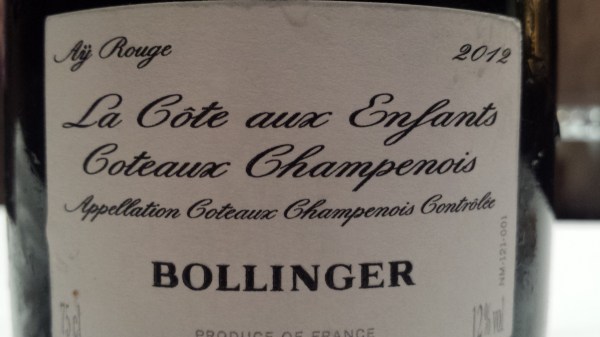 2014 Domaine Jean-Claude Ramonet Puligny-Montrachet Les Enseigneres (courtesy of Li Fern). This is a named village, slightly restrained though some raw nutmeg and white pepper are discernible but absolutely glorious on the palate where it is beautifully open and balanced, layered with excellent concentration and delicate minerality. Excellent.
2000 Pierre Peters Les Chetillons Brut Cuvee Special (courtesy of Kieron). Deeply layered with rich tropical citrus and chalky minerality, exuding a full delicious complex of toast, yeasty overtones and malt. A superb champagne, perhaps not surprising at all as it abuts Salon in Le Mesnil-Sur-Oger.
1998 Domaine Jean-Louis Chave Hermitage (courtesy of Andre). Tasted blind, displaying lovely color resembling a bright pinot tint with an arresting sharp fragrance of intense rose petals and camphor leading to a velvety palate of great concentration and acidity, yet beautifully balanced, tapering to a gentle finish. What a surprise it turned out to be when the wraps were removed. This is a great example of northern Rhone.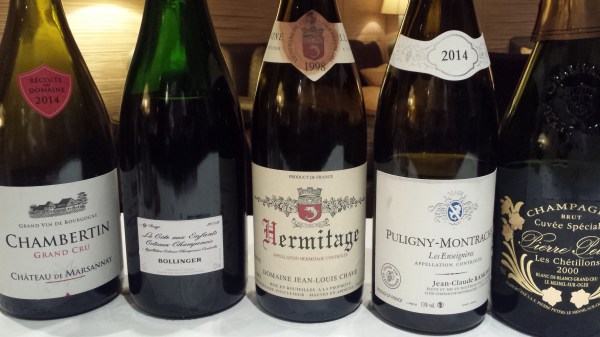 Inspired by my recent visit to the Right Bank, Kieron and I came up with the theme of Saint Emilion Premier Grand Cru Classe A to go with dinner and I’m grateful that members responded generously with their contributions. All wines were decanted on-site (with the exception of the sole Pavie which had been double-decanted earlier) and tasted simultaneously…
2001 Ch Pavie. Mild pungency with earthy medicinal characters. Medium-full, stuffed with a rich vein of ripe blueberries, dark currants, cedar and violets framed by subtle sweet tannins with a graphite tone, finishing with a minty trace. Still youthful.
2000 Ch Angelus (courtesy of Hiok). This wine exudes a lovely glow of dark fruits, plums and currants and other complex undefinable flavours, medium-bodied, rich but open and mellow on the palate where the lovely acidity and fine minerals are absolutely seamless and harmonious, drinking very well and finishing with wonderful length. Excellent.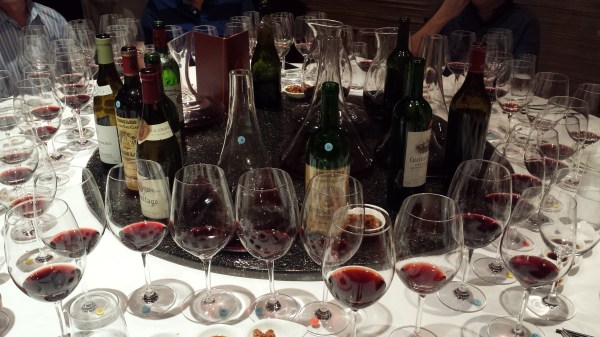 1999 Ch Cheval Blanc (courtesy of Kieron). Very lively and open with the distinctive note of camphor and a hint of vanilla from the predominant cabernet franc, highly harmonious with good concentration and subtle acidity, highly poised and composed. Beautiful.
1998 Ch Ausone (courtesy of David Ong). The last 1998 Ausone that I had was also at a Bacchus dinner at Iggy’s in 2010 where the wine was very full and richly layered, yet to open up. Now, another six years later, the 1998 Ausone, still displaying a deep color, has mellowed considerably, medium-bodied and superbly harmonious on the palate where it is most beautifully proportioned and unassuming, wonderfully subtle in structure with everything in place, enticing one to imbibe sip after sip, not at all showy. This has become quite the complete wine and will continue to hold for another three decades. Outstanding.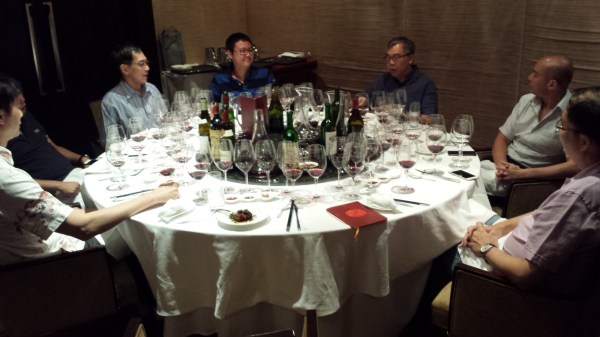 1994 Ch Angelus (courtesy of Victor). This particular wine tends to invite polarizing views but I have a soft spot for the 1994 and, on this occasion, it was positively singing, opening with a highly attractive earthy pungency leading to a lovely complex of raspberries, wild berries, blueberries, cedar and cinnamon on the palate, gentle and mellow with a lovely glow. One of the definitive highlights of an under-rated vintage.
1983 Ch Cheval Blanc (courtesy of Andre). Fully mature but still showing good color with a lovely feminine fragrance of camphor and rose petals, very open with a great kaleidoscope of flavours that kept evolving in the glass with fabulous definition, depth and subtle intensity, displaying great linearity throughout its superb length. There is a special reason why Cheval Blanc favours cabernet franc as its predominant grape and it takes thirty years for its full potential to be appreciated in bottle. Outstanding.
1982 Ch Ausone (courtesy of Li Fern). This is a truly beautiful Ausone, delicious and open with a lovely plushed complex of blueberries and raspberries and full of other subtle nuances, beautifully proportioned, masculine yet absolutely harmonious and silky with great acidity, producing a wonderful thrill on the palate. 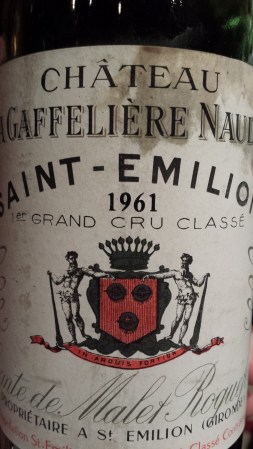 This great Ausone, caught at its absolute peak and still going strong, was made during the time of internal squabbling between Alain Vauthier and his great-aunt Mlle Héylette Dubois-Challon but it is good to know that the winemaking remained unaffected.
1961 Ch La Gaffeliere Naudes (courtesy of KP). Okay, this wine isn’t really right on theme but, then, KP wasn’t obliged to do so and a 1961 anything is always welcome. 1961 was the last vintage under this old name, after which its name was shortened to Ch La Gaffeliere as we know it today. And it seems that 1961 was also the last great vintage of Ch La Gaffeliere Naudes before quality slipped for several years until Stephane Derencourt stepped in to turn things around. As if to prove the point, this wine was, amazingly, still very much alive, open and still quite full with a fabulous hallowed glow of aged claret, displaying an abundance of glorious fruit and sublime acidity, still going strong with plenty of verve and vigour. Cést magnifique!!
FICOFI: Drouhin Montrachet 2012 & 2014, Château Montrose 2010, 2005, 1998 & 1976, Château d’Yquem 2005
These notes come from a FICOFI event on 21 October 2016 at the China Club, Singapore, showcasing the whites of Joseph Drouhin and a vertical of Château Montrose. It was good to meet up, once again, with M. Jean-Paul Dumond, Sales Director of the former, who appeared absolutely at home here in Singapore. Representing the Bordeaux Super Second estate was M. Herve Berland, its CEO since 2012, who had previously spent many years at Ch Mouton Rothschild. Like most FICOFI events, the focus was on the free flow of wine while the five-course Chinese dinner was a relatively straightforward affair. The preceding promenade was hosted entirely by Joseph Drouhin where it was clear that 2014 is living up to its exalted promise: wines of true finesse, depth and potential complexity with 2012 being absolute rivals (if you can still find them), eclipsing those of 2013 which are themselves excellent but requiring more time to unravel.
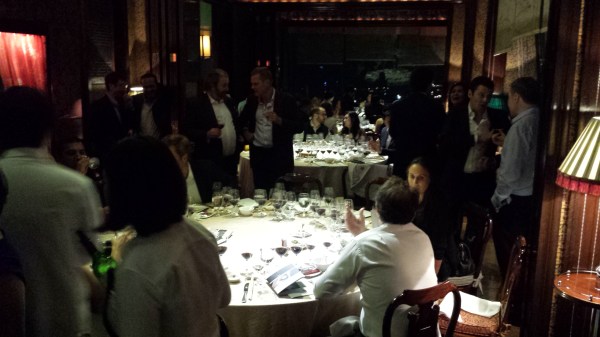 Château Montrose, on the other hand, proved beyond doubt the special value of ex-cellar wines which had remained exceptionally fresh in spite of the many years of bottle age. The wines featured that evening, of course, were made before the new CEO came on board. When I spoke in person with M. Berland, he appeared intent on fashioning Montrose in a more accessible style from young, something I’m not sure would sit well with me. As I see it, the terroir of Ch Montrose translates into wines that can be tough, perhaps even hard, in their youth but which will reward handsomely with time and patience, as exemplified by the 1998 and 1976 that evening. To me, that is what makes Ch Montrose so special. I don’t wish to taste another international wine. A Montrose must speak about its Saint-Estèphe terroir and if that cannot be hurried, so be it.
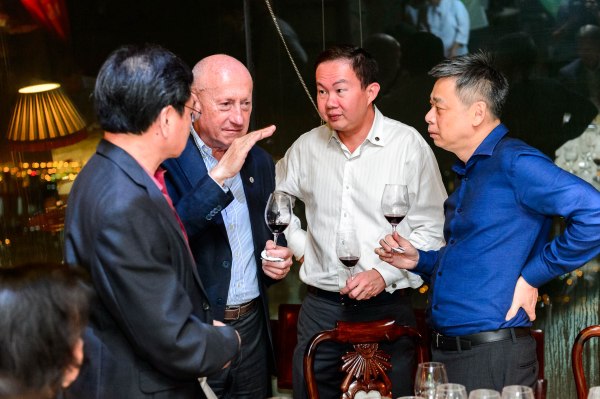
M. Herve Berland making a point
At the promenade…
2013 Domaine Joseph Drouhin Puligny-Montrachet Les Pucelles 1er. Gentle bouquet of morning dew, green fruits and crème de la crème, more minerally on the palate where it is delicious with good concentration and early complexity, but needs more time in bottle.
2013 Domaine Joseph Drouhin Bâtard-Montrachet Grand Cru. Deeper on the nose than the preceding Les Pucelles with delicious aromas of pineapples and tropical citrus of fine intensity, quite full though surprisingly placid on the palate with gentle crème de la crème, turning quite minerally at its lasting finish. Everyone loved it. Excellent.
2010 Domaine Joseph Drouhin Meursault-Perrières 1er. Somewhat shut on the nose though some tropical fruits and green apples are discernible. Medium-bodied, quite lean though infused with good concentration of minerals with overtones of wheat, turning rather stern after some time as it tapered to an austere finish.
2014 Domaine Joseph Drouhin Montrachet Marquis de Laguiche Grand Cru. Beautiful lifted bouquet with rich luxuriant notes of crème de la crème and white flowers, yet ethereal with subdued minerality and acidity, displaying very lovely balance, gentle intensity, great elegance and concealed power, revealing greater detail and definition as it sat in the glass, infinitely persistent in its finish. Outstanding.
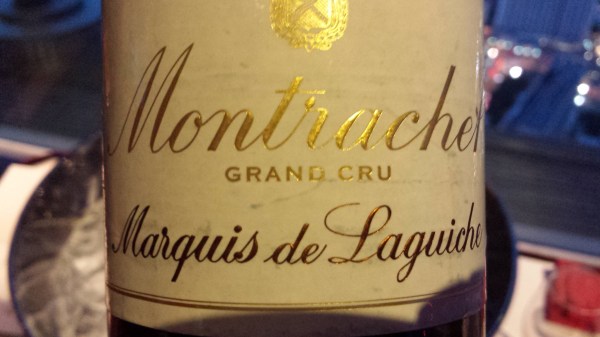 2014 Domaine Joseph Drouhin Chassagne-Montrachet Morgeot Marquis de Laguiche 1er. Forward balance with good concentration of clear citrus and green fruits with overtones of briar supported by saline minerals, fairly open but still a tad unresolved.
And for dinner…
2013 Domaine Joseph Drouhin Corton-Charlemagne Grand Cru. This wine opens with gentle fruity aromas, blossoming well into yellow citrus, rounded on the palate, gaining a bit of mild intensity amidst distinct notes of raw nutmeg before settling down again to a gentle finish. Very fine but it lacks the expression of a Bonneau du Martray.
2012 Domaine Joseph Drouhin Montrachet Marquis de Laguiche Grand Cru. As with the 2014, the Montrachet of 2012 is absolutely lifted with an effortless grace, excellent in concentration and definition, detailed with finely etched minerals on both the nose and palate, beautifully balanced with great harmony and elegance, highly persistent, finishing with a mild ferrous trace. Outstanding.
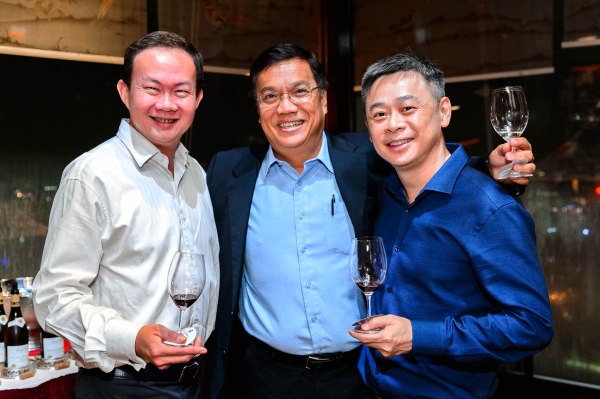 2010 Château Montrose. Shut initially, gradually opening up to reveal a very lovely bouquet, promising an abundance of dark berries and black fruits, potentially delicious. On the palate, the wine is rounded and beautifully proportioned and harmonious, positively glowing after some time though a distinct alcoholic wake is evident at this stage, yet to gain weight, finishing with good length amidst a tinge of green, austere graphite and dryish tannins. Great potential.
2005 Château Montrose. Lovely earthy pungency with very good depth of fruit, quite glorious, rounded and harmonious with good tannin structure, preserving the dryish texture of Saint-Estèphe, still youthful, ending on a minty note. Montrose has never been voluptuous. Technically very fine but it felt somewhat detached.
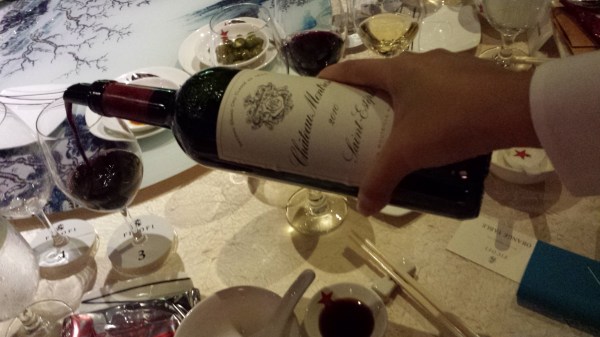 1998 Château Montrose. I still remember seeing bottles of this wine on the shelf of Carrefour going for only SGD79 back in 2003. This wine is showing very well with an attractive earthy pungency on the nose matched by a solid core of dark plums and blackcurrants with soy-like density, quite fleshy, finishing well with good acidity. Not profoundly complex but highly reliable and delicious. Very fine indeed.
1976 Château Montrose. Amazingly for its age, this wine still displays a lovely deep earthy pungency with a tangerine core on the nose, very open on the palate with excellent presence where it is still quite full-bodied with a plummy tone and good complexity with acidity that’s still quite lively, not in danger of drying out though short at the finish. Somehow, wines that are ex-chateau do keep very well.
2005 Château d’Yquem. A perennial favourite of M. Jean-Paul Dumond, this d’Yquem exudes an effortless bouquet of sweet smoky incense and complex nectarine, fabulous in intensity and concentration with further notes of vanilla and malt, made all the more exalted with its precision, controlled sweetness and superb understated acidity. Outstanding.
Ric visits Bodega Otazu
What’s that? Never heard this name before? Well, neither have I, until I visited this winery (“bodega” being equivalent to “chateau” or “domaine” in France although, strictly, the word means “cellar”) on 20 September 2016 and was totally blown away by its uniqueness, attention to quality and passion in winemaking.
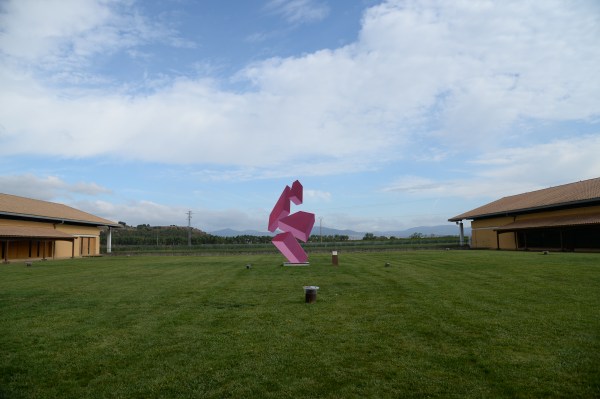 Located 8 km from Pamplona in the vast country of the Navarra region of Spain, bounded by the mountain ranges of Sierra del Perdón and Sierra del Sarbil and the Arga River, Bodega Otazu does not have a long history behind it. In fact, it was established less than three decades ago by its founder Patxi, although wine has been made in the Navarra region since the 15th century. Yet, in this short period since its establishment, its efforts have been recognised and Bodega Otazu was elevated to the status of Pago Appellation in 2009 (equivalent to highest cru in the Spanish wine classification system), awarded only to just a few wineries in Spain.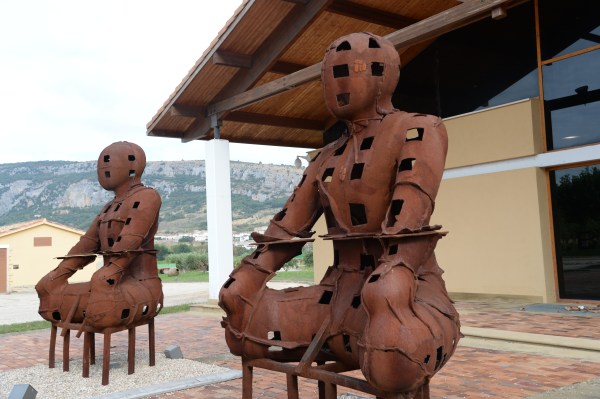
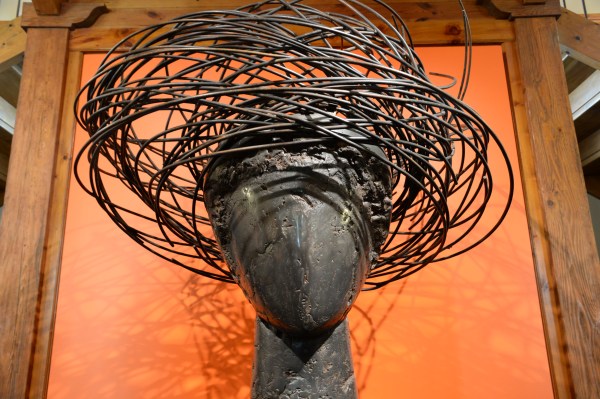 Still, I haven’t the faintest clue what to expect. We spent a good hour driving there from San Sebastian and when we arrived past 1000h, we were warmly received by Guillermo, a dashing young Spaniard in his 30s who speaks excellent English and who had taken over the reins from his father Patxi a few years ago. Sited about 400m above sea-level, Bodega Otazu enjoys the mild temperate climate of the Atlantic and cooler winds blowing down from the northern Pyrenees, both of which contribute to optimal ripeness of the grapes. As Guillermo proudly points out, the 115 ha of Bodega Otazu enjoys its own micro-climate. Four grape varietals – chardonnay, tempranillo, cabernet sauvignon and merlot – are grown on soil consisting largely of clay with pebbles and gravel which facilitates excellent drainage and root penetration.
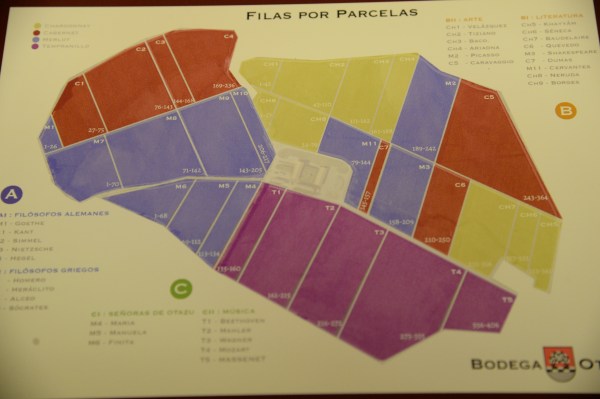 The first thing that caught our eyes when we arrived were large open-air modern sculptures adorning the lawn and various parts of the estate. That’s right, this is a winemaking estate that is hugely interested in music and the arts as well. Which winery in the world would name its various plots after its favourite composers? And so their signature tempranillo, divided into five plots, are named Beethoven, Mahler, Haydn, Strauss and Massenet, as are subplots of merlot named Wagner, Mozart and Bach. I have absolutely no issues with that; in fact, I am absolutely delighted in their choice of composers. Literary greats like Goethe, Shakespeare, Cervantes and Nietzsche (to name but a few) are not spared either. These are not some arty-farty B.S. done for the sake of publicity. Both Patxi and Guillermo breathe art and wine in equal measure. Talking to Guillermo, I realised he knew his music thoroughly and I found myself in deep conversation with him right away about Wagner, the Bayreuth Festival (he just attended The Ring there last month and didn’t like the production) and who sang Brunhilde best.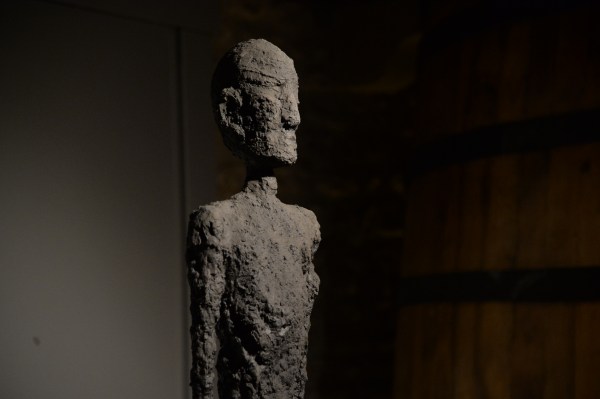
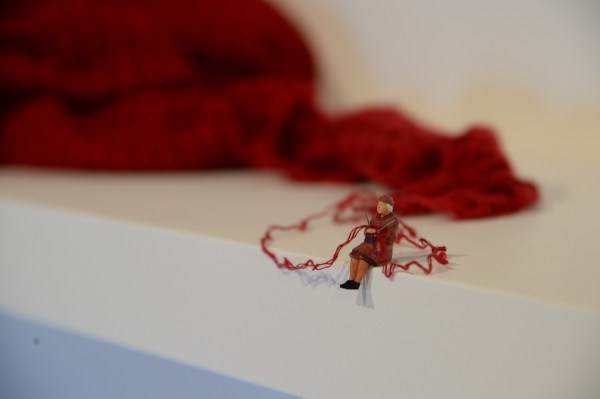
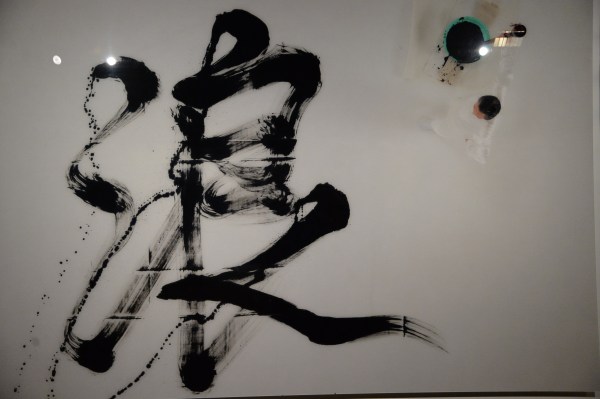 We were shown first to a museum showcasing its range of wines as well as (yes, you guessed it) a vast collection of modern artworks occupying every floor and corner of what used to be its old cellar. Patxi supports promising artists from all over the world and even Ai Weiwei has an installation there. We moved on to its new purpose-built cellar, plunged in total darkness at first, where one is only aware of Bach’s organ music being played in the background. Slowly, some imaginative back-lighting came on, revealing a vast spacious facility with high arch ceilings, gradually illuminating the multiple long rows of barrels lying quietly with their precious content. If the wine being cultivated in barrel listens to Bach, it can only be good.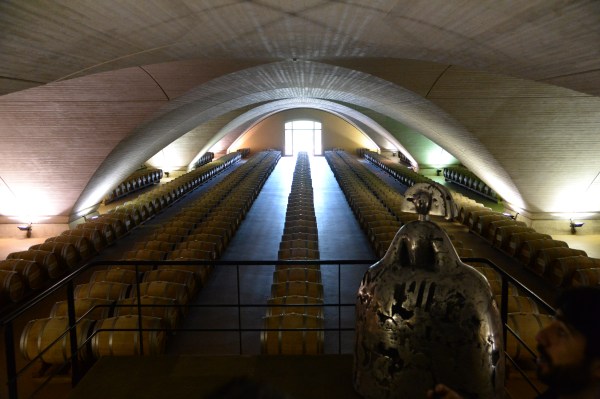
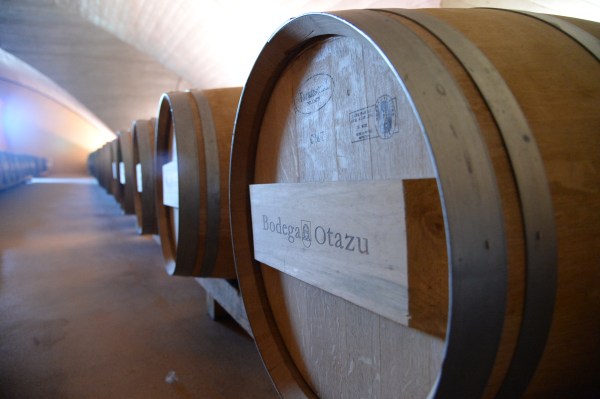 Bodega Otazu also practice what several other wineries around the world are beginning to do, releasing a vintage onto the market only after the wine has had 4-5 years of bottle age, as Guillermo figured that there is no point releasing a wine straight after bottling when it is not yet ready to be drunk. Of course, as a marketing tool, this effectively raises market anticipation and pricing if the vintage is excellent and the wine highly sought-after. The wine being aged in bottle are all housed within the estate and, yes, they listen to more Bach while lying undisturbed. Bodega Otazu certainly has the space and financial clout to do this but I cannot imagine smaller estates forking out money to hold back their own wines.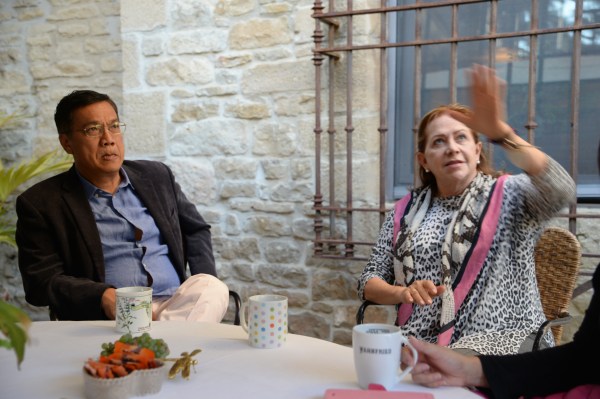
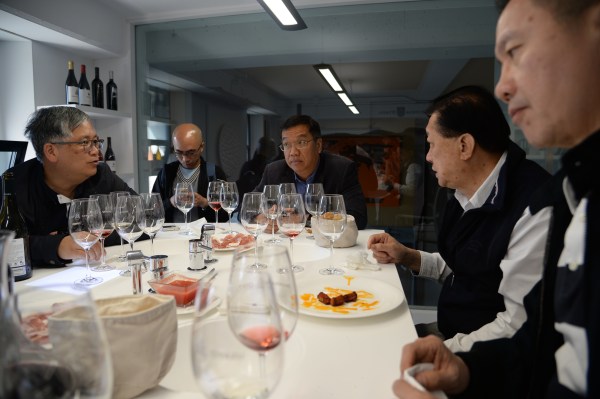
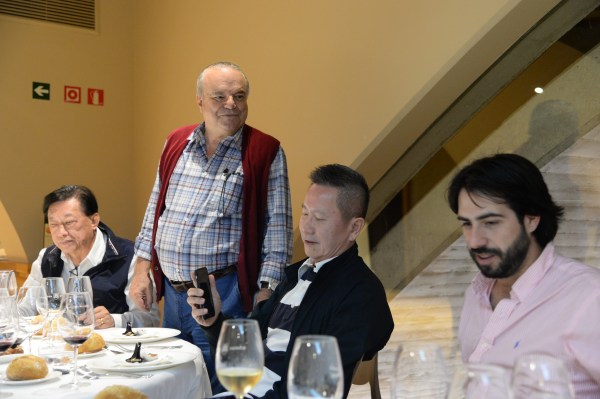 We were hosted by Patxi and his family to a superb lunch overlooking the cellars, where more of the 2007 Vitral was drunk. Bodega Otazu also regularly invites its guests to make their own wines.
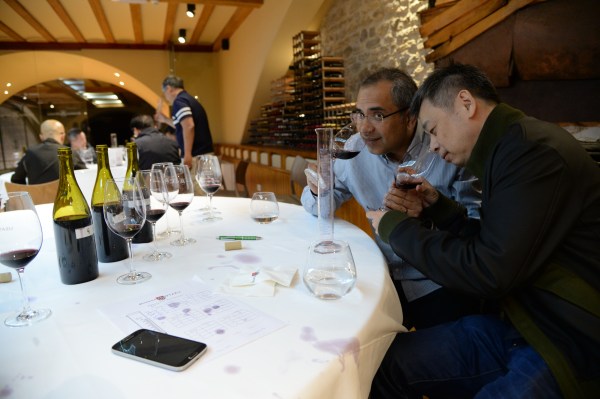
  Thinking that this must be some sort of gimmick, I was surprised when, after lunch had been cleared, three tables were set up, each laden with numerous stemware, burettes and measuring cylinders together with 3 full flasks of red wine marked cabernet sauvignon, merlot and tempranillo. We were split into three teams, each supposed to experiment with various blends of the three grape varietals whilst taking note of the exact proportion of each. We got down to some serious work and I was surprised that small variations in blend proportions actually do result in discernible changes on the palate. When we were done, the three different blends were duly noted by the cellar master who then produced a bottle of each blend. We were made to taste the three blends blind and vote for our favourite. It turned out everyone’s unanimous favourite was a blend of 85% tempranillo with 10% merlot and 5% cabernet (Dr Ngoi’s !!).
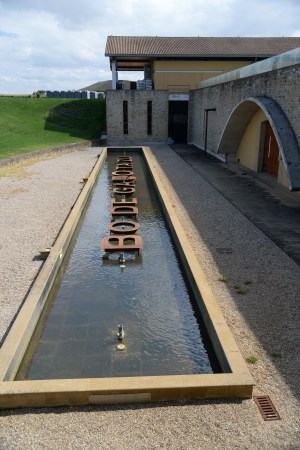
 We then spent the rest of the afternoon exploring various parts of the estate. There was the Romanian Church of San Esteban from the 12th Century, located in the heart of the Señorío de Otazu, part of the original St James´s Way. It was the first building in this spectacular natural scenery and inside the church there is a magnificent altarpiece in plateresque style from the 16th Century. Also of interest was the Defense Tower from the 14th Century, one amongst many other medieval defence towers in Sierra of Etxauri and in the surroundings of Pamplona. And, of course, there was the Palace of Otazu from the 16th Century that was the residence of Gil García de Yániz, señor de Otazu, lieutenant of the Governor of Navarra in 1351, now the living quarters of Patxi and family. In its courtyard was a grand old tree trunk that would do very well as the World Ash Tree in Wagner’s Die Valkyrie.
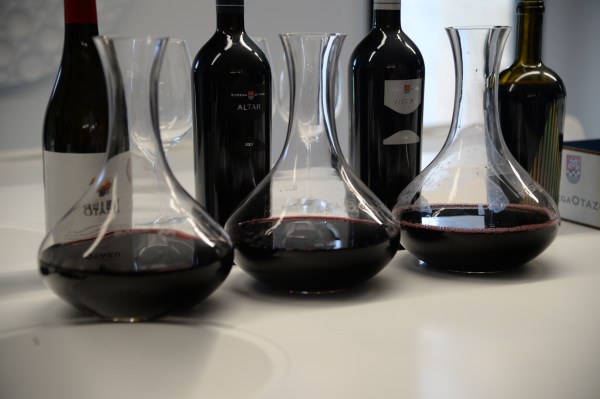 We spent the rest of the lazy afternoon yakking over coffee with Patxi before trudging back to the cellar in the main building, where some unfinished business awaited us. It turned out an entire barrel of Dr Ngoi’s winning wine had been made, to be aged for 12 months in French oak before it would be bottled and shipped to us!! We were asked which kind of bottling we preferred (magnum, of course) and to design our own label. Well, I’m absolutely flabbergasted.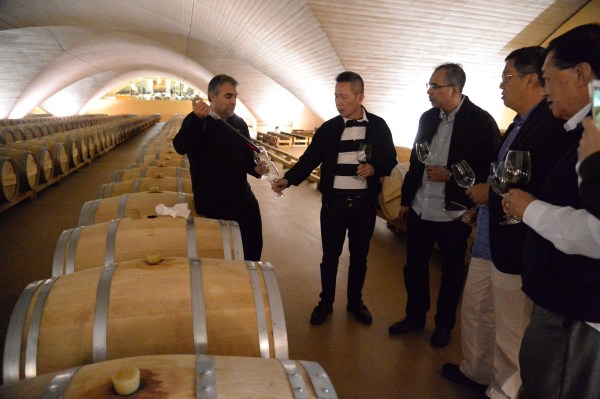
 2015 100% Grenarche tasted from barrel, displaying earthy tones, undergrowth and dark red fruits with great concentration and acidity.
2015 100% Merlot tasted from barrel, exuding powerful notes of dark berries and black fruits, a wine of immense concentration and intensity, framed by sophisticated sweet silky tannins with some graphite overtones.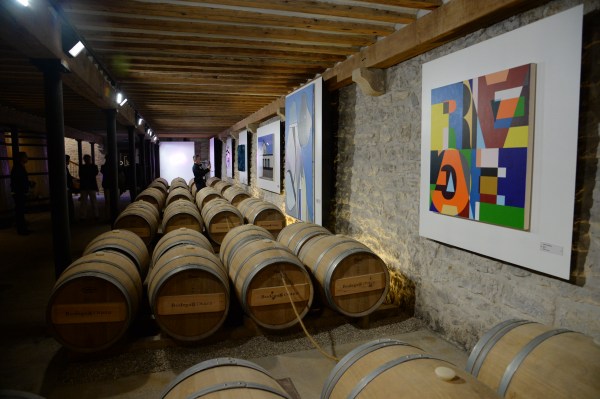 2015 Bodega Otazu Chardonnay. Unwooded at 13.5% alcohol. Absolutely delicious with notes of delicate citrus and gentle pineapples, medium-bodied but beautifully intense, very well balanced between fruit and acidity with understated minerals showing up towards the sparkling finish. Very fine indeed. Excellent.
2015 Bodega Otazu Merlot Rosado. Essentially a rose, delicious with a rosy fragrance, very easy on the palate with good acidity and just the right concentration of fruit, finishing well. Deceptively simple but highly satisfying.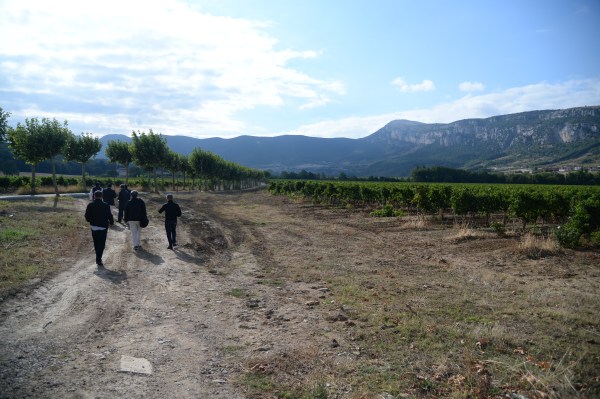 2013 Pago de Otazu Chardonnay Con Crianza. Aged 7 months in 60% new French oak, this wine exuded a beautiful complex bouquet of tropical fruits, rich in complex citrus and crème de la crème, rounded and highly aromatic with understated minerals, displaying excellent balance and mouthfeel. Excellent stuff.
2012 Bodega Otazu Premium Cuvee, a blend of mostly cabernet with 35% merlot and a bit of tempranillo. Selling for only EUR15, this wine carries dark red fruits, dark currants and wild berries, remarkably balanced with excellent acidity, great concentration and fabulous intensity all the way to its lastng finish. Superb value.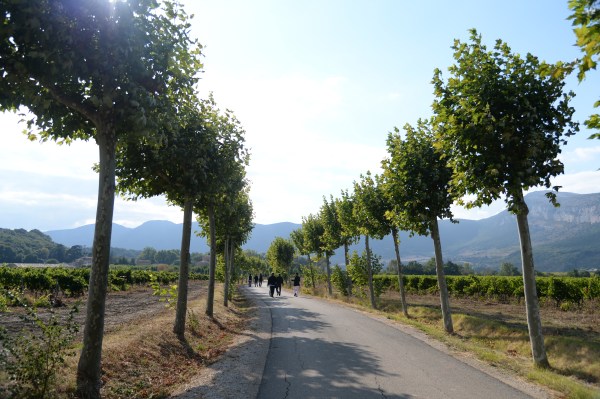 2009 Bodega Otazu Senorio. A blend of 75% cabernet, 20% merlot and a tiny bit of tempranillo. Quite lovely on the nose with bright red fruits, darker in tone on the palate with a spicy edge, displaying good complexity from the excellent depth and concentration of fruit along with fabulous acidity amidst traces of enamel, finishing well. Excellent.
2007 Bodega Otazu Altar. Only 20 barrels made annually, comprising 95% cabernet with the rest merlot and tempranillo. Deep and dark with a quiet brooding character. Big and bold on the palate with an abundance of dark currants, surprisingly gentle and beautifully balanced, layered with red fruits, displaying great definition and linearity all the way to its finish. There’s plenty going on here. Clearly one for the long haul. Excellent. 2007 Bodega Otazu Vitral. This is the absolute top cru of Bodega Otazu with only a few barrels made per year. In a promotional video, workers could be seen carefully selecting the grapes and handling them gingerly, each berry being uniformly rounded, pristine and full. Comprising 95% cabernet that is de-stemmed, the Vitral exudes a beautiful bouquet with a rounded complex red fruits and currants, open on the palate with great presence and fresh acidity, layered with sweet chewy succulence and superb tannin structure. A superb wine with huge potential. Outstanding.
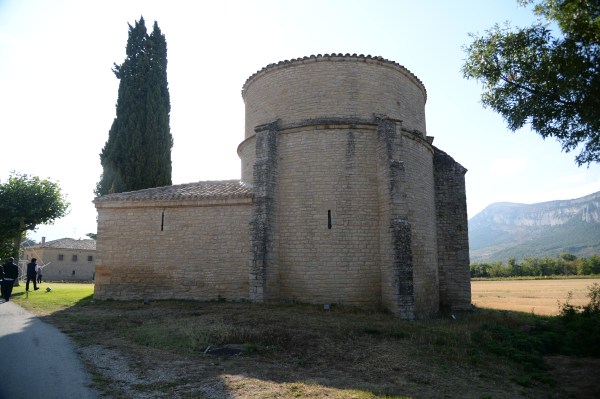 2013 Bodega Otazu Vitral, tasted from barrel. This wine possesses a superb depth of dark red fruits and black currants along with some briar and deep violets, rounded with excellent body, acidity and layering, colored by some spice at the edge.
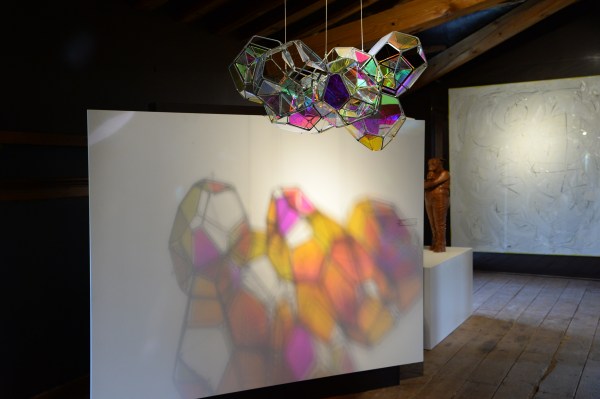 The shadows had grown lengthy by the time we took our leave. This surely has to be one of the most memorable visits ever to a winery. Throughout my time there, I was struck by the absolute passion, zest, energy, attention to detail, discipline and organisation in the work of Guillermo and his staff . Wherever you are, be sure to look out for Bodega Otazu, an estate where its values and ethos translate into outstanding wines at every price point.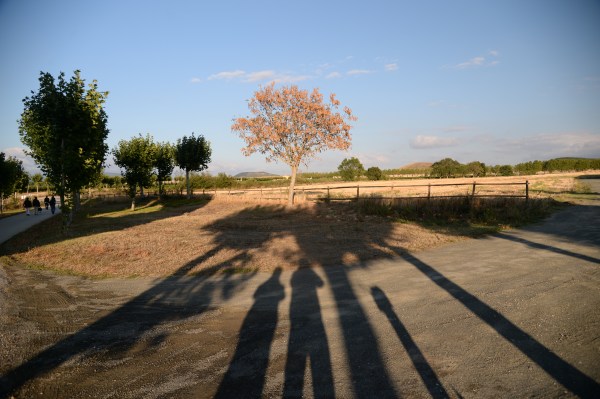
Oct 2016: 2009 Grosset Polish Hill Riesling, 2012 Mugnier NSG Clos de la Marechale, 2013 Bouchard Mersault Genevrieres…
2001 Elderton Command Shiraz, popped and poured at the Marriott Hotel, Singapore, 03 Oct 2016. Dark red with a hint of bricking at the rim, this wine exudes a bright bouquet of red and dark plums, licorice, camphor and red cherries, still rather full on the palate in spite of its 15 years although it is more open than before, its layers of rich velvety fruit more discernible now with overtones of earth, cinnamon, bramble and wild berries supported by lively acidity and good tannin structure, leaving a lasting impression on the palate. Subtlety isn’t part of its grand design. Very fine but, still, I think this is a wine principally for aficionados of Australian shiraz.
2005 Ch Haut Marbuzet, popped and poured at Beng Thin Hoon Kee, 07 Oct 2016. This wine is showing much better than previously several months ago from the same case, now considerably more open and delicious, quite succulent with notes of raspberries, blueberries and dark cherries with traces of earth amidst dryish textures of its St-Estephe terroir, fairly robust and full with a hint of rusticity though still a tad congested towards the finish. Requires further cellaring but it is developing very well.
1991 Penley Estate Cabernet Sauvignon, popped and poured at Jade Palace, 09 Oct 2016. This is a bottle sourced directly from the museum collection when I visited Penley in August. Sporting an opaque brownish red, this wine exudes powerful aromas of soy and herbal and medicinal elements, medium-full with excellent concentration and depth of fruit, displaying notes of ripe wild berries, bramble, raspberries and dark plums, laced with fine gritty tannins and acidity that’s still fresh and lively, becoming more earthy with further notes of chocolate, ferrous elements and dried mushrooms over time, growing in intensity as well as it built up a tannic spine. This robust cabernet may not actually have peaked in spite of its 25 years. Worth cellaring further.
2010 Francis Cossy L’Instant Nature champagne (courtesy of John Law), popped and poured at Otto Ristorante, 11 Oct 2016. An abundance of brilliant citrus, quite intense and sweet, well-blended with green apples and chalky minerality, quite full, slightly creamy and not too dry. Drinking well.
2009 Ch Le Doyenne, popped and poured at Otto Ristorante, 11 Oct 2016. This wine offers a truly fabulous and deep bouquet of dark berries and blackcurrants where the fruit is gorgeously ripe with more red fruits emerging over time amidst dryish textures on the palate, succulent and airy enough but somewhat attenuated in breadth with persistent graphite elements all the way to its finish. Still a fabulous drop at less than SGD45 on the shelf.
2011 Bouchard Pere et Fils Pommard Rugiens 1er (courtesy of Chee Wee), after hours at Glen, 12 Oct 2016. Popped and poured. This wine displays a classic pinot tint with characters of rose petals, cinnamon, ash and a dash of earth, medium-bodied and slightly dryish on the palate, rather polite though its tannins are surprisingly robust. Not really memorable, but very decent if you have nothing better to go with dinner.
2013 Bouchard Pere et Fils Mersault Genevrieres 1er (courtesy of Chee Wee), after hours at Glen, 12 Oct 2016. I much prefer Bouchard’s whites, this being a classic example. The bouquet of this wine is lovely, rich in crème, complex minerals and exotic citrus, alluring and persistent, well replicated on the palate where the complexity is even greater with a seamless blend between minerals and fruit with overtones of incense, excellent in concentration and depth with just the right degree of acidity, not exactly lengthy but here is a classic case where the whole is greater than the sum of its parts. Excellent.
2009 Grosset Polish Hill Riesling, popped and poured over dinner at Ming Kee Live Seafood, 15 Oct 2016. Compared with the 2008 (see last month), this wine is far more open on the palate where the blend of lime, clear citrus and traces of pomelo is excellent in concentration and layering with just the right degree of acidity, combining seamlessly with the flinty minerality and contrasting very well with the dense bouquet of intoxicating diesel fumes. This is a top-notch riesling by any standard.
Billecart Salmon Brut NV, over lunch at Aura, 16 Oct 2016. Notes of morning dew and clear citrus dominate on the nose, missing the usual yeasty tones of champagne, quite gentle on the palate where it was more minerally, finishing well.
2012 Therra Podernuova A Palazzone, over lunch at Aura, 16 Oct 2016. This is a very fine Toscana, opening with notes of enamel and ripe wild berries and dark currants, slightly earthy on the palate, vigorous with excellent concentration and intensity, structured with open gritty tannins that turned sweeter over time, developing further layering. Harmonious and well-balanced, just a tad dry at the finish. Very fine.
2011 Louis Jadot Saint-Aubin Les Murgers des Dents de Chien 1er, popped and poured at Otto Ristorante, 18 Oct 2016. A bottle from the same batch tasted at Garibaldi two days before, this wine offers notes of creme de la creme with a hint of perfumed white flowers, quite attractive but fleeting on the nose, leading to a slim profile on the palate dominated by icy minerality and a slightly sharp concentration of clear citrus, well fleshed out but could do with greater verve and complexity.
2005 Penley Estate Special Select Shiraz, decanted on-site at Otto Ristorante, 18 Oct 2016. This medium-full Coonawarra shiraz is quite open, laden with succulent ripe red fruits and currants, layered with structured sweet tannins, excellent in concentration and depth but never overwhelming, gaining in intensity at the finish. Clearly yet to peak. Very attractive.
2012 Jacques Frederic Mugnier Nuits Saint-Georges Clos de la Marechale 1er, popped and poured after hours at Glen, 20 Oct 2016. Deep gorgeous bouquet of dark cherries and dark roses with a hint of saline minerals and ripe plums. Rich, satiny smooth and layered with structured tannins and understated acidity on the palate, quite open, though it attained a stern and austere demeanour after some time, shrouding the fruit beneath. Good stuff, but needs more time to develop.
2005 Ch Bernadotte, popped and poured from magnum at Marina Bay Sands on the occasion of CGH’s Dinner & Dance, 22 Oct 2016. Retrieved from the cellar where it had been lying for quite a few years, this wine has evolved faster than I anticipated, displaying open and rounded plummy tones, gaining in weight and concentration of red and dark fruits over time with secondary nuances of cinnamon and cedar supported by fine acidity and understated minerality. Very reliable but do start drinking up.
Moet & Chandon Brut NV, served at the Racquet Club of the BNP Paribas WTA Finals at the Singapore Indoor Stadium, 26 Oct 2016. Bone dry with notes of green apples and crisp citrus, quite generous with some yeasty overtones but turning rather steely and metallic with stony minerals towards the finish.
2014 Beringer Chardonnay, served at the Racquet Club of the BNP Paribas WTA Finals at the Singapore Indoor Stadium, 26 Oct 2016. Rather shut initially, gradually revealing some creamy tone with white flowers in bloom. Good concentration on the palate with attractive minerality, developing further notes of melons and morning dew after some time, gaining some mild attractive intensity with a bit of ferrous edge..
2013 Beringer Sauvignon Blanc, served at the Racquet Club of the BNP Paribas WTA Finals at the Singapore Indoor Stadium, 26 Oct 2016. Quite lifted some attractive pungency and abundant citrus with traces of chiku, displaying good concentration with dryish textures, quite open with a certain deftness. Very attractive.
2014 Beringer Knights Valley Cabernet Sauvignon, served at the Racquet Club of the BNP Paribas WTA Finals at the Singapore Indoor Stadium, 26 Oct 2016. Fruit forward with generous concentration of briar, forest floor, dark green elements and dark fruits with sweet tannins. Easy but unmemorable.
 Ric's Wine Journal