Ric visits Château Ausone
After our late morning visit to Château Pétrus on 19 September 2016, we slipped back into Saint-Émilion to make our last chateau visit in the Right Bank, traversing the narrow lanes of this beautiful wine country that circumvent its historic town centre, climbing higher and higher until we arrived at the plateau of the hill where the road finally ends at the entrance of an estate with a single word carved onto its stone pillar: AUSONE.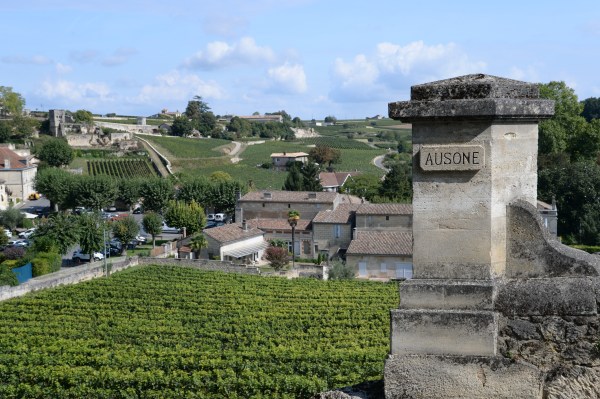

King’s Tower, Saint Emilion, as seen from Ch Ausone
Château Ausone sits at the top of a limestone hill at just about the highest point of Saint-Émilion, truly befitting its Premier Grand Cru Classé A status as it offers the visitor a breathtaking view of the hills surrounding Saint Emilion, not to mention the old church as well as the King’s Tower. Immediately downslope from the château are rows of vines that produce the grand vin of Château Ausone, all 7 ha of it, as well as those of Château Moulin Saint-Georges (a.k.a. the poor man’s Ausone), also part of its stable. Another 40 ha of vines under the care of Château Ausone along the slopes are those of Château Simard, which was bought over by Alain Vauthier in 2008. Here and there, remnants of ancient Roman ruins are clearly visible and even the site of the château itself is built upon ancient Roman stone works, which are now the underground cellars of the château.
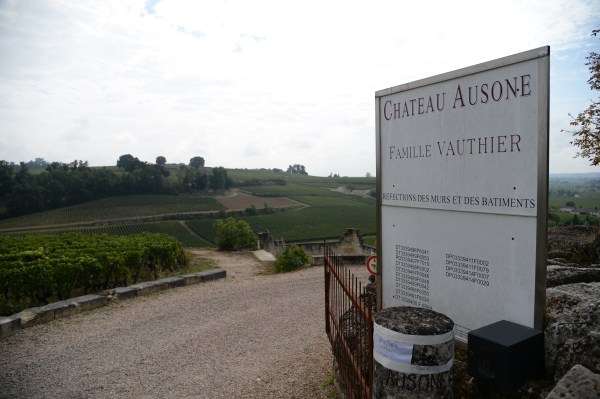
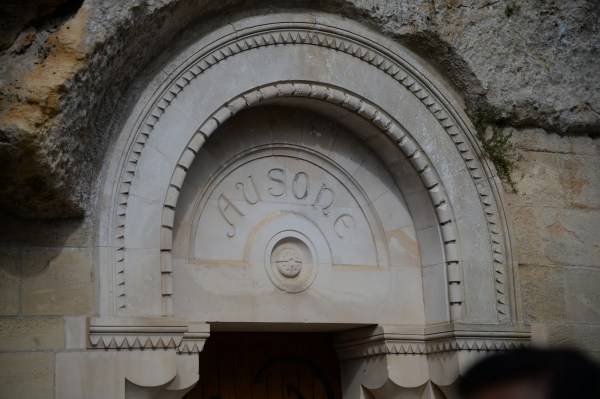
Did the poet Decimius Ausonius live here in the 4th century?
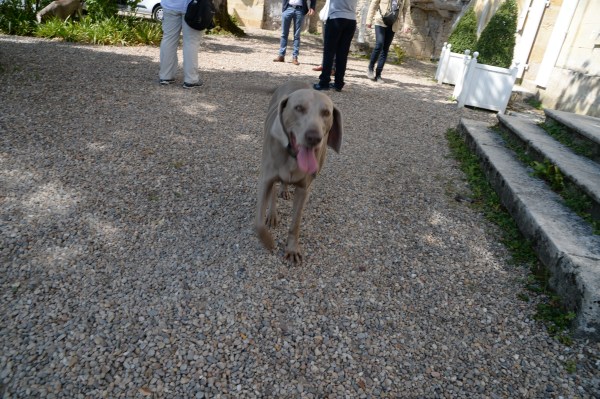
We were greeted on our arrival by a pair of greyhounds guarding the property. I was reminded of Robert Parker’s hostile encounter with a dog at rival property Château Cheval Blanc years ago but these hounds at Château Ausone were non-threatening, announcing our arrival to the current proprietress and winemaker Mlle. Pauline Vauthier, who has taken over from her father Alain, epitomising the current wave of female oenologists who are increasingly running the show in Bordeaux.

Gazing down from the edge of the hill, Pauline explained that the soil on the slopes comprises a mixture of limestone and clay, upon which the vines are planted at a density of 12,000 per ha, producing a mere 18,000 bottles (1500 cases) of the grand vin annually. Sitting high on the slopes, these vines are perfectly positioned to catch the morning light whilst allowing excellent drainage downslope in wet conditions. It is no surprise, therefore, that Château Ausone managed to avoid the debilitating frost of 1956 that badly affected other estates in Saint-Émilion.
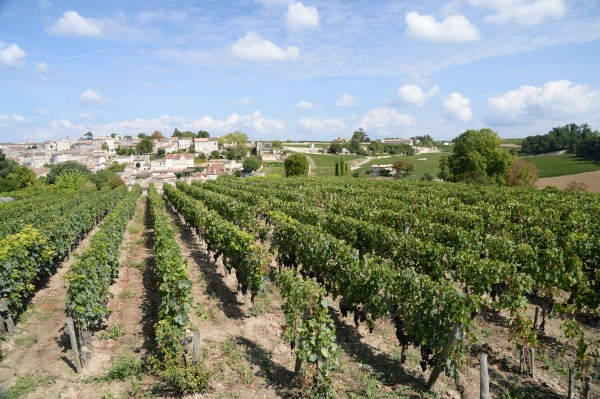
While the plantings used to be 50-50, nowadays there is more cabernet franc at 70% with the remainder merlot, not unlike Cheval Blanc, although in bottle, the blend is usually about 60-40 proportion. Another 5000-9000 bottles of its second label Chapelle d’Ausone is produced annually. The average age of the vines is 60 years with the oldest being planted in 1906 (cabernet franc). Viticulture is organic as far as possible and the chateau avoids pumping, preferring to move the wine into fermentation vats via gravity.
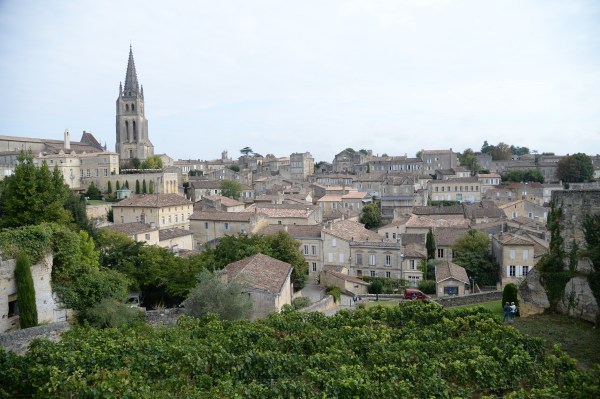
Looking at the old town centre of Saint-Émilion from Château Ausone

Château Moulin St-Georges yonder
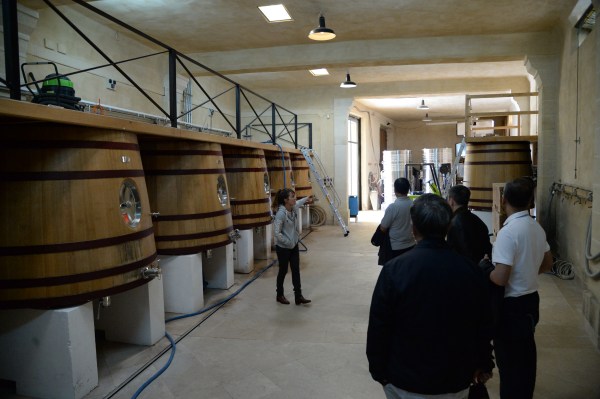
The cellars of Château Ausone are truly a sight to behold: dark, cavernous, naturally cool with walls that have been hewn and toiled for centuries by stonemasons who used to work in these limestone quarries. Housed within the small number of barrels there are the much-prized 2015 grand vin ageing away quietly, and I thanked my lucky stars to have landed a miniscule allocation of 3 bottles during the en primeur campaign earlier this year.
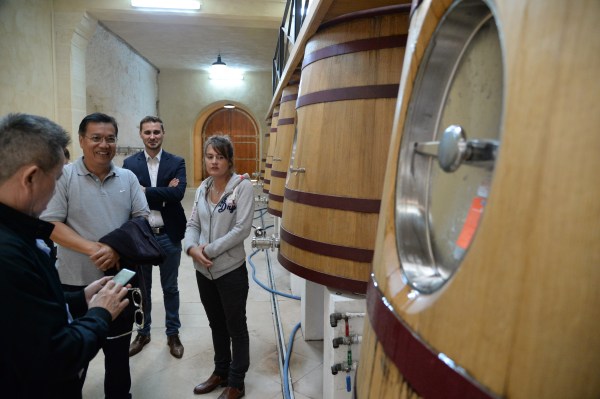
Mlle. Pauline Vauthier explaining the vinification process
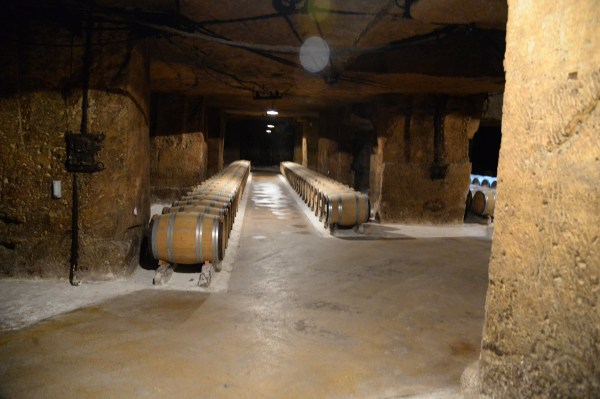

We adjourned to an elegant drawing room decorated in the rococo style for tasting where we learnt that Château Ausone, given its unique heritage and the site’s long history, is a property protected nationally for conservation. We tasted first the 2009 Château Simard, a blend of 80% merlot and 20% cabernet franc, aged in concrete vats and totally unwooded, made for early drinking. Already sporting an evolved color, this wine displays a lovely earthy pungency with a forward balance of red fruits and wild berries with good concentration and acidity, producing a very clean feel though it finished on a stern note. Good for casual pour.
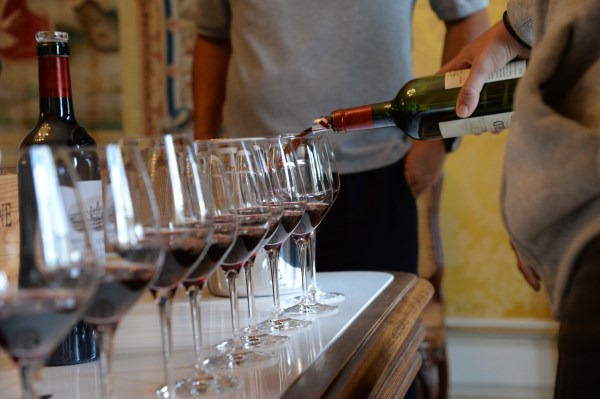
There goes one precious bottle of 2015 Château Ausone
This was followed by the 2015 Château Ausone that’s still in barrel, a blend of 60% cabernet franc with 40% merlot. This wine displays a fabulous deep impenetrable ruby in the glass, exuding a gentle bouquet of dark roses, red fruits and wild berries of excellent ripeness and purity, not at all overdone. Yet to put on weight but this wine is already harmonious with a feminine character, displaying silky textures with highly supple tannins and great linearity all the way to its lasting finish.
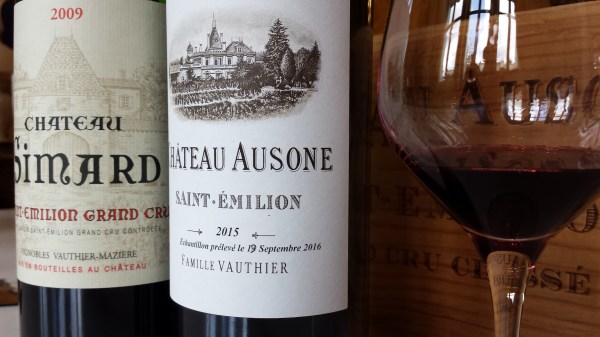
Look at the date on the label
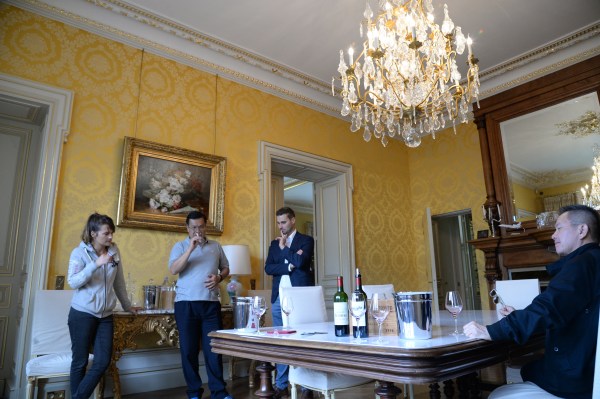
This represents only the fourth occasion where I have had the chance to drink Château Ausone, as the wine is expensive and difficult to source on the open market. Memories of a supremely elegant 1995 (tasted 2007) and a powerful, masculine but youthful 1998 came flooding back (tasted in 2010), as did a delicious elegant and decidedly feminine 1986 just three months ago. This visit wraps up a fabulous time spent at some of the most exalted properties of the Right Bank and certainly will not be forgotten. I must thank Mlle. Pauline Vauthier for taking care of us personally at Château Ausone, and to FICOFI for making this trip possible.
Ric arrives at Château Pétrus

Drive too quickly and you’ll miss this
Château Pétrus. The mere mention of this name immediately conjures excitement, awe, and a sense of the unattainable. Everyone knows Château Pétrus makes one of the most expensive and most highly sought-after wines in the world, definitely the most expensive of all Bordeaux. Tasting opportunities are rare, unless you have very generous friends who don’t mind popping a bottle for you, or you don’t mind splurging several thousands yourself. A visit to the chateau itself is also difficult to arrange, unless one is properly connected. It was with great anticipation, therefore, that the pieces fell in place for me to enjoy a private visit to this venerated estate on the morning of 19 September 2016.

For years, I have heard of people scrounging all over the tiny commune of Pomerol in search of Château Pétrus but being unable to locate it, unless one is sharp enough to spot the crossed-key emblem on a small nondescript building that is otherwise unmarked. Well, all that changed about 4-5 years ago. Now, a sizeable one-storey mansion sits at the site with the famous crossed-keys emblazoned on its forbidding iron gates with the French standard flying high from a tall pole with a “P” at its tip. It does appear rather imposing but when you make the wine that everyone wants but cannot get enough of, I guess one may enjoy certain bragging rights.

We were welcomed at the door by its Ambassador Elisabeth Jaubert and, together, we trooped down to the vineyard. Château Pétrus rests right at the top of a very gentle hill, all 11.5 ha of it, flanked by Ch Gazin, Ch L’Evangile and Vieux Château Certain. Unless one actually stands right there, this small but highly significant observation will go unnoticed. As Pomerol is largely flat ground, this gentle mound, therefore, affords additional drainage of water away from the vines, preventing dilution of the grapes.

Mme. Elisabeth Jaubert
In fact, I hadn’t realised until Elisabeth pointed out that the vines of Pétrus are planted in the direction of the slope, which means that on one side, the rows of vines are planted north-south, while on its adjacent plot, they are aligned east-west. This is one little fact that makes the wine of Petrus unique.
Then, of course, there is the soil, which is largely made up of clay. In particular, there is this matter about blue clay, which really has a bluish hue due to a higher ferrous content. It seems blue clay is unique to Bordeaux, particularly over at the Right Bank where Château Pétrus sits. Blue clay is not visible from the surface, as it lies several feet beneath. However, it seems that at the site of Château Pétrus, blue clay actually reaches up to within a foot of the soil surface.  Blue clay is extremely hard and impermeable, preventing the roots of the vines from penetrating deeply, forcing them instead to spread sideways in search of nutrition. Being impermeable, moisture also tends to remain on surface clay such that the roots of the vines remain relatively dry. To demonstrate this point, Elisabeth picked up a handful of clay which, truly, is moist. When the summer months arrive, this surface moisture prevents the vines from developing heat stress. This unique quality helps to separate Château Pétrus from the rest when it comes to so-called “off vintages” as its vines are capable of fending off extremes of heat as well as wet conditions. In fact, Elisabeth pointed out that the best value wines of Château Pétrus come from less vaunted vintages and I certainly can vouch for this, as memories of a glorious 1994 Château Pétrus came to mind (tasted in 2009).

These factors unique to the terroir contribute to the minerality of the wine as well as high levels of quality tannins in the merlot which, in turn, confers tremendous power and structure to the wine, yet retaining the silkiness of merlot. It is precisely because its merlot offers such optimal qualities that Petrus does not plant anything else, since cabernet is redundant. Nobody really knows when the first vines were planted at Château Pétrus, but the merlot from American rootstock (after the Phylloxera devastation of the mid 19th century) was planted sometime between 1880-90. Presently, the oldest vines in the estate were planted back in 1952. Vine density is quite low at 7000 per hectare. Like other estates elsewhere, its current merlot hanging from the vines are ripening well but the skins are still chewy and the pips yet to turn sweet, indicating that it is not yet time to harvest.


These furry ones peer down at the fermentation vats of Château Pétrus
From the vineyard, Elisabeth led us to the chai, which is modest in size since the quantity of wine produced is relatively limited. With harvesting due to happen very soon, the sorting tables, pumps and pipes are all in place. Vinification at Château Pétrus takes 15 days within its concrete vats. The ripest grapes are extracted first, starting at 14 °C, finally reaching around 28 °C at the end of the process. Prior to this, the vats are lined with tartrate to facilitate the natural environment when the berries are crushed. The wine is aged in 50% new oak for 12-16 months. Before being filled with wine, these barrels are actually steamed with water for 16 days to avoid the need for topping off during elevage. Racking takes place every 3-4 months with fining.

Not much to go around…only 2500 cases annually
After this, we moved to the château’s elegantly decorated tasting room to sample the wine of 2015 which we had just witnessed resting in barrel in the chai, where we were joined by M. Olivier Berrouet, the current winemaker at Château Pétrus who had taken over from his father Jean Claude since 2008.  While both Olivier and Elisabeth are fully aware of soothsayers declaring ever so often “vintage of the century” over and over, they are in agreement that 2015 Château Pétrus is the best wine that this estate has ever made. Fragrant aromas of earth, red berries and dark fruit dominate on the nose, quite resplendent, with further notes of ripe raspberries amidst a ferrous trace on the palate where the wine is quite full, displaying great acidity and tannin structure, already very harmonious in its subtle layering and drinking beautifully at this stage, finishing with great persistence. This is truly a wine of great sophistication, power and elegance. Indeed, it is rare to come across a wine already so complete while still in barrel. We stood around in stunned silence as we took in the beauty of this wine, quite the perfect way to start a Monday morning. The folks who work at Château Pétrus must surely be some of the luckiest people in the world.

M. Olivier Berrouet; 2015 Château Pétrus brings tears to Dr Ngoi:))

This has been a most satisfying visit. Contrary to its forbidding veneer, Château Pétrus turned out to be warm, gracious and very welcoming, and I have certainly come away understanding more about this great estate and its famous product. I must thank Elisabeth and Olivier for their time and generosity, and to FICOFI for making this visit possible. Merci beaucoup!

Etxebarri: Domaine de la Romanée-Conti 2005 Montrachet & 2012 Richebourg Grand Cru, 1999 Vega Sicilia Unico…
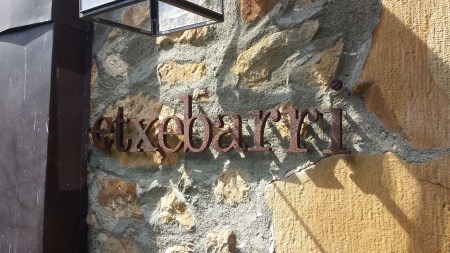 For some of us who are lucky enough, once in a long while comes a dining experience that blows you away. I wasn’t really expecting anything extravagant as we drove towards our lunch destination at Asador Etxebarri after a leisurely morning at the Guggenheim Museum Bilbao, 21 September 2016. Perhaps I should have known better, for Etxebarri is currently rated the tenth best restaurant in the world (Restaurant magazine’s 2015 Top 50 Awards). Of course, none of us knew about this fact beforehand. All we knew was that Pablo Alvarez, owner of Bodegas Vega Sicilia, had arranged lunch for us there, accompanied by some bottles of wine that he had sent over. Not only that; Pablo was also paying for lunch even though he himself couldn’t join us in person. Now, that should have meant something, for it is well-nigh impossible to obtain a booking at this venue, even though it is so far out of the way.
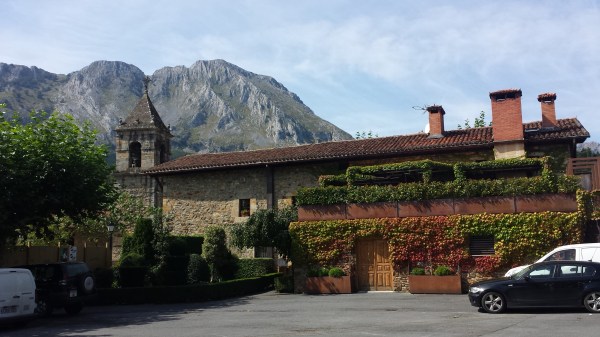
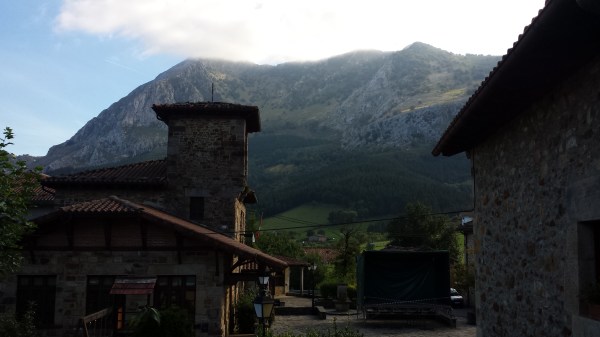
Etxebarri is located at Atxondo, truly off the beaten track, nestling within the idyllic hilly surroundings of the Basque Country where clouds hung low and the only sounds one hears are the tinkling of cowbells and the gentle rustle of the cool breeze. Established in 1990, Etxebarri (meaning new house) is run by owner and chef Victor Aguinzoniz aided by, of all people, a young Japanese called Tetsu who specialises in grilling the beef to perfection. That’s right. Everything here is cooked (or grilled) over a charcoal fire, for Victor loves to barbeque. In fact, the first thing one notices upon arrival is the gentle aroma of smoked meat wafting through the mountain air.

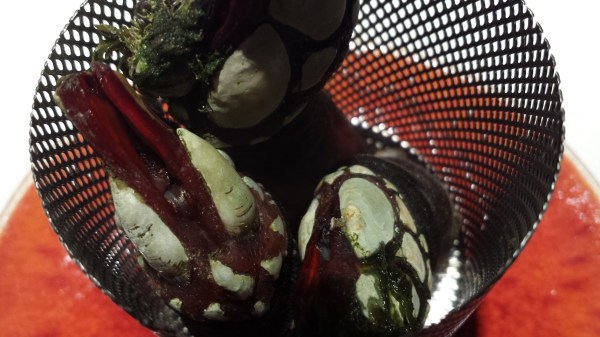
Goose barnacles
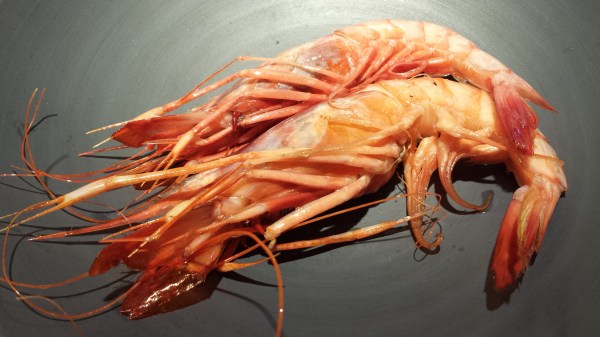
We arrived right on time at 1330h (the Spanish start their meals late, remember?) and we were welcomed by Augusti who ushered us to a private room on the upper floor. In spite of its one-Michelin star, Etxebarri is 100% casual. Augusti was dressed down, which says a lot, but everything else is top class, particularly in their choice of cutlery and stemware. A 12-course lunch had been set that included a large selection of seafood (goose barnacles, red clams, prawns, King bolete, white tuna belly) before culminating in a gargantuan beef steak.

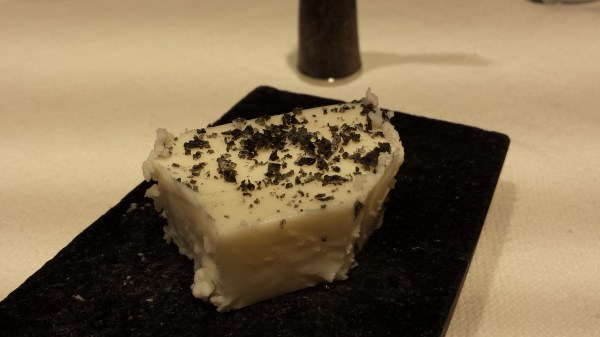
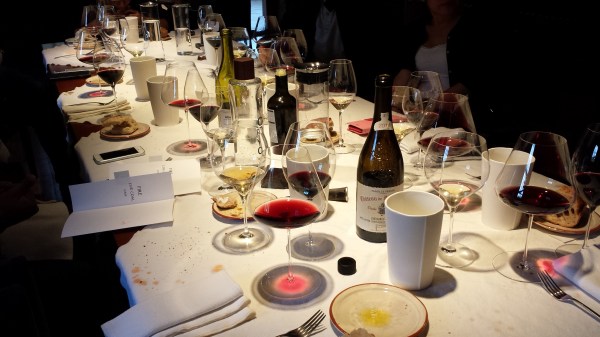
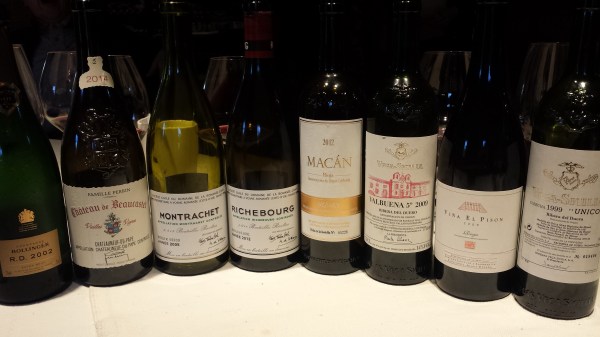
We hadn’t the slightest clue what wines Pablo had sent over but, apparently, he had issued strict instructions to serve them blind (with the exception of the champagne), so much so that Augusti had assigned himself to pour and serve us the wines, each of which was poured into a new glass. We began with a pair of Champagne Bollinger RD 2002, fabulous in its bouquet of deep pungency, recalling yeasty tones and malt, glowing with excellent concentration, fine intensity and complexity from crystalline minerals and yellow citrus with a touch of chalk, very harmonious with controlled dryness and sublime acidity, a superb start to the afternoon. One specialty of Etxebarri is its goat butter that complements their superbly fresh moxarella cheese spread to go with the large chunk of freshly-baked loaf, gorgeous but yet understated.
The first white came across as shy and reticent, displaying just a dash of crème and icing on the palate, light in texture yet possessing good presence with a placid mouthfeel and subtle acidity, eventually revealing some nutmeg character, finishing a tad short. Definitely not one of the usual suspects from Burgundy. Dr Ngoi wondered aloud: a rare ancient grape varietal? Quite spot on, for it turned out to be a 2014 Château de Beaucastel made of 100% roussanne, a Rhone white varietal. Interesting!

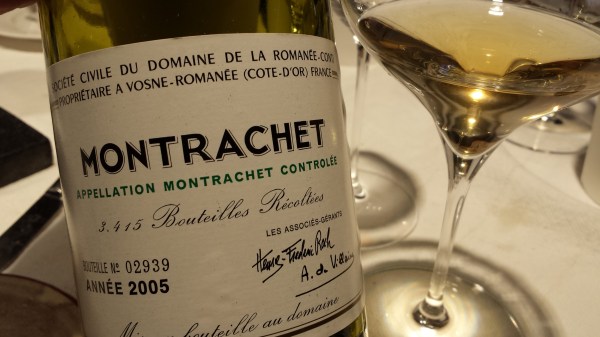
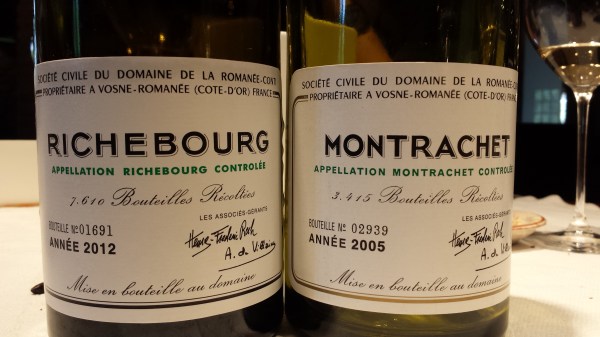
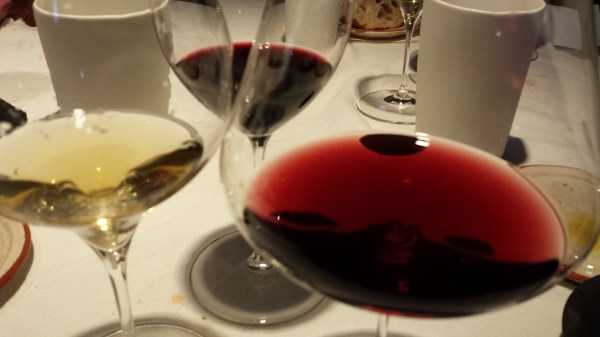
Soon, Augusti brought up a second white, glistening with a luminous luscious gold in the decanter. The colour could only mean one thing: it must be a Montrachet Grand Cru, which I concurred as well. From which producer? The bouquet glowed with aged crème de la crème and some secondary nuances that recalled yellow melons and peaches. On the palate, this wine was superbly proportioned, striking a perfect balance between the fruit, complex minerals and understated acidity, very harmonious with good layering, effortlessly seamless and not at all showy, eventually displaying a dash of burnt cider at the side with overtones of coconut, turning a little stern at the finish, maintaining its ethereal poise and elegance throughout. Not an exuberant or characterful Montrachet like Drouhin’s Marquis de Laguiche (which some thought this to be) but more placid like the Baron Thenard that I had last month, though this has more detail. We were blown away when Augusti showed us the bottle. I was very close: a 2005 Domaine de la Romanée-Conti Montrachet Grand Cru !!! This estate owns 0.67 ha of this hallowed vineyard, sandwiched between the plots of Baron Thenard and Ramonet on the Chassagne side. Well, who would have guessed that Pablo Alvarez would simply just pop a bottle for us?! D.R.C. makes only three whites: this Montrachet Grand Cru, a Bâtard-Montrachet Grand Cru which isn’t for sale (available only for tasting within its cellars which I did in September last year)) and a Haut Bourgogne specially bottled only for FICOFI, which means I’ve tasted all the whites of D.R.C. I’m truly lucky.
We were all still abuzz with excitement when Augusti came in again with more glasses and, now, a red that showed a glorious deep ruby with an abundance of rose petals and red cherries, producing a very lovely fragrance with further notes of camphor and incense on the palate where its purity of fruit and balance were quite exemplary, effortlessly poised with grace and concealed power. This must be a Domaine de la Romanée-Conti, undoubtedly. Can this be a Romanée-Conti itself? I’ve had the 2001 before earlier this year which was quite similar, a wine renowned for its sensuality and balance. Is this a younger wine? Most of us were convinced it was, though it was a 2012 Domaine de la Romanée-Conti Richebourg Grand Cru. Very very young to be drunk but already drinking so beautifully. I’d expected Richebourg to be more exuberant but it was truly elegant here.
The second red came along, very deep crimson with aromas of cherries, ripe strawberries and redcurrants, excellent in depth and concentration, bright on the palate with some briar and earth with subtle tannin structure and controlled power, quite open in spite of the density, not at all jammy. Doesn’t taste French and, since we knew these wines had come from Pablo, we guessed it must be a Vega Sicilia. But no, not yet, though, indeed, it was Spanish, the highly rated 2012 Macan (the inaugural vintage), a joint collaboration between Pablo Alvarez and Benjamin de Rothschild using 100% tempranillo grapes from Rioja Alta, aged in 50% new Burgundian oak. Highly successful.
We haven’t got on to the beef when another red was produced. Surely, this must be Vega Sicilia, very deep red, suitably bright on the palate with dark cherries and redcurrants with a dash of camphor and earthiness, displaying excellent layering and harmony with substantial power. Clearly not French but it was a 2009 Artadi Vina el Pison, a lifted pure expression of tempranillo from a vineyard in Rioja, planted in 1945. Outstanding.
2005 D.R.C. Montrachet (left), 2012 D.R.C. Richebourg (right), 2012 Macan (rear)
Yet another red was produced, exuding a lovely fragrance of bright red fruits and cherries with overtones of camphor, delicious and succulent, displaying excellent depth of fruit and concentration with a core of redcurrants and tangerine on the palate. Lovely fragrance. Vega Sicilia? Very close, just a notch down, the 2009 Valbuena No.5 from the same stable.
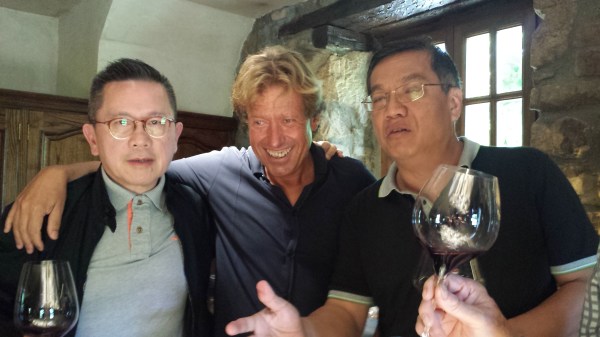
Simon Cheong, Augusti, Dr Ngoi
As we were about to embark on the gargantuan beef steak, there was yet another red, very close in character to the preceding Valbuena but with even greater layering and concentration of red fruits and redcurrants of superb depth, ripeness and fabulous intensity with an overtone of tangerines, open and alluring, framed by velvety ‘gritty’ tannins as if one was chewing the actual fruit, exuding a beautiful fragrance. Surely now, this must be it and, yes, a 1999 Vega Sicilia Unico. At this point, I must say something about the beef: it is the best that I have ever had – juicy, tender, succulent, everything that beef ought to be. In fact, every item we had was sublime. There is no gimmickry, no nitrogen, no bubbles. Just real food with real flavours, utterly fresh from its very modest kitchen with basically just a charcoal grill.
Pablo wasn’t done yet. For dessert, for which there were two courses, something golden and luscious was produced, possessing a beautiful nose of honeysuckle and nectarine with further apricot, crème and stony minerals on the palate, its acidity receding just a little, its sweetness very well managed. Surely a d’Yquem? But it turned out to be a 2012 Matias Torres La Palma, weighing in at 14.5% alcohol though you don’t feel it at all.
By then, it was 1800h. We all paid homage to Tetsu at the open air terrace with coffee and cigars, the young skinny Japanese chap responsible for the outstanding beef whom you think you’re more likely to encounter at a video game arcade in Akihabara. I will never forget this great meal. I am immensely indebted to Pablo Alvarez for his kindness and generosity. A big thank you, too, to Victor and Augusti at Etxebarri for their wonderful hospitality, and thank you as well, my friends, for being a big part of my life. Gracias mucho.
Ric visits Chateau Figeac
Right immediately after lunch at Cheval Blanc on 16 September 2016, we moved on to Chateau Figeac which actually abuts the former, showing just how close in proximity the various properties are in relation to one another in the Right Bank. We were met by its director M. Frederic Faye, a most genial and affable gentleman. 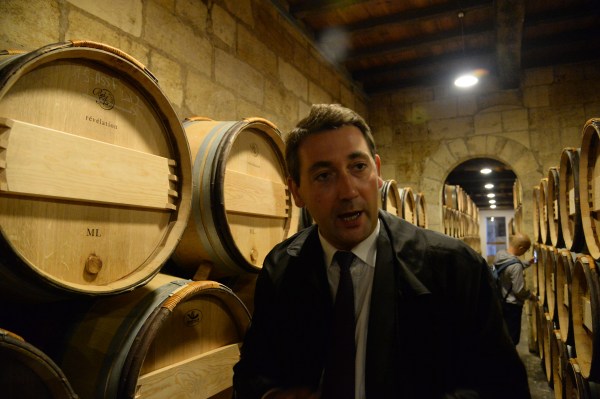
 Ch Figeac shares a common distinction with Ch Ausone and Ch Cheval Blanc in that they are probably the only properties in Saint Emilion where merlot does not dominate in its blend. In fact, Figeac is planted with 35% cabernet sauvignon (itself already unusual for the Left Bank) and 35% cabernet franc with merlot only taking up 30%.
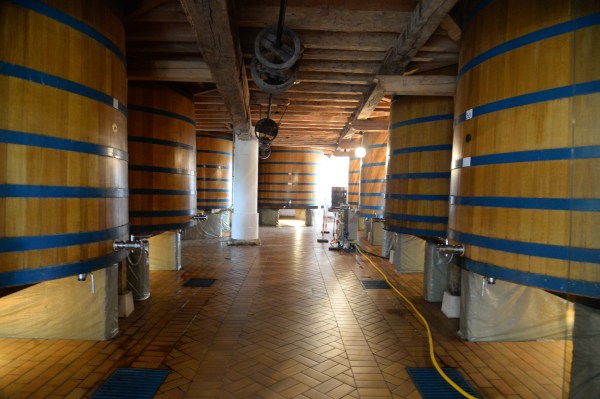
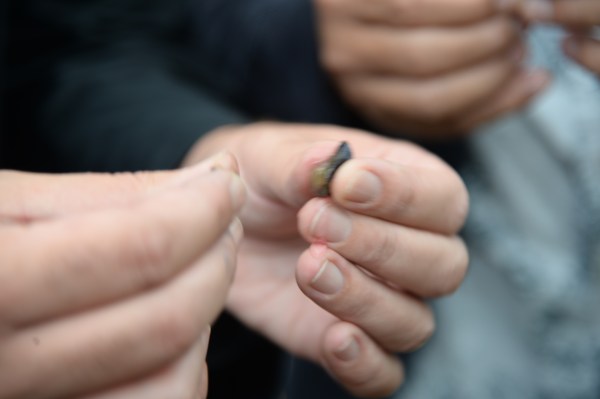
 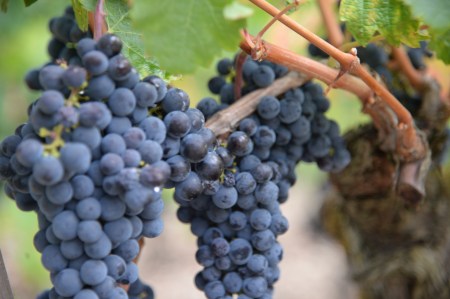 Again, nobody is quite sure how this blend came about for Figeac, but Frederic claims that part of the reason is because there are three outcrops of quartz, flint and blue clay within its 44 ha of vines, with another contributory reason being its gravel soil that goes as deep as 7 metres, making it well suited for cabernet sauvignon, which gives the wine a certain firmness and structure in the great Old World style that has won Figeac legions of followers, compared with many other estates in Saint Emilion which have opted for a more modern style of wine with higher alcohol, ripeness and extraction. It is also precisely because of the higher proportion of cabernet sauvignon that Figeac does not come across so well in its youth, needing considerably longer periods of maturation in bottle before the wine softens and mellows into a classic claret. As at other estates at this time, the grapes are ripening well and, in fact, taste sweet but the skins are still chewy and the pips have yet to become sweet, which would signify that it’s time to pick. Chateau Figeac vinifies its wine in large wooden vats, adding a small amount of pressed wine to the final blend before ageing in new oak.
  2009 Ch Figeac. Amazing deep and complex bouquet that suggests earth, lime and tangerines with quite a full palate of floral characters and redcurrants. Open, transparent and fresh with crisp acidity and fine supple tannins, displaying great linearity and finishing. Still not quite resolved but this will be a long-lived wine. Excellent.
  2011 Ch Figeac. Attractive aromas of sweet dark currants, blueberries and violets, well replicated on the palate with traces of green elements, earth and green pepper. Medium-full and rounded with good focus and transparency, well-integrated and more approachable than usual for Figeac at this early stage.
  2012 Petit-Figeac. Nice bouquet of violets, blueberries and dark berries, rounded and approachable now, appreciably with less fat and less complexity than its grand vin but still imbued with fine acidity, tangerines, red and dark fruits with overtones of green pepper that lend a touch of spiciness at the side, just a tad short. Perfect for earlier drinking while its grand vin rests in bottle.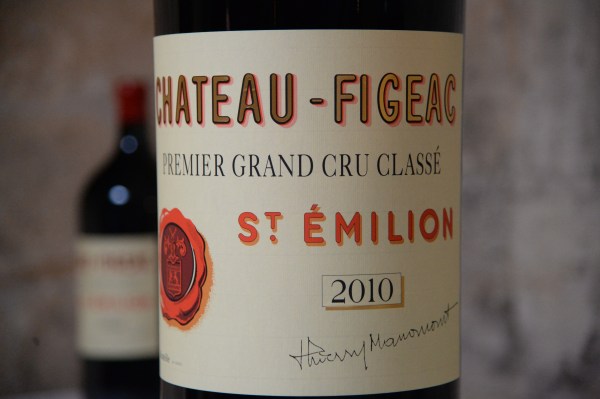
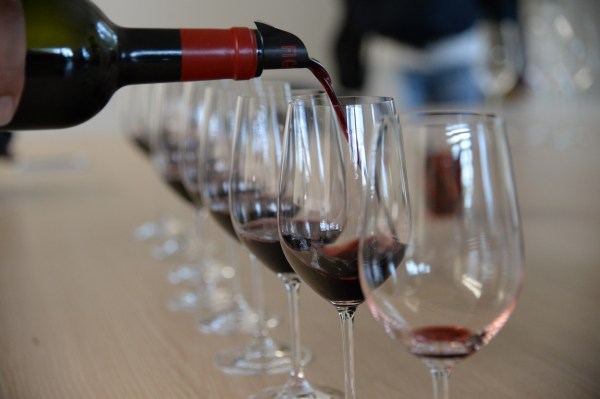 I must thank M. Frederic Faye for his time and generosity and FICOFI as well for organising this visit.
Ric visits Chateau La Conseillante
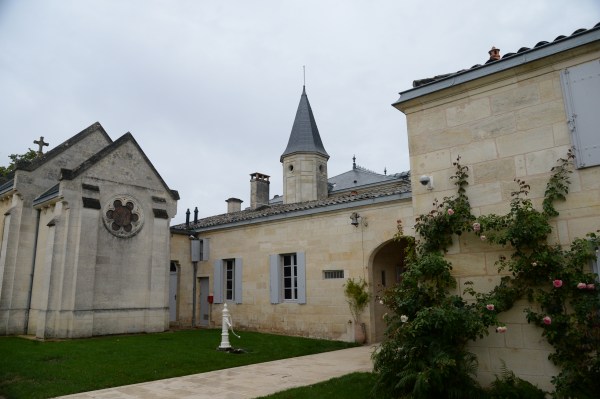
Chateau La Conseillante has always been a perennial favourite of mine. Rich, classy, sophisticated and complex, this wine is always reliable and, importantly as well, is still sensibly priced. As such, it was with certain delight that we made the short drive to Pomerol on 17 September 2016 and soon, we were rolling up the long driveway of Chateau La Conseillante which immediately abuts Chateau L’Evangile. We were welcomed by none other than the winemaker herself, Marielle Cazaux who immediately brought us up to speed with the winemaking at this venerated estate.
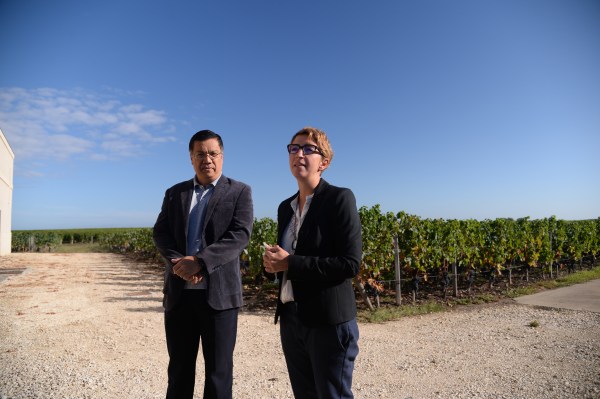
La Conseillante’s winemaker Ms Marielle Cazaux (right)
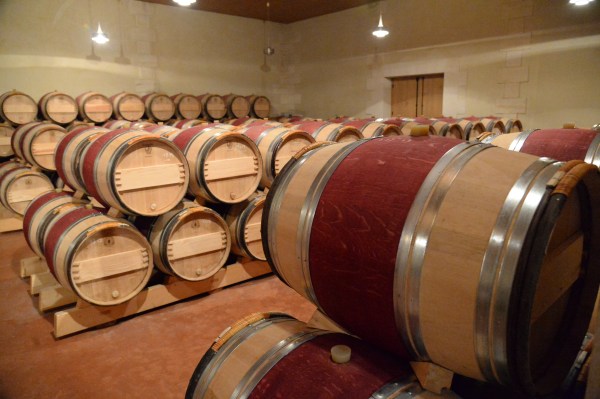
La Conseillante, which has been producing wine for more than 140 vintages, is currently owned by the Nicolas family, one of whom is actually a doctor. Marielle wasted no time bringing us straight to the vineyard proper, where all its 12 ha, which are split into 18 sub-plots, are planted with 80% merlot and 20% cabernet franc on soil that is 60% grey clay and 40% sandy gravel. Planting density is cropped at 7000 vines per ha, where the average age of the vines is about 34 years. 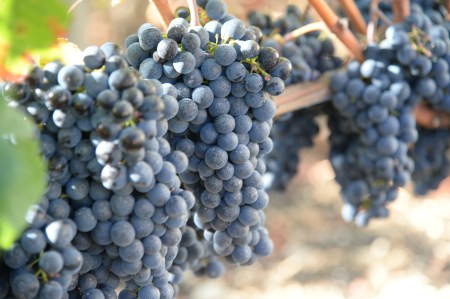 Like most other estates at this time, the vines of La Conseillante are heavy with ripening merlot that hung low, waiting to be picked. Deciding on the right time to pick is always tricky, and for La Conseillante, workers walk down the vines twice weekly when harvesting is nearing, each time picking about 200 berries for tasting and lab analysis. Indeed, in this third week of September, the merlot already tasted sweet but we were told that the grapes were still not quite ready, the skins still a tad thick and chewy while the pips, still decidedly bitter, have yet to become rounder and sweeter. Nevertheless, the chateau is already prepared for harvesting which will take place within the next couple of weeks, with outdoor tents already set up and its sorting table installed. The juice from each sub-plot will be individually fermented in concrete vats and subsequently aged in 70% new oak for up to 18 months. Fining with egg white is utilized, as is racking every quarterly. About 10% of pressed wine is added to the final blend for additional flavouring, colour and intensity.
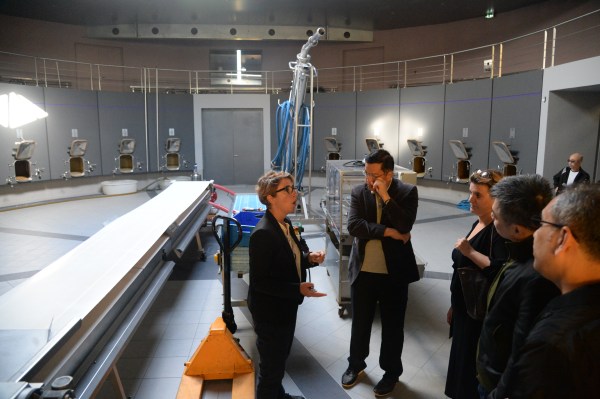
Sorting table and fermentation vats of Ch La Conseillante
Thereafter, we adjourned to the tasting room where a half bottle of 2015 Ch La Conseillante was opened for tasting. Of course, this wine is still ageing in barrel, and so what we were tasting isn’t quite the final blend, though it’s close. 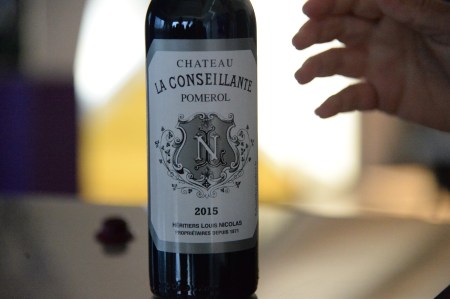 This wine displays quite an abundance of rose petals, red fruits, strawberries and irises with a trace of earth, its aromas lovely and beguiling, gentle on the palate with good levels of ripeness, acidity, concentration and understated sweetness, finishing with silky tannins. Already very fine at this stage and, like many other wines of 2015 that I have tasted en primer, it should develop very well later in bottle, fulfilling the promise of this much-heralded vintage. I must thank Marielle for her time and to FICOFI for making this trip possible.
Ric visits Chateau Cheval Blanc
This marks the beginning of a short but concentrated visit exclusively to the Right Bank of Bordeaux following a similar trip by the same group to Burgundy a year ago. Time truly flies. Within minutes of touching down at Merignac Aeroport on 16 September 2016, we were making our way to Saint Emilion to meet our lunch appointment at Chateau Cheval Blanc, scheduled for 1300h. At this time of year, the weather has turned decidedly cooler, the sky perpetually overcast with occasional bouts of very fine drizzle interspersed with brilliant shafts of sunshine whenever the sun broke cover. Throughout the plains, the predominant dark grapes of merlot hung low and heavily from the vines, waiting to be picked any time within the next week.


M. Pierre Lurton (right)
Even though the Right Bank does not boast any imposing chateau, the estate of Cheval Blanc immediately stands out from its peers, thanks to its manicured lawn and aristocratic-looking buildings that suggests at once wealth, breed and sophistication. We were met upon our arrival by M. Pierre Olivier, the Technical Director of the estate, followed soon after by owner M. Pierre Lurton (who also runs Ch D’Yquem) himself.
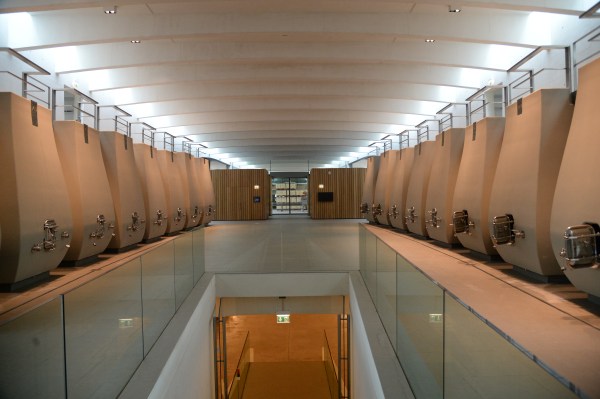
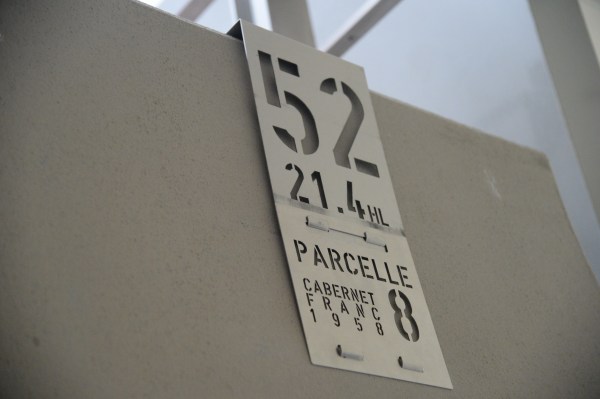
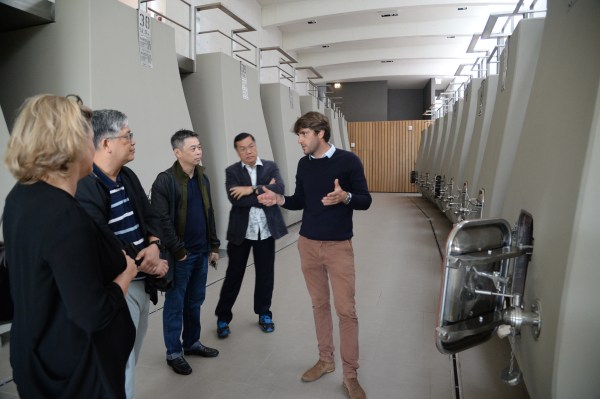
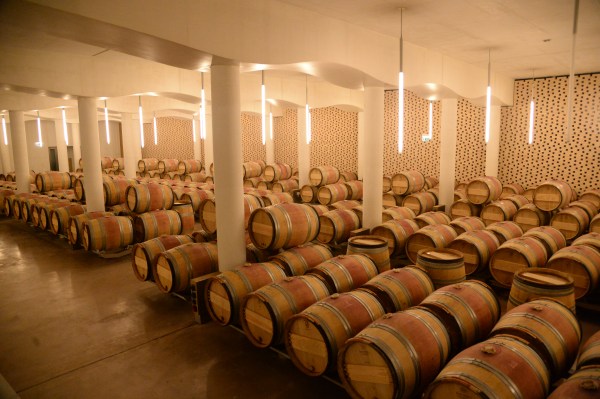
Cheval Blanc has the distinction of being the only wine that has cabernet franc as its main component in its blend with merlot making up the rest. Indeed, Pierre explained that more than half of the estate’s 39 ha of vines, split into 45 distinct plots, are planted with cabernet franc. Nobody really knows what prompted the estate to adopt cabernet franc as its main varietal. Perhaps it is because the soil here consists mainly of sand, clay and gravel, not the usual limestone composition that supports cabernet sauvignon. Nevertheless, Cheval Blanc has not changed its philosophy over the years and its cabernet franc certainly imparts a unique trace of spicy green pepper combined with velvety power during its youth, turning into a demure feminine beauty of great purity when the wine has matured. The grapes from each of the 45 plots are fermented in separate concrete vats housed in a brand new ultra-modern chai that is spotlessly clean. The wine in barrel is racked periodically and when we were there, racking was in progress for the 2015 sitting in barrel.
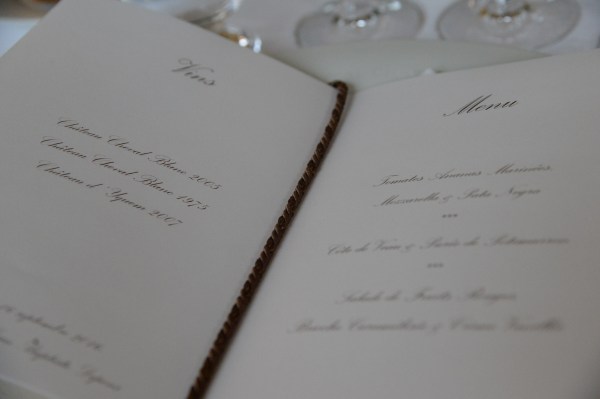
We were hosted to a generous lunch at the chateau by Pierre, beginning first with the Krug Grand Cuvee as aperitif, displaying strong yeasty overtones, toasted oak and earth, crisp, lively and vigorous on the palate with excellent concentration of lime and green citrus, not too dry, finishing very well. This was followed by a 2010 Joseph Drouhin Clos des Mouches Blanc 1er that displayed notes of aged cheese and chalk on the nose, gentle on the palate with unusual subtlety with recessed minerals and early secondary characteristics though the acidity is excellent, taking on a caramelised note after some time but, on the whole, this is a shy wine.
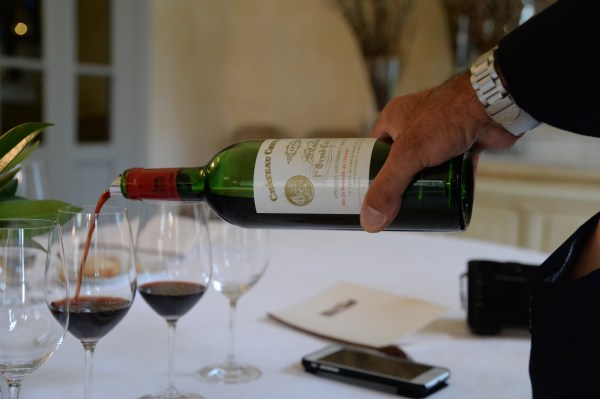
We opened the reds with a contrasting pair. The 2005 Ch Cheval Blanc displayed a lovely soft floral fragrance of young red fruits, strawberries and raspberries with a deeper core of tangerines on the palate, quite harmonious with silky supple tannins, developing a mild earthiness after some time although, at this stage, the crisp acidity is rather intense. Yet to settle down but this wine will be long lived.
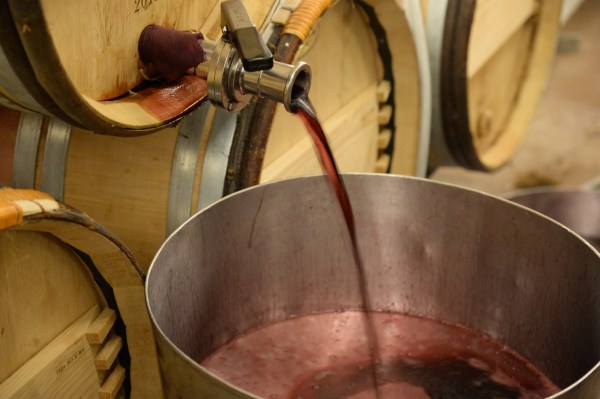
Racking of 2015 Cheval Blanc
In contrast, the 1975 Ch Cheval Blanc, fully mature, opened with a bouquet of mild earthy pungency coupled with a gentle rosy fragrance that was highly enticing, effortless and persistent, a hallmark of aged clarets. On the palate, the wine displayed a feminine elegance with good complexity, concentration and purity of fruit, not showy at all, remarkably poised and balanced but holding up very well, not at all in danger of fading, proving the longevity of cabernet franc.
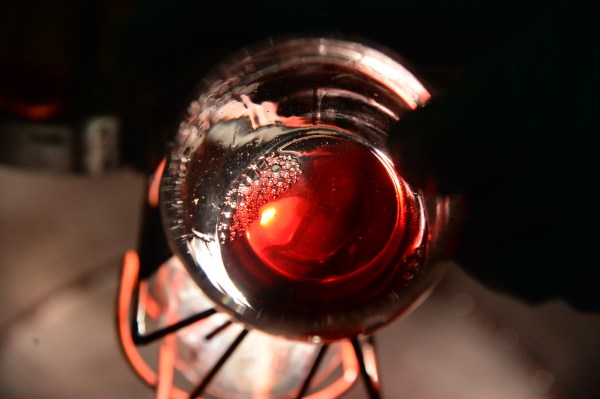
Bright and clear: 2015 Cheval Blanc from barrel
We concluded with a 2007 Ch D’Yquem which, of course, is part of Pierre Lurton’s stable. This Sauterne from this outstanding vintage possesses a generous expanse of nectarine, apricot, fig and glorious tropical fruits, absolutely fabulous in balance with lovely acidity, quiet intensity and concentration, exuding a great perfumed fragrance. Outstanding.

I must thank Pierre Olivier for his time and generosity and FICOFI as well for making this visit possible.
Domaine Albert Mann
This special event was organised by the Alsace Wine & Gastronomy Society, Singapore, on 27 August 2016, and I replicate the succinct introduction by the Society’s President, Mr Julian Teoh, about this estate: There are, perhaps, no greater believers in the magic of Alsace’s terroir than the Barthelmés of Domaine Albert Mann in Wettolsheim. Named French winemakers of the year 2012 by Revue du Vin de France (RVF) and rated in the top tier of French winemakers in RVF 2016, Mann is a true family operation run by two couples: Maurice (winegrower) and Marie-Claire (daughter of Albert Mann, who runs the business), and Jacky (Maurice’s brother and winemaker) and Marie-Thérèse (marketing and export).
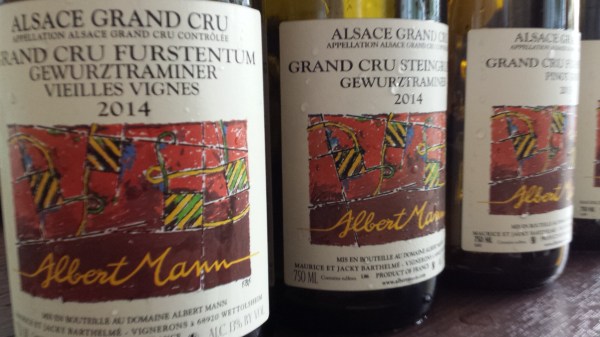
The biodynamic wines of Albert Mann are natural and authentic expressions of their soil and environs. Emphasising low yields per vine (never per hectare), the Barthelmés exploit some 21 hectares held as hundreds of different plots, including in the Grands Crus Schlossberg and Furstentum of Kientzheim (Maurice and Jacky’s inheritance from their mother, a member of the Blanck family of Kientzheim), and Steingrubler, Hengst and Rosenberg of Wettolsheim. Maurice, a marathon runner in fact and temperament, tends to each plot as one would a beloved garden.
For this tasting, the first time Albert Mann wines have been formally showcased in Singapore, we have controlled all potential variables – vintage, grape variety, winegrower – bar one, the vineyard and its unique terroir, so tasters can discern its full impact on the finished product.
The Society is most grateful to Marie-Thérèse and Domaine Albert Mann for making this tasting happen.
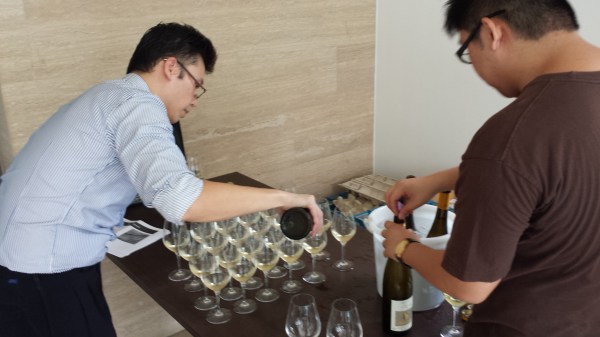
Julian is a hands-on President
2015 Albert Mann Cuvee Albert Riesling. This wine opens with a mild floral fragrance, leading to good intensity, concentration and great acidity on the palate leading up to a gentle citrus spine, displaying good focus and finish with a deep overtone of caramel.
2015 Albert Mann Rosenberg Riesling 1er. Very enticing bouquet, more minerally than the preceding Cuvee Albert, though restrained with a certain gentleness on the palate with subdued acidity, some sweetness and good body with a bit of ferrous trace, turning spicy at the edges as it got too warm.
2015 Albert Mann Schlossberg Grand Cru. Lovely floral fragrance, more flinty over time, medium-full with excellent concentration of fruit, minerals, spicy characters and green pepper, still tight, finishing with great length. Excellent.
2013 Albert Mann Cuvee Albert Pinot Gris. There is plenty going on the nose where mild tropical fruit flavours and green citrus dominate, replicated on the palate with good concentration and intensity, quite open, though without much complexity yet.
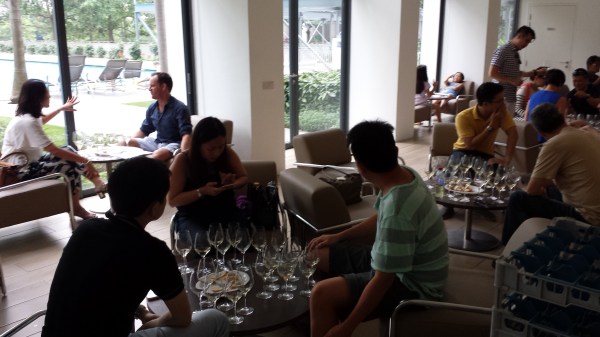
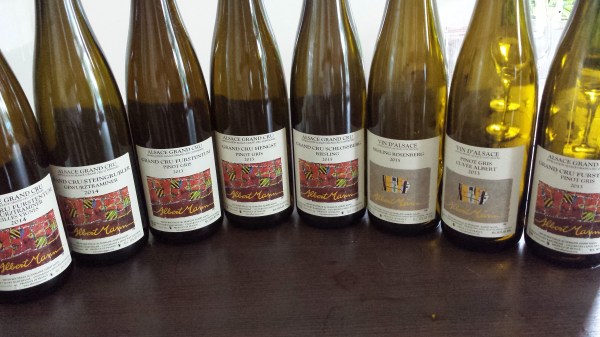
2013 Albert Mann Hengst Pinot Gris Grand Cru. Lifted floral fragrance with notes of sweet icing, mellow and rounded on the palate with a mild dark spicy tone of sweet raw nutmeg amidst subdued acidity, lacking in true complexity.
2013 Albert Mann Furstentum Pinot Gris Grand Cru. Lifted aromas of sweet fragrance, very fine and ethereal with excellent detail on the palate, displaying good depth and balance with very fine, fleeting peppery notes with some nutmeg. Excellent.
2014 Albert Mann Steingrubler Gewurztraminer. Beautiful, deep, luxuriant notes of longans and lychees, very controlled with subdued sweetness, layered with well-integrated acidity, already displaying some early complexity. Very lovely. Excellent.
2014 Albert Mann Furstentum Gewurztraminer VV Grand Cru. An equally lovely but deeper bouquet here, broader with controlled sweetness, very harmonious with notes of green melons, mint, grassy elements and nutmeg, displaying excellent linearity. Excellent.
Chris Ringland: Evil Incarnate, FU, The Wine
I’m usually wary of dinners that comprise entirely of Australian shiraz but when Bob Rees of Wine Exchange Asia (not to be confused with WEA Fine Wines) proposed a Chris Ringland dinner at Table At Seven on 18 Aug 2016, I almost jumped at it. I first heard of Chris Ringland at the turn of the millennium when I became interested in Rockford, for Chris had worked there, going on eventually to developed his cult “Three Rivers Shiraz”. The wines of Chris Ringland are difficult to obtain, there is no cellar door in the Barossa but they are reputed to be exceptionally refined and sophisticated and, indeed, my experience on this occasion confirms that, for these wines are utterly cultured with a quiet intensity in spite of their seemingly outsized proportions. It was good as well to see Karl and Eugenia still going strong and doing very well at their restaurant, and their unique combination of Indonesian-inspired-cum-European cuisine went well with the wines. Bob, as usual, is always generous with the pours at these dinners and we began with the Laurent Perrier Brut NV, very attractive with a forward balance of clear citrus and pomelo, dryish and crisp with very good concentration and biting intensity on the palate though its flavours fall within a narrow spectrum.

2005 Chris Ringland Evil Incarnate. Dense with notes of dark and red plums, liquorice and kumquat amidst a strong alcoholic streak on the nose, though surprisingly creamy smooth and rounded on the palate with ripe tangerine at its core, more forward over time with great concentration and purity, displaying good linearity and sophistication but a tad short, finishing on a subdued spicy tone without any alcohol trail.
2006 Chris Ringland Evil Incarnate, served from magnum. Compared with the preceding wine, the 2006 is more forward with plummy tones, black currants and sweet dark fruits, open, even and harmonious with excellent depth and balance, rounded with controlled tannins. Needs further cellaring but the potential is huge.

2008 Chris Ringland Evil Incarnate, served from magnum. Rich bouquet of dark plums and sweet black fruits, big and full, coating the palate with a creamy smoothness and overtones of enamel, yet poised, elegant and rounded, displaying good handling of oak and tannins, finishing in a gentle spicy trail. This is a magnificent shiraz, combining power and sophistication with great harmony.
2006 Chris Ringland FU. Quiet and slightly reticent, exuding sweet mocha and dark chocolate arising from an immense breadth and depth of dark plums and red currants, displaying great integration, layering, focus and definition, highly refined and exciting. Superb.
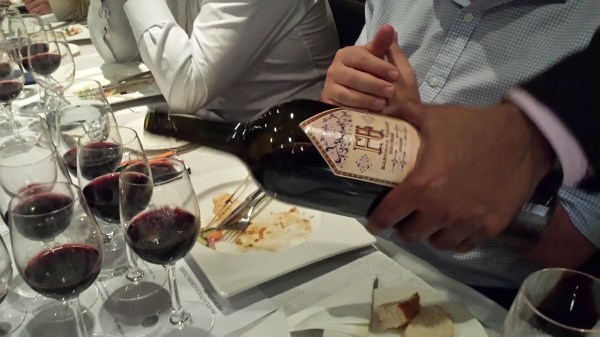
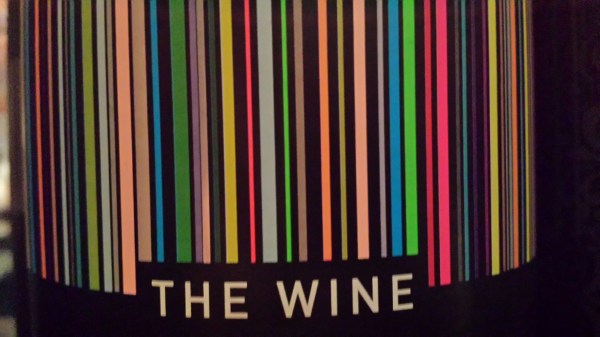
2005 Chris Ringland The Wine. Dense with a great abundance of red plums and red currants, oozing with sweet tannins but the alcohol content is far too massive at 17% (yessir!), obscuring detail on the palate that lacked layering and real complexity.
2006 Chris Ringland The Wine, served from magnum. More massive than the 2005, dominated by a rich plummy tone with a prominent alcoholic note, rounded and well-integrated with a quiet intensity and sophistication, layered with dark fruits and forest floor characters but still unresolved, though it has the potential to evolve very well.
An American theme
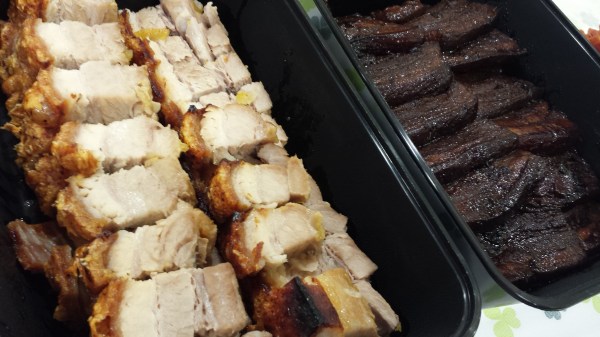
These tasting notes stem from a gathering after hours to mark the first anniversary of SS’s establishment at Gleneagles, 12 Aug 2016. Most of the wines had been aired for some time prior to tasting, pairing well with the decadent pork prepared by LF. An American theme had been proposed which turned out very well. All wines are courtesy of LF unless otherwise stated.
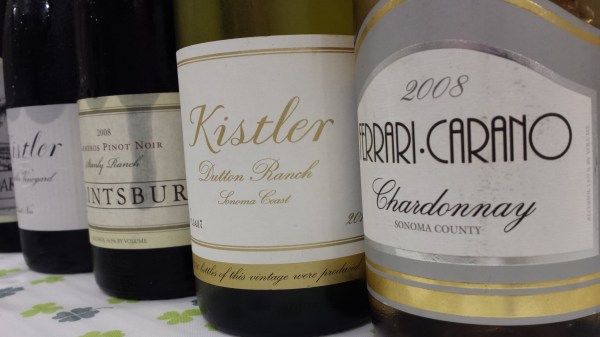
2011 Kistler Dutton Ranch Sonoma Coast Chardonnay, aired ahead in bottle. Gentle aromas of crème and chalk with further notes of nutmeg and varnish, quite ample in lime and tangy citrus, displaying crisp acidity and lovely tension, finishing well. Excellent.
2008 Ferrari Carano Sonoma County Chardonnay, aired ahead in bottle. Rather shut at this stage, quite minerally, just offering glimpses of white petals and gentle citrus, beautifully veiled at the moment, though one appreciates the huge potential here just waiting to blossom. Needs more time.
2008 Saintsbury Carneros Pinot Noir Stanly Ranch, aired ahead in bottle. A highly unusual bouquet of red fruits, wild berries and red plums with overtones of ash and camphor, bright and open with further notes of cinnamon on the palate, oozing with sweet tannins though slightly stern at the side. Very burgundian. Very successful.
2011 Kistler Sonoma Coast Pinot Noir, aired ahead in bottle. A great abundance of red cherries, strawberries and other red fruits, very ripe, giving rise to a lifted aromatic sweetness with an excellent pinot core that is rich, deep and harmonious. Very lovely.
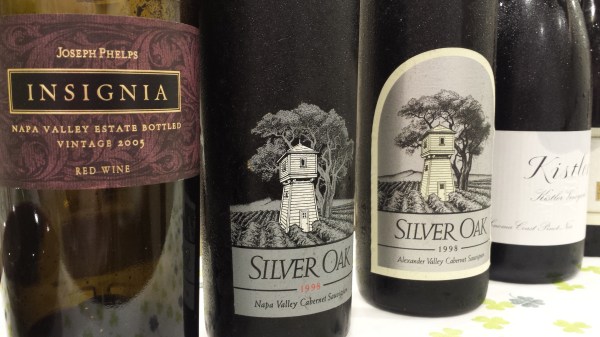
1998 Silver Oak Alexander Valley, aired ahead in bottle. Displaying some vermillion at the rim with lovely floral aromas and predominant red fruits and red roses on the palate with secondary nuances of cinnamon and cassis. Highly enticing and open. Excellent.
2005 Joseph Phelps Insignia, a bottle I’d decanted for 5 hours prior. An abundance of dark plums, dark currants and black fruits producing deep lovely aromas though quite reticent initially. Rich in dark tones and concentration on the palate with a tarry quality and great acidity, opening up with brighter notes after some time, culminating in a mild graphite finish. Excellent, but far from peaking.
1998 Silver Oak Napa Valley (courtesy of CJ). Popped and poured. Quite fascinating to compare the Napa Valley and Alexander Valley of Silver Oak from the same vintage with the benefit of significant bottle age. Supposedly higher in the pecking order, this wine displays good definition of red fruits and plums, medium-bodied and surprisingly bright, absolutely harmonious with fine acidity, linearity and lovely tension, coming across as just a tad more sophisticated than the Alexander Valley but there is really nothing much to separate them. At its peak and will hold for many more years.Excellent.
1997 Caymus Cabernet Sauvignon (courtesy of Hsiang Sui). Popped and poured. A mild cork taint is evident here, the wine already evolved quite well with characters of red fruits and briar and earth, displaying good linearity and harmony though permeated by a woody overtone.
2009 Baron Thenard Montrachet Grand Cru, 1989 Palmer, 2003 La Mondotte, 1990 D’Yquem
These wines were drunk at a dinner hosted by Dr and Mrs Wang Kuo Weng at the NUSS Guild House, Bukit Timah Campus, Singapore, on 23 Aug 2016. Kuo Weng had been very impressed with the 2003 Ch La Mondotte from a previous tasting and wanted to share a bottle with us, along with an old Palmer and D’Yquem. Why not? I came up with the whites, Mrs Wang arranged a customised menu at this lovely restored building and we were set.
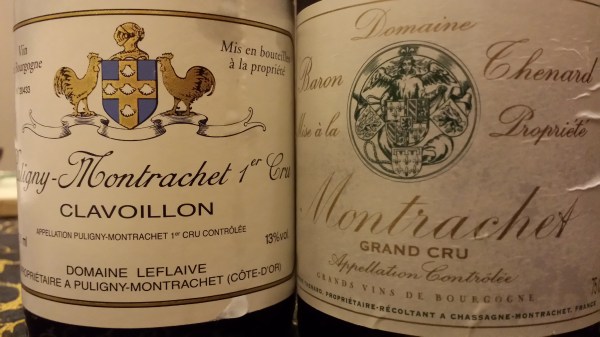
2011 Domaine Leflaive Puligny-Montrachet Clavoillon 1er. Aired in bottle for 7 hours prior in the fridge. The bouquet here is most enticing with lifted aromas of white flowers, peaches, fig and melons, matched by an explosion of minerals, crème, butterscotch, crisp citrus and great acidity all coming together with great exuberance. It went on to develop a perfumed fragrance along with more fat in the mid-body as it warmed up to the right temperature, becoming more open and detailed, displaying superb concentration and depth with further notes of caramel and nectarine, culminating in a great finish of wonderful intensity that seemed to linger forever, displaying the cultured breed of this great estate. Still youthful and far from peaking, but this wine is already so good. Superb.
1989 Ch Palmer. Aired in bottle for about 90 minutes prior. The distinct glow of an aged claret is unmistakable, suggesting violets, rose petals and blueberries with earthy tones and ferric traces, the signature fragrance of Margaux still fresh and alluring. On the palate, the wine has mellowed beautifully, evolving over time to develop lovely characters of red fruits and camphor with mild overtones of ash, still possessing lively acidity and good concentration, not at all drying out but neither the best in definition. The 1989 Palmer is past its absolute brilliance but it is ageing most gracefully and if you’ve never tried one before, it’s still not too late.
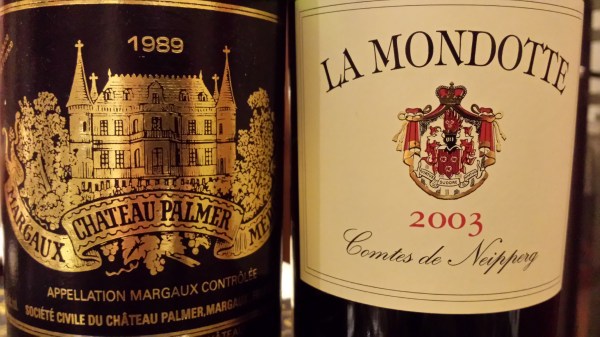
2003 Ch La Mondotte, aired in bottle for 3 hours prior. Predictably, this is a big wine done in a modern style, lavish with an abundance of dark fruits, soy and graphite on the nose, very deep and intense on the palate, highly extracted, the fruit warm and ripe with raisiny characters that gave way to a dominant plummy tone with sweet tannins. However, the intense heat of the growing season took its toll on the finish, which is practically non-existent as the flavours simply dropped off as soon as the wine has left the palate, resulting in a lack of balance. Go for other vintages.
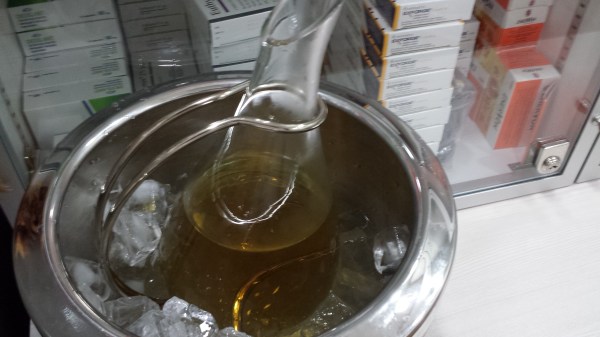
2009 Baron Thenard Montrachet decanted in ice
2009 Baron Thenard Montrachet Grand Cru. Double-decanted from 0730h (you read correctly) under temperature control and drunk neat with a generous cheese platter after the main course. This is the way Burgundians treat a Montrachet Grand Cru. Baron Thenard is the second largest owner (after Marquis de Laguiche) of Montrachet (strictly speaking Le Montrachet, as it lies on the Chassagne side) with 1.83 ha of this Holy Grail of chardonnay. 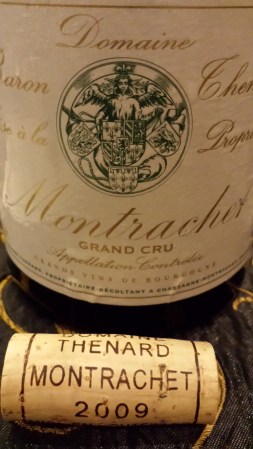 Established in 1842, this estate used to sell its wines to Domaine Remoissenet but has now stopped that practice. Served a tad too cold initially, this wine started off with a predominant tone of minerals with some faint citrus, quite ethereal, displaying some early complexity. As it warmed to the right temperature, its feminine elegance became evident, turning more chalky with a luminous glow as it slowly revealed further notes of caramel and clear citrus, taking its time in an unhurried fashion like a seductress, maintaining a balanced and gentle poise throughout without any hint whatsoever of its 14% alcohol. If I have a quibble, it would be the relative lack of detail on the palate compared with the Montrachet of Bouchard (though this lies on the Puligny side), and the wine borders almost on shyness. Though the guests were impressed, I think this wine is becoming a bit shut. It needs further bottle age.
1990 Ch D’Yquem, from a half bottle. This hallowed wine displayed predominant tones of nectarine with a lifted complex of apricot and honey crust shrouded in overtones of white incense, the aged acidity contributing to a mellowed tone, more minerally towards the finish with an easy balance. Excellent but go for a 750 ml bottling if you are bent on getting one as the acidity is fresher.
My thanks to Dr and Mrs Wang for their kind generosity.

The gleaming tone of 2009 Baron Thenard Montrachet
 Ric's Wine Journal