Laurent-Perrier Cuvee Rose, popped and poured at Tunglok Signatures, Orchard Parade Hotel, Singapore, 31 Oct 2015. Notes of toast, white smoke, grapefruit, traces of plum, apples and apricot, glowing with good concentration on the palate, good balance, not too crisp, ending in a dry metallic finish.
Henri Giraud Fut De Chene Ay MV (courtesy of KG), popped and poured at Tunglok Signatures, Orchard Parade Hotel, Singapore, 31 Oct 2015. This champagne displayed a high-toned bright minerality, generous in citrus zest and sweet yeasty overtones, appropriately crisp, coming together very well with lovely intensity and significant complexity. Excellent.
2008 G Prieur Echezeaux Grand Cru (courtesy of Peter Tan), from a magnum aired in bottle for almost an hour at Tunglok Signatures, Orchard Parade Hotel, Singapore, 31 Oct 2015. This wine is restrained with aromas of strawberries and red fruits, open on the palate, characterised by bright red fruits, good intensity and classic balance with a salty minerality without being too profound in depth.
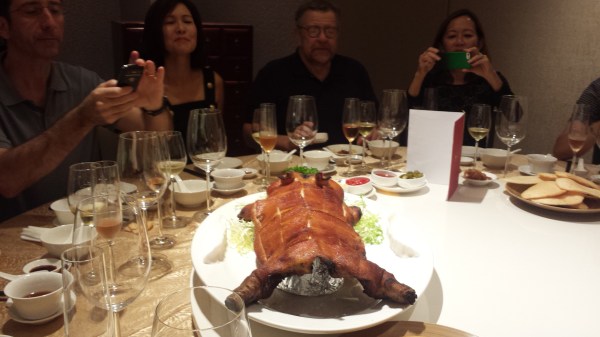 2006 Soldera (courtesy of Dr S S Ngoi), aired in bottle for 9 hours prior to serving at Tunglok Signatures, Orchard Parade Hotel, Singapore, 31 Oct 2015. Medium-full, white flowers, black pepper, red fruits, dark plums, excellent length but slightly stern at the finish. Almost voluptuous.
2006 Ch D’Yquem Y (courtesy of Dr Ngoi), aired for 2 hours in bottle before serving at Tunglok Signatures, Orchard Parade Hotel, Singapore, 31 Oct 2015. An unusual opportunity to taste this uncommon white, the Y displayed a bouquet of crème de la crème, white flowers and traces of nectar with further notes of pineapples and tropical fruits after having settled down, but dominated by a ferrous tone on the palate, imparting a stern demeanour.
2001 Ch D’Yquem (courtesy of Dr Ngoi), two half-bottles aired for 2 hours prior to serving at Tunglok Signatures, Orchard Parade Hotel, Singapore, 31 Oct 2015. The second time in as many weeks that I’ve had this very same wine with consistent notes. Pure liquid gold oozing with luscious nectar, apricot and intense smoky sweet incense, displaying great linearity, acidity and uniformity, yet to develop secondary nuances but clearly stamped with greatness. Outstanding.
Laurent-Perrier Brut NV, popped and poured at All Night Long, Hong Kong, 06 Nov 2015. Forward characters of lime and yellow citrus, pretty intense and underscored by yeasty overtones, zesty and vibrant, a tad too dry for my liking on this occasion but not lacking in body.
2008 Frogmore Creek cabernet merlot, popped and poured at Golden Dragon restaurant, Hong Kong, 07 Nov 2015. Obviously a quaffer, this Tasmanian red, nonetheless, acquitted itself rather well with a lovely nose of red fruits, plums and a hint of prune and tangerine, but too disjointed on the palate where it was stern with a prominent metallic quality, finishing with dusty tannins.
2012 Chateau de Saint-Cosme Les Deux Albion, poured after a brief airing of 20 minutes in bottle at Golden Dragon restaurant, Hong Kong, 07 Nov 2015. This wine (albeit a 2001) achieved cult status after having been prominently featured in Vol. 2 of the famous manga The Drops of God, where it had swayed the taste buds of an eminent wine critic and, thereafter, formed part of a blinded 3-wine line-up of French vs Italy. True to form, the 2012 displayed an attractive earthy pungency with copious notes of cedar and red currants on the nose, somewhat lean on the palate initially but blossoming into a fine wine of fair intensity and definition with overtones of orange peel, a classic hallmark of Rhone, medium to full-bodied, ending in a graphite finish that was a tad short. The varied Cantonese cuisine didn’t match very well with it but I’d imagine this robust wine will go very well with barbequed meats. Priced at a shade above HKD400 from the restaurant list, this is, in every way, a good drop.
Raphael et Vincent Bereche Champagne Cote premier cru, a 2007 disgorgement, popped and poured at Imperial Treasure T3, 10 Nov 2015. Forward balance of lime and citrus zest, underscored by yeasty overtones and toast, featuring good depth and intensity but a tad too dry.
2008 Mount Mary Quintet, popped and poured from magnum over 3 hours at the wedding of Jon & Fiona, Ritz-Carlton Singapore, 14 Nov 2015. I thought this may be a massive wine but, most surprisingly, it turned out to be highly accessible with initial aromas of dark cherries, camphor and sweet incense and further notes of dark currants and blueberries within its depths on the palate, rounded with subdued tannins and understated structure, transforming further after some time into an utterly harmonious wine with a high tone of red plums, peaches and orange peel. In essence, this is a feminine wine, pretty much in spirit like a Lafite Rothschild or Ducru Beaucaillou, more of refined elegance than outright power though without the voluptuousness. Excellent.
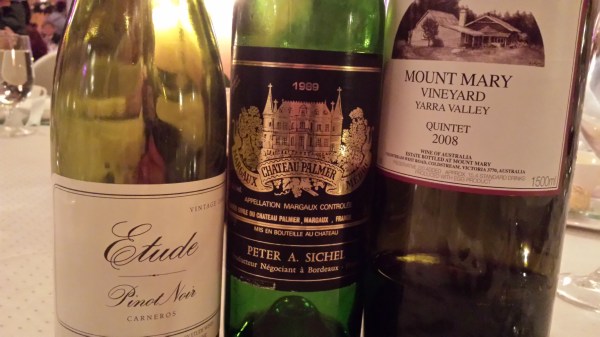 1989 Ch Palmer (courtesy of Vic), opened for at about 3 hours at the wedding of Jon & Fiona, Ritz-Carlton Singapore, 14 Nov 2015. Fully evolved, this stately Margaux displayed a dominant tone of dried plums and tangerine supported by a prominence of dry gravel and earthy minerality that was almost saltish, utterly seamless, the glorious red fruits of 26 years ago still substantial and fresh beneath all that outer sheen. Likely to hold on for several more years. Excellent.
2001 Etude Pinot Noir Carneros (courtesy of Dr Ngoi), tasted after being aired in bottle for a couple of hours at the wedding of Jon & Fiona, Ritz-Carlton Singapore, 14 Nov 2015. This is a true pinot in style and spirit, relaxed, open and flowing with excellent linearity and purity of fruit, though its depth and power is considerably more substantial than I’d expected with a rich vein of ripe raspberries and dark cherries coursing through, trailed by traces of tangerine. Forget about comparing Old and New World pinot. I enjoyed it.
1999 Maison Roche de Bellene Puligny-Montrachet Les Combettes 1er (courtesy of Sanjay), tasted at Chef Kang’s after a brief airing, 17 Nov 2015. Traces of apricot and white flowers well supported by chalky minerality of fair intensity with an aged feel where the wine is somewhat subdued and placid in spite of having retained decent acidity, but its lack of fullness in mid-body for such a successful vintage is telling, eventually fading away, becoming hollow.
1999 Hospices de Beaune Beaune 1er Cuvee Maurice Drouhin (courtesy of MH), tasted at Chef Kang’s after a brief airing, 17 Nov 2015. Made by Joseph Drouhin, this wine displayed notes of dark raspberries and sweet wild berries with a dash of spice, linear, straightforward and fairly generous on the palate, turning stern and minty with a vegetal trace not unexpected of the Cote de Beaune reds before blossoming with a powerful tangerine and plummy tone.
2006 Sylvie Esmonin Gevrey-Chambertin Clos St Jacques 1er, tasted at Chef Kang’s after 45 minutes of aeration, 17 Nov 2015. Well-proportioned, good depth of fruit with predominant notes of bright cherries and rose petals, structured, well matched with a minty earthy tone, attaining a perfumed fragrance after some time though a tad short. Distinctly feminine, perhaps because it’s made by a female vintner?
2004 Jayer-Gilles Echezeaux Grand Cru (courtesy of LF), tasted at Chef Kang’s after an hour of aeration in bottle, 17 Nov 2015. Made by a distant relation of Henri Jayer, this wine seemed rather shut on the nose even at this stage, where one could only discern traces of red cherries on the nose while mild medicinal notes with bright spots that eventually broadened on the palate, gaining in intensity towards the end of dinner. Not particularly distinctive on the whole.
2002 Comte Georges de Vogue Chambolle-Musigny 1er (courtesy of Hsiang Sui), tasted at Chef Kang’s after 90 minutes of aeration in bottle, 17 Nov 2015. Dark, big, almost creamy with a metallic trace, saturating the senses with an abundance of dark currants and ripe dark cherries of excellent linearity with a dash of soy. Still yet to peak. Excellent.
2000 Bonneau du Martray Corton-Charlemagne Grand Cru (courtesy of Vic), tasted at Chef Kang’s after 90 minutes of aeration, 17 Nov 2015. Aromas of lemongrass amidst mild grassy overtones. Buttery with notes of coconut, nectarine, apricot and seared caramel with a controlled sweetness, intensity and understated complexity. Lengthy. Quite outstanding.
2011 Leflaive Puligny-Montrachet Les Clavoillon 1er, at Parkway Pantai’s annual cocktail party, Grand Hyatt Singapore, 23 Nov 2015. Quite the opposite of a Pucelles, the Clavoillon is marked by its distinctive aromatics with ample floral characters and notes of dried citrus and cinnamon, understated in minerality. Delicious.
 2012 Meo Camuzet Vosne-Romanee Les Chaumes 1er, at Parkway Pantai’s annual cocktail party, Grand Hyatt Singapore, 23 Nov 2015. Clear ruby, predominant notes of red roses but surprisingly linear and restrained, lacking in multi-dimension on the palate. I’d expected more from this address.
2008 Jacques-Frederic Mugnier Nuits-Saint-Georges Clos de la Marechale 1er, at Parkway Pantai’s annual cocktail party, Grand Hyatt Singapore, 23 Nov 2015. Here is burgundy at its best, a wine of great purity, displaying excellent balance between the depth of intensity of fresh roses and cherries and the delicate aromatics. Lovely.
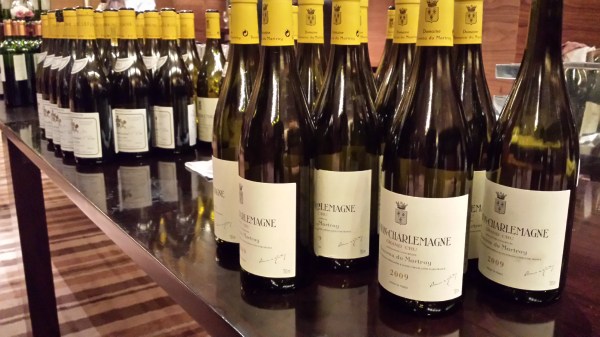
2009 Bonneau du Martray Corton-Charlemagne Grand Cru, at Parkway Pantai’s annual cocktail party, Grand Hyatt Singapore, 23 Nov 2015. Morning dew, melons, green apples and citrus of great intensity, supported by clear minerality with a trace of steeliness at the finish. Needs time to unfurl its full glory. Truly one for the long haul. Will be outstanding.
2006 Ch Montrose, at Parkway Pantai’s annual cocktail party, Grand Hyatt Singapore, 23 Nov 2015. Dark, full-bodied with a vegetal trace amidst an abundance of dark with a sense of warmth, dry with a gravelly tone at the finish. Still primal without much character at this stage.
2007 Ch Cos D’Estournel. at Parkway Pantai’s annual cocktail party, Grand Hyatt Singapore, 23 Nov 2015. Oozing with sweet tannins with a sense of heated stones, earth and cedar with excellent depth and concentration of fruit. Already very open at this stage of relative youth. Very pleasant. Almost as if it is made to please.
2011 Sassicaia, at Parkway Pantai’s annual cocktail party, Grand Hyatt Singapore, 23 Nov 2015. Earthy with broad swathes of dark currants and ripe red fruits, slightly disjointed and a tad simple at this youthful stage, displaying an attractive sweetness in its tannins.
2000 Ch Pontet Canet, at Parkway Pantai’s annual cocktail party, Grand Hyatt Singapore, 23 Nov 2015. Open, not too dry, displaying excellent depth, richness, concentration and balance, coupled with attractive aromatics. Clearly excellent now, but may be outstanding in another ten years
2009 Ch Corconnac, popped and poured at Jade Palace, 24 Nov 2015. Deep purple. Notes of dark currants and wild berries, generous in fruit density but shorn of fat and layering, imparting a lean austere texture to the wine, imbued with graphite minerality.
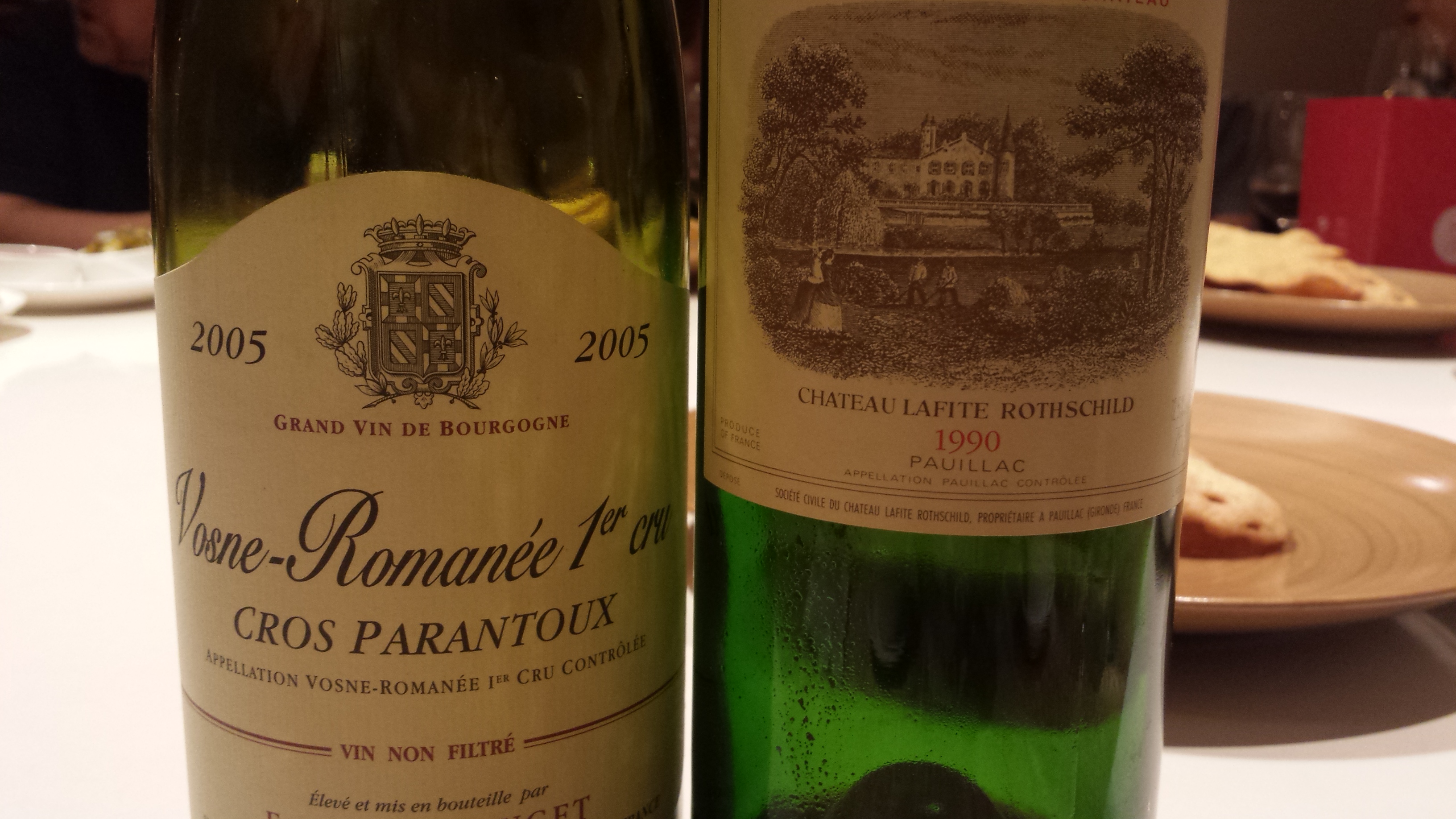
2005 Emmanuel Rouget Cros Parantoux 1er 1990 Ch Lafite Rothschild
Cros Parantoux is a rather small vineyard in Vosne-Romanee just before Richebourg, if one is coming from the north. Interest in this premiere cru only came about in recent times. It was relatively unknown until a certain Henri Jayer acquired a majority holding in this plot (with the remaining tiny portion belonging to Meo Camuzet) in the mid-1950s and replanted the vines.
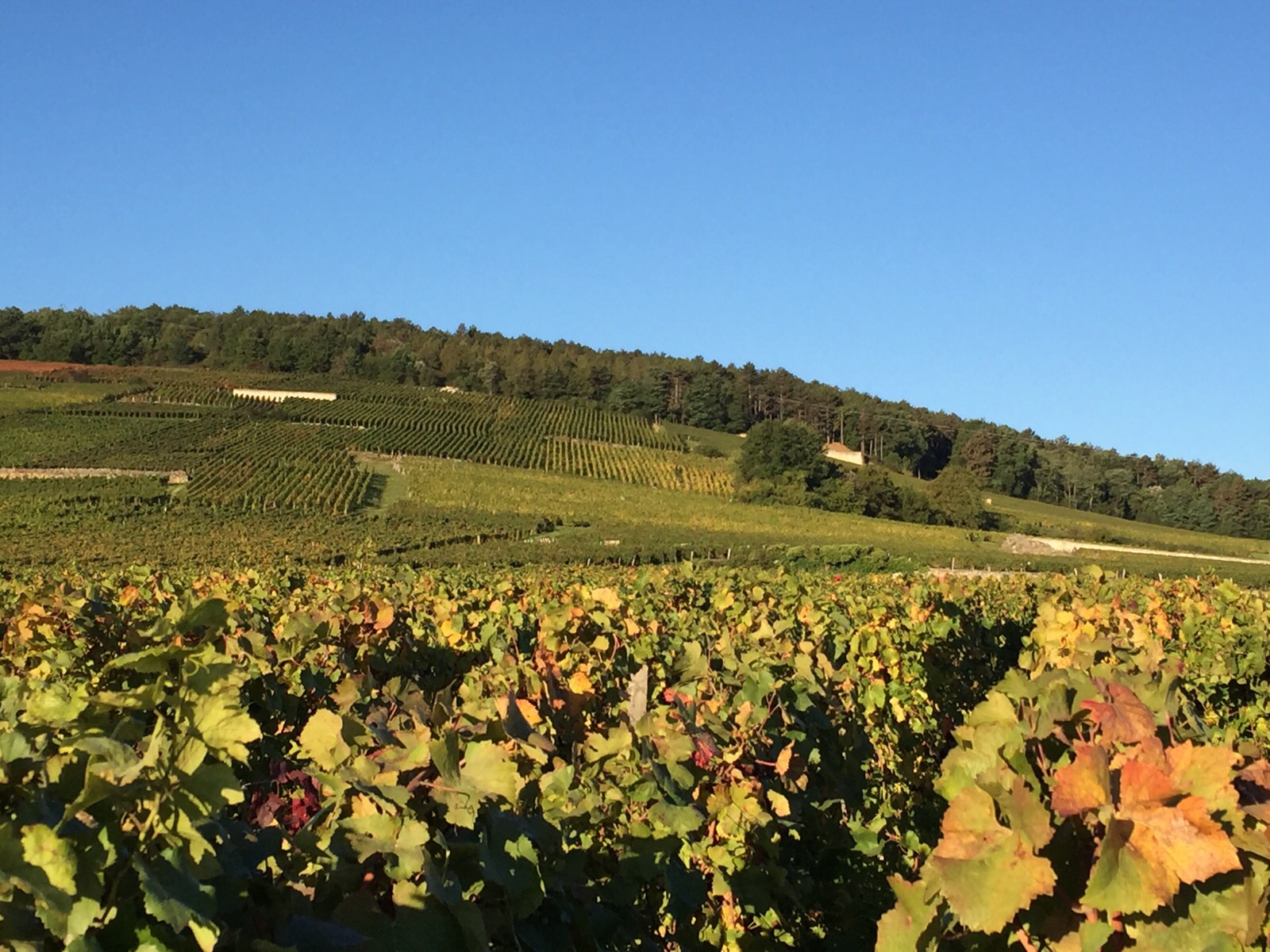
During the initial years when the vines were young, the wine made from Cros Parantoux by Henri Jayer was simply bottled and sold as Vosne-Romanee village. By the time the vines had matured in the 1980s, Henri Jayer had already mastered its terroir. It goes without saying that Henri Jayer’s production is small, with estimates running between 700-3000 bottles annually. With the last vintage being 2001, it is practically impossible to source for a genuine bottle of Henri Jayer Vosne-Romanee Cros Parantoux 1er nowadays. On the other hand, Henri Jayer’s holdings were shared between him and his nephew-cum-protege Emmanuel Rouget, and it is well-known that Henri Jayer had often played a large part in the winemaking at Domaine Emmanuel Rouget, particularly when the latter had been indisposed in the late 1990s, adding to further frenzied interest in the wines of Emmanuel Rouget. With the passing of the old master in 2006, all the holdings previously under Henri Jayer came under Emmanuel Rouget. The mysticism and romance of Cros Parantoux reached its peak when these wines of Henri Jayer and Emmanuel Rouget played a major part in a story of rekindled love in the Japanese manga comic The Drops Of God, with the older winemaker being revered as the “God of Burgundy” while the wine of Emmanuel Rouget was touted as “99 percent” similar to Henri Jayer’s.
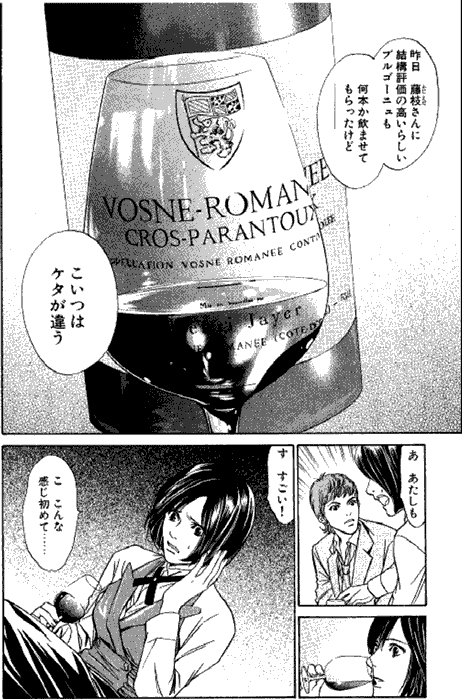
I’m not sure how Henri Jayer would have reacted had he lived to witness the fanatical interest in his wines but the fact is: Emmanuel Rouget has benefitted most from it all, the wines are expensive and they are extremely difficult to procure. However, the key question remains: how good really is it?
To be honest, I have never tasted any Cros Parantoux until we popped a bottle of the 2008 Domaine Emmanuel Rouget Vosne-Romanee Cros Parantoux 1er only a couple of months ago at Lameloise in Chagny. That bottle, undoubtedly, displayed rich abundant characters of glorious red fruits and cherries but it was still far from any kind of secondary development, the subtleties of great burgundy still obscured by broad swathes of new oak. We had wasted a precious bottle of this wine that, in the first place, the restaurant should not have included in its wine list.
Our hearts beat faster again when Dr Ngoi proffered another bottle, this time a 2005 Domaine Emmanuel Rouget Vosne-Romanee Cros Parantoux 1er at dinner at Tunglok Signatures, Orchard Parade Hotel, Singapore, on 31 Oct 2015, in the presence of Philippe Capdouze (CEO of FICOFI) and Jean-Paul Dumond (Sales Director of Joseph Drouhin) who had flown in from Beaune. Would a further three years of bottle age make any significant difference? I arrived an hour before dinner to open the wine, airing it in bottle for 3 hours before it was served. In spite of this, a certain amount of bottle stink was evident which KG concurred and, for a moment, I quietly feared that the wine was corked although Philippe and Jean-Paul seemed to feign polite ignorance. Thankfully, it disappeared after an additional second pour of the wine, allowing one to revel in its intoxicating aromas of red fruits, dried red plums and brandied cherries, rounded with a quiet intensity on the palate, sufficiently open to permit a glimpse of camphor, blueberries and raspberries of immense depth and concentration, tightly coiled, simply waiting to burst forth, as it finished with great length. Yet, this is never, at any point of time, a hedonistic monster. This is a wine of understated elegance at the present moment that will most certainly be wonderful and sublime in another 10-15 years.
Did the beautiful woman in the strawberry field turn around to kiss me, as romanticised metaphorically in The Drops Of God? Well, I think I caught a side profile, more than a glimpse perhaps, but that kiss is still elusive.
In contrast, the 1990 Ch Lafite Rothschild, decanted on-site for 3 hours and drunk alongside the Cros Parantoux, was distinctly feminine, displaying a wonderful perfumed fragrance and lifted aromas of rose petals, red fruits, red plums and blueberries, rounded with added notes of white pepper and mild earthy pungency on the palate without much of the Pauillac dryness, brimming with elegant intensity, understated power and great persistence throughout its length with no hint of the wine having hit its peak. A quintessential Lafite, like a woman whose beauty is apparent, yet unfathomable.
Between these two outstanding wines, the 1990 Ch Lafite Rothschild is drinking very well now at less than half the price of the 2005 Domaine Emmanuel Rouget Vosne-Romanee Cros Parantoux 1er. The latter, on the other hand, is far from ready but could turn into something truly special. But, as of now, the magic of a Cros Parantoux still eludes me. Thank you, Dr Ngoi, for the tasting opportunities.
Little did we realise, less than a month after we had first met Mme. Delphine Tronchon, CEO of FICOFI Paris, at Vosne-Romanee, that we would have a chance to play host to her for dinner at Tunglok Signatures, Orchard Parade Hotel, Singapore, on 20 October 2015 where, as usual, Dr Ngoi had arranged a delectable 5-course menu in its private room. An all-Burgundy line-up was planned and I must say that the Tunglok staff surpassed themselves this time, making sure that each different wine was poured into a new glass. 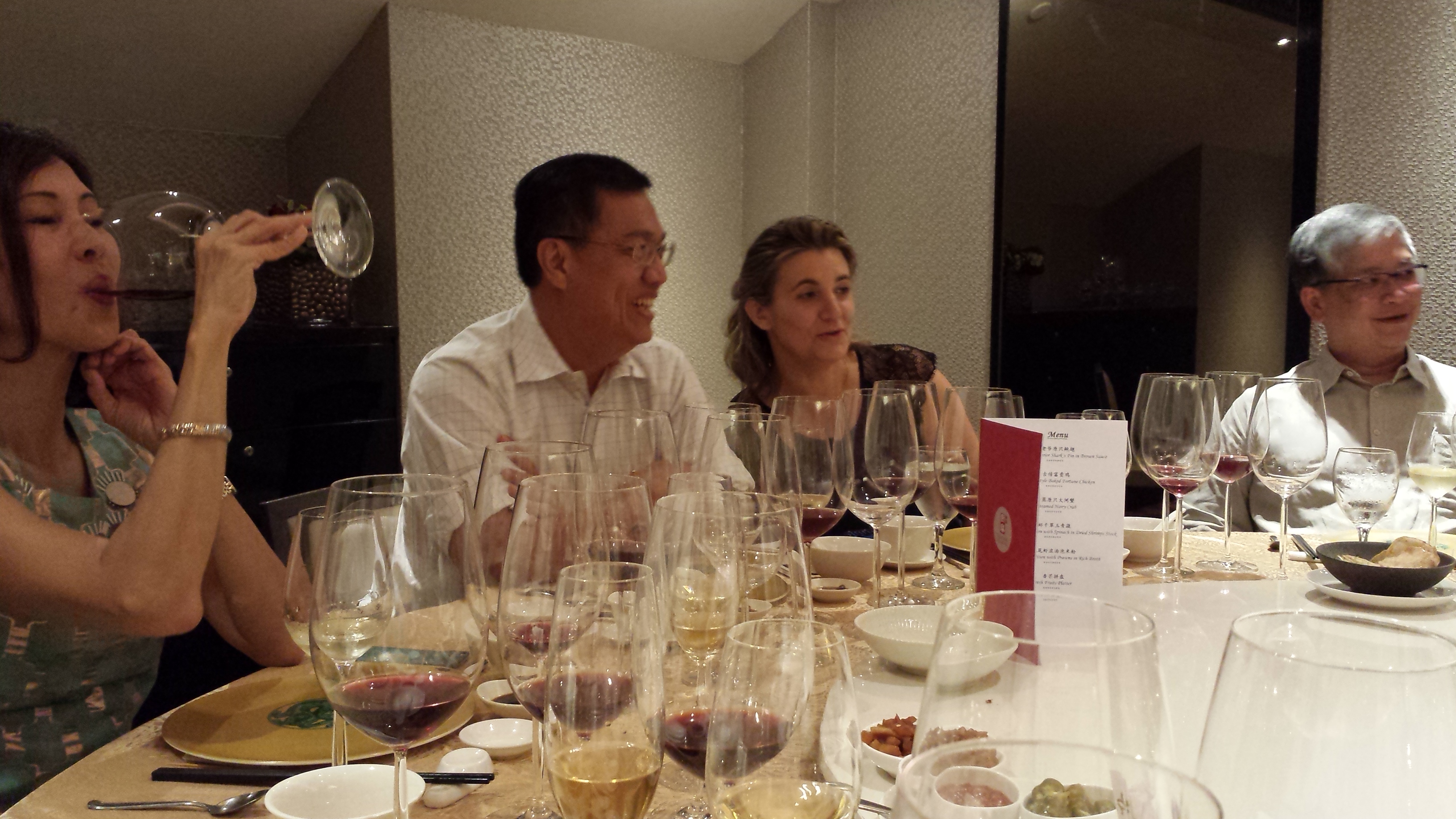 As we settled down, a 2004 Dom Perignon (courtesy of Dr Ngoi) was poured. This turned out to be rather shut on the nose but open on the palate, displaying notes of white flowers and citrus, minerally and well-balanced with good intensity, not overly crisp but yet to develop further complexity.
Dr Ngoi had also brought along a 2006 Comte Liger-Belair La Romanee Grand Cru, quite a rarity, which he insisted that we taste first before our palates become influenced by food. Displaying quite a bit of bricking and evolution, this wine possessed a most beautiful bouquet, initially of floral notes, camphor and a mild medicinal sweetness before being dominated by a high note of plums more than an hour later, highly elegant on the palate with open textures, fully harmonious with recessed tannins, finishing with great persistence and excellent mouthfeel. Truly feminine. Not quite as structured as other reds up north but this is a wonderful wine and what a privilege it was to have tasted it.
We moved back to the whites for the first course of shark’s fin, a 2009 Domaine de la Pousse d’Or Puligny-Montrachet Les Caillerets 1er (courtesy of Sanjay) that was creamy smooth and restraint, growing in intensity on the palate with notes of white flowers over time, yet retaining an appealing lightness of being. 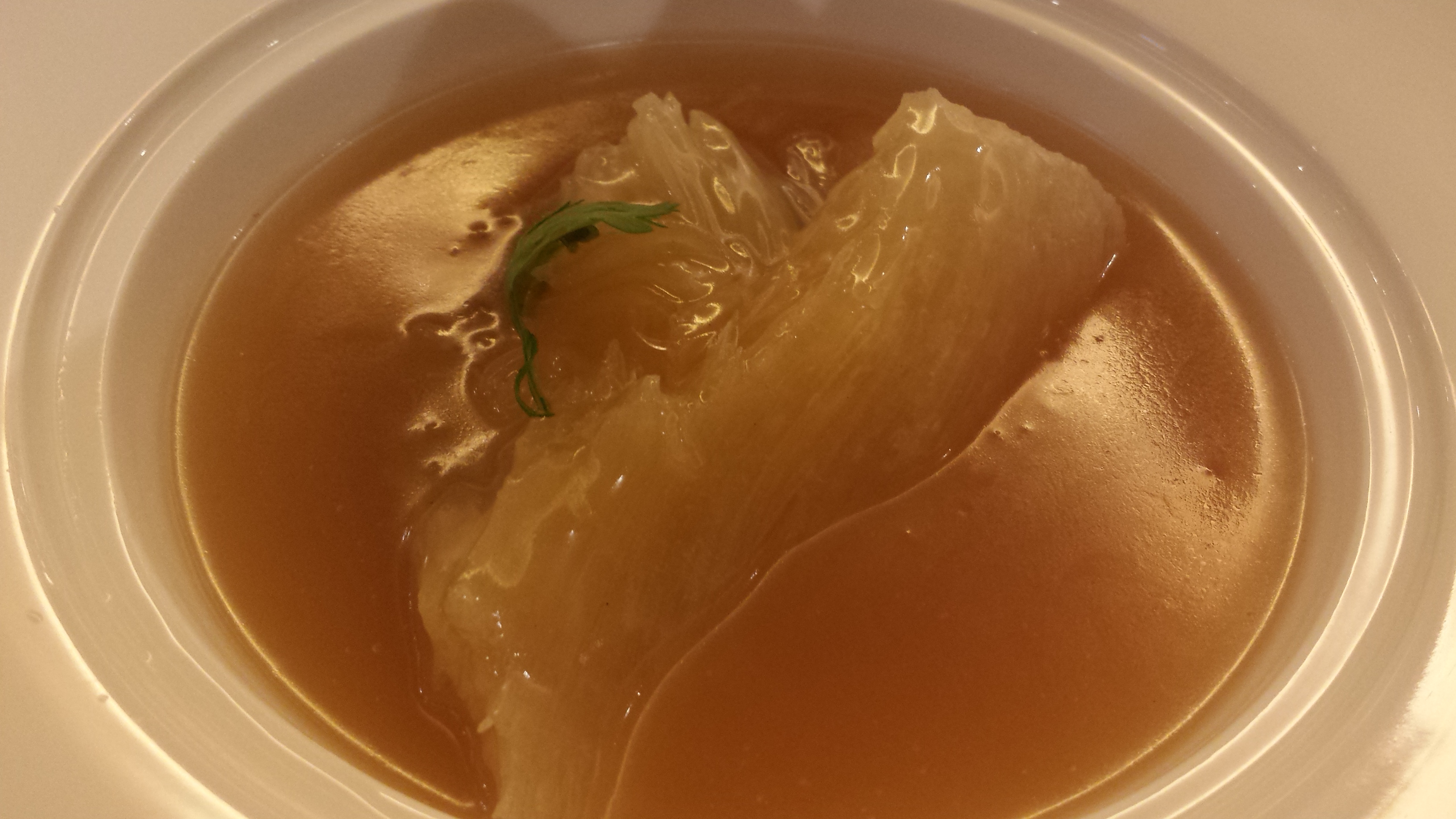 This was paired with a 1988 Salon Cuvee ‘S’ Le Mesnil Blanc de Blancs (courtesy of Hsiang Sui), fully matured with complex characters of yeast, toast, honeysuckle and caramel cast in a burnished tone, yet still youthful with fresh acidity and excellent depth of fruit. Truly marvellous.
This was followed by a pair of reds to go with the next dish of baked chicken, a 2008 Meo Camuzet Vosne-Romanee (courtesy of Miah Hiang), intense in color and bouquet, dominated by notes of earth, rich red fruits and dark berries of excellent depth, structured, balanced and refined, a wine of great finesse that belies its village status. Drunk alongside, the 2006 Prieure-Roch Vosne-Romanee Les Suchots 1er (specially sent over for us by its winemaker Yannick Champ and carried by Delphine herself) was highly individualistic with an attractive earthy pungency amidst high-toned minerality, tangerine and red fruits, settling down eventually with refined intensity, just a tad short. The next course of hairy crab was paired with a 2010 Henri Boillot Puligny-Montrachet Les Pucelles 1er, displaying great typicity with its fabulous complex of intense minerality, apples and crème de la crème with a slightly forward balance, developing more fat with an oily texture and a dash of coconut after some time, ending with great persistence. Superb.
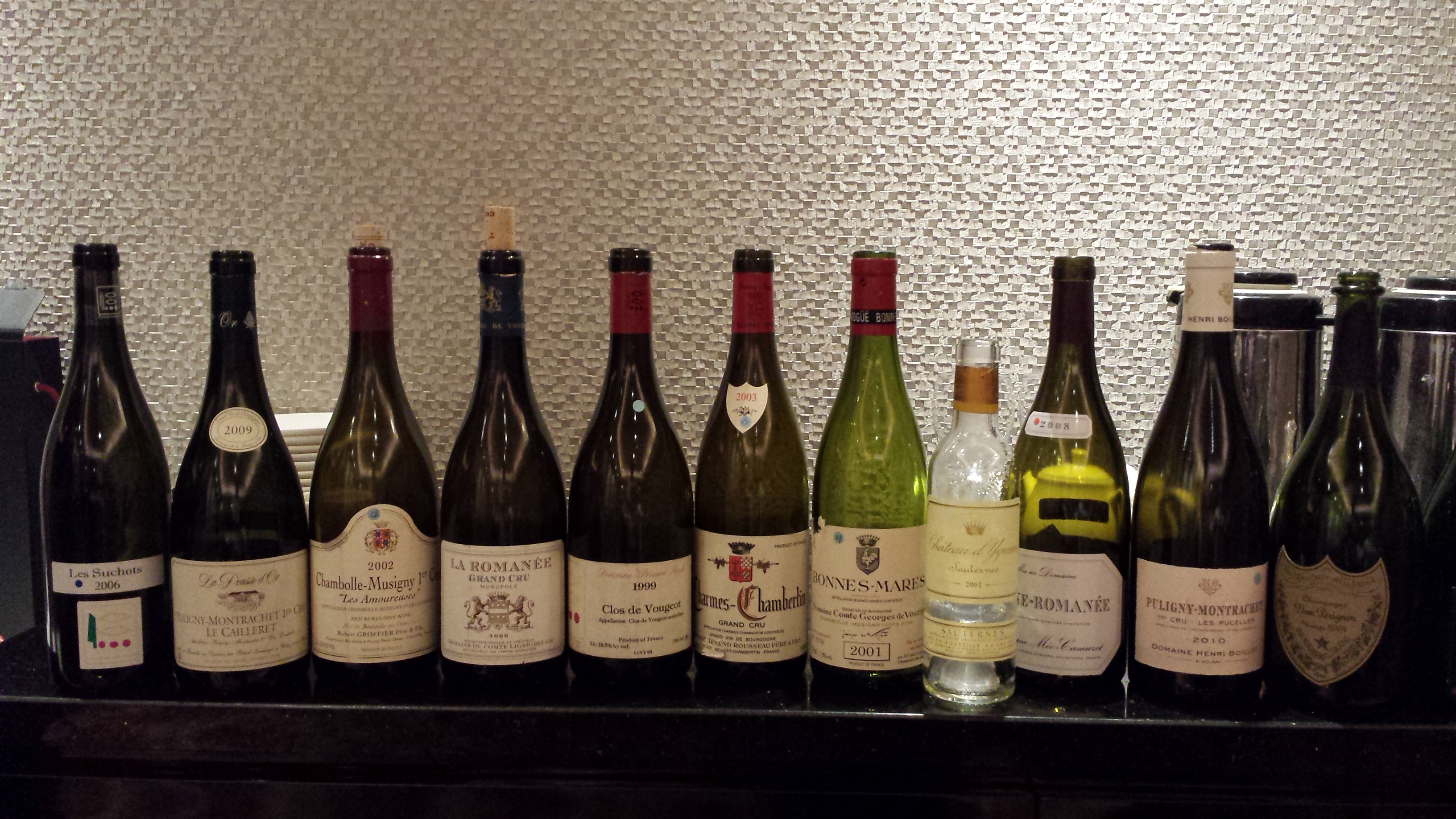
Another pair of reds was drunk with the noodles that followed. The 1999 Prieure-Roch Clos de Vougeot Grand Cru (courtesy of Li Fern) again displayed a characteristic high plummy tone from a wine that is clearly well-evolved, displaying great harmony with a spicy finish. 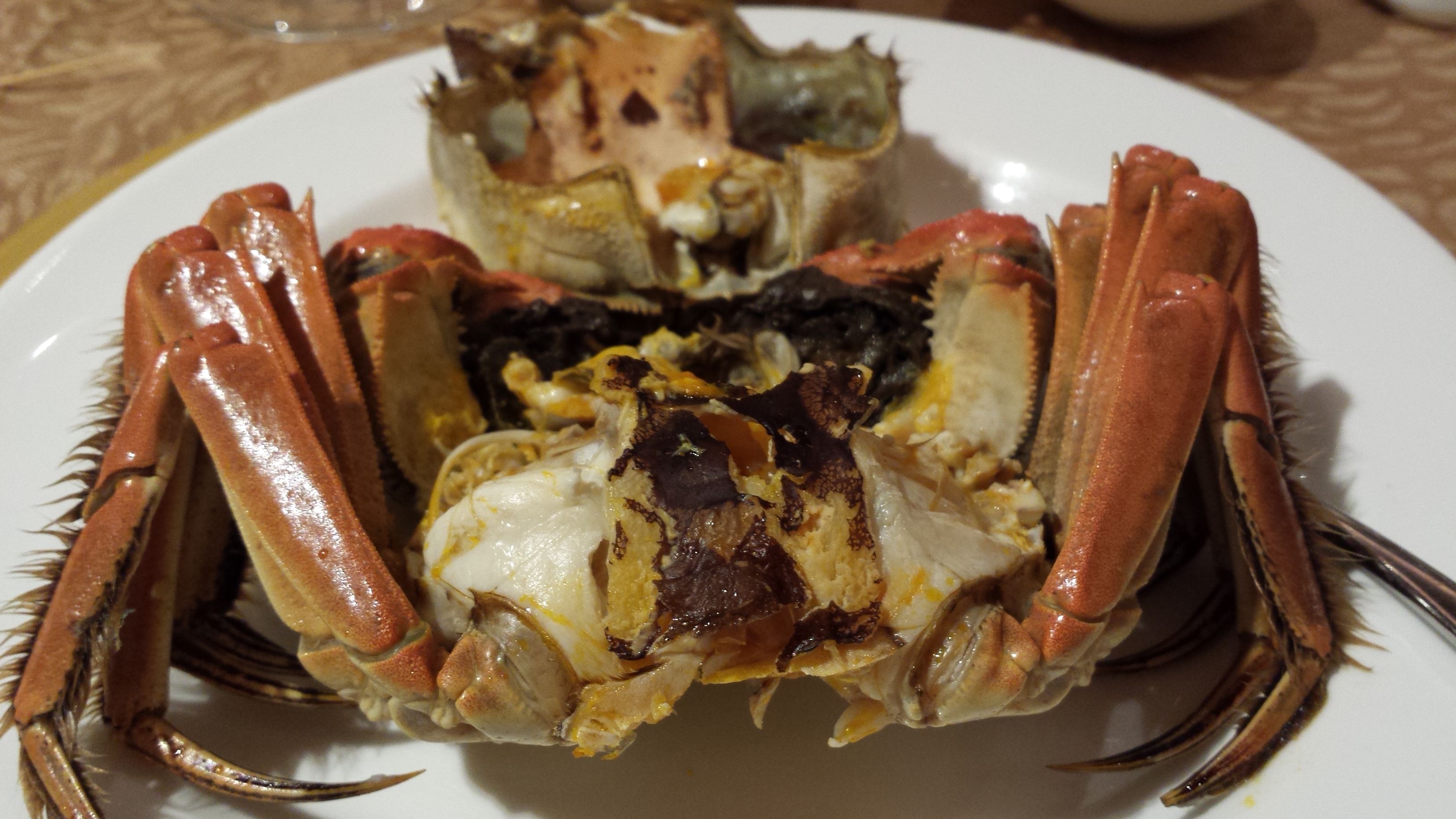 Next to it, the 2003 Armand Rousseau Charmes-Chambertin Grand Cru (courtesy of Vic) exhibited a most attractive pungency on the nose with a predominance of red fruits and redcurrants, displaying a good level of complexity and depth although, expectedly from this climat, a wine that is less structured compared with other benchmark grand crus of Chambertin.
The final pair of reds was drunk on their own, representative of some of the best of Chambolle-Musigny. The 2002 Robert Groffier Chambolle-Musigny Les Amoureuses 1er (courtesy of Eddy) displayed a wonderful fragrance of red cherries, camphor and traces of dark berries, a wine of great purity, concentration and balance that truly harmonises power and finesse, better than a younger Faiveley that we had last month at Ma Cuisine. As good as that was, the 2001 Comte Georges de Vogue Bonnes-Mares Grand Cru (courtesy of Hsiang Sui) truly lived up to its exalted status, sporting rich red and dark berries of fabulous intensity, power, depth and structure, its sophisticated tannins imparting a wonderful mouthfeel without heaviness nor fatigue. A complete wine. To wrap up, a 2001 Ch D’Yquem was proffered (courtesy of Hsiang Sui), exhibiting an indescribable high-toned complex of nectar, bright citrus and ripe tropical fruits with overtones of incense, crème de la crème and a dash of graphite at the finish, burnished and uniformly intense throughout its length, a complete Sauternes with a long, long life ahead. This evening will not be easily forgotten. My sincere thanks to everyone for their generosity.
Lameloise revisited
After having barely digested an excellent late lunch (with Yannick Champ in Pommard) on 27 September 2015, we drove down south to Chagny for dinner at the three-Michelin-starred restaurant Lameloise, located within the hotel of the same name, where it was very good to be welcome by the same familiar faces that I had met during my first visit in June last year. A long table for 13 pax had been set for us in its private dining room where we were joined by M. Jean-Paul Dumond of Joseph Drouhin as well as the true père et fil team of M. Pierre-Henry Gagey and his son Thibault Gagey, owners of Louis Jadot. The venerated chef Eric Pras had prepared a generous four-course meal (a relative bargain at EUR190, considering this is dinner) and all we had to do was to select some wines from the extensive carte de vin to go with it. KG did the honours with minimum fuss and, before we knew it, we were tasting the Champagne Henri Giraud Fut De Chene Ay Grand Cru (2007 disgorgement), highly complex on the nose, suggesting great depth with characters of toast, charcoal ember, yeast and sweet citrus with a mild attractive pungency, generously proportioned and balanced without being too dry.  A very sophisticated champagne and an excellent start.
The first course of foie gras de canard et perche was paired with a 2007 Domaine Coche-Dury Meursault, the second such wine we had from the same producer within the same day (a 2009 was drunk during lunch). Coche-Dury always carries a hefty premium but, after having experienced it, one begins to understand what the fuss is about. Lifted aromas of almonds with overtones of honey and a trace of rock melons hinted at excellent depth of fruit, living up to its promise with delicate but intense citrus on the palate, enhanced immeasurably by the crisp acidity that cut effortlessly through the texture of the foie gras.  I’ve never been truly enthusiastic about Meursault but I’m now a convert, provided it can be as good as a Coche-Dury. A superb effort.
Then an interesting incident occurred. A 1998 Domaine Louis Jadot Criots-Bâtard-Montrachet Grand Cru was served to go with the dorade grise et cazette du Morvan. The wine was clearly evolved with an unusual bouquet of magnolia and apricot, just a tad leaden, hinting at aged citrus, though still pretty robust on the palate, intense with cutting acidity. From the corner of my eye, I caught sight of Pierre-Henry raising an eyebrow with a muted frown. After a brief but animated conversation between himself and the sommelier in French, a second bottle of the same wine was immediately produced and popped. It turned out that Pierre-Henry had felt the wine to be a little corked, and he was absolutely right!! The new bottle was fresher on the nose and richer and creamier on the palate, topped with a caramelised note and finishing with a ferric trace. There were many experienced palates at the table but none of us had an inkling that the first bottle was amiss. This proved a couple of things: Pierre-Henry really knows his own wines and it really helps to drink in the presence of the winemaker.
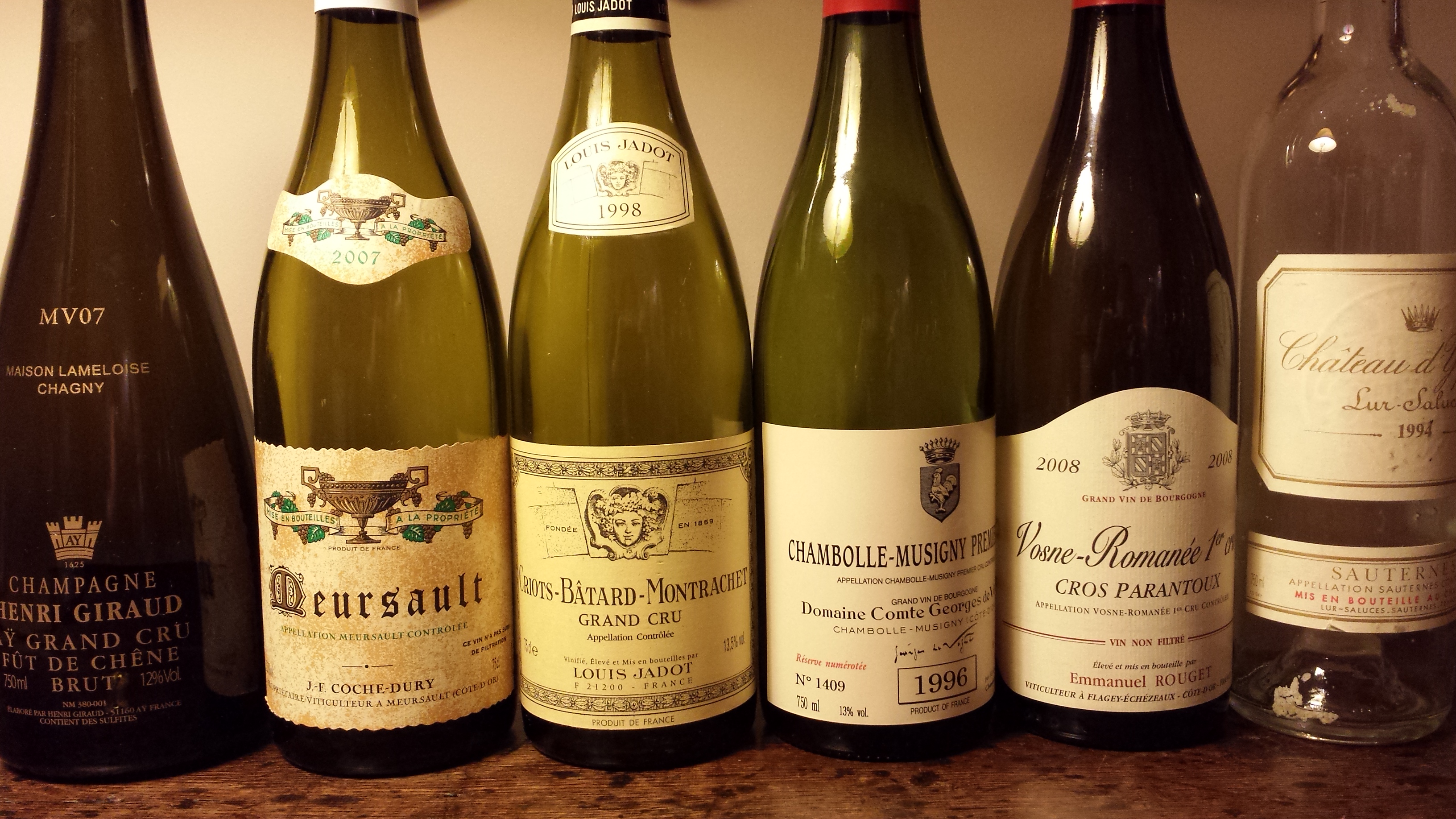
A couple of reds were paired with the restaurant’s signature pigeonneau. The 1996 Domaine Comte Georges de Vogüé Chambolle-Musigny 1er was an absolute beauty, displaying a deep ruby with an abundance of rose fragrance, still imbued with wonderful acidity, freshness, intensity and depth on the palate, easily one of the best wines I’ve had on this trip. 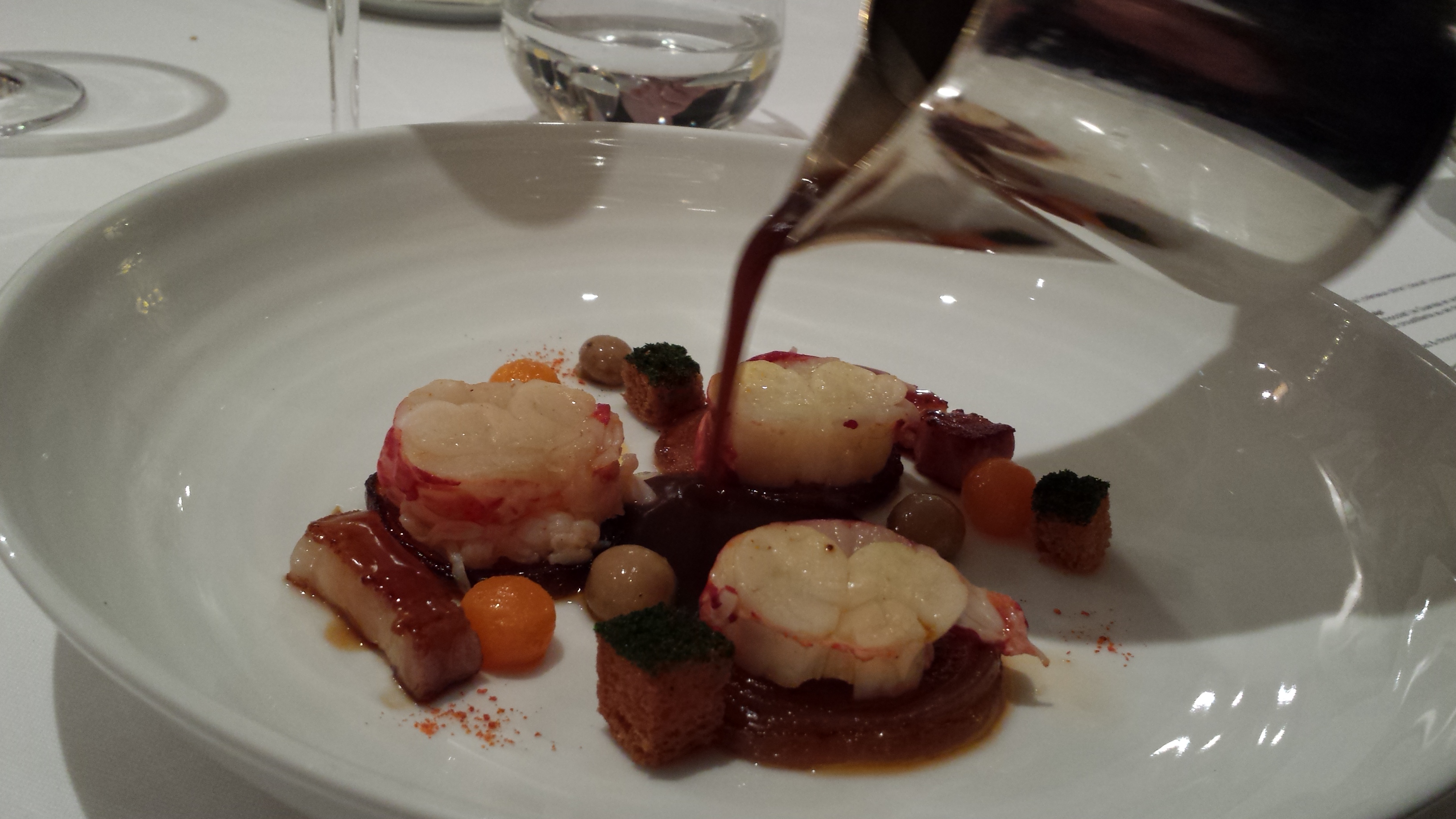 Quite outstanding and will hold for many more years. In contrast, the 2008 Domaine Emmanuel Rouget Vosne-Romanée Cros Parantoux 1er, a relative rarity, carried a slightly forward balance of intense red fruits and cherries on the nose, somewhat lean initially, becoming weightier later but still dominated by vanilla and wood. The potential is immense but wasted this evening. A 1994 Château d’Yquem was served to round off the evening, a wine that always sailed Jean-Paul’s boat, displaying a powerful bouquet of honey and apricot and sweet medicinal notes on the palate, luscious with decent acidity. We were all properly hammered at the end of the long evening but this will go down as another memorable evening unlikely to be forgotten.
Ric arrives at Domaine de la Romanée-Conti
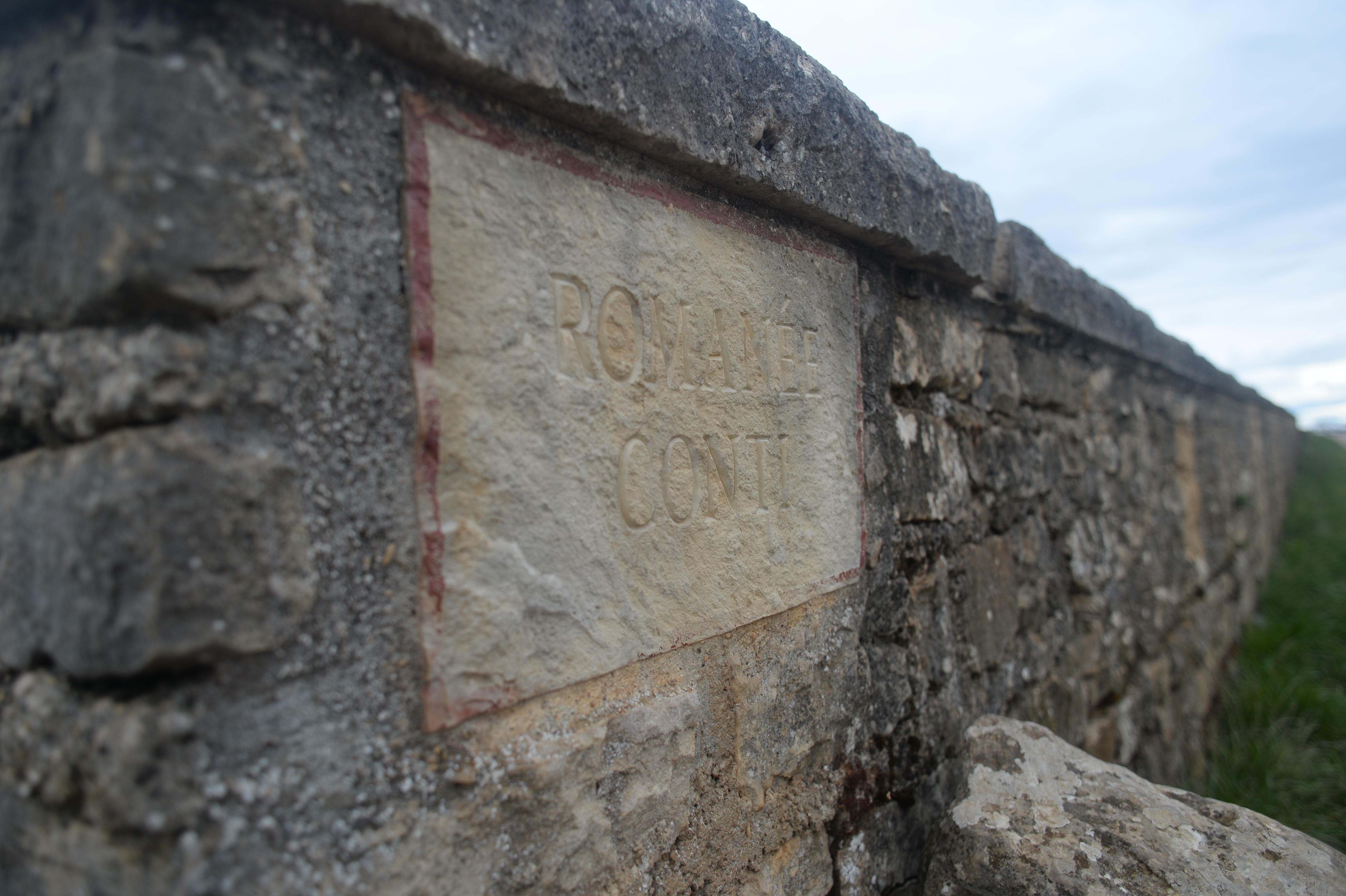 The pièce de résistance of my short tour in Burgundy, without doubt, was a visit to this most venerated estate of all in the world of oenology, Domaine de la Romanée-Conti, on the morning of 28 September 2015 where, through a most fortuitous turn of affairs that I need not elaborate about, we were granted access into its chai, its cellars and a tasting within, in addition to a personal tutorial about technical aspects of its winemaking whilst standing right on the soil of the most expensive piece of real estate in oenology, Romanée-Conti.
As we stepped through the gates of the nondescript-looking mansion (that does not, in any way, state that it is D.R.C.) immediately to the right of the old church in the little square of Vosne-Romanée, we were warmly welcome by M. Bertrand de Villaine, nephew of Aubert (owner of DRC), a stout stocky gentleman who appears, to the casual observer, to be more at home with rugby than his role as the chief winemaker of D.R.C., overseeing the entire vinification of all the wines within the D.R.C. stable.  Together, we took a walk up the gentle slope to the monopole plot of Romanée-Conti, traversing its low clos (normally forbidden), striding up to its vines basking in the glorious sunshine of this cool beautiful morning. D.R.C. has been biodynamic long before it became the fashionable byword, Bertrand saying that it was the sensible thing to do. It seems 2015 has all the trappings of a superb vintage, the Indian summer coming on earlier than usual such that practically every vineyard had completed harvesting by the first week of September, and it was no exception at D.R.C.. Only ripe bunches growing off the main stems are picked while isolated bunches hanging off side stems are left alone as these tend to contain too much acidity and less sugar. D.R.C. is also experimenting with plot densities with some vineyards pushing up to 14000 vines per hectare from the usual 10000.
  The average age of the vines are between 40-50 years and there is a continual process of vine renewal as old vines that are deemed to be past their prime are pulled, to be replaced by younger vines that will only begin yielding dividends more than ten years down the road. Here and there, particularly within the plot of Romanée-Saint-Vivant at this moment, one could see rows of greener vines indicating newer plantings.
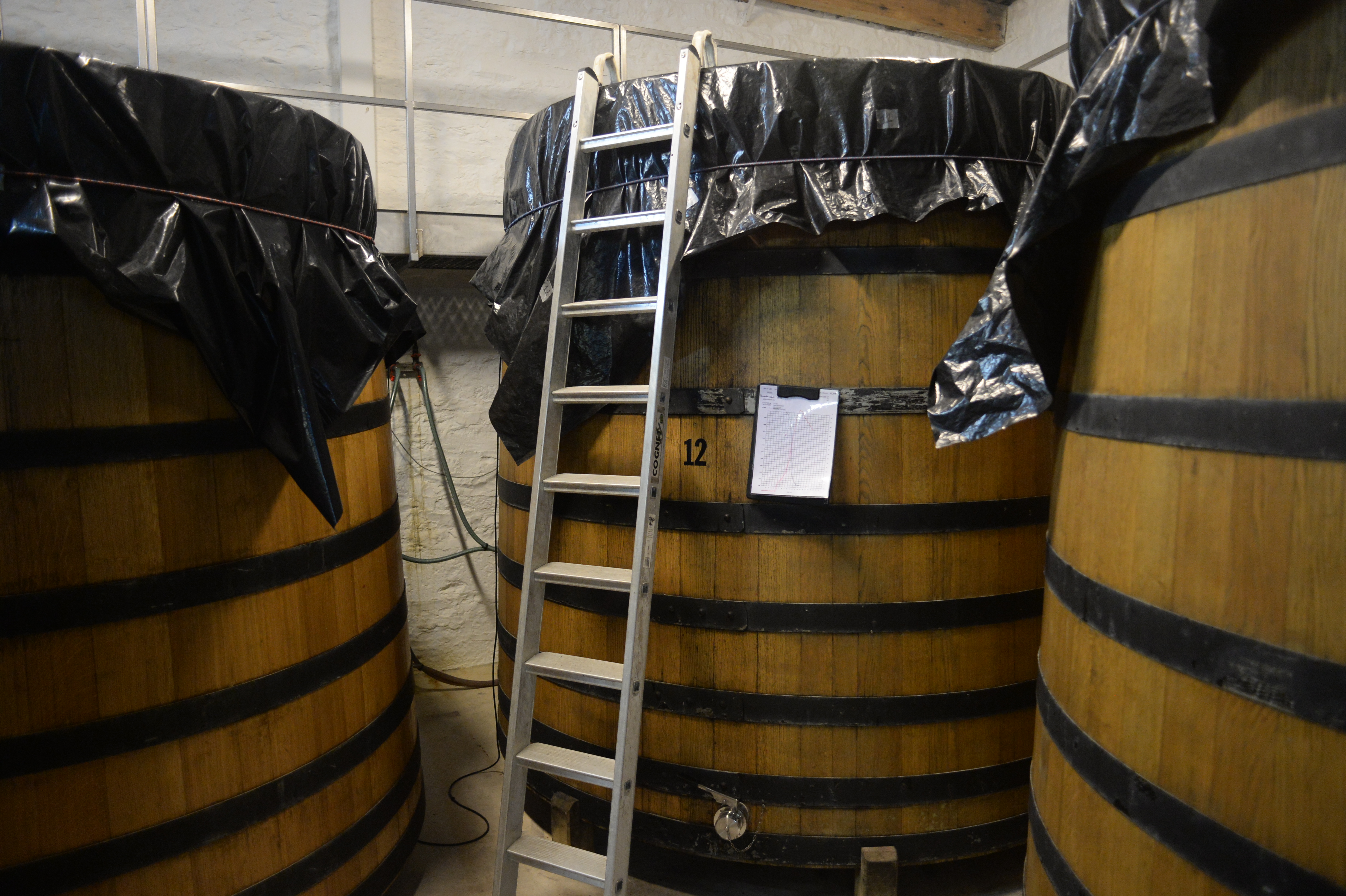
The Richebourg grapes were being pressed that morning and as we entered its chai, one could feel some relative warmth and a certain mushiness in the air, by-products of the heat and carbon dioxide released during fermentation. 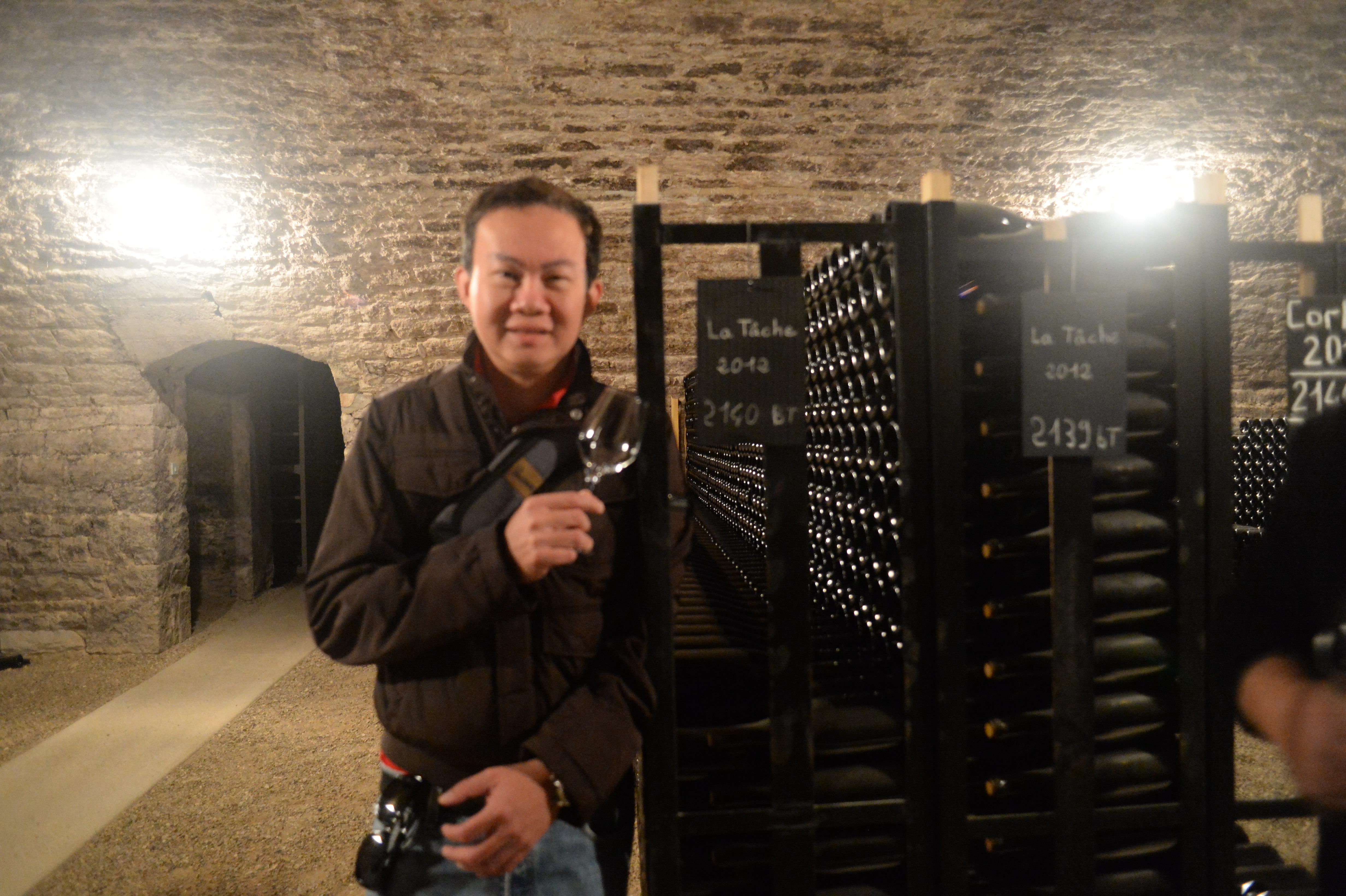 The chai appeared extremely modest and functional, with all of the 2015 harvest contained in only a few vats, driving home the scarcity of D.R.C. wines and, in a quiet corner, sat vat number 11 containing Romanée-Conti. D.R.C. ages its wines mostly in new oak.
We then descended into its cellars, just a part that contained more recent vintages lying in bottle. Seeing the shelves of Romanée-Conti, La Tâche and Richebourg et cetera of various vintages was certainly orgasm-inducing. We finally arrived at the tasting room where Bertrand had brought two unlabeled bottles without telling us what they were, imploring us to taste them blind, and none of us dared to do otherwise. We began with a red, sporting a clear ruby with powerful floral aromas of red fruits and sweet dark berries. Red plums and tangerine dominate on the palate with a ferric trace, excellent in concentration and acidity but very controlled, producing a great mouthfeel, well balanced but still rather tight and not quite settled. Needs time. Bertrand quizzed us whether we thought it came from a cool or hot vintage, and we all thought the former, for there was absolutely no trace of heat stress nor any raisiny notes. 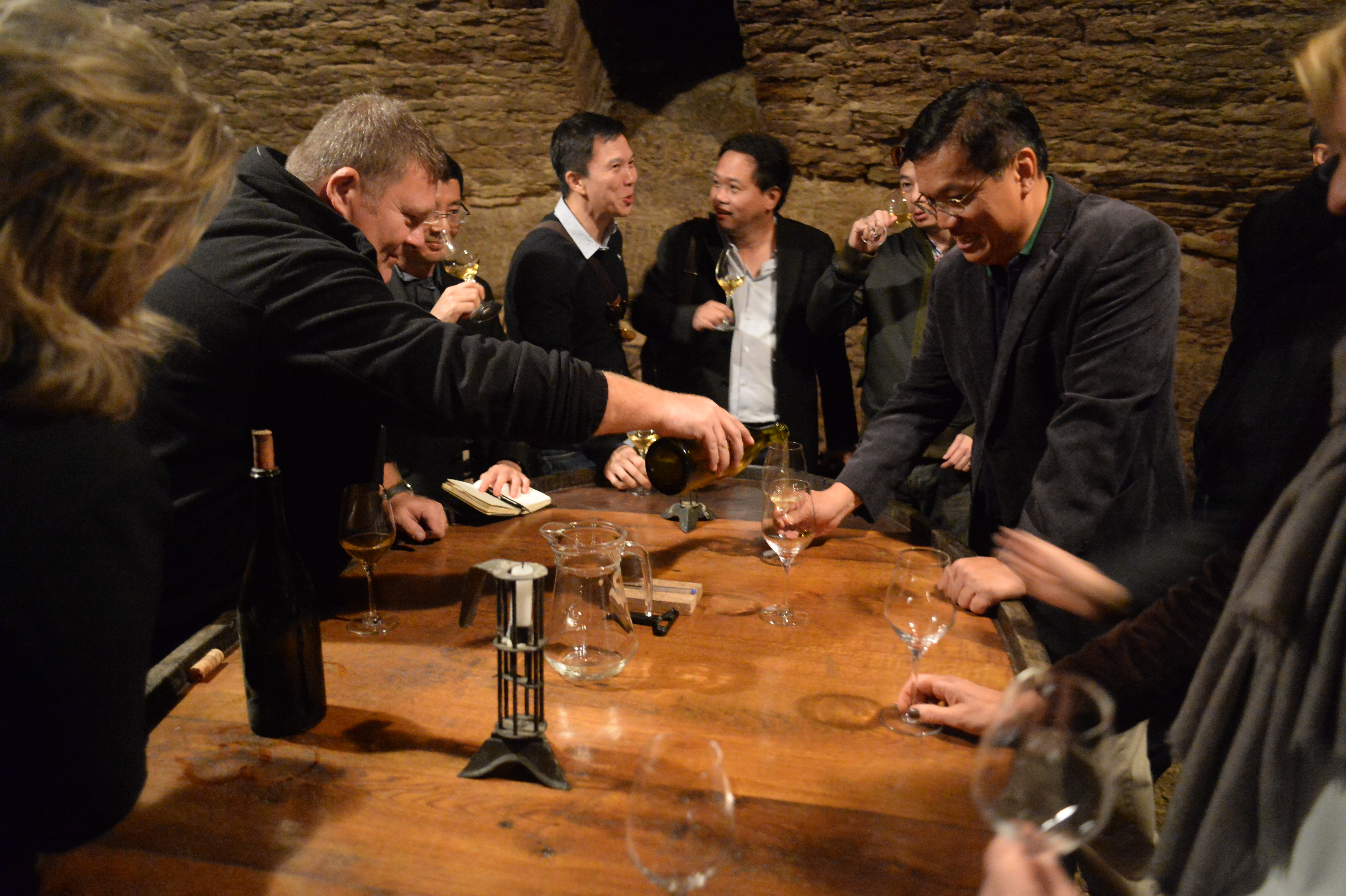 I guessed quietly an Échezeaux and indeed it turned out to be a 2003 Domaine de la Romanée-Conti Échezeaux Grand Cru, and I suppose the little blinded exercise was to drive home the point of expert vineyard management in dealing successfully with difficult vintages, 2003 being the hottest vintage in decades.
Next was an unlabeled white that we were already informed was a Bâtard-Montrachet, producing an effusive bouquet of white flowers, caramelized honey and melons with a quiet intensity, displaying harmonious citrus and subtle minerality on the palate with fine delicacy, acidity and persistence with just a ferric trace. Again, Bertrand probed us to hazard a guess about its vintage. It turned out to be a 2005 Domaine de la Romanée-Conti Bâtard-Montrachet Grand Cru, the second warmest vintage after the 2003 but, like the previous wine, there was no indication at all on the palate that it was so. 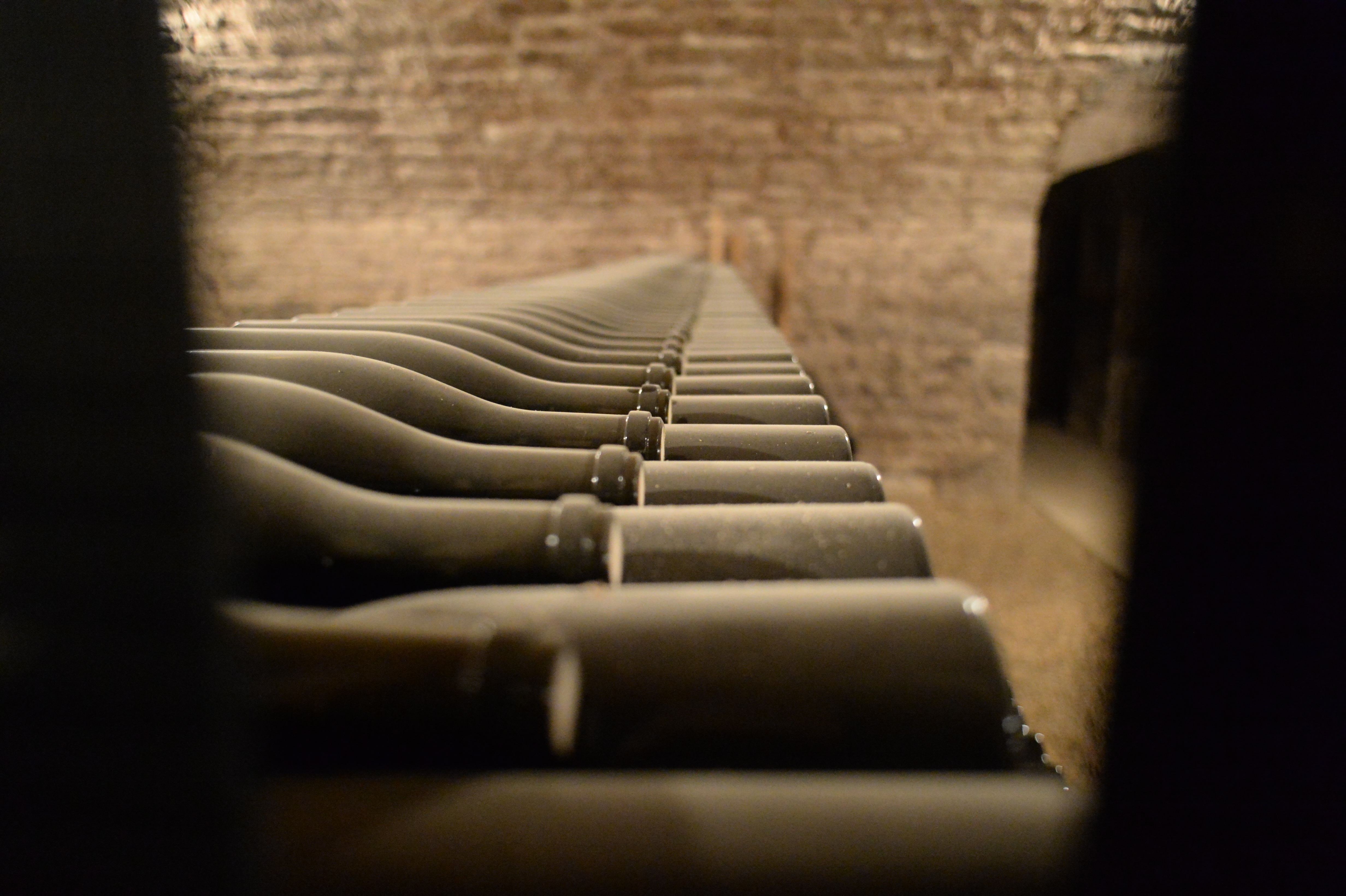 One doesn’t look for absolute fullness in a Bâtard-Montrachet and perhaps one shouldn’t, for it is never as full as a Chevalier-Montrachet, let alone Montrachet itself and, perhaps, this exercise demonstrates again the expertise of D.R.C. in managing its wines to reflect the terroir accurately. It has been a real honor and privilege, as an outsider, to have experienced such intimate hospitality from DRC and, besides being indebted to M. Bertrand de Villaine for his time, there are certain other people to be thanked but who prefer to remain anonymous and they shall not be forgotten.
Lunch with Yannick Champ of Prieuré-Roch
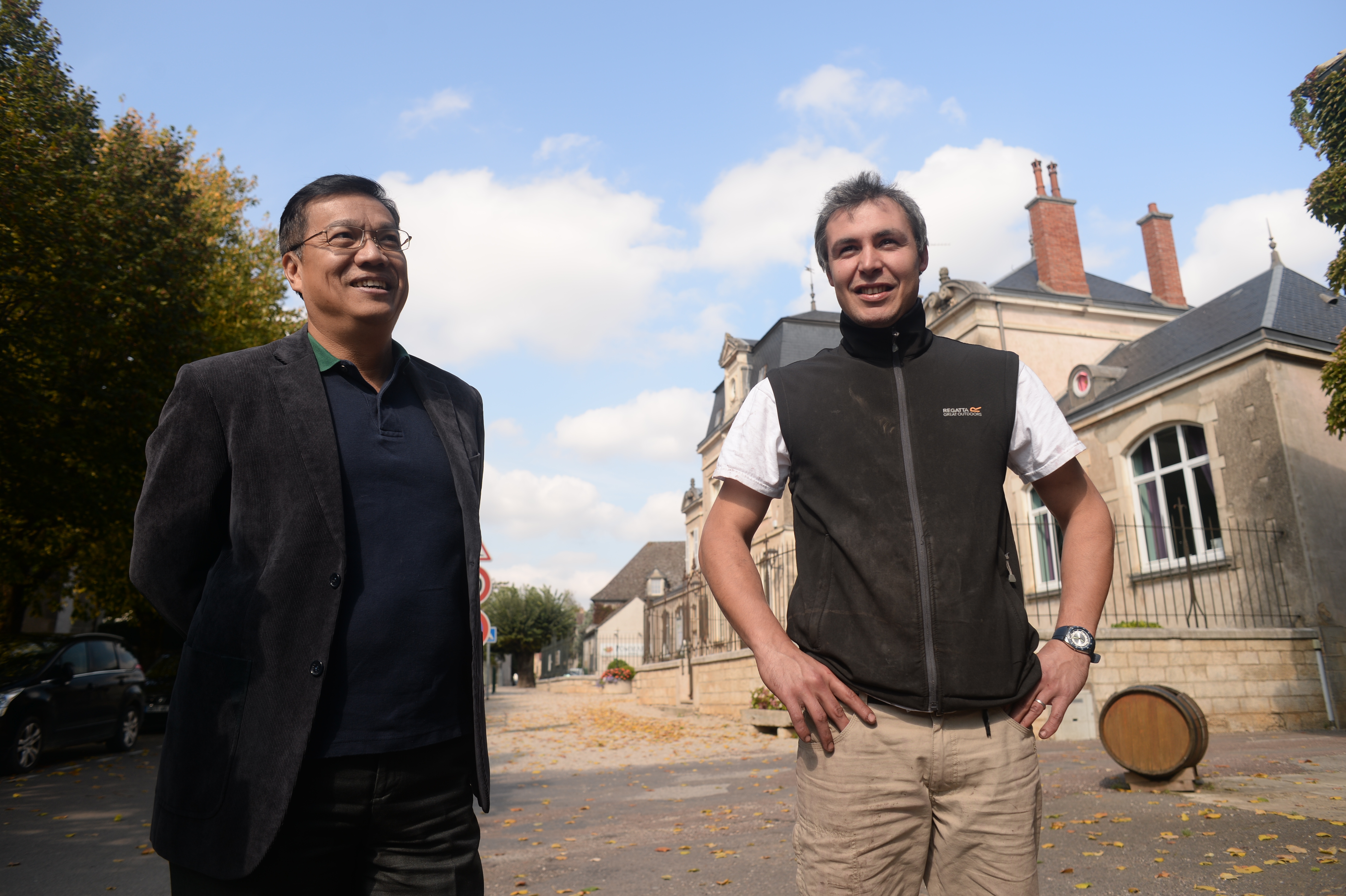 After a leisurely breakfast on 27 September 2015, we drove down south of Beaune to the sleepy township of Puligny-Montrachet where it was very good, once again, to be able to walk up the gentle slope of the Côte de Beaune from the D113 secondary road and to tread gently at the skirting of Bienvenues-Bâtard-Montrachet, followed immediately by Bâtard-Montrachet and then Montrachet itself, where the twin pillars of Marquis de Laguiche stood silently at a corner. Memories of the lovely Grand Crus that we have had over the past couple of days from these vineyards of Bouchard Père & Fils and Joseph Drouhin came flooding back. Harvesting for the 2015 vintage has concluded but, here and there, one can see forlorn bunches of grapes left untouched by the pickers, a poignant reminder about how absolutely fastidious the winemakers must be in choosing their grapes and how much hard work has been done by all these passionate individuals just purely for our pleasure.
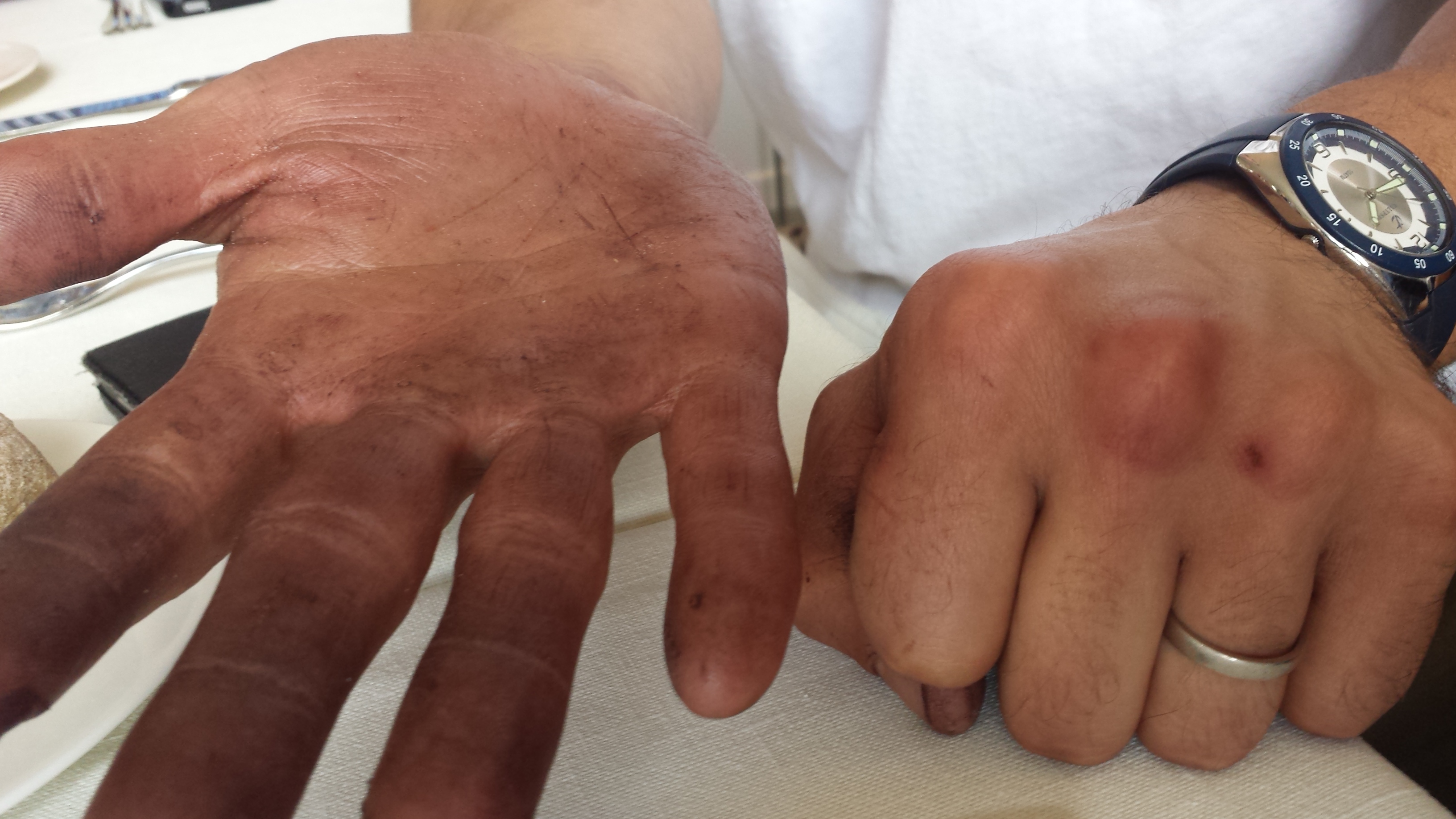 As it turned out, lunch had been arranged that afternoon at a small lovely restaurant n Pommard, Auprès du Clocher, and waiting to meet us there was the good-looking young winemaker M. Yannick Champ of Domaine Prieuré-Roch. The first thing I noticed as I shook his hand were the deep purplish stains on his hands and the red inflamed knuckles. Apparently, Yannick has been up since 4.00AM to tend to his newly-pressed wines and he had evidently been hard at work right till it was time to meet us, for he was still wearing his soiled working clothes. Yannick certainly embodies the new generation of hardworking young winemakers driven by passion and it shone through in his wines that he had brought for lunch.
 But first, we began with a 2009 Domaine Coche-Dury Meursault from the restaurant list. This displayed a light luminosity with lifted aromas of fig and apricot, marked by delicate clear citrus and intense minerality with great linearity, depth and persistence. Quite amazing for a village, easily outperforming many other classified wines. Superb. Following this was the 2000 Domaine Leflaive Bienvenues-Bâtard-Montrachet Grand Cru, displaying a luscious gold, considerably heavier with notes of apricot, peach, rock melon and a hint of caramel with excellent intensity, understated acidity and length. This can easily keep for many more years.
From here, we moved on to a series of Prieuré-Roch wines, all provided by Yannick himself:
2014 Domaine Prieuré-Roch Nuits-St-Georges Clos des Argillieres 1er. Direct from barrel. Dark with generous dark cherries raspberries. Rustic. Stern on the palate, receding quite quickly as the wine developed bright red fruits and some sweetness in the glass. Good potential though too early to pass judgement.
 2014 Domaine Prieuré-Roch Vosne-Romanée Les Suchots 1er. Direct from barrel. Abundant red fruits, brighter and more open. Stern metallic notes on the palate, again replaced by more fruit and sweet tannins over time. Good potential.
2009 Domaine Prieuré-Roch Vosne-Romanée Les Suchots 1er. Brownish red. Dark plums, earth, some ferrous element. Good depth of fruit. Trace of sweet tannins but firm now, finishing with medicinal overtones. Needs more bottle time.
2006 Domaine Prieuré-Roch Vosne-Romanée Les Maizières. A village. Very open. Aromas of rose petals and cherries, some briar, wild berries and dark red fruits, medium-full, missing the complexity of higher classified wines but drinking well now.
 2005 Domaine Prieuré-Roch Clos Vougeot Grand Cru. Lovely fragrance of rose petals and strawberries, open, earthy, displaying good depth. Very enjoyable.
2000 Domaine Prieuré-Roch Nuits-St-Georges Le Clos des Corvées 1er. A 5.2 ha monopole. Dusty brown. Subdued fragrance, fairly intense with salty minerality, somewhat austere and minty at the finish. Came together very well. Beautiful.
This has been a remarkable afternoon and truly an honour and privilege to have spent time with Yannick and his wines. Merci beaucoup!
Ric visits Joseph Drouhin
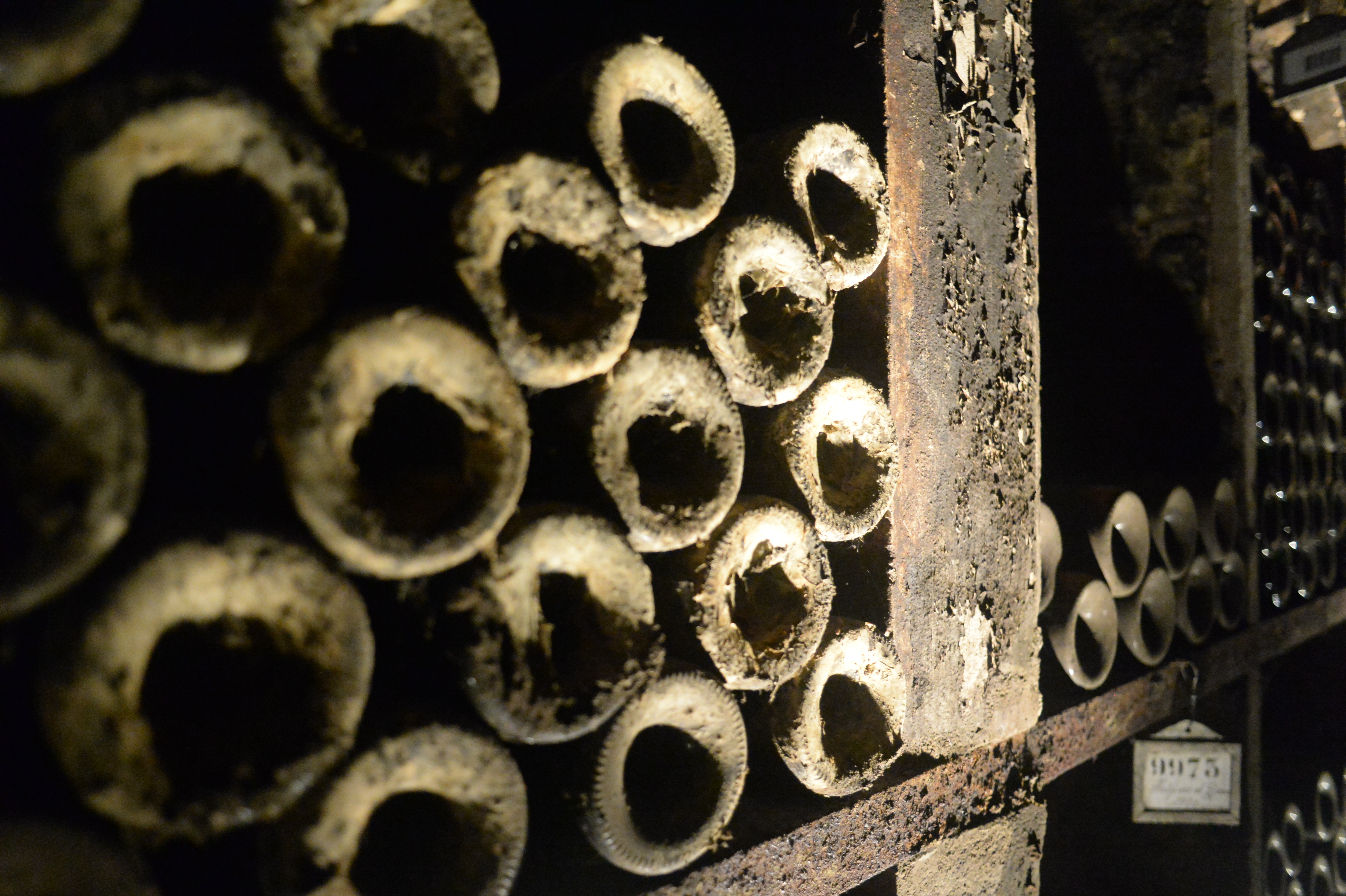
Today, 26 September 2015, marked another exceptional visit to one of the oldest names in Burgundy, the Domaine Joseph Drouhin. Founded in 1880 as a negociant, this estate now also owns more than 70 hectares of vines in Chablis, Cote de Nuits and the Cote de Beaune. 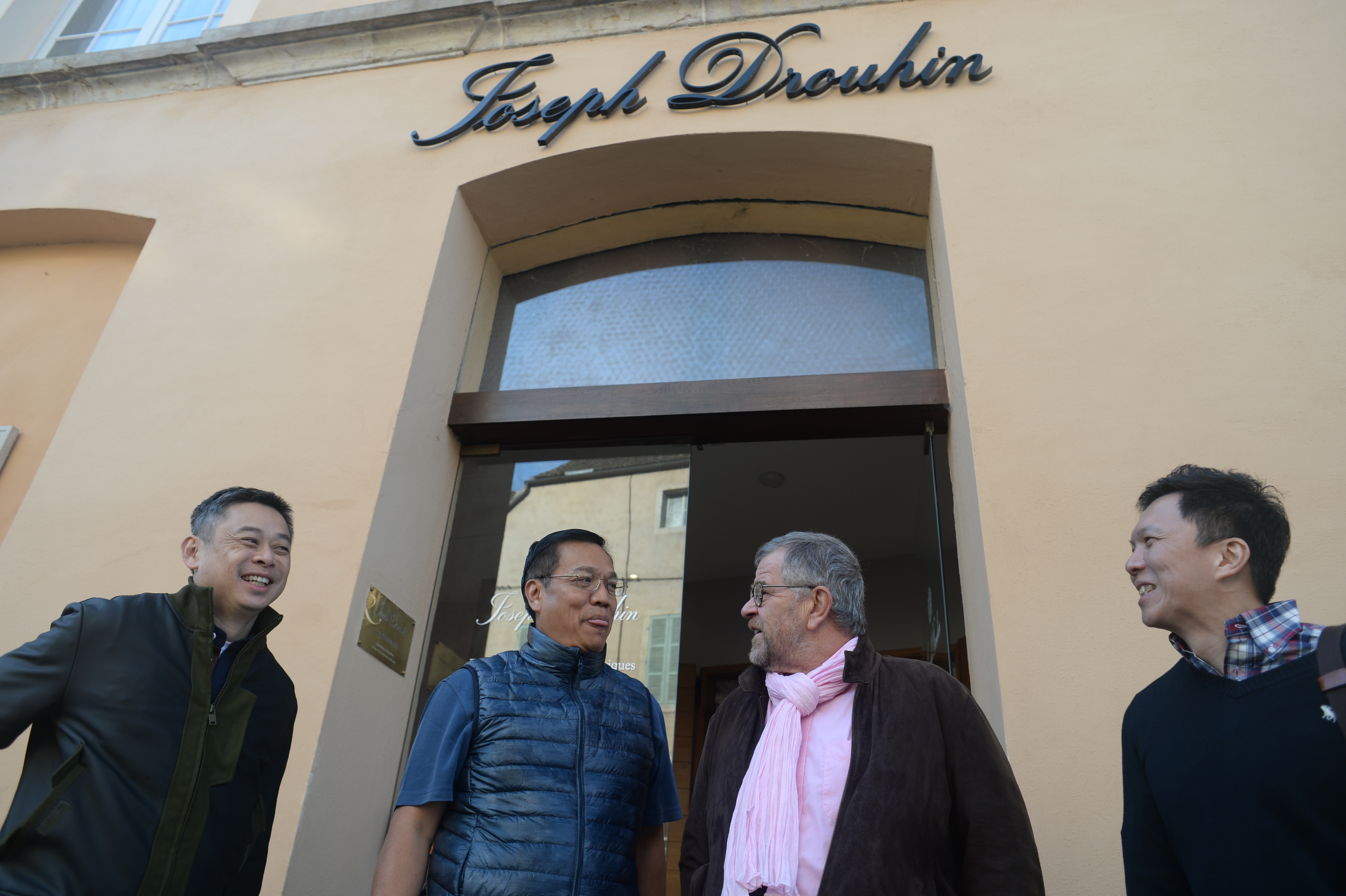 We were welcome at the door, situated right next to the Collegial Notre Dame in Beaune, by its Sales Director M. Jean-Paul Dumond, a highly affable character who had spent several years of his youth in England that accounted for his excellent English and his love for rugby. We went straight to the cellars and, once again, we were all amazed by the extensive labyrinth of dark damp tunnels that, surely, must criss-cross a large part of Beaune. Farming is entirely biodynamic at Joseph Drouhin and the freshly-pressed wine is allowed to flow by gravity into its collecting vat. We then went into its tasting room where Jean-Paul had prepared a generous line-up, the whites having been aired the night before.
2012 Joseph Drouhin Chablis Bougros Grand Cru. Delicate, fairly intense notes of lime and citrus. Medium-bodied, slightly chalky, persistent. Very good.
 2012 Joseph Drouhin Chassagne-Montrachet Morgeot Marquis de Laguiche 1er. Fuller, more fat, luscious, attractive oily texture, subdued minerality, slightly stern but lasting finish. Very good.
2012 Joseph Drouhin Beaune Clos des Mouches 1er. Lovely fragrance. Hint of apricot and nectarine with white pepper. Rounded and minerally. Lively, crisp and long.
2013 Joseph Drouhin Volnay Clos des Chenes 1er. Darker and bigger wine. Dark cherries, wild berries and earth. Accessible. Stern trace of brightness at the finish.
2012 Joseph Drouhin Nuts-St-Georges Proces 1er. Red fruits, earth and incense. Good intensity, very well integrated, structured. Excellent fruit quality and depth. Persistent. Powerful. Excellent.
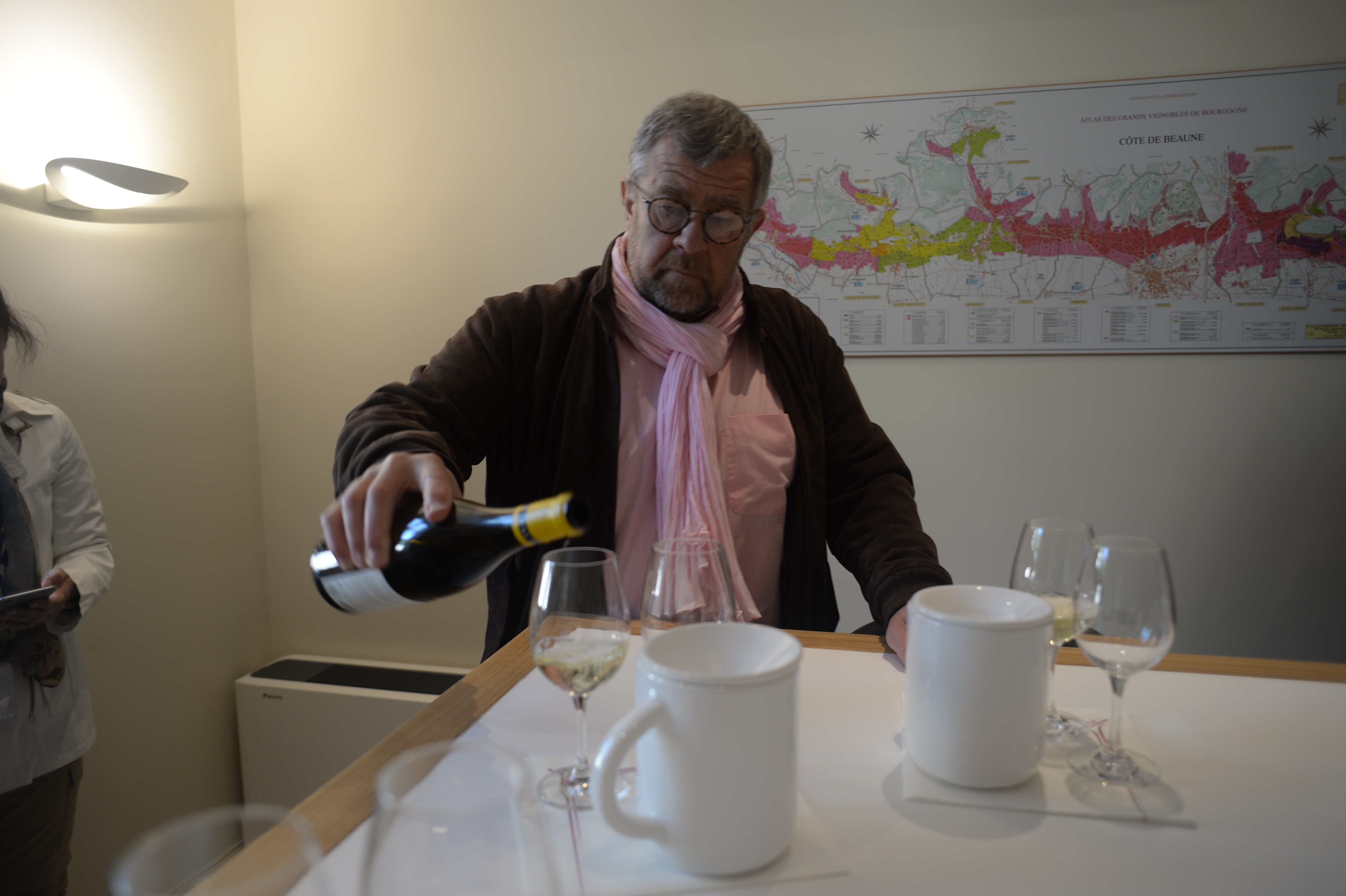 2013 Joseph Drouhin Charmes-Chambertin Grand Cru. Good color. Highly aromatic. Ripe red fruits. Rounded, soft. Less structured. Dry finish. Elegant but lacks real layering.
2013 Joseph Drouhin Mazis-Chambertin Grand Cru. Highly aromatic. Excellent acidity, depth and layering. Structured. Still a tad unsettled.
2013 Joseph Drouhin Chambertin-Clos de Beze Grand Cru. Lifted aromas of red fruits. Great depth and structure, layered. Superb balance. Already quite open in spite of its youth. Great linearity and definition. Great potential. Superb.
2013 Joseph Drouhin Criots-Batard-Montrachet Grand Cru. Great bouquet. Full, oily and fat. Gorgeous creme de la crème and white flowers amidst subtle minerality, enhancing its complexity. Has great character. Already accessible. A great rarity: only 300 bottles. One can go on forever on the nose.
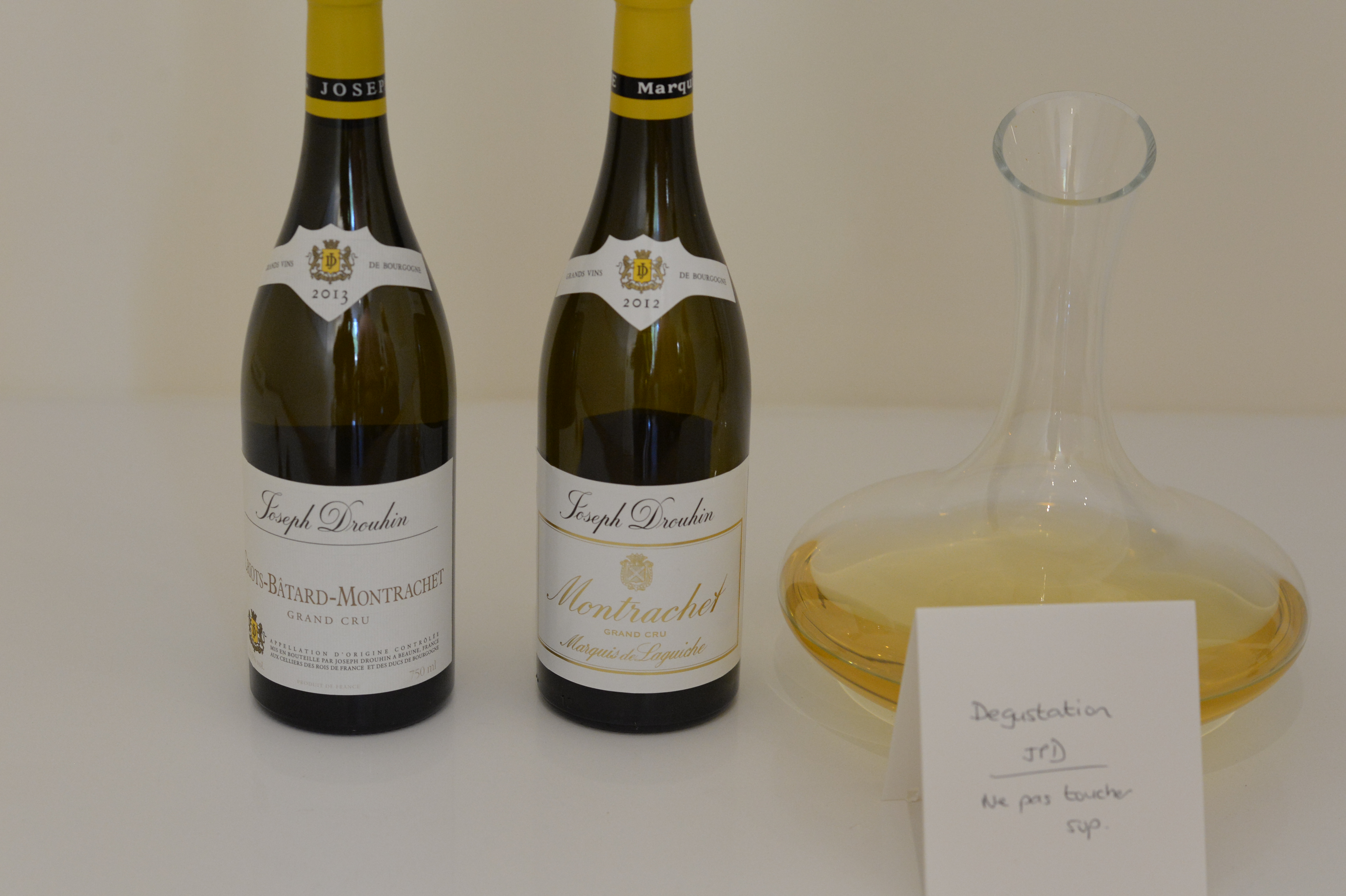 2012 Joseph Drouhin Montrachet Grand Cru. Enticing, seductive, gentle with complex citrus of controlled intensity. Velvety on the palate, displaying wonderful depth but it’s the supreme balance that holds everything today. Absolutely harmonious. A great wine made to last forever. Truly mesmerizing. Heavenly, yet humbling to know such sublimity is possible.
On that high, we made our way to Le Carmin for lunch where Jean-Paul had pre-arranged a simple yet delectable menu of delicate seafood starters and veal, accompanied by the smoothest mash potato I’ve ever tasted. The generosity of Jean-Paul knew no boundaries. As if the wines we’ve had weren’t enough, Jean-Paul provided another couple more bottles and settled the bill as well:
2003 Joseph Drouhin Montrachet Grand Cru. Perfect luminous gold. Utterly complex yet gentle in its entry on the palate, seductive and glowing with almonds, creme de la crème, complex citrus and perfect acidity, superbly balanced, excellent in concentration with a lightness of being. Ethereal.
 1995 Joseph Drouhin Gevrey-Chambertin Combottes 1er. Medicinal and herbal aromas with sweet tannins and receding acidity. Slightly burly. An older and heavier style of burgundy but still drinking well
To have not one, but two supreme bottles of Montrachet Grand Cru in one afternoon is, indeed, an outstanding and unique experience, enhanced further by the spirit of friendship and camaraderie around the table. We cannot thank Jean-Paul enough for his kind hospitality and for making this visit possible. Joseph Drouhin has left an indelible mark on my mind with its outstanding quality and I shall forever remain grateful to have experienced such a wonderful opportunity.
Ric visits Bouchard Pere & Fils
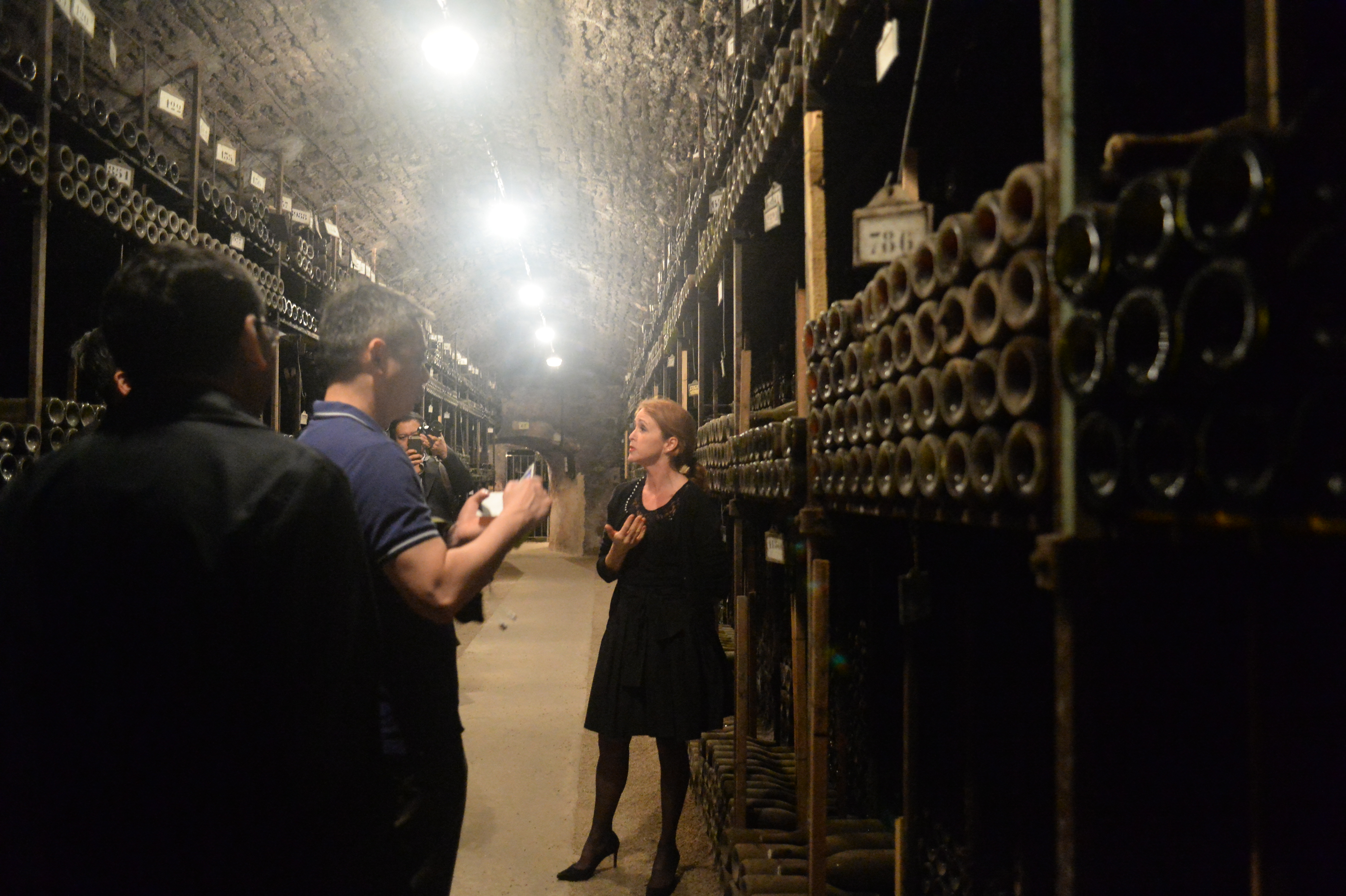
Right after the outstanding visit to Domaine Faiveley, we made our way to Bouchard Pere & Fils late after 5.00 PM on 25 September 2015, highly respectable in the negociant business since 1731, which has also gone on to own its own vineyards, particularly the Grand Crus of Le Corton, Corton-Charlemagne, Chevalier-Montrachet and that Holy Grail of whites, Montrachet. 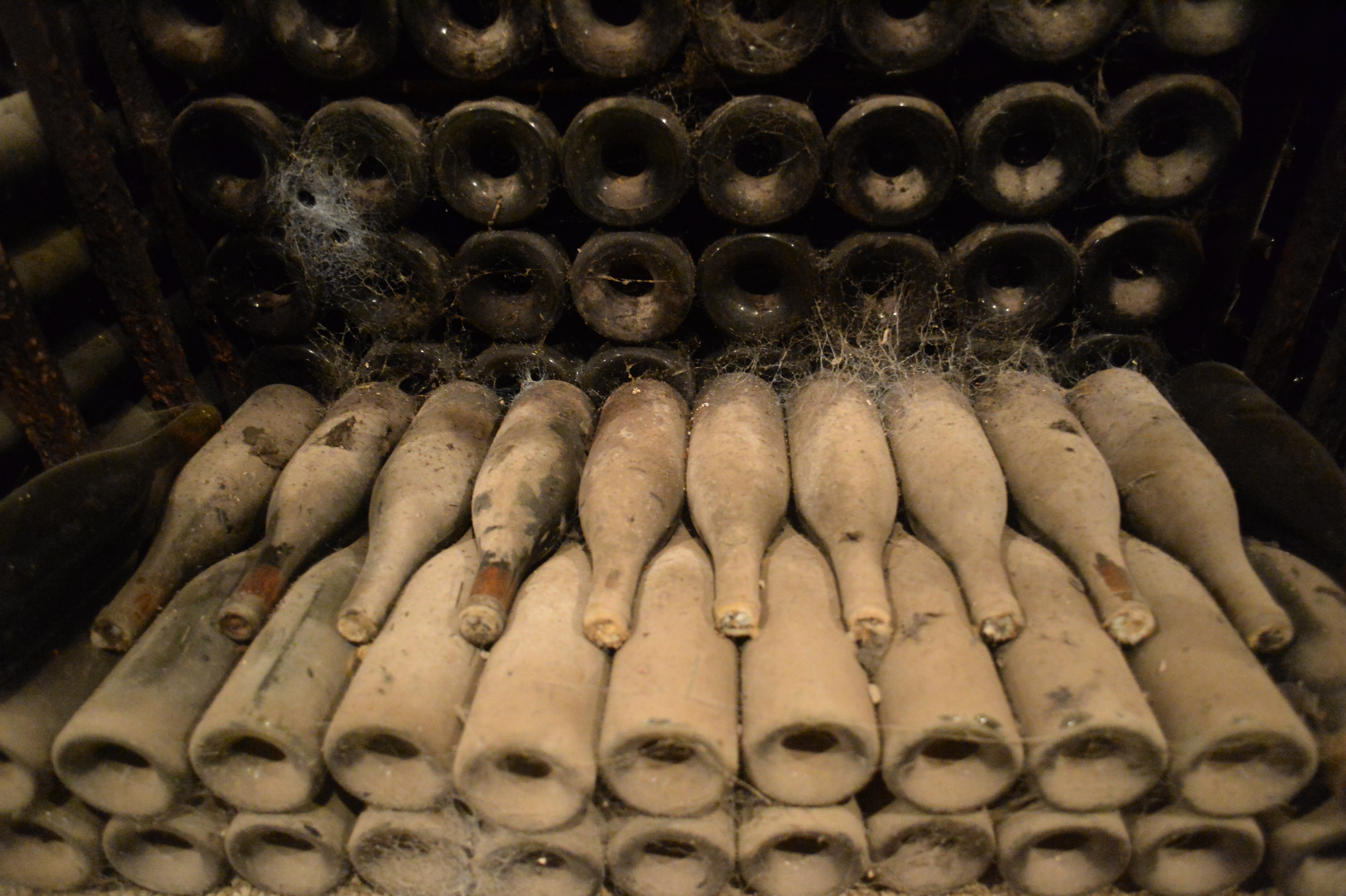 We were welcome by Ms Viviana Jaimon who wasted no time bringing us down to its extensive centuries-old cellars that was originally a fortress in the 14th century, its extensive labyrinth of tunnels connecting five towers that guarded the old city of Beaune. No less than two million dust and mould-covered bottles lie peacefully within the cellars, some for well over a century, the oldest being a 1846 white. For that, we have to thank the owners for sealing up the cellar behind four walls during the War to prevent the Nazis from looting its contents. If every winemaking firm in Beaune owns a cellar, countless tunnels and corridors must, indeed, exist beneath the cobblestone streets of Beaune which, surely, must be the case. After trudging through the cellars and salivating over all the bottles that lay within, we emerged into the tasting room, tasting the wines in the order listed. While I found the reds to be underwhelming, the whites, on the other hand, were truly excellent. All wines had been aired in bottle for about 8 hours prior to tasting.
 2012 Bouchard Pere et Fils Volnay Caillerets Ancienne Cuvee Carnot 1er. Dark cherries and other dark tones, earth and forest floor. Tight, not yielding much.
2012 Bouchard Pere et Fils Beaune Greves Vigne de L’ Enfant Jesus. Red fruits, darker wild berries, some vegetal trace, fair intensity, rounded. Short.
2012 Bouchard Pere et Fils Le Corton Grand Cru. Plums, tangerine, soft, fairly intense. Lacks layering and character for GC.
2012 Bouchard Pere et Fils Chambertin Clos de Beze Grand Cru. Structured, suggestion of power on the nose. Masculine and velvety on the palate but the fruit is rather shy and backward. Could do with more layering. Not distinguished for what is supposed to be on par with Chambertin.
2013 William Fevre Chablis Les Clos Grand Cru. Powerful nose of white flowers with a hint of tropical fruit, crisp but very pleasant and easy with subtle minerality. Very elegant.
 2012 Bouchard Pere et Fils Mersault Genevrieres 1er. Generous notes of white pepper and clear citrus but too generic. Lacks character.
2011 Bouchard Pere et Fils Corton-Charlemagne Grand Cru. Aromatic, good concentration, layered with tropical fruits and white flowers, well integrated with plenty of acidity. Lengthy. Very promising.
2011 Bouchard Pere et Fils Chevalier-Montrachet Grand Cru. Racy ripe tropical fruits, pineapples, apricot, butterscotch and crème de la crème. Crisp with excellent concentration and intensity. Good complexity. Excellent stuff but still a notch below Montrachet (below).
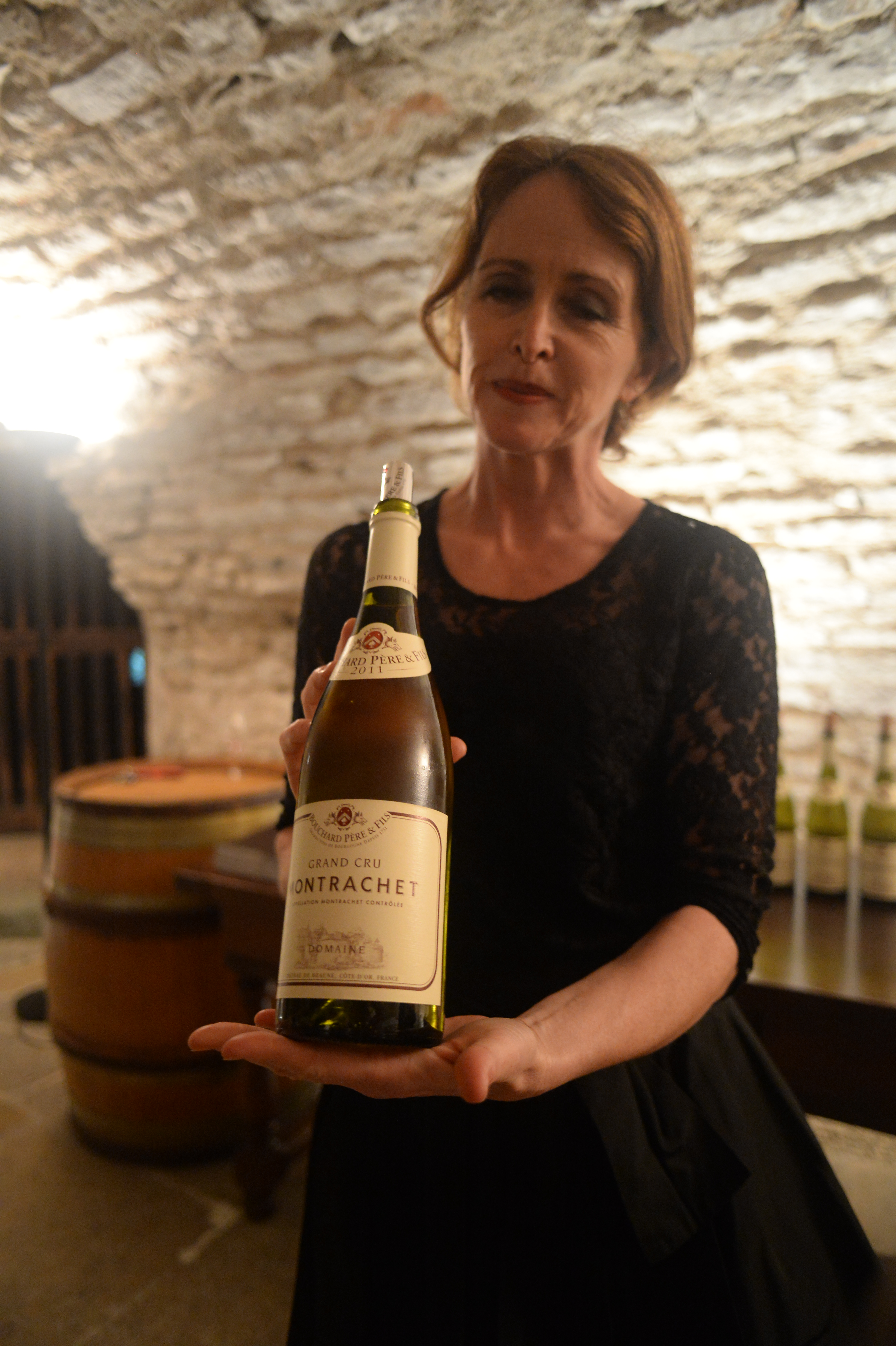
2011 Bouchard Pere et Fils Montrachet Grand Cru. Powerful, glowing with notes of tropical fruits, intense citrus, enamel, vanilla and crème de la crème with a hint of steeliness. Lengthy and elegant. Not showy at all. Great mouthfeel. Already highly complex even in its youth but still tight. Quite outstanding.
I must thank Bouchard Pere et Fils for such a generous line-up of wines for tasting, and to FICOFI for making this visit possible. I’ll be certain to pay more attention to their whites in future.
Ric visits Domaine Faiveley
Domaine Faiveley must surely count as one of the most famous names in Burgundy. From its origins as a negociant in the wine business, bottling wines from grapes bought from growers, Faiveley has evolved to become a domaine in its own right, now owning their own parcels and controlling every step of the winemaking from the cultivation of vines right down to bottling and marketing. Faiveley has certainly come a very long way although the problem, I suspect, is that there are still people who do not appreciate enough the quality of Faiveley and its enormous ability, drive and passion. It was, indeed, our good fortune to be welcome at the door of this famous domaine on 25 September 2015 by none other than Monsieur Erwan Faiveley, the seventh 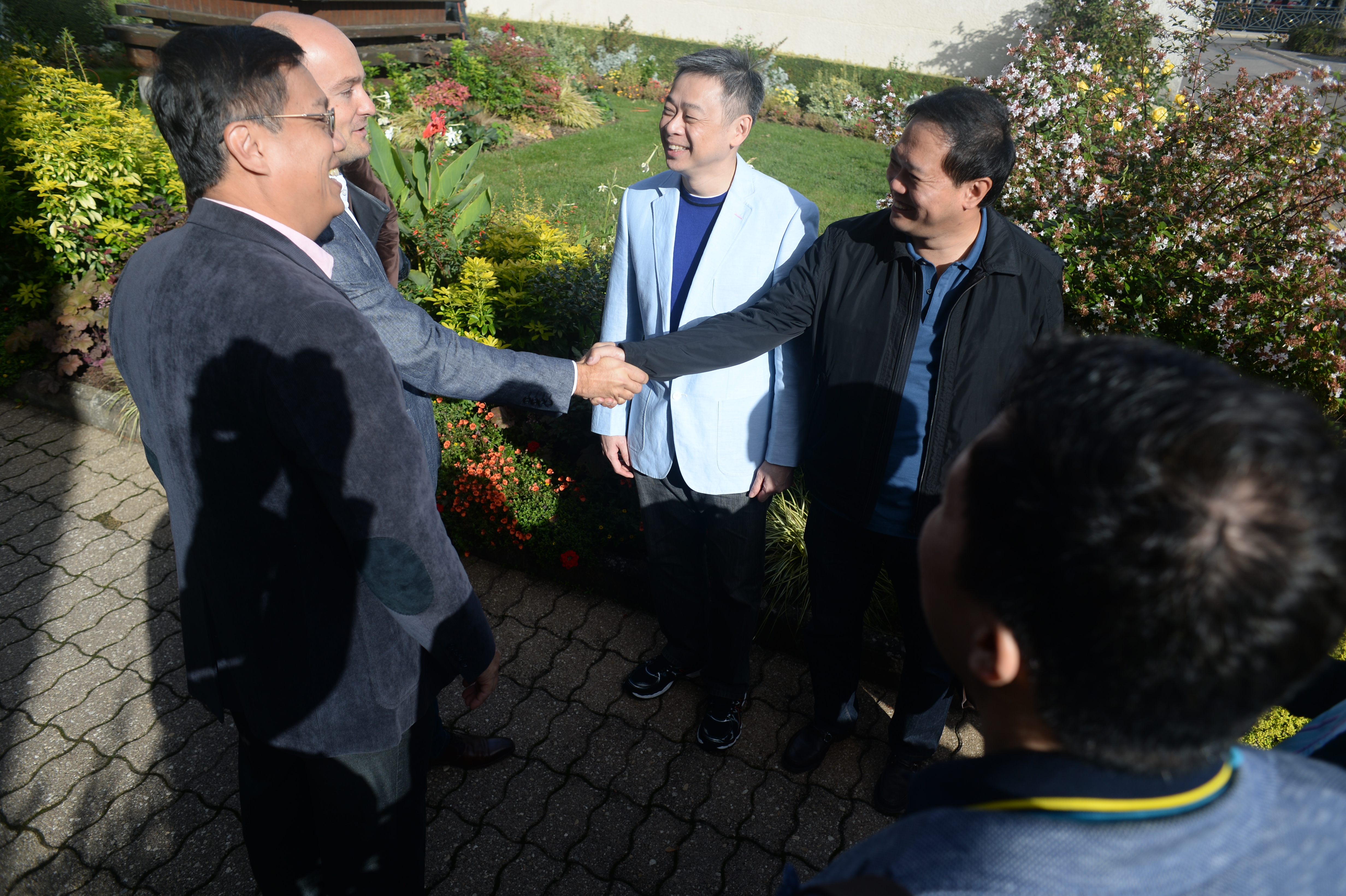 generation and current owner who hosted us to an wonderful morning of tasting from barrels in its cellars, followed by lunch and more wine within the cellars. It so happened as well that, on this day, Faiveley was pressing the 2015 harvest of its Musigny Grand Cru, and hearing that sent shivers of excitement through all of us, heightening the anticipation of what was in store. And as if he sensed that, Erwan wasted no time bringing us through to view its presses and vats, each bearing the name of famous plots of vineyard, reminding us instantly of the huge range of wines that Faiveley makes, following which we then descended to oenology heaven, its cellars. The following is the list of wines tasted straight from barrel:
2014 Domaine Faiveley Nuits-Saint-Georges Les Porets 1er. Fresh, succulent, savoury, weighty, good length, slightly earthy.
2014 Domaine Faiveley Gevrey-Chambertin Clos des Issarts 1er. A monopole. Only 20 barrels. Good concentration and fragrance, structured, subtle with quiet intensity, long. Great potential.
2014 Domaine Faiveley Chambolle-Musigny Les Fuees 1er. Powerful dark flavors with bright red fruits, some wood, fleshy, harmonious, feminine. Excellent.
2014 Domaine Faiveley Corton Clos des Cortons Faiveley Grand Cru. One of only nine grand cru monopoles in Burgundy, reminding us again of the importance of Faiveley. Very attractive, displaying bright red fruits and cherries. Slightly dry but neither lean nor vegetal. Surprisingly good for a Corton though a little short. E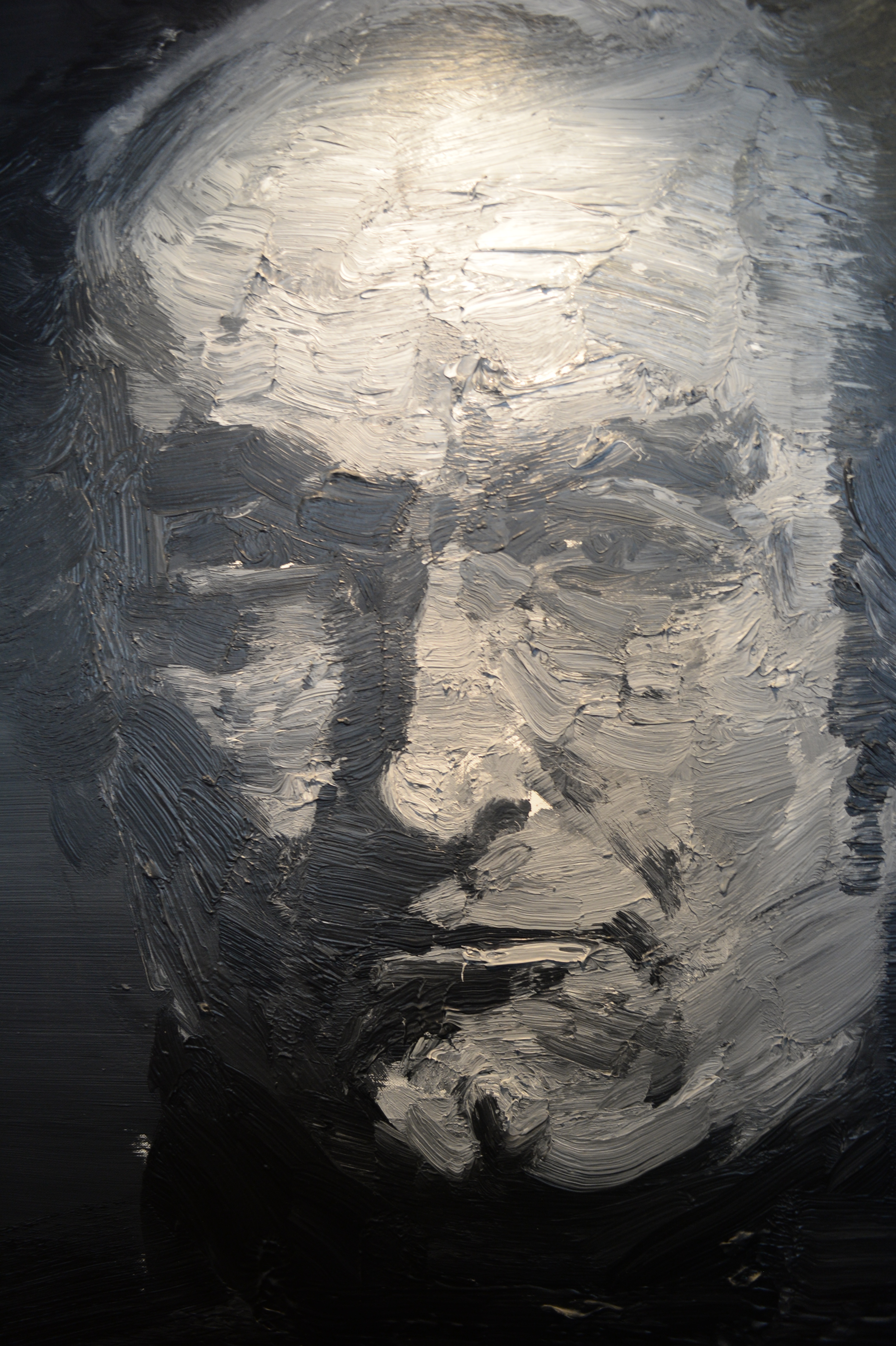 rwan related to us a long story about how this vineyard came into the family and the subsequent trials and tribulations as others tried to wrest control of it. This tasting has really changed my opinion of Corton.
2014 Domaine Faiveley Échezeaux Grand Cru. Good color ,fairly intense, smooth, good concentration, fleshy, masculine.
2014 Domaine Faiveley Clos Vougeot Grand Cru. Some cedar, sweet tannins, good density, touch of briar and earth. Not distinctive. Could do with more character. Not surprising, given that Clos Vougeot is largely second division grand cru.
2014 Domaine Faiveley Mazis-Chambertin Grand Cru. Powerful, aromatic, sweet. Excellent purity, depth and length. Very well integrated tannins, rounded, already accessible. Excellent.
2014 Domaine Faiveley Chambertin Clos de Beze Les Ouvrees Rodin Grand Cru. From a parcel very special to Faiveley. Darker tones though rather restrained now. Lovely integration, not showy. Hint of coconut. Great purity. Rounded. Excellent.
2014 Domaine Faiveley Musigny Grand Cru. Here our hearts beat faster, knowing now that Faiveley has acquired its own plot in Musigny. Dark tones, striking notes of cocoa and mocha. Open velvety textures. Excellent concentration, well managed tannins, remarkable balance. Bit short now but should develop very well in bottle. Quite outstanding.
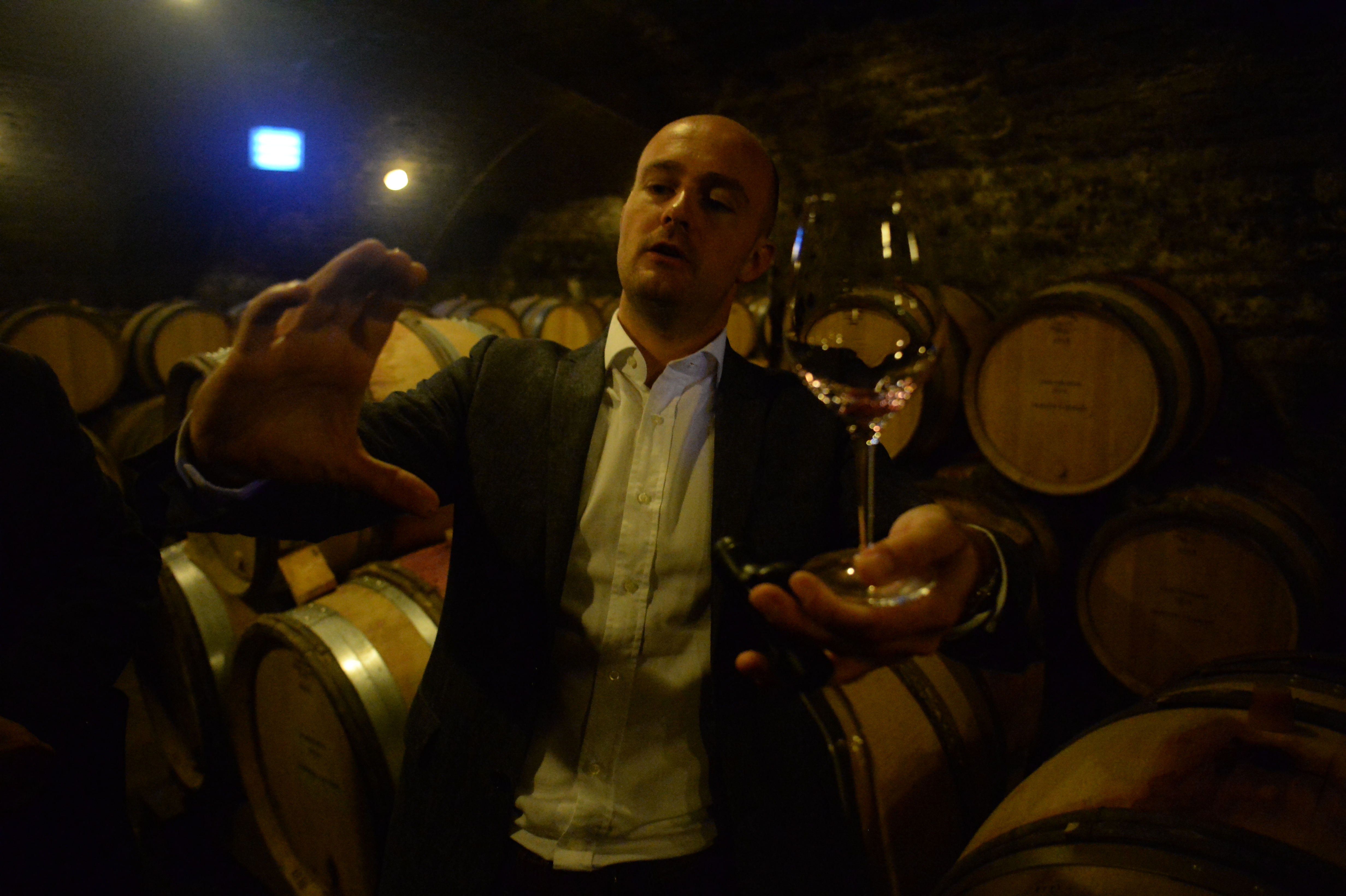 2015 Domaine Faiveley Corton Clos des Cortons Faiveley Grand Cru. Just pressed only two days ago!! We are told the 2015 is, in every way, an excellent vintage. Already showing ripe cherries ad raspberries with crisp acidity and generous proportions. Rounded. Good concentration. What a privilege!!
2014 Domaine Faiveley Bienvenues Batard-Montrachet Grand Cru. Lifted aromas of intense citrus, slightly creamy, very fresh, excellent acidity though not too crisp, displaying good linearity and definition. Excellent.
2014 Domaine Faiveley Corton-Charlemagne Grand Cru. Beautifully lifted aromas of citrus, morning dew and some grassy elements. Good focus. Excellent concentration.
I can tell you I did not spit a single drop from any of the above. Moving on, we trooped to a dining area within the cellar for a delicious lunch hosted by Erwan, followed by more wine:
2010 Domaine Faiveley Mersault Les Charmes 1er. Clear citrus, good acidity and intensity, yet light and delicate.
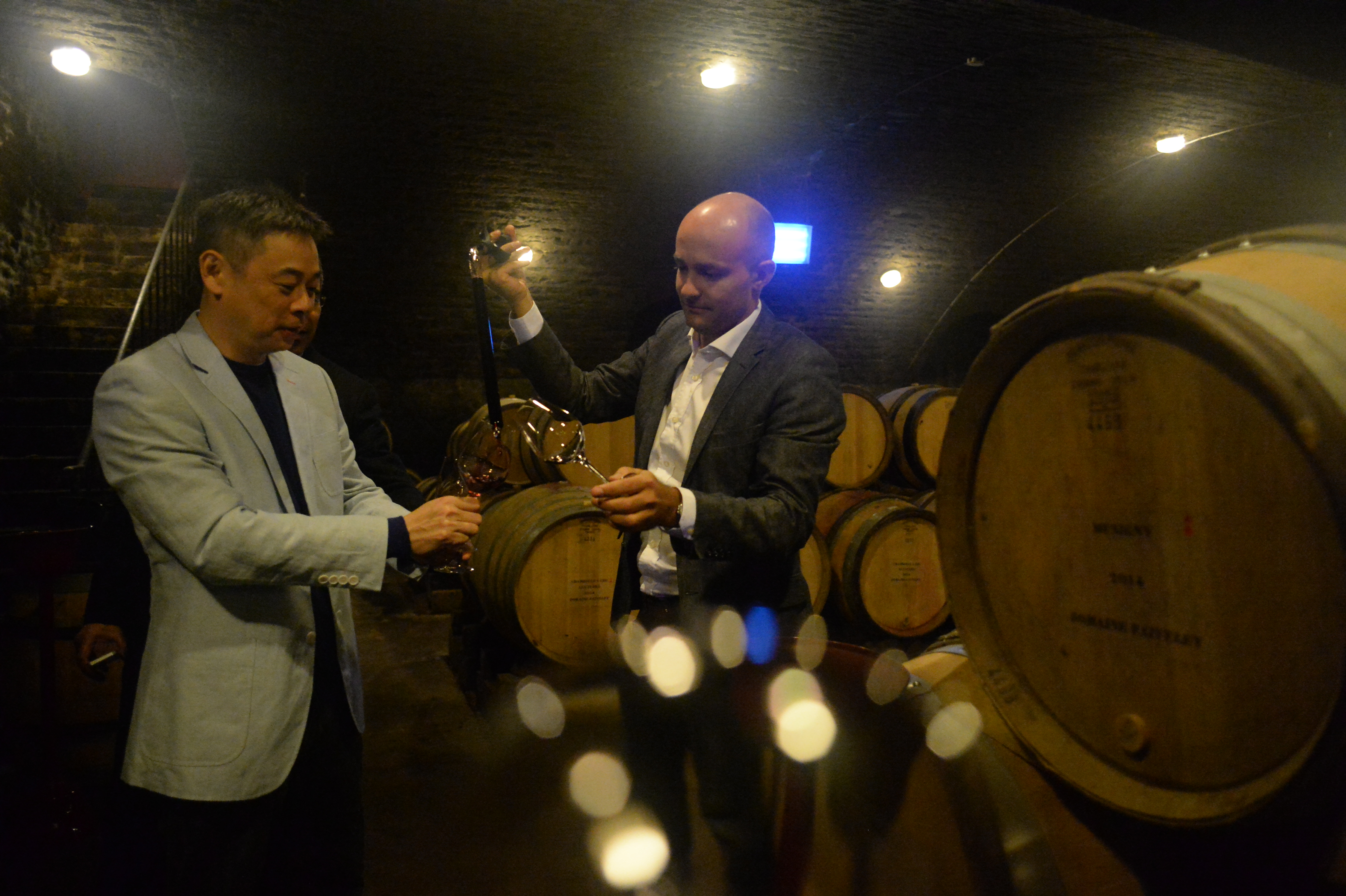 2008 Domaine Faiveley Bâtard-Montrachet Grand Cru. Lifted aromas of white flowers, very good concentration of fruit supported by flinty minerality, good delicacy, still tight. Should become even better.
2009 Domaine Faiveley Corton Clos des Cortons Faiveley Grand Cru. Poured from magnum. Monopole. Dark, earthy tones. Powerful with velvety tannins. Yet to develop. None of the usual gruffiness and burliness of Corton. Faiveley has really changed my opinion of Corton.
2000 Domaine Faiveley Gevrey-Chambertin Les Cazetiers 1er. Still intense and vibrant, fresh, gentle, bright and slightly spicy.
1998 Domaine Faiveley Mazis-Chambertin Grand Cru. Still displaying a youthful intensity. Balanced and open but austere at the finish.
This visit has been a real eye opener with many of us developing a newfound admiration for Faiveley. We cannot thank Erwan Faiveley enough for his time and FICOFI for making this visit possible.
 Ric's Wine Journal