Nicolas Feuillatte at Tenshin
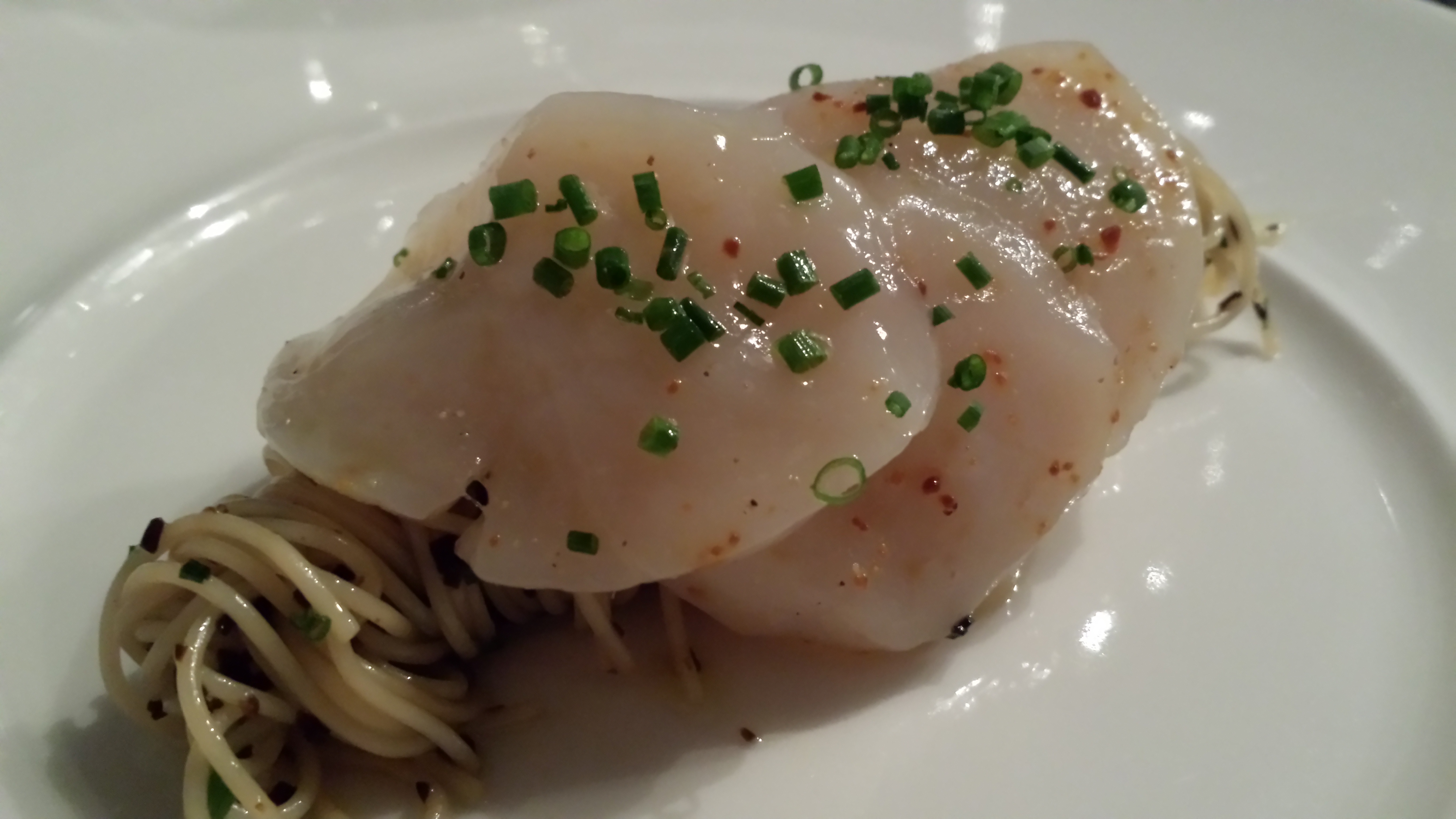
These are notes from an evening when we were invited by Dr KW Wang to dinner at Tenshin, a Japanese restaurant specialising strictly in tempura only at the Regent Hotel, Singapore, 8 May 2014, themed with the champagne of Nicolas Feuillatte, the well-known maison based in Epernay. ![20140508_202557[1]](https://winebyric.com/wp-content/uploads/2014/07/20140508_2025571.jpg) To get the evening rolling, the Nicolas Feuillatte Brut Reserve NV was served as the aperitif, displaying complex flavours of citrus, lime and grapefruit amidst a generous body of light toast with excellent depth of fruit, smooth, lively and refreshing with just a tad of sweetness by the side. This was followed quickly by the Nicolas Feuillatte Brut Rose NV. Having had more experience with champagne over the years, I no longer quite fancy rose nowadays, tending to find them a bit too straightforward and lacking in real character. This turned out to be the case here, the wine exhibiting notes of cider, tangerine and a hint of red fruits, slightly dry but ultimately lacking in true complexity even though the wine attained greater depth and expanse over time with further notes of pomelo and bitter lemon.
To get the evening rolling, the Nicolas Feuillatte Brut Reserve NV was served as the aperitif, displaying complex flavours of citrus, lime and grapefruit amidst a generous body of light toast with excellent depth of fruit, smooth, lively and refreshing with just a tad of sweetness by the side. This was followed quickly by the Nicolas Feuillatte Brut Rose NV. Having had more experience with champagne over the years, I no longer quite fancy rose nowadays, tending to find them a bit too straightforward and lacking in real character. This turned out to be the case here, the wine exhibiting notes of cider, tangerine and a hint of red fruits, slightly dry but ultimately lacking in true complexity even though the wine attained greater depth and expanse over time with further notes of pomelo and bitter lemon.
The 2004 Nicolas Feuillatte Cuvee 225 was the first in the line-up that accompanied the meal proper, its name derived from the litre capacity of the barrel in which it had been aged for 4 years prior to bottling. This vintage champagne has clearly benefitted from its additional time in the cellar, yielding a more refined wine of high-toned minerality with attractive yeasty aromas replete with smoke and white flowers, generous and long on the palate, yet delicate and beautifully balanced right down to its gentle finish. Excellent stuff.
![20140508_201038[1]](https://winebyric.com/wp-content/uploads/2014/07/20140508_2010381.jpg) The trio of vintage champagne kicked off with the 2000 Nicolas Feuillatte Grand Cru Blanc de Noir Millesime, golden in color though its considerable bottle age has resulted in a darker tone on the palate with deep yeasty overtones and notes of delicate bitter lemon with a touch of green, malt and wheat. Very lovely and long. The was followed by the 2002 Nicolas Feuillatte Palmes d’Or Brut where the outstanding vintage has made its mark, the wine producing a highly enticing nose of deep yeasty overtones and hazelnuts, exhibiting great subtlety on the palate, treading a delicate line between a high-tone minerality and flavours of complex citrus and exotic fruits, achieving fine balance but yet to realise its full potential. Quite outstanding. Bringing up the rear was the 2005 Nicolas Feuillatte Brut Rose Palmes d’Or, a rather unusual rose displaying great complexity on the nose with lifted aromas of rose petals and cherries allied with characters of camphor, orangey citrus and cinnamon on the palate, medium-bodied and well-balanced, leading to a long finish recalling whisky and malt, bringing the evening to a most satisfying conclusion.
The trio of vintage champagne kicked off with the 2000 Nicolas Feuillatte Grand Cru Blanc de Noir Millesime, golden in color though its considerable bottle age has resulted in a darker tone on the palate with deep yeasty overtones and notes of delicate bitter lemon with a touch of green, malt and wheat. Very lovely and long. The was followed by the 2002 Nicolas Feuillatte Palmes d’Or Brut where the outstanding vintage has made its mark, the wine producing a highly enticing nose of deep yeasty overtones and hazelnuts, exhibiting great subtlety on the palate, treading a delicate line between a high-tone minerality and flavours of complex citrus and exotic fruits, achieving fine balance but yet to realise its full potential. Quite outstanding. Bringing up the rear was the 2005 Nicolas Feuillatte Brut Rose Palmes d’Or, a rather unusual rose displaying great complexity on the nose with lifted aromas of rose petals and cherries allied with characters of camphor, orangey citrus and cinnamon on the palate, medium-bodied and well-balanced, leading to a long finish recalling whisky and malt, bringing the evening to a most satisfying conclusion.
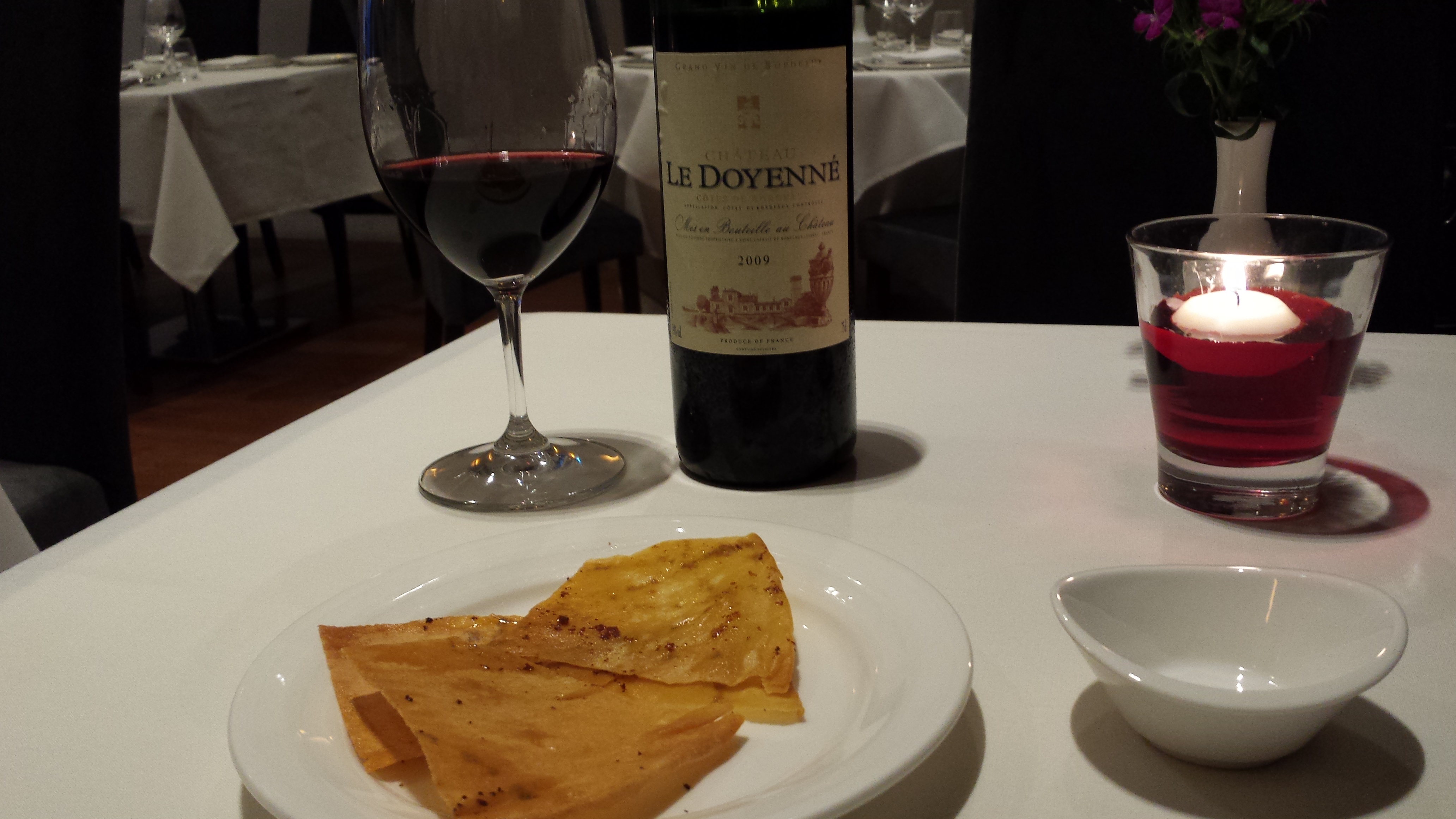 2009 Ch Le Doyenne, popped and poured at the new Gattopardo along Tras St, 3 June 2014, which I can readily attest as a classy and sophisticated restaurant far better than its previous incarnation at Fort Canning Hotel. I am constantly on the lookout for over-achieving clarets and this wine certainly fits the bill. Dark opaque purple, somewhat muted on the nose although there is a promise of ripe dark berries and raspberries beneath the sheen of new wood and vanilla. Its full glory is revealed on the palate, where a saturation of dark currants and blueberries vie for attention against notes of enamel, full-bodied with excellent depth and concentration, developing notes of cedar and violets with further aeration and food, already harmonious and accessible without calling attention to its well-managed tannins and lively acidity. This is a long-lived 2009 that will yield more rewards with further cellaring, and it’s not even a cru bourgeois. At only SGD42, get yourself a case.
2009 Pierro chardonnay, aired in bottle at Cardiology’s dinner, 4 June 2014, Chui Huay Lim Club. Attractive pungency with grassy notes. Light medium on the palate, rather simple although it developed excellent concentration and depth towards the end of dinner.
2007 Ruffino Oro CC Riserva Ducale, aired in bottle at Cardiology’s dinner, 4 June 2014, Chui Huay Lim Club. Notes of heated stones and ripe red fruits, fairly open with tannins of some intensity but well balanced.
2007 Mast Amarone Costasera Classico, aired in bottle at Cardiology’s dinner, 4 June 2014, Chui Huay Lim Club. As expected of an amarone, this is dark inky red and dense, but surprisingly smooth, tapering to a stern finish. Lacking in development.
2005 Marques de Caceres Gran Riserva. aired in bottle at Cardiology’s dinner, 4 June 2014, Chui Huay Lim Club. Ripe dark berries supported by redcurrants of good concentration, smooth but unremarkable.
2005 Santa Rita Casa Real, aired in bottle at Cardiology’s dinner, 4 June 2014, Chui Huay Lim Club. Dense but straightforward on the palate, curtailed finish. Unremarkable.
2001 Diana Madeline Cullen. aired in bottle at Cardiology’s dinner, 4 June 2014, Chui Huay Lim Club. Margaret River cabernet from this excellent vintage is very difficult to find but, unfortunately, this bottle was significantly corked. What a waste.
2001 Flor de Pingus, aired in bottle at Cardiology’s dinner, 4 June 2014, Chui Huay Lim Club. Dense, almost hedonistic, with notes of enamel and raspberries. Very well-crafted and sophisticated with a New World demeanor, highly intense, tannic and still youthful.
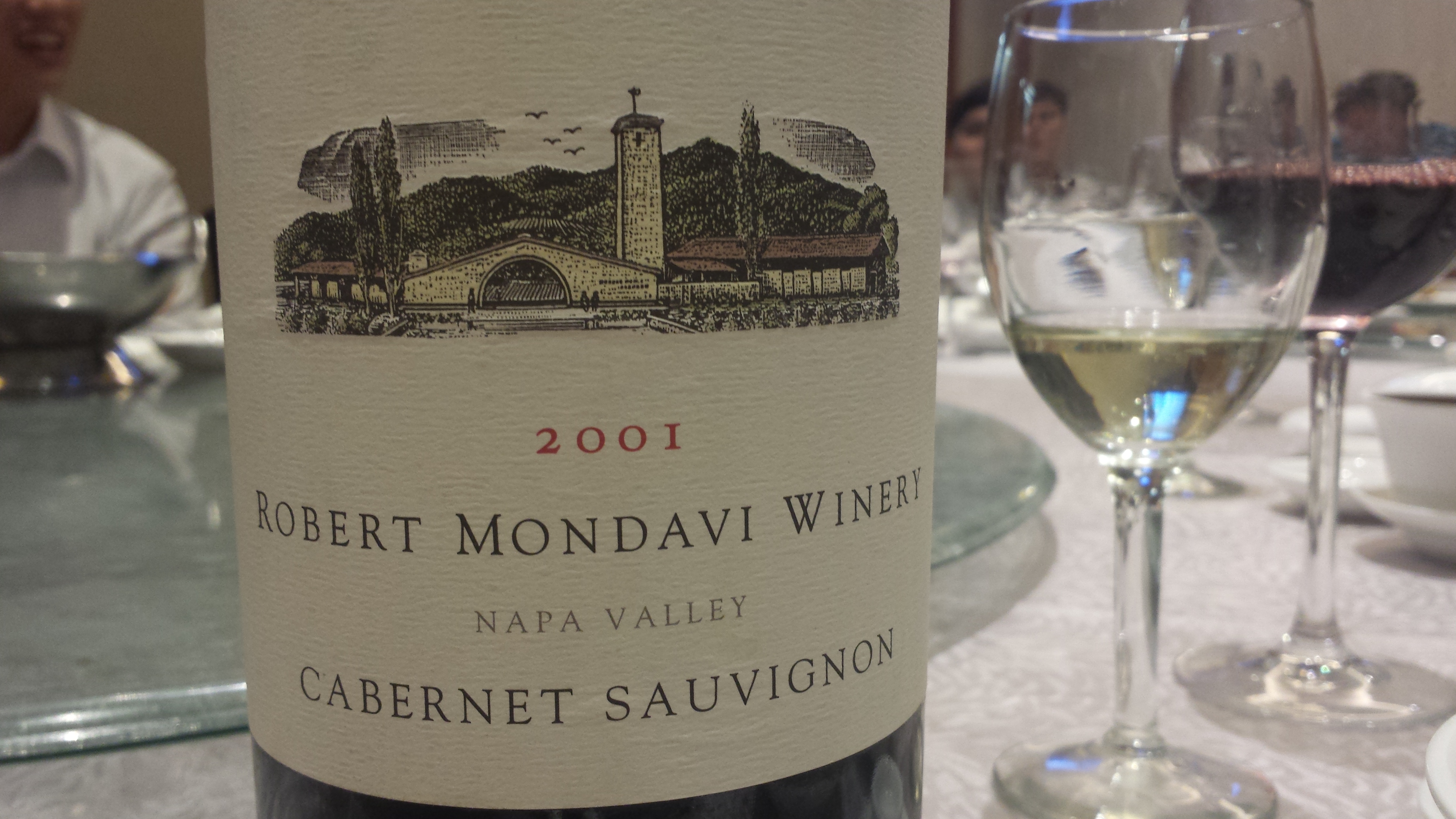 2001 Robert Mondavi cabernet sauvignon, aired in bottle at Cardiology’s dinner, 4 June 2014, Chui Huay Lim Club. From a magnum going for only SGD106, aired in bottle for about two hours. Dark red, offering notes of mulberries, cedar, cinnamon and other black fruits, medium-full, on the verge of tertiary development, well-balanced, framed by fresh attractive sweet tannins. It opened up after some time but this wine is still tight and youthful.
2003 E Guigal Hermitage, bought from the restaurant list of Jade Palace, 5 June 2014, and decanted on-site. Notes of heated gravel, red plums and a dash of medicinal aromas initially, with the impression that it could do with greater fullness and presence. For sure, it did finally blossomed out into a fine wine by the end of dinner, although it certainly took its time to shake off some stiffness and tame the angularity from its tannic spine before opening up to reveal notes of redcurrants and mixed berries with an attractive intensity, becoming very well integrated but it needs time.
1989 Ch Montrose (courtesy of John), a half-bottle decanted for close to 45 minutes prior to tasting at Bistro 103, 6 June 2014. To be honest, I wouldn’t have been aware that this was such a highly-rated wine if I had been blinded, for it came across initially as dry, angular and medium-full, cloaked in dusty tannins. It took quite a while to settle down in spite of having been decanted, eventually developing greater fullness and emerging fruit with notes of blueberries, dark currants and dark berries of remarkable ripeness repelled the initial angularity while the tannins became sweeter, taking on a svelte texture that added immeasurably to the wine’s structure. But the amazing thing was that as it continued to flesh out in the glass, it actually became more intense and youthful, giving the impression that in spite of all its 25 years, this wine has yet to peak, which is quite incredible given that this tasting is based on a half-bottle. Still nowhere near full maturity. Outstanding.
2007 Lan Rioja Riserva, popped and poured at The King’s Cave at Central Plaza Hotel, Zurich, Switzerland, with the wifey on the occasion of our 20th anniversary, 11 June 2014. Reasonably priced at around CHF60, this wine displayed perfumed aromas of rose petals with intense notes of blueberries, red fruits and dark currants on the palate, structured with sweet tannins, distinctly feminine over time as it became softer and medium-bodied with a predominance of red fruits. Good value.
2010 Domaine Jacques Prieur Beaune Champs-Pimont 1er Cru, popped and poured at Jade Palace, 20 June 2014. There is an abundance of raspberries and dark cherries, more on the palate than nose, just slightly darker in tone and a tad bigger than a classic burgundy with just a trace of vegetal character at the side, displaying good density and balance but lacking the brilliance and sophistication of, say, a Gevrey-Chambertin 1er. ![20140603_200236[1]](https://winebyric.com/wp-content/uploads/2014/07/20140603_2002361.jpg) Perhaps more cellaring may prove to be more rewarding.
Perhaps more cellaring may prove to be more rewarding.
Castellblanch Brut NV, at Crystal Wines’ Mega Sale tasting, 28 June 2014. Fruit forward with an attractive balance of crisp citrus and bitter lemon that suits this bubbly particularly well, complementing the dry finish quite nicely.
2011 Kerlann Chablis, at Crystal Wines’ Mega Sale tasting, 28 June 2014. Subdued overtones of citrus and grassy morning dew, topped off with some attractive crème de la crème, but one gets the impression that the wine-making in this instance is a tad too cautious.
2011 Norton Hawkes Bay White Label chardonnay, at Crystal Wines’ Mega Sale tasting, 28 June 2014. Attractive on the nose with forward notes of cream and fresh oak, but doesn’t quite match up on palate. One dimensional.
2008 Les Haut des Smith, at Crystal Wines’ Mega Sale tasting, 28 June 2014. I used to like this second wine of Ch Smith Haut Lafitte, particularly its 2005. Here, there is an abundance of wild berries and red fruits, appropriately ripe and well-balanced against notes of gravel and earth but, overall, rather unexciting.
2013 Tamar Ridge Devil’s Corner pinot noir, at Crystal Wines’ Mega Sale tasting, 28 June 2014. I’ve not had a Tasmanian pinot noir for a long time. This bottle from a well-known estate offers lifted aromas of dark cherries, too forward and spicy on the palate for its own good without much minerality, topped off with a touch of burnt caramel. Can’t say I like it.
2011 Misha’s Vineyard Imptomptu pinot noir, at Crystal Wines’ Mega Sale tasting, 28 June 2014. Unusual bouquet – rather musty – sullen and uneven on the palate, displaying a touch of green amidst red fruits although it did flesh out towards the finish with a dash of spice.
2010 Ch D’Aigulhe, at Crystal Wines’ Mega Sale tasting, 28 June 2014. This is a perennial over-achiever. Very dark, no doubt highly extracted, dense and concentrated with powerful notes of red and dark berries and lifted aromas of camphor and perfume, turning a bit vegetal and stern at the finish. Needs plenty of time. Very expertly crafted but its style is becoming too predictable and tiresome.
2008 Clarendelle, at Crystal Wines’ Mega Sale tasting, 28 June 2014. From a freshly-popped bottle. The makers of Haut-Brion have done very well to produce a wine of excellent ripeness and concentration, generous in red and dark berries, highly lifted, almost perfumed, displaying great linearity and balance on the palate. Quite excellent.
2009 Lis Neris Jurosa, at KP’s residence, 29 June 2014. An Italian chardonnay from the Venezia-Giulia region. Quite unusual, medium-bodied with characters of fig, melons and a hint of nectar and tropical fruits on the palate. Interesting.
![20140528_205117[1]](https://winebyric.com/wp-content/uploads/2014/07/20140528_2051171.jpg) 2002 Simon Bize & Fils Savigny-les-Beaune Aux Guettes 1er, at KP’s residence, 29 June 2014. Dominated by menthol and herbal overtones at first, followed by notes of sweet cedar after much coaxing. Firm and minerally, mildly salty but very even in delineation, more generous over time, eventually reaching a stage of lovely intensity marked by lithe supple tannins before settling into a more relaxed and rounded tone. Good.
2002 Simon Bize & Fils Savigny-les-Beaune Aux Guettes 1er, at KP’s residence, 29 June 2014. Dominated by menthol and herbal overtones at first, followed by notes of sweet cedar after much coaxing. Firm and minerally, mildly salty but very even in delineation, more generous over time, eventually reaching a stage of lovely intensity marked by lithe supple tannins before settling into a more relaxed and rounded tone. Good.
2012 Collovray & Terrier Pouilly Fuisse Vieille Vignes, shared with KP at Gattopardo Ristorante, 30 June 2014. Popped and poured. I’m normally not a fan of Pouilly-Fuisse, but this 2012 vintage, supposedly a low-yielding but concentrated one, was surprisingly full, creamy and almost luscious, replete with attractive fat and minerality on the mid-palate, adding further sophistication to notes of peaches and melons, becoming more intense over time with a touch of real complexity, ending in a quality graphite finish. If this village wine from a periphery commune is performing so well, I’d be sure to seek out other 2012 whites from the Cote de Beaune. Very good.
1996 Ch Clos Fourtet (courtesy of KP), decanted on-site at Gattopardo Ristorante, 30 June 2014. Displaying some mild bricking at the rim, this wine offered up notes of mulberry, cedar and plum, distinctly soft with its acidity already lowish and threatening to dip further, medium-bodied and lacking in fullness. It gained some weight over time but, ultimately, it lacks distinction, reinforcing the notion that 1996 truly belongs to the Left Bank.
De courtes notes de Bourgogne
After several years of trying to educate myself on the wines of Burgundy, I finally managed to spend three glorious days at the Cote dÓr (golden slope) this June. I wouldn’t pretend at all to fully understand Burgundy. While theoretical knowledge gained through reading and tasting serves as a useful foundation, nothing beats the first-hand perspective and insight gained from a visit to the actual location itself.  One immediately appreciates the complexity of this region and the relation of the various parcelated plots to one another. At the very least, I now have a visual reference whenever I am drinking a burgundy from any particular commune.
After trooping in to Beaune on a sleepy Sunday afternoon, 15 June 2014, I immediately lost myself in the old world charm of this historic area filled with an abundance of centuries-old buildings with weather-beaten shutters and yellowed stone walls, crumbling in some places, but it would have been unimaginable otherwise, for this is how it is supposed to be. First stop was the famous Hostel-Dieu (established 1443) with its unmistakable roof of colored tiles and I was surprised to learn that it still functioned as a hospital until as recently as 1985. After having exhausted the long afternoon on the town’s photogenic offerings, the wifey and I sat down for a meal at one of its ubiquitous cafes, washed down with a bottle of 2011 Jean Yves Guyard Cote de Nuits Villages Le Clos de Magny (the carte de vin had promised a 2009 but I didn’t realise I was being served a 2011 till too late), dark ruby with attractive notes of rose petals with some dark cherries and an allure of smokiness, generous in body and depth without being too minerally, displaying good balance, all for EUR34.
 Having collected my Renault early next morning, I wasted no time hitting the D974 (previously known as the N74, as notated in the maps of Clive Coates’ Wines of Burgundy as well as The World Atlas of Wine by Robinson & Johnson) south of Beaune, essentially looking at the Cote de Beaune on my right, its vineyards extending all the way down to the main road, turning into the narrow secondary roads (look for D113A) that dissect the various plots of vineyard at Puligny-Montrachet. Straight away one understands why certain plots are deserving of grand cru status and others less so. The relatively narrow strip of the Cote lies in a north-south axis with the vineyards facing east by south-east, the land rising imperceptibly into a gentle slope as one moves away from the main road such that, at a certain altitude, some plots attain very uniform exposure to the morning light, their positions on the slope also being optimal in collecting the rich minerals carried down from above and, almost invariably, these plots would form the grand crus. Beyond this, the slope suddenly becomes much steeper in ascent, the vines becoming more exposed to the harsh light later in the day along with other elements of the climate, culminating in thinner soil of hard rock and limestone at the top of the hill. The local Office de Tourisme has done something to enhance visitors’ understanding, for each well-known plot (except La Tache!) is now properly sign-posted.
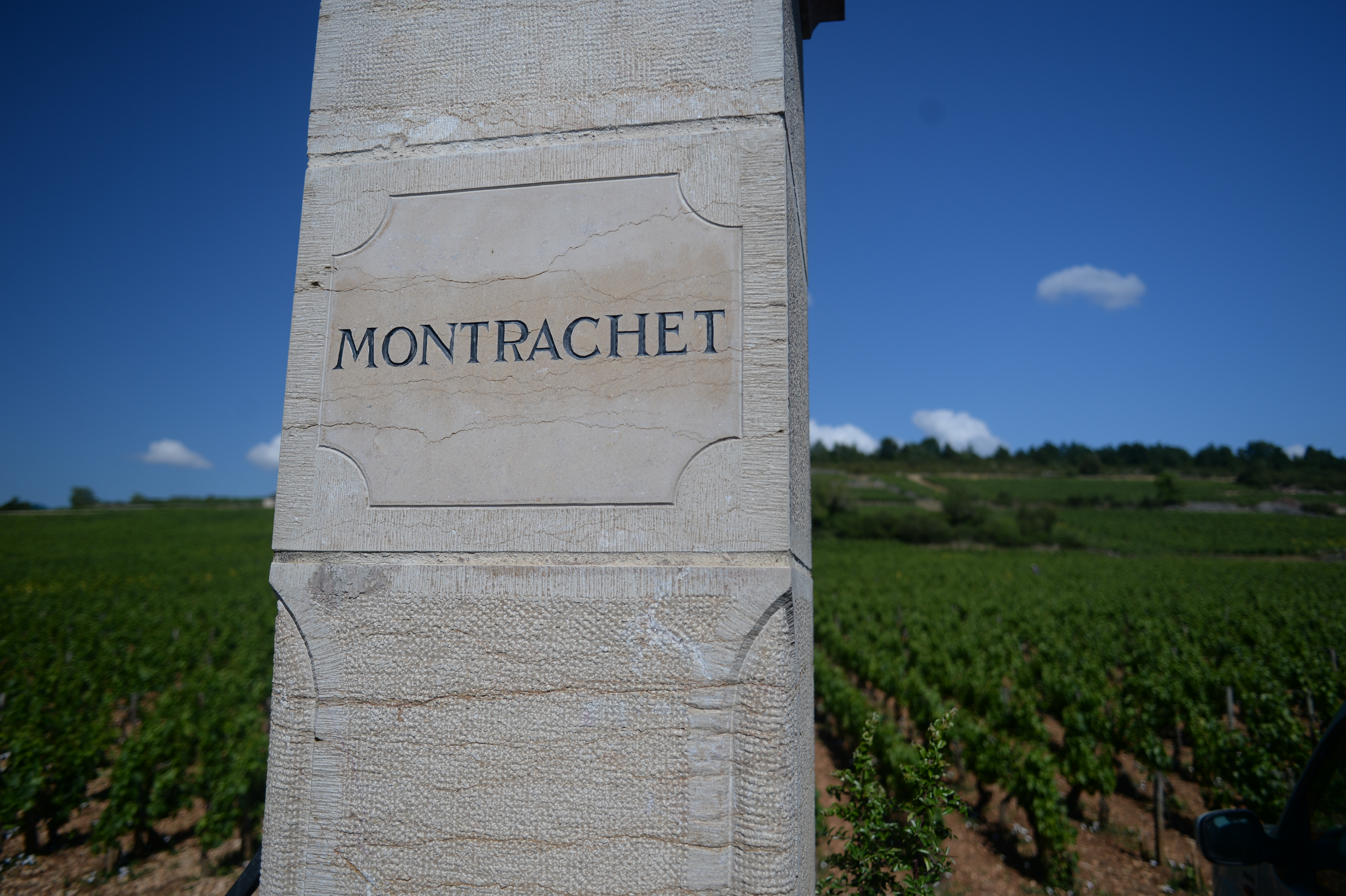
  It was thus that I suddenly found myself at Bienvenues-Batard-Montrachet, then Batard-Montrachet, followed by the ancient stone arch of Chevaliers-Montrachet nearby, each plot located progressively higher on the gentle slope, and, finally, Le Montrachet, optimally facing E-SE, with the gates of various domains marking their own sub-plots although within the famous vineyard itself, the rows of vines are totally seamless. At this time of the year, flowering has occurred and tiny bunches of fruit could be seen emerging from the vines and throughout the Cote dÓr, workers could be seen busy with green harvesting. For an amateur like me, being there in person at these famous sites was orgasmic enough and the entire morning was spent soaking in the photogenic sights, followed by lunch north of Beaune at Nuits St-Georges, where a generic Bourgogne blanc (I missed the producer, at EUR3 per glass) was surprisingly lively, generous and balanced.
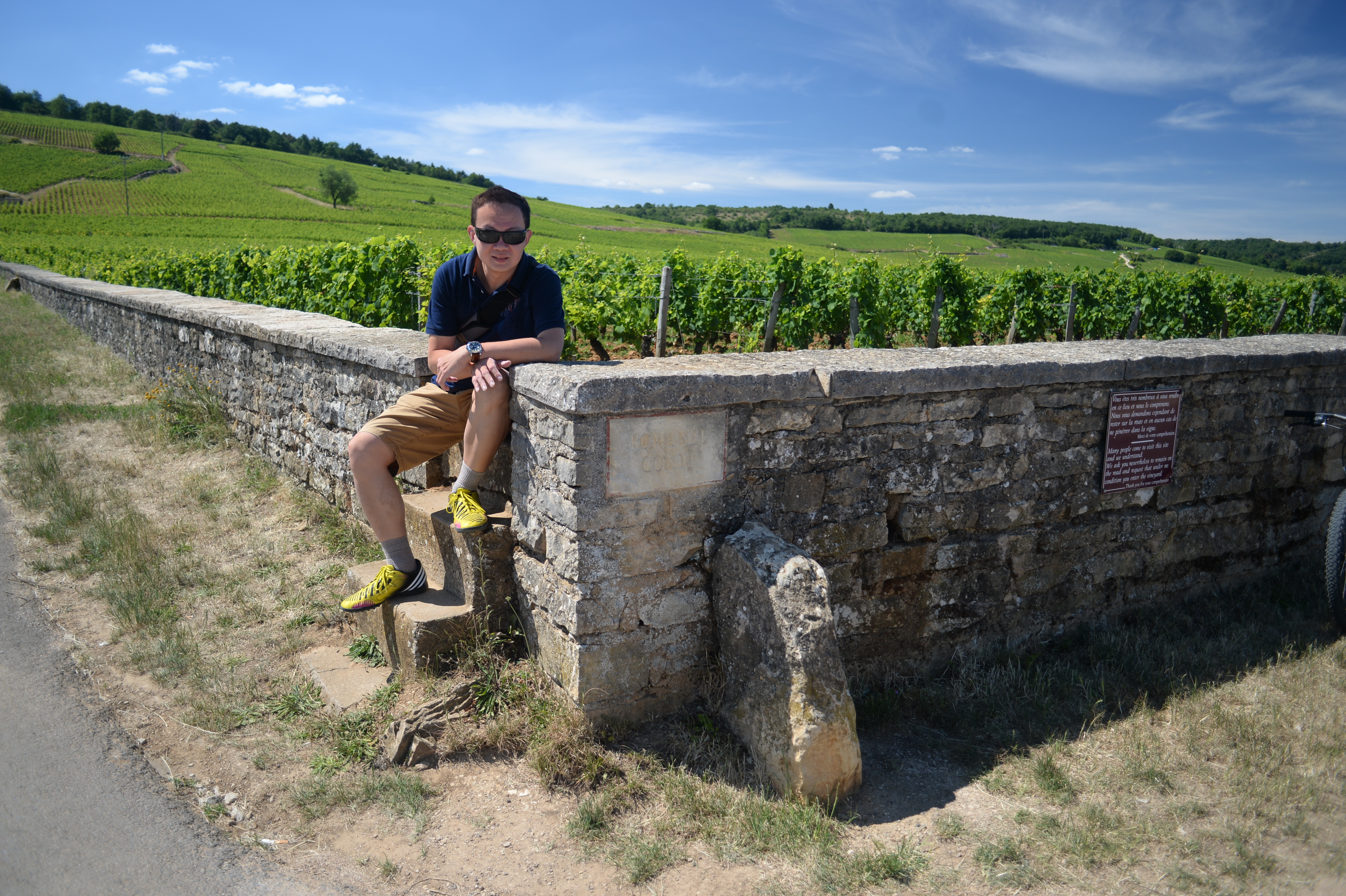
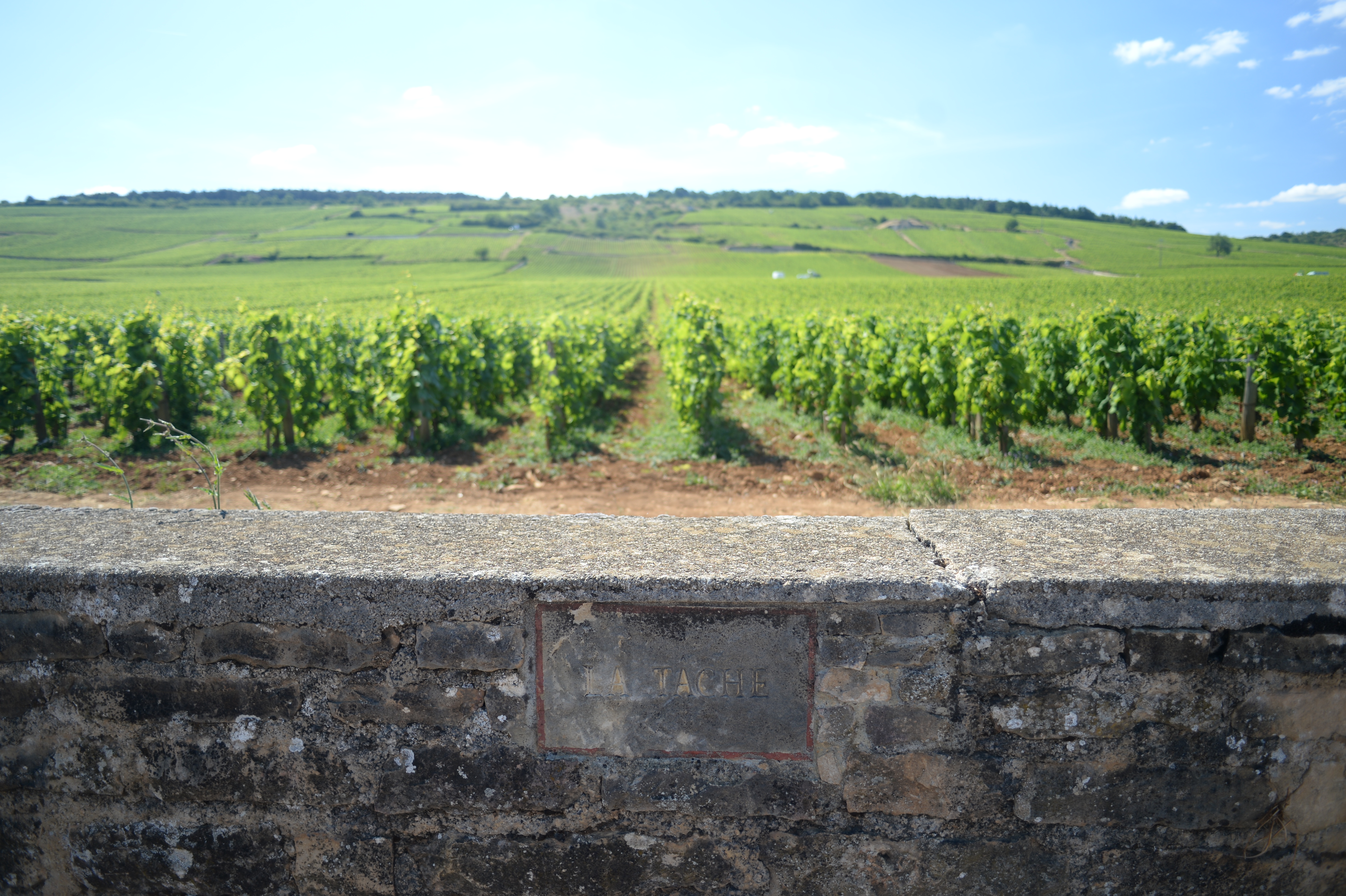 The Cote de Nuits, north of Beaune, was the object of my pursuit in the afternoon and Vosne-Romanee was the first commune to be encountered moving northward on the D974 after the village of Nuits St-Georges. Knowing that the grand crus practically lie next to the D122, a secondary road within the vineyards (also known as the Route des Grand Crus) that run parallel to the D974, it was a relatively easy matter to quickly locate that Holy Grail of all climats: Romanee-Conti. Like most of its grand cru counterparts, this plot is demarcated by an ancient low wall with just a faded plague at a corner bearing the famous name. On the other hand, La Tache was difficult to confirm. Well, locating it was easy enough using the map as a reference, being just a small plot lower down from Romanee-Conti, but how does one know for sure that it is indeed La Tache? I remembered having seen pictures showing the name inscribed on the low wall, but we failed to spot it despite driving up and down past that plot repeatedly and having two natives confirming that we were looking at La Tache. In the end, I got out the car and walked in the scorching heat for a closer look. It paid off, for right in the middle of the perimetry is indeed a terribly faded plague bearing the famous name, which would have been easily overlooked ten paces away.
  Adjacent to Vosne-Romanee is the largest grand cru in Burgundy, the Clos du Vougeot with its famous chateau within. Again, one has to be there to appreciate the high wall that surrounds the plot, and to understand why this grand cru is derided by many, for it truly stretches right down to the D974, with much of it lying on unimpressive flat ground. As I went up the slope to gain a better camera angle of the chateau, I was surprised to encounter the Musigny of Domaine Comte Georges de Vogue on the upslope, immediately diagonal to the Clos du Vougeot. Amazing!! The vines in the foreground that you see in the photo here are actually Musigny, overlooking Clos du Vougeot. Downslope, but again immediately adjacent to Clos du Vougeot lie Les Amoureuses. Again, I cannot emphasise enough that the relation and close proximity of these climats to one another can only be appreciated on site.
 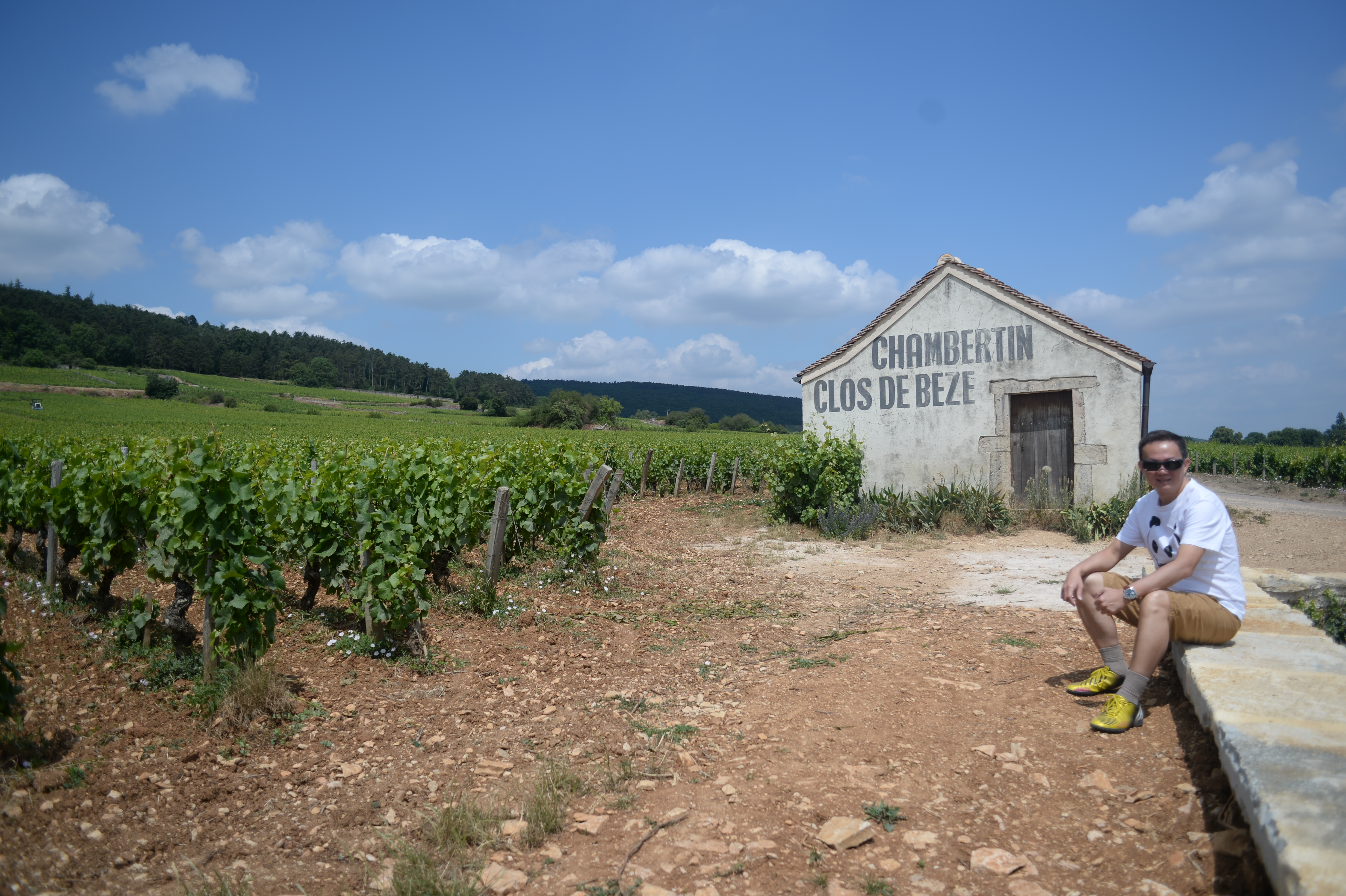 Continuing along the D122 through Morey-St Denis brought me straight to Chambertin grand cru, and little wonder Clos de Beze is held in the same regard as the former, for it is just immediately adjacent at the same altitude, albeit separated by a dirt lane and facing more eastward.
An evening drive south to the small town of Chagny, 16 June 2014, brought us to Lameloise, the famous restaurant located within the most elegant hotel of the same name in the town, for our 20th anniversary dinner. Apart from ala carte, a multi-course degustation was available at EUR190 but we opted for the 4-course (with a cheese selection) menu at EUR130 that actually turned out to be more than 4 courses, as is the usual practice in these fine establishments. The vin de carte, while less voluminous than the one at La Tour dÁrgent (Paris), was thorough enough, obviously focusing largely on burgundy but with plenty of gems priced very reasonably. We opted to start with a half-bottle of the 2010 Jean Marc Morey St Aubin Les Chamois 1er cru, popped and poured. The impression I’ve had of various St Aubin whites was that they are gorgeous on the nose without quite living up to expectations on the palate. However, this particular wine was luminous right from the first pour, almost golden in hue, giving off an attractive pungency with a hint of white flowers and gentle citrus, possessing more body and weight than usual for a St Aubin amidst a fair degree of chalky minerality, with further notes of tropical fruit, bananas and melons coming on as it opened up over time with a gradual build up in intensity and fullness. 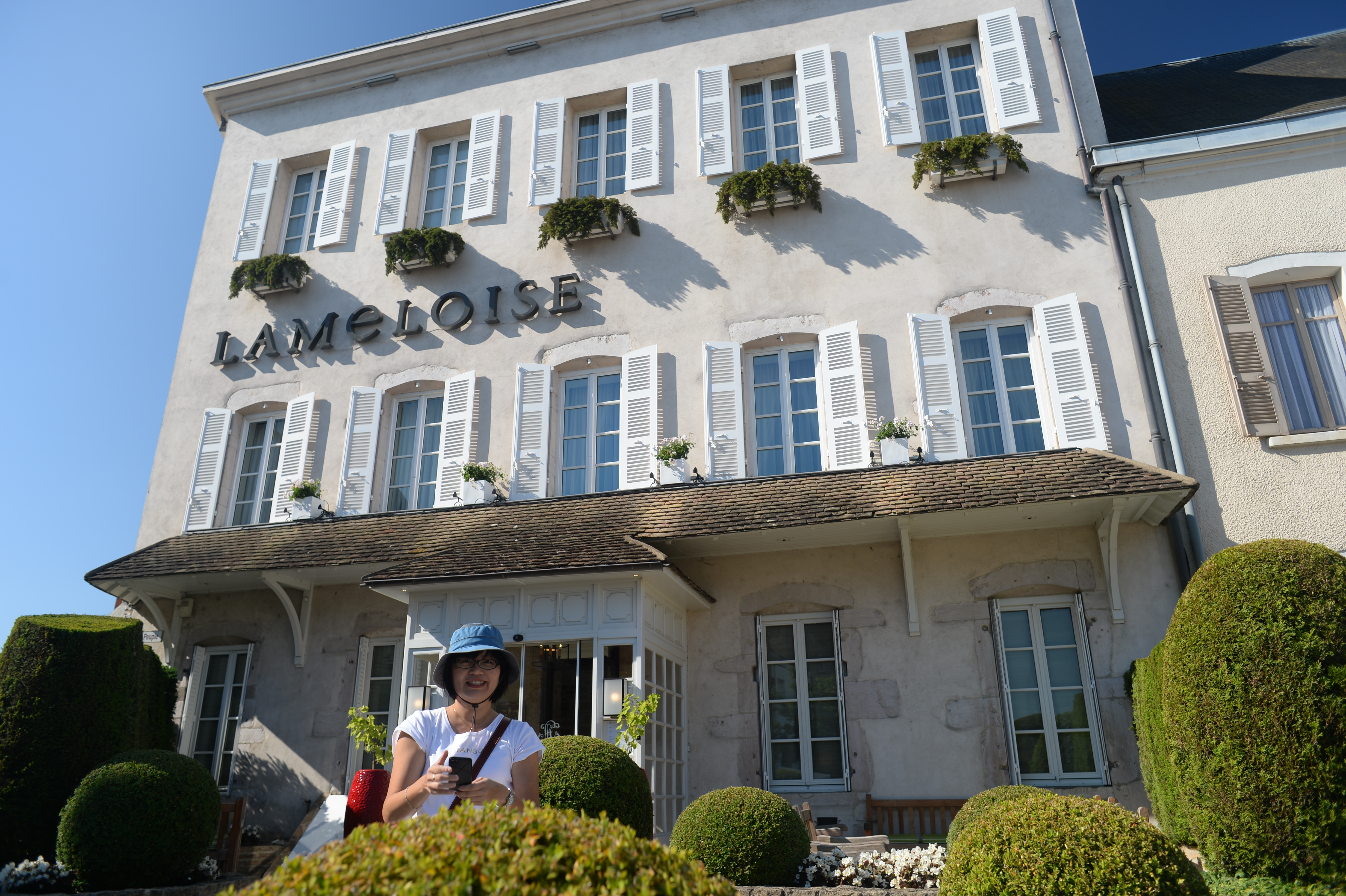 This is a really good St Aubin, well-priced at only EUR40 in this three-Michelin star restaurant. It went quite perfectly with the host of starters, including the signature omble chevalier & ecrevisses as well as foie gras & coquillages. Coming from the kitchen of the venerated Eric Pras, one is assured of unadulterated traditional offerings oozing with fresh natural flavors and balance without any of the molecular nonsense. For the mains, I opted for a half bottle of 2009 David Duband Gevrey-Chambertin (EUR60), popped and poured. This was a shade darker than usual, rather shy and shut on the nose although it carried good weight and balance with notes of dark cherries tapering towards a minty finish. It became broader and more open as dinner wore on, its stony minerality more obvious but lacking in further development although it matched my pigeonneau well.
The next evening before we departed Beaune, I brought a bottle of 2009 Louis Jadot Chorey-les-Beaune (EUR17) back to the hotel room to go with some cheese as well as the World Cup action. This commune lies rather low on the Cote de Beaune, next to its better known neighbour Savigny-les-Beaune. As expected, the reds from this region tend to be more gruff and rustic with vegetal characters, but Louis Jadot has done well in this outstanding vintage, producing a wine of adequate weight and concentration, darker in color and tone with notes of dark cherries and a dash of jam and apricot without any trace of green, although its tannins still need time to settle down. So much to see, do and eat but so little time. I’m sure I’ll be back.
1988 Dominus
It has become really difficult nowadays to find time to meet up with old friends and colleagues. Fortunately on this day, 23 May 2014, both Kieron and myself could avail ourselves at the St Regis, Singapore, not least because one of us had proferred a 1988 Dominus while the other had offered to cover the meal. Decanted on-site. 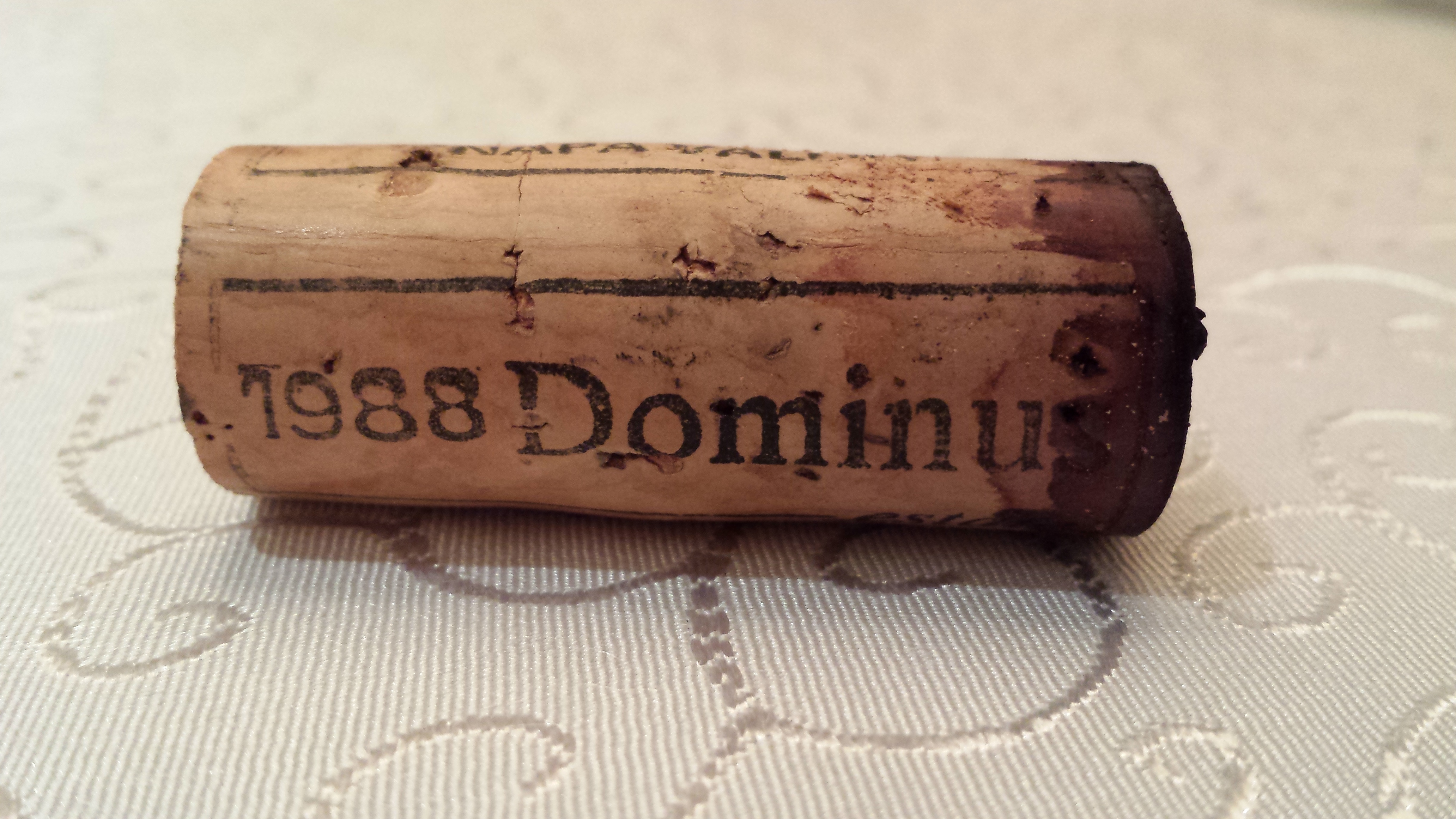 Drinking a Dominus never fails to lead to an attempt to discover how much of a resemblance it has to a Bordeaux, given that Christian Mouiex of Ch Petrus has a direct hand in crafting Dominus but, on this occasion, I just felt that the latter was simply quite unique on its own, still displaying a deep purple after all these years with only some gentle bricking at the rim. Generous aromas of dark plums, dark berries, blackcurrants and raspberries dominate initially, replete with some medicinal and herbal overtones, the wine rather sullen, tense and angular on the palate, as if it had been rudely awoken from a deep sleep. After 30 minutes and some food, however, it underwent a complete transformation, suddenly becoming open and relaxed with sweetened tannins, the herbal notes having wafted away, allowing drier notes of tea leaves, snuff and tinder to emerge although I wouldn’t go so far as to say that it mirrors a Bordeaux, missing the hallowed glow that can only come from a true claret. A further development was to come towards the end of the meal almost 90 minutes later where an increase in weight and depth was easily appreciable, along with notes of cassis, violets and cinnamon with tannins exerting a puckered intensity on the palate, adding immeasurably to the impression that this wine still has the legs to develop further, albeit with roots firmly embedded in the New World. Excellent, but not a compelling buy.
I encountered a trio of clarets from 1996, now almost 18 years post-vintage where it seems most of them are on the verge of tertiary development, although it is clear some have not entirely shed their backwardness:
1996 Ch Calon Segur (courtesy of Chris), at the SMA dinner, Regent Hotel, 10 May 2014. Aired in bottle for two hours. Highly evolved on the nose with notes of dried plums, black fruits and the indefinable lovely glow of an aged claret with excellent linearity on the palate, although somewhat narrow in spectrum, lacking in mid-body fat and rather dry in mouthfeel. Perhaps I already had too much to drink on that evening by the time I came to the Calon; it may perform much better on its own.
1996 Ch Pontet Canet, popped and poured at Anu & Ravi’s wedding, Holiday Inn Orchard, 16 May 2014. The classic Pauillac signature is loud and clear, represented by notes of dried tobacco leaves, snuff box, pencil shavings and mushrooms, the dryness of its terroir ensuring that the wine remains medium-bodied with its flavours confined within a narrow spectrum. Some will like this style, but on this occasion, its deficiencies were shown up by the Pichon Baron (below) from the same vintage.
1996 Ch Pichon Longueville Baron, popped and poured at Anu & Ravi’s wedding, Holiday Inn Orchard, 16 May 2014. We drank this rather quickly, but who could resist its generous aromas of ripe dark cherries and blueberries and raspberries emanating from a medium-full wine with much more presence and depth of fruit than the Pontet Canet above, still remaining fresh and vibrant after all these years, hinting at further developmental potential whilst enticing one to partake all its goodness at this stage. This bottle is far better than another tasted in February 2014, which, I suspect, suffered from poor provenance. Keep!
2005 Barossa Valley E&E Black Pepper Shiraz, decanted on-site at Burlamacco Ristorante, 1 April 2014. Highly attractive bouquet of dried plums, dark cherries, licorice, vanilla and enamel that carried well onto the palate with excellent weight and density, slightly waxy in texture, though not quite as open as I’d hope it would be, mildly tannic at the finish, yet to develop true complexity. 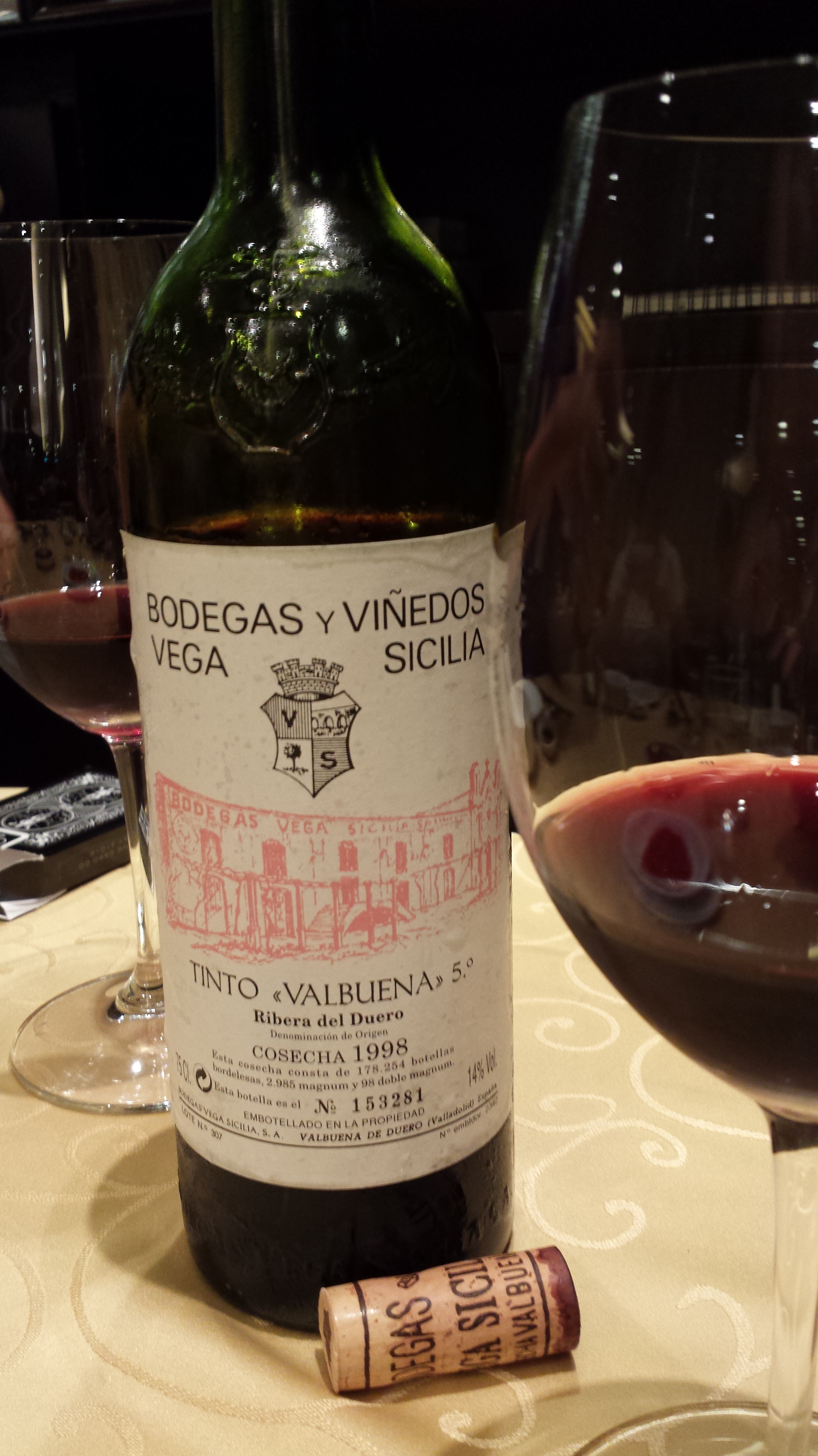 Hopelessly over-priced in Singapore, but worth cellaring if you purchase it duty-free in Australia.
2010 Winemakers’ Reserve cabernet sauvignon, popped and poured at Foo House, 5 April 2014. This is a supermarket wine that punches way above its weight. Instead of some thin weedy juice, one is pleasantly surprised by the fullness and weight on the palate, the wine appropriately soft at the edges with well-integrated tannins that add attractively to its structure, open enough in the mid-body, offering notes of red plums, tangerine and grapefruit. Not bad at all.
1998 Vega Sicilia Bodegas Vinedo Tinto Valbuena N0.5, popped and poured at Jade Palace, 6 April 2014, on the occasion of Monster’s 15th. Displaying a brighter tint of red than usual, the initial impression was dominated by medicinal aromas that lightened up rather quickly to yield notes of red plums, bright cherries, tangerine and kumquat, the latter contributing to the high-toned presence on the palate. Medium-bodied with good concentration of fruit without plumbing the depths, though the tannins have yet to settle completely even after 16 years. Undeniably likeable, though ultimately lacking in distinction.
2004 Ch Latour-a-Pomerol, popped and poured at Asia Grand, 19 April 2014. Dark inky red, weighty with excellent concentration of ripe dark berries and blackcurrants, racy and medium-full, structured with silky tannins and notes of graphite towards the finish. 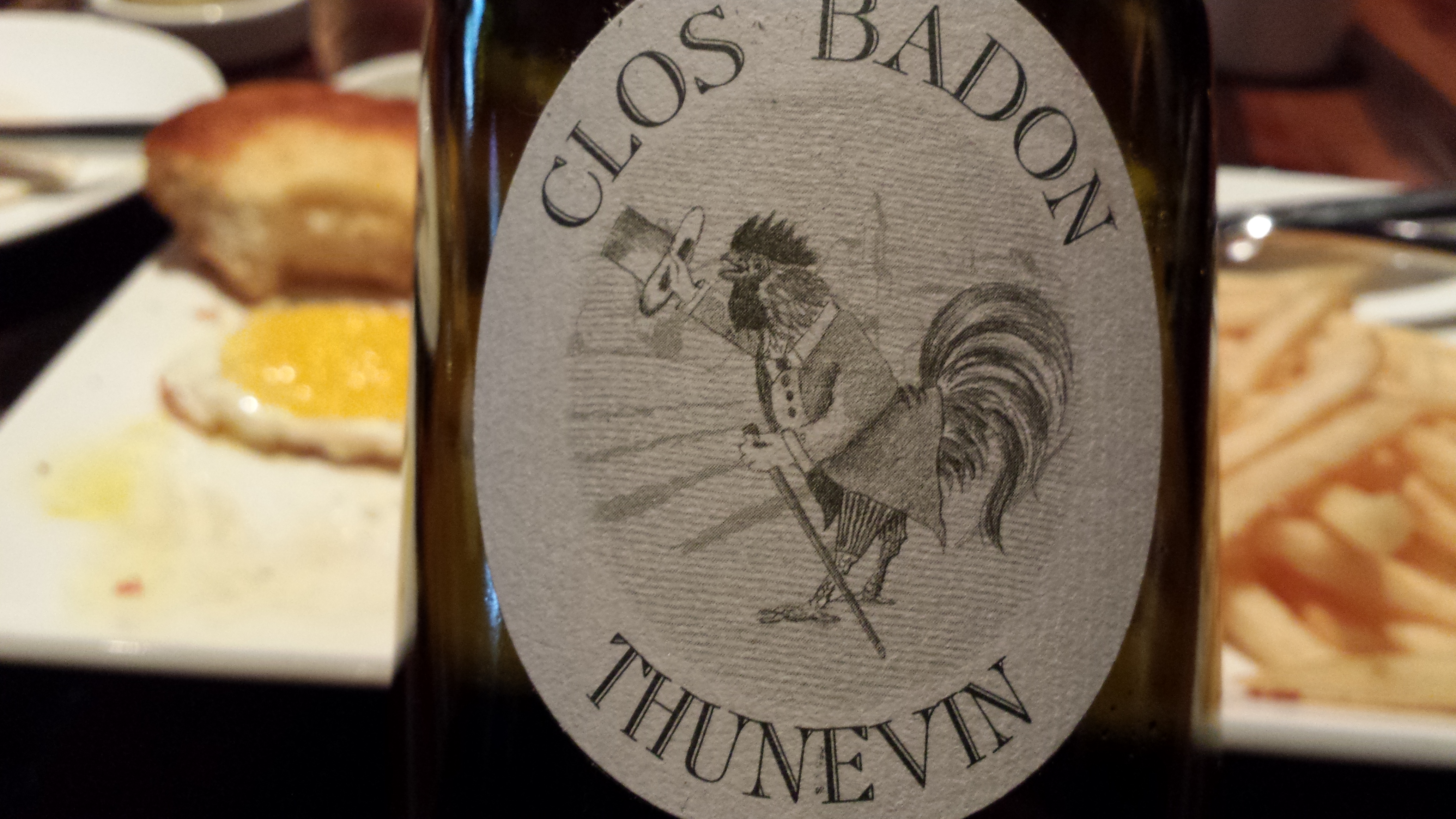 However, this wine is still very much on the ascendancy and it’d be a real shame to drink the entire case at this stage. Keep.
1998 Clos Badon Thunevin, decanted on-site at Bedrock Bar & Grill, 21 April 2014. As suggested by the deep purple, this wine is made from fruit harvested at full ripeness and aged in significant new oak, which translates into a medium-full presence with notes of raspberries, raisins, cedar, dark fruits and traces of vanilla although mellowed and softened by the passage of time, weighty with a creamy texture but not overbearing, tapering towards a stern and slightly metallic finish. Expectations are high for any wine crafted by the maker of Ch Valandraud and this wine does not disappoint, especially if it’s going for only SGD76.
2009 Ch Fuisse Tete De Cru, two bottles bought off the restaurant list of OCF (hosted by Troy), 22 April 2014. I’m normally not a fan of Pouilly-Fuisse but as the restaurant has a strict 1-for-1 policy, this was the most affordable Burgundy on the list at SGD125, taking a chance that the outstanding vintage of 2009 will add more weight and body to the usual narrow spectrum of this region’s whites. I was right. Notes of clear citrus and white flowers emanate from the glass with a hint of caramel and walnut. On the palate, this wine is noticeably more generous in proportion than usual for Pouilly-Fuisse, although the fruit is still rather firm and tight at this stage, the sharp citrus threatening to upset the balance towards the finish. Not bad at all, but still pricey.
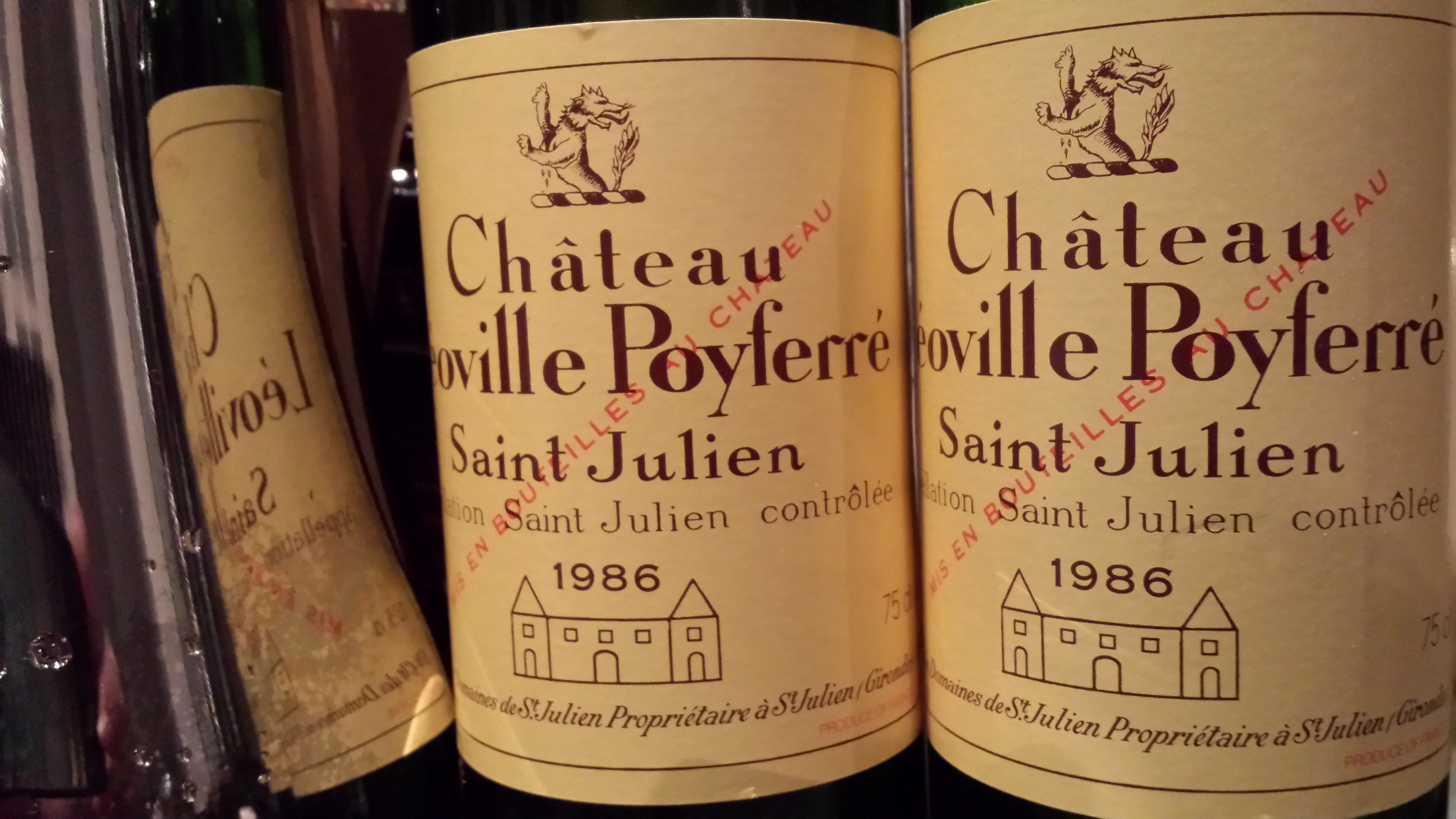 1986 Ch Leoville Poyferre, two bottles decanted on-site at OCF (hosted by Troy), 22 April 2014. Regular followers will know that I’ve been drinking through a case of this over the past 3 years. On this occasion, it was, by a significant margin, at its best. Displaying an evolved vermilion with a dash of green on the nose, the wine was utterly soft and velvety, bereft of wood and tannins although still retaining adequate acidity and weight, allowing the purity of fruit to come through easily with an abundance of red fruits and redcurrants, underlined by sweet cedar and glycerine. However, there is no doubt though that this wine has just gone past its peak, as the fruit tended to trail the acidity and alcohol towards the finish. Still quite excellent, but it is not on par with Leoville Las Cases.
2011 Schlumberger Brut, popped and poured over lunch with David at Jade Palace, 23 April 2014. During my visit last week to the Salzburg Easter Festival, this sparkling wine was sold during intermissions at EUR8 per miserable flute, only for me to discover that it costs only all of EUR10 from Munich duty-free. OK, it’s nowhere near Louis Roederer, but it is stuffed to the hilt with brilliant citrus, lime and pomelo although it is too congested on the palate, firm and minerally, not helped at all by the brazen dryness, finishing in a stern and austere mood that’s the contribution of its weissburgunder (pinot blanc; others being chardonnay and welschriesling) but one that is highly consistent with the typical Austrian temperament.
2009 Domain Road pinot noir, popped and poured at home, 24 April 2014. This New Zealand pinot appears to have turned the corner, much more relaxed and open on the palate compared to a previous bottle just a couple of months ago, although I don’t think anything can ease its tendency towards heaviness in texture and weight with notes of cinnamon and prunes rather than delicate red fruits. A true bourgogne or village from a good producer will serve you better.
 2004 Ch Bernadotte, two bottles from the same case popped and drunk over three hours at Ben’s opening party of Arden Endocrinology, 26 April 2014. Very dark in color, medium-bodied with predominant notes of dark fruits and blackberries laced with some sweet cedar ten years after vintage, though rather stern and unyielding towards the finish where a trace of green may be discerned. One wishes for the fruit to be a bit more forward and open. But at SGD35, I maintain that this is a very well-crafted (by the makers of Pichon Lalande) Haut Medoc that may be more rewarding with further cellaring.
2004 Ch Pichon Longueville Comtesse de Lalande, again two bottles from a case recently imported from Bordeaux Index London, decanted and drunk over three hours at Ben’s opening party of Arden Endocrinology, 26 April 2014. The raison d’etre is obvious, for this afforded a direct comparison between it and the Bernadotte above, both being made by the same team. The bouquet is immediately glorious right from the first pour, exuding powerful aromas of cedar, cinnamon and sweet meat from the wonderful concentration of ripe dark fruits and redcurrants beneath.  On the palate, the wine is medium-full and generous in body but soft at the edges with a sappy texture, again marked by an attractive level of sweetness though it has yet to display any significant secondary characteristics, eventually developing quite a bit of tannic spine after some time even though the wine had become more relaxed. Quite excellent, but needs further cellaring.
2004 Solaia, decanted on site at Otto Ristorante, 30 April 2014. A very generous contribution by John and what a way to end the month. Deep purple with effusive aromas of blueberries, plum, raspberries and dark currants that leapt right out of the decanter. In spite of some bottle age, this full-bodied wine hardly seems to have evolved at all, fully extracted, weighty and upfront, displaying a rich concentration of glorious ripe fruit along with traces of vanilla and new oak with powerful medicinal aromas bringing up the rear, approaching a level of hedonism that could almost be mistaken for New World although it has certainly become accessible and fairly well-integrated at this stage. I am reminded of its close resemblance to a young Pingus. Fascinating to taste now but hardly ready. Don’t touch it for another ten years, dare I say.
Pichon Lalande: 1983, 1986, 2000 & 2001
This came from a dinner at Jade Palace on 19 February 2014 hosted by Ms Angelina Teh of Bordeaux Index London, and since Angelina had promised a 2000 of the outstanding estate Ch Pichon Longueville Comtesse de Lalande (the full name always sounds so much better), we decided on a vertical. All bottles were popped and decanted on-site, blinded by the wait staff and tasted simultaneously over two hours.
The bottle marked with a Green dot displayed a fully evolved color and a powerful bouquet of seductive red fruits and rose petals that were quite lovely with notes of camphor and tangerine on the palate and a dash of sweet cedar that emerged later, rounded with silky smooth tannins amidst mild salty minerality, finishing with good length. 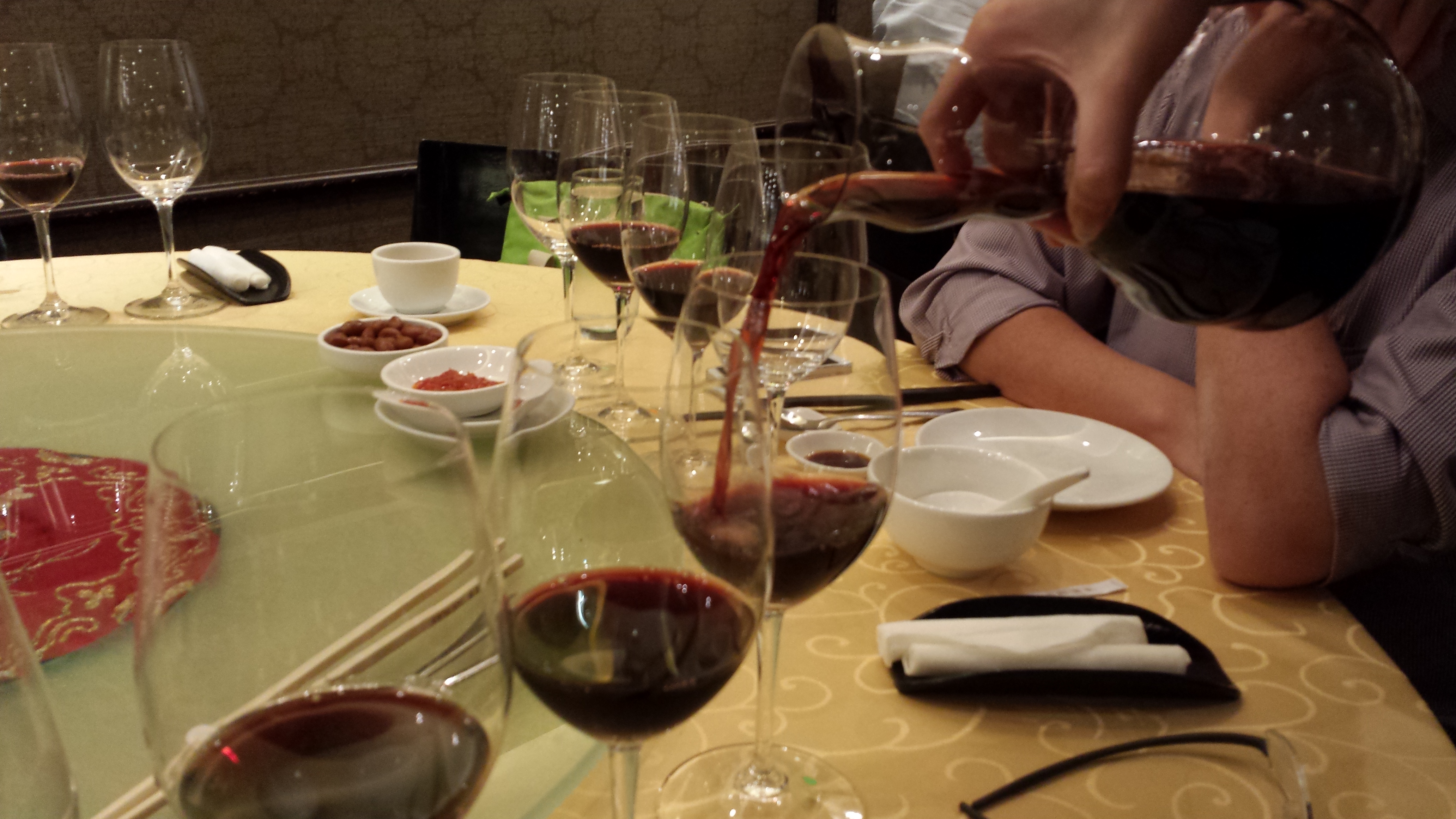 Over time, however, it became overwhelmed by the others in the line-up and began fading towards the end of dinner. Surely the 1983 (courtesy of Pipin), we thought.
Next up was an Orange dot that was even more evolved in color, certainly a very open and relaxed wine but definitely leaner and more reticent than the first bottle above, somewhat earthy with a mild pungency and a persistent vegetal character, not helped by the backward quality of the fruit. However, it rebounded strongly after two hours of food and aeration, becoming more tannic and firm than it had ever been. The 1986?
The Yellow dot was vermillion in color, producing a beautiful effortless glow of red fruits although it was lowish in acidity and rather lean and mildly vegetal with subdued tannins. It snapped together after thirty minutes and with food, the classic dry Pauillac signature appearing at the sides although, at one point, its vegetal character became quite pronounced before disappearing completely, replaced thankfully by a broadening on the palate with more succulent fruit to the fore. Was it the 2001, with its large proportion of petit verdot?
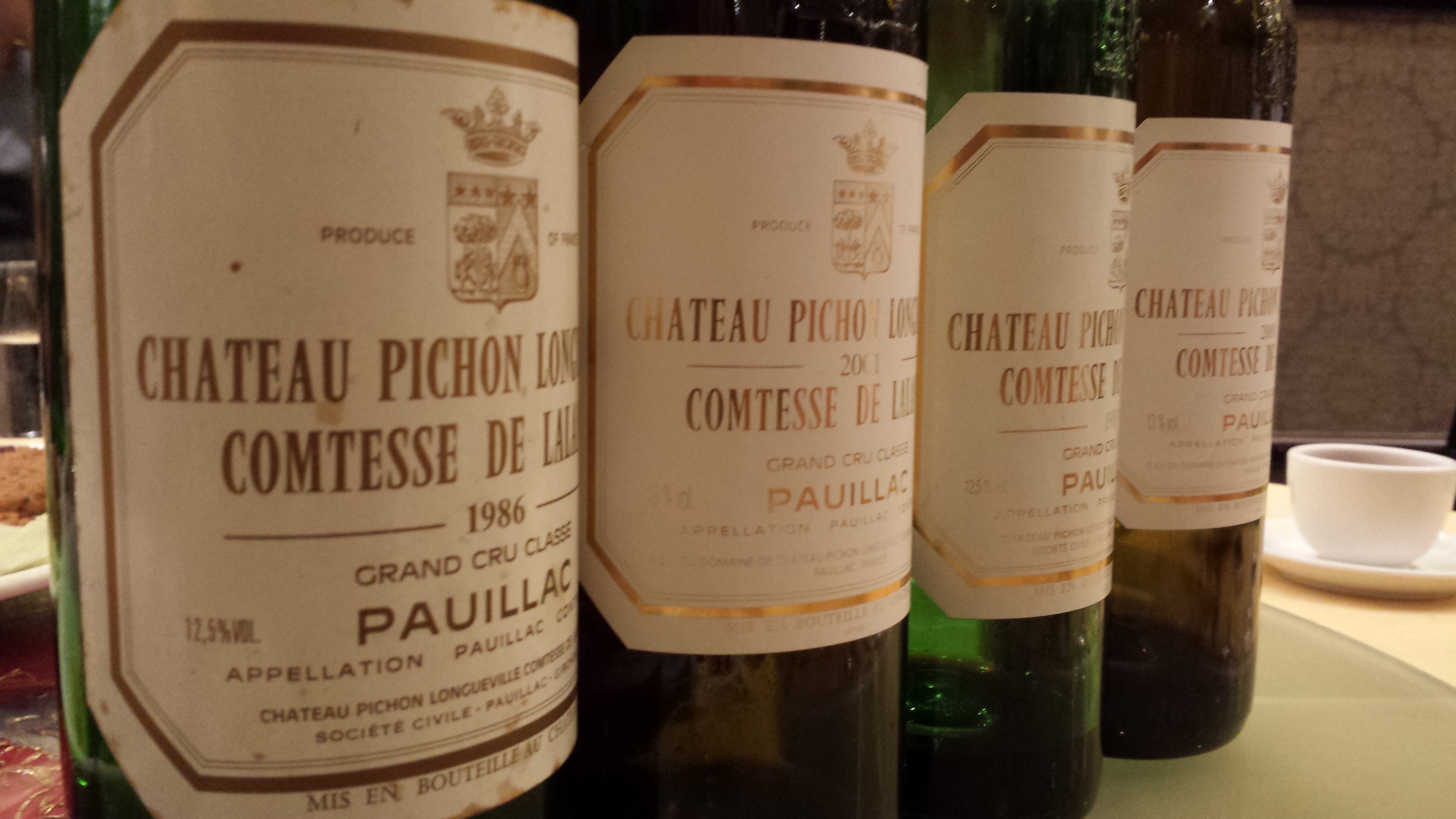 The final bottle was clearly the most masculine, boasting a dark inky red rich in blackberries and redcurrants supported by wonderful minerality with traces of graphite, rounded with just a trace of vegetal character though unobtrusive. It mellowed after some time, allowing one to focus on its great concentration and depth, framed by silky tannins that added a great deal of sophistication to its structure and lengthy finish. We were unanimous in declaring this the 2000, and what a great and long-lived 2000 it will turn out to be. In fact, we were all totally in agreement with what we thought we’d drunk. Well, it turned out, as usual, that we were quite off the mark. Sure, we got the 1983 and 2000 correct, but the Orange was actually a much younger wine – the 2001 – which had been thoroughly beaten by a much older 1986 (Yellow, courtesy of David, in absentia). Wow. It’s surprising that the 2001 has become so wayward and this tasting seemed to confirm my poor impression of another bottle of the same just a week before (see Feb 2014). For sure, there is a certain consistency about Pichon Lalande: its ever-present trace of vegetal notes and its ability to mellow quickly, displaying a harmonious core of tangerine and dark berries with soft edges that contribute significantly to its feminine appeal. Thanks to everyone, in particular Angelina, for a wonderful evening.
1989 Ch Canuet, popped and poured at Burlamacco Ristorante, 4 March 2014. I took a chance on this, figuring that 1989 was excellent for the Margaux commune and that I don’t stand to lose much for SGD89. It turned out very well, in fact, its cork pristine and the wine still displaying a healthy glow of cedar, old leather, earth, bramble with a dash of tangerine and herbal aromas, clearly dipping in acidity although it didn’t fade away. A cheap glimpse into the magic of a fully mature claret but, ultimately, not quite memorable.
2005 Ch La Tour Carnet, popped and poured at Burlamacco Ristorante, 4 March 2014. Coming after the above, this was much more satisfying, the wine already beginning to mellow with early development of secondary nuances, medium to full bodied, excellent in weight and concentration with an abundance of ripe dark berries, cedar and earth without any sign of green. I wouldn’t say its elegant, though.
Verve Cliquot Yellow Label NV, popped and poured at Rang Mahal, Pan Pacific Hotel, Singapore, 5 March 2014, with faculty from The Mayo Clinic. Fairly generous, ticks the right boxes with notes of toast, cashews, a dash of yeast and excellent concentration of citrus characters supported by dense chalky minerality, just a tad dry at the finish. Pretty decent.
2011 Dr Loosen Wehlenur Sonnenuhr spatlese, popped and poured at Rang Mahal, Pan Pacific Hotel, Singapore, 5 March 2014, with faculty from The Mayo Clinic. 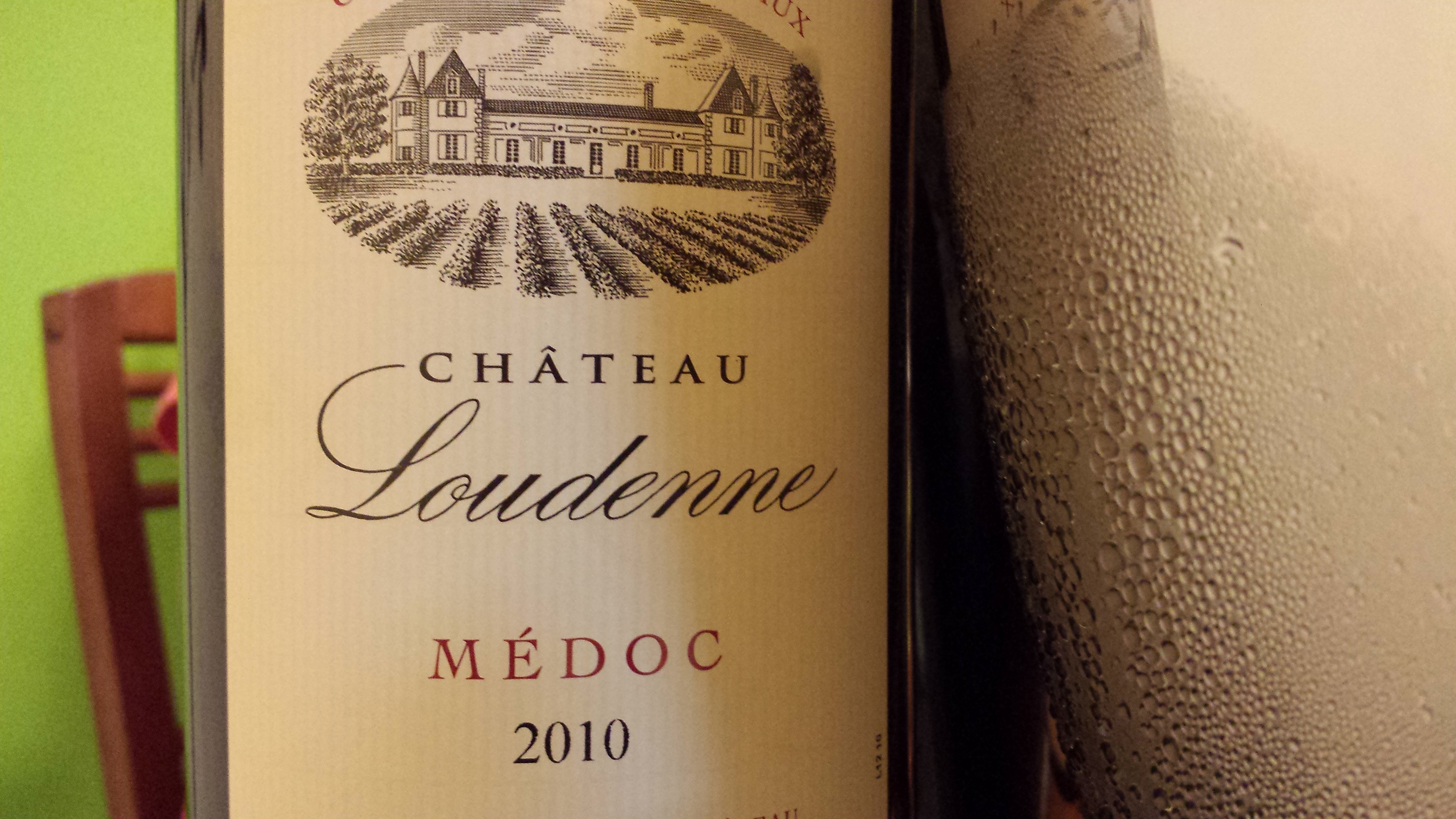 Immediately pleasing with its understated sweetness along with notes of melons, apricot and tropical fruits, medium-bodied. Typically for Dr Loosen, though, the wine lacks concentration and complexity, made for early consumption.
Mansard NV, popped and poured at Tung Lok Signatures, Orchard Parade Hotel, 6 Mar 2014, with faculty from The Mayo Clinic . This champagne from Epernay, even though offered at a one-for-one deal (SGD128), is certainly not bad at all. Generous in body and saturated with yellow citrus and pomelo, its lively acidity cutting through the dense Cantonese cuisine with ease, its dryness just a tad overdone at the finish where notes of toast and gentle oak contrive to put up some semblance of complexity.
2008 Christian Moreau Pere et Fils Chablis “Les Clos”Grand Cru, two identical bottles drunk at Tung Lok Signatures, Orchard Parade Hotel, 6 Mar 2014, with faculty from The Mayo Clinic. Aromas of white flowers with some cream and vanilla, medium bodied and rounded, somewhat lean in fruit and minerality. Could do with greater presence and depth. I’d expected more from a Grand Cru.
2004 Ch Bernadotte, poured from two magnums after airing in bottle for over an hour at Tung Lok Signatures, Orchard Parade Hotel, 6 Mar 2014, with faculty from The Mayo Clinic. Rounded, soft and fleshy, perhaps more promising on the nose where generous notes of violets and blueberries dominate, translating only to an earthy medium-bodied wine that could do with more opulence and layering. The 2005 is preferable.
2009 Meo Camuzet Gevrey-Chambertin, two identical bottles drunk at Tung Lok Signatures, Orchard Parade Hotel, 6 Mar 2014, with faculty from The Mayo Clinic . Aired in bottle for over an hour. Lovely clear cherry red displaying excellent purity of fruit that has the right amount of weight and finesse with overtones of rose petals and ripe strawberries supported by mild minerality, slightly forward yet delicate enough without the usual obligatory saltiness. Very fine.
 2008 Louis Jadot Gevrey-Chambertin, a magnum decanted on-site at Otto Ristorante, 11 Mar 2014. Lovely purplish-violet in color with generous aromas of raspberries, rose petals and red cherries with a dash of camphor and violets, just the right level of extraction for a village wine that strikes a good balance between weight, depth and delicacy, the ripe fruit supported by understated minerality, replete with some fat in the mid-body. Admittedly, not much in terms of actual complexity at this stage, but it went really well with the medium-rare wagyu ribeye. Good stuff.
1990 Ch Cordet, an unclassified growth from the commune of Margaux. Would you take a gamble on a bottle of this wine for SGD69 off the shelf? Of course. Popped and poured at Jade Palace, 14 Mar 2014, its cork looking absolutely pristine. Distinctly medium-bodied, fully matured in color and on the palate. Slightly dry at first and low in acidity, very soft with primary notes of rose cordial and earthy minerality, eventually, gaining in intensity after an hour and with some food, broadening with further notes of violets, rose petals and a dash of tangerine, becoming fuller in body with transparent textures. Quite lovely, really.
2009 Domaines Leflaive Macon-Verze, popped and poured at Alex Wong’s residence, 23 Mar 2014. As with most Maconnais wine, this is somewhat lean with an even mix of clear citrus, pomelo and some grassy element, slightly soft at the edges, missing in mid-body fat and complex minerality that would have added so much more depth and character to the wine. Disappointing.
2010 Ch Loudenne (magnum), popped and poured on two separate occasions just a few days apart: first at Alex’s residence on 23 Mar 2014, again at the EMSS AGM at the Grand Copthorne Singapore, 25 Mar 2014, with consistent notes. Having been won over by this estate’s 2009 on board Singapore Airlines Business Class, I wasted no time in snapping up half-dozen magnums of the 2010 at only SG81 per magnum when I chanced upon it on offer at a local wine retail chain. I can hardly think of a better deal and I wasn’t disappointed. Dark purple. Fairly generous with aromas of ripe blueberries, raspberries violets and briar, medium-full and certainly benefitting from the excellent growing conditions although notes of enamel and new leather were still discernible. Very well crafted without any hard edges at a level of sophistication well beyond most cru bourgeois of the Medoc with superb integration of fruit and tannins, finishing with a tinge of graphite. I certainly couldn’t detect any hollowness nor any trace of vegetal character. It became slightly more relaxed after some time, putting on a bit more weight and opening up a little more, becoming broader and fuller with added notes of cedar. Very fine. This is a connoisseur’s red.
2005 Ch Lalande Borie, two bottles from the same batch tasted on two consecutive nights, both popped and poured, first at the Grand Copthorne Singapore, 25 Mar 2014, then again at Top Seafood, 26 Mar 2014, with consistent notes. 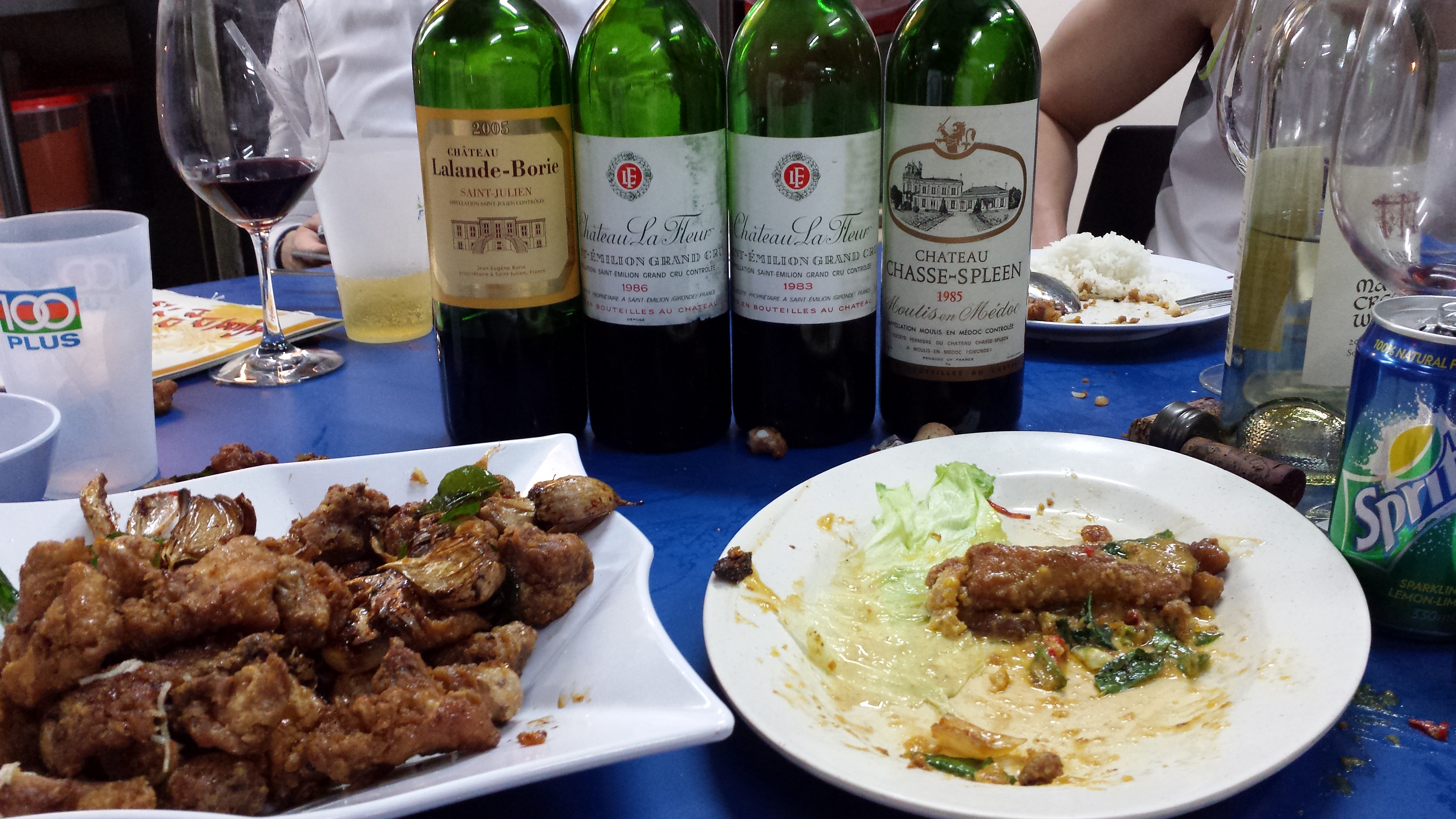 This is a very relaxed wine right from the first pour, very open and layered, slightly leathery in texture and saturated with ripe dark berries entering into a new phase of development, evidenced by more complex characters of mocha, cedar and cinnamon. Very good.
2009 Matanzas Creek Winery (courtesy Jeremy), popped and poured at Top Seafood, 26 Mar 2014, basically a coffee-shop (in Singaporean parlance) off Sixth Ave with cheap but excellent Chinese cuisine, but you bring your own wine and stemware. This sauvignon blanc was rather out of sorts, trying too hard with notes of nutmeg, spice, lemongrass, citrus and tropical fruits. Just too over-the-top for me, with some steeliness creeping in after some time.
1983 Ch La Fleur (courtesy Hiok), popped and popped at Top Seafood, 26 Mar 2014. Not to be confused with Lafleur of Pomerol. Uneven at first, the wine fading at the sides while struggling to maintain its core of fruit that is clearly past its peak, lowish in acidity with herbal notes and tertiary characters of old leather, cinnamon and a dash of apricot. It firmed up after some time and held course for the rest of dinner, but the 1986 below is far preferable.
1986 Ch La Fleur (courtesy KP), popped and popped at Top Seafood, 26 Mar 2014. Still very fresh and almost full-bodied after all these years with notes of raisins and cedar, still lively with a rising tannic spine towards the finish. Compared to the 1983, this is much firmer and broader right from the outset. Very good.
2010 Henri Boillot Savigny-Les-Beaune Le Lavieres 1er, at Crystal Wines’ sale on 29 Mar 2014. Attractive nose of raspberries and dark cherries with a good dose of earthy minerality, slightly salty in texture, certainly generous in body with a fair amount of fat, well-integrated. Very good. I bought two bottles.
2009 Ch German Marbuzet, at Crystal Wines’ sale on 29 Mar 2014. As expected from Saint-Emilion, a wine of good density and weight, medium-to-full bodied with predominant characters of dark wild berries, but just a bit too stern and steely for my liking.
2008 Frank Phelan, at Crystal Wines’ sale on 29 Mar 2014. Second wine of Phelan Segur. Touch of green and forest floor and earth. Supple with excellent mouthfeel, lacking in charm but otherwise correct.
2005 Ch Preuillac, at Crystal Wines’ sale on 29 Mar 2014. Disappointingly short on the nose and palate. Perhaps it deserves a re-tasting?
2009 Bernadotte, at Crystal Wines’ sale on 29 Mar 2014. Regular readers will know this is one of my trusted favorites in good vintages. The 2009 has fleshed out significantly since its release two years ago. Great color – glorious deep purple. Notes of heated stones, saturated with ripe dark and red berries, a touch of briar, raisins and toast. Mildly tannic and laced with lively acidity, yet to shed its cloak of enamel. Great potential. This wine will be long-lived. Get some magnums for keeps if you can.
2010 Fleur de Clinet, at Crystal Wines’ sale on 29 Mar 2014. Although a second wine, I must say I was quite taken by its weight and fullness, displaying attractive dark ripe berries with some bright spots and a touch of earthy forest floor. But second wines are getting ridiculously expensive.
2002: Cos DÉstournel & Leoville Las-Cases
This was a blinded tasting at Jade Palace, 9 Mar 2014, with the renowned thyroidologist Dr Robert Levine who also possesses extensive experience in Bordeaux along with a remarkable palate and, hence, came about this dinner. 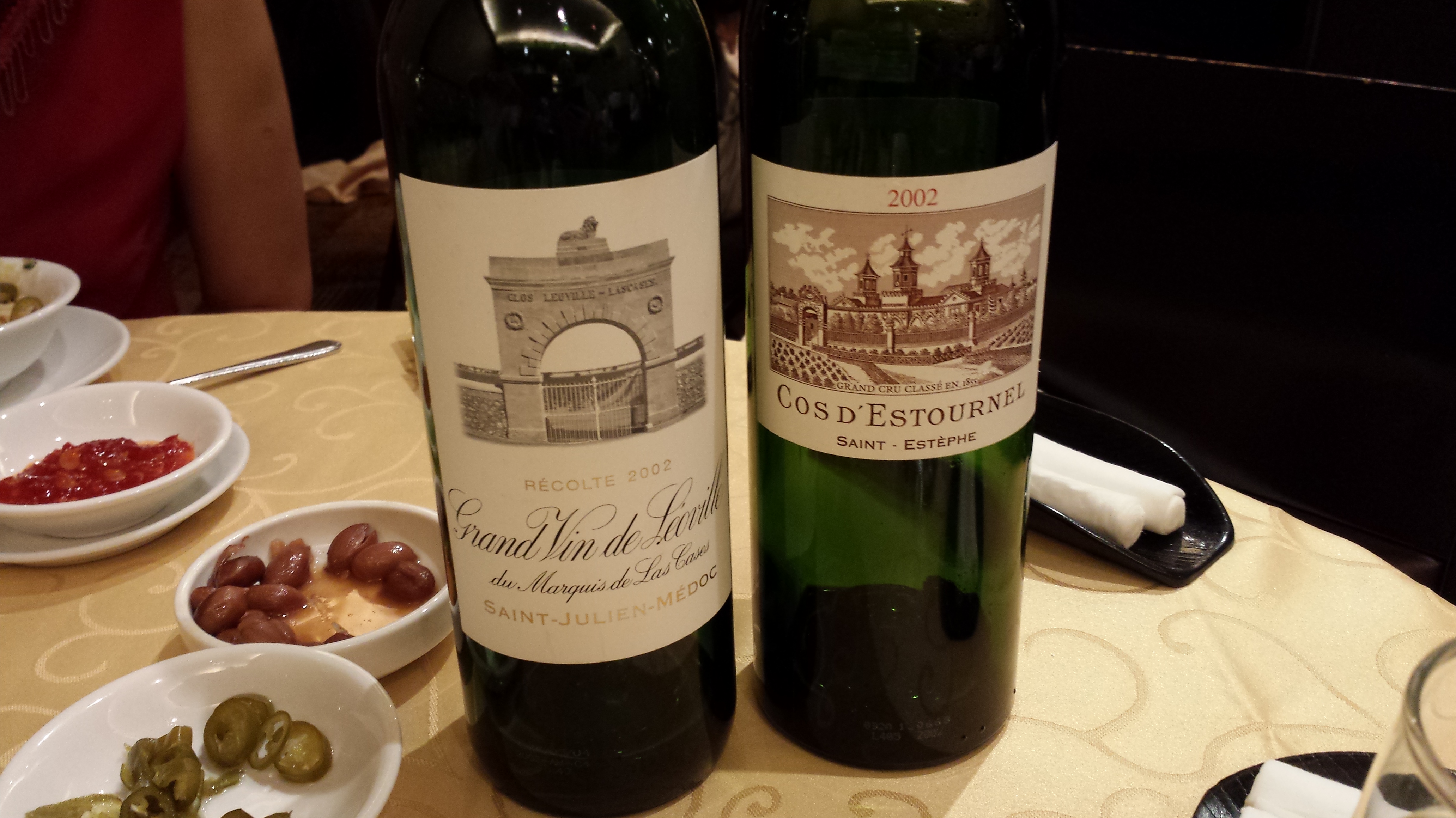 Both bottles had been purchased shortly after bottling and stored in my cellar thereafter, and both were decanted on-site at the restaurant and tasted simultaneously. The 2002 Ch Cos DÉstournel, deep dark red in color, bolted off the starting block with an abundance of black fruits that hinted at a full-bodied wine, beautifully structured with a firm ferrous tone, framed by sophisticated svelte tannins. It loosened up very quickly, becoming much softer and more relaxed for a stretch of time that allowed more nuances of sweet dark berries to emerge amidst traces of cedar before growing again in intensity with early secondary characters appearing. This wine has evolved significantly since my last tasting note in January 2012 (see post), having shed its heavy cloak of wood and dusty tannins, managing on this occasion to put on some charm and warmth, just missing in outright opulence. Clearly, it carried enough typicity about itself, for Bob was spot-on in declaring “it tastes like Cos!”.
In contrast, the 2002 Ch Leoville Las-Cases, which I’d never had, took its time to develop. Very dark and opague. I thought it seemed more reticent on the nose at the first pour compared to the Cos (although Bob thought otherwise) but its bouquet was soon dominated by dense black fruits laced with the tell-tale graphite quality of the unique Saint Julien terroir.  Like the Cos, it too underwent a period where it became softer and more accessible, with textures that were more layered and open, although its stern demeanour remained. Then came a spectacular transformation where the contrast between the gorgeous black fruits and the tight sexy tannins snapped into focus, striking a wonderful harmonious balance, growing in breadth and seductiveness with traces of sweetness creeping in, displaying a level of concentration, depth and sophistication that only estates with true class and breed can produce. In my opinion, Leoville Las-Cases is truly a premier cru, and its quality in this so-called off year is testimonial to that.
Both wines are yet to peak. While the Cos is drinking very well now, my vote goes to the Las-Cases which has, at least, another two decades ahead of it.
 Ric's Wine Journal