2006 Henri Boillot Corton Charlemagne Grand Cru (courtesy of KW). Popped and poured after a brief period of aeration in bottle at Gattopardo, 2 Dec 2014. Too cold initially with only shades of creme and vanilla discernible. As it warmed up gradually, it grew in body and intensity, broadening with full-bodied complexity on the palate, supported by gorgeous firm minerality with a lovely lift towards a slightly minty finish. This is a Corton-Charlemagne to match those of Bonneau du Martray. Excellent.
2002 Maison Leroy Chassagne-Montrachet, decanted on-site at Gattopardo, 2 Dec 2014. One of the few reds produced from Chassagne, this wine is notably darker in tone and color, dusty red that’s almost brownish, displaying notes of ripe raspberries amidst raisins and medicinal overtones and traces of burnt. 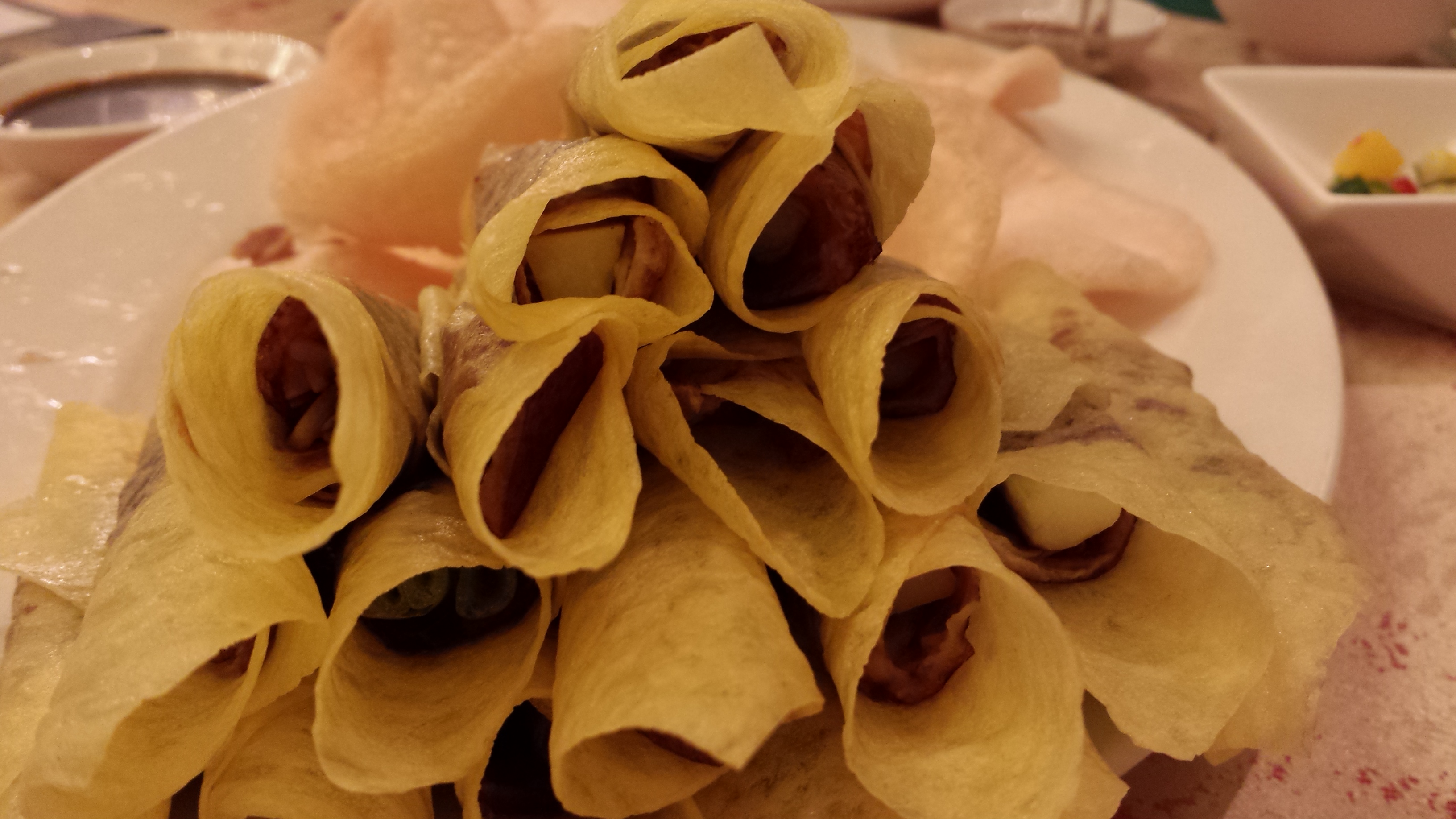 Very atypical for a burgundy, even coming from this venerated estate. I’ll stick with the reds from the Cote des Nuits.
1989 Ch Chasse-Spleen, decanted on-site at Gattopardo, 2 Dec 2014. Still retaining a deep purple after 25 years, this wine exhibits effusive aromas of blueberries and raspberries and traces of tangerine that are well-replicated on the palate with excellent depth of fruit, most succulent and alluring, replete with sweet soft tannins. Clearly at its drinking peak and looks set to hold for several more years. Excellent.
Moet et Chandon NV Rose (courtesy of KP Lim), popped and poured at New Ubin Seafood, 07 Dec 2014. Attractive bouquet of pink roses, cherries and other floral notes but somewhat dry and one-dimensional.
2002 Dom Perignon (courtesy of Vic) at New Ubin Seafood, 07 Dec 2014. Never disappointing, the 2002 DP is a prodigious wine, somewhat muted initially but eventually glowing with notes of fine complex citrus well-integrated against the chalky minerality with a dash of creme and vanilla, displaying great depth and early complexity though still tight and steely.
2011 Hudelot Noellat Chambolle Musigny at New Ubin Seafood, 07 Dec 2014.This wine is really lovely, stuffed with red fruits of excellent purity and depth, striking a beautiful balance with the salty minerality, ending in a long lasting finish. Excellent.
2004 Ghistaine Barthod Chambolle Musigny Aux Beau Bruns 1er. Corked unfortunately.
1998 Ch Clos de l’Oratoire (courtesy of SS Ngoi) at New Ubin Seafood, 07 Dec 2014. Still displaying a deep dark red, full-bodied with predominant notes of soy amidst some mild herbal aromas, excellent in concentration with velvety tannins. Still not much development at this stage. this will be a long-lived Saint Emilion.
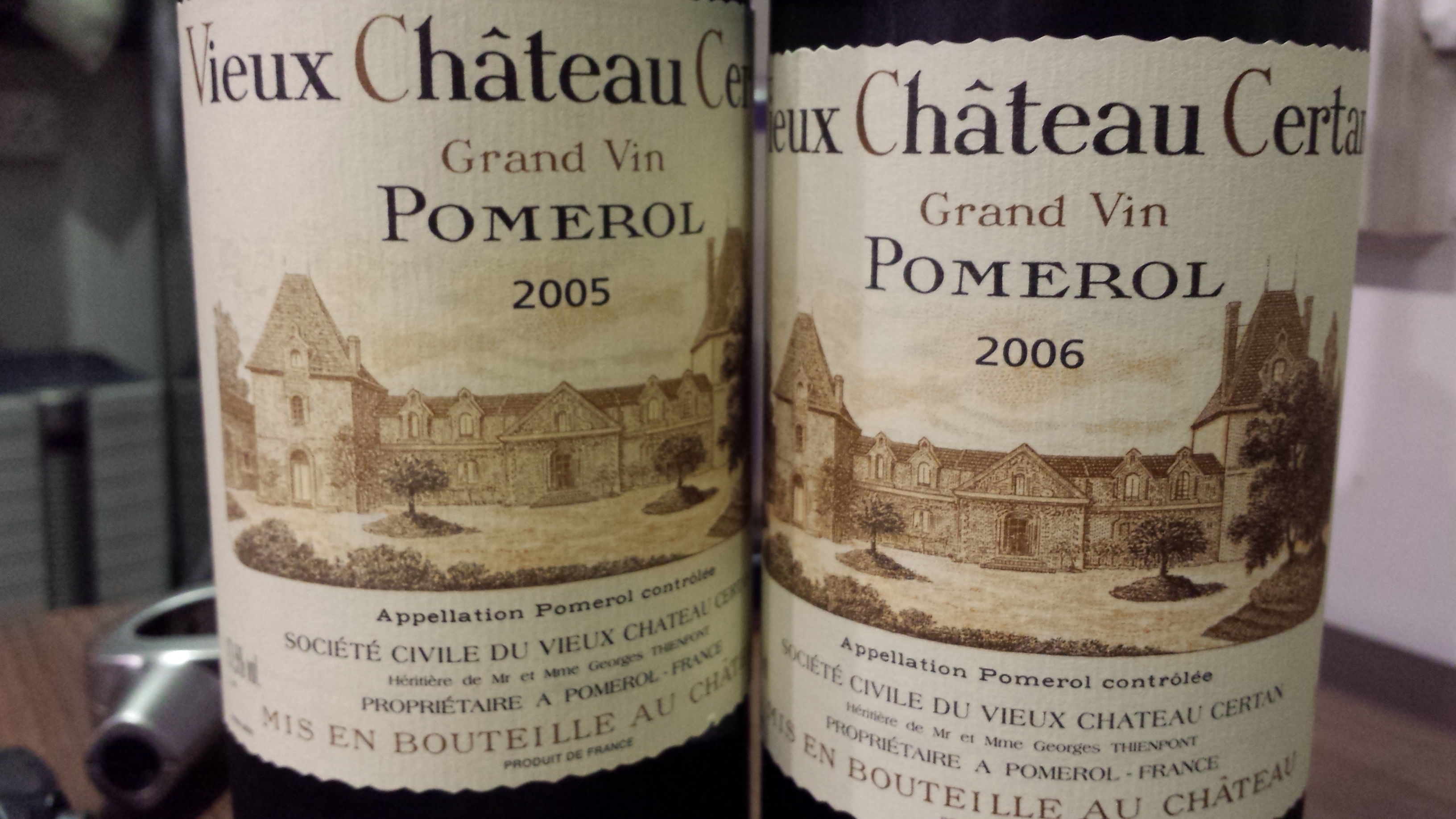 2006 Vieux Chateau Certan (courtesy of SS Ngoi) at New Ubin Seafood, 07 Dec 2014. Full-bodied with a powerful earthy pungency, yet soft and accessible. Still unevolved and slightly short.
2005 Vieux Chateau Certan (courtesy of SS Ngoi) at New Ubin Seafood, 07 Dec 2014. Dark inky black, oozing with ripe warm black fruits with subtle graphite colouring, full-bodied but superb in balance. Still primal, this will be a long-lived Pomerol.
2005 Hestan Vineyards cabernet sauvignon (courtesy of LF) at New Ubin Seafood, 07 Dec 2014. Predictably huge with a strong graphite element, traces of herbal medicine and an abundance of dark fruits. Hedonistic but superbly controlled, balanced and crafted.
2011 Alois Kracher No.8 Scheurebe Trockenbeerenauslese, at New Ubin Seafood, 07 Dec 2014. One marvels at the remarkable balance, just medium-full, never heavy, achieving a lovely concentration of melons, tropical fruits, lychees and fig with a quiet intensity and inner complexity, yet never over-bearing. Excellent.
2003 Ch Guiraud at New Ubin Seafood, 07 Dec 2014. Full-bodied but dipping in acidity already, which is both surprising and alarming, robbing this Sauterne of its verve and liveliness, turning a tad heavy and flat.
2007 Paul Hobbs Lindsay Estate Vineyard Pinot Noir, popped and poured at Bedrock Bar & Grill, 08 Dec 2014. If I hadn’t known that this bottle was a pinot noir, I’d have thought I was drinking a malbec or GSM blend, for such was its weight and forward projection of ripe dark fruits and raspberries amidst powerful medicinal and herbal overtones, tight and tannic on the palate. Did the estate label the bottle wrongly?
2009 Altavilla Della Corte Firriato, a half-bottle bought off the list of Buona Terra, 09 Dec 2014. Popped and poured. I’m highly impressed by the lifted aromas of white roses, fig, melons and citrus coupled with seared caramel and light honey of surprising richness and intensity on the palate, supported by firm chalky minerality that added to some degree of genuine complexity. An over-achieving Sicilian, perfectly agreeable at SGD58.
2008 Il Marroneto Brunello di Montalcino, a half-bottle bought off the list of Buona Terra, 09 Dec 2014. Aired in bottle for well over an hour. This Brunello does not disappoint, promising a big wine with powerful aromas of red plums, cedar, raisins and dark berries, living up to its promise on the palate, medium-full with excellent depth of fruit, yet open and layered with a rich vein of dark berries, suggesting that this wine still has quite some way to go before peaking.
2004 Ch Bernadotte, popped and poured at Asia Grand, 13 Dec 2014. This wine appears to have turned the corner, shedding its green surly coat, more open on the nose and palate with notes of cedar, raisins and ripe berries, carrying excellent weight and supported by understated minerality and sweet subdued tannins. Definitely much more inviting and delicious than ever before.
1995 Verve Cliquot La Grande Dame (courtesy of Chor Tzien) at Chotto Matte, 18 Dec 2014. Very lovely on the nose with notes of cashews, toast and yeast, deep and inviting, displaying excellent balance on the palate between the lively citrus and crystalline minerality. Sophisticated and highly attractive.
2004 Belle Epoque Perrier-Jouet, popped and poured at Chotto Matte, 18 Dec 2014. Forward balance of dense citrus that is somewhat acerbic on the palate, tapering to a steely austere finish.
2009 Leflaives Macon-Verzes (courtesy of Li Fern), aired for 45 minutes at Chotto Matte, 18 Dec 2014. It was good to return to this perennial favourite, still full-bodied and packed with an abundance of ripe citrus and chalky minerality, intense on the palate, yet to yield further complexity.
2002 Leroy Montagny (courtesy of Li Fern), aired for almost an hour at Chotto Matte, 18 Dec 2014. Attractive bouquet of earthy pungency. Slightly flat on the palate but it transformed quite quickly into a broader wine with notes of white flowers and tangy citrus, rather firm, finishing with a bit of spice at the edges. A good drop but I wished it carried greater complexity.
2009 Meo Camuzet Morey St Denis, aired in bottle for 90 minutes at Chotto Matte, 18 Dec 2014. In spite of its youth, this wine is fully accessible now, stuffed with fruit of great purity, offering lifted aromas of ripe raspberries, cherries and camphor with traces of vanilla still discernible, replete with plenty of fat in the mid-body, just a tad spicy at the finish. Excellent.
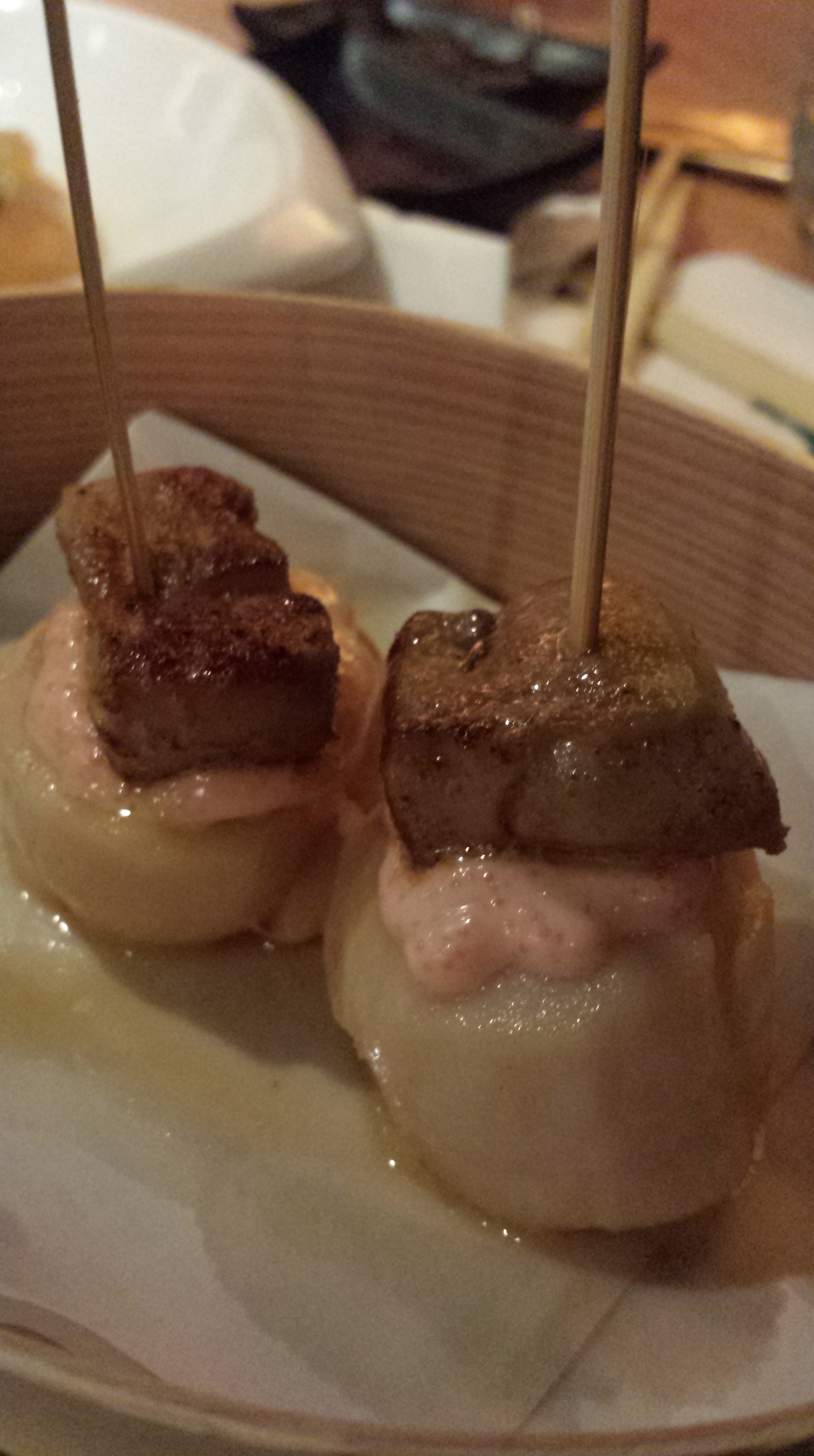 2003 Joseph Drouhin Charmes-Chambertin Grand Cru (courtesy of Ooi CJ) aired in bottle for 90 minutes at Chotto Matte, 18 Dec 2014. I’m afraid this Grand Cru doesn’t quite live up to its billing, rather heavy with medicinal aromas that tend to impart a certain density on everything else. Disappointing.
2007 Sylvain Cathiard Vosne Romanee “Aux Malconsort”1er Cru (courtesy of SS Ngoi), aired in bottle for 90 minutes at Chotto Matte, 18 Dec 2014. Expectations were high and this wine doesn’t disappoint, offering a fantastic bouquet of pink roses and other floral fragrances, displaying great presence and depth on the palate with predominant notes of red cherries and spice that lent plenty of verve and vibrancy. Excellent.
2004 Clonakilla Shiraz-Viognier, popped and poured at Beng Hiang, 20 Dec 2014. I don’t like the way this wine is shaping up after 10 years, even though this bottle had been immaculately cellared for the past 7 years. Heavy with a predominance of medicinal overtones and forest floor and wild berries, one-dimensional and angular, almost hard. Disappointing.
2007 Ch Haut Batailley, popped and poured at home, 22 Dec 2014. Compared to a previous bottle from the same batch tasted about 18 months ago, this wine has turned alarmingly angular and disjointed, its fruit already stale and drying out, leaving a carcass of musty wood and dusty tannins. Not worth buying even at SGD59.
2010 Ch Loudenne, popped and poured from magnum (my last!) at the wedding of Evan & Cynthia, Shangri-La Hotel Singapore, 27 Dec 2014. This wine offers deep aromas of rich dark currants and blueberries on the nose although, on the palate, it is distinctly medium-bodied, slightly lighter and more open in texture than before with a good concentration of violets and graphite elements in its sophisticated tannins, growing in intensity over time, a cru bourgeois within touching distance of a Fifth Growth. Very good for its price.
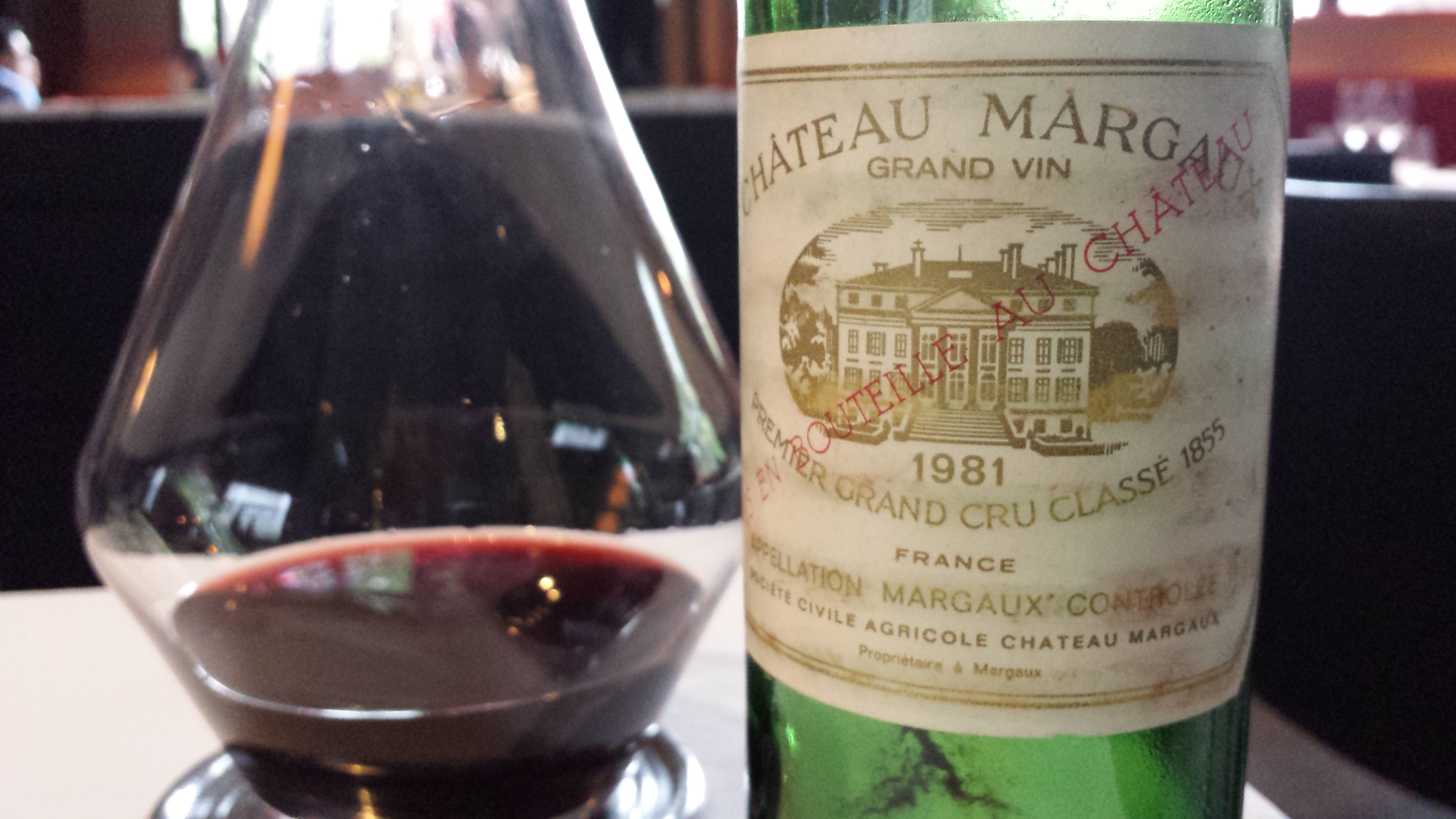 1981 Ch Margaux (courtesy of John), a half-bottle decanted on-site at Otto Ristorante, 30 Dec 2014. To be honest, there was substantial bottle stink on the nose and palate that almost amounted to the bottle being corked, but we didn’t have the heart to pour away a Margaux. Thank goodness, though, it seemed to blow off by the time we reached the latter half of the bottle, revealing predominant red fruits and tangy citrus that the wine still carried, allied with notes of earth, forest floor and wild berries amidst a soft fragrance. However, this wine clearly lacked distinction and if I’d been blinded, there was no way I’d have known this was a 33-year-old premier cru. Nevertheless, a big thank-you, John.
Mansard Brut NV, popped and poured over lunch at Imperial Treasure T3, 31 Dec 2014. Attractive and promising at first with generous notes of lime and citrus supported by flinty minerality, offering very good depth of fruit. However, it became far too dry and crisp after some time, becoming one-dimensional and hard.
One look at the line-up above and you will realise two things: it is outrageously expensive, and only one group of like-minded individuals locally is capable of going great lengths to stay on theme: Bacchus. When Kieron first proposed a 1990 Pauillac horizontal and proudly proferred a Latour, nobody took a step back. In fact, with less than two weeks to go before we were to meet at Les Amis on 18 July 2014, everyone pulled out all stops to procure their own offerings. In one instance, an OWC of Lafite Rothschild was specially imported from London via express freight just for this dinner. Tim Goh, Director of Wines at Les Amis, had secured for us its private dining hall with a customised menu and we were set.
As usual, we kicked off with a 1990 Champagne Dom Pérignon (courtesy of Daniel) that was still very fresh and lively, sporting lifted aromas of nutmeg, toast and exotic fruits with a mild yeasty overtone, coating the palate with very fine gentle bubbles, slightly minty at the finish. It broadened and grew in intensity over time, displaying great depth and sweetness and developing notes of white pepper and high-toned glycerine and graphite, ensuring a complex sophisticated finish. A wonderful and complete wine, although it took a while to get there. 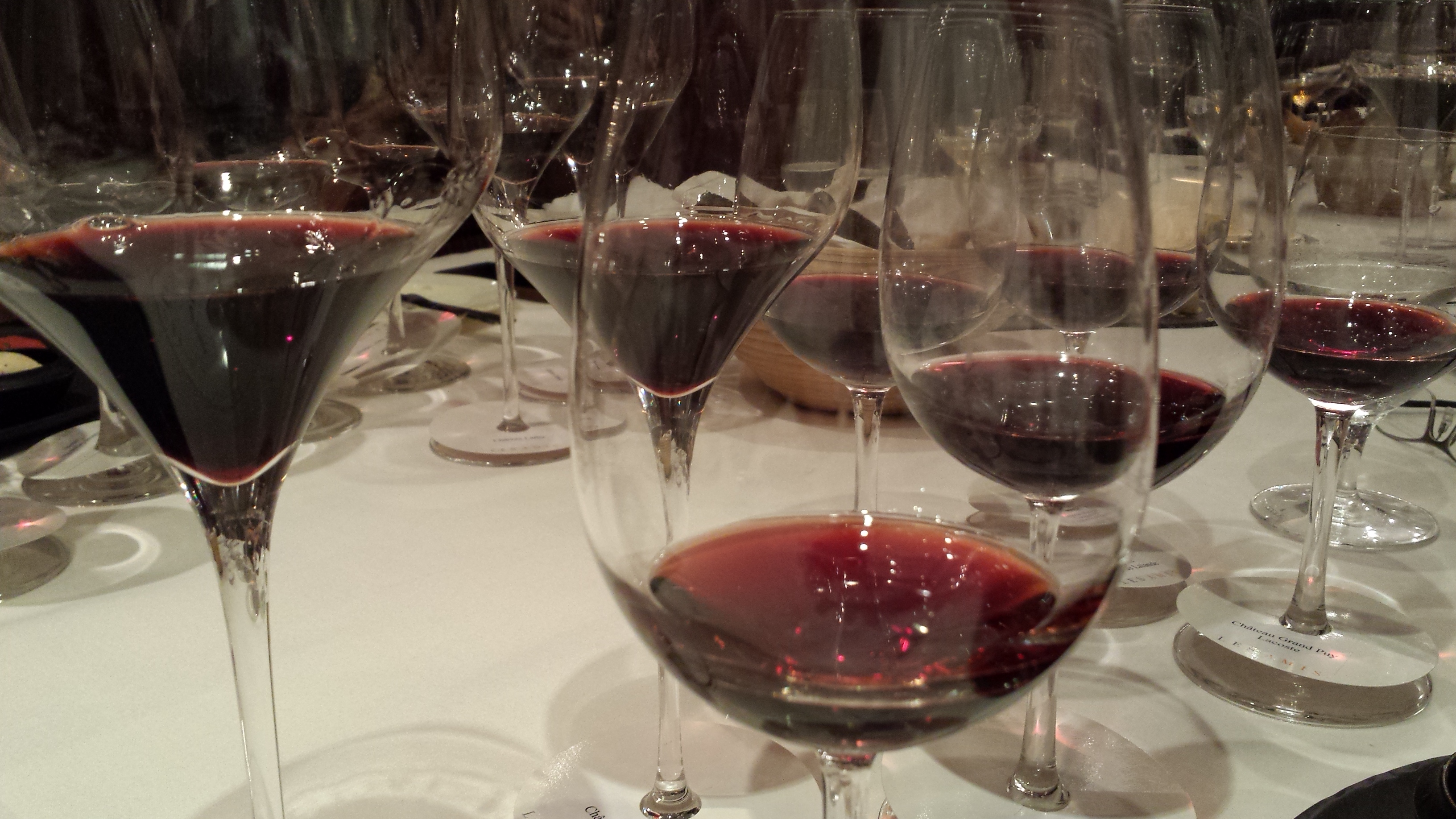 Next up was also a white, a 1990 Dauvissat Les Clous Grand Cru (courtesy of David), lighting up with a luscious gold, low in acidity with notes of seared caramel and pistachios that contributed to a burnished tone. Though lowish in acidity, unsurprisingly in light of its age, it blossomed over time to produce a powerful complex of lychees, crème de la crème and chalky minerality with just a hint that, perhaps, the fruit was beginning to dry out. Like the Dom Perignon, this wine requires patience on your part.
We drank the reds in three flights, beginning with a trio of estates from the northern part of Pauillac. The 1990 Château Grand-Puy-Lacoste (courtesy of Uncle Hsu) displayed the most evolved bouquet of the entire line-up, a powerful complex proposition with its ripe plummy glow on the nose, promising an abundance of rich velvety red fruits and blueberries that came through on the palate, medium-bodied but incredibly complex and seamless. One could go on sniffing the whole night. A complete wine. The 1990 Château Lynch Bages (courtesy of Victor), another perennial favourite, was considerably deeper and darker with its forward fruit characters and powerful bouquet of cedar and violets overshadowing the usual Pauillac dryness, undeniably attractive and correct in every way, growing in intensity over time with further sweet tannins. Unlike the GPL that has peaked, the Lynch Bages is still evolving at a glacial pace, still incredibly fresh with so much more potential in store, consistent with a previous tasting note from last year. Fascinating. The 1990 Château Clerc Milon (courtesy of Chris) stood its ground in the face of top-flight competition, displaying a classic Pauillac fragrance and dryness, saturating the palate with a lovely rose-tinted intensity and a tinge of salty minerality, tapering towards a spicy finish. It morphed into seamless whole towards the end of dinner, its minerality more earthy over time. Like the GPL, this wine is at its peak, offering much of the attractiveness of this outstanding vintage without breaking the bank.
Next flight was the classic pairing of the two Pichons. As expected, the 1990 Château Pichon Longueville Comtesse de Lalande (courtesy of Pipin) was distinctly feminine, highly seductive with a predominant bouquet of red fruits and violets, possessing impressive depth and charm, dry and earthy, defying all previous criticism this estate has had over this vintage. Perhaps it could do with a little more definition on the palate but it really is very lovely, perfect for drinking now. Across the road, the 1990 Château Pichon Longueville Baron (courtesy of Hiok) was considerably darker and more masculine than the Comtesse with notes of ripe dark berries and blackcurrants that complemented the distinctive Pauillac signature perfectly, displaying great structure and integration, justifiably more inspired than the Comtesse.
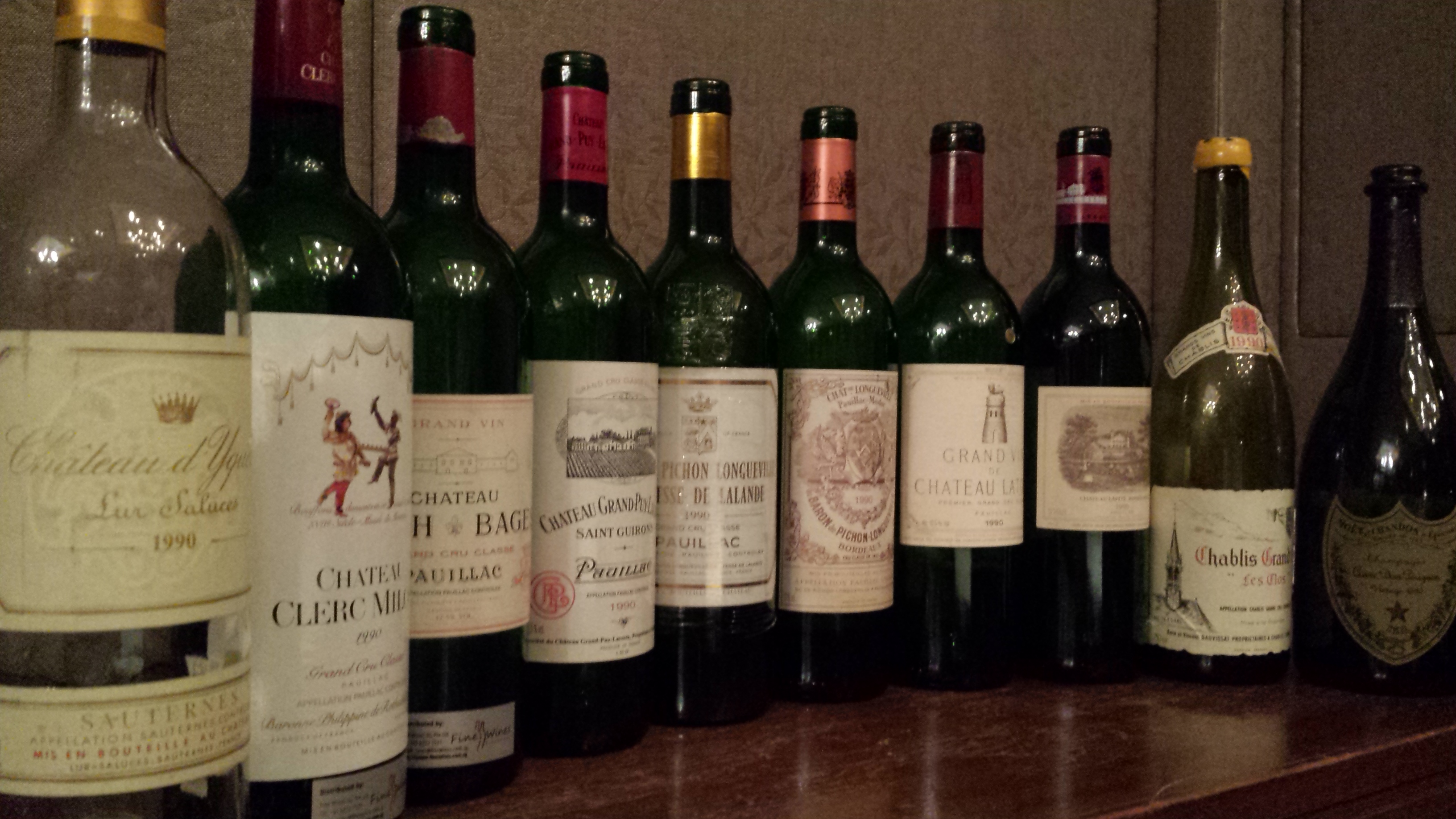 We arrived at the pinnacle of Pauillac (and perhaps of all Bordeaux) with the First Growths, sans Mouton Rothschild (its reputation for 1990 probably irreversibly damaged by negative press reviews). Surprisingly, the sommeliers at Les Amis opted not to decant both wines, a debatable move. The 1990 Château Lafite Rothschild, glowing in deep ruby, was still shut at the first pour, probably the result of it not being decanted, although one could discern floral notes of red fruits amidst the depths of darker fruits, waiting to burst forth. When it finally did open up after another hour of persistent coaxing in the glass, it was a quintessential Lafite that greeted the senses – feminine, full of elegance and immaculate composure, absolutely harmonious with understated power beneath, rising towards a lifted, long lasting finish. One is left with the feeling that it could have been even better had it been decanted, but it still stood heads and shoulders above all the reds that had come before it, even putting the 1990 GPL in its place. Such is the power and allure of Lafite Rothschild in a great year. Side by side, the 1990 Château Latour (courtesy of Kieron), radiated absolute power and beauty from its glorious unfathomable depth of ripe rich tarry black fruit, beautifully integrated with the wood and velvety tannins amidst a sprinkling of red plums. Truly remarkable. And as if we needed anything more to cap such an outstanding evening, David offered a 1990 Château d’Yquem, the perfect counterfoil after all those reds with its rich, intense layers of concentrated lacquer, nectar and apricot, neatly balanced, perhaps just a tad more impressive on the nose than on the palate but who cares? This had been an evening to match any of Bacchus‘ best. I dare not think how we can better this. Thank you, everyone.
A corked encounter at Steirereck, Wien.
I had the chance to re-visit this two-star Michelin establishment in Vienna for lunch on 18 Sep 2014 after a two-year hiatus, during which it had undergone some interior renovation. For those who remember its outrageous restrooms, I regret to announce that all that have gone, replaced now with ordinary fittings. 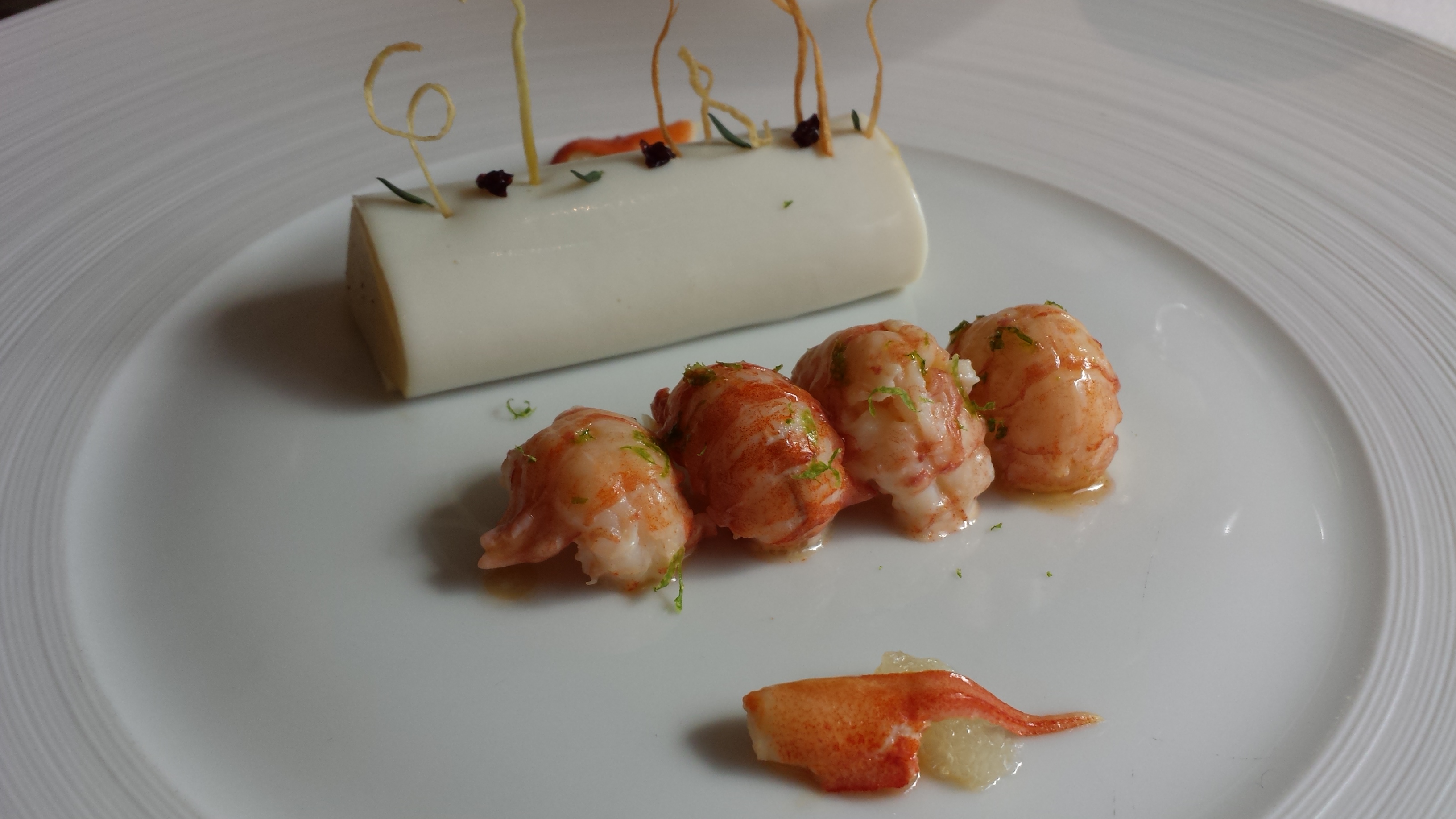 But, more importantly, Steirereck has upped the ante for what truly counts: its service is now friendlier and less stiff, yet delivered with greater polish, its wine list more extensively stuffed with Austrian offerings, and its cuisine more imaginatively and immaculately executed (not that it never was).
I have never been let down by Austrian whites, always uniquely flavoured and complex and reasonably priced and, on this occasion, I let the sommelier recommend the 2012 Prager Achleiten Grüner Veltliner after I had indicated my preferred grape varietal. As expected, this wine, decanted on-site, possessed very lovely and powerful aromatics hinting at crème de la crème, white roses and magnolias with an attractive grassy element whilst the palate revelled in the rich stony minerality that supported the excellent depth of fruit, combining to produce a lively and complex proposition. 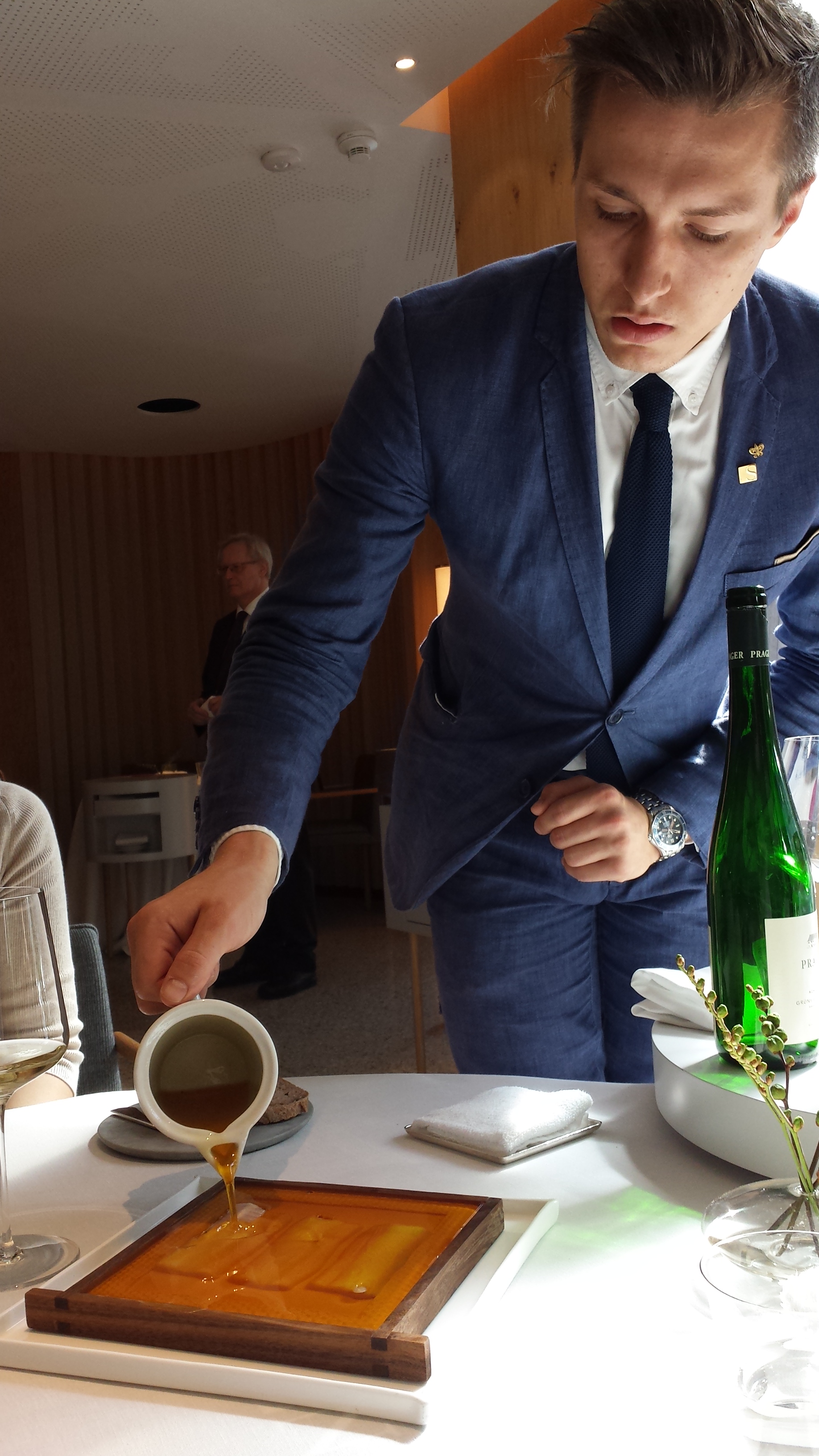 As lunch wore on (four hours!), a hallowed glow of hazelnuts and apricot grew out of the glass, a testament to its outstanding virtues.
For the red, I opted to move away from the ubiquitous blaufrankisch varietal, following instead the sommelier’s recommendation of a 2011 Claus Preisinger St Laurent Merlot from the region of Neusiedlersee. Decanted on-site for close to an hour prior to serving, the wine was notable for a huge earthy pungency that was on the verge of being corked. Whilst sniffing and sloshing the wine, I deliberated for several moments as to whether it may actually be corked although the fruit seemed alright on the palate, dominated by notes of forest floor, twigs and wild berries. I remarked to the young sommelier about the intense pungency but he waved it away (without tasting the wine), instead waxing lyrical about how familiar he was with the wine and its quality, having worked at the estate for three years. In the end, I decided to give it the benefit of the doubt and accepted the bottle. However, as we drank through the bottle, I found the fruit to be continually overshadowed by a prominent salty minerality and the continual pungent presence that tended to shroud everything else. Three-quarters of the way through, I called the sommelier to bring over another similar bottle. Thinking that we needed more wine, he came bubbling over with fresh glasses and a new bottle. But before he proceeded to open it, I called the first bottle as corked, offering to pay for the second should I be proven wrong. It was only then that the young man took a swig from the remaining wine, agreeing immediately that it was, indeed, corked.  In fact, I’d underestimated the severity, for the new bottle displayed a level of immediacy, freshness, vigour, depth and layering that was so far removed from the initial offering. In its full glory, this Claus Presinger St Laurent Merlot is truly excellent, offering an abundance of rich luxuriant red and dark fruit of wonderful depth and balance, coating the palate with ripe supple tannins, ensuring that this memorable lunch will not be forgotten.
Sept 2014: 2003 St Hallett Old Block, 1990 Leoville Barton, 2005 Mount Mary Quintet, 2006 Kracher No.11 TBA…
2004 Jean Gaunoux Hudelot Puligny-Montrachet “Champs Gain”1er, tasted neat after hours at Glen Arden, 01 Sep 2014. Displaying a luscious golden tone, this wine exhibited a clear flinty minerality and notes of yellow citrus that was quite sharply accented with a dash of perfumed white flowers, medium-bodied, still retaining a fair bit of crisp acidity on the palate. As with most quality whites, it become more concentrated in color and flavour as it sat in the glass over the next 90 minutes, the intensity developing into a fabulous nose of great complexity although it was less exciting on the palate, turning a bit reticent towards the short finish. At SGD97, this is still highly satisfactory.
2003 St Hallett Old Block, decanted at Burlamacco Ristorante, 02 Sep 2014, and shared with Dr N who given it to me direct from Adelaide several years ago. Still displaying a deep dark purple after all these years, this wine was an absolute blockbuster right from the first pour, exuding thick heavy aromas of menthol, medicinal herbs, licorice, raisins, garden floor and a generous abundance of very ripe fruit laden with overtones of dark currants, dense and almost unctuous, laced with lively acidity. It gradually loosened up after some time, lightening up slightly in texture although it still remained full-bodied, allowing more plummy fruit and mineral notes to emerge with a dash of liquer taking up the finish. A classic Barossa shiraz made from very old vines but not for daily drinking.
2012 Wolf Blass Red Label, popped and poured at Crystal Jade, 6 Sep 2014. This may be a supermarket wine, but one admires the effort put in by this respected estate, crafting a wine with an abundance of ripe raisiny shiraz with overtones of red plums and a dash of licorice, very good in concentration but soft and accessible, good to drink now with the sterner cabernet bringing up the rear although it doesn’t quite add to any structure. The headache and myositis next day lasted 24 hours though.
2005 Carpineto Vino Nobile di Montepulciano Riserva, a bottle presented to me by Mr Steven Ong a couple of years ago and decanted on-site at Otto Ristorante, 8 Sep 2014, over a late but quick dinner. I’ve had a case of the 1993, but this is the first time I’m tasting a younger wine from this estate and what a lovely thing this is. Very deep purple, from which rich and luxuriant notes of violets, blackcurrants and a lovely blend of red and dark fruit with overtones of graphite excite the senses with serious intensity and weight, framed by lithe supple tannins that provided a firm but pliant structure on the palate, mellowing a little over time but remaining poised and balanced. At its peak, and would hold for quite some time.
2003 E Guigal Hermitage, a bottle presented to me by Dr Jonathan Teh recently, popped and poured after hours at Glen Arden, 12 Sep 2014. This is so much better than a similar bottle bought off the list of Jade Palace just a few months ago. Whereas that was angular and unsettled, this was singing right from the first pour with an abundance of glorious ripe fruit, saturating the olfactory senses with notes of cedar, cinnamon, savoury sweet meat and bacon. Firm, full and layered on the palate with a particularly rich vein of red fruits within the depths. Delicious.
2005 Mount Mary Quintet (courtesy of John), aired in bottle for 3-4 hours and further decanted prior to tasting after hours at Glen Arden, 12 Sep 2014. Quite evolved in color, its rusty brown not particularly attractive, but this wine is absolutely glorious on the palate where notes of red plums, licorice, tangerine, kumquat, cedar and cinnamon all come together in a harmonious blend, even and medium-full, displaying great definition and linearity, stern and correct but with a hint of sweetness from the recessed tannins. No, it doesn’t possess that undefinable hallowed glow of a claret, because it isn’t a claret. Mount Mary requires plenty of patience and I’d say this wine has yet to peak even though it is drinking so well now.
2009 Domaine de la Poultier bourgogne, courtesy of Astra Women’s Specialists on the occasion of their grand opening, 13 Sep 2014. This is a good drop, not surprising considering its vintage, open and inviting on both the nose and palate with aromas of fresh morning dew, lemongrass and citrus with a light touch, supported by attractive flinty minerality that doesn’t call attention to itself, taking on a richer tone after some time with a creamy texture that offset the crisp acidity very well. I enjoyed it.
Duval-Leroy Brut NV, on board Swissair Business Class, 13 Sep 2014. Highly aromatic with notes of lime, pomelo, green apples and clear citrus with mild yeasty overtones, fairly generous on the palate but just a tad too dry and short on depth.
2013 Fricktal Cuvée Blanc, on board Swissair Business Class, 13 Sep 2014. This is a Swiss wine with a mix of pinot blanc and pinot noir that was a tad shy on the nose, displaying notes of green fruits and melons, but well-layered on the palate with other notes of apples and mint appearing.
2013 Terras de Moncao, on board Swissair Business Class, 13 Sep 2014. This is a Portugese white with quite an intriguing nose of white flowers and perfume, with an intensity that’s least expected. On the palate, however, this wine is purely one-dimensional and unexciting although it doesn’t leave any hollow spots.
2013 Besserstein Pinot Noir, on board Swissair Business Class, 13 Sep 2014. Coming from the region of Aargau, Switzerland, there are appropriate notes of red fruits underscored by redcurrants with overtones of fresh cherries, forward and trying hard to please, but lacking in distinctiveness and, ultimately, it doesn’t taste like pinot.
2009 Clarendelle, on board Swissair Business Class, 13 Sep 2014. Kudos to Swiss for this inclusion. Distinctively Bordeaux. Very well balanced with the right mix of ripe fruit and recessed minerality, medium-bodied, not too dry, slightly earthy and spicy towards the finish, though it doesn’t quite possess the classic Pessac-Leognan character.
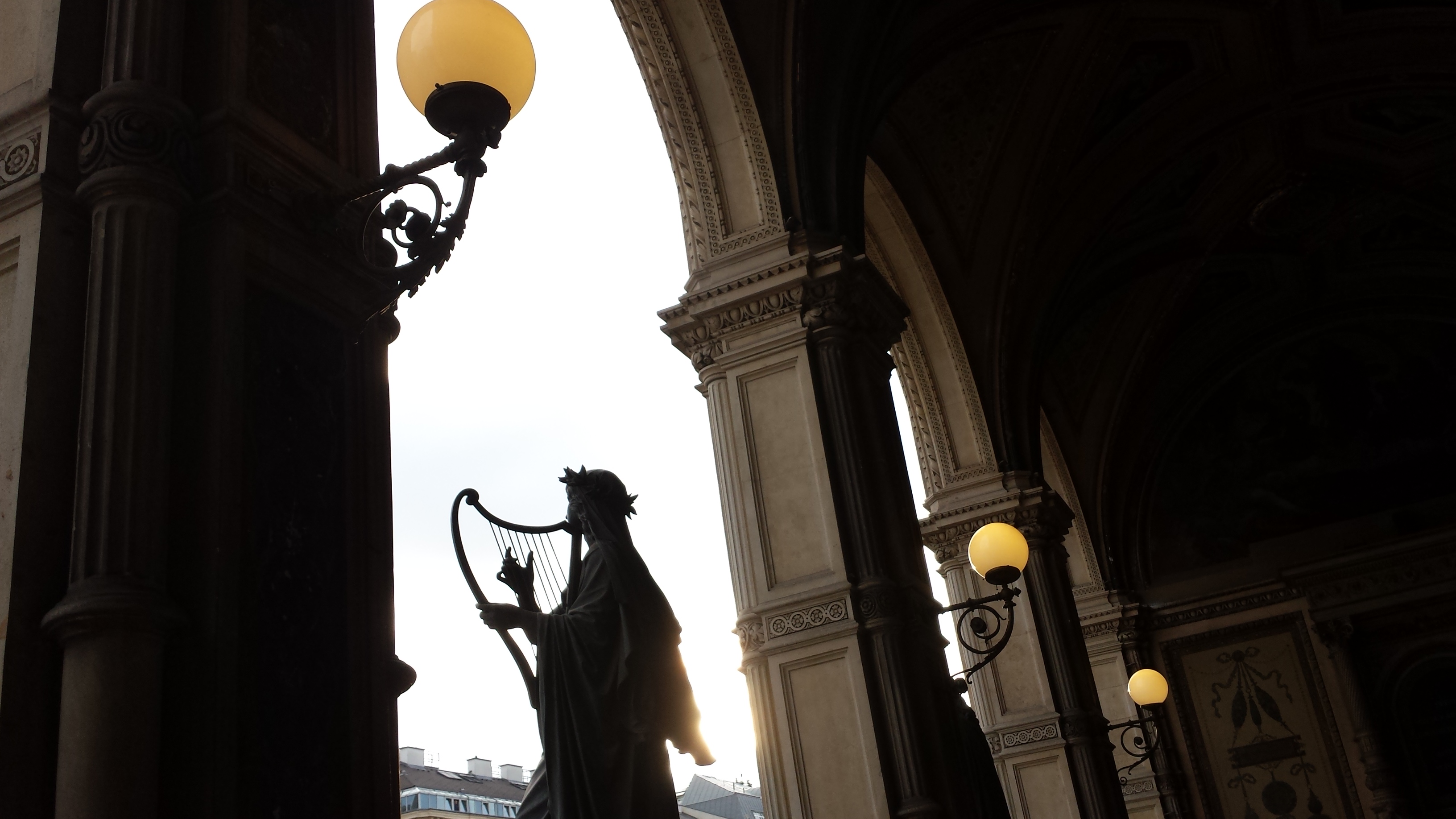 Laurent-Perrier NV, at the Wiener Staatsoper, Vienna, before the start of Puccini’s La Fanciulla del West, 14 Sep 2014. A rip off at EUR14 per flute, this is, nevertheless, a very good calling card for this famous champagne house, generous in aroma and body with an abundance of toast, malt, complex citrus, chalky minerality and mild yeasty overtones, a tad dry towards the finish.
2012 Roccadelle Macie Galestro, popped and poured over lunch at Settimo Cielo, Vienna, 15 Sep 2014, from the restaurant list. Light, citrusy without being too crisp, good body, clear minerality, well balanced and easy. Perfect for lunch.
2012 Scheiblhofer Legends, off the list of Figlmuller, an institution in Vienna, 16 Sep 2014. Popped and poured. A blend of merlot and cabernet sauvignon, this Austrian red is full-bodied and fruit forward with generous notes of dark currants, dark cherries, raspberries and a dash of ripe wild berries and earthy green bringing up the rear, linear and solid across the palate without any true complexity. Does its job as a table wine.
2012 Terramo Tempranillo., at the Star Alliance lounge of Zurich airport, 19 Sep 2014. Very pleasant and well integrated with notes of red fruits and red plums, finishing with sweet gentle tannins.
2000 Ch Potensac (courtesy of Johnny) at Top Seafood, 23 Sep 2014, Popped and poured and drunk rather quickly. Dark red. There was plenty of dark fruits, alcohol and a powerful dose of medicinal aromas at the first pour that indicated this wine hasn’t quite come together. It settled down after half an hour and some food, delivering classic notes of earthy dried leaves and mushrooms in a medium-full tone well integrated with the wood without any angularity nor hollowness. In spite of it being an unclassified growth, one senses that this wine has yet to develop completely. Keep another 5 years before re-visiting.
2002 Grant Burge Meshach shiraz (courtesy of Johnny) at Top Seafood, 23 Sep 2014. Popped and pored and drunk rather quickly as well. I remembered this was the first estate I’d visited when I first visited the Barosss Valley in 2002, the same year as this vintage. Like the Potensac above, this wine was somewhat disjointed initially with a prominent note of pine wood on the broad side. However, it soon snapped into focus, turning into a wine of considerable power, yet beautifully controlled and tight, delivering an abundance of ripe warm Barossa shiraz with overtones of red plums, licorice, cedar and sandalwood, producing a superb mouthfeel with its depth and sophistication without turning jammy although the note of pine remained distinct. This shiraz has plenty of character and will be long-lived. Excellent.
2008 Pio Cesare Barolo, courtesy of Kenneth during dinner at his residence, 26 Sep 2014. Popped and poured. I had forgotten how powerful Barolos can be, for its deep medicinal herbal aromas, coupled with licorice and mint, were almost overwhelming at the first whiff. Almost brownish in color, the wine was dominated by spicy black pepper and menthol on the palate before settling down with more notes of prune, dark currants and raisins emerging, the firm tannins raising some sharpness and angularity at the finish. To some extent, it reminds me of a New World shiraz.
2000 Ch Rauzan-Segla, courtesy of Kenneth during dinner at his residence, 26 Sep 2014. Decanted on-site. My expectations were high for this vintage and I wasn’t disappointed. Effortless notes of violets, cedar and dark currants emerged from the ripe black fruit, fairly rich and glorious on the palate, carrying good weight and concentration with a touch of the classic Medoc dryness. Succulent and delicious, though not at all feminine. I enjoyed it.
2006 Kracher Number 11 Scheurebe Trockenbeerenauslese, popped and poured at Kenneth’s residence, 26 Sep 2014. Unfortunately, this was served a bit too warm. There is an abundance of apricot and honey with its inherent sweetness kept well under control, never for an instance cloying but I’d expected greater complexity and layering which were missing, the wine coming across as one-dimensional, not quite lighting up the senses.
1990 Ch Leoville Barton (courtesy of John), decanted on-site at Jade Palace, 30 Sep 2014. Still displaying a dark inky red, this Saint-Julien wine promises an abundance of ripe intense black fruits on the nose with overtones of herbs and graphite which is largely realised on the palate along with other notes of cedar and red plums, slightly tarry in texture thanks to its density and weight. As expected of any 1990 Bordeaux, this wine is highly attractive, although the pronounced tannins after more than an hour of aeration suggests that it has yet to peak.
Aug 2014: 1997 & 2006 Rockford Basket Press, 1999 Angelus, 2004 Mount Mary Quintet, 2007 Muller-Catoir Mandelring, 1999 Tignanello…
2007 Muller-Catoir Mandelring Spatlese, popped and poured at Yan Ting, St Regis Hotel, Singapore, 01 Aug 2014. This is a highly cerebral spatlese from this famous estate, bursting with a kaleidoscope of intense longan and lychee amidst attractive but controlled sweet overtones recalling peaches, melons and clear citrus, supported by firm crystalline minerality, medium-full but superb in concentration, extending to a lengthy finish long after the wine has left the palate. ![20140801_135607[1]](https://winebyric.com/wp-content/uploads/2014/08/20140801_1356071.jpg) One is utterly impressed by its balance and control in spite of so much that was going on. Excellent.
One is utterly impressed by its balance and control in spite of so much that was going on. Excellent.
2001 Elderton Command Shiraz, decanted on-site at Yan Ting, St Regis Hotel, Singapore, 01 Aug 2014. Although one discerns secondary characters of cedar and traces of leather, this wine is still infused with a density and weight more akin to a recent bottling rather than one that’s already 13 years, still sporting broad swathes of vanilla and enamel and the hallmark spice and black pepper and menthol of Barossa shiraz in generous measure. I’m really not sure if this wine will develop any further.
2000 Ch Giscours (courtesy of John), decanted on-site at Prive Grill, 04 Aug 2014. As expected of this vintage, this wine is still tight and youthful. For sure, there is an abundance of superb ripe fruit offering notes of blueberries, violets and dark currants with an attractive sprinkling of brighter notes on the palate, although one senses some inhibition in expression at this stage, reflecting its reticence on the nose, framed by silky but unresolved tannins of quiet intensity. Not ready.
2011 Lutsa pinot bianco, courtesy of Charles during dinner at his residence, 09 Aug 2014. This is somewhat off the beaten track, but it has some good things going for it, ripe fruit recalling white flowers and other grassy elements supported by firm chalky minerality without any hollow spots.
2010 Ch Loudenne, poured from magnum at over dinner at Charles’residence, 09 Aug 2014. I’m surprised that this wine has totally shut down. There is absolutely nothing on the nose, although there is an abundance of dark currants, blueberries and raspberries on the palate amidst receding notes of enamel, excellent in concentration with subdued tannins. Hold.
2006 Rockford Basket Press shiraz, 11 Aug 2014, Otto Ristorante. Decanted on-site. I’d expected a Barossa blockbuster but, surprisingly, this wine turned out to be more evolved than I’d anticipated, displaying a tinge of bricking, fairly soft and accessible (for a Rockford!) though still full-bodied with a central core of red plums and tangerine layered with overtones of licorice, dark chocolate and mocha, well-integrated and coming together pretty well. But best to lay off for another 4-5 years, if you can.
2000 Penley Estate Reserve cabernet sauvignon, 13 Aug 2014, decanted on-site at Jade Palace. Regular followers will know that I possess a soft spot for this Coonawarra estate, although I’ve never had this particular vintage. Nothing quite prepared me for the full-on density of fruit with powerful medicinal aromas and angular tannins from the first pour. 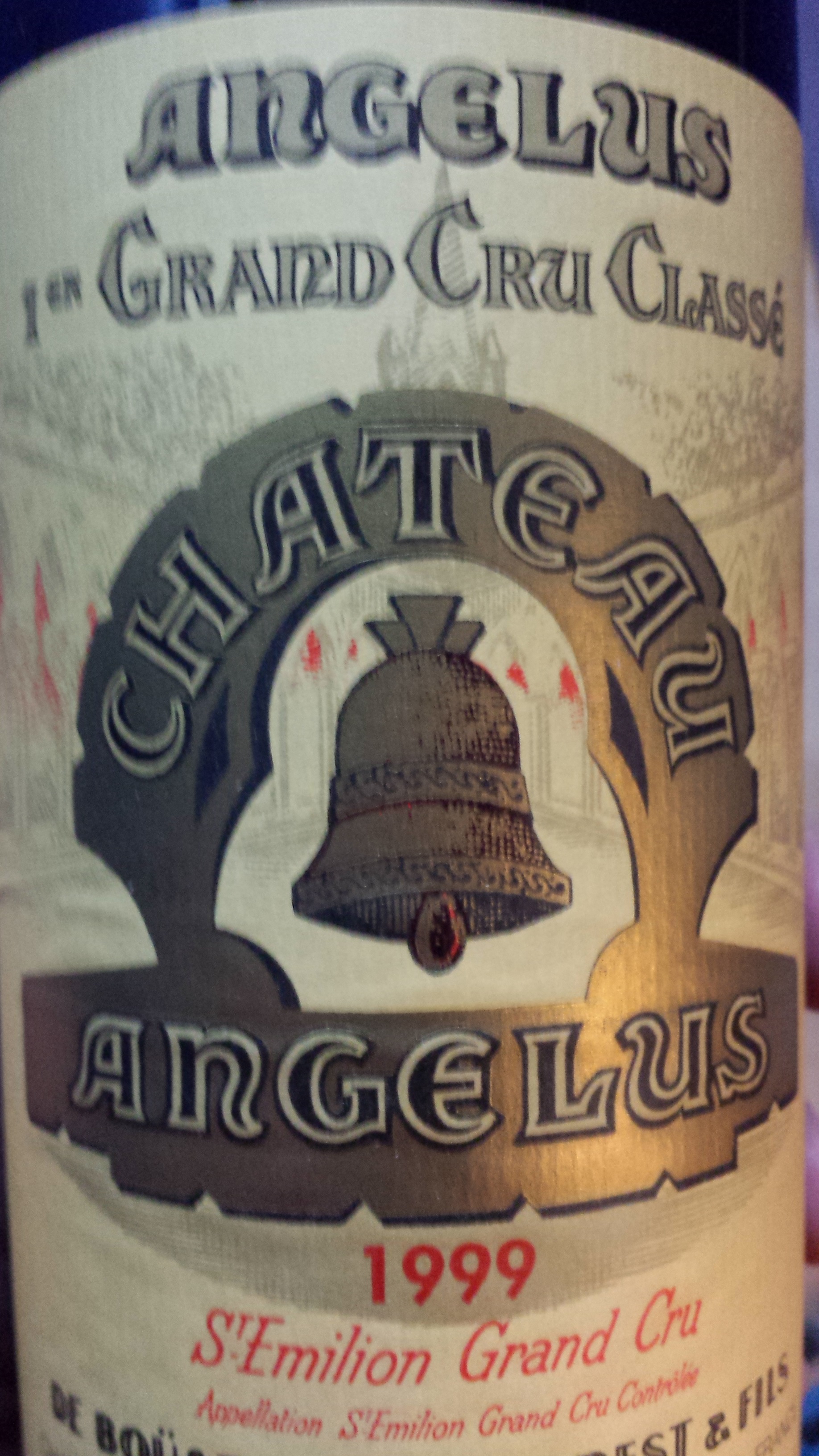 It took an hour to slowly open up to reveal a softer core of red berries and dark violets whilst its textures lightened up considerably to allow more fruit and a mild salty minerality to come through, eventually resembling more of the Penley Reserve cabernet that I knew and loved although, on this occasion, it didn’t have time to develop true complexity. I’ll have to refrain from popping another, not for another few more years.
2013 Matakana sauvignon blanc, by the glass at SingHealth’s RiSE awards, 14 Aug 2014. Clean and crisp, possessing some grassy elements with a fair bit of intensity, dry at the finish.
2013 Matakana pinot noir, by the glass at SingHealth’s RiSE awards, 14 Aug 2014. Fruit forward with notes of bright cherries and rose petals, certainly well-balanced against some earthy minerality in the background. Pleasant but superficial.
2011 Ribbonwood pinot noir, 15 Aug 2014. Reasonably priced around SGD60 at the Tanglin Club. While this pinot possesses a forward balance as well, it has much more depth of fruit of excellent concentration and ripeness without being overbearing, rather open and pleasing on the palate without trying too hard.
2002 Penley Estate Reserve cabernet sauvignon, popped and poured at Asia Grand, 16 Aug 2014. Like the 2000 above, this wine is full in body and expression with dense notes of mulberries, black fruits and cedar, eventually opening up to reveal an efflux of smooth sweet tannins and excellent depth of fruit though with traces of herbal character in the background. Probably yet to peak.
1999 Tignanello (courtesy of John), decanted on-site at Michaelangelo’s, 18 Aug 2014. Dark purplish with an initial exciting glow of ripe plums on the nose amidst other notes of dark currants and traces of tangerine. On the palate, this wine is layered with an excellent concentration of dark fruits with the plummy character of the predominant sangiovese never far away while the smaller proportion of cabernet is evident in its structured finish with gentle tannins, though it has yet to open fully in spite of persistent coaxing. I’d say this perenial favourite is still a couple of notches away from its peak. Very good. Please note that Monday BYO is no longer available at Michaelangelo’s.
2005 Duckhorn cabernet sauvignon, decanted for 3 hours before tasting after hours at Arden, 20 Aug 2014. Whereas it used to be tannic and angular, this wine is now pretty accessible, softer at the edges with a fairly intense core of ripe succulent blueberries and dark currants with overtones of violets, cedar and liquered cherries on the nose and palate, rich in layering although traces of vanilla from the new wood is still discernible. Delicious, but let it rest another 3-4 years.
 2004 Mount Mary Quintet, decanted on-site and drunk over the next two hours over an outstanding lunch at Iggy’s, 21 Aug 2014. Very clear lovely purple, giving off initial aromas of raspberries and violets, highly enticing. The palate was dominated by darker fruits at the start before opening up after 45 minutes to reveal characters of rose petals and bright cherries from fruit of excellent purity, medium-full in body but generous, displaying excellent definition and glow with tannins that are seamlessly integrated, becoming quite Burgundian in character. Iggy, the great man himself, loved it. This is a superb Mount Mary Quintet but make sure you give it all the time it needs.
1998 Ch Lanessan, popped and poured at Porta Porta (Stanley St), 22 Aug 2014. There is nothing much to shout about here which is probably why this is such an under-rated wine, for it does its job so well but quietly. At this stage, the 1998 Lanessan is soft and distinctly medium-bodied, having evolved significantly with secondary characters of cedar, plums, and blueberries that provide a hint of layering and gentle complexity even though it doesn’t quite possess enough richness and concentration. But it doesn’t need that. This is a great table wine that accompanies your food without any distraction.
2007 Ch Haut Batailley, decanted on-site at Otto Ristorante, 26 Aug 2014. Discounted to only SGD59, this is an immensely drinkable Pauillac with no lack of quality fruit offering up notes of cedar, raspberries, sweet incense and a trace of its Pauillac terroir of light tobacco and tea leaves although what lets this wine down is a flabby finish without any structure, and a definite lack of opulence in spite of its attractive fruit. But I suggest you leave your cerebral cap behind and just enjoy the wine at this price.
1999 Ch Angelus, aired in bottle for well over an hour and then tasted on its own without any accompaniment over the next 90 minutes after hours at Glen Arden, 28 Aug 2014 and again on 01 Sep 2014. This wine has just entered its phase of maturity where it is soft and open, yet carrying excellent weight and concentration of ripe supple merlot that offered characters of mulberries, redcurrants and cinnamon supported by sweet tannins at the sides that offset the darker cabernet structure very well, making for a highly attractive proposition, just missing real opulence and dazzle. ![20140830_200056[1]](https://winebyric.com/wp-content/uploads/2014/08/20140830_2000561.jpg) Much better than a previous bottle tasted some 2-3 years ago from the same lot.
Much better than a previous bottle tasted some 2-3 years ago from the same lot.
1997 Rockford Basket Press Shiraz, popped and poured at Foster’s Steakhouse, 30 Aug 2014. I’d cellared this bottle, my last, for several years and I thought it would be interesting to see how this Rockford, from a supposedly weak vintage, would fare 17 years after vintage. The results are glorious, though not immediately apparent at the first pour where the dusty red wine was notably already quite open, predominantly characterised by notes of menthol, ripe sultanas, cedar and herbal aromas. Things gelled together within 30-45 minutes as the medicinal quality receded to allow more of ripe red plums and tangerine and wild berries to emerge, coupled with savoury sweet meat amidst great acidity with slick racy tannins bringing up the rear. Exciting, complete and harmonious. Jeremy Oliver is completely wrong about this wine. This 1997 is far from over the hill. In fact, it is at its very peak.
2010 Ch Muret, popped and poured at Jade Palace, 3 July 2014. Regular followers will realise that I’m trying to suss out good clarets from outstanding vintages without having to burn a hole in my wallet. This cru bourgeois seemed relatively shut on the nose in spite of persistent coaxing, barely displaying characters of black fruits, gravel and graphite on the palate, balanced but tight, tapering towards a stern finish. I was about to write this off mentally when it began opening up after 45 minutes, with more notes of red fruits emerging, the wine becoming more relaxed and richer. At SGD40, it’s worth popping another in a couple of years time.
2010 Henri Boillot Savigny-les-Beaune 1er Cru “Le Lavieres”, popped and poured at Otto Ristorante, 9 July 2014. Served a bit too warm initially, the wine was tannic and angular. It showed a lot better after having cooled down, revealing lovely aromas of rose petals on the nose although it took a lot longer for it to gel together on the palate, where it was medium-full with notes of raspberries and dark cherries though somewhat subdued in character without much fat in the mid-body and tannins that have yet to resolve.
2004 Ch Bernadotte, popped and poured at Ka-Soh, 11 July 2014. Although from the same case that I just bought recently, there clearly is some degree of bottle variation, for this bottle was rather uninspiring, flat and vegetal, cloaked in dusty tannins for the most part of dinner, only showing signs of transformation at the end of dinner whereby it took on a fresher stance with more quality fruit emerging to the fore whilst its tannins receded. Will try my best to refrain from popping the rest of the case for some time.
2012 Case Sparse Chianti, a half-bottle popped and poured at Bedrock Bar & Grill, 14 July 2014. Made for early drinking, this wine offers forward notes of red fruits and wild berries amidst a bright dominant tone of heated gravel, well-crafted, full-bodied yet smooth with very well-managed tannins, finishing with a touch of spice and menthol. After some time, though, the fruit seemed to recede into the background, causing the wine to lose its balance, turning a tad vegetal and awkward.
2008 Domaine Louis Jadot Gevrey-Chambertin, popped and poured from magnum at Garibaldi, 16 July 2014. Appropriately rose-tinted but restrained on the nose with the faint promise of ripe red berries and cherries that never really materialized on the palate, the wine distinctly medium-bodied amidst sandy minerality and other notes of camphor, smoke and incense, soft and rounded with well-integrated tannins. One wishes for greater richness and concentration but this wine is firmly a village in every way.
2009 Maison Leroy Bourgogne, popped and poured at Prive Grill, 17 July 2014. Generic bourgogne this wine may be but, coming from this distinguished estate, one expects greater things and it doesn’t disappoint. Displaying a clear ruby tint and aromas of fresh red fruits and rose petals with a hint of complexity, this wine possesses a level of richness, depth and ease on par with what would have passed off as premier cru from lesser estates, soft but generous in body, developing an attractive earthy minerality that dominated proceedings after some time. At SGD73, it’s not exactly cheap for a bourgogne, but it truly punches way above its weight, just missing in opulence and fat. Very good.
1986 Ch Pape Clement (courtesy of John), decanted for about 45 minutes prior to serving at Prive Grill, 24 July 2014, displaying a deep vermillion. At this stage, this wine is fully matured, the fruit that was once backward and shy now well integrated and abundant with generous characters of tangerine, cinnamon, violets and earth, though without the pungency of Pessac-Leognan, its acidity threatening to dip but still adequate on this occasion. Delicious.
2009 Gressier Grand Poujeaux, popped and poured at Porta Porta (Stanley St), 24 July 2014. Not impressive initially, the wine distinctly angular and disjointed with a bitter, tannic predisposition. However, it snapped together rather quickly, becoming a lot softer and smoother at the edges while notes of violets, cedar and blueberries emerged readily from the ripe fruit, medium-bodied, without much of the vanilla of new oak. Pleasant and delicious. Not much to shout about but, as I’ve said before, if the price is right, this is a very agreeable wine.
2005 Ch Villars Fontaine Les Jiromees, popped and poured at Gattopardo, 29 July 2014. This white burgundy is unusual, coming from the Cote de Nuits where reds are far more commonplace. This is the fourth bottle I’ve had from a half-case and it’s clear that, over the years, this wine has matured considerably and put on more weight. The nose is particularly attractive, offering generous aromas of cashews, hazelnuts, a dash of apricot and peaches and a touch of caramel. What used to be some crisp flinty notes on the palate has evolved into clear and gentle minerality supporting a fine expanse of lovely fruit with characters leaning towards tropical fruit, medium-bodied, suitably ripe and balanced with a mild creamy texture and acidity that’s well-tamed, although one could wish for greater opulence. I’m hopeful that this will flesh out even more over the next few years. Very fine.
2000 Robert Mondavi cabernet sauvignon, poured from magnum, decanted on-site at Gattopardo, 29 July 2014, for almost an hour prior to serving. Having had the 2001 recently, I thought this may need more time to settle down but, surprisingly, the 2000 appears to have hit optimal maturity and is drinking very well now. Still displaying quite a dark purple, this wine is soft, fleshy and open, singing right from the start, exhibiting top drawer fruit with cool notes of dark currants, blueberries, violets and cedar amidst some spots of rose petals, cloaked in sweet gentle tannins, medium-full, remarkably well-balanced, beautifully poised and elegant, almost feminine. It grew in intensity after some time, firming up slightly, adding immeasurably to its structure and sophistication without upsetting the fine balance. Unlike its Bordeaux counterparts, this wine may not quite possess any firm reference to its terroir, which is probably its only shortcoming, but this is a really good cabernet that I’m happy to re-visit again and again. Excellent.
2009 Vincent Girardin Gevrey-Chambertin, popped and poured at Imperial Treasure T3, 31 July 2014. Although from an outstanding vintage and made by a dependable negociant, this wine is turning out to be a major disappointment, the fruit being too dark and heavy, shrouded by dusty tannins, disjointed and angular on the palate.
Nicolas Feuillatte at Tenshin
These are notes from an evening when we were invited by Dr KW Wang to dinner at Tenshin, a Japanese restaurant specialising strictly in tempura only at the Regent Hotel, Singapore, 8 May 2014, themed with the champagne of Nicolas Feuillatte, the well-known maison based in Epernay. ![20140508_202557[1]](https://winebyric.com/wp-content/uploads/2014/07/20140508_2025571.jpg) To get the evening rolling, the Nicolas Feuillatte Brut Reserve NV was served as the aperitif, displaying complex flavours of citrus, lime and grapefruit amidst a generous body of light toast with excellent depth of fruit, smooth, lively and refreshing with just a tad of sweetness by the side. This was followed quickly by the Nicolas Feuillatte Brut Rose NV. Having had more experience with champagne over the years, I no longer quite fancy rose nowadays, tending to find them a bit too straightforward and lacking in real character. This turned out to be the case here, the wine exhibiting notes of cider, tangerine and a hint of red fruits, slightly dry but ultimately lacking in true complexity even though the wine attained greater depth and expanse over time with further notes of pomelo and bitter lemon.
To get the evening rolling, the Nicolas Feuillatte Brut Reserve NV was served as the aperitif, displaying complex flavours of citrus, lime and grapefruit amidst a generous body of light toast with excellent depth of fruit, smooth, lively and refreshing with just a tad of sweetness by the side. This was followed quickly by the Nicolas Feuillatte Brut Rose NV. Having had more experience with champagne over the years, I no longer quite fancy rose nowadays, tending to find them a bit too straightforward and lacking in real character. This turned out to be the case here, the wine exhibiting notes of cider, tangerine and a hint of red fruits, slightly dry but ultimately lacking in true complexity even though the wine attained greater depth and expanse over time with further notes of pomelo and bitter lemon.
The 2004 Nicolas Feuillatte Cuvee 225 was the first in the line-up that accompanied the meal proper, its name derived from the litre capacity of the barrel in which it had been aged for 4 years prior to bottling. This vintage champagne has clearly benefitted from its additional time in the cellar, yielding a more refined wine of high-toned minerality with attractive yeasty aromas replete with smoke and white flowers, generous and long on the palate, yet delicate and beautifully balanced right down to its gentle finish. Excellent stuff.
![20140508_201038[1]](https://winebyric.com/wp-content/uploads/2014/07/20140508_2010381.jpg) The trio of vintage champagne kicked off with the 2000 Nicolas Feuillatte Grand Cru Blanc de Noir Millesime, golden in color though its considerable bottle age has resulted in a darker tone on the palate with deep yeasty overtones and notes of delicate bitter lemon with a touch of green, malt and wheat. Very lovely and long. The was followed by the 2002 Nicolas Feuillatte Palmes d’Or Brut where the outstanding vintage has made its mark, the wine producing a highly enticing nose of deep yeasty overtones and hazelnuts, exhibiting great subtlety on the palate, treading a delicate line between a high-tone minerality and flavours of complex citrus and exotic fruits, achieving fine balance but yet to realise its full potential. Quite outstanding. Bringing up the rear was the 2005 Nicolas Feuillatte Brut Rose Palmes d’Or, a rather unusual rose displaying great complexity on the nose with lifted aromas of rose petals and cherries allied with characters of camphor, orangey citrus and cinnamon on the palate, medium-bodied and well-balanced, leading to a long finish recalling whisky and malt, bringing the evening to a most satisfying conclusion.
The trio of vintage champagne kicked off with the 2000 Nicolas Feuillatte Grand Cru Blanc de Noir Millesime, golden in color though its considerable bottle age has resulted in a darker tone on the palate with deep yeasty overtones and notes of delicate bitter lemon with a touch of green, malt and wheat. Very lovely and long. The was followed by the 2002 Nicolas Feuillatte Palmes d’Or Brut where the outstanding vintage has made its mark, the wine producing a highly enticing nose of deep yeasty overtones and hazelnuts, exhibiting great subtlety on the palate, treading a delicate line between a high-tone minerality and flavours of complex citrus and exotic fruits, achieving fine balance but yet to realise its full potential. Quite outstanding. Bringing up the rear was the 2005 Nicolas Feuillatte Brut Rose Palmes d’Or, a rather unusual rose displaying great complexity on the nose with lifted aromas of rose petals and cherries allied with characters of camphor, orangey citrus and cinnamon on the palate, medium-bodied and well-balanced, leading to a long finish recalling whisky and malt, bringing the evening to a most satisfying conclusion.

