Truly a month of glorious excesses…
1998 Parker Estate Terra Rossa First Growth, popped and poured at Kai Garden 02 Aug 2019. Deep garnet red. Lifted bouquet of dark plums and complex red fruits. Highly supple. Excellent presence, weight and acidity with very good integration of cool ripe fruit, developing further notes of chocolate and mocha that culminated in a sweet lengthy finish. Still coiled with tight tension. Will easily last another couple of decades.
2006 Dom Perignon, courtesy of CHS at Mei-I, 06 Aug 2019. Intense nose of pine, complex citrus and pomelo. Forward in fruit balance with a full presence on a backdrop of highly subtle recessed minerals, displaying an attractive burnished dryness amid overtones of heated iron filings, finishing with lovely gentle intensity with just a trace of minerally glare. Quite excellent.
1995 Dom Perignon Second Plenitude, courtesy of LF at Mei-I, 06 Aug 2019. Surprisingly closed on the nose though superbly refined on the palate, this P2 is imbued with subtle fruit and delicate creamy minerals that confer gentle complexity beneath its smooth sheen of very fine bubbles, finishing with seamless quiet elegance even as it developed a greater intensity of citrus over time. Superb.
2016 Domaine du Roc des Boutires Pouilly-Fuisse Aux Bouthieres at Mei-I, 06 Aug 2019. Poured from magnum. Somewhat reticent, proffering just glimpses of nutmeg and olive on the nose but really superb on the palate where it was rounded and smooth with very lovely fruit without any jarring prominence, very seamlessly integrated with gentle depth, exuding an almost sake-like ethereal presence. Turned a bit more chalky over time, finishing with great linearity amid traces of salinity. Excellent.
2014 Domaine Arnaud Ente Bourgogne, courtesy of LF at Mei-I, 06 Aug 2019. Closed, only glimpses of distilled fruit. Dry with an abundance of white floral tones and clear citrus on a gentle bed of crème, traversing the palate with clean precision without any plumpness. Developed further delicate intensity of clear citrus with time. Excellent.
2007 Domaine Faiveley Corton-Charlemagne Grand Cru, courtesy of Dr Ngoi at Mei-I, 06 Aug 2019. Appearing to evolve faster than the exalted vintages, already displaying a dull golden hue with an aged feel though undoubtedly quite beautiful in its lovely depth of delicate chalky and minerally intensity, open with just a hint of caramel towards the finish. Excellent.
Louis Roederer Premier Brut NV, popped and poured over dimsum at Asia Grand 11 Aug 2019. Forward balance of yellow citrus, lime and pomelo with further notes of green melons. Excellent ripeness. Open with very fine bubbles that conferred a certain lightness and subtlety amidst crystalline minerals that grew in dry intensity over time. Perfect for lunch.
1998 Piper Heidsieck Millesime Rare, courtesy of SKY’s private cellar at Les Amis, 12 Aug 2019. Poured from magnum. Delicate lift of complex minerals amid deep toasty tones. Rather full with an attractive fresh dryness and bold minerality on the palate, very richly layered and detailed, leading to a certain sternness that eventually gave way to a deep delicious glowing creaminess. Excellent.
1986 Vieux Château Certan, courtesy of SKY’s private cellar at Les Amis, 12 Aug 2019. Poured from double magnum. Still darkly coloured with just a slight evolution at the rim. Exudes a rich deep core of aged fruit underscored by a tangy saline complexity, open with lovely ripeness and delicate intensity. Highly supple, showing good linearity all the way to its soft gentle finish amidst delicious melted tannins. Caught at its peak. Superb.
1990 Ch L’Evangile, courtesy of SKY’s private cellar at Les Amis, 12 Aug 2019. Poured from double magnum. Deep garnet red. This wine opened with a very slight bottle stink on top of a highly prominent reductive tone of earthy pungency coupled with a distinct graphite ferrous minerality. Beautifully open and rounded with great suppleness, well mellowed with the passage of time, displaying subtle intensity with a lovely focus on deep dark currants with emerging notes of dark chocolate and mocha, gaining in further intensity over time as it finished with traces of black pepper and exotic spices. At it’s absolute best. Excellent.
2008 Roger Coulon Blanc de Noirs, courtesy of Kieron at Imperial Treasure Great World, 14 Aug 2019. Lovely deep toasty nose with a burnished yeasty tone. Accentuated delicious expanse of creamy minerals, beautifully layered with complex citrus, lime and overtones of rye within a delicate sheen of gentle bubbles. Became fuller and more minerally over time, exuding fabulous presence with an open dry intensity that lasted with glowing persistence. Outstanding. A blend of pinot noir and meunier.
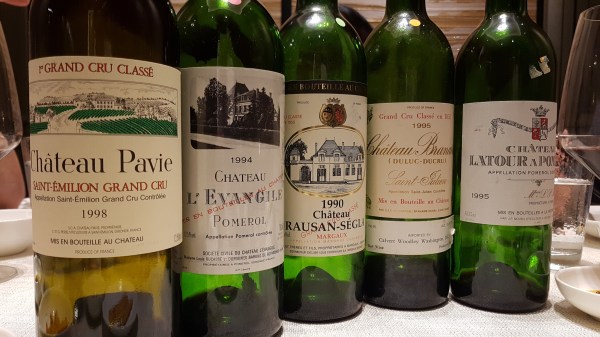
1995 Ch Latour-a-Pomerol, courtesy of Kieron at Imperial Treasure Great World, 14 Aug 2019. In spite of its evolved red, this wine exudes a very attractive youthful bouquet of dark fruits. Medium-bodied and fleshy, layered with earthy minerals. Quite seamlessly integrated, rounded with mellow intensity as further notes of tobacco snuff emerged over time. Good finish. Quite excellent.
1995 Ch Branaire-Ducru, courtesy of Sir Robert at Imperial Treasure Great World, 14 Aug 2019. Compared with the preceding Latour-a-Pomerol of the same vintage, this Left Bank wine is considerably darker in colour and tone, larger in proportion and more savoury, very earthy with a growing prominence of Chinese medicinal herbs on the nose. Rather stern on the palate, imbued with mature red plums and dates along with a bit of minerally glare, finishing well with gentle intensity. Very fine.
1990 Ch Rausan-Segla, courtesy of Timothy Goh at Imperial Treasure Great World, 14 Aug 2019. Dark opaque murky red. Softly mellowed though it still glowed with some residual intensity of dark plums and currants amid sweet tannins, imbued with a dense ferrous core amid gritty textures at the mid-body. Still holding well.
1994 Ch L’Evangile, at Imperial Treasure Great World, 14 Aug 2019. Evolved vermillion. Somewhat reticent at first, gradually opening up with soft gentle hues of dark cherries and gentle tea leaves, almost delicate in its seamless mellowed intensity and subtlety. Highly supple, exuding lovely presence. Still showing well.
1998 Ch Pavie, courtesy of David Tan at Imperial Treasure Great World, 14 Aug 2019. Deep garnet red with faint vermillion hue at the rim. Effusive in dense dark plums and soy on the nose. Slightly more extracted than usual, still rather bold and concentrated with very good intensity. Very well integrated, finishing with traces of burnt. Excellent.
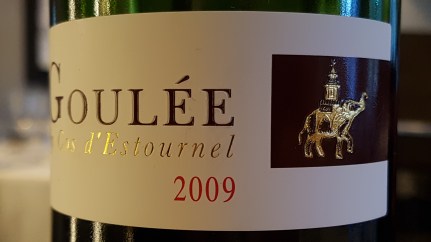 2009 Goulée, popped and poured at Otto Ristorante, 17 Aug 2019. Freshly cracked from a 6-bottle OWC that I’ve cellared for years in London. This Médoc made by Cos D’Estournel is very dark and well extracted, proffering dense blackberries, violets and kirsch on the nose with a hint of prunes. Full, fleshy and undeniably modern, richly layered with dark plums that display lovely ripeness. Softly rounded with very well integrated subtle tannins underscored by a hint of earthy minerals, exuding fabulous intensity with a minty finish but still rather taut, eventually receding into a tight shell with overwhelming dark intensity. Weighing in at 14.5% abv, this wine is clearly not ready.
2005 Amon-Ra, popped and poured at Jade Palace, 18 Aug 2019. Very deep inky purple. Exuding powerful aromas of soy, cedar and cinnamon, this Barossa shiraz is still quite a behemoth, layered with dense ripe fruit and dark currants on a medium-full palate. Distinctly pruny, coiling up with sharp intensity in spite of its supple acidity. Still hasn’t quite settled.
2014 Domaine Thibert Pouilly-Fuisse Les Cras, popped and poured at Crab At Bay, 22 Aug 2019. Delicate floral lift. Rather full. Great presence of stony white citrus with overtones of nutmeg, slightly bright, exuding delicate intensity. Lovely glowing finish. Excellent but yet to hit full potential.
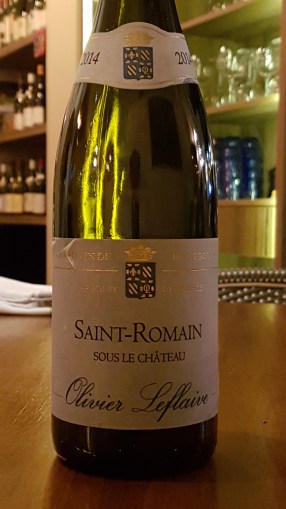 2014 Olivier Leflaive Saint-Romain Sous Le Château, from the list of Gaston, 24 Aug 2019. Ample in clear citrus on the nose, rather delicate with fine focused intensity. More minerally and lightly textured on the palate, almost flinty, displaying very fine concentration and lasting presence within a narrow spectrum of flavors.
2006 Perrier-Jouet Belle-Epoque, courtesy of LF after hours at SS ENT, 28 Aug 2019. Brilliant gleaming hue, proffering generous tones of apricot and cinnamon with dry chiselled minerality on the medium-full palate imbued with grapefruit. Finished with gentle length and fine linearity. Excellent.
2013 Peter Michael La Carriere, courtesy of LF after hours at SS ENT, 28 Aug 2019. Lovely luminosity. There is an effusive oiliness on the nose with a restrained depth that led to a broad expanse of white fruits and chalkiness on the palate, imparting excellent concentration and mouthfeel in spite of its subdued intensity, deeply layered but highly understated, finishing with gleaming persistence. Excellent.
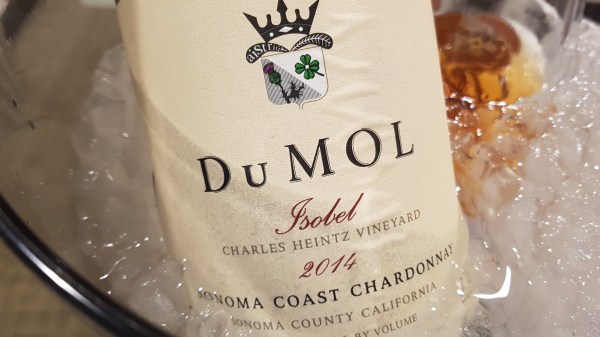
2014 DuMOL Isobel Charles Heintz Vineyard, courtesy of LF after hours at SS ENT, 28 Aug 2019. From Sonoma Coast. Luminous but reticent. Distinctly more minerally on the palate with more high-toned salinity, somewhat narrower in spectrum although its depth of white fruits and clear citrus is never in doubt, finishing long with lovely intensity amid overtones of paraffin. Excellent.
2014 DuMOL Ryan Widdoes Vineyard, courtesy of LF after hours at SS ENT, 28 Aug 2019. This Russian River pinot noir displays great colour with effusive aromas of red fruits and cherries. Softly rounded and fleshy with understated acidity shrouded by a thin sheen of paraffin, very well balanced, building up in fine concentration and intensity towards its persistent finish. Excellent.
2014 Williams Selyem Russian River Pinot Noir, courtesy of LF after hours at SS ENT, 28 Aug 2019. Lifted tones of delicate rose petals and haw flakes on the nose. Medium-bodied, imbued with high-toned gravelly minerals within a narrow spectrum of flavours that tapered to a smooth gentle finish though, on the whole, this wine shut down rather quickly. Not ready.
2013 Kistler Sonoma Coast Pinot Noir, courtesy of LF after hours at SS ENT, 28 Aug 2019. Darker in hue and tone with a predominance of dark cherries and roses, softly rounded with lovely warm ripe tones in a medium-bodied proposition. Open and fleshy. Drinking well.
2014 Sea Smoke Southing Pinot Noir, courtesy of LF after hours at SS ENT, 28 Aug 2019. Poured from magnum. Dark deep pinot tone. Fresh and fullish, slightly forward, showing lovely concentration, depth and intensity with subtle salinity. Beautifully proportioned and balanced. Huge potential. Excellent.
2012 Peter Michael Les Pavots, courtesy of LF after hours at SS ENT, 28 Aug 2019. Dark. Amply layered with warm ripe red fruits and currants, quite excellent in concentration, underscored by subtle earthy tones and stern minerals amid vegetal traces though there are certain bright spots. Rounded with good balance. Needs more bottle age.
2007 Amuse Bouche, courtesy of LF after hours at SS ENT, 28 Aug 2019. This wine is made by Heidi Barrett who also made Screaming Eagle. Displaying a deep garnet red, this wine opens with an effusive glow of complex red fruits, openly layered with delicious dark plums and currants that traverse the palate with seamless supple intensity amid traces of stern ferrous elements. Still highly youthful. Unmistakably Napa. Excellent.
2004 Mount Mary Quintet, after hours at SS ENT, 28 Aug 2019. Poured from magnum. Deep garnet red. Medium-full. Generous in dark plums, displaying fine concentration and intensity with traces of saline minerals but somewhat sullen and narrow in spectrum, not helped at all by its overall darkish tone and character.
2014 Domaine des Comte Lafon Meursault-Goutte D’Or 1er, courtesy of CJ after hours at SS ENT, 28 Aug 2019. Superb exuberance of dense white floral tones with a lovely chalkiness. Very good in concentration, displaying great definition and inner crystalline detail on a superb minerally base, exuding cool delicate presence. Excellent.
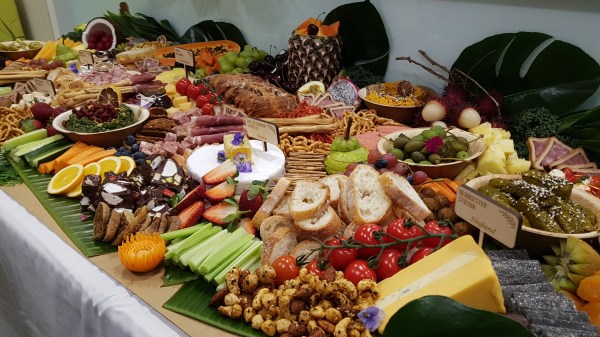
2008 Dom Perignon, courtesy of SC at the wedding of Charles & Melissa, Ritz-Carlton Singapore, 31 Aug 2019. Delicious bouquet. Slightly forward in green fruits, melons and yellow citrus, layered with rich inner detail. Very lovely in its open velvety intensity, oozing with exquisite length and sweetness. Huge potential. Most excellent.
2015 Domaine Leflaive Puligny-Montrachet Clavoillon 1er, courtesy of SC at the wedding of Charles & Melissa, Ritz-Carlton Singapore, 31 Aug 2019. Delicate lime and clear citrus amid gentle floral tones on the nose and palate, imbued with early complexity. Subtly layered with creme de la crème, displaying wonderful integration and delicate detail. Became more minerally over time, developing a lovely dry glowing intensity throughout its length as it finished with great sensual elegance. Outstanding.
1989 Ch Soutard, courtesy of SC at the wedding of Charles & Melissa, Ritz-Carlton Singapore, 31 Aug 2019. Poured from magnum. Still dark. Softly rounded with an open dry earthy pungency that led to a soft open intensity of dark currants and blueberries, layered with a gentle depth of light cherries amid understated graphite tones, finishing strongly with a lifted note of soy. Still imbued with remarkable freshness and acidity. Caught at its peak. Excellent.
2000 Ch Grand-Puy-Lacoste, at the wedding of Charles & Melissa, Ritz-Carlton Singapore, 31 Aug 2019. Poured from magnum. This wine opens with sweet mocha on the nose. Medium-full. Open with even concentration, gently rounded with understated intensity amid early cedary tones with the classic Pauillac signature coming on late.
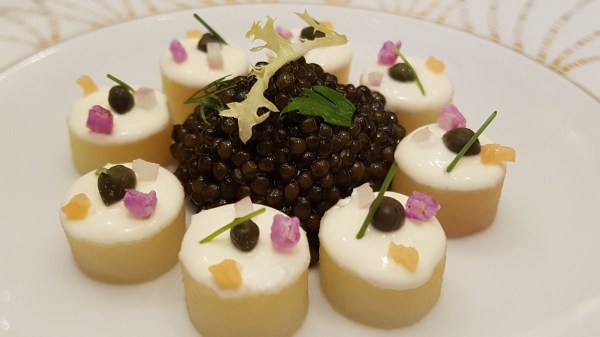
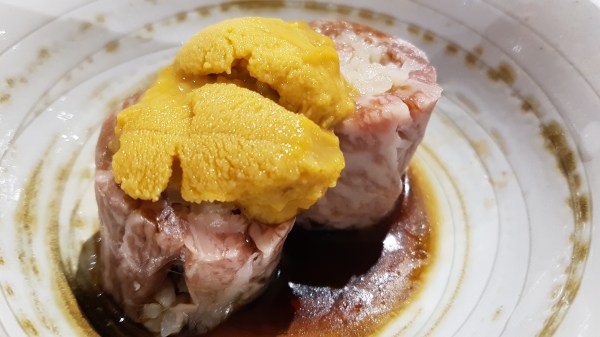
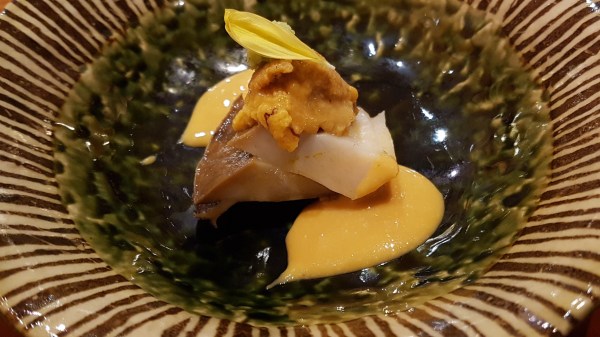
A Les Amis creation on 12 Aug 2019, just before its promotion to 3 Michelin stars
Vintage: 2008 Larmandier-Bernier Levant, 2016 Alphonse Mellot Generation Dix-Neuf
The Vintage Club of Singapore held a private tasting on 11 September 2019 that showcased several less commonly encountered wines. Most so-called wine lovers are plain label drinkers who are likely to be put off by unfamiliar names or origins but the fact is there are so many wines that offer tremendous drinking and cerebral pleasure at far friendlier prices. These are the stuff that people ought to explore but, sadly, the low turnout that evening simply reinforces my point. Nevertheless, I’m glad that Vintage is leading the way. As a little game, at the end of the tasting, guests were invited to taste 4 wines blind from opaque black stemware with narrow apertures to guess what the wines (supposedly coming from the line-up) were. My previous experience with black wine glasses turned out badly (mistaking whites for reds!). However, I was on top form that evening, correctly guessing the de Montille Saint-Romain twice (Stephanie had wickedly poured me the same wine twice) as well as the Bruno Clair Marsannay, while I identified the fourth as a red burgundy which was about as far as I could go as it (the Domaine des Perdrix) didn’t feature in the line-up. Merci Christophe!
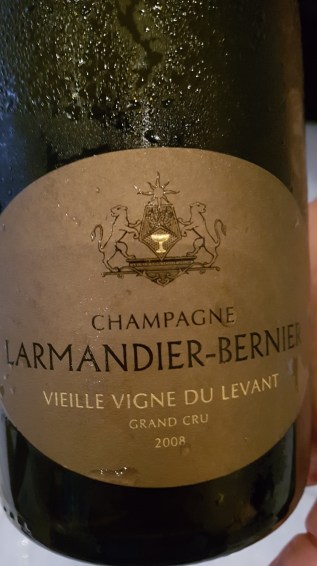 2008 Larmandier-Bernier Vielle Vigne du Levant Grand Cru. This blanc de blancs opens with a most alluring deep toasty nose, highly complex and persistent with intriguing overtones of burnt sugar and brioche. medium-bodied. Open, rounded and smooth, imbued with a generous expanse of delicate clear citrus and transparency that imparted a certain deftness on the palate, finishing with wonderful length. Quite superb, further affirming the excellence of 2008 for champagne. In business for eight generations with 45 hectares in the Cote des Blancs, this wine is made from old vines aged 35 years on average.
2012 Pascal Agrapart Avizoise Extra-Brut Grand Cru. This blanc de blancs exudes a marked earthy pungency that quickly evolved in the glass to reveal a tight focused bouquet of clear citrus and white fruits, displaying excellent fullness, precision and inner definition, finishing with great linearity and focus. Superb.
2017 Domaine du Roc des Boutires Pouilly-Fuissé. Grassy characters with distinct aromas of nutmeg and Asian spices. Great body and concentration with clear inner crystalline tones, finishing well with understated intensity. Excellent quality and value. The domaine’s very limited Aux Bouthieres bottling is another notch higher but this base wine would serve perfectly well should you need an excellent house pour.
2016 Domaine de Montille Saint-Romain. Pale. Gentle creaminess on the nose amid clear citrus. Medium-bodied, showing delicate presence of white fruits with lively acidity and fine transparency, finishing with a minerally mouthfeel. Very fine. Great value.
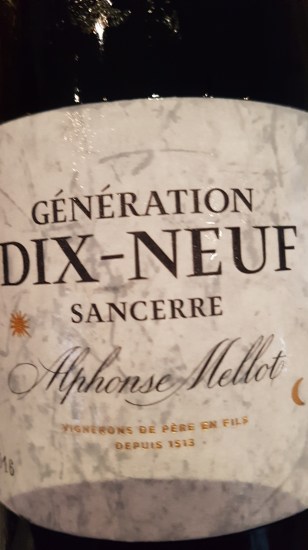 2016 Alphonse Mellot Sancerre Generation Dix-Neuf Blanc. Faintly sweet aromas with more than a whiff of nail varnish and enamel, undeniably attractive. Excellent concentration of clear citrus, still rather tight and intense though not overwhelming, imbued with excellent purity and fine balance that tapered to a gentle finish. Very elegant. This is a sauvignon blanc from very old vines. Not unlike a Didier Dagueneau. Excellent.
2017 Domaine Bruno Clair Marsannay. Sharp attack of accentuated rose petals and red fruits on the nose. Open, fleshy and softly rounded, imbued with some earthiness and haw flakes. Very focused with a very clean feel but lacking in depth and potential complexity.
2015 Alphonse Mellot Sancerre Generation Dix-Neuf Rouge. Deeply coloured, exuding an alluring bouquet of red fruits and cherries. Medium-full. Open with very good concentration and presence, subtly intense, slightly austere at the finish.
2010 Domaine Comte Senard Corton Clos du Meix Grand Cru. Good color. Ample tone of evolved red fruits and raspberries amid earthy traces on both nose and palate. Medium-full. Fleshy and structured with a bit of bright minerally glare, still tight at its spicy finish. Lacks distinction for a 2010.
2011 Chateau Le Puy Barthelemey. Pronounced earthy pungency on the nose amid dark plums and tangerines. Medium-bodied. Softly rounded and supple. Very well integrated with understated acidity and soft tannins, underscored by a persistent tone raspberries and paraffin at the finish. Drinking well.
2016 Domaine de Montcalmes Terrasses du Larzac. A blend of 60% syrah, 20% mourvèdre and 20% grenache from 30-year-old vines. Deeply coloured, proffering intense dark fruits, graphite and enamel on the nose, replete with after tones of cigar ash on the nose. Most enticing. Big but not heavy, amply layered and structured with dark plums that oozed with sweet undertones. Very well balanced in spite of its masculine proportions. Excellent, but it really demands a good juicy steak to do it full justice.
2014 Alter Ego de Palmer. Dark, exuding a classic Bordeaux nose of dark plums and currants. Open and slightly dryish as it should rightly be, displaying very good presence and concentration with good inner detail though not profoundly deep. Highly seamless, traversing the palate with fine linearity. Drinking well though yet to evolve further.
2015 Domaine des Perdrix Nuits-Saint-Georges Aux Perdrix 1er. Monopole. Reticent on the nose. Medium-bodied. Open and fleshy with slightly sandy textures, displaying lovely feminine smoothness and easy presence but lacking in complexity. Quiet finish.
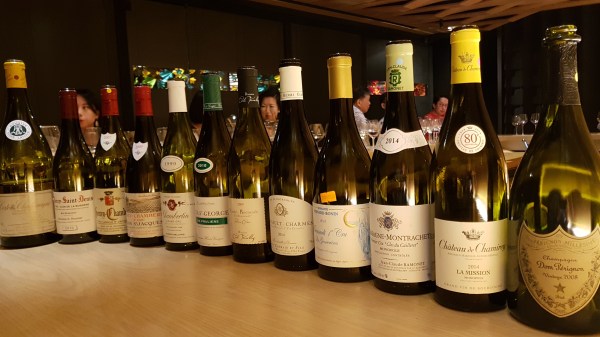
The Jurade de Saint-Emilion du Singapour gathered again on 29 August 2019 to indulge in another evening of great camaraderie, excellent food and fine wines. Yoshi was the venue, helmed by the man himself Mr Yoshiyuki Kashiwabara whose omakase creations reflect great skill and refinement. The actual surprise was the wine theme: nothing of Bordeaux, but of Burgundy 1er. We don’t necessarily need to confine ourselves to Saint-Emilion just because we’re the Jurade. A couple of bottles fell out of theme but who can decline any Chambertin Grand Cru or Corton-Charlemagne Grand Cru? Many thanks, everyone, for your generous contributions, particularly to Russ for the great organisation.
2008 Dom Perignon, courtesy of Russell. Lovely luminosity but it appeared to be somewhat reticent, proffering fleeting glimpses of ferrous minerals and clear citrus with some chalkiness. Slightly more expressive on the palate where I thought it may blossom but it simply receded into a shell, coiled tightly with stern ferrous elements, bitter lemon and grapefruit, not helped at all by its crisp dryness that proved unyielding. Shutting down, not unlike the 2008 Philipponnat Clos des Goisses that I popped couple of months back. Best to lay down all your 2008 champagne while you drink up the other odd years that are lighter (2007, 2009, 2011).
2014 Ch Chamirey Mercurey La Mission 1er, courtesy of Kieron. This over-achieving monopole is still stunning in every way, exuding a cool sheen of icing and vanillin on the nose with a white floral tone that is, at once, already imbued lovely gentle complexity. The palate lived up to expectation, excellent in concentration and presence of clear citrus and delicate minerals without being too overtly dense, displaying fine transparency with superb depth and expanse. Very correct in its poise and balance. Outstanding.
2014 Domaine Jean-Claude Ramonet Chassage-Montrachet Clos du Caillerets 1er, courtesy of Kieron. The inaugural vintage of this superb monopole is absolutely mesmerising on the nose, seducing the senses with enticing detailed floral tones that matched perfectly with a minerally palate, highly understated in its subtle complex of gravel, saline minerals, ferrous elements and graphite, softly focused with very fine inner definition, finishing gently even as it grew in stature over time. Outstanding.
2014 Domaine Henri Germain et Fils Meursault-Charmes 1er, courtesy of Sandy. Deep peculiar nose of fluoride and menthol, rather open and enticing, subtly layered with saline minerals on the medium-bodied palate, displaying delicate clear tones that persisted well into the finish. Very fine.
2015 Domaine Bernard-Bonin Meursault Les Genevieres 1er, courtesy of Melvin. Don’t let its paleness deceive, for this wine proffers an effusive deep floral fragrance layered with an attractive dense chalkiness, displaying even concentration and linearity even as it turned more minerally over time, tapering to a cool waxy finish.
1995 Domaine Louis Latour Corton-Charlemagne Grand Cru, courtesy of Irene and Shuang Bai. Poured from magnum. Darker hue than usual. Served too cold initially where it was shut, proffering just some apricot. However, it snapped into great focus when it warmed up to correct temperature, displaying very fine concentration of white fruits and yellow citrus with very refined intensity and verve, supported by a bed of restrained saline minerals along with a recessed chalkiness. Louis Latour has seldom been as convincing as this. Excellent.
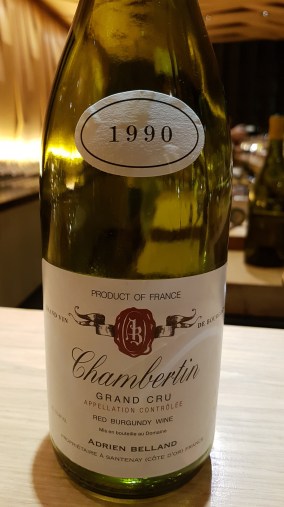 1990 Adrien Belland Chambertin Grand Cru, courtesy of Christie. Great colour. Absolutely superb on the nose, an effusive glow of complex red fruits, mint and minerals that is simply indescribable. Medium-bodied and fleshy, layered with lovely velvety textures that confer subtle intensity, utterly seamless throughout its length, finishing with lasting persistence. Caught at its peak. Excellent.
2009 Domaine Cecile Tremblay Vosne-Romanee Les Beaumonts 1er, courtesy of Russell. Deeply colored. This wine impressed immediately with its effusive glow of complex dark plums and black currants splashed with gloss and varnish, delivering on its delicious promise with superb suppleness, presence and feminine textures underscored by some dominant salinity. Showed good linearity and persistence but it seemed to lose some of its focus and shine later when lined up against the classic purity of old style pinot expression.
2010 Domaine Henri Gouges Nuits-Saint-Georges Les Pruliers 1er. Very lovely effusive earthy pungency on the nose, matched by a classic old style pinot expression on the palate. Softly rounded and fleshy, imbued with superb purity of evolved red fruits that exude great feminine elegance and superb balance, just a tad short which is to be expected of a 1er. Stood its ground even when drunk alongside the Armand Rousseau below. Outstanding value.
1997 Domaine Armand Rousseau Gevrey-Chambertin Clos Saint-Jacques 1er, courtesy of Stephen. Dusty red, but the nose is absolutely beguiling with a generous fragrance of evolved red fruits and tangerines, well replicated on the palate with a touch of gentle earthiness. Medium-bodied. A tad acidic, pitching the palate at a higher tone but really lovely and delicious.
2007 Domaine Armand Rousseau Gevrey-Chambertin Lavaux Saint-Jacques 1er, courtesy of Andrew. Right on the heels of the preceding Clos-Saint-Jacques, this younger sibling also sports a good spread of gentle red fruits and tangerines, distinctly feminine in its softly-rounded youthful suppleness without the structured masculinity of Gevrey-Chambertin, imbued with very fine acidity and earthy minerals. Open with fine intensity, just a tad short. We tasted it blind, where I thought it might have been Volnay.
2012 Domaine Georges Roumier Morey-Saint-Denis Les Boussiere 1er, courtesy of KC. Darker in colour, dominated by an ample expanse of roses and cherries on the nose. Superbly supple, beautifully nuanced with some charred elements, softly rounded. Again a little short, but still undeniably gorgeous.
1969 Ch Pichon Baron & 1969 Ch d’Yquem…
It was Vic’s turn to celebrate his big round number with a fine dinner at Shang Palace, Shangri-la Singapore, on 09 July 2019. Quite unusually, the number of wines drunk that evening was considerably less than usual but what mattered most was quality, the birthday boy himself springing a pleasant surprise with a couple of 1969s, no less. Nobody minds pushing the boat out for Vic’s special occasion. Many happy returns!!
 2008 Philipponnat Clos des Goisses Extra Brut, poured from magnum. Smooth, dry but reticent. Full-bodied yet exuding a feminine feel in its delicate fleeting concentration of citrus, pomelo and melons, replete with mild toasty characters amid yeasty overtones. Developed a deeper tone over time with further depth but without any significant complexity. I felt this champagne wasn’t quite as exuberant as a magnum tasted last year at a FICOFI event. May be shutting down a little. Perhaps best to lay down for a few more years.
1999 Domaine de Montille Puligny-Montrachet Le Cailleret 1er, courtesy of MH. Poured from magnum. Somewhat reserved on the nose though complex white floral characters are clearly discernible, but this wine fans out very beautifully on the palate with a gentle glowing intensity of pears, nutmeg and aged chalk, imbued with a lovely delicate density amid traces of earthy pungency. Still fresh and youthful, layered with subtle nuances as it took on a elegant sheen of creme de la crème over time, becoming almost ethereal. Very close in character to a Montrachet Grand Cru, which isn’t surprising at all as de Montille’s plot of Le Cailleret is immediately closest to that Holy Grail of whites on exactly the same north-south line. This is where the smart money should be.
2003 Domaine Faiveley Chambertin Clos de Beze Grand Cru, courtesy of Sanjay. Bright vermillion. This wine exudes a deep aromatic bouquet of red and dark plums and red cherries that promised tremendous verve on the palate, tautly drawn with exciting acidity and tension, highly supple, amply layered with ripe fruit amid traces of earth as it finished on a note of ferrous ore. Excellent.
 1997 Ch Margaux, courtesy of CJ. Deep garnet core with vermillion at the rim, proffering a delicious deep fragrance of violets, blueberries and dark currants. Medium-bodied. Softly rounded, displaying superb suppleness, transparency and complexity with a distinct limestone lift amid a dominant plummy tone, developing further notes of snuff and tea leaves although it seemed to lose a bit of linearity towards the finish.
1969 Ch Pichon Baron Longueville, courtesy of Vic. Poured from magnum. Recorked in 2002. Deeply colored. Medium-bodied. Still imbued with excellent freshness, proffering gentle medicinal aromas with a mild earthy pungency that led to a palate of dark fruits, mulberries and soy. Highly supple, showing good concentration and intensity with acidity that’s still remarkably fresh. Quite excellent.
1969 Ch d’Yquem, courtesy of Vic. Deeply coloured, exuding a rich bouquet of apricot and honey meringue of great complexity amid gentle medicinal tones whilst the fruit is distinctly laid above a tarry base of graphite minerals, still imbued with enough freshness and acidity. Not drying out. What a privilege!


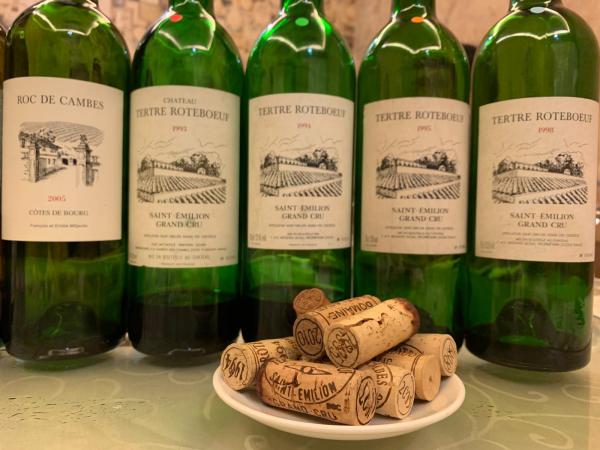
Tertre Roteboeuf 1993, 1994, 1995, 1998 & 2005 Roc de Cambes
This tasting was inspired by our recent visit to Tertre Roteboeuf in June this year where we had spent a most captivating afternoon with its founder and proprietor Francois Mitjavile. It so happened that my half-case of 2005 Roc de Cambes had just arrived from Bordeaux Index London (bought for only £30 per bottle about six years ago…can you believe that?!) and, with that masterclass of masterclasses still vividly fresh in our minds, it was only logical that we organised a dinner based on the wines of Francois Mitjavile. Mr Ho had us set up nicely in a private room at Jade Palace on 23 August 2019 with the restaurant’s signature cold Alaskan crab to match some excellent whites as a preamble. The actual line-up for the Tertre Roteboeuf turned out to be most enticing, a consecutive trio of 1993-95 topped by a stunning 1998. Best of all, they all hailed from the last century, meaning we’d be catching the wines at their peak. Many thanks, everyone, for your generous contributions.
2007 Valandraud Blanc. Aired in bottle for an hour prior. Straw coloured. Waxy aromas with overtones of green melons and toasty notes, quite intense and effusive. Took on a well-developed deeper chromatic tone supported by subtle chalkiness, imbued with very fine concentration of white citrus amid traces of nutmeg and sweet incense that imparted a relaxed open feel before tapering to a spicy glowing finish. Quite excellent.
1999 Champagne Louis Roederer Cristal, courtesy of Russ. Superb on the nose, boasting of toast, complex citrus, honeysuckle and fig. Still imbued with wonderful freshness on the palate, displaying excellent dry intensity, definition and linearity with inner crystalline tones that conferred great brilliance, finishing with glowing persistence. Still very youthful. Superb!
2010 Domaine Leflaive Puligny-Montrachet Les Pucelles 1er, courtesy of Kieron. Closed at first with a bit of bottle stink that eventually blew off, revealing good concentration of delicate citrus with overtones of preserved tangerines on an open palate though still rather placid and reserved, not helped at all by the recessed chalkiness. Gained some subtle intensity but still not giving away much. One has to put up with considerable bottle variation often associated with this estate.
2005 Roc de Cambes, aired in bottle for two hours prior. Deep inky purple. Good lift of ripe black berries, blueberries and dark currants, highly delicious with a touch of snuff amid savoury traces. Beautifully layered on the palate with attractive intensity where that note of savoury sweet meat is more pronounced and unmistakable, in turn giving way to robust fruit, gloriously ripe with subtle structured tannins that exude fabulous intensity and acidity, superbly integrated with lively balance. Quite outstanding but still youthful.
1993 Château Tertre Roteboeuf, courtesy of D. Deep purple. Highly lifted, again with that signature savoury character of barbequed meat that continued with superb linearity onto the palate. Delicious, savoury and concentrated with very good fruit quality, very smooth and evenly layered, imbued with very fine acidity and intensity. Almost delicate, finishing well, hanging on for about three hours before it began to fade a little. Unbelievable for a 1993. Excellent.
1994 Tertre Roteboeuf, courtesy of Tim. This wine opened with a whiff of bottle stink that persisted although it wasn’t enough to obscure the abundance of dark fruit and plummy characters beneath, displaying excellent presence with open supple intensity but somewhat opaque, missing inner detail and complexity. Quite emphatically upstaged by the 1993. Interestingly, the word “Château” has been omitted from the label from this vintage onwards.
1995 Tertre Roteboeuf, courtesy of Kieron. Some vermillion at rim, proffering a gentle lift of heated gravel amidst heaps of dark fruit and currants. Still rather tightly coiled with a deep core of ripe berries, exuding seamless intensity as it finished with fine linearity and persistence. At its best and will hold for many more years.
1998 Tertre Roteboeuf, courtesy of Russ. Saving the best for last, the 1998 exceeded all expectations. Displaying an evolved purple with open lifted tones of dark currants, roast, tea leaves and soy, this wine has developed some early tertiary complexity, exuding fabulous intensity from its glorious depth of fruit, fleshy and beautifully rounded with svelte tannins and graphite minerals that added immeasurable excitement. Brilliant!
1996 Bordeaux: A blinded trio
These are notes from a small blinded tasting organized by Benjamin after hours at his office on 04 July 2019. The theme was 1996 Bordeaux. Each of us, of course, knew what we’d brought but after the bottles were covered with identical socks and shuffled, we became none the wiser. It was supposed to be a quartet but a 1996 Ch Palmer was unfortunately corked, leaving us with a trio that still provided plenty of intrigue and fun. Many thanks, everyone, for your contributions, especially to Benjamin for the immaculate preparation.
2017 Domaine Faiveley Batard-Bienvenues-Montrachet Grand Cru, courtesy of Benjamin. Cask sample, popped and poured. Effusive in delicate chalkiness underscored by a light creamy presence with clear citrus some grassy elements, already good early complexity with excellent presence, transparency and definition on a base of graphite minerals. Very well-layered balanced, finishing well. Excellent but way too young.
Red #1. Darkly coloured. Distant aromas of sweet red fruits and currants, displaying an even richness on the medium-bodied palate. Fleshed out with attractive acidity and smoked characters with a tinge of dryness and burnt coal, just a tad short as it finished with ground minerals. A 1996 Clos du Marquis, courtesy of Benoit.
Red #2. Deeply coloured and savoury with a dominance of delicious dark currants and mocha on the nose, highly inviting. Quite full and fleshy, more minerally at first before giving way to dark plums and dark cherries with a bit of racy intensity, distinctly savoury and meaty amid traces of bellpepper though rather understated in acidity and finish. I thought a Saint-Emilion – perhaps a Tertre Roteboeuf – when, in fact, it was the 1996 Château Pontet-Canet that I’d brought. Most unusual, as I could not discern any of the expected Pauillac dryness.
Red #3. Raspberries, dark and red currants dominate on the nose with sweet delicious overtones. The palate was tinged with a touch of dryness amidst an abundance of earthy ferrous minerals that recalled cordite, concentrated in dark fruits with a certain sternness, turning more velvety with some lovely juicy sweetness as it gained further depth and intensity. Utterly delicious. Clearly not from the Left Bank. Kind of difficult to place, perhaps Pomerol. I thought it was La Conseillante. Instead, it was a 1996 Château Ausone….what a surprise! Merci Damien!
After the Bordeaux trio had been unblinded, Benjamin threw in a mystery red, tasted blind. The bottle shape gave it away as a Burgundy. Popped and poured, exuding a distinct earthy pungency on the nose, not unlike egg yolk. Some evolution has taken place, the wine delectably open, fleshy and highly supple with delicious red fruits and cherries that exude wonderful freshness and lift, very subtly structured with a deep core of tangerines that oozed with lovely sweetness. Carried great vigour and optimism all through to its minerally finish. All of us got it correctly: a 1996 Joseph Drouhin Beaune Clos des Mouches Rouge 1er. Excellent.

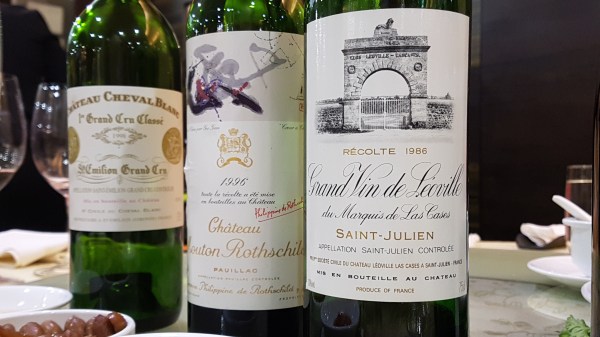
July 2019: 1986 Chateau Leoville Las-Cases, 1998 Cheval Blanc, 1996 Mouton Rothschild
2016 Jim Barry Cover Drive, from the list of Wooloomooloo 05 Jul 2019. Clear purple. Fruit forward with good concentration of dark berries and raspberries, highly supple. Well balanced and lively. Opened up with good even intensity on a minerally floor, finishing on a slightly earthy spicy trace.
2016 Penfolds Bin 407, courtesy of Mr Thu at Restoran Public, Kota Tinggi, on 07 Jul 2019. Dense dark fruits and currants dominate amid traces of forest floor and dusty tannins, quite even in concentration. Finished with fine intensity of blackcurrants.
 2015 Domaine Bruno Clair Chambolle-Musigny Les Veroilles, popped and poured at Otto Ristorante, 12 Jul 2019. Lovely deep pinot tint. Ample expanse of rose petals, red cherries, camphor and haw flakes on the nose and palate. Quite plump and fleshy, displaying good intensity and extraction with excellent ripeness. Highly supple. Snapped into focus after 30 minutes, becoming rounder and warmer and more seamless, layered with a deeper vein of fruit amid traces of saline minerals, finishing with a bit of coiled tension. Very fine. Great value.
2000 Champagne Henriot Cuvee des Enchanteleurs, popped and poured at Jade Palace, 13 Jul 2019. Deep lustre with a deep yeasty pungency. Medium-bodied, fleshy and dry. Lightly layered with crisp clear citrus, lime and green melons. Better developed with more presence and depth but this is never the most profound of champagne.
2014 Domaine Bernard Moreau Chassagne-Montrachet, popped and poured at Jade Palace, 13 Jul 2019. Superbly layered with chalky creaminess, not apparent at first but it gradually opened up to reveal some early complexity amidst a light minerally tone, developing further depth and richness with a lovely transparency and roundedness, finishing with wonderful length.
1986 Ch Leoville Las-Cases, popped and poured at Jade Palace, 13 Jul 2019. Deep garnet red. Powerful developed bouquet of Chinese tea leaves, deep currants and violets. Highly supple with great sublime acidity, still imbued with superb presence and layering that exuded great precision with a fabulous controlled intensity, developing a sweet velvety tannin structure over time as it finished with a wonderful hallowed glow amid traces of mint. At its peak but still amazingly youthful, this wine can easily last another few more decades.
1996 Ch Mouton Rothschild, courtesy of Meng, popped and poured at Jade Palace, 13 Jul 2019. Deep garnet core with a trace of vermilion at the rim. Highly supple, fleshy and open. Deeply layered with cool ripe fruit and dark currants amid overtones of dried mushrooms and tea leaves that underscores its terroir. Understated in complexity, it displayed great linearity as it finished with growing power in that unmistakable Pauillac signature tone.
1998 Ch Cheval Blanc, courtesy of WKW, popped and poured at Jade Palace, 13 Jul 2019. Deep crimson. Imbued with slightly darker shades dark plums and soy that caressed the palate with a lovely velvety richness. Open and highly supple, fleshing out with further notes of tea leaves as it exuded a lovely youthfulness that lasted the whole night. However, knowing the potential greatness of mature cabernet franc, I’d say this wine is still far from peaking.
2000 Ch D’Aiguilhe, popped and poured at Tunglok Signatures, 15 Jul 2019. Deep purple, exuding powerful aromas of dark currants, cherries and dark plums on the nose and palate with great concentration. Still tannic with taut tension underscored by ferrous undertones, culminating in a spicy lengthy finish.
Veuve Cliquot Brut, popped and poured at Tunglok Signatures, 15 Jul 2019. Dense bouquet of green citrus with a gentle yeasty pungency, dry and bright with good concentration lime and pomelo that imparted a slightly stern minerally tone.
Veuve Fourny et Fils Oertus Premier Cru Brut, popped and poured at Tunglok Signatures, 15 Jul 2019. Toasty yeasty characters dominate amid layers of fig, pine, green melons and lime, displaying excellent depth and concentration. Excellent.
2009 Ch Le Doyenne, popped and poured at Ka Soh, 21 Jul 2019. Early evolution, proffering dense aromas of blueberries and violets with excellent fullness, presence and layering on the palate, slightly dryish. Developed a persistent sandy earthy tone over time, rather unlike the graphite intensity previously encountered with this wine, fleshing out very well with an almost Pauillac-like character with a lovely biting open intensity that conferred superb mouthfeel.
2017 Domaine Chanson Bourgogne Rouge, from the list of Taratata Brasserie, 26 Jul 2019. Rosy hues, dark cherries and wild berries dominate on the nose beneath a sheen of paraffin. The palate is marked by prominent salinity and dry crisp acidity, showing good concentration of dark plummy fruit, developing some biting intensity over time but still generally undistinguished.
2003 Ch Lagrange, popped and poured, 28 Jul 2019. Clear purple, exuding notes of capsicum and austere green elements on the nose. Good intensity of ripe wild berries, mulberries and currants on the palate, grippy with tight acidity. Opened up very well to reveal a great fleshy presence with a delicious core. Perennially under-rated but this Saint-Julien is good value if you can find it below SGD100.
2009 Carpineto Vino Nobile di Montepulciano Riserva, popped and poured at Crab At Bay, 31 Jul 2019. Deep garnet red. Shy, not revealing much on the nose though the palate is concentrated with ripe dark berries and dark plums amid ferrous elements, open with supple intensity. Still youthful.
1969 Ch Lafite Rothschild
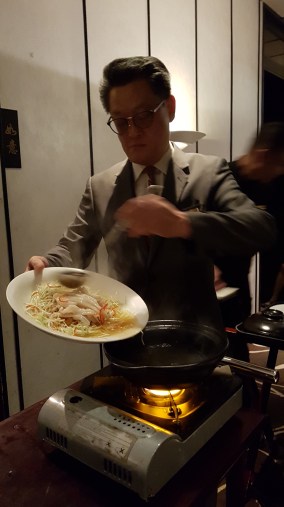 Another casual dinner on 18 July 2019 threw up a wonderful line-up given that no theme had been set. The Imperial Treasure Super Peking Duck at Paragon Singapore is truly an outstanding venue for refined Cantonese cuisine. Try ordering some off-the-menu items (very nicely arranged for this occasion by LF): glutinous duck rice, salted fish tofu in claypot, and the razor clam cooked side-table in superior broth (pictured left).
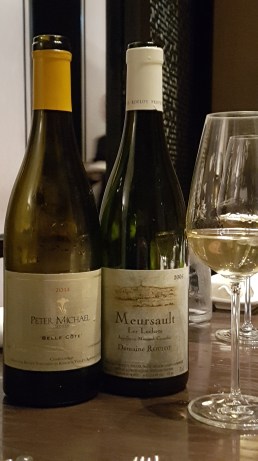
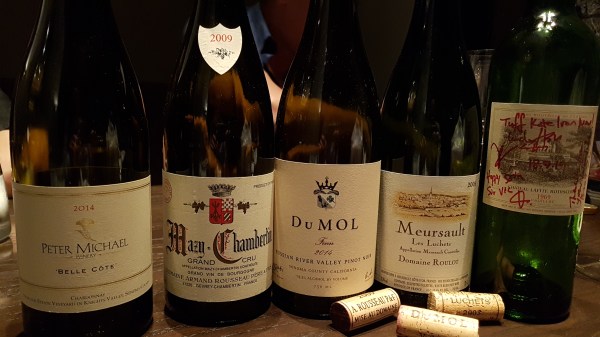
2005 Domaine Roulot Meursault Les Luchets. Light golden lustre. Rather shy, proffering only white fruits and floral mint with some mild salinity. Rapidly gained depth and body as it warmed up, developing lightly peppery tones with traces of nutmeg as it gradually blossomed with fine detail and delicate intensity, taking on a more distinct saline minerality whilst maintaining its subtle richness as it tapered to an open minerally finish. This is Meursault at its finest, amazingly from a village.
2014 Peter Michael Belle Cote, courtesy of Kieron. Lovely luminosity. There is an attractive hint of oiliness on the nose matched by lifted tones of bell pepper and dense morning dew from the solid concentration and depth of fruit, revealing excellent sophistication and detail as it stretched over time to an extended chalky finish before receding beneath a waxy sheen. Excellent.
 2014 DuMOL Finn Russian River Valley Pinot Noir, courtesy of LF. Deep ruby. There is a faint trace of paraffin amid the delicious expanse of red cherries on the nose. The palate is rounded and open, revealing a deep intense core of ripe fruit that exuded lovely charm and elegance with excellent linearity. Very well-balanced and integrated, finishing with youthful vigour and richness.
2009 Domaine Armand Rousseau Mazy-Chambertin Grand Cru, courtesy of Kieron. Glowing irresistibly with glorious red fruits, rosy hues and ripe strawberries, this wine is superbly open with great inner definition, revealing shades of gravelly minerals and sweet structured tannins that impart great feminine charm with fine subtle intensity, fleshing out very well with great roundedness and sophistication. Excellent.
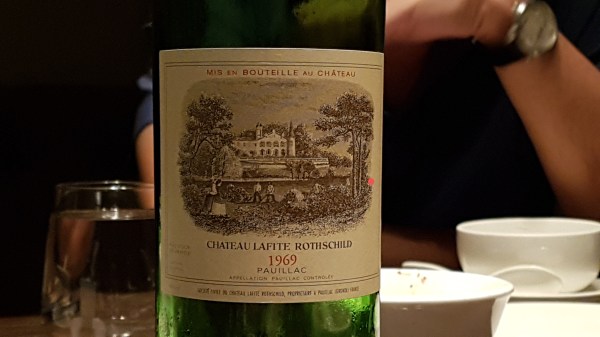
1969 Ch Lafite Rothschild, courtesy of Vic. Displaying an almost pinot tint, this Lafite is still imbued with excellent fullness in spite of its rounded mellowed softness, yielding a lovely lifted pungency from its core of aged plummy fruit and sweet melted tannins. What a wonderful surprise for a casual dinner! One cannot ask for more from this wine nor from its generous owner.
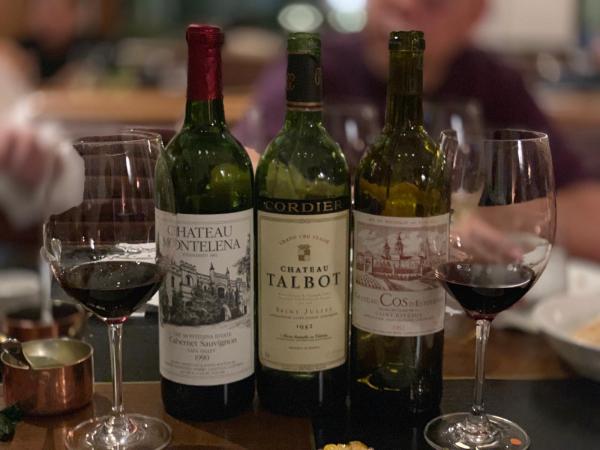
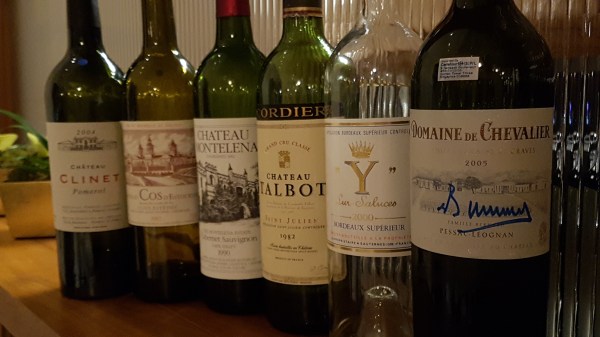
1990 Ch Montelena Estate, 1982 Ch Talbot, 1982 Ch Cos D’Estournel, 2000 “Y” Ygrec, 2005 Domaine de Chevalier Blanc, 2004 Clinet
August kicked off with a wonderful dinner organised by K at Origin Grill, Shangri-La Hotel, Singapore, on 01 August 2019 where Sir Robert was in a particularly generous mood, especially given that no specific wine theme had been set. Head sommelier Britt Ng saw to it that we were properly looked after with fresh stemware for each wine. I was particularly impressed by the Montelena Estate, given that I just had the 1991 just two months earlier. The 1990 here was equally stunning. When properly blinded, there was nothing to give it away as a Napa. Many thanks guys, for your friendship and generosity.
2000 Ch d’Yquem “Y” Ygrec, courtesy of Robert Kwok. Light luminous golden hue. Reticent at first, only proffering traces of icing, vanilla and paraffin. Much more forthcoming on the palate where tropical fruits and notes of honeysuckle dominate with very fine body and layering, laced with understated acidity. It took on a gentle rounded complexity over time, developing further tones of eau de cologne, slightly minty, never at all heavy as it tapered to a gentle glowing finish. Excellent.
2005 Domaine de Chevalier Blanc, a bottle personally autographed by proprietor Olivier Bernard in Singapore many years ago. Very shy on the nose. Very delicate and lightly shaded with a bright minerally shine, revealing great clarity and transparency as it developed lovely acidity and rounded intensity against a backdrop of understated minerals. Superb refined elegance.
1982 Ch Talbot, courtesy of Robert Kwok. Tasted blind. Deep garnet red, exuding a great deep earthy pungency that immediately called to mind the terroir of Pessac-Leognan. Medium-bodied. Softly rounded, fleshy and open, filled with an ample expanse of mature red fruits and cherries, beautifully integrated with understated depth and intensity. Gained lovely purity as the initial pungency receded after some time but, still, there’s no way one would have imagined this to be a Saint-Julien. Excellent.
1990 Ch Montelena Estate, courtesy of Robert Kwok. Tasted blind. Still amazingly dark and youthful. I thought this showed a classic Saint-Julien nose of heated gravel with delicate graphite tones amid a superb deep fragrance of cool ripe blueberries and dark currants. Open with great suppleness and quiet intensity, very subtly structured. Can easily last another couple of decades. Superb.
1982 Ch Cos D’Estournel, courtesy of Kieron. Gentle but pronounced earthy pungency on the nose. The palate is slightly austere with a predominance of very fine graphite elements within mature tones of dark berries, violets and blueberries. Beautifully rounded, developing a rich complex of cedary notes, cinnamon, plums and tangerines at its core. Quite glorious, at its absolute best.
2004 Ch Clinet, courtesy of Vic. Violets and blueberries dominate with a lovely fragrance, fairly dense and deep, quite full but not overwhelming, opening up well with a fleshy biting intensity before settling into a more gentle seductive tone on an understated graphite base.
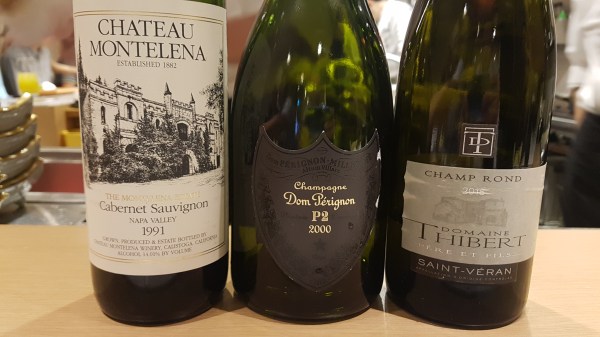
2000 Champagne Dom Perignon Second Plenitude, courtesy of CW over lunch with Frederic Faye of Ch Figeac and Marielle Cazaux (Ch La Conseillante) at Shinzo, 01 Jun 2019. Quiet on the nose. Even gentle minerally tone with a smooth dryness, exuding lovely charm and transparency. Not the most profound of Dom but its balance is impeccable, developing superb presence of delicate green fruits and citrus over time.
2015 Domaine Thibert Pere et Fils Saint-Verain Champ Rond, over lunch with Frederic Faye of Ch Figeac and Marielle Cazaux (Ch La Conseillante) at Shinzo, 01 Jun 2019. Bit closed on the nose though the palate is imbued with a generous expanse of delicate white fruits and citrus that teased with fleeting concentration and intensity. Rounded and smooth. Very well balanced with understated charm, energy and sleek controlled acidity, developing wonderful depth with a gentle open intensity over time. Excellent.
1991 Ch Montelena Estate, courtesy of CW over lunch with Frederic Faye of Ch Figeac and Marielle Cazaux (Ch La Conseillante) at Shinzo, 01 Jun 2019. Deep garnet red. Intense bouquet of briar, bramble, raspberries and delicious currants. Still amazingly fresh on the palate, displaying superb concentration and ripeness with smooth velvety tannins. Sublime in acidity, integration and balance with an understated red plummy tone, slightly earthy. An absolute winner, very much on par with any Bordeaux premier cru. Outstanding.
2005 Ch D’Aiguilhe. Popped and poured at Crab At Bay, 02 Jun 2019. Deep dark impenetrable red. Abundant dark fruits, blackberries and blackcurrants on the nose with a sweet plummy tone. Open with excellent fullness and suppleness. Ample in rich ripe fruit laid on an earthy floor with dusty textures. Very fine acidity. Rather understated in structure for its proportions. Austere ferrous finish. Decent length. Still youthful.
2003 Pavillon Rouge du Margaux, popped and poured over lunch at Otto Ristorante, 04 Jun 2019. Deep garnet red. Delicious bouquet, leading to very good concentration of black fruits and red currants, slightly earthy, within a very well-defined slim profile. Lively acidity. Mellowed quite quickly with relaxed charm, developing exciting tertiary nuances with open biting intensity amid soft velvety textures. Still youthful. On par with a classified growth. Excellent.
2004 Domaine Vincent Girardin Chevalier-Montrachet Grand Cru, courtesy of Vic at Summer Pavilion, 04 Jun 2019. Gentle sleek white floral tone with light citrus on the nose and palate, showing superb integration, balance and precision with sublime acidity. Fine open intensity, fleshing out very well with a lovely transparent chalky tone, finishing with overtones of walnuts. Excellent.
2014 Domaine Faiveley Clos des Cortons Faiveley Grand Cru, at Summer Pavilion, 04 Jun 2019. Silky tangerines and light rose petals dominate with gentle presence, slightly more minerally and stern. Opened up well with some lovely intensity but still a little tight. Fine balance. Distinctly feminine without the lush succulence and velvety plushness of the 2016.
1990 Domaine Drouhin-Laroze Chambertin Clos de Beze Grand Cru, courtesy of LF. Good colour. Imbued with good concentration of warm ripe fruit and dark plums amid well-developed characters of cedar and cinnamon, exuding fine intensity, slightly earthy and stern with overarching acidity.
2015 Katgully Cabernet Sauvignon, at Dorothy’s place 09 Jun 2019. Softly focused aromas of gentle red plums on the nose. The medium-full palate features ample warm ripe fruit with a deeper vein of dark currants, undergrowth and mocha with traces of marmite in its minerality, more forwardly balanced. Rounded with controlled intensity and understated acidity. Very fine. From Margaret River, Western Australia.
1998 Champagne Krug, popped and poured at Saint-Pierre on 11 Jun 2019 to mark our Silver Jubilee. Gently perfumed. Very subtly suffused with characters of toast and yeasty, exuding a lovely delicate fragrance. Suitably dry with a sheen of very fine bubbles, the perfect counterfoil for the layers of intense citrus, bitter lemon and grapefruit though it doesn’t quite truly plumb the depths. Finished with lasting persistence.
1990 Ch Lafite Rothschild, decanted on-site at Saint-Pierre on 11 Jun 2019, our Silver Jubilee. Deep purple with only slightest hint of evolution. Enticing complex bouquet, a hallowed deep glow of ripe red plums, soy and black cherries with a hint of smouldering ember. Beautifully open with velvety textures amid sublime acidity, seamlessly layered, exuding great charm and feminine elegance as it stretched out with superb definition and intensity. Just like an earlier bottle from the same case tasted in March 2019, this wine has been caught at its peak and will last. Outstanding.
2011 Champagne Pierre Peters Cuvée Speciale Les Chetillons Brut, popped and poured to mark the clinic re-opening, 13 Jun 2019. This blanc de blancs is considerably lighter in texture, distinctly delicate and feminine, an impression reinforced by its very fine gentle bubbles. Ample in pomelo and lime amid traces of bitter lemon, layered with gentle yeasty tones. Lively presence though somewhat narrow in spectrum. Doesn’t quite plumb the depths.
2002 Ch Cos D’Estournel, popped and poured to mark the clinic re-opening, 13 Jun 2019. Raspberries, mulberries and wild berries dominate with good density, slightly cedary and earthy, distinctly darkish in tone and demeanour. Supple with fine transparency and rounded tannins but it lacks real distinction, missing in charm and succulence.
2012 Domaine William Fevre Chablis Les Preuses Grand Cru, popped and poured at Ming Kee Live Seafood, 15 Jun 2019. Excellent presence. Notes of tangy citrus and nutmeg. Good transparency, suffused with saline minerals amid ferrous elements. Creamer over time with a gentle presence of green apples along with some chalkiness, laced with fine subtle acidity. Drinking well. Alas, Ming Kee has ceased its business after 25 June 2019.
2008 Lucien de Moine Richebourg Grand Cru, courtesy of John Law, 18 Jun 2019 at restaurant Ibid. Darker tint of pinot. Rather shut, hinting at only dark currants with some fragrance. Far more powerful on the palate, exuding an intense plummy tone with notes of forest floor, cranberries and bramble. Taut with quite an acidic spine, yielding raw intensity of fruit. MIssing true pinot character.
2014 Domaine Dominique Mugneret Vosne-Romanee Cuvee Alliance des Terroirs, courtesy of Edmund Wong at Otto Ristorante, 19 Jun 2019. Good color. Quite ample in ripe raspberries and red fruits with a tight plummy tone, exuding lovely fragrance. Slightly acidic.
1999 Champagne Phillipponnat Clos des Goisses Brut, popped and poured at Otto Ristorante, 19 Jun 2019. Deep complex bouquet of white flowers, vanilla, creme and minerals. Opened with a rich minerally glow amidst deep toasty nutty overtones, supported by crisp intense citrus with acidity that’s still remarkably fresh and lively, finishing with traces of green pepper.
2010 Domaine Jacques Prieur Volnay Clos des Santenots 1er, courtesy of Vincent at Otto Ristorante, 19 Jun 2019. Good color. Gentle rosy hues with undertones of dark cherries. Medium-full, supple and fleshy, displaying superb ripeness, succulence and length with excellent subtle acidity, finishing with traces of snuff.
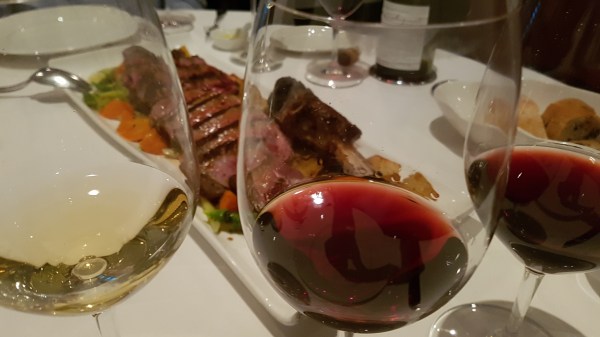
2005 Ch Rauzan-Gassies, popped and poured at Wah Lok, 21 Jun 2019. Deep impenetrable purple. Displays a certain richness and fullness of fruit and dark currants against plush cushioned velvety textures with traces of sweet. Still incredibly infantile and barely evolved. Opened up more over time with further notes of smoke, cedar and soy, highly supple, coming together at the last pour with stunning intensity. Excellent.
2006 Champagne Piper Heidsieck Millesime Rare, tasted at the Krisflyer First Class Lounge of Changi Airport T3, 23 Jun 2019. Light golden hue. Deep toasty nutty complex with yeasty tones on the nose. Generous expanse and concentration of pomelo and yellow citrus amidst very fine gentle bubbles. Excellent vigour and intensity, finishing with gentle graphite minerals.
2016 M Chapoutier Les Meysonnieres Crozes-Hermitage, tasted at the Krisflyer First Class Lounge of Changi Airport T3, 23 Jun 2019. Notes of forest floor and dark fruits dominate within a light-medium lean profile. Well balanced with fine acidity but not distinctive.
2009 Champagne Dom Perignon, tasted at the Krisflyer First Class Lounge of Changi Airport T3, 23 Jun 2019. Lighter-textured with a gentle perfumed fragrance of clear citrus, showing great clarity though within a rather narrow spectrum. Distinctly feminine. Short.
2006 Ch Rauzan-Segla, on board Singapore Airlines SQ336 from SIN-CDG, 24 Jun 2019. Very shy on the nose, just able to discern some dark currants. Equally introverted on the slim palate, hinting at dark fruits and blackberries beneath rather than outright opulence although its concentration and fine acidity is beyond reproach, tinged with ferrous minerals.
2008 Louis Latour Corton Grand Cru, on board Singapore Airlines SQ336 from SIN-CDG, 24 Jun 2019. Good concentration of wild berries and plums. Medium-bodied. Very fine acidity, showing good integration and balance with a slightly vegetal tone that conferred a certain rusticity, finishing with traces of incense.
LaCheteau Cremant de Loire Brut, at the Star Alliance lounge of CDG, 29 Jun 2019. Gentle floral aromas with yeasty tones, slightly toasty with a broad expanse of intense clear citrus and lime. Suitably dry.
2016 Cru de la Maqueline, at the Star Alliance lounge of CDG, 29 Jun 2019. Dark currants, raspberries and plums dominate with a distinct ferrous minerality on the mid-palate, displaying decent fullness, depth and length.
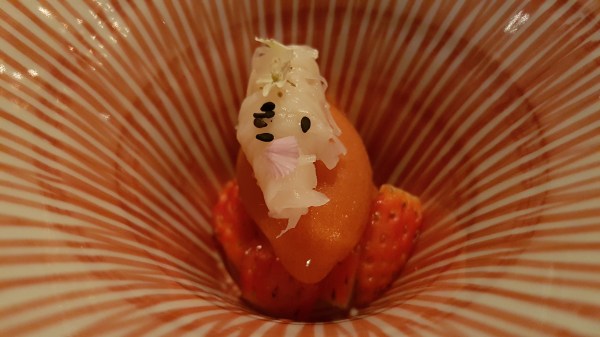
Creation of restaurant Saint-Pierre, Singapore.

