Ric visits Chateau Cheval Blanc
This marks the beginning of a short but concentrated visit exclusively to the Right Bank of Bordeaux following a similar trip by the same group to Burgundy a year ago. Time truly flies. Within minutes of touching down at Merignac Aeroport on 16 September 2016, we were making our way to Saint Emilion to meet our lunch appointment at Chateau Cheval Blanc, scheduled for 1300h. At this time of year, the weather has turned decidedly cooler, the sky perpetually overcast with occasional bouts of very fine drizzle interspersed with brilliant shafts of sunshine whenever the sun broke cover. Throughout the plains, the predominant dark grapes of merlot hung low and heavily from the vines, waiting to be picked any time within the next week.


M. Pierre Lurton (right)
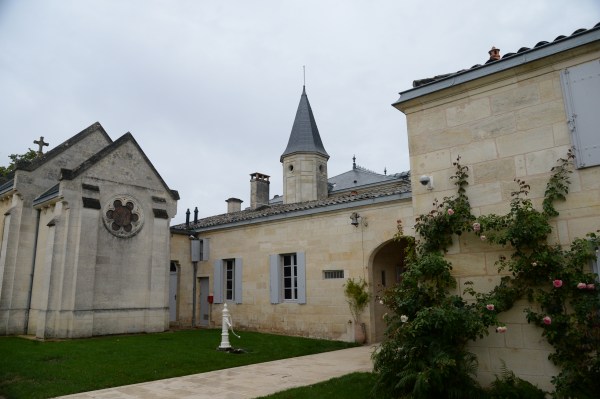
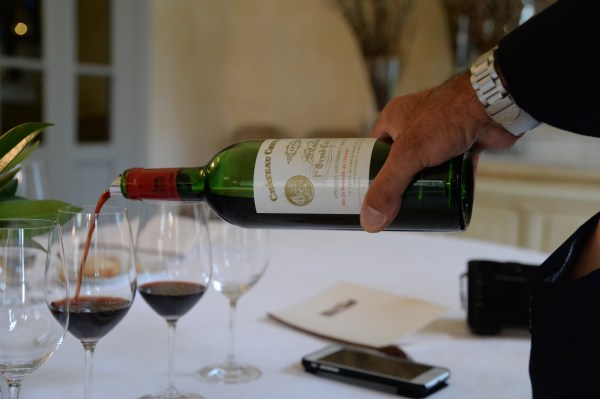
Even though the Right Bank does not boast any imposing chateau, the estate of Cheval Blanc immediately stands out from its peers, thanks to its manicured lawn and aristocratic-looking buildings that suggests at once wealth, breed and sophistication. We were met upon our arrival by M. Pierre Olivier, the Technical Director of the estate, followed soon after by owner M. Pierre Lurton (who also runs Ch D’Yquem) himself.
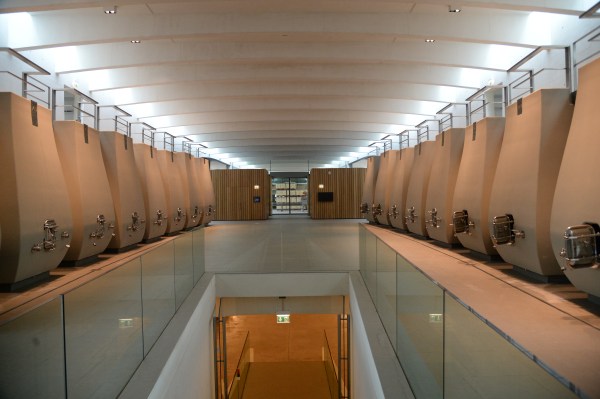
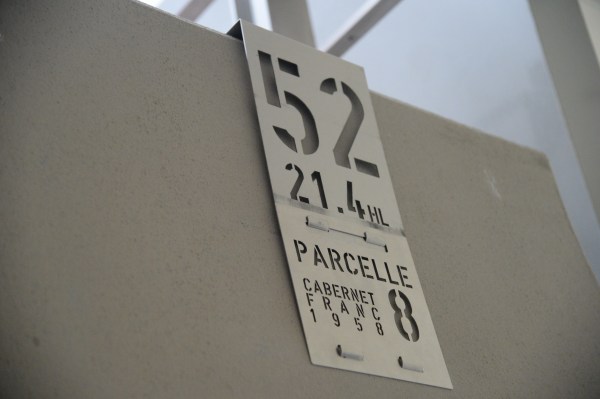
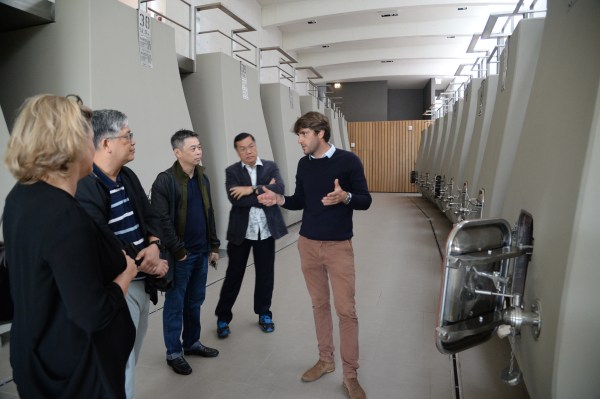
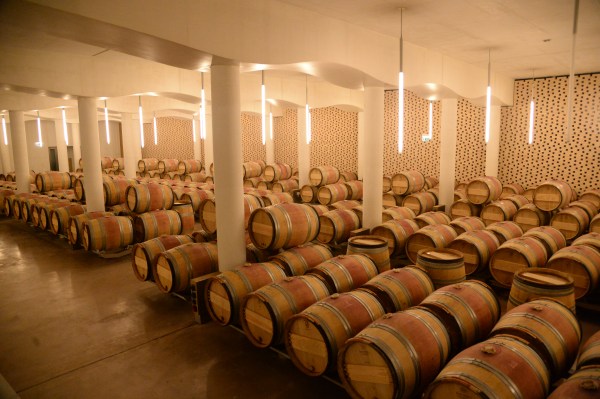
Cheval Blanc has the distinction of being the only wine that has cabernet franc as its main component in its blend with merlot making up the rest. Indeed, Pierre explained that more than half of the estate’s 39 ha of vines, split into 45 distinct plots, are planted with cabernet franc. Nobody really knows what prompted the estate to adopt cabernet franc as its main varietal. Perhaps it is because the soil here consists mainly of sand, clay and gravel, not the usual limestone composition that supports cabernet sauvignon. Nevertheless, Cheval Blanc has not changed its philosophy over the years and its cabernet franc certainly imparts a unique trace of spicy green pepper combined with velvety power during its youth, turning into a demure feminine beauty of great purity when the wine has matured. The grapes from each of the 45 plots are fermented in separate concrete vats housed in a brand new ultra-modern chai that is spotlessly clean. The wine in barrel is racked periodically and when we were there, racking was in progress for the 2015 sitting in barrel.
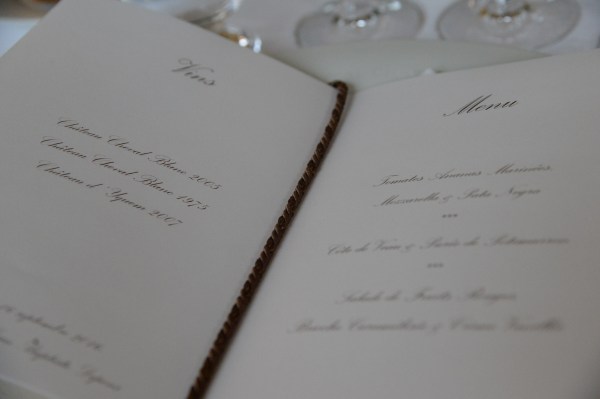
We were hosted to a generous lunch at the chateau by Pierre, beginning first with the Krug Grand Cuvee as aperitif, displaying strong yeasty overtones, toasted oak and earth, crisp, lively and vigorous on the palate with excellent concentration of lime and green citrus, not too dry, finishing very well. This was followed by a 2010 Joseph Drouhin Clos des Mouches Blanc 1er that displayed notes of aged cheese and chalk on the nose, gentle on the palate with unusual subtlety with recessed minerals and early secondary characteristics though the acidity is excellent, taking on a caramelised note after some time but, on the whole, this is a shy wine.
We opened the reds with a contrasting pair. The 2005 Ch Cheval Blanc displayed a lovely soft floral fragrance of young red fruits, strawberries and raspberries with a deeper core of tangerines on the palate, quite harmonious with silky supple tannins, developing a mild earthiness after some time although, at this stage, the crisp acidity is rather intense. Yet to settle down but this wine will be long lived.
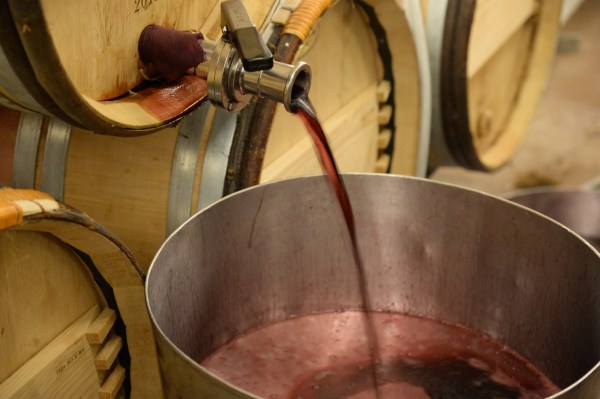
Racking of 2015 Cheval Blanc
In contrast, the 1975 Ch Cheval Blanc, fully mature, opened with a bouquet of mild earthy pungency coupled with a gentle rosy fragrance that was highly enticing, effortless and persistent, a hallmark of aged clarets. On the palate, the wine displayed a feminine elegance with good complexity, concentration and purity of fruit, not showy at all, remarkably poised and balanced but holding up very well, not at all in danger of fading, proving the longevity of cabernet franc.
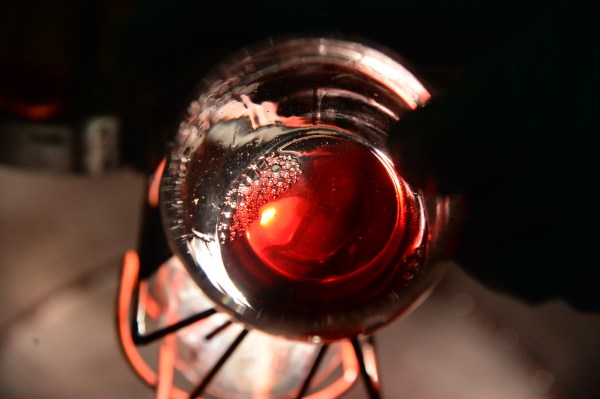
Bright and clear: 2015 Cheval Blanc from barrel
We concluded with a 2007 Ch D’Yquem which, of course, is part of Pierre Lurton’s stable. This Sauterne from this outstanding vintage possesses a generous expanse of nectarine, apricot, fig and glorious tropical fruits, absolutely fabulous in balance with lovely acidity, quiet intensity and concentration, exuding a great perfumed fragrance. Outstanding.

I must thank Pierre Olivier for his time and generosity and FICOFI as well for making this visit possible.
Domaine Albert Mann
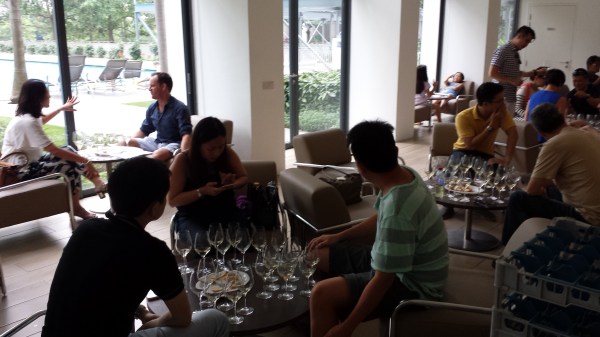
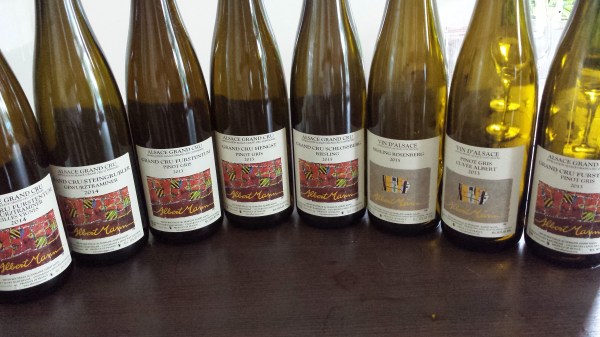
This special event was organised by the Alsace Wine & Gastronomy Society, Singapore, on 27 August 2016, and I replicate the succinct introduction by the Society’s President, Mr Julian Teoh, about this estate: There are, perhaps, no greater believers in the magic of Alsace’s terroir than the Barthelmés of Domaine Albert Mann in Wettolsheim. Named French winemakers of the year 2012 by Revue du Vin de France (RVF) and rated in the top tier of French winemakers in RVF 2016, Mann is a true family operation run by two couples: Maurice (winegrower) and Marie-Claire (daughter of Albert Mann, who runs the business), and Jacky (Maurice’s brother and winemaker) and Marie-Thérèse (marketing and export).
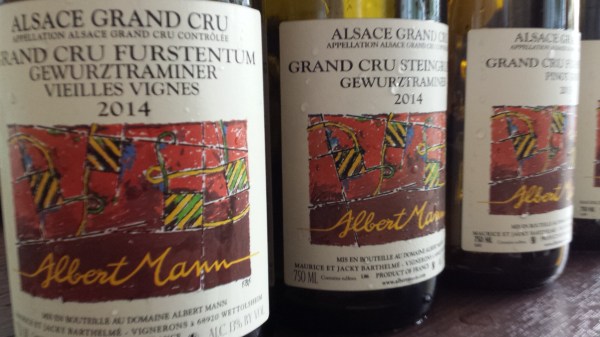
The biodynamic wines of Albert Mann are natural and authentic expressions of their soil and environs. Emphasising low yields per vine (never per hectare), the Barthelmés exploit some 21 hectares held as hundreds of different plots, including in the Grands Crus Schlossberg and Furstentum of Kientzheim (Maurice and Jacky’s inheritance from their mother, a member of the Blanck family of Kientzheim), and Steingrubler, Hengst and Rosenberg of Wettolsheim. Maurice, a marathon runner in fact and temperament, tends to each plot as one would a beloved garden.
For this tasting, the first time Albert Mann wines have been formally showcased in Singapore, we have controlled all potential variables – vintage, grape variety, winegrower – bar one, the vineyard and its unique terroir, so tasters can discern its full impact on the finished product.
The Society is most grateful to Marie-Thérèse and Domaine Albert Mann for making this tasting happen.
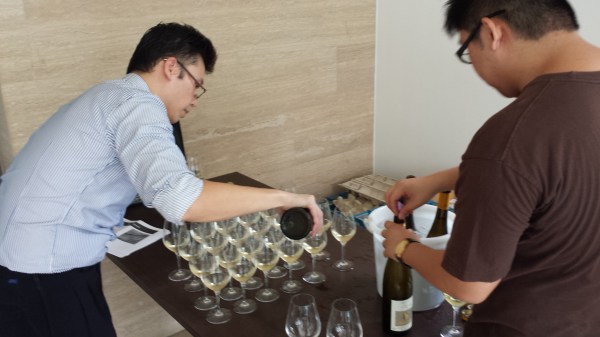
Julian is a hands-on President
2015 Albert Mann Cuvee Albert Riesling. This wine opens with a mild floral fragrance, leading to good intensity, concentration and great acidity on the palate leading up to a gentle citrus spine, displaying good focus and finish with a deep overtone of caramel.
2015 Albert Mann Rosenberg Riesling 1er. Very enticing bouquet, more minerally than the preceding Cuvee Albert, though restrained with a certain gentleness on the palate with subdued acidity, some sweetness and good body with a bit of ferrous trace, turning spicy at the edges as it got too warm.
2015 Albert Mann Schlossberg Grand Cru. Lovely floral fragrance, more flinty over time, medium-full with excellent concentration of fruit, minerals, spicy characters and green pepper, still tight, finishing with great length. Excellent.
2013 Albert Mann Cuvee Albert Pinot Gris. There is plenty going on the nose where mild tropical fruit flavours and green citrus dominate, replicated on the palate with good concentration and intensity, quite open, though without much complexity yet.
2013 Albert Mann Hengst Pinot Gris Grand Cru. Lifted floral fragrance with notes of sweet icing, mellow and rounded on the palate with a mild dark spicy tone of sweet raw nutmeg amidst subdued acidity, lacking in true complexity.
2013 Albert Mann Furstentum Pinot Gris Grand Cru. Lifted aromas of sweet fragrance, very fine and ethereal with excellent detail on the palate, displaying good depth and balance with very fine, fleeting peppery notes with some nutmeg. Excellent.
2014 Albert Mann Steingrubler Gewurztraminer. Beautiful, deep, luxuriant notes of longans and lychees, very controlled with subdued sweetness, layered with well-integrated acidity, already displaying some early complexity. Very lovely. Excellent.
2014 Albert Mann Furstentum Gewurztraminer VV Grand Cru. An equally lovely but deeper bouquet here, broader with controlled sweetness, very harmonious with notes of green melons, mint, grassy elements and nutmeg, displaying excellent linearity. Excellent.
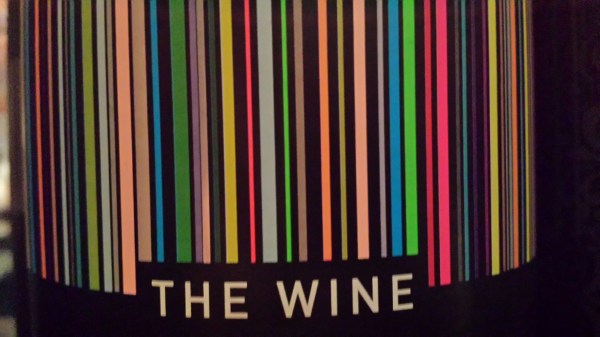
Chris Ringland: Evil Incarnate, FU, The Wine
I’m usually wary of dinners that comprise entirely of Australian shiraz but when Bob Rees of Wine Exchange Asia (not to be confused with WEA Fine Wines) proposed a Chris Ringland dinner at Table At Seven on 18 Aug 2016, I almost jumped at it. I first heard of Chris Ringland at the turn of the millennium when I became interested in Rockford, for Chris had worked there, going on eventually to developed his cult “Three Rivers Shiraz”. The wines of Chris Ringland are difficult to obtain, there is no cellar door in the Barossa but they are reputed to be exceptionally refined and sophisticated and, indeed, my experience on this occasion confirms that, for these wines are utterly cultured with a quiet intensity in spite of their seemingly outsized proportions. It was good as well to see Karl and Eugenia still going strong and doing very well at their restaurant, and their unique combination of Indonesian-inspired-cum-European cuisine went well with the wines. Bob, as usual, is always generous with the pours at these dinners and we began with the Laurent Perrier Brut NV, very attractive with a forward balance of clear citrus and pomelo, dryish and crisp with very good concentration and biting intensity on the palate though its flavours fall within a narrow spectrum.

2005 Chris Ringland Evil Incarnate. Dense with notes of dark and red plums, liquorice and kumquat amidst a strong alcoholic streak on the nose, though surprisingly creamy smooth and rounded on the palate with ripe tangerine at its core, more forward over time with great concentration and purity, displaying good linearity and sophistication but a tad short, finishing on a subdued spicy tone without any alcohol trail.
2006 Chris Ringland Evil Incarnate, served from magnum. Compared with the preceding wine, the 2006 is more forward with plummy tones, black currants and sweet dark fruits, open, even and harmonious with excellent depth and balance, rounded with controlled tannins. Needs further cellaring but the potential is huge.

2008 Chris Ringland Evil Incarnate, served from magnum. Rich bouquet of dark plums and sweet black fruits, big and full, coating the palate with a creamy smoothness and overtones of enamel, yet poised, elegant and rounded, displaying good handling of oak and tannins, finishing in a gentle spicy trail. This is a magnificent shiraz, combining power and sophistication with great harmony.
2006 Chris Ringland FU. Quiet and slightly reticent, exuding sweet mocha and dark chocolate arising from an immense breadth and depth of dark plums and red currants, displaying great integration, layering, focus and definition, highly refined and exciting. Superb.
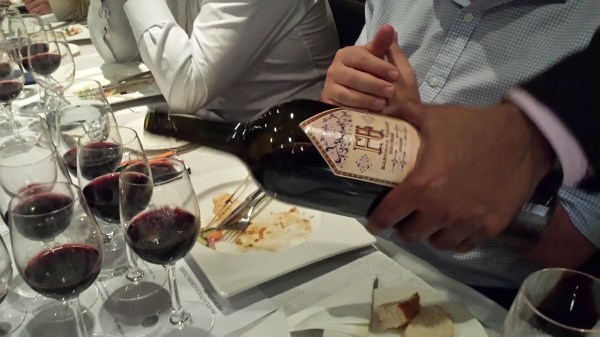
2005 Chris Ringland The Wine. Dense with a great abundance of red plums and red currants, oozing with sweet tannins but the alcohol content is far too massive at 17% (yessir!), obscuring detail on the palate that lacked layering and real complexity.
2006 Chris Ringland The Wine, served from magnum. More massive than the 2005, dominated by a rich plummy tone with a prominent alcoholic note, rounded and well-integrated with a quiet intensity and sophistication, layered with dark fruits and forest floor characters but still unresolved, though it has the potential to evolve very well.
An American theme
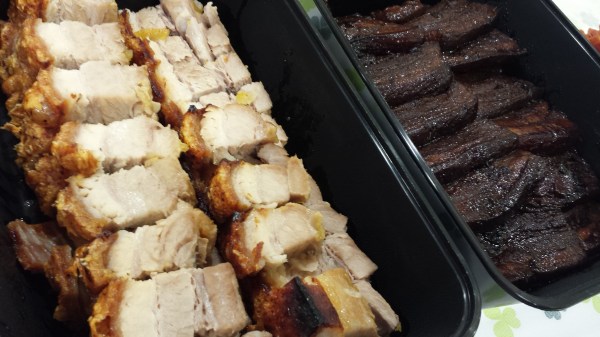
These tasting notes stem from a gathering after hours to mark the first anniversary of SS’s establishment at Gleneagles, 12 Aug 2016. Most of the wines had been aired for some time prior to tasting, pairing well with the decadent pork prepared by LF. An American theme had been proposed which turned out very well. All wines are courtesy of LF unless otherwise stated.
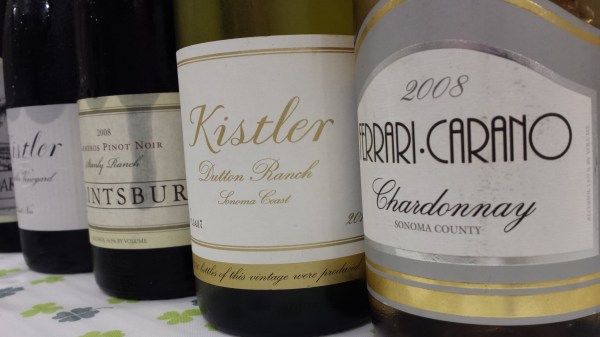
2011 Kistler Dutton Ranch Sonoma Coast Chardonnay, aired ahead in bottle. Gentle aromas of crème and chalk with further notes of nutmeg and varnish, quite ample in lime and tangy citrus, displaying crisp acidity and lovely tension, finishing well. Excellent.
2008 Ferrari Carano Sonoma County Chardonnay, aired ahead in bottle. Rather shut at this stage, quite minerally, just offering glimpses of white petals and gentle citrus, beautifully veiled at the moment, though one appreciates the huge potential here just waiting to blossom. Needs more time.
2008 Saintsbury Carneros Pinot Noir Stanly Ranch, aired ahead in bottle. A highly unusual bouquet of red fruits, wild berries and red plums with overtones of ash and camphor, bright and open with further notes of cinnamon on the palate, oozing with sweet tannins though slightly stern at the side. Very burgundian. Very successful.
2011 Kistler Sonoma Coast Pinot Noir, aired ahead in bottle. A great abundance of red cherries, strawberries and other red fruits, very ripe, giving rise to a lifted aromatic sweetness with an excellent pinot core that is rich, deep and harmonious. Very lovely.
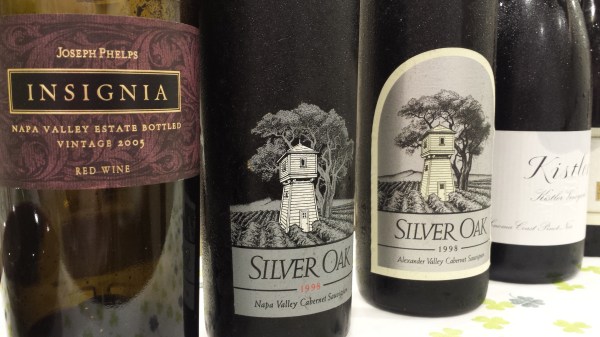
1998 Silver Oak Alexander Valley, aired ahead in bottle. Displaying some vermillion at the rim with lovely floral aromas and predominant red fruits and red roses on the palate with secondary nuances of cinnamon and cassis. Highly enticing and open. Excellent.
2005 Joseph Phelps Insignia, a bottle I’d decanted for 5 hours prior. An abundance of dark plums, dark currants and black fruits producing deep lovely aromas though quite reticent initially. Rich in dark tones and concentration on the palate with a tarry quality and great acidity, opening up with brighter notes after some time, culminating in a mild graphite finish. Excellent, but far from peaking.
1998 Silver Oak Napa Valley (courtesy of CJ). Popped and poured. Quite fascinating to compare the Napa Valley and Alexander Valley of Silver Oak from the same vintage with the benefit of significant bottle age. Supposedly higher in the pecking order, this wine displays good definition of red fruits and plums, medium-bodied and surprisingly bright, absolutely harmonious with fine acidity, linearity and lovely tension, coming across as just a tad more sophisticated than the Alexander Valley but there is really nothing much to separate them. At its peak and will hold for many more years.Excellent.
1997 Caymus Cabernet Sauvignon (courtesy of Hsiang Sui). Popped and poured. A mild cork taint is evident here, the wine already evolved quite well with characters of red fruits and briar and earth, displaying good linearity and harmony though permeated by a woody overtone.
2009 Baron Thenard Montrachet Grand Cru, 1989 Palmer, 2003 La Mondotte, 1990 D’Yquem
These wines were drunk at a dinner hosted by Dr and Mrs Wang Kuo Weng at the NUSS Guild House, Bukit Timah Campus, Singapore, on 23 Aug 2016. Kuo Weng had been very impressed with the 2003 Ch La Mondotte from a previous tasting and wanted to share a bottle with us, along with an old Palmer and D’Yquem. Why not? I came up with the whites, Mrs Wang arranged a customised menu at this lovely restored building and we were set.
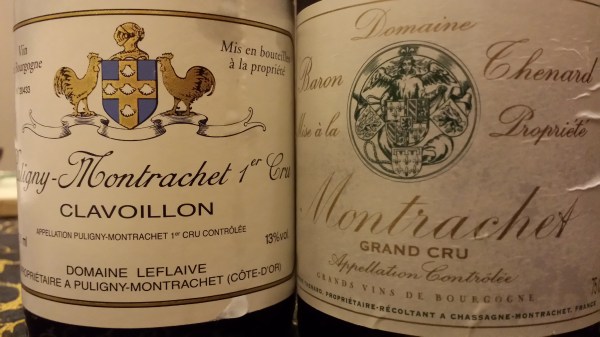
2011 Domaine Leflaive Puligny-Montrachet Clavoillon 1er. Aired in bottle for 7 hours prior in the fridge. The bouquet here is most enticing with lifted aromas of white flowers, peaches, fig and melons, matched by an explosion of minerals, crème, butterscotch, crisp citrus and great acidity all coming together with great exuberance. It went on to develop a perfumed fragrance along with more fat in the mid-body as it warmed up to the right temperature, becoming more open and detailed, displaying superb concentration and depth with further notes of caramel and nectarine, culminating in a great finish of wonderful intensity that seemed to linger forever, displaying the cultured breed of this great estate. Still youthful and far from peaking, but this wine is already so good. Superb.
1989 Ch Palmer. Aired in bottle for about 90 minutes prior. The distinct glow of an aged claret is unmistakable, suggesting violets, rose petals and blueberries with earthy tones and ferric traces, the signature fragrance of Margaux still fresh and alluring. On the palate, the wine has mellowed beautifully, evolving over time to develop lovely characters of red fruits and camphor with mild overtones of ash, still possessing lively acidity and good concentration, not at all drying out but neither the best in definition. The 1989 Palmer is past its absolute brilliance but it is ageing most gracefully and if you’ve never tried one before, it’s still not too late.
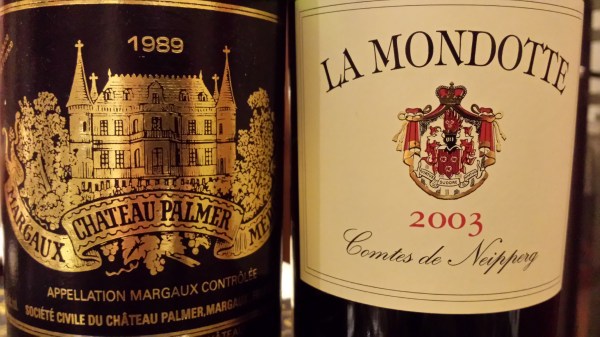
2003 Ch La Mondotte, aired in bottle for 3 hours prior. Predictably, this is a big wine done in a modern style, lavish with an abundance of dark fruits, soy and graphite on the nose, very deep and intense on the palate, highly extracted, the fruit warm and ripe with raisiny characters that gave way to a dominant plummy tone with sweet tannins. However, the intense heat of the growing season took its toll on the finish, which is practically non-existent as the flavours simply dropped off as soon as the wine has left the palate, resulting in a lack of balance. Go for other vintages.
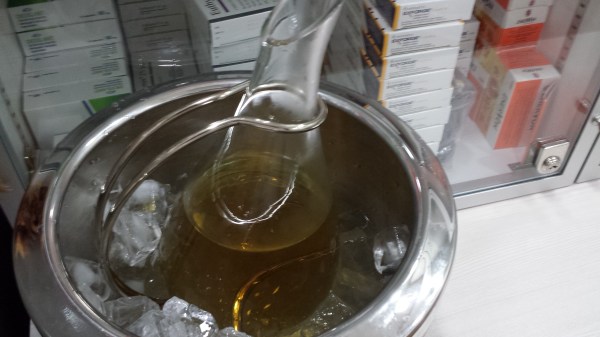
2009 Baron Thenard Montrachet decanted in ice
2009 Baron Thenard Montrachet Grand Cru. Double-decanted from 0730h (you read correctly) under temperature control and drunk neat with a generous cheese platter after the main course. This is the way Burgundians treat a Montrachet Grand Cru. Baron Thenard is the second largest owner (after Marquis de Laguiche) of Montrachet (strictly speaking Le Montrachet, as it lies on the Chassagne side) with 1.83 ha of this Holy Grail of chardonnay. 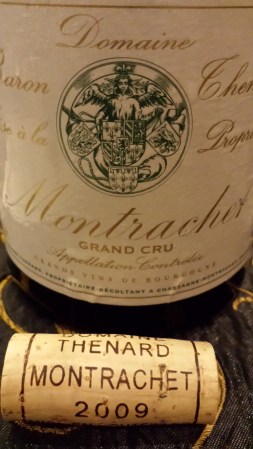 Established in 1842, this estate used to sell its wines to Domaine Remoissenet but has now stopped that practice. Served a tad too cold initially, this wine started off with a predominant tone of minerals with some faint citrus, quite ethereal, displaying some early complexity. As it warmed to the right temperature, its feminine elegance became evident, turning more chalky with a luminous glow as it slowly revealed further notes of caramel and clear citrus, taking its time in an unhurried fashion like a seductress, maintaining a balanced and gentle poise throughout without any hint whatsoever of its 14% alcohol. If I have a quibble, it would be the relative lack of detail on the palate compared with the Montrachet of Bouchard (though this lies on the Puligny side), and the wine borders almost on shyness. Though the guests were impressed, I think this wine is becoming a bit shut. It needs further bottle age.
1990 Ch D’Yquem, from a half bottle. This hallowed wine displayed predominant tones of nectarine with a lifted complex of apricot and honey crust shrouded in overtones of white incense, the aged acidity contributing to a mellowed tone, more minerally towards the finish with an easy balance. Excellent but go for a 750 ml bottling if you are bent on getting one as the acidity is fresher.
My thanks to Dr and Mrs Wang for their kind generosity.

The gleaming tone of 2009 Baron Thenard Montrachet
2014 Wynns Shiraz, at the Silver Kris lounge of Adelaide airport, 07 Aug 2016. Ripe dark berries, redcurrants, mocha and chocolate coat the palate with a creamy smoothness, fleshy, oozing with great acidity and sweet tannins, superbly balanced, ending smoothly in a spicy finish. This is simply quite outstanding. One would have thought this was a far more expensive wine had it been blinded.
Philipponnat Royale Reserve Non-Dose Brut NV. Popped and poured over dimsum at Jade Palace, 09 Aug 2016. Tasted thrice in two months, this champagne was showing very well on this occasion, displaying excellent concentration of lime and green citrus, supported by rich chalky minerality topped with delicate crème and further notes of yeast and toast, laced with a dash of sweetness that complemented the minerally balance, rounded with fine intensity that tapered to a lasting finish. Excellent stuff.
2009 Ch Marsau, popped and poured over dinner at home, 10 Aug 2016. Somewhat reticent on the nose, but the palate is awashed with an abundance of black fruits and dark currants, rich and weighty with a touch of graphite towards the finish, structured with fine supple tannins. A good drop.

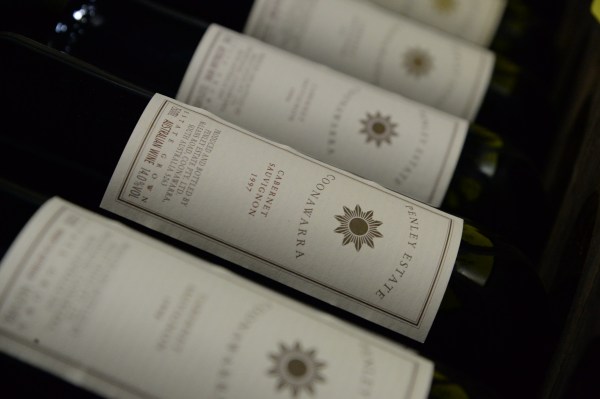
1990 Penley Estate Cabernet Sauvignon, a bottle carried back from the cellars of Penley in Coonawarra, popped and poured at Trattoria, 313 Orchard, 15 Aug 2016. Still dark at its core, this wine opens with dominant medicinal and herbal notes tinged with licorice and dark chocolate amidst some earthy tones, still carrying excellent concentration of dark fruits and currants on the palate with lovely tension arising from the lively acidity and firm tannins, slightly tarry, with further notes of red plums emerging after an hour, rising to an accentuated finish. Very fine indeed, considering this was only the second vintage from this estate. May be cellared for another decade.
2010 Denis Berthaut Fixin Les Crais (courtesy of KP), popped and poured at his residence on 16 Aug 2016. Predominant plummy tone with further notes of roses and cherries, medium-full and rounded with gravelly textures and darker tones on the palate, slightly stern with unresolved tannins though the finish is robust. Would go well with food.
2014 E Guigal La Doriane Condrieu, at Catch Seafood (courtesy of LCW), 25 Aug 2016. Quite a delicate bouquet of floral notes, quite crisp on the palate with flinty minerals and firm citrus, displaying very good concentration and intensity. Perfect for summer.
2014 Egon Muller Scharzhofberger Spatlese (courtesy of LCW) at Catch Seafood, 25 Aug 2016. Fabulous notes of peaches, melons and tropical fruits endlessly teasing the palate with fine detail, racy with lovely acidity and a core of sweet tangerines layered with a tone of burnished nectarine, providing superb mouthfeel and finish. Superb, in spite of its youth.
 2011 J J Prum Kabinett (magnum) at Catch Seafood, 25 Aug 2016. Compared with the preceding Egon Muller, this wine is less exuberant and perhaps a tad more reserved with characters of diesel fumes, slightly drier, smoky and understated which contributed to a sense of austerity, rounded but yet to develop complexity. It fleshed out more over time, becoming fuller and more complex at the finish.
2013 Hudelot-Noellat Chambolle-Musigny at Catch Seafood, 25 Aug 2016 (courtesy of LCW). Rounded with a lovely bouquet of gentle rose petals and earth, quite plummy with a tangy core complemented by crisp acidity. Very fine.
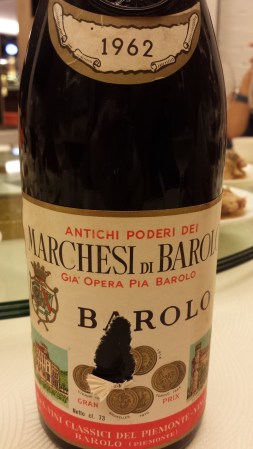
1962 Marchesi di Barolo (courtesy of Dr Liang TS) at Catch Seafood, 25 Aug 2016. This wine is still going strong at 54 years, producing powerful aromas of aged madeira with other medicinal port-like characters, medium-bodied and open, still carrying great acidity with an excellent concentration of warm ripe fruit with nuances of tangerines and cinnamon without any hint of drying out. Amazing stuff.
2012 Gaja Barbaresco (courtesy of LCW) at Catch Seafood, 25 Aug 2016. This wine opens with a superb display of red fruits and red currants with an aristocratic burnished tone, open with excellent concentration and gorgeous acidity, superbly balanced, finishing with mild medicinal overtones. Drinking very well now but will be absolutely fabulous in another decade.
2011 Poderi Aldo Conterno Colonello Bussia (courtesy of LCW) at Catch Seafood, 25 Aug 2016. Big, ripe, almost raisiny with a generous concentration and depth of dark currants and black fruits, quite forward in balance with a sheen of enamel, with further notes of dried leaves coming on later. I’d have thought New World if I’d been blinded. Excellent but needs time to unfurl properly.
 1969 Remoissenet Beaune Chevaliers De L’Arquebuse 1er (courtesy of Dr Liang TS) at Catch Seafood, 25 Aug 2016. This old burgundy, most astonishingly, is still very much alive, exuding an earthy pungency with mellow characters of longans, dark plums and incense, still displaying excellent depth of fruit and fresh acidity, very harmonious, finishing well. Excellent.
2015 Cesare Pinot Grigio, at Aura, National Gallery Singapore, at a Parkway event on 26 Aug 2016. Notes of lemongrass and morning dew, somewhat muted, with white flowers and nutmeg on the palate, slightly veiled, soft with subdued acidity, dominated later by grassy elements, finishing with saline minerals.
2009 Potiron L’Or de Vin Blanc Sec, popped and poured at Prive Grill, 29 Aug 2016. A blend of sauvignon blanc, sauvignon gris and semillon. Somewhat reticent on the nose where one discerns green apples and light citrus. More impressive on the palate which is quite minerally with a good concentration of green fruits, lime and mint with pretty good depth and acidity, finishing on a slightly spicy note.
1998 Penley Estate Cabernet Sauvignon, decanted on-site at Portico Prime Dempsey, 31 Aug 2016. Powerful aromas of leather with a medicinal and herbal glow on the nose coupled with an equally powerful tone of red plums on the palate, very bright and open with notes of other red fruits, fleshy and solid in concentration with firm tannins that hasn’t quite gelled with the vibrant acidity, particularly at the finish. I’m not sure whether this is the result of a very warm ambient temperature, in spite of air-conditioning, at this dining venue that is simply not conducive at all for wine appreciation.
2011 Denis Mortet Gevrey-Chambertin 1er (courtesy of MH), popped and poured at Brazil Churrasco, 31 Aug 2016. Predominant notes of red fruits and red plums, youthful in disposition with fine concentration and intensity, developing further characters of cherries and camphor but not quite structured as higher-tier premiere cru, finishing with a ferrous trace.
2000 Robert Mondavi Cabernet Sauvignon, popped and poured at Brazil Churrasco, 31 Aug 2016. The cork was dry and fractured but the wine showed up well, rich in dark currants, black fruits and soy, quite full and open on the palate with good intensity and concentration and lively acidity.
2003 Barossa Valley E&E Black Pepper Shiraz, popped and poured at Brazil Churrasco, 31 Aug 2016. Another case of splintered cork but the wine was excellent, very deep in color with great acidity and intense notes of licorice, dark chocolates and dark plums with a sweet tangy core, refined and quite harmonious in spite of limited aeration, living up to its name with a fine peppery finish. Very good stuff.
2005 Ch D’Aiguilhe, popped and poured at Brazil Churrasco, 31 Aug 2016. Compared with a previous tasting some three years ago, this modern Right Bank has mellowed considerably, far more approachable without any harshness though it is still generously proportioned and fullish, layered with fine concentration of dark fruits and wild berries and early nuances of cinnamon, quite rounded with well-managed tannins but still far from peaking.
2008 La Conseillante (courtesy of Sanjay), aired in bottle for 90 minutes prior to tasting at Brazil Churrasco, 31 Aug 2016. Dominant notes of soy and ripe dark berries, medium-full, opening up quite well on the palate with great concentration and intensity, well-integrated with supple tannins and some early complexity. Very fine, and should be excellent in another decade.

Ric visits Henschke
Henschke was founded by Johann Christian Henschke who fled Germany in 1842 in the wake of widespread persecution of Old Lutherans, losing his wife and a few of his children during the long and treacherous sea journey to Australia. He settled in the Eden Valley of the Barossa, bought land and started producing wine in 1868. Today, the estate is still family-owned, helmed by fifth generation descendant Stephen Henschke with the sixth generation ready to take over in due course. I consider Henschke’s Hill of Grace as the pinnacle of Australian wine and truly a great wine by any standard. A true single vineyard shiraz (as opposed to Penfolds Grange, a multi-district blend that varies from year-to-year and you simply do not know how many are bottled annually) made from very old vines, some exceeding 100 years, Hill of Grace exudes complexity, depth and layering, seamlessly combining power and elegance, traits that have filtered to other reds within the Henschke stable.
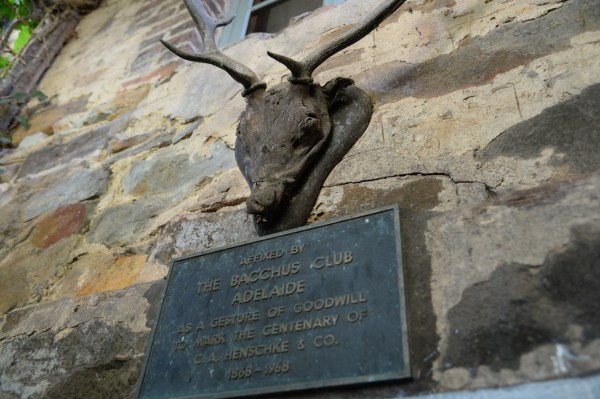
Although I have visited Henschke’s cellar door several times since 2004, this is the first time arrangements were made for a small group of us to visit the estate on 06 Aug 2016 that included a tour of the Hill of Grace vineyard. Readers familiar with the Barossa will know that Eden Valley lies in the north-eastern sector of the Barossa, almost 500 metres above sea-level, and that Henschke itself is situated at a remote corner of the Eden Valley. Surprisingly, the Hill of Grace vineyard is just a small unmarked patch situated some distance away from the main estate, not at all visible from the paved road leading to the estate’s gates and, hence, naturally protected from nosy wine enthusiasts. Severely gnarled and aged, but still going strong, these are the best old vines of shiraz to be found anywhere in Australia, grown on a bed of clay and limestone. Henschke has the foresight to anticipate, though, that these very old vines are not going to last forever. Thus, cuttings were made from the very best vines of Hill of Grace and replanted in an adjacent plot named Hill of Roses, available only as a cellar door release, its first vintage being the 2007. The visit culminated in a private tasting. While I found the whites to be gentle and elegant, I wished there was a bit more going on for them. The reds, on the other hand, are truly the calling cards of Henschke and, of course, we wasted no time carting away as many bottles of Hill of Roses as we could (limited to 3 per customer).
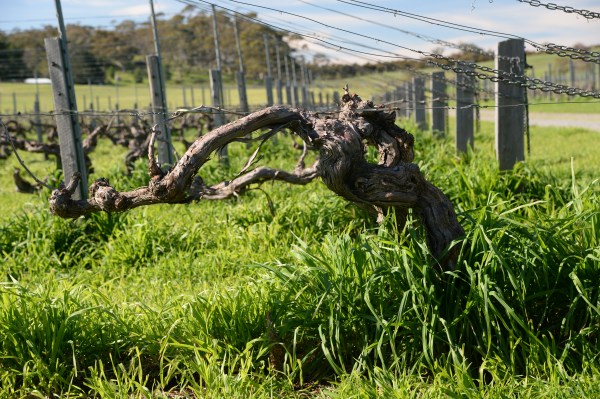
Very old vine of Henschke Hill of Grace vineyard
2015 Henschke Julius Riesling. Made from grapes grown in Eden Valley, famed for its cool-climate Riesling. Gentle bouquet with aromas of grassy elements with overtones of malt. Medium-bodied. Dry and minerally on the palate, quite deft and elegant, more open than a Clare Valley riesling, finishing well.
2015 Henschke Joseph Hill Gewurztraminer. Made from grapes grown in the Adelaide Hills. Light straw-coloured, generous in lychees, green apples and green melons, smooth and elegant with a trace of sweetness and well-integrated acidity, displaying good linearity all the way to its finish.
2014 Henschke Louis Semillion, also grown in the Eden Valley. Straw-colored with green apples and melons, more minerally and flinty but smooth with an easy elegance, displaying very good integration of fine citrus and crisp acidity. Could do with more depth.
2015 Henschke Innes Vineyard Littlehampton Pinot Gris. Notes of citrus and peaches dominate with, again, an easy smoothness and elegance aided by subtle acidity, finishing on a mild note of mint.
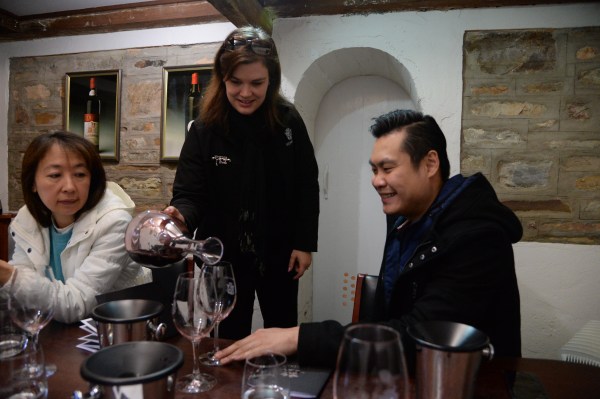
2013 Henschke Giles Lenswood Pinot Noir. Lenswood lies within a cool, hilly part of Adelaide Hills that is ideal for pinot noir. This wine displays a classic pinot color with aromas of aged roses, cinnamon and plums with further notes of strawberries on the palate, medium-bodied with subtle acidity that is quite appropriate though somewhat restrained and short, missing in complexity.
2012 Henschke Keyneton Euphonium, a blend of 65% shiraz and the rest cabernet. Generous bouquet of sweet herbal elements with medicinal traces, underscored by black fruits, briar and sweet dark plums on the palate of good density and concentration, finishing with traces of spice.
2010 Henschke Cyril Henschke Cabernet Sauvignon. Forward balance of cherry wood, plum and cassis on the nose with further notes of mocha and chocolate on the palate, displaying very good depth, concentration and integration, highly elegant with subtle intensity, tapering to a gentle finish. Very fine.
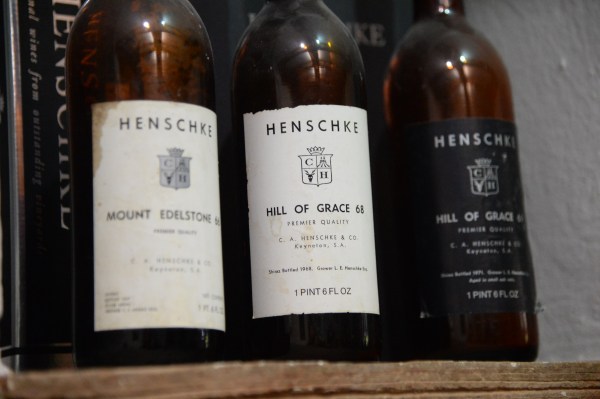
2009 Henschke Hill of Roses. Directly related to Hill of Grace, its breeding is evident where this current vintage, displaying some vermillion at the rim, was highly impressive with deep aromas of red and dark plums, sandalwood, mocha and dark chocolate with a lovely tensile presence contributed by the excellent concentration and purity of fruit, sweet supple tannins and refined acidity, revealing some secondary nuances and early complexity. Poised and elegant without any hint of over-extraction nor manipulation, though it proved to be rather short at the finish, expected from young vines yet to hit full maturity but the results are already remarkably stunning.
2012 Henschke Mount Edelstone shiraz, made from old vines grown in the Eden Valley not unlike Hill of Grace, aged in 32% new oak, mostly French. Readers will note that the Hill of Roses was served first in the line-up even though it costs twice as much. The reason was evident on tasting where the Mount Edelstone shiraz remained superbly poised and restraint in spite of the wonderful depth of glorious dark fruits with characters of sweet dark plums and dark currants illuminated on the palate in excellent definition, highly elegant with superb integration of fruit, acidity, tannins and wood, displaying superb balance and linearity, outstripping the Hill of Roses. This wine will surely turn out to be great over time.
2010 Henschke Hill of Grace. The pinnacle of Australian shiraz was tasted with palpable anticipation. But like all the very best crus of the world, the Hill of Grace is hardly a showstopper, expressing its virtues in a most refined manner with a truly stupendous depth of dark fruits and red currants of fabulous intensity and concentration even greater than that of Mount Edelstone, yet appearing so ethereal through its lovely acidity, great balance and fine detail, not at all hedonistic, absolutely elegant with true finesse, revealing some early complexity at this stage. Truly outstanding but, unfortunately, now priced beyond the reach of most. Go for it if you can but the smart money will be on Mount Edelstone.

Short notes from Barossa
We left Coonawarra for the Barossa Valley on 05 Aug 2016, dropping by the charming German village of Hahndorf along the way for some superb German lager, followed by an excellent lunch at Bridgewater Mill restaurant. I didn’t realise this is no longer the cellar door of Petaluma, having changed management several months ago. Nevertheless, the restaurant has been beautifully expanded, the menu and the extensive wine list are most reasonably priced and the food is still excellent – highly recommended. From Bridgewater, it’s just a 90-minute drive through the Adelaide Hills to the Barossa via its south entrance (ie. Lyndoch), where we wasted no time stopping at the cellar doors of Rockford, St Hallett and Torbreck, followed by dinner at the well-known 1918 restaurant in Tanunda. While this time of the year offers lovely cool weather without any annoying flies, it isn’t the best time to visit Rockford, for its fabled Black Shiraz and Basket Press Shiraz are completely unavailable.
2013 Petaluma Coonawarra Cabernet Sauvignon. A bottle at AUD55 over lunch from the list of Bridgewater Mill in the Adelaide Hills, 05 Aug 2016. Deep dark purple, this wine exudes generous aromas of dark currants, blueberries, violets and dark plums, well-replicated on the palate with open transparency, excellent linearity and definition, ending on a minerally note. Excellent.

2013 Rockford Eden Valley Riesling, tasted at the Rockford cellar door, Barossa Valley, 05 Aug 2016. Very classic bouquet, rich in white citrus and white roses with a petroleum quality. Fullish with some fat on the palate to match the crisp acidity, not too dry, supported by understated minerality with a good finish. Eden Valley, situated 500m above sea-level at the highest point of the Barossa, is famous for its cool-climate riesling and this is an excellent example.
2015 Rockford White Frontignac, tasted at the Rockford cellar door, Barossa Valley, 05 Aug 2016. A suggestion of nectarine on the nose, medium-bodied with subdued sweetness with overtones of white flowers, attractive but lacking in complexity.
2013 Rockford Rod & Spur, tasted at the Rockford cellar door, Barossa Valley, 05 Aug 2016. A cabernet-shiraz blend, this full-bodied wine is stern and austere in demeanour, displaying earthy tones with herbal and forest floor characters, peppery with a powerful spicy finish.
 2013 Rockford Rifle Range, tasted at the Rockford cellar door, Barossa Valley, 05 Aug 2016. Rockford’s cabernet displays quite a lovely glow of ripe dark plums, dark currants and mocha with overtones of ash, quite full on the palate with excellent tannin structure and detail.
2007 Rockford Shiraz VP (vintage port), tasted at the Rockford cellar door, Barossa Valley, 05 Aug 2016. An abundance of ripe fruit with a warm raisiny quality; rich, powerful and smooth with controlled sweetness, displaying good depth and acidity though without much complexity, ending in a minty finish.
2013 St Hallett Dawkins Shiraz, tasted at the St Hallett cellar door, Barossa Valley, 05 Aug 2016. A single vineyard shiraz, this wine displays dominant earthy tones with forest floor characters pegged to warm ripe fruit with spicy peppery notes, full-bodied with crisp acidity, ending on a medicinal note.
2013 St Hallett Scholz, tasted at the St Hallett cellar door, Barossa Valley, 05 Aug 2016. Also a single vineyard shiraz, this wine is weighty and dense with full-bodied ripe shiraz of good concentration, still tight with predominant characters of forest floor and earth, yet to open up. Needs time.
2014 St Hallett Blackwell, tasted at the St Hallett cellar door, Barossa Valley, 05 Aug 2016. This stalwart of St Hallett carries an abundance of dark currants and black fruits with some graphite elements, herbal tones and notes of dried mushroom, still very tight and a bit hard on the palate at this stage where it has just been newly bottled.
2010 St Hallett Blackwell, tasted at the St Hallett cellar door, Barossa Valley, 05 Aug 2016. With the benefit of bottle age, this wine is much more developed with early secondary nuances of mocha and cinnamon amidst licorice and earthy tones, full-bodied with great acidity and excellent tannin structure with a trace of sweetness, opening up with real sophistication. Excellent.
2013 St Hallett Old Block, tasted at the St Hallett cellar door, Barossa Valley, 05 Aug 2016. In spite of its youth, this flagship of St Hallett offers a bouquet of unexpected complexity and verve, rich in dark currants and black fruits with some tangerine at its core, surprisingly deft and open, very poised and well-defined with a ferrous finish, not at all heavy. Excellent.

2015 Torbreck Viognier, tasted at the Torbreck cellar door, Barossa Valley, 05 Aug 2016. Full-bodied with unusual aromas of glue and agar, crisp on the palate with accentuated notes of green citrus, a tad sharp towards the finish.
2011 Torbreck Kyloe Mataro, tasted at the Torbreck cellar door, Barossa Valley, 05 Aug 2016 Full-bodied with typical characters of bush, undergrowth and wood, dense and undifferentiated with firm sharp tannins.
2013 Torbreck Factor, tasted at the Torbreck cellar door, Barossa Valley, 05 Aug 2016. 100% shiraz from old vines, aged in older casks. A big wine with an abundance of warm lush fruit, densely layered with overtones of varnish, herbal elements and black pepper, displaying good balance.
2013 Torbreck Descendant, tasted at the Torbreck cellar door, Barossa Valley, 05 Aug 2016. A single vineyard shiraz planted in 1994 with cuttings from old RunRig vines, added with 8% viognier in the style of Northern Rhone and aged in casks previously used for RunRig. Oozing with licorice, dark chocolate, medicinal spice and black pepper, densely saturated with discernible traces of lemongrass contributed by the viognier that has not quite gelled with the shiraz yet, warm and earthy, finishing with firm tannins.

2013 Torbreck RunRig, tasted at the Torbreck cellar door, Barossa Valley, 05 Aug 2016. Surprisingly, for such a young wine, this flagship of Torbreck is absolutely poised and elegant, displaying muted aromas, medium-full on the palate with very good integration between the ripe fruit, acidity and oak, displaying fine balance and definition, beautifully structured with sophisticated tannins. Undoubtedly large in proportion but doesn’t call attention to itself. Very similar in expression to Northern Rhone syrah. Highly successful.
2015 Skillogalee Riesling, from the restuarnt list of 1918, Tanunda, Barossa Valley, 05 Aug 2016. Aromatic with dense fumes of varnish and white flowers, full-bodied, endowed with stern minerality and crisp acidity with a hint of barley. Will benefit from another 3-4 years of cellaring.
1994 Henschke Mount Edelstone, AUD260 off the list of 1918 restaurant and decanted on-site, Tanunda, Barossa Valley, 05 Aug 2016. With the benefit of prolonged cellaring, this top shiraz of Henschke (ranked just below its Hill of Grace) displays a stunning complex bouquet of mocha, white chocolate and sweet incense, medium-full with notes of dark cherries and bitter peat that eventually gave way to a deep spicy medicinal glow only possible from aged wines, still maintaining lovely structure and tensile acidity with sweet port-like overtones. Excellent.

Barossa from the air
2014 Saltram Metala Shiraz Cabernet, tasted at the cellar door of Saltram, Barossa Valley, 06 Aug 2016. Dense core of dark red fruits with overtones of sugar burnt. Full, austere and slightly angular with a spicy finish.
2014 Saltram Shiraz, tasted at the cellar door of Saltram, Barossa Valley, 06 Aug 2016. Full-bodied with an abundance of black fruits and dark currants with some bright spots, displaying good overall balance and linearity but lacking in complexity.
2012 Saltram Mamre Brook Shiraz, tasted at the cellar door of Saltram, Barossa Valley, 06 Aug 2016. Classic nose of mocha, licorice and dark chocolate on the nose. Harmonious and balanced but lacking complexity.
2012 Saltram Single Vineyard Marble Road Shiraz, tasted at the cellar door of Saltram, Barossa Valley, 06 Aug 2016. This wine displays an excellent depth of gorgeous black fruits with firm tannin structure, quite well integrated at this stage but with a slightly prominent alcoholic trace at the finish.
2012 Saltram Mamre Brook Cabernet Sauvignon, tasted at the cellar door of Saltram, Barossa Valley, 06 Aug 2016. From a bottle that had evidently been opened and aired for some time, this wine was very open and approachable, displaying distinct and attractive cabernet characters of chocolate, bramble, violets, dark fruits and traces of cinnamon, detailed on the palate with elegant tannins. However, a new bottle that was popped over lunch at Salter’s Kitchen (the estate’s restaurant), was shut and tightly coiled, loaded with soy and graphite characters that proved too overwhelming. This wine has excellent potential but it needs plenty of time to blossom.

2012 Saltram Winemaker Selection Cabernet Sauvignon, tasted at the cellar door of Saltram, Barossa Valley, 06 Aug 2016. From the same vintage as the Mamre Brook above but supposedly higher in the pecking order, this special selection possesses an appreciably deeper bouquet of blackcurrants and violets, but it seems somewhat awkward at the moment with flavours that are rather narrow in spectrum, lacking in distinct cabernet character. Probably needs another few years of cellaring to unfurl its full potential.
2013 Saltram McLaren Vale Pepperjack Shiraz, tasted at the cellar door of Saltram, Barossa Valley, 06 Aug 2016. Peppery and spicy with overtones of white chocolate from grapes that are very ripe and grainy, befitting the rustic character of most McLaren Vale shiraz.
2013 Saltram No.1, tasted at the cellar door of Saltram, Barossa Valley, 06 Aug 2016. What used to be Saltram’s flagship, the No.1 stamps its class with a fine display of decadent chocolate, red fruits, bright cherries and dark plums, open and layered on the palate with fine detail and great succulence, finishing with a long peppery trace. Excellent.
2009 Saltram The Journal 100 Year Old Vine Shiraz, tasted at the cellar door of Saltram, Barossa Valley, 06 Aug 2016. This current flagship of Saltram boasts a complex nose of cassis, licorice, plums and white pepper, medium-full, developing fine tension from the supple tannins and smooth acidity, displaying excellent linearity to its long finish. Excellent, but the smart money should be on No.1.

Ric visits Penley Estate
Penley Estate in Coonawarra was set up in 1988 by Kym Tolley after he left Penfolds, having been the chief winemaker for its famous Bin 707 cabernet sauvignon. The name Penley combines the prefix of Penfolds with the suffix of Tolley. I like Penley’s cabernet, first bottled in 1989, which is made with a real feel for the terra rossa terroir of Coonawarra, never overly extracted, thoroughly age-worthy, fleshy with red fruits and dark currants that develops into a complex open wine with age. I first visited its cellar door in 2003 and I have been back several times since. On this occasion, 04 Aug 2016, Penley has arranged a tour of its vineyard and facilities, led by its winemaker Matt Tilby followed by a tasting of its 2014, 2015 and 2016 cabernet sauvignon from barrel and further tasting at the cellar door. Penley ages its cabernet in 100% new French oak, a great choice for elegance and complexity. Kym has retired and the labels now sport a new modern design featuring Greek mythology. I’m not sure whether the new labels are entirely necessary but, most importantly, I felt reassured that the wines I tasted were still excellent, a clear indication that Penley has remained on track. My sincere thanks goes to Matt and his cellar door team for their time and generosity.
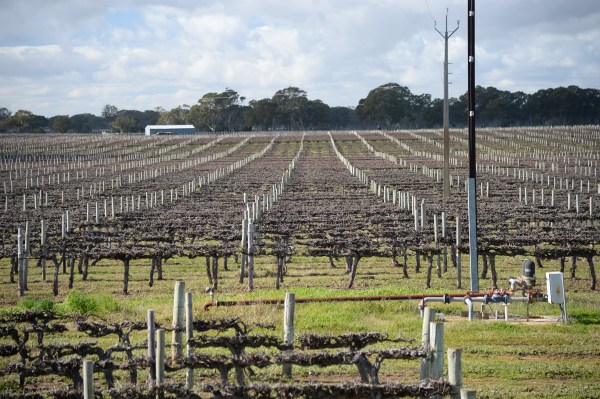
2013 Penley Estate Heritage Tolmer Cabernet Sauvignon, tasted at the cellar door. Forward with characters of plums and dark berries, carrying good weight and concentration with fine tannins, though somewhat austere in demeanour.
2013 Penley Estate Steyning Cabernet Sauvignon Classic. The fruit quality here is truly excellent, fresh, exciting and aromatic, very harmonious with well-integrated acidity and good tannin structure.
2013 Penley Estate Chertsey Classic Red Blend #1. A blend roughly of a third each of cabernet sauvignon, merlot and petit verdot, this wine sports a powerful sweet medicinal and herbal lift, rounded with fine acidity and some complexity but short.
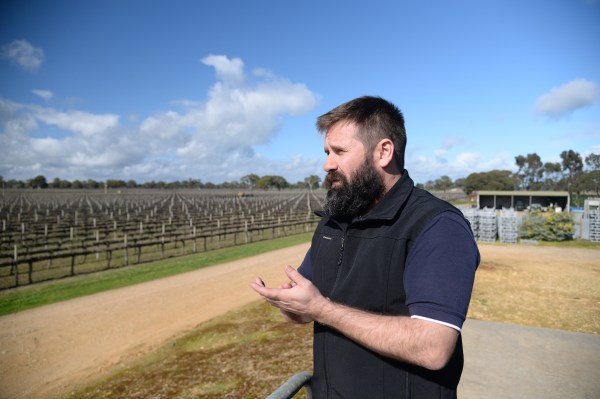
2014 Penley Estate Rosebury Shiraz. Lovely deep nose with a hint of black pepper, spice and mocha, displaying good balance and linearity with great acidity and a creamy finish.
2000 Penley Estate Special Select Shiraz, plucked from its museum collection. Great bouquet of black pepper, licorice and dark plums, medium-bodied, savoury and satiny smooth on the palate, highly supple with subtle acidity leading up to a great complex finish. Quite superb.
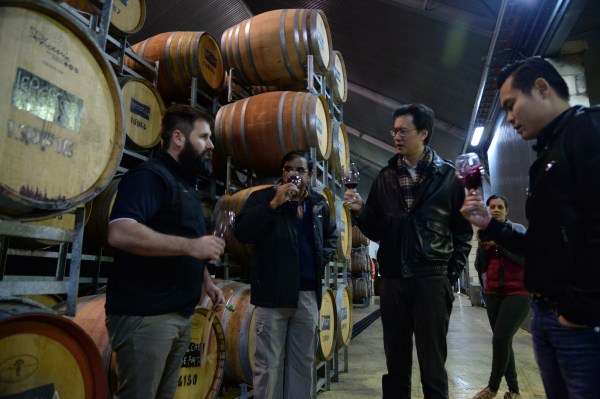
1989 Penley Estate Cabernet Sauvignon, plucked from its museum collection. Dark at its core with a vermillion rim, the very first vintage of this estate exudes powerful lifted sweet medicinal aromas that were almost port-like. On the palate, the wine is soft and rounded with a plummy tone, relaxed and open with a creamy complexity whilst maintaining a lovely tension from the subtle acidity. Caught at its absolute peak. This is great stuff and what a privilege it was to have had the opportunity to taste this.
2014 Penley Estate Cabernet Sauvignon, tasted from barrel. Subtly flavoured with earthy tones. Well-integrated with overtones of ash and incense amid slim and supple tannins, showing good presence, already taking shape very well.
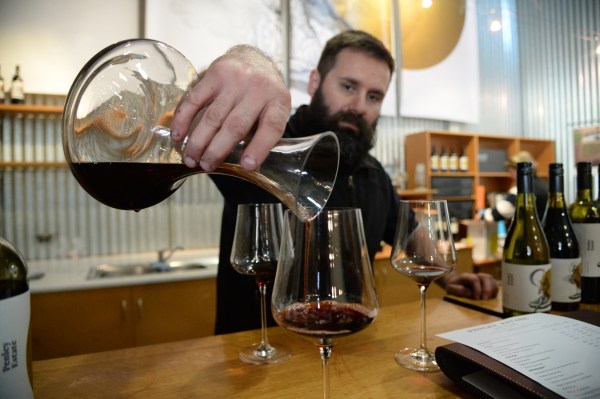
2015 Penley Estate Cabernet Sauvignon, tasted from barrel. Lovely floral aromas with characters of violets, blueberries, raspberries and dark currants, displaying excellent concentration of cool ripe fruit, great balance and purity with very subtle use of wood. Already excellent at this stage, and I think this will be outstanding in time to come.
2016 Penley Estate Cabernet Sauvignon, tasted from barrel. Even at such an early stage, this year’s cabernet is already so good from barrel, forward with violets and cool ripe fruit, displaying excellent ripeness with some earthy tones, exuding great acidity and freshness. Excellent potential ahead.
Short notes from Coonawarra
These notes stem from a brief two-day visit to Coonawarra, 3-4 August 2016, which we drove to straight from Adelaide airport. At the peak of winter, the ultra flat landscape of Coonawarra appears barren with endless rows of vines shorn and stark naked in the cold wind. Lying 382 km southeast of Adelaide (a good 3.5 hours drive), Coonawarra is never exactly a tourist hotspot, generally bereft of attractions (the World Heritage Naracoorte caves are 20 km up north while Mt Gambier is another 50 km south) save for the wineries. But for purveyors of world-class cabernet, the sight of all the well-known estates on both sides of the single road running down this narrow 7 km strip is enough to excite the senses. I first visited Coonwarra in 2003 and every visit since has always been highly anticipated. The same names are there although Yalumba has shut its cellar door, Parker Estate has been spruced up by its new owners, and Kym Tolley has retired from Penley.
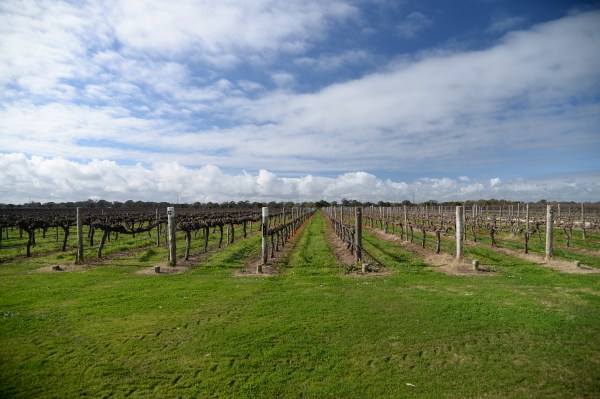
2014 Hollick The Gondolier Barbera, tasted at the cellar door of Hollick, 03 Aug 2016. Rather medicinal on the nose with herbal overtones. Full-bodied with very good concentration of red and dark berries, laced with fine acidity.
2012 Hollick Tannery Block cabernet merlot, tasted at the cellar door of Hollick, 03 Aug 2016. Red fruits and wild berries dominate with very good concentration and balance, slightly lean, finishing with fine supple tannins.
2012 Hollick Ravenswood, tasted at the cellar door of Hollick, 03 Aug 2016. This flagship of Hollick exudes a true cabernet bouquet of red fruits, violets, sandalwood and an unusual note of glue that is undeniably attractive. Fleshy, full, and quite open with excellent concentration, very well balanced and sophisticated. Very fine indeed.
2015 Hollick The Nectar, tasted at the cellar door of Hollick, 03 Aug 2016. Nectarine, apricot and cinnamon dominate, ample and smooth with good concentration, though lacking in real complexity.
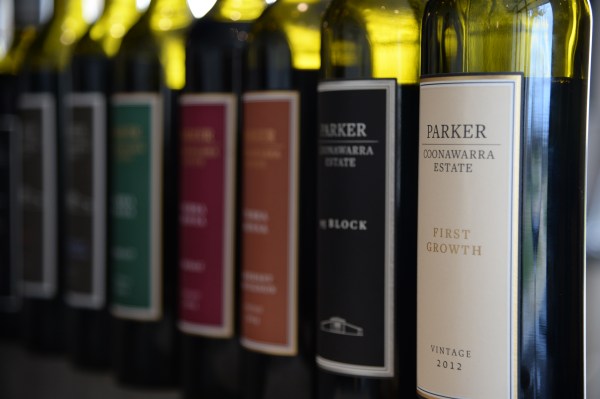
2010 Parker Estate Terra Rossa cabernet sauvignon, a bottle at AUD55 from the restaurant list of Piper’s in Penola, Coonawarra, 03 Aug 2016. Displaying some early evolution, this wine is vibrant with plenty of red fruits, violets and plums, caressing the palate with a velvety intensity from the full concentration, structured with sophisticated tannins, finishing with traces of spice. Excellent. Worthy of mention alongside the Terra Rossa First Growth.
2015 Parker Estate Chardonnay, tasted at the cellar door of Parker Estate, 04 Aug 2016. Flavourful with an abundance of grassy elements, morning dew and light citrus, quite delicate without the chunky minerality and cream often seen in New Word chardonnay.
2014 Parker Estate Favourite Son, tasted at the cellar door of Parker Estate, 04 Aug 2016. Earthy with good grape quality, slightly austere with some prominent graphite and ferrous trace at the finish.
2014 Parker Estate Shiraz, tasted at the cellar door of Parker Estate, 04 Aug 2016. Lifted notes of anise, licorice and plums, displaying great acidity and subtle intensity, somewhat lean with textures, characteristic of cool-climate shiraz. Very attractive.
2014 Parker Estate Cabernet Sauvignon, tasted at the cellar door of Parker Estate, 04 Aug 2016. Lean with dark berries and blackcurrants, slightly earthy with traces of burnt, well-balanced on the palate though not distinctive.
2014 Parker Estate Merlot, tasted at the cellar door of Parker Estate, 04 Aug 2016. Lovely aromas of bright red fruits and dark currants, male with supple tannins, finishing with a perfumed fragrance.
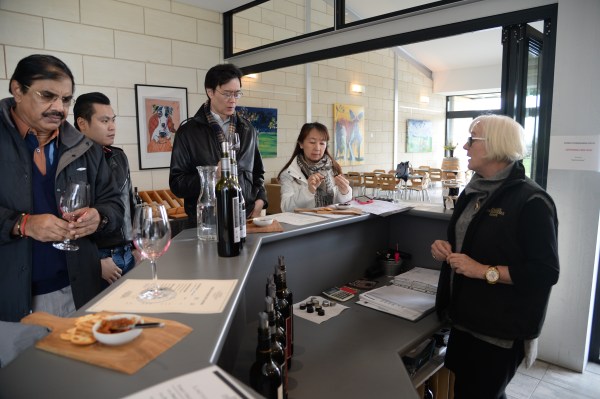
2014 Parker Estate Terra Rossa Shiraz,tasted at the cellar door of Parker Estate, 04 Aug 2016. Lovely bouquet of cool-climate shiraz, oozing mocha, chocolate and dark berries with lovely warm aromas, lively with great balance, finishing with a subtle dash of spice.
2014 Parker Estate Terra Rossa cabernet sauvignon, tasted at the cellar door of Parker Estate, 04 Aug 2016. Dark deep ruby, displaying an abundance of red fruits and dark currants, surprisingly mellow with good detail and some mild dusty textures from the new wood, just a tad short.
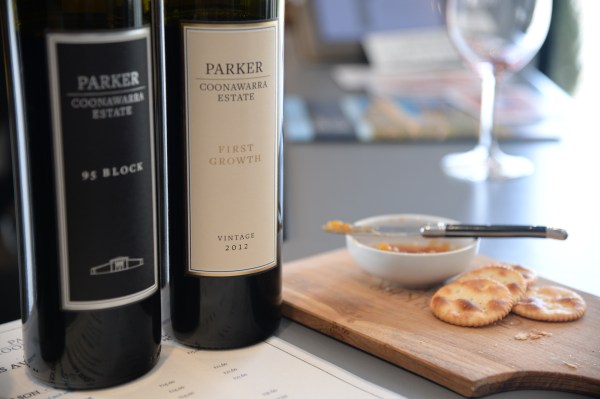
2013 Parker Estate 95 Block cabernet sauvignon, tasted at the cellar door of Parker Estate, 04 Aug 2016. Made from a plot containing clones of original pre-phylloxera Bordeaux cabernet cuttings, and blended with 21% petit verdot. Deep purple, this wine exudes aromas of coconut and malibu, quite full and ample and well-structured with dark fruits and sophisticated tannins at its core, softened by overtones of ash and spice with the petit verdot adding further velvety fragrance. An unusual cabernet that needs more time in bottle to sort itself out fully.
2012 Parker Estate Terra Rossa First Growth, tasted at the cellar door of Parker Estate, 04 Aug 2016. Bright purple, this flagship cabernet exudes heady aromas of ripe fruit and something akin to glue that was most intoxicating. The palate is suffused with red berries, blueberries and violets, highly supple with excellent acidity that gave the impression of a slim profile though certainly not lean, very well-balanced and linear to its finish. Very good now, but I expect it to flesh out with further complexity in another 5-7 years.
 Ric's Wine Journal