July 2016: 1996 Chateau Tertre Rotebouef, 1996 Parker Estate Terra Rossa First Growth, 2011 Bouchard Chevalier-Montrachet…
2003 Ch Phelan Segur, decanted on-site at Crystal Jade Ngee Ann City, Singapore, on 02 July 2016. Deep purple, this wine exudes an abundance of ripe dark berries and raspberries with a tinge of burnt, the heat wave of that particular vintage reflected in the raisiny quality of the fruit with a pruny character. On the palate, this wine is ample and structured with excellent concentration, just a shade stern towards the finish but opening up beautifully after an hour to yield exciting supple tannins. A fine drop with a long life ahead.
Philipponnat Royale Reserve Non-Dose Brut NV. Tasted twice on 03 and 06 July 2016. Made of predominantly pinot noir and blended with chardonnay and meunier and disgorged in July 2013, this champagne possesses quite a stern demeanour right from the start, rich and concentrated in darker shades of lime, bitter lemon and pomelo with an attractive creamy intensity, veering naturally towards dryness due to its non-dosage (ie. no sweet wine or Cognac is added before bottling) method, but never abrasive, slightly steely at the finish with a bitter-sweet quality.
2004 Ch Cissac, popped and poured after hours at Heart Partners, 04 July 2016. Dull opaque red, this wine offers notes of cool dark berries, blueberries and briar on the nose, somewhat plummy with dryish textures on the palate, medium-full, structured with firm sweet tannins and crisp acidity, fleshy but short at the finish. Immediately recognisable as a Haut-Medoc. A fine table wine but not distinctive. At one time, Ch Cissac was the Bordeaux served on board Singapore Airlines Business Class.
2012 Domaine Faiveley Gevrey-Chambertin “Clos des Issarts” 1er, popped and poured at Prive Grill, 05 July 2016. Displaying a deep ruby, this monopole of Faiveley possesses an abundance of red roses and dark cherries, bright and alluring with further notes of plums and earth coming on after some time, surprisingly open and airy, laced with crisp acidity and understated minerality but yet to develop secondary nuances. Needs further cellaring.
2005 Ch Reignac, two bottles popped and poured over dinner at NUSS Guild House, Singapore, 12 July 2016. This wine offered a classic nose of violets, ripe wild berries, blueberries and dark currants without being too effusive, quite open and fleshy on the palate with a hint of prunes amidst dryish textures entirely in keeping with its Bordeaux origin, turning more raisiny towards the finish that, perhaps, betrayed higher extraction in the winemaking. Nevertheless, Reignac has always outperformed its Bordeaux Superieur classification and this 2005 is beginning to drink well.
2001 Elderton Command shiraz, popped and poured over dinner at NUSS Guild House, Singapore, 12 July 2016. It is quite unbelievable that, after 15 years, this stalwart of the Barossa is still stuffed to the brim with ripe warm fruit recalling raisins, licorice, herbs and prunes with overtones of port, full-bodied with acidity still fresh and lively, its massive concentration and layering framed by stout tannins that, I must say, are very expertly managed to give an impression of velvety smoothness.
2006 Pierre-Jouet Brut Rose (courtesy of Li Fern), popped and poured at a Gleneagles event at Gattopardo, 19 July 2016. Notes of honeysuckle, toasted oak, yeast and malt teased the senses with excellent concentration, complexity and balance, producing a deep burnished tone with further notes of cinnamon. Excellent.
2011 Bouchard Pere et Fils Chevalier-Montrachet Grand Cru (courtesy of Sanjay), served after a brief airing in bottle at a Gleneagles event at Gattopardo, 19 July 2016. In spite of the suboptimal aeration, this wine was absolutely singing with effusive notes of aromatic white flowers yet light and ethereal with superb subtle intensity of apricot, nectarine and tropical fruits, creamy in texture, already complex, displaying great linearity all the way to its lasting finish. Feminine and voluptuous, for a white. Absolutely delightful. Wonderful stuff. Bouchard belongs to the top division of burgundy whites.
2012 Domaine des Comtes Lafon Volnay Santenots-du-Milieu 1er (courtesy of Miah Hiang), served after a brief airing in bottle at a Gleneagles event at Gattopardo, 19 July 2016. Ample in dark cherries and fresh roses on the nose and palate, richer and more intense than usual for pinot noir, coupled with traces of kumquat and tangerines held together by velvety tannins. Still rather tight. Will be absolutely gorgeous in another 5-7 years.
2010 Ch Ducru Beaucaillou (courtesy of Keen Wai), decanted on-site at a Gleneagles event at Gattopardo, 19 July 2016. Dark and intense with a complex bouquet of raspberries and red fruits amidst some mild earthiness and traces of soy, displaying excellent concentration and intensity, oozing with controlled sweet tannins. Already accessible, but clearly needs another decade of cellaring, at least.
2009 Ch Branon (courtesy of John), served after a brief airing in bottle at a Gleneagles event at Gattopardo, 19 July 2016. I must admit not having been acquainted with this estate before but it is, indeed, excellent. An abundance of red fruits, earthy minerals and characters of forest floor dominate with sweet svelte tannins and overtones of enamel. Still tight, but this has huge potential.
2006 Ch Grand-Puy-Lacoste, after a brief airing in bottle at a Gleneagles event at Gattopardo, 19 July 2016. Served from magnum, this GPL has finally come into its own, ample in red and dark currants, quite minerally with an austere ferrous trace and framed by sweet tight tannins, drinking well with an exciting verve from its gorgeous acidity. Already quite open, this wine has character and will be even better.
2005 Ch Pichon Longueville Comtesse de Lalande (courtesy of CJ), after some aeration in bottle at a Gleneagles event at Gattopardo, 19 July 2016. This is an unusual Lalande, rather dark and austere in tone, almost closed, with dominant notes of dark plums and vegetative elements, tight and unyielding. Needs time, perhaps.
2001 Ch Pavie Decesse (courtesy of Hsiang Sui), after some aeration in bottle at a Gleneagles event at Gattopardo, 19 July 2016. Dark in tone and color with sweet medicinal overtones coupled with soy and herbal elements, rich and smooth with a quiet intensity.
2001 Poggio Salvi Riserva Brunello di Montalcino (courtesy of Li Fern), after some aeration in bottle at a Gleneagles event at Gattopardo, 19 July 2016. Notes of plums, red fruits and tangerines, quite open and fleshy on the palate with good definition, laced with sweet tannins and fine acidity.
1996 Ch Tertre-Rotebouef (courtesy of S S Ngoi), served after aeration in bottle for over an hour at a Gleneagles event at Gattopardo, 19 July 2016. Displaying a fair degree of evolution, this wine was highly lifted, utterly complex and open, its gorgeous fruit exuding sweet tones of glycerine, still fresh with great acidity, gaining in detail and intensity over time, culminating in a mild tannic spine that added further to the excitement and heightened tension. Very classy and sophisticated. Superb.
1995 Ch Boyd-Cantenac, popped and poured at Dragon Pheonix restaurant, Temasek Club, 22 July 2016. This bottle was a poor example of this wine, far evolved beyond its 21 years with a murky pinkish brown color where the fruit has faded terribly, leaving a shell without any decency of a claret, just sweet medicinal aromas with characters of port and sour plums. Probably the result of poor provenance.
2004 Henri Abele, popped and poured over dimsum at Asia Grand, 24 July 2016. Displaying a fruit-forward balance initially, featuring green melons, green apples and white grapes, developing further notes of toast, yeast and rye with better depth after 45 minutes to balance against the dry finish. Neither profound nor as complex as the best vintage champagne, but it works well for a casual lunch.
2013 Cecchi Vermentino Litorale Val Delle Rose, popped and poured at Rubato, 26 July 2016. Notes of morning dew, green apples and peaches with a sweet nose, creamy with good concentration and understated minerality. Drinking well.
1996 Parker Estate Terra Rossa First Growth, decanted on-site at Rubato for an hour prior to serving, 26 July 2016. A bottle that I’d cellared for several years, this famous cabernet blend displayed a sweet bouquet of medicinal and herbal tones, ample in notes of mocha, chocolate and raspberries with a hint of brandied cherries on the palate, open, relaxed and well-structured with supple tannins and fresh acidity still, developing a slightly ferrous and pungent overtone over time that reflects the famous terra rossa terroir of Coonawarra. Quite unique and excellent.
Rockford Black Shiraz 2013 disgorgement (courtesy of Hiok), popped and poured at Rubato, 26 July 2016. Elements of Rockford Basket Press shiraz, from which this famous sparkling shiraz is derived, are readily discernible: the raisiny tone of warm ripe shiraz, licorice, herbal overtones, cinnamon and raspberries with traces of liquer at the finish, slightly sweet-edged with the fizz adding a fresh dimension. Uniquely attractive.
2007 Louis Roederer Cristal, popped and poured at Jade Palace, 27 July 2016. This celebrity champagne possesses a deep burnished tone with a sweet edge, ample in lime, citrus and fig with toasty overtones, crisp not too dry, very well balanced against the chalky minerality with quite a lovely intensity, developing some early complexity over time although it doesn’t quite match the depth and opulence of a Henriot or Dom Perignon.
2009 Ch Le Crock (courtesy of Hiok), popped and poured after a brief aeration at Jade Palace, 27 July 2016. Good concentration of quality fruit though rather generic in character, with overtones of enamel, wood and earthy tones, quite extracted but narrow in spectrum with a slight vegetative hint.
2012 Ch La Grave-a-Pomerol Trigant de Boisset, poured from magnum after an hour’s aeration at Jade Palace, 27 July 2016. This wine displays dominant notes of soy and ripe black fruits on the nose, open with good transparency and concentration, bright and lively on the palate with a sweet subtle intensity, quite linear, tapering towards a dusty finish. Very good value for money.
2000 Ch Monbousquet, poured after an hour’s aeration at Jade Palace, 27 July 2016. Ripe with earthy tones, dark berries and mild medicinal overtones with a trace of sweetness, displaying some evolution at this stage but still tight, medium-full with a fair bit of power. Needs more time to settle down.
2001 Ch L’Evangile (courtesy of Dr Mark Fernandez), poured after an hour’s aeration at Jade Palace, 27 July 2016. Notes of old leather, dried mushrooms and soy dominate with silky textures, quite open and harmonious with some lovely tension mounted by the fresh acidity. Excellent.
2012 Ch Grand Village Blanc, at Time & Flow, Scotts Square, 30 July 2016. Quite unusual on the nose where it was rather meaty with a reductive quality, suggesting ham amidst some earthiness. On the palate, this wine was quite ethereal, displaying great acidity and wonderful purity of fruit, fleshy but not heavy, developing some early complexity with traces of peach and burnt sugar, glowing with subtle intensity. Excellent.
2007 Ch Bernadotte, at Time & Flow, Scotts Square, 30 July 2016. This medium-bodied wine exudes notes of earth, graphite and iron ore at its core, subtly structured with good acidity and fruit quality with traces of enamel from new oak still discernible. Certainly drinking very well and, had it been blinded, I wouldn’t have known it was a Haut Medoc. Very fine, proving that every vintage carries an optimal drinking window.
2012 Ch D’Armailhac, at Time & Flow, Scotts Square, 30 July 2016. A far bigger wine than the preceding Bernadotte, displaying very good concentration of redcurrants and raspberries with fine purity and traces of forest floor, highly accessible in spite of its youth, gaining further intensity and structure, proving to be a superb pairing with the excellent lamb.
2011 Carmes de Rieussec, at Time & Flow, Scotts Square, 30 July 2016. Surprisingly good for a second wine with no shortage of nectarine and apricot, suitably intense with fine acidity and overtones of sweet incense, just missing, perhaps, the detail and complexity of a Rieussec grand vin.
An evening of great Burgundy
Bacchus isn’t doing too badly this year, having managed to meet twice before a third of the year was over. Burgundy was the theme for dinner on 26 April 2016 at the newly-relocated Saint Pierre, now on the second floor of One Fullerton, Singapore, where it commands an unobstructed view of the iconic Marina Bay Sands (pity, though, that the chandelier lights within the restaurant reflected badly off the slanted windows, actually obscuring the view). It seemed Saint-Pierre has refocused on delivering what matters most to diners: food and service quality, for the restaurant has downsized significantly from its previous incarnations, now just comprising a simple dining hall with limited capacity and a very small adjoining private dining room. On both counts, Saint-Pierre has delivered well with chef Emmanuel Stroobant displaying plenty of flair and imagination. On this occasion, a long table had been set for dinner with a customised menu. As we awaited everyone’s arrival, we began with a 2006 Perrier Jouet Belle Epoque (courtesy of Li Fern), dominated by notes of cinnamon, peaches and toasty oak against a backdrop of stony minerality, very well-proportioned with dry textures, developing some floral fragrance after some time but stern in overall demeanour.
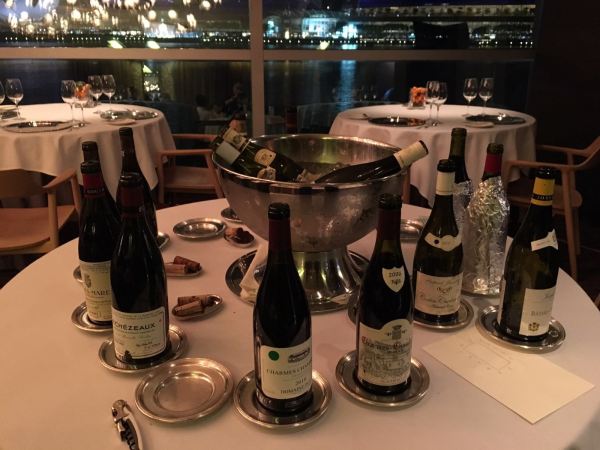
We kicked off dinner proper with a trio of excellent whites:
2007 Domaine Joseph Drouhin Batard-Montrachet Grand Cru (courtesy of the Tan brothers). Terribly shut initially before gradually emerging from its shell as it warmed up to the correct temperature, its intensity more discernible within a narrow spectrum, eventually blossoming into an effusive expanse of crème de la crème and buttery characters with chalky minerals that are very well integrated, generously proportioned with plenty of fat. Full and voluptuous and very correct on the palate. Superb.
2010 Domaine Henri Boillot Criots-Batard-Montrachet Grand Cru. Quite an impressive earthy pungency on the nose, noticeably lighter and more minerally with a sense of delicacy (reflecting its terroir well, given that this tiny plot lies between Chassagne and Puligny), displaying great suppleness and intensity from the firm concentration of citrus, finishing with traces of bitter lemon. Excellent.
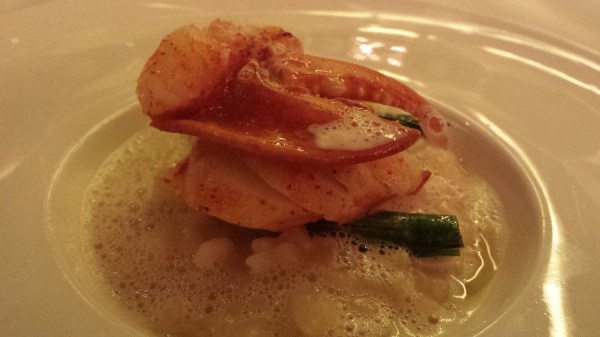
2005 Patrick Javillier Corton-Charlemagne Grand Cru (courtesy of Li Fern). Typically of this producer, this wine displays aromas of aged crème and cinnamon and wisps of scented white flowers, slightly nutty, but the general impression is one of shy understated tones.
We began the reds with a blinded pairing. The first wine displayed an aged dull ruby with a sweet medicinal trace on the nose that gave it an aged feel, open and quite seamless with good balance but seemingly lacking in structure and layering, somewhat short and minty at the finish. When the wraps were removed, I was surprised that it turned out to be a 1995 Georges Comte de Vogue Bonnes-Mares Grand Cru (courtesy of Hiok). However, this bottle was neither as masculine nor as fresh as another bottle tasted in January 2016 with Jean-Luc Pepin of Comte de Vogue that came straight from the estate’s cellars, proving a point for buying ex-chateau.
The second red, tasted blind alongside the Bonnes-Mares above, was dull red, suggesting significant bottle age, displaying some camphor and bright red fruits on the nose, quite vigorous on the palate with a deep vein of red currants that betrayed its New World origins, becoming more settled and harmonious after some time with a predominant tone of ripe strawberries and a minty finish. I was correct when the wraps were removed: a 1994 Willem Salyem pinot noir (courtesy of Li Fern), an excellent pinot noir with a cult following.
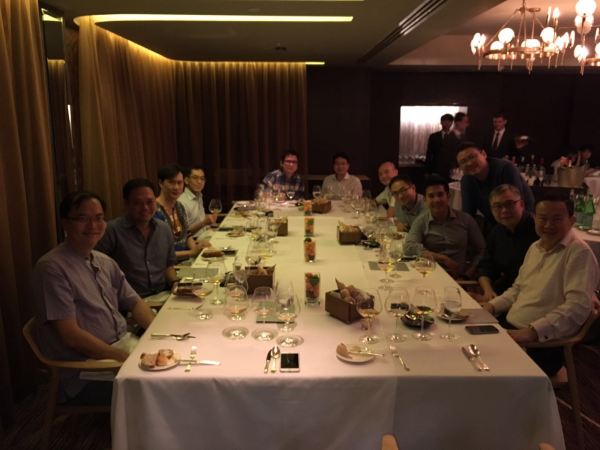
The line-up thereafter was absolutely outstanding:
1996 Georges Comte de Vogue Bonnes-Mares Grand Cru (courtesy of Andre). Notes of heated stones and earthy tones dominate on the nose with a distinct trace of brett that took some time to blow off, revealing predominant red fruits with a masculine tone. Still rather backward, though it gradually built up to an attractive intensity with firm tannins that still await further resolution.
2006 Claude Dugat Charmes-Chambertin Grand Cru (courtesy of Timothy Goh). Characteristic of this renowned estate, this wine boasts predominant red fruits with bright tones, ample in cool ripe fruit with good purity, harmonious with well-integrated acidity and subdued tannins that lend a distinct feminine feel, just missing in layering and opulence, which is usually the case with Charmes-Chambertin.
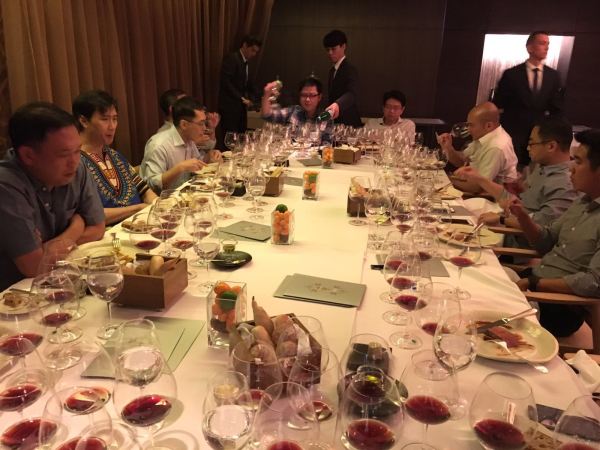
2010 Dujac Charmes-Chambertin Grand Cru (courtesy of Chris). Earthy tones dominate with traces of oak still discernible in this young wine, expectedly quite full on the palate with excellent concentration to complement the attractive bouquet of fresh dark cherries and red roses, taking time to blossom, finally singing towards the end of dinner. Highly successful.
2001 Ponsot Clos de la Roche Grand Cru (courtesy of David Ong), a wine that let rip with superb earthy pungency on the nose, distinctive in red fruits and overtones of tangerines, open with excellent intensity, detail and linearity down to its lasting finish. Superb.
2007 Ponsot Clos de la Roche Grand Cru (courtesy of Pipin). Fascinating to compare both bottles of Ponsot from the same plot, separated by 6 years. The 2007 is superbly aromatic and forward with an abundance of camphor, rose petals and red fruits, broad and open on the palate, gravelly in texture with excellent intensity, structure and detail throughout its length though the 2001 possesses greater complexity. Excellent.
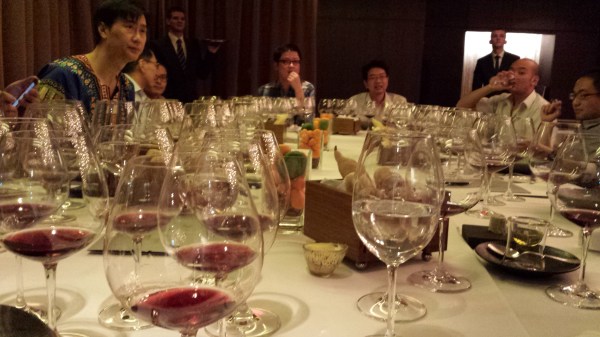
2003 Armand Rousseau Chambertin-Clos des Beze Grand Cru (courtesy of Kieron). This legendary estate never disappoints, producing a most beautiful bouquet, full-bodied, sweet and powerful, brimming with warm ripe fruit and tangerines with a medicinal minty trace that, perhaps, betrayed the hot vintage. Otherwise, this wine is absolutely harmonious, its plush tannins exuding a luxurious velvety feel only possible from such breed. Quite outstanding.
1997 Remoissenet Pere et Fils Chambertin-Clos des Beze Grand Cru (courtesy of KP). It would have been fascinating to compare this with the Armand Rousseau but, unfortunately, this wine was corked although there seemed to be a good deal of red fruits and acidity beneath. A pity.
1995 Domaine de la Romanee-Conti Echezeaux Grand Cru (courtesy of Daniel). Any wine from this famous estate is guaranteed to raise expectations beyond the roof, even if it is “just an Echezeaux”. This wine was highly aromatic, suggesting rose petals, dark cherries, camphor and raspberries of undoubted power and fragrance. It turned out to be surprising mellow and open on the palate, ample in soft red fruits with overtones of tangerines supported by saline minerals, all held in a lovely balance with understated acidity, complemented by an eventual note of ash as it settled down to a gentle finish. A very fine example of a Vosne-Romanee grand cru, certainly excellent by any standard.
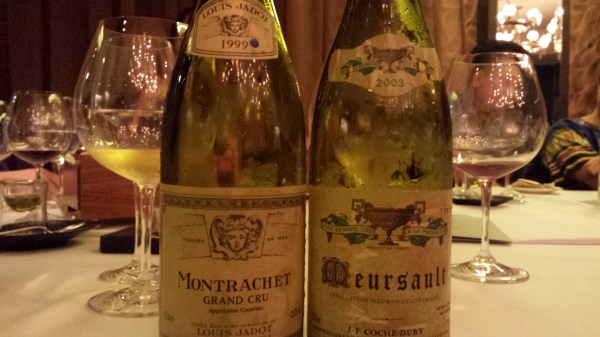
Taking a leaf from lessons learnt in Burgundy, we saved the best whites for last to go neat with an excellent cheese spread. The 1999 Domaine Louis Jadot Montrachet Grand Cru (courtesy of Vic) was most unusual on the nose, recalling pine forest, fig and what seemed like glue that was almost intoxicating on its own, leading to a floral fragrance and characters of aged creme on the palate, still spiked with tight intensity in spite of the understated acidity amidst some restraint. This is a masculine Montrachet, somewhat brooding and quirky, partly because, I suspect, it did not receive adequate aeration and the whites of 1999 are big wines that evolve at a glacial pace.
Paired with the above was the 2003 Coche Dury Mersault (courtesy of Kieron), displaying a complex of distilled citrus and tangerines on the nose with delicious presence on the palate, exuding some fat with characters of aged creme, yet poised and delicate enough due to understated minerality. Quite unbelievable, coming from a village but that is the magic of Coche Dury.
My sincere thanks to everyone for an outstanding evening.
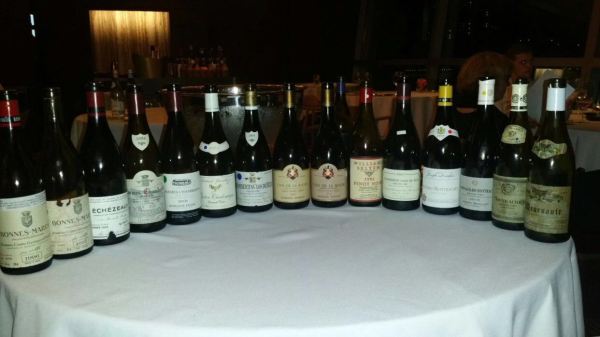
FICOFI: Primum Familiae Vini
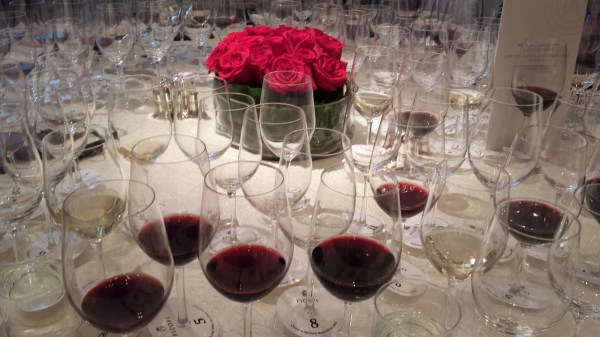
These are tasting notes from a FICOFI event held at the Hong Kong Island Shangri-La on 23 May 2016, where a promenade of wines from top family-owned estates preceded a dinner where all wines were served from magnum bottlings. The likes of Rupert Symington (Symington Family Estate), Laurent Drouhin (Maison Joseph Drouhin), Priscilla Incisa Della Rocchetta (Tenuta San Guido), Charles Perrin (Chateau de Beaucastel) and Egon Muller IV himself were present in person, not to mention the ubiquitous Pablo Alvarez (Vega Sicilia), amongst others. It goes without saying that Philippe and his boys from FICOFI certainly know how to serve up a great party with everyone getting properly hammered by the end of dinner. The 26 wines listed below are not exhaustive as a few were inevitably missed.
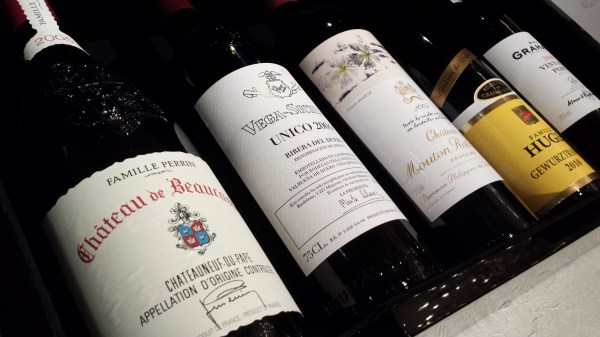
2006 Champagne Pol Roger Brut. Lovely floral fragrance with citrus, lime and honeysuckle of fine intensity, opening up with an excellent expanse across the palate. Dry but lively.
2004 Champagne Pol Roger Cuvée Sir Winston Churchill. A kaleidoscope of clear citrus, pomelo and traces of malt of subtle intensity, rather minerally with rich creamy chalky textures, superbly balanced. Certainly meets the expectations Britain’s wartime premier who modestly declared he is “easily satisfied with the best”.
2011 Domaine Joseph Drouhin Marquis de Laguiche Montrachet Grand Cru. Rather reserved and shy on this occasion. There is butterscotch, crème de la crème and minerals in a fine balance but it feels rather lightweight and awkward without having quite fleshed out, lacking the ethereal quality and potential complexity of a Montrachet from a top vintage. I suspect this underwhelming display was due to inadequate aeration. The estate’s Sales Director Jean-Paul Dumond had the wine decanted overnight before tasting when I visited Drouhin last year. Deserves a better showing.
2009 Hugel Jubilee Riesling, poured for me on this occasion by Jean-Frederic Hugel, the 13th generation (since Hans-Ulrich Hugel founded this iconic estate in 1639) to take over the helm after his father Etienne’s untimely passing just weeks prior. Highly aromatic, laced with sweet tropical fruits, mangoes and lemongrass with a characteristic lightness, understated acidity and effortless balance that is the hallmark of Alsace. Clear and refreshing. Excellent. Tasted again from magnum at dinner with consistent notes alongside the 2010 Joseph Drouhin Beaune “Clos des Mouches”.
2010 Hugel Riesling Verdanges Tardive. Building on its Jubilee Riesling but with an even more lifted bouquet of tropical fruits and petroleum fumes and, again, that ethereal lightness and understatement so characteristic of Alsace, rounded with superbly-integrated acidity. Absolutely harmonious, so much so that it can be drunk on its own. Outstanding.
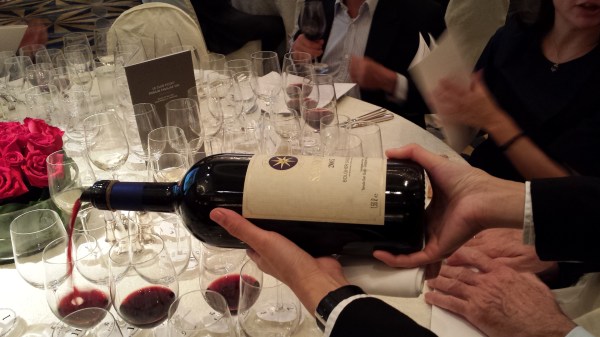
2012 Sassicaia. Somewhat shut at this stage but the abundance of red fruits, dark currants, mulberries and raspberries is simply quite astounding, rounded and fleshy, still cloaked in enamel with overtones of camphor and supported by understated minerals, quite exemplary in balance. With time, this will be an outstanding Sassicaia, the only wine in Italy to be honoured with its very own appellation: Bolgheri Sassicaia DOC.
2009 Tignanello. Bright red fruits, violets and raspberries dominate with controlled intensity, swathed in excellent acidity amidst some earthy tones, medium-full, beautifully balanced and warm with a natural grace, easing towards a sweet lasting finish. A bit too eager to please, but this is a Tignanello of enormous potential.
2007 Ch D’Armailhac. Almost bone dry with dusty textures, sporting red and dark berries with soft rounded tones and good balance and acidity, but neither distinctive nor memorable.
2011 Domaine Joseph Drouhin Chambertin-Clos de Beze Grand Cru. This wine boasts an attractive complex of red fruits, cherries and camphor on the nose and palate, lifted and layered with excellent concentration and subtle nuances, displaying great balance, poise and sophistication.
2012 Macan. A big wine on the nose but surprisingly open, medium-full with bright red fruits amidst swathes of enamel and framed by structured sweet tannins of controlled intensity. Not heavy at all in spite of the immense concentration, though somewhat short.
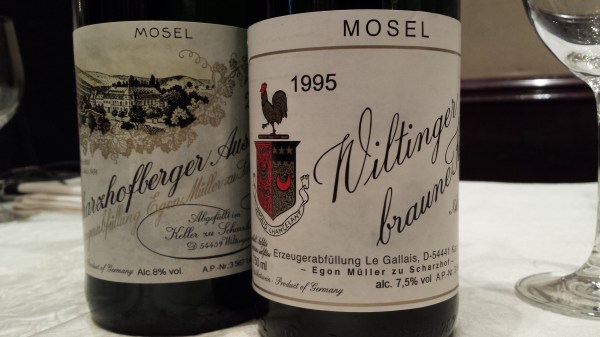
2007 Egon Muller Auslese. Rich and luscious in nectarine, apricot and tropical fruits of fabulous intensity and controlled sweetness, barely evolved, yet to develop further complexity. Still long way to go. Superb potential.
1995 Egon Muller Wiltinger Braune Kupp Auslese. An intoxicating petroleum quality with understated longans dominate on the bouquet, absolutely harmonious and open with an ethereal lightness on the palate. Fascinating. This is Egon Muller at its best.

Catching up with Egon Muller IV in the gents’
2007 Château de Beaucastel Chateauneuf-du-Pape. The nose is marked by forest floor and undergrowth with a mild medicinal trace while ripe dark berries and red fruits coat the palate with fine acidity and balance. A big wine, predictably, but refined and elegant.
2001 Château de Beaucastel Chateauneuf-du-Pape. The bouquet here is absolutely enticing, marked by old leather, truffles, mushrooms and some attractive earthy pungency, teasing the senses. Rounded, fleshy and layered on the palate, displaying gorgeous concentration but quiet, not at all heavy, more of mourvedre, perhaps, with some brightness, still retaining great acidity, finishing with great length. Excellent complexity. Yet to peak. Fabulous.
2010 Vega Sicilia Valbuena No.5. Dark red berries, wild berries and mushrooms dominate with velvety textures amidst a vegetal trace, rounded with well-managed tannins though missing in layering. Still youthful.
2005 Ch Clerc Milon. Made by Mouton Rothschild without ever being quite distinctive, this wine is noticeably brighter than usual with red fruits and camphor amidst dry textures that immediately signalled Pauillac, displaying good concentration but lacking in layering and true complexity.
And as if the above weren’t enough to wet the beak, the following wines were served with dinner…
2002 Champagne Pol Roger Cuvée Winston Churchill (magnum). Highly generous and complex bouquet of earthy pungency, yeasty tones, creme and deep citrus, dry but gentle on the palate, open with great definition and detail, tapering to a lengthy finish. Terrific stuff. Paired with Hokkaido sea urchin.
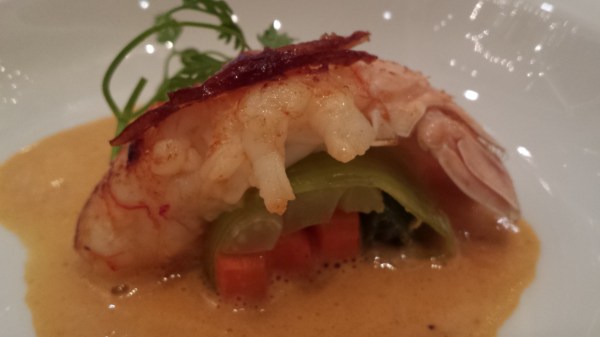
2010 Domaine Joseph Drouhin Beaune Clos des Mouches Blanc (magnum). Medium-bodied, creamy and chalky and slightly chunky, open and poised, very well-proportioned and balanced with some crisp acidity at the edges, quiet and understated at the finish. Went well with the Scottish langoustine.
The next three wines were paired with some superb duck breast, always a specialty in Hong Kong…
2001 Torres Grans Muralles (magnum). A big wine, dense and saturated with ripe wild berries, licorice, dark plums and vanilla with well-managed tannins, becoming more savoury and sweet over time. Likely to take a very long time to age.
2006 Solaia (magnum). Now managed by the 26th generation since the 13th century, this Super Tuscan, made predominantly with cabernet sauvignon along with some sangiovese and cabernet franc, is still remarkably youthful, displaying earthy tones and dry mushrooms with a medicinal glow, medium-bodied, still unresolved and slightly angular at the finish, yet to develop significant complexity.
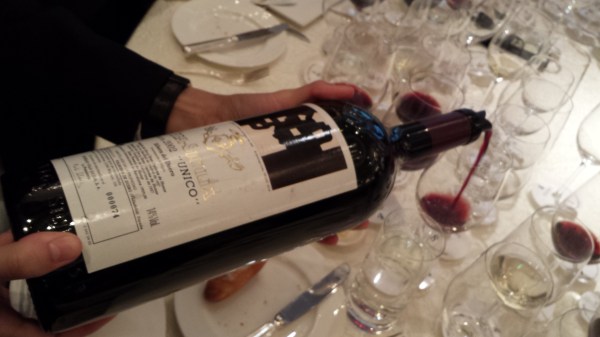
2005 Sassicaia (magnum). In contrast to the Solaia above, this wine, just a year older, is already quite evolved with a fair degree of complexity on the nose where plums and blueberries dominate, gentle and open on the palate with earthy tones, chocolate, mocha and tobacco, slightly lean and just a tad short.
The next three reds went with Allaiton lamb medallion laced with black truffle lamb jus…
2002 Vega Sicilia Unico (magnum). As expected from this venerated estate, the 2002 Unico is still very youthful, displaying a deep garnet red imbued with warm ripe fruit, dark currants and raspberries, richly layered and opulent with chewy tannins. Best to lay down for another 10-15 years, at least.
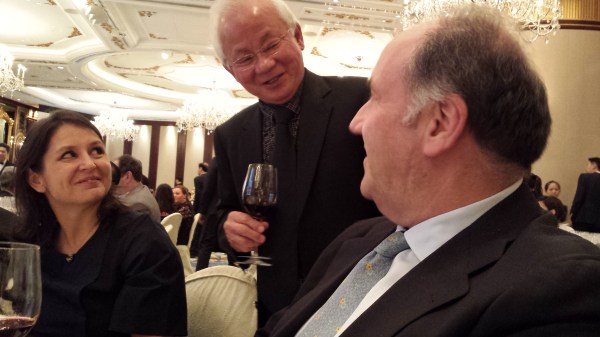
Someone is obviously delighted with Pablo Alvarez’s Unico, while Christine Stiegel of FICOFI looks on
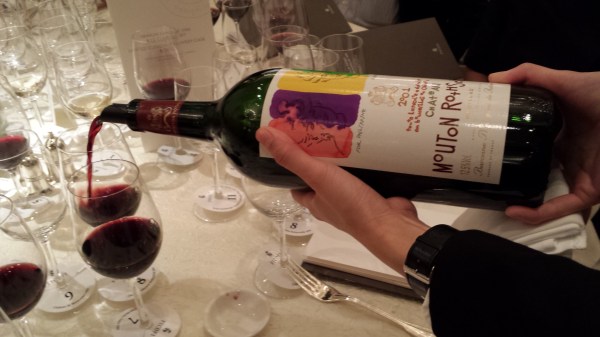
2001 Ch Mouton Rothschild (magnum). This Mouton lived up to all expectations, producing a wonderful earthy pungency from the glorious dark currants and black fruits amidst dry textures immediately classic of the Pauillac character, superbly balanced with great definition and linearity all the way to its minty finish. A classic claret of the top order. A great success.
1989 Château de Beaucastel Chateauneuf-du-Pape (magnum). Glowing with a beautiful pungency on the nose, this wine still possesses a subtle intensity within its layers that belies its mellowness, open with great acidity and not at all heavy, finishing in a mild herbal lift with sweet subtle tannins. Lovely.
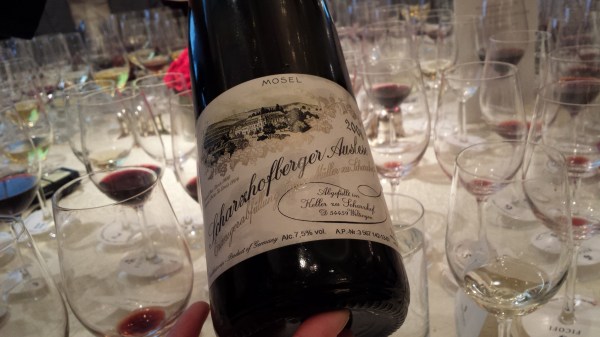
1972 Graham’s Single Harvest Tawny. This wine possesses strong medicinal overtones with excellent complexity, yet open and airy, not overtly alcoholic, still imbued with great acidity with understated sweetness at the side. I must confess my experience with port is limited but this may encourage me to explore this genre further. Served with artisanal cheese platter by Bernard Antony.
2006 Egon Muller Scharzhofberger Auslese Goldkapsel (magnum). Like all the wines of this great estate, this riesling displays an alluring complex of nectarine, apricot, cinnamon and tropical fruits with great composure and absolute control and precision of its sweetness and acidity, understated but lengthy. A classic case where less is more. Outstanding. Served with Pink Lady Apple Textures from Australia.
These notes stem from a dinner at Otto Ristorante on 29 June 2016 courtesy of Samuel who was eager to try his latest acquisition, the 1974 Ch Haut-Brion. But, first, we began with a 2006 Leeuwin Estate Art Series Chardonnay that I’d cellared for several years. Surprisingly, this Margaret River white was still remarkably youthful, displaying generous notes of pear, crisp citrus and lime of fabulous intensity, lifted with overtones of honeysuckle, cashews and crème, powerful and amply layered, still very tight and tense, yet to fully open, developing a hint of sappy nectarine after some time. Huge ageing potential here even after 10 years that I’ve never come across from Leeuwin. Clearly not ready yet and may require at least another 5 years or more of cellaring.
The cork of the 1974 Ch Haut-Brion was totally soaked through and, predictably, it fractured during extraction. With its ullage sitting at mid-shoulder, I was rather worried but the wine proved to be intact, displaying an earthy pungency characteristic of Pessac-Leognan that was almost peaty, still imbued with dark roses amidst dryish textures, mellow and gentle on the palate where its acidity still held, firmly structured with eventual notes of dark plums emerging from the classic glow of an aged claret. Not the most profound Haut-Brion nor the most delicious, but I’ve never had a bad Haut-Brion and this is another example of how well the wines of this estate can hold up even in average vintages. Thank you, Sam.

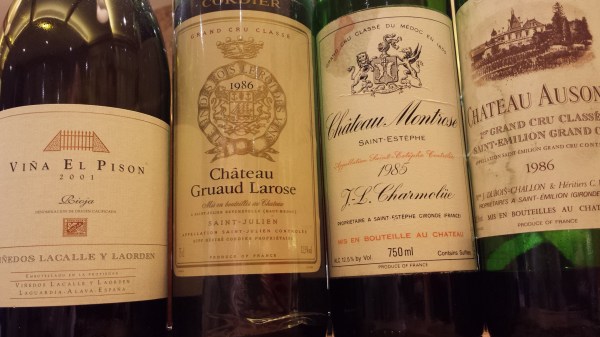
1986 Gruaud Larose, 1985 Montrose, 1986 Ausone
The following wines were drunk over an omakase dinner at Akashi, Paragon Singapore, 28 June 2016. Jon had proposed an ’80s theme which turned out well. All wines were popped and poured on-site over 3 hours, with the exception of the Montrose which had been double-decanted. All wines were tasted blind.
1986 Ch Ausone (courtesy of Jon). This wine was rather backward and relaxed at the first pour, displaying predominant red fruits, rather bright with a mild medicinal tinge, still carrying good levels of acidity, soft and subtly structured. Over time, it fleshed out with notes of old leather and red plums with an easy elegance, gaining in gradual intensity with a trace of sweetness, rather delicious, certainly not in danger of drying out, cloaked in feminine tones with an eventual note of soy. Unmistakably Right Bank. Like all top crus, this wine doesn’t call attention to itself, neither voluptuous nor a stand-out. An understated Ausone on song. Thank you, Jon!
1985 Ch Montrose (courtesy of Hiok). The bouquet here is marked by an earthy pungency with overtones of dried mushrooms, rounded with understated acidity but solidly structured, developing a plummy glow and emerging tone of sweet dark currants against a backdrop of dried leaves and snuff that hinted strongly at Pauillac, though it turned out to be its its neighbouring commune St Estephe. It stayed this way throughout the evening, mellow, harmonious and structured without any hint of drying out. An excellent Montrose.
1986 Ch Gruaud Larose, a bottle I’d cellared for the past ten years. Powerful tones of plums and tangerines dominate on the nose and palate, coupled with an attractive earthy pungency. Infinitely masculine and harmonious, subtle in structure at first, eventually developing a glorious tone and fabulous intensity from the ripe dark fruits that belied its 30 years. Still incredibly youthful, this has the legs to carry on for the next decade, at least. Superb.
 2009 Ch Bernadotte, popped and poured after hours at Glen, 03 June 2016. Displaying a brilliant ruby, this wine is beginning to open up, offering excellent concentration of ripe dark berries, blueberries and dark currants with some bright spots, layered and structured with sweet supple tannins, achieving a level of sophistication usually not encountered in unclassified Haut Medoc. Certainly the best Bernadotte ever. Buy.
1988 Ch Leoville Las-Cases, decanted on-site over dinner with the wifey at Saint-Pierre, 06 June 2016. A bottle that I’ve cellared for several years, this wine displayed an evolved crimson with an initial bouquet of predominant red fruits amidst some true earthy pungency and some faint musty odours (but in a most positive manner), firm and fleshy with a lovely tension that teased the palate with its fresh and gorgeous acidity. It rapidly evolved to develop a powerful glow of aged mushrooms on the nose with further notes of plums and balsam before establishing a dominant tone of complex tangy citrus of subtle intensity, absolutely harmonious with exciting depth and concentration.  This wine is at its drinking peak where it is likely to hold for several more years. Superb.
2000 Bonneau du Martray Corton-Charlemagne Grand Cru (courtesy of Vic), over lunch at Les Amis, 10 June 2016. This wine is akin to a beautiful sensuous woman who reveals herself bit by bit. Somewhat reticent and reserved at first, this wine blossomed with lovely aromas of sweet white flowers and crème de la crème, richly layered with complex citrus, almonds and nutty nuances supported by subtle chalky minerality and understated acidity, gaining a lovely accentuation that led to a fabulous intensity over time, turning somewhat stern and minerally at the finish. Drinking superbly.
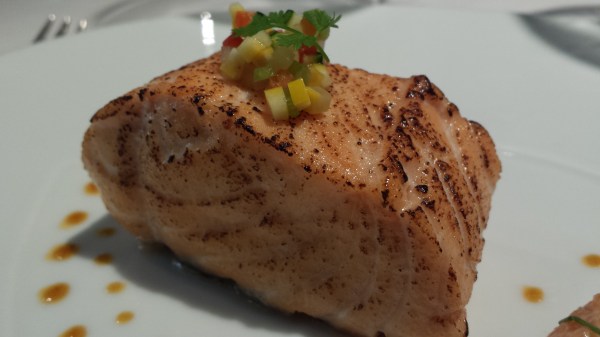
2007 Pierre Amiot Clos Saint-Denis Grand Cru, aired in bottle over lunch at Les Amis, 10 June 2016. Lovely aromas of rose petals and dark cherries dominate, fairly generous, displaying very good concentration and acidity, building up to quite an intensity with sweet tannins and smoky overtones, measured and elegant though not quite the last word in complexity. Perfect for lunch, nonetheless.
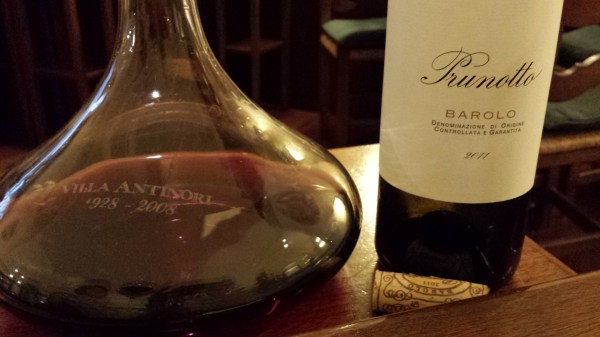
2011 Prunotto Barolo, from the restaurant list of Cantinetta Antinori, Firenze, Italy, 11 June 2016 and decanted on-site. Forward in ripe wild berries, raspberries and redcurrants with a after note of burnt sugar. Medium-full with good definition, power and concentration, still tight with well-managed tannins.
2014 Tenuta Ca’ Bolani Friuli Pinot Grigio Superiore, a half bottle over lunch at the Uffizi, Firenze, Italy, 12 June 2016. Notes of lemongrass and morning dew dominate on the nose, matched by green apples and melons on the palate with subdued acidity. Easy and refreshing.
Ca’ Percotta Millesimato Vino Spumante Brut, a half-bottle over a pizza lunch in Pisa, Italy, 13 June 2016. Dry with an abundance of green apples and lime citrus, highly inviting with a lovely intensity, somewhat stern at the finish with a mild graphite character.
2011 Tenuta Lidola Nuova Vino Nobile Di Montepulciano, over a grilled ribeye in Firenze, Italy, 13 June 2016. Ripe wild berries and blueberries dominate with sweet plummy tones of fair intensity and an after note of burnt sugar on the palate, inviting with good presence.
 2013 Poggio dei Gelsi, a half bottle over dinner at La Martinicca, Firenze, Italy, 14 June 2016. This wine offers an abundance of lime and bitter citrus with an understated floral fragrance, minerality and creme de la creme, generously proportioned with excellent intensity and a bit of smoky sheen, finishing with superb length. Sophisticated and classy, way above its restaurant price of EUR16. Excellent.
2005 Farnito Camponibbio (courtesy of Antonio), over lunch with Antonio Zaccheo of Carpineto at La Casina in Chianciano, Italy, 15 June 2016. Made by Antonio’s Carpineto from 100% cabernet sauvignon, this wine displays characters of blueberries, cinnamon and dark currants within a masculine structure, fairly ample and rounded on the palate with decent layering and a dominant plummy tone after some time. Quite perfect with the Tuscan bistecca.
Valdobbiadene Lagioiosa Et Amorosa Prossecco, a bottle off the list of San Desiderio, a superb charming restaurant in Siena, Italy, 16 June 2016. This sparkling wine possesses an abundance of lemongrass, morning dew, green apples, melons and clear citrus, ample on the palate with excellent intensity, body and concentration, and not too dry. At EUR15, this is highly satisfying.
 2014 Ferghettina Curtefranca Bianco, a half bottle over lunch at Lake Como, Italy, 18 June 2016. Made from 80% chardonnay and 20% pinot bianco, this inexpensive wine from Lombardy exudes impressive aromas of white roses and creme de la crème marked by attractive chalky minerality and rich intense citrus on the palate with smoky textures that imparted an excellent mouthfeel, highly lifted and lengthy at the finish, punching well above its weight. Quite excellent.
2015 Montressor Valpolicella at La Baita, Milan, Italy, 18 June 2016. Bright red plums and cherries dominate with overtones of tangerines and burnt sugar, displaying good intensity. Open but straightforward. A decent quaffer.
2009 Zind Humbrecht Brand Riesling, popped and poured at Ming Kee Live Seafood, 24 June 2016. This wine exudes attractive aromas of green melons, lemongrass and nectarine with overtones of petroleum fumes so classic of these Alsace rieslings, laced with understated sweetness and layered with impressive concentration and stony minerality, slightly stern at the finish. Not quite really open at this stage and will really need more time before it develops true complexity. One for the long haul.
2001 Vina El Pison (courtesy of Kenny), popped and poured at Akashi, 28 June 2016. Dark deep purple, saturated with ripe dark fruits and dark currants with some bright spots, dense and concentrated on the palate with a sweet edge though it is still somewhat unresolved, tapering to a powerful spicy finish. Almost hedonistic but certainly not over-extracted, recalling the likes of Macan and Pingus.
2004 Ch Bernadotte, popped and poured at Foster’s Steakhouse, 09 May 2016. Rustic and somewhat four-square with notes of wild berries, briar, sandalwood and licorice, quite robust but drying out a little on the palate with dusty tannins, ending in a spicy minty finish. Will not improve further. Drink up. The 2005 and 2009 are much more substantial.
2005 Ch Calon Segur, popped and poured at Chef Kang’s on the occasion of Huey’s birthday, 11 May 2016. Showing a deep garnet red, this wine is rich and smooth with a lovely intensity, effusive in aromas of dark berries and dark currants with a hint of warm gravel, licorice and chocolate, layered with glorious black fruits, fine acidity, saline minerals and framed by sweet supple tannins, finishing with good length. Still very much on the ascendency and yet to fully open up on the palate. Needs another 5-10 years of cellaring, at least. Clearly one for the long haul.
1990 Ch Saint Pierre (courtesy of WCY), popped and poured at the annual SMA Dinner at the Raffles Town Club, Singapore, 14 May 2016. Powerful earthy pungency on the nose with dominant plummy and raisiny tones on the palate along with traces of tangerines, soy and metallic notes towards the finish. Rounded and rustic, displaying good tension from the crisp acidity, but lacking in complexity compared with the top estates.
1996 Ch Saint Pierre (courtesy of WCY), popped and poured at the annual SMA Dinner at the Raffles Town Club, Singapore, 14 May 2016. Almost as pungent as the 1990, medium-bodied and stern in demeanour with an overall tone of dark fruits, becoming more relaxed over time with traces of sweetness emerging.
2008 Ch Les Ormes de Pez, a house pour offered at the annual SMA Dinner at the Raffles Town Club, Singapore, 14 May 2016. Dark and muted on the nose. Rounded and quite seamless with a dash of spice though somewhat unresolved on the mid-palate, yet to open up.
2008 Domaine Joseph Drouhin Beaune 1er, at the annual SMA Dinner at the Raffles Town Club, Singapore, 14 May 2016. Notes of bright red fruits, cherries and strawberries exuding an overtone of camphor, displaying good intensity and suppleness, ending in a spicy finish with a vegetal hint.
2009 Jacques-Frederic Mugnier Nuits-Saint-Georges Clos de la Marechale 1er (courtesy Andrew Chin), popped and poured from magnum at the annual SMA Dinner at the Raffles Town Club, Singapore, 14 May 2016. Expectations were high and JF Mugnier doesn’t disappoint. The bouquet is dominated by an abundance of bright cherries and rose petals with overtones of varnish, highly aromatic, leading to a gentle entry on the palate where it is satiny smooth and superbly integrated, generous with ample depth, already hinting at some early complexity at the finish. Highly feminine and elegant. Very lovely.
2002 Ch Pavie (courtesy of WCY), popped and poured at the annual SMA Dinner at the Raffles Town Club, Singapore, 14 May 2016. Lifted aromas of red fruits, violets and dark currants, racy with excellent tension on the palate, exciting but still tight, highly detailed with fine acidity and linearity. Excellent.
2002 Ch Mouton Rothschild (courtesy of WCY), popped and poured at the annual SMA Dinner at the Raffles Town Club, Singapore, 14 May 2016. Deep garnet red, still rather youthful with subdued dark berries and plums still shrouded by vanillin. Rounded, medium-full and appropriately dry from the Pauillac terroir, finishing with excellent length but yet to develop layering and complexity. Needs time. .
2001 Ch L’Evangile (courtesy of Ms Romanee Lee), popped and poured at the annual SMA Dinner at the Raffles Town Club, Singapore, 14 May 2016. A full-bodied complex of ripe dark berries and black fruits and currants, oozing with sweet tannins and high-toned minerals, displaying excellent depth and harmony though, true to form for Pomerol, this wine is difficult to place.
1988 Ch Suduiraut, popped and poured at the annual SMA Dinner at the Raffles Town Club, Singapore, 14 May 2016. Luscious with an abundance of nectarine and apricot, though the receding acidity and stony minerality led to some awkwardness.
2002 Faiveley Corton Clos des Cortons Faiveley Grand Cru, popped and poured at the annual SMA Dinner at the Raffles Town Club, Singapore, 14 May 2016. This monopole grand cru is rich in dark cherries, raspberries and redcurrants, full-bodied and dry with excellent depth and fine tension but rather stern and somewhat one-dimensional, lacking real complexity.
2008 Faiveley Corton Clos des Cortons Faiveley Grand Cru, popped and poured at the annual SMA Dinner at the Raffles Town Club, Singapore, 14 May 2016. No lack of ripe red cherries and strawberries in this medium-bodied proposition with slightly dry textures, still unresolved and short.
2009 Ch Le Doyenne, popped and poured at Jade Palace, 16 May 2016. Seven years post-vintage, this overachieving Saint Emilion possesses quite a fabulous bouquet of aromatic dark cherries, raspberries and violets, though somewhat attenuated on the palate where this medium-bodied effort seemed to have hit a ceiling. Over time, however, the dusty textures and raw edges gave way to a broad expanse of ripe raisiny extract, marked by dominant notes of licorice almost akin to a New World cabernet sauvignon. This is still a very good wine for the dollar.
2013 Le Caveau des Capucins, popped and poured over lunch at Prive Grill, 18 May 2016. Displaying a crimson hue, this Pays D’oc is surprisingly supple and fleshy with a fairly generous plummy tone and overtones of burnt sugar, possessing enough fruit to match the saline minerality. Quite agreeable.
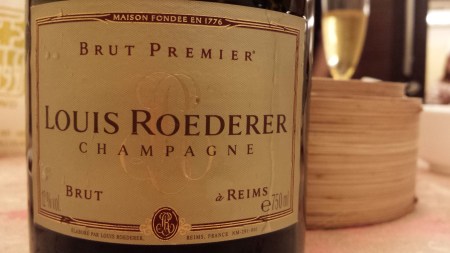
Maison Leroy Fleur de Vignes NV, popped and poured at Asia Grand and shared with Antonio Zaccheo, proprietor of Carpineto (of Montepulciano), 20 May 2016. A non-vintage dry white, this wine displays attractive aromas of clear fresh citrus and other floral characters, lightly perfumed, matched by delicate minerality and understated acidity on the palate, very fine in balance , highly elegant and unpretentious, not at all heavy. Perfect to go with lunch on a warm midsummer day.
2002 Maison Leroy Montagny (courtesy of Li Fern), popped and poured at S S ENT, 20 May 2016. An abundance of green apples and melons on the nose, matched by intense crisp clear citrus with great acidity, ending in a finish of mild bitter lemon. Lovely.
2005 Domaine Gros Frere & Soeur Vosne-Romanee (courtesy of Li Fern), popped and poured at S S ENT, 20 May 2016. This village displayed an evolved red with powerful aromas of raspberries, ripe plums and caramel, quite full on the palate with saline minerals, earth and spice but a tad heavy with unresolved tannins and short at the finish.
2002 Georges Comte de Vogue Chambolle-Musigny (courtesy of Li Fern), popped and poured at S S ENT, 20 May 2016. Highly perfumed with notes of bright red fruits, cherries, roses and camphor, excellent in depth, layered with earth, understated minerals and sweet tannins. Yet to peak. Goes to show that a village can be absolutely satisfying from a top producer in a top vintage.
2006 Robert Groffier Chambolle-Musigny Les Sentiers 1er (courtesy of Choon Jin), popped and poured at S S ENT, 20 May 2016. Lifted aromas of rose petals and cherries, open and elegant with well integrated minerality, showing some complexity and great persistence. Lovely.
2005 Noon Reserve Shiraz, popped and poured at S S ENT, 20 May 2016. Very ripe and barely evolved in spite of bottle age, saturated with intense notes of varnish, enamel, sweet plums, medicinal characters, licorice and burnt sugar. Rounded and opening up. A huge wine but balanced, not at all hedonistic.
1998 Vincent Girardin Corton Renardes Grand Cru (courtesy of WCY), popped and poured over dinner in Hong Kong, 22 May 2016. Displaying substantial bricking, this wine is fully evolved with a dominant plummy tone with overtones of bright tangerines, still crisp in acidity but the fruit was rather backward at the start, as if threatening to dry out. However, it gained in intensity over time, more open with the emergence of red fruits and ripe plums that added some depth and layering. Drinking well but unlikely to improve further.
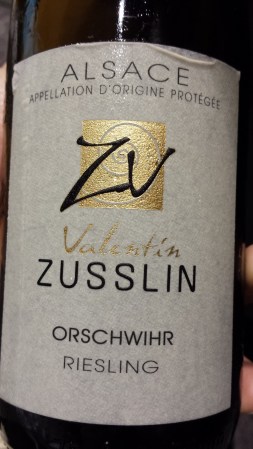 2014 Valentin Zussler Orschwihr Riesling (courtesy of Christophe Cazaux-Maleville of the Vintage Club), over dinner at One Farrer Hotel, 25 May 2016. Its unmistakable Alsace character comes through with attractive petroleum characters on the nose, matched by fresh melons, tropical fruits, mild sweet citrus and smoky overtones, generous and very well balanced with subdued minerality, understated acidity and some early complexity. Very enjoyable.
Valentin Zussler Cremant D’Alsace NV Brut Zero (courtesy of Christophe Cazaux-Maleville of the Vintage Club), over dinner at One Farrer Hotel, 25 May 2016. This sparkling wine opens with an attractive bouquet of grassy elements, clear citrus and some mild yeasty pungency that hinted at excellent depth. Open with good definition, fullness and concentration and understated minerality at just the right degree of dryness, finishing with notes of lemongrass and malt. Very good indeed.
2013 Valentin Zusslin Bollenberg Pinot Noir (courtesy of Christophe Cazaux-Maleville of the Vintage Club), over dinner at One Farrer Hotel, 25 May 2016. Camphor, dark roses and saline minerals dominate in this Alsace pinot, slightly darker than usual, open with good depth and acidity, though lacking in terroir specificity and true complexity.
Louis Roederer Brut NV, popped and poured over dimsum at Asia Grand, 29 May 2016. Forward in citrus, tropical fruit, melons and peaches at the first pour with excellent depth, giving way to stony minerality with notes of graphite, yeasty overtones, walnuts, almonds and understated creamy characters before the dryness eventually caught up, developing into a wine of robust intensity and substantial complexity. A very fine example of Louis Roederer’s calling card.
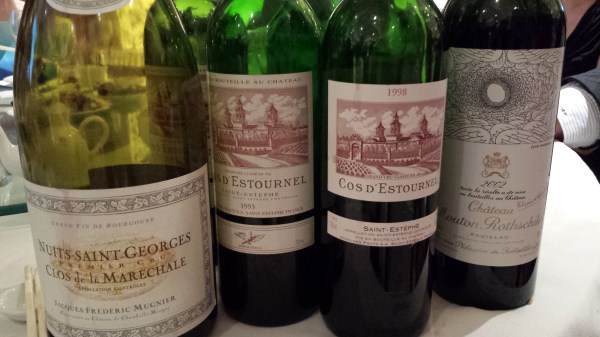
Cos D’Estournel: 1988, 1993, 1997, 1998
This mini vertical of this famed Second Growth of Saint-Estephe was kindly sponsored by Dr Wong Chiang-Yin at the annual SMA Dinner at the Raffles Town Club, Singapore, 14 May 2016. None of these hail from vaunted vintages and, in fact, one or two may be labelled as so-called “off years” but, even then, Cos D’Estournel of the last century has a certain easy nuance and expression that is no longer quite apparent in the vintages of the past decade as it pushed for greater sophistication and intensity. All wines were popped and poured over 2-3 hours.
1993 Ch Cos D’Estournel. Gentle aromas of raspberries and dark cherries, rounded, smooth and pleasant on the palate with sweet tannins. Desperately missing in charm and complexity even though it gained some mild intensity over time. Drink up.
1997 Ch Cos D’Estournel. Mild earthy pungency with overtones of sandalwood, aged plums and burnt toast, finishing with some mint and graphite that imparted a sense of sternness, missing in complexity.
1988 Ch Cos D’Estournel. A sense of heated gravel on the nose with ripe berries, mocha and raisins supported by saline minerals and fine acidity. Harmonious with an attractive feminine intensity that produced some lovely tension though lacking in layering and sheer complexity.
1998 Ch Cos D’Estournel. The best of this mini-series of Cos, where lifted earthy pungency on the nose is matched by rounded fleshy tones on the palate, marked by mature dark berries, plum and ash with traces of graphite, displaying good concentration and depth of fruit, slightly more forward with time, ending in a spicy minerally finish. Just missing the last ounce of opulence. Very fine.
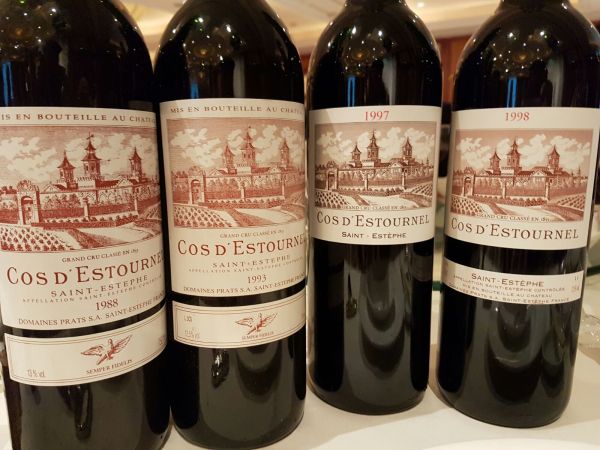
Photo courtesy of Dr Wong Chiang-Yin
2015 Bordeaux en primeur tasting
Thanks to the generosity of M. Christophe Cazaux-Maleville of the Vintage Club, I was invited to the first ever en primeur tasting of selected chateaux of 2015 Bordeaux in Singapore held at the Tower Club, 27 May 2016. The vintage of 2015 has been touted as the best of the current decade after 2010, marked by early flowering and fruit set in June followed by very fine dry conditions in July, average rainfalls in August and, again, warm days and cool nights in September (with the exception of the Northern Medoc) that allowed full ripening of the grapes before harvesting took place under excellent conditions. Though not quite as homogenous as the very best vintages (2005, 2009), experts have commented that most of the clarets of 2015 possess the structure and elegance of the best years though with less power. Certainly, in my tasting of the limited line-up, all the wines (already bottled as the finalised blend) were already highly accessible, rounded and generous in aroma and fullness without any jarring edges, some being distinctly feminine and elegant although one has to be mindful that these wines will actually spend another year or more in barrel before bottling takes place in 2018.
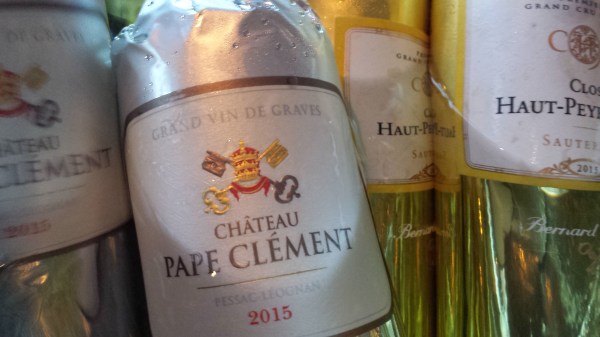
Ch Pape Clement blanc. Bouquet of grassy elements and morning dew. Excellent presence on the palate, generous in lifted floral notes with traces of sweet, well-integrated acidity and understated minerality.
Ch Fombrauge. Fresh oak and earthy tones dominate on the nose, rounded on the palate with ripe dark fruits, wild berries and traces of vanillin, slightly stern, finishing on a minty note.
Ch Pape Clement. Rather restrained on the nose where there are notes of barley and grassy elements. Rounded, dry and fairly rich in mocha and dark berries, showing good definition and linearity, developing further tension and structure over time from the excellent acidity and well-integrated tannins.
Ch La Tour Carnet. Dark roses and raspberries on the nose along with morning dew and earthy tones. Medium-bodied, smooth and harmonious with ripe tannins and fine acidity, rather high-toned and somewhat narrow in spectrum.
Ch Clos Haut-Peyreguey blanc. Sweet lemongrass and fresh morning dew dominate. Very generous and ample on the palate with controlled sweetness and fine acidity. Lengthy finish. Highly attractive.
Ch Olivier blanc. Clear citrus and grassy elements with a certain lightness, fairly generous and well-integrated with fine acidity and a trace of sweetness.
Ch Olivier. An abundance of earthiness and heated gravel on the nose, displaying very good concentration on the palate with ripe sweet tannins and understated acidity. Harmonious but short at this stage.
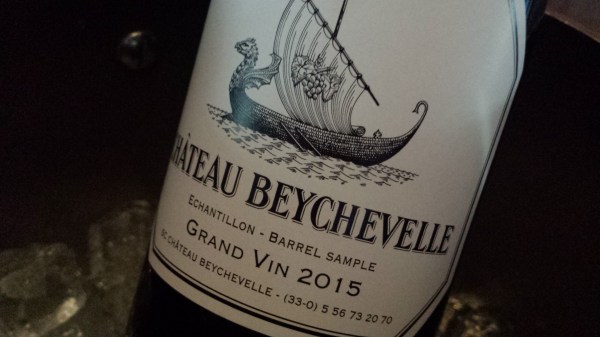
Ch Beychevelle. Highly lifted with floral notes, fresh roses and camphor. Fairly full with excellent concentration, layering and acidity with traces of grassy elements that doesn’t detract. Feminine, elegant and structured without calling attention to itself. Highly successful with great potential here. This wine was the highlight of the tasting.
Ch Beauregard. Gentle with an abundance of floral notes. Rounded, smooth and generous with excellent depth, understated richness and acidity, ending in velvety finish. Pomerol has been blessed in this vintage. Excellent.
Ch Lafon Rochet. Consistent with growing conditions of this vintage, this wine of the Northern Medoc seems rather shut on the nose with a narrow spectrum of cooked meat and ripe wild berries with sweet tannins and crisp acidity without much depth.
Ch Labegorce. A perfumed bouquet of floral characters and camphor, leading to predominant red fruits and mulberries, rather fruit forward in balance with a gentle elegance and lovely acidity, rounded and structured, finishing with some persistence. This will be a most astute buy.
Ch Marquis D’Alesme. From the same management as Ch Labegorce, this Margaux is distinctly feminine with floral characters of rose petals, sweet raspberries and violets, replete with 10% petit verdot that added further depth and dimension, medium-full with fresh acidity that’s very well-integrated. Very lovely.
Ch de Lamarque. Earthy tones, wild berries and wheat. Forward in fruit balance. Ample and rounded with understated acidity, just a tad short.
Ch Laroque. Rounded with a soft fragrance, good linearity, concentration and acidity with traces of sweet.
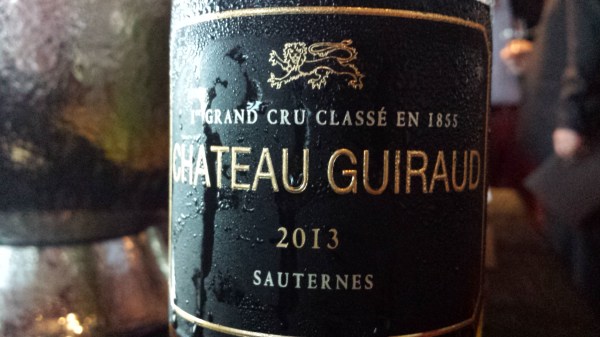
Ch Guiraud. An abundance of apricot, nectarine and peaches of controlled sweetness and intensity, medium-bodied with good acidity and presence, finishing on a gentle note of tropical fruits, not at all overbearing. Very fine.
FICOFI: Domaine Faiveley
Domaine Faiveley is a major negociant-cum-producer with a vast portfolio. That Georges Faiveley (4th generation owner of Faiveley) was a co-founder of the Confrérie des Chevaliers du Tastevin demonstrates amply the importance of Faiveley in the history of Burgundy over the last couple of centuries. Established in 1825 and still family owned, now with massive holdings of 120 ha, it is simply not quite possible for anyone with some interest in wine not to have tasted Faiveley before. Wine produced entirely from vines under its direct holdings are labelled under the Domaine, while wine produced from grapes bought from growers come under Joseph Faiveley. Now helmed by its seventh generation owner M. Erwan Faiveley since 2007, this estate has gone from strength to strength, having added the great whites of the Cote de Beaune to the domaine’s portfolio since 2008: Bâtard-Montrachet Grand Cru, Bienvenues-Bâtard-Montrachet Grand Cru and Puligny-Montrachet La Garenne 1er.
It was good, once again, to meet up with Erwan at this FICOFI event held at Golden Peony, Conrad Centennial Singapore, 13 May 2016, where Erwan still remembered about our visit to his cellars last September. Quality at Faiveley has improved over the years through strict pruning of the vines, hand sorting of grapes at harvest and prolonged vatting times. Whereas previously the wines of Faiveley, in my opinion, tended to be somewhat backward, I have noticed that Faiveley now seems to understand the different individual pieces of terroir better and the wines now do reflect very well their origin with no lack of vibrancy and vigour.
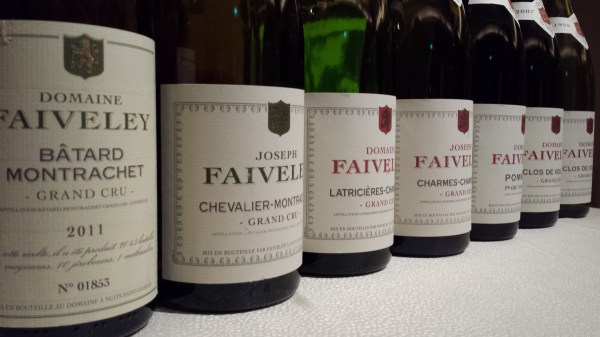
2014 Joseph Faiveley Puligny-Montrachet Champ Gain 1er. Dry with an attractive earthy pungency, slightly grassy, rounded and satiny smooth with a hint of peaches. Very agreeable.
2014 Joseph Faiveley Chassagne-Montrachet Morgeot 1er. Exuberant and highly aromatic, of melons and white roses, quite racy and exciting, excellent in supple intensity, matched by chalky minerals, ending in a persistent finish marked by exotic tropical fruits. Excellent.
2014 Domaine Faiveley Bâtard-Montrachet Grand Cru. Gentle aromas of morning dew sprinkled on white flowers, gleaming with glorious creme de la crème, medium-bodied, already quite open and minerally, very well-proportioned and balanced, slightly stern a the finish. Structured and poised. Not as outwardly muscular, unlike the Batard of Joseph Drouhin, but very correct, nonetheless. A wine of great nuance and promise. Excellent.
2014 Domaine Faiveley Gevrey-Chambertin Les Cazetiers 1er. Great color and intensity with an abundance of red and dark cherries, rounded with plenty of presence, excellent acidity and linearity. Bold and crisp at the moment but likely to develop excellent complexity over time. Excellent potential.
 2014 Domaine Faiveley Mazis-Chambertin Grand Cru. Deep ruby with extended notes of cherries and mulberries and traces of ash. Structured and firm with lovely intensity and tension from the fine acidity, long and minty at the finish. Excellent.
2014 Domaine Faiveley Chambertin-Clos de Beze Grand Cru. Great bouquet of dark cherries, raspberries and camphor, slightly darker in tone. Surprisingly open on the palate, the fruit set a bit backwards to favour a more minerally balance, very well proportioned and somewhat understated. Doesn’t call attention to itself. Needs time to flesh out. Excellent potential.
2014 Domaine Faiveley Clos Vougeot Grand Cru. Quite an intense bouquet of raspberries and dark cherries, smooth, rounded and ripe with a tinge of sugar burnt that doesn’t disguise the fact that this wine lacks dimension and layering, consistent with Clos Vougeot in general.
2014 Domaine Faiveley Corton Clos des Corton Faiveley Grand Cru. One of only nine grand cru monopoles in Burgundy. This wine possesses great layering and intensity, medium-full and already quite open with bright fruits supported by a rich vein of dark currants, rounded and well-balanced, never overwhelming. Far richer and more sumptuous than Corton in general without any vegetal trace. Consistent with a previous tasting from barrel last September in Faiveley’s cellars.
2011 Domaine Faiveley Bâtard-Montrachet Grand Cru. Rather restraint on the nose but the complexity is unmistakable, displaying an abundance of coconut, fig, white flowers and supported by chalky minerality with traces of icing. Excellent in definition, layering and balance. Quite full but not showy. Excellent, but I think the 2014 will surpass this in time to come.
2011 (left) and 2014 Joseph Faiveley Batard-Montrachet Grand Cru
2011 Joseph Faiveley Chevalier-Montrachet Grand Cru. Superb bouquet here. Beautifully aromatic, deeply intense and highly captivating, matched by notes of white chocolate, varnish, coconut, fig and full creme de la creme with understated minerality and cutting acidity that creates a fine tension across the palate, medium to full-bodied, fabulous in intensity and concentration though yet to develop further complexity. This is a confident and luscious beauty, a wine that’s truly singing. Outstanding.
2010 Domaine Faiveley Latriceres-Chambertin Grand Cru. Clear ruby, displaying intense dark cherries, raspberries and some smoke, opening up on the mid-palate where it is layered but lacking in structure and detail.
2010 Domaine Faiveley Charmes-Chambertin Grand Cru. Feminine, as expected from this growth. Pleasant and solid with a forward balance of raspberries and mulberries as if to make up for the lack of layering and complexity.

M. Erwan Faiveley (standing, fourth from right)
2007 Joseph Faiveley Pommard Les Rugiens 1er. Darker in tone and colour with dark cherries and raspberries of great intensity, matched by firm acidity and lovely tension on the palate. Robust but unevolved.
2007 Domaine Faiveley Clos Vougeot Grand Cru. Cool ripe fruit, distinctly autumnal, with good harmony and linearity but lacking in distinction.
1995 Domaine Faiveley Clos Vougeot Grand Cru. Perhaps it is the vintage but this is a much better Clos Vougeot. Deeper with excellent fruit at just the right degree of ripeness, still fresh, open and layered with far greater complexity and detail, finishing on a minty note. Still youthful.
 Ric's Wine Journal