2007 Wicks Estate Eminence shiraz cabernet, popped and poured at Jade Palace, 02 Mar 2015. Dark red. Generous nose of ripe berries and raisins. Dense, but not unctuous, saturating the palate with notes of licorice, red plums and dark cherries well integrated with a hint of enamel and a dash of tangerine and melons, smooth without any jarring angularity, approaching some sort of controlled hedonism. Surprisingly good.
2013 Louis Jadot Macon-Villages, popped and poured at home over pasta, 03 Mar 2015. Notes of lime and pomelo in abundance but steely in character, almost bitter, supported by crystalline minerality that imparted an overall impression of leanness. Lacks charm. I much prefer the 2012.
1997 Michel Gaunoux Corton-Renardes Grand Cru, popped and poured at Foo House, 07 Mar 2015. A shade darker than expected with predominant notes of raisins and cinnamon and a certain medicinal quality matched by firm earthy minerality. One-dimensional and unyielding.
NV Cheurlin Noellat Coeur de Familie Blanc de Noir, at a WEA tasting, 08 Mar 2015. Fresh complex citrus, possessing excellent depth, smoky with notes of toast and yeast, fairly deep and chalky. Highly attractive.
2007 R&V Bereche Cote Premier Cru Blanc de Blancs disgorged 2014, at a WEA tasting, 08 Mar 2015. Sweet and highly intense with notes of white flowers and white pepper, fascinating on the nose, promising lots of complexity. That didn’t quite come through on the palate although the depth of fruit was excellent with plenty of yeast and toasty characters, very well balanced.
2012 Mongeard Mugneret Fixin,at a WEA tasting, 08 Mar 2015 . From the north of the Cotes de Nuits. Surprisingly good with notes of fresh raspberries and cherries, medium-bodied, well balanced against the minerality without any vegetal overtones, linear, slightly simple but attractive.
2012 Gerard Mugneret Vosne Romanee, at a WEA tasting, 08 Mar 2015. Ripe dark cherries, more subtle but deeper that the Fixin above, more minerally as well, slightly darker in tone but the balance is excellent. Not cheap though for a village.
2012 Duroche Gevrey-Chambertin 1er Champeaux, at a WEA tasting, 08 Mar 2015 Bright cherries, minerally, well-balanced but somewhat simple. Not quite befitting of premiere cru.
2012 Hetedtyn-Mazzini Gevrey Chambertin 1er Goulots, at a WEA tasting, 08 Mar 2015. Apparently difficult to source but i don’t quite understand the fuss, the wine sweet and aromatic but simple.
2008 Jean Marc Bouley Pommard 1er Rugiens, at a WEA tasting, 08 Mar 2015. Appropriately for Pommard, this wine was notably deeper and heavier with more presence and fat compared to all the above reds in the tasting line-up, slightly chewy, carrying good weight and intensity. Not too heavy for Pommard but it needs more time.
2004 Domaine de Chevalier (courtesy of John), decanted at Prive Grill, 10 Mar 2015. This wine is slightly fruit forward, offering a good concentration of dark berries with overtones of orange peel and tangerine and the occasional bright spot framed by lithe supple tannins, suitably intense on the palate, structured but somewhat lean in demeanour, lacking in mid-body fat. Still far from peaking. Keep.
2008 Ch Rauzan-Segla, decanted at Otto Ristorante, 18 Mar 2015. Generous notes of dark cherries, wild berries and mocha on the nose but distinctly medium-bodied and lean on the palate with a slight vegetal trace though its tannins are undeniably supple and attractive.
2013 Black Cottage Marlborough pinot noir, bought off the list of Spathe, 24 Mar 2015. Popped and poured. Saturated with ripe dark cherries and raspberries with traces of enamel, displaying great intensity and concentration on the palate but not too heavy, lightening up considerably over time, becoming more open. Straightforward but passable as a table wine.
2005 Amon Ra, decanted for an hour prior to tasting at Spathe, 24 Mar 2015. As expected, this is quite a monster, a big wine, very forward, saturated with warm ultra ripe Barossa fruit with notes of red plums and olives and forest floor, shrouded by a dense blanket of medicinal overtones. Undeniably hedonistic. Highly attractive at first, but I found it difficult to drink beyond half a bottle, not helped by its warm alcoholic trail.
2008 Faiveley Gevrey-Chambertin Clos Des Issarts 1er, courtesy of Li Fern at his residence, 01 Feb 2015. There are notes of bright cherries amidst the mild salty minerality but, overall, this wine was disappointing, far too subdued and restrained, leaving a sense of hollowness. Could do with greater body. Certainly not up to premiere cru standards.
2008 Faiveley Chambolle-Musigny Les Fuees 1er, courtesy of Li Fern at his residence, 01 Feb 2015. An interesting comparison to the above wine, both from the same producer and vintage and both hailing from adjacent communes, but Les Fuees is a better known vineyard and it shows. This wine is darker with a quiet intensity on the nose. Medium-full on the palate, it displays a good concentration of attractive red fruits well balanced against the classic burgundian minerality, blossoming very nicely over time, developing a sweet intensity at the finish. It cannot match a Comte de Vogue in power or refinement, but this is quite satisfying on its own.
2008 Kistler Vineyard Sonoma County, courtesy of Li Fern at his residence, 01 Feb 2015. Slightly darker than usual for pinot, offering attractive notes of rose petals and camphor with good concentration and attractive intensity with some spice box coming through at the finish after some time, though it remained somewhat short at the finish.
2010 Williams Selyem Russian Valley, courtesy of Li Fern at his residence, 01 Feb 2015. Another New World pinot that has attained cult status, although initial impressions weren’t promising, displaying a powerful sweet bouquet with more than a passing semblance to port, though veering away on the palate towards notes of camphor and red fruits, excellent in concentration and intensity yet open in texture. It took on an additional hint of sour plum after some time, becoming very burgundian, just a tad upfront. Very good, if you can find it.
2011 Majella Cabernet Sauvignon, popped and poured at Otto Ristorante, 04 Feb 2015. Discounted to SGD39, I could not resist trying this wine as I have a soft spot for this estate, having visited it as far back as 2003, and its 1998 vintage is fabulous. Typically for an Aussie red, this wine was big, sharp and tannic, imbued with a density of red and dark currants, leafy characters and a distinct ferrous aftertaste that seemed to recall the ferric sub-soil of Coonawarra. In that sense, it may have succeeded in delivering its terroir, but this is spoilt by excessive spiciness at the finish and I cannot say that I enjoyed this wine at this stage. At that price point, you are better off sticking with Bordeaux cru bourgeois from 2005 or 2009.
2009 Ch Mouton Rothschild Aile d’Argent, courtesy of KP, popped and poured over dinner at his residence, 14 Feb 2015. Very lovely on the nose, an effusive abundance of apricot, melons, white flowers and nugmet all combining very well to produce an air of great complexity and expectation, but falling short on the palate where it was noticeably steely, lacking in vibrancy and fullness. A pity, but I’m still grateful for the opportunity to sample this uncommon white from Mouton.
![20150214_203700[1]](https://winebyric.com/wp-content/uploads/2015/02/20150214_2037001.jpg) 1990 Claude et Hubert Chavy-Chouet Pommard Les Chanlins 1er, courtesy of Hiok, popped and poured over dinner at KP’s residence, 14 Feb 2015. Very dusky and opaque. In spite of the outstanding vintage and classification, this wine isn’t convincing,
1990 Claude et Hubert Chavy-Chouet Pommard Les Chanlins 1er, courtesy of Hiok, popped and poured over dinner at KP’s residence, 14 Feb 2015. Very dusky and opaque. In spite of the outstanding vintage and classification, this wine isn’t convincing,
1995 Ch Figeac, popped and poured over dinner at KP’s residence, 14 Feb 2015. Good concentration of dark fruits and redcurrants, almost fully evolved with notes of violets, cinnamon, earth and cedar contrasted against the dried mushrooms and tea leaves. Likely to hold station for many years to come. My last bottle.
2006 Kistler Hyde Vineyard chardonnay, courtesy of Li Fern, popped and poured at Glen Arden after hours, 17 Feb 2015. Displaying a very attractive earthy pungency on the nose, this chardonnay sparkles with brilliant notes of white flowers, melons and icing supported by complex chalky minerality in equal measure, never weighed down by its excellent concentration thanks to its fresh acidity, ensuring that the wine remained lively and vibrant. Excellent.
2005 Colgin Cariad, courtesy of Li Fern, a bottle that’s had the benefit of having been aired overnight, drunk at Glen Arden after hours, 17 Feb 2015. This is a superb example of the heights that Californian cabernet can achieve. The bouquet offers generous notes of aromatic dark currants and mocha, saturated with glorious ripe berries and dark fruits on the palate, underscored by supple minerality, rich yet silky smooth, displaying superb linearity and definition all the way to its lasting finish. Still tight after ten years and clearly yet to peak, but it is outstanding even now. I can’t imagine how it would be once it has time to unfurl its full potential. Superb.
2009 Ch Le Doyenne, popped and poured at Glen Arden after hours, 17 Feb 2015 and again on 19 Feb 2015 during Chinese New Year dinner at home. The nose promises an abundance of aromatic black fruits which translates well onto the palate, medium-full, supported by firm minerality imparting a dash of graphite with traces of bramble and briar, the vanilla and enamel from the new oak still discernible although the flavours seemed rather narrow with the first bottle, but bloomed very well with the second, finishing with fine sophisticated tannins. A prodigious over-achiever.
2008 E Guigal Chateau D’Ampuis Cote Rotie (courtesy of Hsiang Sui), popped and poured at Glen Arden after hours, 17 Feb 2015. The word “racy” comes to mind, the wine an exciting proposition of ripe dark fruits and raspberries offering some bright spots, medium-full, smooth, excellent in depth and concentration and layering. Hard to place if tasted blind.
2009 Ch Macay, popped and poured at the reunion dinner on the eve of Chinese New Year, 18 Feb 2015. Similar to my previous experience of this wine more than a year ago, it opens with quite a fair bit of dusty tannins and wood dust, the fruit erring towards dryness. But some early development has taken place, with notes of cedar, licorice and earth emerging. Still not impressive enough for me. You’re better off with a cru bourgeois from the Medoc. Moreover, Cotes de Bourg is getting expensive these days.
2011 Ch Pey La Tour, courtesy of Kee Soo, after aeration in bottle for two hours during Chinese New Year dinner, 19 Feb 2015. This wine is imbued with dark berries and raspberries with sweet tannins, weighty and substantial which is unusual for a supermarket wine, but still not able to match up to the 2009 Ch Le Doyenne (above, drunk alongside) in intensity, concentration and sophistication.
2010 Grosset Polish Hill Riesling, popped and poured at home, 20 Feb 2015. This has settled considerably, more smooth and open with a myriad of fresh lime and citrus, nutmeg and a dash of apricot, its acidity no longer so crisp and cutting as before and so much the better for it, taking on considerable weight and intensity after some time. Quite excellent.
2011 Ca’Marcanda Vistamare, at Parkway Pantai’s Lunar New Year dinner, Swissotel Stamford Singapore, 27 Feb 2015. From Gaja. Full-bodied, fresh and bright with a mild steely edge. Gained some floral lift and more intense notes of lime amidst crisp stony minerality but still a relatively straightforward wine.
2012 Nargalie Vigot Vosne Romanee, at Parkway Pantai’s Lunar New Year dinner, Swissotel Stamford Singapore, 27 Feb 2015. Terrible stuff. Too simple and undistinguished.
1997 Michel Gaunoux Corton Renardes Grand Cru, at Parkway Pantai’s Lunar New Year dinner, Swissotel Stamford Singapore, 27 Feb 2015. Still retaining quite a classic burgundian character in spite of its bottle age and the less-than-impressive vintage. Mildly medicinal on the nose and palate with other notes of rose petals and understated minerality.
![20150108_131554[1]](https://winebyric.com/wp-content/uploads/2015/02/20150108_1315541.jpg) 2004 Ch Pichon Longueville Comtesse de Lalande, at Parkway Pantai’s Lunar New Year dinner, Swissotel Stamford Singapore, 27 Feb 2015. Some lovely notes of blueberries, redcurrants, velvety forest floor and a slight vegetal hint that seems to be a characteristic trait of this estate. Medium-full with some early secondary development. More memorable for its attractive aromatics.
2004 Ch Pichon Longueville Comtesse de Lalande, at Parkway Pantai’s Lunar New Year dinner, Swissotel Stamford Singapore, 27 Feb 2015. Some lovely notes of blueberries, redcurrants, velvety forest floor and a slight vegetal hint that seems to be a characteristic trait of this estate. Medium-full with some early secondary development. More memorable for its attractive aromatics.
2008 Ch Rauzan Segla, at Parkway Pantai’s Lunar New Year dinner, Swissotel Stamford Singapore, 27 Feb 2015. Classically poised, decent red fruits and dark berries with a hint of bramble, structured and lifted at the finish but, overall, somewhat lean.
2009 William Fevre Grenouilles Chablis Grand Cru, at Parkway Pantai’s Lunar New Year dinner, Swissotel Stamford Singapore, 27 Feb 2015. Minerally and chalky, true to its roots with an abundance of perfumed white flowers and vanilla that exuded great presence, creamy rich and delicious.
2006 Ch Montrose, at Parkway Pantai’s Lunar New Year dinner, Swissotel Stamford Singapore, 27 Feb 2015. Attractive earthy pungency, stern and linear on the palate leading to a slightly austere finish. Lacks opulence.
2007 Sassicaia, at Parkway Pantai’s Lunar New Year dinner, Swissotel Stamford Singapore, 27 Feb 2015. Curious blend of dark fruits and tangerine, somewhat lean and not quite seamless at this stage. Needs time to settle down.
2009 Bouchard Pere et Fils Corton Charlemagne Grand Cru, at Parkway Pantai’s Lunar New Year dinner, Swissotel Stamford Singapore, 27 Feb 2015. Intense notes of citrus and white incense, generous in fruit, well-balanced. Lovely.
2010 Meo Camuzet Vosne Romanee Les Charmes 1er, at Parkway Pantai’s Lunar New Year dinner, Swissotel Stamford Singapore, 27 Feb 2015. Cool ripe fruit, balanced but lean.
Krug Grand Cuvee Brut NV, at Parkway Pantai’s Lunar New Year dinner, Swissotel Stamford Singapore, 27 Feb 2015. Full-bodied but dry, almost acerbic, as expected of Krug. Very tight. Great ageing potential in spite of its NV classification.
2007 Clos Sainte Hune Alsace, at Parkway Pantai’s Lunar New Year dinner, Swissotel Stamford Singapore, 27 Feb 2015. Good concentration of dry crisp citrus with a distinct petroleum character in the mid-body that’s classic of Old World Riesling. Should have started the evening with this, rather than at the end!
Zind-Humbrecht
These are short notes from a Sunday lunch at Mandarin Oriental organised by the newly-founded Singapore Alsace Wine and Gastronomy Society, helmed by its first President Julian Teoh, on 09 November 2014, featuring the wines of the famous Alsatian estate Domaine Zind-Humbrecht with its proprietor Olivier Humbrecht, MW, in attendance, showcasing Brand (“Land of Fire”), one of the top grand crus of Alsace, located near Turckheim. All the wines of this domaine are biodynamically farmed.
2009 Zind-Humbrecht Riesling Brand Grand Cru Vieilles Vignes. Lifted peaches and tropical fruits, smooth, creamy, slightly austere from the bit of bitter lemon, controlled sweetness, ending in a lasting minty finish.
2008 Zind-Humbrecht Riesling Brand Grand Cru Vieilles Vignes. Deeper than the 2009. 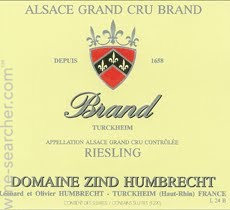 Great presence, leans towards sophisticated salty minerality, dry but beautifully layered. Highly complex. Excellent.
2007 Zind-Humbrecht Riesling Brand Grand Cru Vieilles Vignes. Mild green notes, though not vegetal, well-integrated with clear minerality with understated sweetness, giving it a stern demeanour. Became creamier over time but still somewhat short.
2006 Zind-Humbrecht Riesling Rangen de Thann Clos St Urbain Grand Cru. Arguably from the best grand cru site in Alsace, separate from Brand. Deep luscious gold, distinctly deeper in color with an abundance of apricot and grapefruit but beginning to dry out as evidenced by the lowish alcohol, not helped by the austere minerality. Fleshed out more over time but could do with more fruit.
2009 Zind-Humbrecht Gewurztraminer Clos Windsbuhl. Low in acidity with distinct notes of lychee but unassuming, ending in a long finish. Needs time to unwind.
2001 Zind-Humbrecht Pinot Gris Rangen de Thann Clos St Urbain Grand Cru Selection de Grains Nobles. Luscious with excellent aromatics, highly lifted, lowish in acidity and somewhat dense, displaying excellent complexity, utterly smooth and seamless. Quite exceptional.
2001 Zind-Humbrecht Pinot Gris Clos Jebsal Selection de Grains Nobles. Compared with the Rangen de Thann , this wine is even more layered with apricot and nectar, paradoxically lighter on the palate yet greater in complexity. Marvellous.
Palmer 2002, 2004 & Margaux 2002, 2003
The Glen boys gathered again for another evening of excesses at Garibaldi, 9th February 2015, where Roberto the chef and owner had customised a menu for us. The original intention was to drink a 2004 horizontal of Margaux, seeing how infrequently this commune is featured in most tastings. However, it wasn’t quite possible to sustain the plot across a diverse group of people and we ended up drinking whatever people brought. We began with a 2004 Dom Perignon (courtesy of Miah Hiang) that bolted off the blocks with a powerful earthy pungency and concentrated white citrus, light touch of lime and pomelo and a glimpse of mint intermixed very fine gentle bubbles, eventually developing overtones of vanilla and sweet toasty oak. Highly cerebral and complex and really quite superb. In contrast, the regular yellow label Verve Cliquot (courtesy of Beow Kiong) was rather stern in character with notes of limey citrus, green apples and bittersweet pomelo, weighty and linear from entry to finish, veering towards overt dryness.
We moved on to a pair of white burgundy, both courtesy of Choon Jin. The 2011 Guy Amiot Chassagne Montrachet La Maltroie 1er was highly attractive with a lovely and generous bouquet of white petals, placid and gentle on the palate with understated sweetness, taking on greater weight and expanse over time. Next to it, the 2009 Henri Boillot Savigny-les-Beaune Les Vergelesses 1er, whilst hailing from a great vintage, didn’t seem quite ready to drink at this stage although one senses an abundance of quality fruit beneath the even and smooth surface, toned with a hint of richness and delicate minerality, but still largely undeveloped. ![20150209_220955[1]](https://winebyric.com/wp-content/uploads/2015/02/20150209_2209551.jpg) A third white, the 2004 Mischief & Mayhem Mersault Les Poruzots 1er (courtesy of Keng Hong) was much heavier in color with the advantage of significant bottle age, featuring generous notes of caramel and red apples on the nose although disappointingly short on fruit on the palate; it desperately needs more fullness and body.
A third white, the 2004 Mischief & Mayhem Mersault Les Poruzots 1er (courtesy of Keng Hong) was much heavier in color with the advantage of significant bottle age, featuring generous notes of caramel and red apples on the nose although disappointingly short on fruit on the palate; it desperately needs more fullness and body.
The series of reds got off to a poor start, a potentially delicious bottle of 2001 Nicolas Potel Echezeaux Grand Cru turning out to be significantly corked. It never fails to amaze me how many people who drink very regularly and are knowledgeable about wine cannot recognise a corked wine whenever the encounter arises. On the other hand, the 2006 Taupenot Merme Mazoyeres Chambertin Grand Cru (courtesy of Hak Mien) was an absolute beauty, displaying a wonderful purity of red fruits and camphor, highly attractive in concentration and intensity without the outright voluptuousness of a first-division grand cru of Chambertin, very refined and quintessentially burgundian. Very good indeed, providing the ideal platform from which to move on to the wines of Margaux, finally.
It turned out that only Ch Palmer and Ch Margaux were featured, with two different vintages available for each, an ideal situation for easy pairing and comparison. The 2004 Ch Palmer (courtesy of Vic) was a classic beauty with open textures and an abundance of ripe dark fruits and dark currants of excellent depth, classically structured and balanced, its tannins slightly chewy and velvety, its aromas more lifted over time with nothing out of proportion, confirming just how under-rated this vintage has been. In contrast, the 2002 Ch Palmer, a bottle I’d cellared since its initial release, was also quite excellent, striking a perfect balance between loads of black fruits and the high-toned salty minerality, very seamless, just missing in sheer opulence. This is a wine that can hold its own in any line-up, a reminder never to under-estimate better estates in so-called weak vintages.
![20150209_225049[1]](https://winebyric.com/wp-content/uploads/2015/02/20150209_2250491.jpg) The 2002 Ch Margaux (courtesy of Li Fern) was similar in many ways to the 2002 Palmer with good saturation of black fruits and dark currants, possessing greater depth and layering, matched against earthy minerality, just a tad short at the finish. Its deficiencies were shone up by the 2003 Ch Margaux (courtesy of SS Ngoi), a prodigious wine of immense breadth and depth, layered with outstanding dark fruits and redcurrants, rich and lush without being overbearing and, naturally, still youthful with absolutely no trace of burnt from the hot vintage.
The 2002 Ch Margaux (courtesy of Li Fern) was similar in many ways to the 2002 Palmer with good saturation of black fruits and dark currants, possessing greater depth and layering, matched against earthy minerality, just a tad short at the finish. Its deficiencies were shone up by the 2003 Ch Margaux (courtesy of SS Ngoi), a prodigious wine of immense breadth and depth, layered with outstanding dark fruits and redcurrants, rich and lush without being overbearing and, naturally, still youthful with absolutely no trace of burnt from the hot vintage.
Just when we had concluded dinner and about to leave, Hsiang Sui came with a clutch of offerings that was difficult to refuse. The 2007 Kistler Russian Valley chardonnay was dry, lean and austere with a metallic tone towards the finish, while a 2000 Pavillon Rouge was well into its secondary development with notes of cedar and sweet tannins, slightly lean but its breed shone through. Definitely quality stuff. And, finally, a half-bottle of 1989 Ch Rieussec was consistent with my impression from a standard bottle 4-5 years ago, its acidity having ebbed away, robbing the wine of much of its verve, a pity since its apricot is still substantial. Given that there were so many of us, each person didn’t really have much to drink for each wine although I daresay there were some who staggered out of the restaurant. My thanks to everyone for their contributions.
Old Right Bank
These were the wines drunk at a dinner at Jade Palace hosted by Ms Angelina Teh of Bordeaux Index on 5 February 2015, where the reds were based on a Right Bank theme. All bottles were decanted on-site over a couple of hours.
We began with a pair of contrasting whites. The 2005 Rene Lequin-Colin Batard-Montrachet Grand Cru (courtesy of David) displayed a luminous gold with a rich creamy bouquet and notes of white petals, very minerally, yet understated, paving the way for a seamless and very well integrated wine that took on a rich petroleum-like quality after some time, ending in a long finish. Quite superb. Next to it, the 2012 Peter Michael Belle Cote chardonnay (courtesy of Kieron) was distinctly paler in comparison, considerably lighter in texture on the palate dominated by narrower spectrum of clear citrus, lime and morning dew amidst other mild grassy elements, ending in a bittersweet finish. ![20150205_231828[1]](https://winebyric.com/wp-content/uploads/2015/02/20150205_2318281.jpg) Over time, however, it developed a quiet intensity at the finish that gradually built up into a high crystalline tone with a dominant note of caramel on the palate, yet surprisingly smooth and controlled in spite of its 15% alcohol. Very lovely indeed.
Over time, however, it developed a quiet intensity at the finish that gradually built up into a high crystalline tone with a dominant note of caramel on the palate, yet surprisingly smooth and controlled in spite of its 15% alcohol. Very lovely indeed.
The three reds were drunk simultaneously. The 1975 Ch La Conseillante (courtesy of Angelina) was still dark in color, proffering powerful medicinal and earthy aromas, surprisingly generous in body and tone, still imbued with an excellent concentration of dark currants, plums and wild berries amidst remarkable acidity in spite of its 40 years. Fully evolved, gentle yet exciting at the finish, this wine is likely to continue to hold for many more years. Outstanding. The 1983 Ch Figeac (courtesy of KP), displaying a dark dirty red, possessed a sweeter bouquet, notably a bigger wine filled with top-drawer plummy fruit and powerful salty minerality, matched by fine silky tannins that complemented the classic dryness of tea leaves and ash very well, still laced with great acidity. A great Figeac. Lastly, the 1988 Ch Troplong Mondot, highly consistent with a similar bottle Kieron and I had shared over lunch at Eleven Madison Park in New York back in 2012, was relatively youthful in comparison to the above, saturated with dark fruits, blackcurrants and wild berries that gave off herbal and earthy aromas, well-integrated but slightly subdued and brooding in spite of the sweet cedar that emerged after some time. This had been a wonderful evening; thanks to all for the wine and to Angelina for dinner.
Great Old Italians
 Bacchus convened again on 13 Jan 2015 at Buona Terra, now the preferred venue for a number of people but, like all things good, I’m beginning to find its cuisine predictable and perhaps it is best to stay away for a while. The manager Gabrielle proferred the same 2011 Miani Fruliano from the restaurant list to start us off. Admittedly though, this is an excellent choice, fresh and zesty and unexpectedly rich and complex with a hint of tropical fruit and notes of white flowers and bitter citrus, slightly steely, that added immeasurably to its sophistication.
Well, of course, the wine theme for the evening would be Italian and when David was first to offer a 1964 Gaja Barbaresco, there was no turning back. In spite of its 50 years, the 1964, well-evolved in color, proffered sweet medicinal aromas with notes of red fruits and cooked meat amidst earthy smoky overtones, utterly seamless, even gaining in some intensity over time, staying the course throughout dinner without fading off. Superb. Drunk alongside, the 1971 Gaja Barbaresco (courtesy of LF), although younger, was alarmingly lighter in color, almost to the point of murkiness, but it redeemed itself beautifully with very lovely notes of rose petals and tangerine trailed by a hint of mint, still carrying good intensity and acidity, wonderfully balanced. Superb as well, but I felt that the 1964 came across as fresher and livelier. Still on the theme of great old Italians, we popped a 1964 Conterno Barolo from the restaurant list. 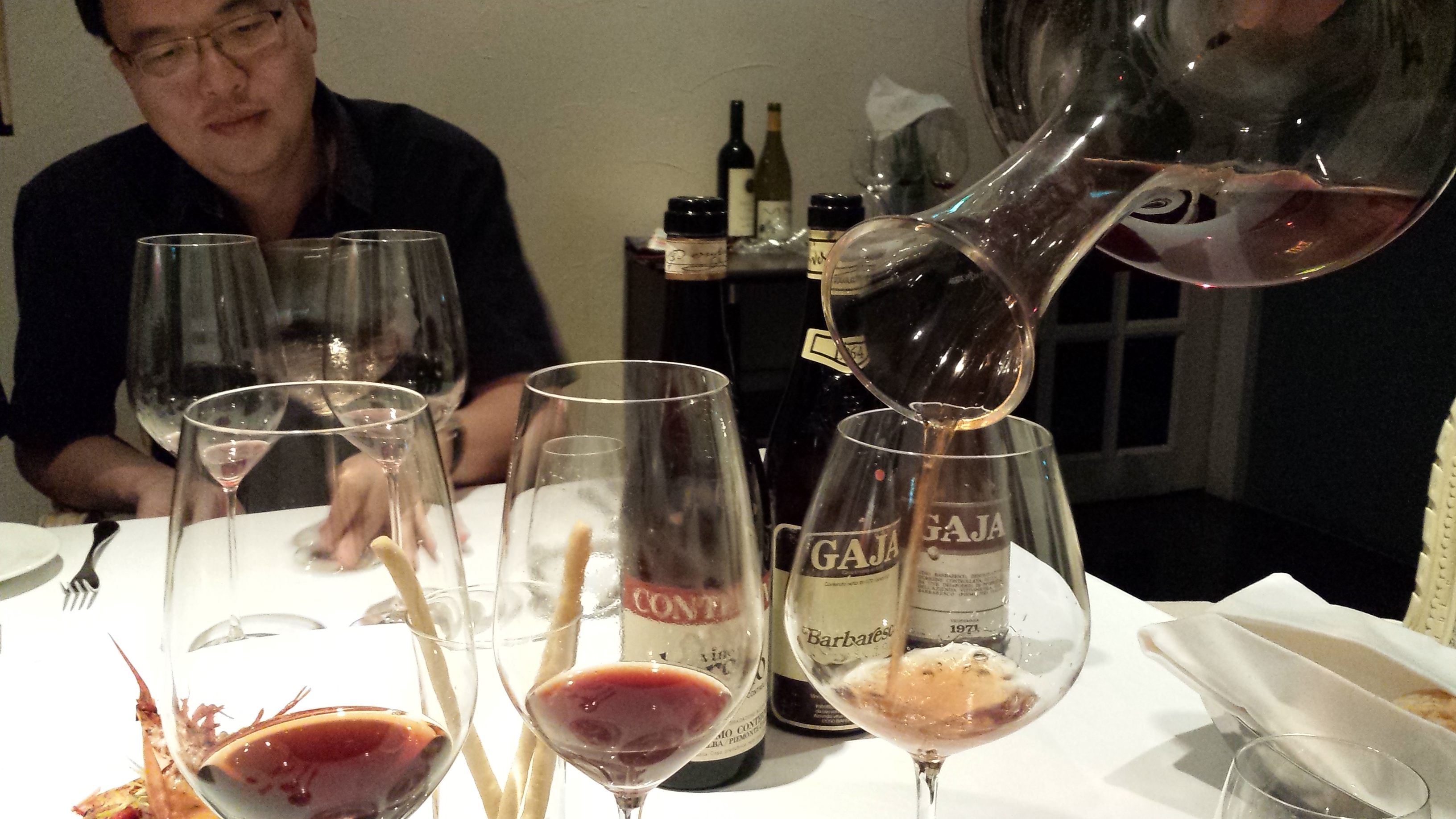 This was also alarmingly light in color but it stayed true to its Barolo roots with heavier port-like sweet medicinal aromas and pure tangerine on the palate, still decent in body and showing off great acidity, though the short finish could not be disguised, becoming better over time but the pair of Gaja still held sway.
The wine list of Buona Terra contained a relatively affordable 2011 Leterno Feudi del Piciotto Pinot Nero that has become a favourite with some regular diners. Primarily fruit forward with dominant notes of red apples and citrus, I felt this wine to be too heavy in body, typical of young Italian reds. We concluded the evening with a 1997 Sassicaia (courtesy of Kieron), normally a wine that would have blown the socks off any line-up. 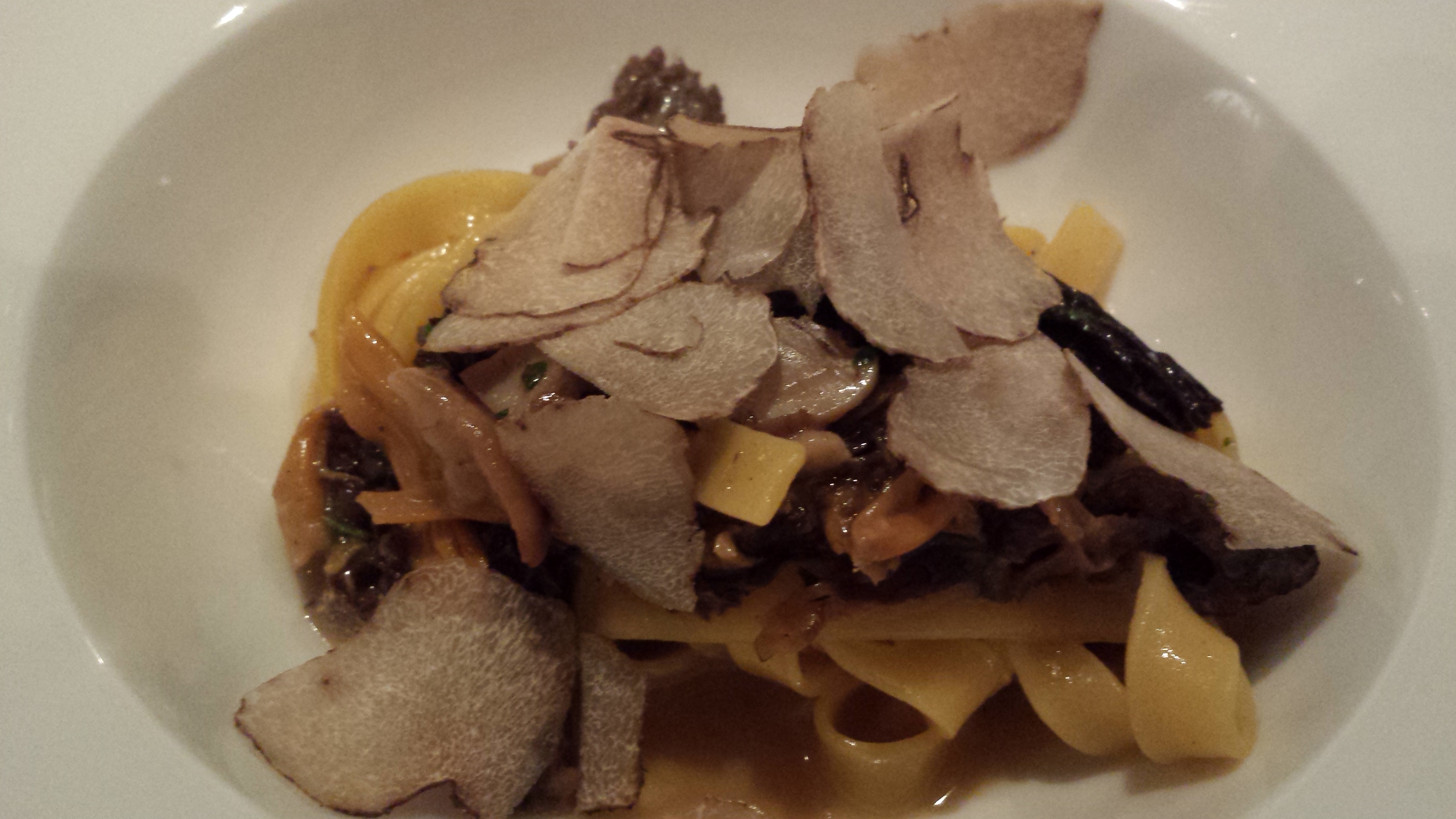 On this occasion, it contained a significant touch of earthiness and vegetal characters initially that, thankfully, blew off quickly enough to reveal dark fruits and blackcurrants with a dash of ferrous minerality, medium-bodied, supple and well-balanced, though stern in demeanour and certainly not the last word in complexity. Just as in typical Italian dramas, you can’t bump off the oldies and the Sassicaia certainly could not move out of the shadows of the great pair of Gaja Barbaresco.
Jan 2015: 1990 Les Ormes de Pez, 1990 Grand Puy Lacoste, 1989 Petit Village, 2003 Carruades Lafite, 2008 Louis Jadot Corton Charlemagne…
2012 Joseph Faiveley Bourgogne, popped and poured at Porta Porta, 03 Jan 2015. My first bottle of the New Year and it turned out to be a good drop. Living up to the promise of this excellent vintage, this bourgogne offers notes of white flowers, lime and sweet citrus with a delicate balance, light to medium bodied at first, gradually fleshing out over time with greater fullness and body with other notes of crème and nutty flavours creeping in, gaining in intensity and weight. It may gain some complexity with further cellaring. Discounted to SGD36, this is great value.
2012 Louis Jadot Macon Villages, popped and poured over dinner at home, 05 Jan 2015. I know I’m drinking a bottle of these every month but it’s really good, stuffed with an abundance of limey citrus and chalky minerality with just a dash of vanilla and crème, gaining an austere and slightly steely finish over time that seemed most appropriate for a young Burgundy and made easier by the relatively gentle 12.5% alcohol.
1990 Ch Les Ormes de Pez, decanted on-site over lunch at Prive Grill, 8 Jan 2015. Fully evolved, this wine is at its drinking peak, offering an attractive bouquet of kumquat and tangerine allied to darker characters on the palate, namely bramble, ripe wild berries, old leather and cedar, still displaying excellent structure and grip even though its tannins are perceived rather than felt. Already 25 years post-vintage, but not in danger of fading anytime soon. At SGD93 (current retail price), this is excellent.
2008 Louis Jadot Corton-Charlemagne Grand Cru (courtesy of KW), popped and drunk over 90 minutes at Glen Arden, 10 Jan 2015. Surprisingly heavy in color for a young Grand Cru, offering lifted aromas of butterscotch and dominant notes of coconut, medium-full and generous in body on the palate with substantial fat, firm in minerality, promising a lot but yet to develop true secondary nuances.
2009 Maison Leroy Bourgogne rouge, aired in bottle for almost two hours prior to tasting at Glen Arden, 10 Jan 2015. The cork was entirely soaked through (I’m told this is usual for Leroy) but, thankfully, the wine is perfectly fine, slightly dark for a bourgogne but already developing secondary notes of cassis and red plums laced with sweet supple tannins, medium-bodied, soft but structured. Possesses an innate attractiveness that invites one to keep sipping the wine. Easily qualifies as village. Very good.
1997 Carpineto Vino Nobile di Montepulciano Riserva, decanted and drunk over two hours at Glen Arden, 10 Jan 2015. Lively with a good mix of red fruits and blueberries, dominated by the fragrance of camphor and red cherries on the palate, lively, medium-full, structured with unobtrusive tannins. Yet to peak, and could be even better. Excellent.
2004 Ch Latour-a-Pomerol, popped and drunk rather quickly at Glen Arden, 10 Jan 2015. I’ve been going through a case of this for the past two years, and this wine keeps growing in stature and sophistication on each occasion, already developing secondary nuances of cedar and overtones of savoury sweet meat, generously proportioned with ripe berries, supple and delicious. Excellent but now expensive.
2008 Carpineto Vino Nobile di Montepulciano Riserva, popped and poured at Jade Palace, 14 Jan 2015. Deep purple with an attractive but restrained bouquet of violets and ripe dark berries, while raspberries dominate on the palate with a hint of cedar and sweet meat, well structured and integrated but somewhat lean and dry, leaving behind a puckered mouthfeel. Could do with more fat in the mid-body.
2011 Schlossgut Diel Spatlese Riesling, popped and poured at Jade Palace, 17 Jan 2015. This wine carries exotic notes of tropical fruits, rock melons, apricot and nectarine, all caught up with a quiet but exciting intensity that perfectly balances against the substantial sweetness with some early complexity in the mid-body. Very lovely.
2003 Carruades de Lafite, a bottle that I have cellared since its release in 2006, decanted at Jade Palace, 17 Jan 2015 to celebrate Monster’s success. Displaying a deep dark garnet red, this wine carried notes of ripe dark berries and blackcurrants, better on the palate than nose, with a dash of cedar and raisins that tapered to a dominant graphite character towards its short finish, becoming quite seamless and fragrant over time. Compared with the venerated premier cru, this second wine is rather understated in structure, giving way to a softer, more slender and feminine character that’s entirely consistent with Lafite, just missing in outright opulence and voluptuousness although there’s certainly no lack in concentration of quality fruit. It’s a good drop but not worth the current price.
Billecart-Salmon Rose Brut NV, popped and poured at Bedrock Bar & Grill, 19 Jan 2015. This champagne offers generous notes of red apples and crisp citrus on the nose, broad and deep on the palate with toasty characters and almonds, finishing with a metallic twist that added a touch of sophistication. Acquired greater depth and finish over time, the fizz never getting in the way of the fruit. Probably the best example of rose from this maison.
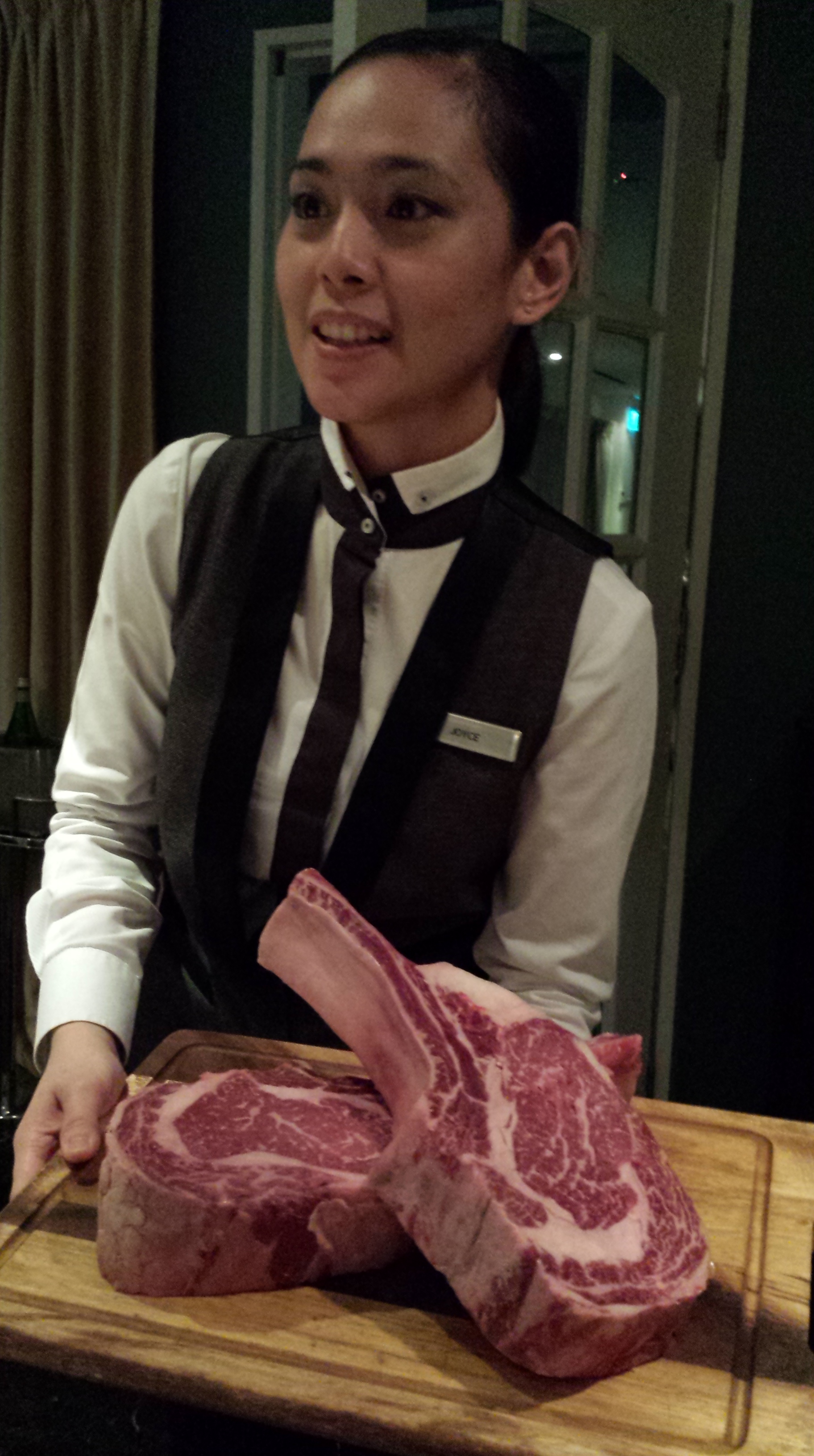
1989 Ch Petit Village, a bottle given to me by SS Ngoi, decanted and drunk over a tomahawk steak at Bedrock Bar & Grill, 19 Jan 2015. Displaying an evolved red, this Pomerol stayed true to its roots with notes of soy and dark berries with a dash of tar, still quite excellent in concentration and depth, its acidity still holding out although it could not compare with the 1990 Grand-Puy-Lacoste in richness and opulence.
1990 Ch Grand-Puy-Lacoste (courtesy of John), decanted and drunk over a tomahawk steak at Bedrock Bar & Grill, 19 Jan 2015. My second bottle of this wine within six months, with consistent notes. Still displaying a deep garnet red, this outstanding wine overwhelmed the senses right from the first pour with effusive notes of glorious ripe dark berries and blackcurrants, oozing with wonderful voluptuousness and opulence and layered with tertiary notes of cedar, cinnamon, tea leaves and roast meat, still pretty full in body and depth, its fresh acidity suggesting that this wine is still far from reaching its peak. Wonderful to drink now, but do keep some for the next 25 years!
2005 Ch Bernadotte, poured from magnum over 3 hours at CGH Dinner & Dance, Resorts World Sentosa, 24 Jan 2015. This Haut Medoc has developed another notch over the past year, medium to full-bodied with excellent concentration of ripe dark berries and overtones of plum, cedar, toast and sandalwood, balanced and structured with just the right amount of acidity. This is an excellent Bernadotte.
2011 Ch Bourbon La Chapelle, popped and poured at Prive, 29 Jan 2015. Nothing to shout about here. This supermarket wine possesses the requisite dry quality of the Medoc with decent fruit quality, but lacking in body and fullness.
2004 Penley Estate Reserve Cabernet Sauvignon, decanted at Porta Porta (Stanley St), 31 Jan 2015. Still very dark in color, this wine opened with dominant medicinal overtones and notes of licorice, full-bodied and tannic. It settled down after 60 minutes, becoming much more open and integrated with further notes of red plums and some red fruits emerging from the depths of dark currants. Very fine, but give it plenty of time.
2006 Henri Boillot Corton Charlemagne Grand Cru (courtesy of KW). Popped and poured after a brief period of aeration in bottle at Gattopardo, 2 Dec 2014. Too cold initially with only shades of creme and vanilla discernible. As it warmed up gradually, it grew in body and intensity, broadening with full-bodied complexity on the palate, supported by gorgeous firm minerality with a lovely lift towards a slightly minty finish. This is a Corton-Charlemagne to match those of Bonneau du Martray. Excellent.
2002 Maison Leroy Chassagne-Montrachet, decanted on-site at Gattopardo, 2 Dec 2014. One of the few reds produced from Chassagne, this wine is notably darker in tone and color, dusty red that’s almost brownish, displaying notes of ripe raspberries amidst raisins and medicinal overtones and traces of burnt. 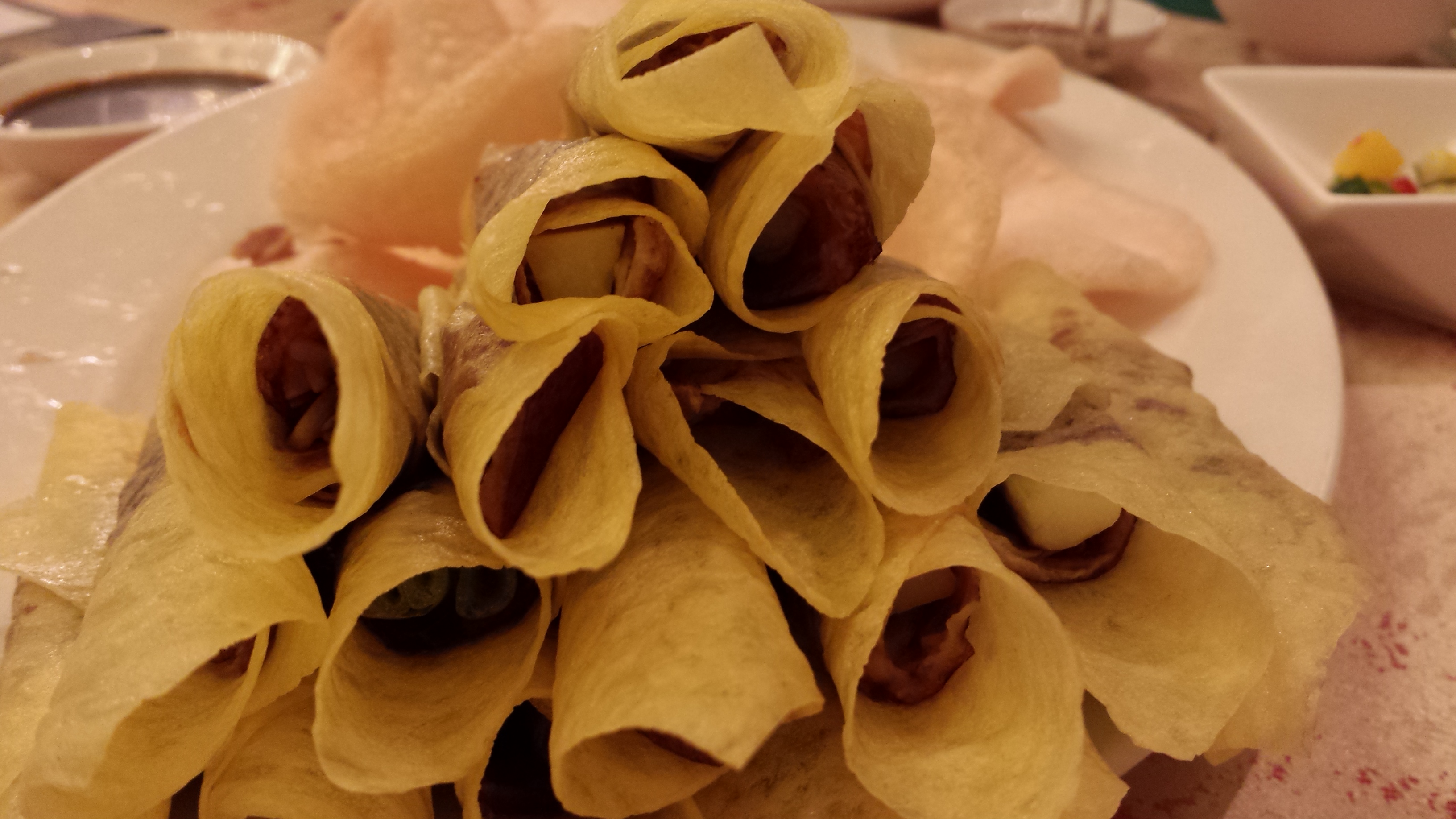 Very atypical for a burgundy, even coming from this venerated estate. I’ll stick with the reds from the Cote des Nuits.
1989 Ch Chasse-Spleen, decanted on-site at Gattopardo, 2 Dec 2014. Still retaining a deep purple after 25 years, this wine exhibits effusive aromas of blueberries and raspberries and traces of tangerine that are well-replicated on the palate with excellent depth of fruit, most succulent and alluring, replete with sweet soft tannins. Clearly at its drinking peak and looks set to hold for several more years. Excellent.
Moet et Chandon NV Rose (courtesy of KP Lim), popped and poured at New Ubin Seafood, 07 Dec 2014. Attractive bouquet of pink roses, cherries and other floral notes but somewhat dry and one-dimensional.
2002 Dom Perignon (courtesy of Vic) at New Ubin Seafood, 07 Dec 2014. Never disappointing, the 2002 DP is a prodigious wine, somewhat muted initially but eventually glowing with notes of fine complex citrus well-integrated against the chalky minerality with a dash of creme and vanilla, displaying great depth and early complexity though still tight and steely.
2011 Hudelot Noellat Chambolle Musigny at New Ubin Seafood, 07 Dec 2014.This wine is really lovely, stuffed with red fruits of excellent purity and depth, striking a beautiful balance with the salty minerality, ending in a long lasting finish. Excellent.
2004 Ghistaine Barthod Chambolle Musigny Aux Beau Bruns 1er. Corked unfortunately.
1998 Ch Clos de l’Oratoire (courtesy of SS Ngoi) at New Ubin Seafood, 07 Dec 2014. Still displaying a deep dark red, full-bodied with predominant notes of soy amidst some mild herbal aromas, excellent in concentration with velvety tannins. Still not much development at this stage. this will be a long-lived Saint Emilion.
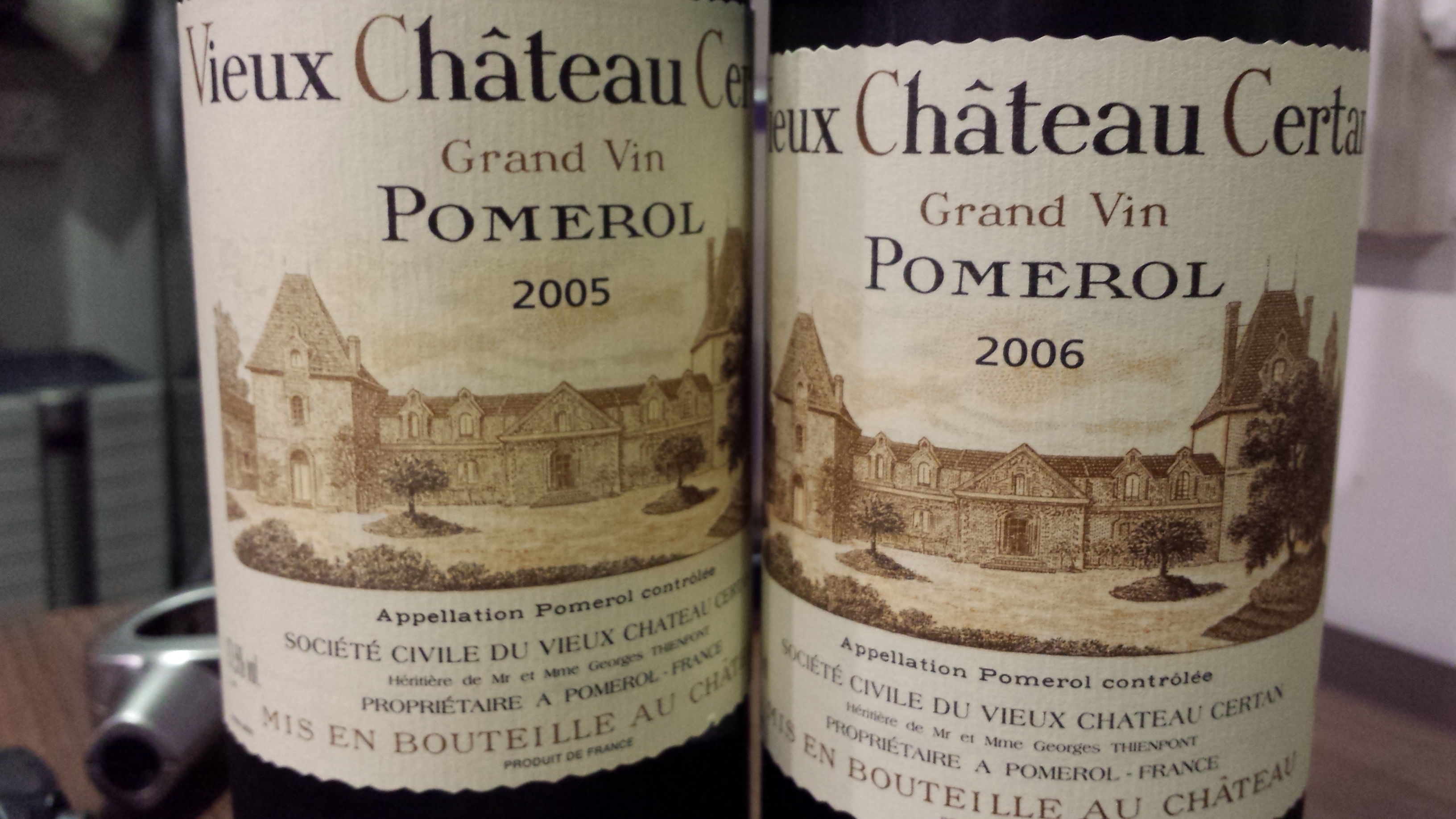 2006 Vieux Chateau Certan (courtesy of SS Ngoi) at New Ubin Seafood, 07 Dec 2014. Full-bodied with a powerful earthy pungency, yet soft and accessible. Still unevolved and slightly short.
2005 Vieux Chateau Certan (courtesy of SS Ngoi) at New Ubin Seafood, 07 Dec 2014. Dark inky black, oozing with ripe warm black fruits with subtle graphite colouring, full-bodied but superb in balance. Still primal, this will be a long-lived Pomerol.
2005 Hestan Vineyards cabernet sauvignon (courtesy of LF) at New Ubin Seafood, 07 Dec 2014. Predictably huge with a strong graphite element, traces of herbal medicine and an abundance of dark fruits. Hedonistic but superbly controlled, balanced and crafted.
2011 Alois Kracher No.8 Scheurebe Trockenbeerenauslese, at New Ubin Seafood, 07 Dec 2014. One marvels at the remarkable balance, just medium-full, never heavy, achieving a lovely concentration of melons, tropical fruits, lychees and fig with a quiet intensity and inner complexity, yet never over-bearing. Excellent.
2003 Ch Guiraud at New Ubin Seafood, 07 Dec 2014. Full-bodied but dipping in acidity already, which is both surprising and alarming, robbing this Sauterne of its verve and liveliness, turning a tad heavy and flat.
2007 Paul Hobbs Lindsay Estate Vineyard Pinot Noir, popped and poured at Bedrock Bar & Grill, 08 Dec 2014. If I hadn’t known that this bottle was a pinot noir, I’d have thought I was drinking a malbec or GSM blend, for such was its weight and forward projection of ripe dark fruits and raspberries amidst powerful medicinal and herbal overtones, tight and tannic on the palate. Did the estate label the bottle wrongly?
2009 Altavilla Della Corte Firriato, a half-bottle bought off the list of Buona Terra, 09 Dec 2014. Popped and poured. I’m highly impressed by the lifted aromas of white roses, fig, melons and citrus coupled with seared caramel and light honey of surprising richness and intensity on the palate, supported by firm chalky minerality that added to some degree of genuine complexity. An over-achieving Sicilian, perfectly agreeable at SGD58.
2008 Il Marroneto Brunello di Montalcino, a half-bottle bought off the list of Buona Terra, 09 Dec 2014. Aired in bottle for well over an hour. This Brunello does not disappoint, promising a big wine with powerful aromas of red plums, cedar, raisins and dark berries, living up to its promise on the palate, medium-full with excellent depth of fruit, yet open and layered with a rich vein of dark berries, suggesting that this wine still has quite some way to go before peaking.
2004 Ch Bernadotte, popped and poured at Asia Grand, 13 Dec 2014. This wine appears to have turned the corner, shedding its green surly coat, more open on the nose and palate with notes of cedar, raisins and ripe berries, carrying excellent weight and supported by understated minerality and sweet subdued tannins. Definitely much more inviting and delicious than ever before.
1995 Verve Cliquot La Grande Dame (courtesy of Chor Tzien) at Chotto Matte, 18 Dec 2014. Very lovely on the nose with notes of cashews, toast and yeast, deep and inviting, displaying excellent balance on the palate between the lively citrus and crystalline minerality. Sophisticated and highly attractive.
2004 Belle Epoque Perrier-Jouet, popped and poured at Chotto Matte, 18 Dec 2014. Forward balance of dense citrus that is somewhat acerbic on the palate, tapering to a steely austere finish.
2009 Leflaives Macon-Verzes (courtesy of Li Fern), aired for 45 minutes at Chotto Matte, 18 Dec 2014. It was good to return to this perennial favourite, still full-bodied and packed with an abundance of ripe citrus and chalky minerality, intense on the palate, yet to yield further complexity.
2002 Leroy Montagny (courtesy of Li Fern), aired for almost an hour at Chotto Matte, 18 Dec 2014. Attractive bouquet of earthy pungency. Slightly flat on the palate but it transformed quite quickly into a broader wine with notes of white flowers and tangy citrus, rather firm, finishing with a bit of spice at the edges. A good drop but I wished it carried greater complexity.
2009 Meo Camuzet Morey St Denis, aired in bottle for 90 minutes at Chotto Matte, 18 Dec 2014. In spite of its youth, this wine is fully accessible now, stuffed with fruit of great purity, offering lifted aromas of ripe raspberries, cherries and camphor with traces of vanilla still discernible, replete with plenty of fat in the mid-body, just a tad spicy at the finish. Excellent.
 2003 Joseph Drouhin Charmes-Chambertin Grand Cru (courtesy of Ooi CJ) aired in bottle for 90 minutes at Chotto Matte, 18 Dec 2014. I’m afraid this Grand Cru doesn’t quite live up to its billing, rather heavy with medicinal aromas that tend to impart a certain density on everything else. Disappointing.
2007 Sylvain Cathiard Vosne Romanee “Aux Malconsort”1er Cru (courtesy of SS Ngoi), aired in bottle for 90 minutes at Chotto Matte, 18 Dec 2014. Expectations were high and this wine doesn’t disappoint, offering a fantastic bouquet of pink roses and other floral fragrances, displaying great presence and depth on the palate with predominant notes of red cherries and spice that lent plenty of verve and vibrancy. Excellent.
2004 Clonakilla Shiraz-Viognier, popped and poured at Beng Hiang, 20 Dec 2014. I don’t like the way this wine is shaping up after 10 years, even though this bottle had been immaculately cellared for the past 7 years. Heavy with a predominance of medicinal overtones and forest floor and wild berries, one-dimensional and angular, almost hard. Disappointing.
2007 Ch Haut Batailley, popped and poured at home, 22 Dec 2014. Compared to a previous bottle from the same batch tasted about 18 months ago, this wine has turned alarmingly angular and disjointed, its fruit already stale and drying out, leaving a carcass of musty wood and dusty tannins. Not worth buying even at SGD59.
2010 Ch Loudenne, popped and poured from magnum (my last!) at the wedding of Evan & Cynthia, Shangri-La Hotel Singapore, 27 Dec 2014. This wine offers deep aromas of rich dark currants and blueberries on the nose although, on the palate, it is distinctly medium-bodied, slightly lighter and more open in texture than before with a good concentration of violets and graphite elements in its sophisticated tannins, growing in intensity over time, a cru bourgeois within touching distance of a Fifth Growth. Very good for its price.
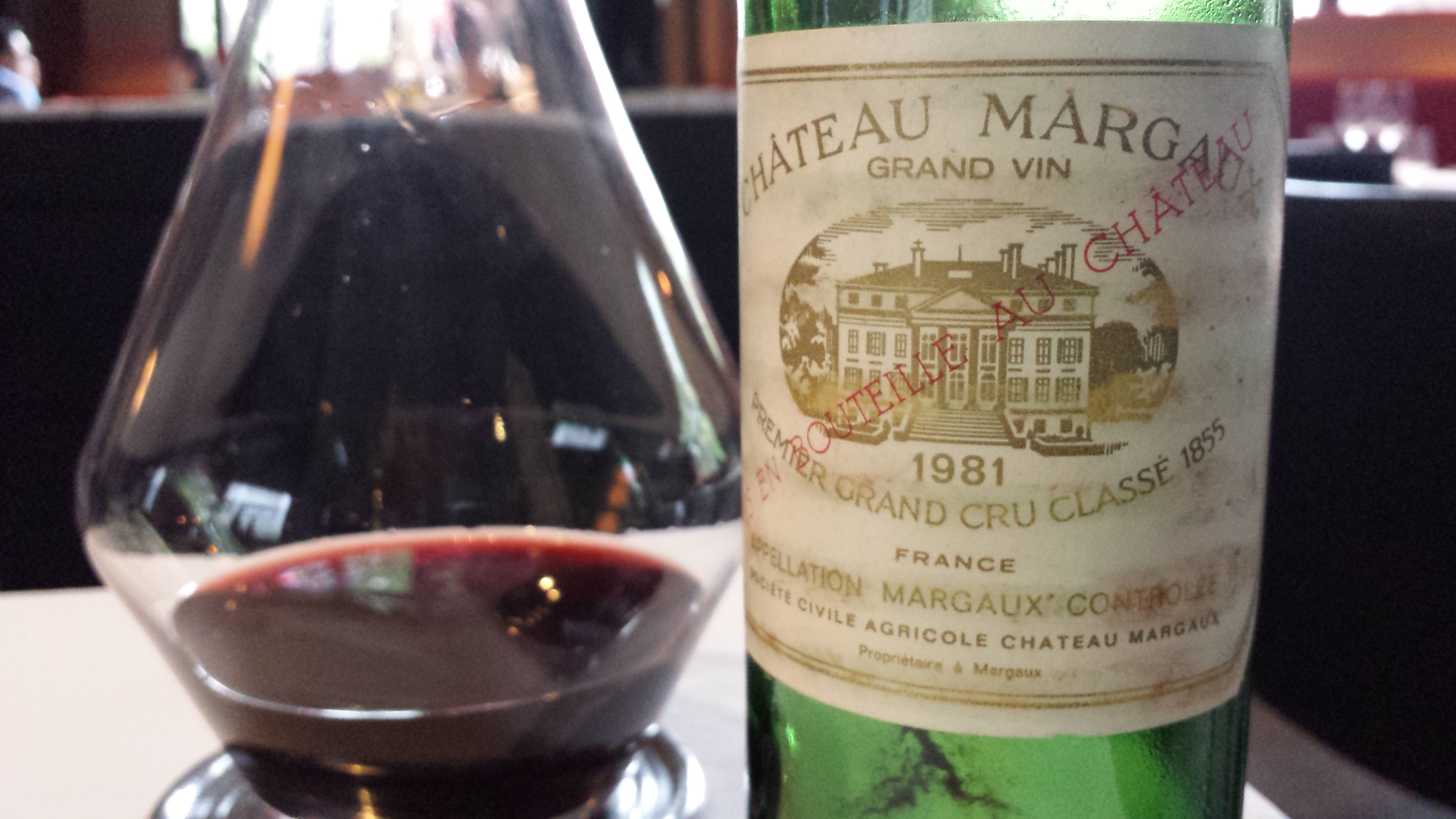 1981 Ch Margaux (courtesy of John), a half-bottle decanted on-site at Otto Ristorante, 30 Dec 2014. To be honest, there was substantial bottle stink on the nose and palate that almost amounted to the bottle being corked, but we didn’t have the heart to pour away a Margaux. Thank goodness, though, it seemed to blow off by the time we reached the latter half of the bottle, revealing predominant red fruits and tangy citrus that the wine still carried, allied with notes of earth, forest floor and wild berries amidst a soft fragrance. However, this wine clearly lacked distinction and if I’d been blinded, there was no way I’d have known this was a 33-year-old premier cru. Nevertheless, a big thank-you, John.
Mansard Brut NV, popped and poured over lunch at Imperial Treasure T3, 31 Dec 2014. Attractive and promising at first with generous notes of lime and citrus supported by flinty minerality, offering very good depth of fruit. However, it became far too dry and crisp after some time, becoming one-dimensional and hard.
 Ric's Wine Journal