Notes in brief (September)…
2006 Leopold Aumann Harterberg CS-M-ZW, over boiled beef at the excellent restaurant Immervoll in Vienna, Austria. That last bit stood for 40% cabernet sauvignon, 40% merlot, and 20% zweigelt. Deep dark red, with hardly any bouquet. The palate revealed a delicious, smooth, fruit-driven wine that was quite elegant and well-balanced, without trying too hard. Made in a New World style. With time, it developed further intensity, but it still remained a simple, straightforward table wine that does its job. 54 Euros, from the restaurant list.
2008 JJ Christoffel Erben Erdener Treppchen Kabinett Riesling, at the in-laws. Straw-colored. Lovely bouquet, full of floral and lime notes, very fragrant. Well balanced, with a fairly rich vein of minerality but never excessive, finishing with just the right touch of sweetness. Excellent.
2004 The Moorooduc Chardonnay, over beehoon crab at Ming Kee, its signature dish. Luminous pale golden. Initially served too warm, the body was disjointed from the nose, which carried very floral and delicate notes of citrus, chalk and minerals. As it hit the right temperature, the body firmed up, carrying some weight, but still very chunky and unresolved on the mid-palate. Good concentration, but it lacked depth and richness at this stage. A good chardonnay, no doubt, but I suspect it needs much more time in bottle. Two more left.
2002 Domaine Faiveley Nuits St-Georges 1er Cru “Les Vignerondes”, after hours. A classic Burgundy red in every way – lighter dusky red, lovely bouquet of fresh cherries and raspberries without being over-exuberant, medium-bodied, very even on the palate, polished, moderate depth and finish. Doesn’t pack power, but otherwise very correct. A good one.
The 2006 Littorai Hirsch Vineyard, from Sonoma County, drunk alongside the Faiveley above, surprisingly has almost the same color as the Burgundy. However, the nose was perceptibly heavier, with dominant notes of barley and malt (!). Also medium-bodied, but a bit fuller, with excellent fruit quality, the note of malt persisting on the palate which wasn’t intrusive; rather, it added an exotic touch. Moderate depth, with a sweet finish. Still quite primal and straightforward at this stage, but I’m sure it’ll age very well. Good stuff.
2004 Ulithorne Frux Frugis Shiraz, at June’s wedding dinner on 20.09.2009 at 2009h. Neat. This is a relatively new estate in McLaren Vale, which I first got acquainted with during a dinner at Sage some 2-3 years ago, with the winemaker in attendance. The wines had shown up very well then, but this bottle tonight was disappointing. Too much wood on the nose, with heavy doses of incense and smoke that carried well onto the palate. Even the plummy, sweet fruit failed to shake off the heaviness. Far too disjointed. The wine eventually developed a sweet-sour edge. I didn’t like it, and I don’t think it’ll age well. Just as well it’s my last bottle.
2004 Ch Leoville Poyferre, my third bottle over the last 6 months, from a half-bottle over dinner at Crystal Jade T2. Deep dark red. Seemed more reticent this time round, more subdued, but notes of dark berries emerged after persistent coaxing. Full-bodied, austere, huge on the mid-palate, still quite primal, trace of alcohol, firm tannins. Quite awkward on the whole, and not much in terms of flavours – a wine that’s probably going to shut down soon, although I have no doubt in 10 years it will be excellent. Business seemed slow at this Crystal Jade branch, and they have waived corkage, supplying excellent Oberglas 1860 stemware.
1996 Ch Potensac, at TMCC. Ruby red with bit of dusty rim. Quite fruity on the nose, holding up well on the palate, a wine that’s beginning to soften, although still big and quite backward. It mellowed with further aeration, smoothening its rustic edges, transforming into quite a harmonious wine that went very well with the black pepper steak and spicy dishes. Drinking much better than a previous bottle Fatty brought 4 years ago at the old Asia Grand. Very good.
2003 Ch Lafon-Rochet, at Foo House over a Monster Burger, from a half-bottle. Deep impenetrable red. Quite shut. Also subdued on the palate, though one can appreciate its full-bodied nature, ripe fruit, and firm structure. Surprisingly one doesn’t get the raisiny toasted note of a very hot vintage. The only hint was the discernible alcoholic bed, but even that was held in check and deemed acceptable for a young Left Bank. I’m not sure how this will evolve in the long run, but no harm drinking now.
1999 Ch Pichon Longueville Baron. Part One: at Asia Grand, to celebrate Monster’s first-placing in his swimming heat. Knowing that the missus and I would struggle through a full bottle over a simple meal, I had poured half into a half-bottle immediately upon opening and sealed it, bringing only the remaining half to the restaurant. Somewhat disappointing. The nose was rather musty, suggesting an imbalance of wood over fruit, which was the exact experience on the palate. The fruit appeared to have dried out quite a bit, leaving behind a disjointed core with unresolved dusty tannins. I’d expected more, as a bottle tasted earlier this year at Jade Palace was lush, bold and drinking very well. The current bottle in question was purchased recently at Crystal’s megasale. Perhaps of dubious provenance? Part Two: drank the remaining half two evenings later at the in-laws. It kept very well in the bottle, with none of the oxidised note. It seemed to taste better, more even and fruitier, although essentially it lacked richness and density. I may wait another year or two before opening the next bottle.
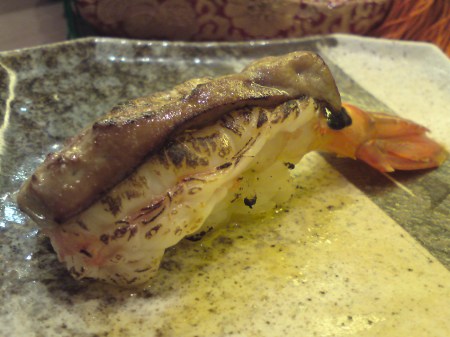 2006 Kooyong Ferrous Pinot Noir, at Majestic. Definitely tasting better than the sample I had few nights ago at the American Club (see below): fresher, more delicious. The bouquet is underlined by the slightest trace of alcohol, to be expected for a young wine, but there is abundant rich fruit to support it. Soft, with a rich core, excellent definition. None of the burnt note or heat of a very dry vintage. Hasn’t gained complexity, but this has great potential. A very good New World pinot noir.
2002 Ch Rauzan-Segla, second time in as many months from my remaining half-bottle, again at Foo House with the missus over an excellent tenderloin steak. Very austere and disjointed, lacking in quality fruit to support the alcohol, which was quite jarring. Hollow. We didn’t even finish it.
2007 Grosset Polish Hill Riesling, at Kome. Supposedly one of the best rieslings from Australia, Clare Valley. A lot of acidity initially that obscured the flavours. Gradually regained its balance after an hour, tasting very fresh, with loads of citrus, lime and minerality without being too dry. But its a bit edgy. I’ve had better examples from 2006.
American Club tasting
I was fortunate to be invited back to the American Club for an evening of premium wines on 5 Sept 2009, where any vendor that mattered was represented, each presenting a fine selection of wines for free tasting, coupled with free flow of food. The only drawback was that it’s only standing room, but that’s a small price to pay for the opportunity to taste more than 200 different wines. So, very briefly…
The Whites: Grosset Grande Reserve Brut NV (disappointingly bland, too much fizz, lacked focus); Bauget-Jouette Brut Reserve NV (very pleasant and agreeable, if a tad simple. I’ll be happy to drink this anytime); 2005 Vincent Girardin Mersault 1er Cru Charmes-Dessus (flinty, good acidity without too much minerality, attractive, quite ready to drink); 2005 Vincent Girardin Puligny-Montrachet 1er Cr Les Folatieres (more body than the Mersault, more stuffing, but a tad shy on the whole, needs more time); 2006 Louis Moreau Chablis Grand Cru Les Clos (excellent example of a Chablis, light-medium, less complex than a Puligny-Montrachet); 2004 Moorooduc Chardonnay (at last a chardonnay with very decent body, halfway towards a Giaconda at one-third the price; we bought some).
The Reds: 2004 Conterno Fantino Barolo “Vigna del Gris” (big, dense, nebbiolo fruit quite discernible; lacks finesse expected of single vineyard Barolos); 2005 Roc de Cambes (cult wine, very difficult to source; modern, extracted but not over-done; very good, but very poor value for a Cote de Bourg); 1999 Robert Mondavi Cabernet Sauvignon (hasn’t really evolved much, big, not much complexity, disjointed finish, touch of green); 2006 Vynfields Martinborough Pinot Noir (very attractive nose, well-made pinot, bit simple, but a good one, nonetheless); 2007 Vynfields Martinborough Pinot Noir (heavier than the 2006, more stuffing); 2007 Gibbston Highgate Soultaker Pinot Noir (also attractive on the nose, good body and finish, I quite liked it)…but the most attractive thing with the best body was that delicious babe from Rev Distribution Network who was the main reason for tasting the last 3 wines…2005 Domaine de Chevalier (lovely ripe cool fruit, hasn’t developed further complexity but clearly has enough depth to do so eventually); 2000 Ch de Fieuzal (excellent fruit quality, balanced, but not much sophistication); 2004 Ch Gruaud Larose (very classic, well-balanced, good fruit without any green note, will be drinking well; I liked it); 2000 Ch Lynch Moussas (quite an open expressive nose, but wasn’t particularly exciting on the palate); 1994 Ch Montrose (just popped open, seemed fatter, with more stuffing, than my previous experience earlier this year, no sign of the fruit drying out); 2002 Philip Togni Tanbark Cabernet Sauvignon (huge wine but smooth, well made, bit thick in the middle, still monolithic); 2004 Pio Cesare Barolo (rustic, earthy, speaks of the terroir, I suppose, good wine but out of place amongst these monster reds); 2005 Shafer Merlot (big, disappointing, doesn’t taste like merlot at all); 2005 Ch Montelena Cabernet Sauvignon (not the Estate, showing well, not as big as I thought it would be, has some depth); 1996 Ch Poujeaux (very attractive nose, medium, softening, good table wine, but nothing really special); 2005 JJ Hahn “1914” Shiraz (big, well made, smooth, but not special enough); 2006 Kay Bros Block 6 (obscured by obtrusive alcohol throughout, I poured it away); 2005 Bannockburn Serre Pinot Noir (very very nice nose, very correct, good body, manages to avoid over-extraction, we liked this); 2006 Kooyong Ferrous Pinot Noir (very good nose, but too lightweight for its own good); 2005 Rockford Basket Press (the best red of the night, superb fruit, dense, but has plenty of layering and Old World charm, trace of alcohol but that will disappear with time; we bought a case – only SGD 72!!); 2006 The Relic Shiraz Viognier (huge, viognier element discernible, nothing special now); 2005 Diggers Bluff Top Dog Shiraz (from son of Robert O’Callaghan, shares same fruit as the Rockford Basket Press; great quality, but doesn’t have the Rockford’s layering); 2007 Glaetzer Amon-Ra (huge, very well made, rich, ripe, without being unctuous; monolithic now, will be interesting to see how it develops); 2005 Yarra Yering Red No.2 (a blend of shiraz, viognier and marsanne; very attractive with liquorice, spice, mint, and cherries(?), but my palate was already worn by then); 2005 Cain Five (tries not be too big, succeeds somewhat, predominantly red fruit characters, but not distinctive).
That’s it: 32 samples over 3 hours. I was totally worn, even though I was spitting and pouring away two-thirds of my samples. Tasting those New World monsters again and again became nauseating. Well, I’ll be stuck with plenty of Rockford in my collection. I suppose that’s more of a good thing rather than bad. They need plenty of sleep, but at the rate I keep expanding my vertical collection, I’ll have to start thinking hard about how to drink them up.
Friends
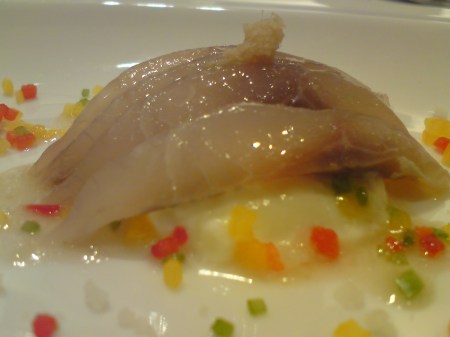 What are friends for? Well, they stand by you through thick and thin, they are great company, and when it’s time to push the boat out, you can count on them to do so with great style and panache, at Iggy’s, no less, now amongst the world’s Top 50 restaurants, and deservedly so. Only here can one find top notch service by knowledgeable staff who carry off their smart efficiency with effortless grace, almost re-defining the standards of “smart casual”, matched with impeccable wine service, and food that delights at every instance, yet remaining focused and fuss-free. The best part is, the restaurant has even surpassed itself on this very occasion. We took our usual places at the Chef’s Table amidst cheerful banter within the most relaxed atmosphere possible, and focused on the wonderful wine and food that were about to unfold.
The 1999 Philipponnat Clos des Goisses was, in every way, the perfect aperitif that immediately set the tone for the entire evening. Pale, but it had a intriguing bouquet right from the first pour, with lifted aromas of vanilla and caramel intermixed with soft, floral notes of white flowers. This led to a wine of great body and mouthfeel, almost creamy smooth, with the right level of minerality and soft citrus, intense yet balanced, without any sign of heaviness. Very, very classy. Even the staff at Iggy’s were impressed. With time, it began peeling off its outer layer, revealing deep layers of flavours and stunning complexity, taking on more weight, showing off bit of yeasty note, gaining greater expanse, yet all the while maintaining that wonderful balance, elegance and finesse. This is a great champagne. C’est magnifique!!
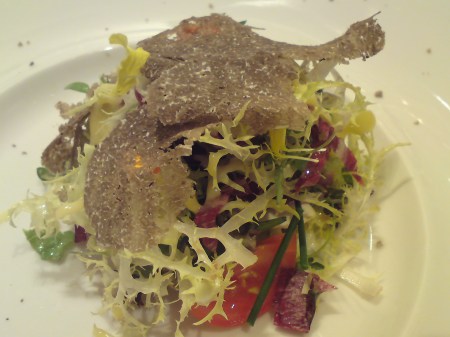 This was a perfect start to the evening’s menu, which kicked off with a series of Aji, Summer Salad with black truffles, Sanma, and Cappellini, which were washed down with a 2001 Batard-Montrachet from Domaine Leflaive. An aristocratic light golden in color, not unlike some Carrera marble lit by the morning glow, immediately exuding its class with a rich, intense sheen of chalk and transparent citrus that leapt out of the glass, occasionally allowing you a peek at its hidden riches. I’m reminded of the Berliner Philharmoniker strings. As it hit the right temperature, a deeper note eventually emerged, of cream and cashews, carrying more weight, yet maintaining that transparency down to its depths. It continued to develop and evolve right till the end, showing off sweet notes of longans and lychees, with a bit of a bitter-sweet pomelo finish. Superb.
A trio of outstanding reds took over the limelight, matching the suckling pig, lamb and wagyu beef perfectly. The 1990 Sassicaia, a true Bordeaux blend grown on Tuscan soil, was deep red with some lightening at the rim, exuding a very powerful nose of mint, spice, and liquorice. Notes of ripe, mature dark fuits laced with saccharine, with a trace of oak, were deeply evident on the palate. Very smooth and seamless, tapering to a soft, mellow finish. The initial impression was a wine reminescent of a St Julien, save for that atypical minty note of liquorice. Its true colors emerged with subsequent pours, revealing layers of smoke and blueberry, the mint having disappeared, with power and depth breaking through that very harmonious surface, tasting every bit like a St Julien or Pauillac. Great stuff.
Red #2, served blind, was a Burgundy, opened since 3.00 PM. That much was clear. Dusty but clear red. It proved stunning rght from the initial whiff. The impressions whirled around my mind fast and furious: intense, powerful, sweet, top drawer red fruits, deeply layered, of plums and “san cha”, superb mouthfeel, slick, “oily” (always a sign of greatness in a Burgundy), luxurious, very very long and lingering, minty finish. Unbelievably rich. Great concentration (not to be mistaken for “thickness”, definitely not here), focus and precision. Precision – that was the key word. Every component in place, or to use another metaphor – not a single strand out of place. With time, it developed a saccharine coating, without sacrificing any of that power or elegance. It brought us to our feet. This is a great, great wine. It’s Burgundian nirvana, experienced live. C’est parfait!!
 Coming after that, how can one move on from here? Red #3 proved that it’s possible! Again blinded. Deep red with a slight evolving rim. A very open, deep nose, with a hint of sweetness. One can sense, right away, the sizzling power and intensity beneath. Velvety sexy tannins, caressing the palate seductively. Great grip (!). Wonderful layers of rich fruit, with great concentration, as in Red #2, though with a tad less precision. Great control of power, finesse and elegance. One could tell it was not just an excellent claret. It contained too much breed and aristocracy. In a class of its own. I guessed a ’82 Mouton. Wrong. Something from 1994!! What on earth from that vntage could taste so good? I was reminded of a ’94 L’Evangile, and foolishly declared so (on hindsight, how could it be? [by then, we’d unveiled Red #2]). Actually, I was pretty close, geographically. Another great, great wine that I can never quite afford. Standing ovation, of course.
We closed the evening with a 1989 Dr Burklin-Wolf Beerenauslese. Very dark, tea-colored, but it had an excellent balance of apricot, honey, and nectar, although I felt the acidity was beginning to fade. Still tasting very well, nonetheless. I’m truly grateful to all who provided these riches – a very heartfelt merci beaucoup and danke. Wih Iggy’s rising above the occasion as well (with two additional courses thrown in for good measure), this dinner will be unforgettable.
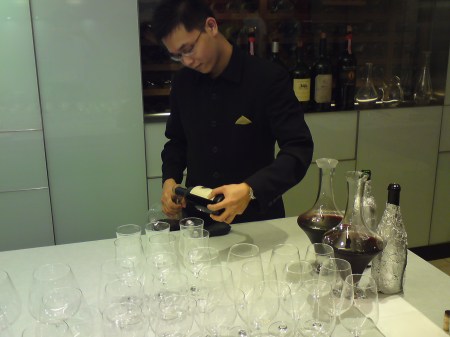
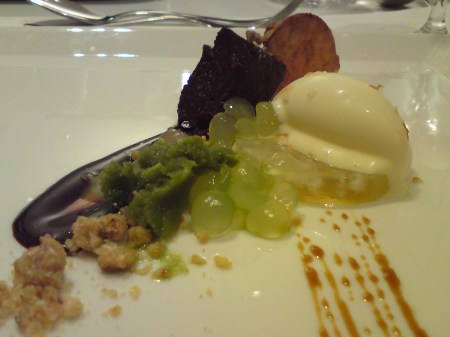
Red #2: 2002 Domaine de la Romanee-Conti Grands Echezeaux
Red #3: 1994 Chateau Petrus


Dept dinner at Kome
 This has been one of the very best Dept dinners in recent memory. This time, we held it at Kome, with chef Lawrence and his able assistants at the helm. The food was outstanding, the service prompt and attentive in spite of the complete range of misbehaviour across all ranks, everyone enjoyed themselves thoroughly, at least 4 large format bottles of sake were drunk, and we also drank the following at the high table.
The Billecart-Salmon Brut Reserve NV that started the evening was simple but fresh, doing its job of setting the stage for the pair of German rieslings that followed. The 2007 JJ Christoffel Erben Uziger Wurzgarten Riesling Kabinett (Kieron), from an outstanding vintage, showed a level of complexity and sophistication way above its classification. Dull golden, with a very immediate and enticing bouquet of honey, peach and apricot that followed through onto the palate. Very good body and density, and fairly complex, finishing on a sweet note that suggests more of a spatlese. Quite a complete wine. Excellent. In contrast, the 2003 JJ Prum Wehlener Sonnenuhr Riesling Spatlese, which is the second time I’m having this within a month, was more delicate and floral, coming across as a more elegant riesling, but it has more body, with that extra layer of “petrol” quality in the middle only found in German rieslings, creating more depth and complexity, finishing quite long, with the sweetness nicely tamed. I picked up a faint durian note on the nose, but Kieron vehemently disagreed. This is performing better than the previous one I had earlier this month. Perhaps the food pairing was more appropriate, compared with chilli crab.
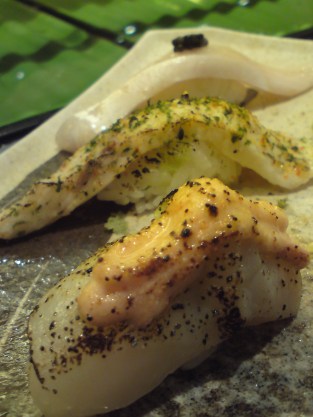 Kieron also brought a 2002 Domaine Jean-Jacques Confuron Vosne-Romanee 1er Cru “Les Beaux Monts”, a truly classic Burgundy rouge. Pale but clear rusty red, it exuded the sort of oily, slick character on the mid-palate, which I find only present from good producers. Very good fruit quality, producing a very fragrant nose of red fruits and cherries. Just lacking that extra depth and power, but this went very well with the cuisine.
In contrast, the 1998 Ch Clos Fourtet, showing an evolving red with a tawny rim, was rather shy on the nose. It took a while to settle, eventually morphing into a soft, mellow wine with predominantly red fruit characters, finishing with fairly sophisticated tannins, the merlot component just discernible. Would not have guessed that it’s a Right Bank, but it doesn’t taste like a Medoc either. Doesn’t quite possess power nor depth, but it is drinking well, a good match with the JJ Confuron.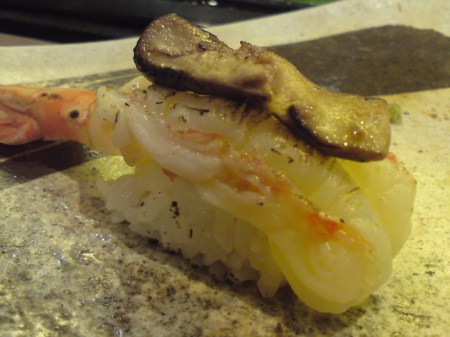
Ward 48 dinner at Jade Palace
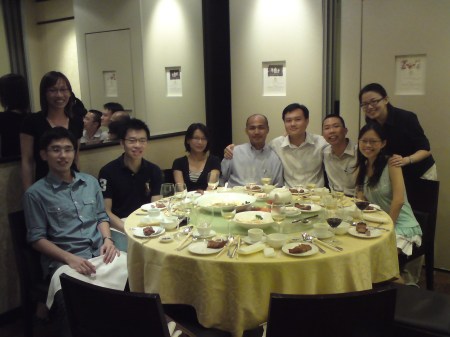 Each edition of these dinners for the HOs and MOs seem to reach new heights – the budget goes up, the venue more upmarket, the cuisine more sophisticated. But most significantly, this latest dinner on 20 August 2009 saw a major breakthrough where truly great wines were drunk.
The senior table began the evening with a 2004 Domaine William Fevre Chablis 1er Cru “Fourchaume” (Kieron). Very light toned, with a very attractive bouquet – heavily scented, floral, undertones of peach and honey, carrying well onto the palate. Loads of minerality and acidity, producing a very structured wine that’s almost strict, no-nonsense in character. Finishes sprightly. Good stuff, but, unfortunately on this occasion, it was overshadowed by the next white.
The 2005 Hestan Chardonnay (PS), in contrast, was a lot more flamboyant. Golden hued, with an initial bouquet of grapefruit and pineapples that eventually blossomed at the correct temperature to show off loads of creme and vanilla. Lush, with good body and complexity, although the finish seemed cluttered and unresolved. Less stuffing than a Kistler or Talbott, but it kept getting bigger in the glass, producing a deep note of apricot even right at the end. Certainly stole the show.
However, it was the pair of reds that made us realise that the wine selection for these ward dinners has reached new heights. I was supposed to have brought an ’89 Clerc Milon, but I just couldn’t locate it in my cellar, and had to make do with a 1995 Ch Calon Segur. Rusty red with a slightly evolved rim, giving off a soft, mellow bouquet framed by a hint of rusticity, but there was an unmistakable searing intensity beneath all that softness, reflecting top quality fruit. The entry was soft, almost delicate, giving way to a wine that was totally seamless and harmonious, finishing on a tertiary savoury note. It gave the impression of an ’80s Bordeaux, rather than a mid-90s wine. Never before has this level of wine been encountered at a ward dinner. It does not have the kind of toughness or ruggedness associated with the northern Medoc that I recalled was readily apparent in a 1996 Calon Segur tasted 3 years ago. Some commented that it’s atypical of St Estephe, but I felt this is the kind of peak quality that all great clarets aspire to achieve, regardless of origin. A great wine, by any standard, caught at its peak.
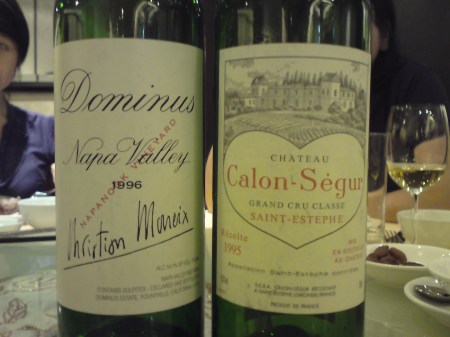 The ’95 Calon Segur would have been a tough act to follow, but the 1996 Dominus (K) that followed, most amazingly, matched up to it in every way. A similar rusty red, but slightly more evolved, with a very attractive bouquet reflecting ripe succulent fruit, laced with a touch of glycerin. Great entry as well, seamless, great body, good grip, infused with loads of cigar box and that so-called pencil shavings character. Very Old World. Would have easily mistaken it for a Pauillac. It got even better in the glass, developing velvety tannins, remaining absolutely harmonious and finishing long. Fantastic. I believe this bottle will be quite irreplaceable, and I’m grateful for the opportunity to taste it.
Cullen dinner at Flutes at the Fort
I have a healthy respect for the chardonnays and cabernet-based wines of Margaret River, especially after visiting the region last year. Favourites include Leeuwin Estate Art Series chardonnay, Moss Wood for their chardonnay as well as cabernet sauvignon, and the Cullen Diana Madeline, a true Bordeaux blend. These are just about everyone’s favourites as well. However, it would be idle to pretend that these wines match up in every way to actual Burgundy whites and Bordeaux reds, as this tasting of Cullen wines on 12 August 2009, with Vanya Cullen herself in attendance, amply shows.
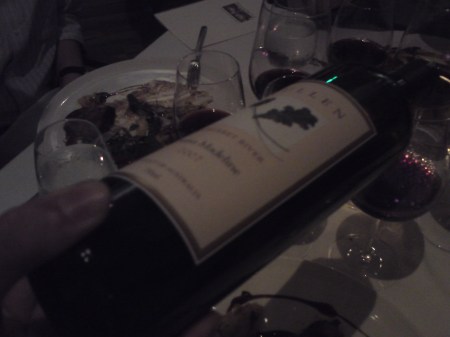 We started off with a 2008 Cullen Sauvignon Blanc Semillon. The Aussies love this sort of blend, but I just don’t get it. Very pale straw-colored, light and “grassy”. Straightforward and simple, although it had a fresh, zesty feel about it. I still don’t get it.
A pair of chardonnays followed. The 2007 Cullen “Kevin John” Chardonnay, light yellow, was served too cold initially, but one could discern some nutty flavours as well as caramel. It eventually did open up when the temperature was right, revealing good minerality and body, but not much complexity. Rather one-dimensional. Perhaps it needs more bottle time. Next to it, the 2002 Cullen Chardonnay, with the benefit of bottle age, was far more complex, with more depth of color and more intense, lifted aromas. It even managed more than a nod in the direction of a Giaconda, with a certain weightiness and layering that only mature, good quality fruit can deliver. Quite excellent.
Next came the much-anticipated duo of Diana Madelines, but which turned out rather disappointing. The 2007 Cullen Diana Madeline (84% cabernet sauvignon, 8% merlot, 4% each of cabernet franc & petit verdot) was very deep red and rather muted on the nose, although one could sense the intensity of fruit beneath. Medium, velvety, but somewhat disjointed, with a fair amount of leafy greeness. Didn’t quite seem like the Diana Madeline that I knew and loved, where the velvety supple tannins from the merlot matched seamlessly with the cabernet structure. Vanya Cullen seemed rather upbeat about the 2007 vintage, but I wasn’t convinced. The 1998 Cullen Carbenet Sauvignon Merlot (actually 68% cabernet sauvignon, 25% merlot and 6% cabernet franc, aged 18 months in 20% new oak) was even more disappointing. Still a very dark unevolved red after all these years. A huge wine, thick, bitter undertone, almost unctuous, very dense, shot through with a prominent liquered note, ending with a short finish. It’s as if one is drinking the distilled essence. Instead of the wine opening up with tertiary flavours, this is almost a complete opposite, a reduction. Is this how a Bordeaux blend is supposed to be after 11 years, tasting like a Barossa shiraz?? Not my type, for sure. This tasting only reinforced my allegiance towards Moss Wood as the torchbearer for Margaret River cabernet sauvignon – a 2000 vintage drunk earlier this year was very “correct” and pleasurable, and still very much on the ascent.
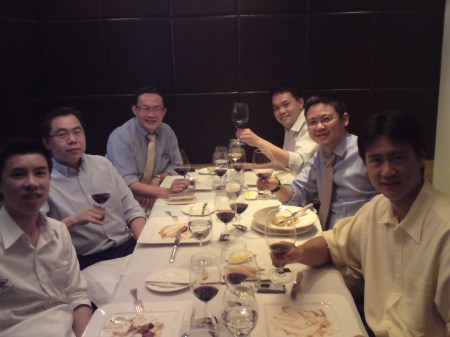 True friendship transcends all barriers and difficulties. This was amply demonstrated when an impromptu gathering at Saint-Pierre was called at very short notice, a wine of the vintage was readily proferred, and everyone turned up in spite of their busy schedules. We were given a private room, the wines decanted, the main courses of wagyu beef and kurobuta pork expertly prepared, and we were ready for an intense but highly enjoyable meal.
The 2002 Dubrueil-Fontaine Corton Charlemagne Grand Cru (courtesy K), a shade off golden, displayed great purity and minerality. Very fresh, balanced, elegant, with good acidity and complexity. Drier compared to a Bonneau du Martray, which will probably carry a layer or two of additional complexity, but this is still excellent. A great start.
The 1998 Ch Montrose (courtesy PS) that followed was deep red with a ruby rim. The nose was rather muted and restrained initially, but it eventually opened up, revealing dollops of rich, dark fruit which were amply replicated on the palate. Very good body and density, the firmness of St Estephe already beginning to soften. Excellent stuff. Should have bought this at Carrefour 4-5 years ago, when it was available for less than SGD100.
Next to it, the 1999 Ch Palmer had greater depth, power, and concentration. Not overtly voluptuous, already mellowing, harmonious, carrying great finesse and balance. Only wines from Margaux commune (actually only those of Ch Margaux and Ch Palmer) seem able to combine masculinity and charm so successfully. Tasted twice before: first in Aug 2006 (private dining on the occasion of my promotion) where it held its own against the likes of 1986 Haut Brion and 1983 Leoville Las Cases, and then last year at a 1999 horizontal at See Lim’s, showing well against Cheval Blanc. This vintage is known to favour estates south of the Medoc, with the sweet spot falling on both Ch Margaux and Ch Palmer. I feel this Palmer is still on the ascent. Like other great wines, it has become really expensive over the past year, and increasingly difficult to source. Will have to space out my remaining 7 bottles properly!
Slow lunch with 1985 Leoville Las Cases, 1982 Leoville Barton & 1982 Ducru Beaucaillou
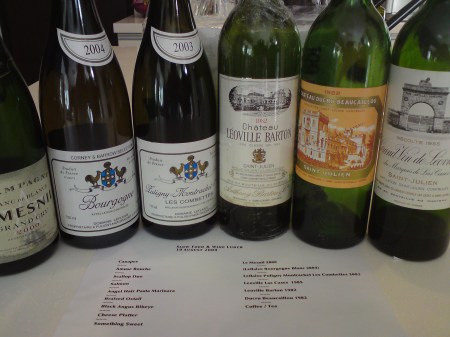
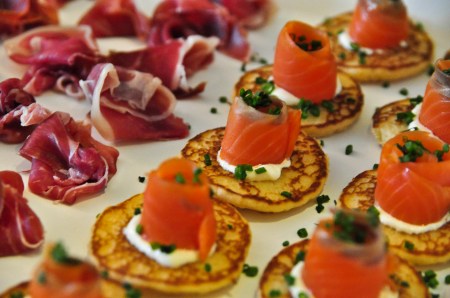 When a friend suggested that he’d host a long slow lunch, tied to a superb mini series of St Julien wines from outstanding vintages in the 1980s, we couldn’t refuse. Hence, at 1230h on 10th August 2009, we gathered at his residence and wasted no time ploughing into an excellent bottle of 2000 Le Mesnil Blanc de Blancs Grand Cru champagne to get things rolling. We got off to a good start; this was light-golden, fresh, lively, medium-bodied, maintaining a sense of delicacy amidst its sweet floral notes. Quite the perfect aperitif.
A couple of whites from Domaine Leflaive accompanied the first 3 courses of scallops, salmon, and angelhair marinara pasta. The 2004 Bourgogne, light-golden, gave off a huge fantastic nose full of minerality and vanilla that hinted at a wine of great complexity and body. Quite unbelievable, coming from a generic bourgogne, again emphasising the dictum that producers matter most for burgundy wines. However, this wine didn’t quite reach up to its promise on the palate, being medium-bodied and soft, with less than the anticipated level of complexity.
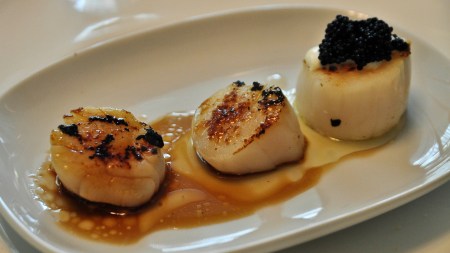 Side by side, the 2003 Puligny-Montrachet 1er Cru “Les Combettes”, darker hued, was lighter in texture, more fragrant, more floral and delicate. Nevertheless, it put on more weight after an hour, the slick oily character so typical of Leflaive becoming apparent. Definitely more complex, with that extra layer of depth missing from the generic bourgogne. A more complete wine that showed up the bourgogne’s deficiencies, although the latter, on its own, would have been very satisfactory.
Then came the highly-anticipated trio of reds to go with the braised oxtail and black angus ribeye. The 1985 Ch Leoville Las Cases, brownish red with a tawny rim, had the sort of nose found only in top-flight aged Bordeaux, although this was somewhat stern and less exuberant compared to what a Pauillac can offer. But once on the palate, it exuded its class and impeccable breeding with notes of blackcurrants and bit of plum in the background, possessing great depth, seamless harmony and focus, gaining a velvety feel with time with only just a slight hint of oak remaining. I was reminded that this was the third time I’ve tasted this wine – initially in late 2006 at Iggy’s, then sometime in 2007 at a private function. A wonderful wine at its peak, and still there. Having had the 1986 four years back (Hiok), which was still very backward, I fully agree that 1985 is the best vintage to drink now from that decade.
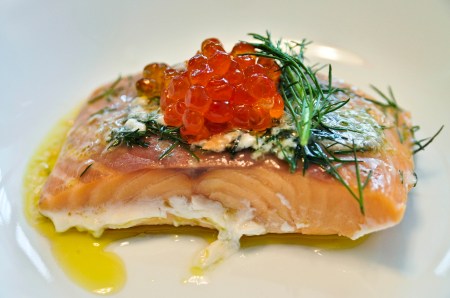 Compared to this, the 1982 Ch Leoville Barton, showing a similar red but just a tad lighter, was initially less powerful and leaner in texture with a shorter finish, although the wine was absolutely harmonious with great purity of fruit, without any wood. It gained weight in the glass, to its advantage, eventually turning very delicious. Definitely much better than the bottle we had at the SMA Dinner in May. Great stuff, but it goes to show why Las Cases remains at the top of the pecking order for the three Leoville estates.
The piece de resistance for the afternoon was, without doubt, the 1982 Ch Ducru Beaucaillou. Absolutely magnificent, and it was not difficult to tell why: of the three St Julien wines, it had the deepest red, the liveliest nose, great entry, and that extra dimension, depth and grip that even the Leoville Las Cases didn’t possess (albeit from a different vintage). Great delineation and focus from start to finish. Rich, intense and luxurious. Still packed more than adequate power, though mellowed by time. It recalled memories of the 1982 Ch Leoville Poyferre, but the Ducru is even better. Definitely has the legs to last another two decades; in fact, I feel it still hasn’t peaked!!
Lunch finally ended after 5PM with a 1994 Ch Rabaud-Promis, a Sauternes that easily stood up to more well-known estates. By then, we were all done in by the food (2 full helpings of pasta!!) and the preceding wines to fully appreciate this, which was a bit of a waste. Discounting this, it was 6 bottles for 4 persons. One would have thought that would be really excessive (it was!) but with these beauties, there wasn’t the slightest bit of fatique on the palate. I dare say the reds that we’d drunk will be irreplaceable. But what’s the point of keeping these purely as trophies? Great wines must go with great food and great company. I’ve come to realise that such opportunities are scarce, and so when they arise, one must push the boat out. I’m glad we all did. I must really thank the host for the time, energy and generosity that had gone into making this lunch possible. Knowing us, there’ll probably be more of such decadence to come in the near future.
Notes in brief (August 2009)…
2005 Ch de Fieuzal, decanted and poured over dinner at the in-laws. I’ve never really been drawn to the wines of this estate, partly because of the very un-French name. However, this tasting may change my attitude. Deep ruby. Very shy on the nose, not revealing anything. However, it carries all the hallmarks of the great 2005 vintage: medium-bodied, good body of cool ripe fruit, silky smooth, quite seamless from start to its lingering finish with absolutely no trace of wood nor heat. It began to open up after a couple of hours, developing a more intense savoury note, but still retaining its wonderful balance. Hasn’t got complexity nor depth presently, and doesn’t quite match up to Domaine de Chevalier. But at SGD71 (cheapest deal, from Crystal Wines), it’s definitely worth acquiring more to lay down.
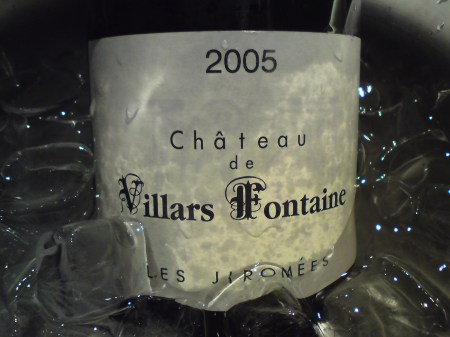 2005 Chateau de Villars Fontaine Les Jiromees, over a simple dinner at Ka-Soh. This is a white Burgundy close to Nuit St-Georges, and always highly recommended by Patrick of Le Benaton. Dull golden, with intense flavours of chalk and limestone on both the nose and palate. Good body, but not much in the way of depth or complexity, perhaps obscured by the high acidity, giving it a crisp edge with a hint of undergrowth. Very tight. This is the second time I’ve had this since the first at Imperial T3 a year ago where it had seemed more open and less intense. The ageing potential is not in doubt. I remembered drinking a 1991 and a 1994 at See Lim’s couple of years ago, and they were gorgeous. Perhaps it just needs more bottle time. Four more left.
2005 Les Hauts de Smith, second wine of Ch Smith Haut Lafitte, over lunch at Imperial Treasure T3. Compared to the Grand Vin, this is, strangely, not so easy to find on the shelves, especially the stellar 2005 vintage. I gained a healthy respect for this wine after having been served the 2004 vintage at Les Sources de Caudalie, where I thought I’d been drinking the Grand Vin, until the bill came. Beautiful ruby red, fairly deep nose of dark fruits with bit of plum. Medium-bodied, with good mouth-feel and grip, without being over-extracted. Not quite complex, but it has good balance, ripe fruit, and excellent oak handling, finishing with some mouth-puckering tannins, but never obtrusive. I’ve not tasted the actual SHL ’05, but I believe this is cut from the same cloth. Excellent value at SGD58, from Wine Gallery.
2002 Ch Rauzan-Segla, from a half-bottle just bought from Vinum, all to myself over a late night juicy steak at Foo House alone. Dull red. The initial note wasn’t encouraging – decent entry but disjointed finish, subdued fruit, a touch of green. But it evolved very quickly over a few minutes, settling into a wine that’s fairly intense, medium-bodied, even, with fairly good grip, and most importantly, the green note had disappeared. A very decent effort from a difficult vintage. Went well with the steak. But don’t keep. Drink now.
2003 Domaine Armand Rousseau Clos de la Roche Grand Cru, at the Boathouse with Fatty’s usual suspects. The class and impeccable breeding is at once evident. Beautiful autumn red, deep, powerful nose of red berries, laced with a tinge of sweetness. Carries nicely onto the palate – sensuous, slick, quite full, great depth and layering. Yet to develop further complexity, but most certainly will, with time. Superb.
1993 Ch Rauzan-Segla, also at the Boathouse. A classic case where the wine is only about how it excites your olfactory senses – very fragrant, floral, with a layer of vanilla. Otherwise, it’s just an empty shell. Hollow, too much wood and lacking in quality fruit.
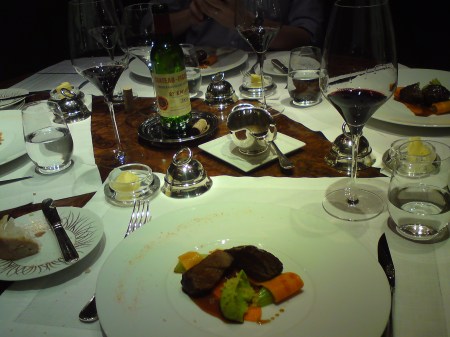 2000 Ch Figeac, from a half-bottle over lunch at Les Amis. Beautiful deep but clear red. Rich, dark fruits. Lovely perfumed fragrance of cabernet franc framed by sterner structure of cabernet sauvignon. Softening, beginning to develop its tertiary flavours, but there is still quite a bit of persistent wood. I was glad to have the chance to taste this, as I have a couple of bottles lurking somewhere.
2005 Domaine Patrick Javellier Mersault, drunk with the Figeac above. From one of the renowned producers of Mersault. Supposedly fastidious in his winemaking. It shows: a very expressive and scented bouquet, very floral. Beautiful nose. Medium-bodied, good minerality but it’s a bit hollow. Could do with more stuffing. Very agreeable, nonetheless. From a half-bottle.
2003 Joh. Jos. Prum Wehlenur Sonnenuhr Spatlese, with chilli crab at Long Beach on National Day. Pale golden, lifted aromas of citrus, medium bodied, just the right level of acidity, some bitter-sweet undertone, finishing on a pomelo note. Not as sweet as one would expect a spatlese to be. Lacking in complexity and richness. Could do with more stuffing. Not a great example of JJ Prum, and I don’t think it’ll improve further. Nevertheless, went well with the meal.
 2000 Ch L’Arrivet Haut Brion, over lunch at Imperial Treasure. You’ll pass by this estate enroute to Smith Haut Lafitte in Pessac-Leognan. I’m partial towards the wines of Graves, as I feel they represent the last vestiges of traditional Bordeaux style and goodness – unadulterated, pure, reflective of terroir and vintage, without being over-priced. This wine was no exception: luminous red, immediately exuding its scorched earth character on the nose, quite rich, ripe, good structure, bit of firm tannins but it is beginning recede. Great typicity of Graves. Quite similar to Domaine de Chevalier, but less sophisticated. Entering its drinking window. I’d tasted the 2005 last year, which was richer than this 2000. This is an excellent Graves, better than Ch Carbonnieux for about the same price.
1998 Penley Estate Reserve cabernet sauvignon over lunch at TMCC. Made by former winemaker of PENfolds Bin 707, Kym TolLEY, hence PENLEY. One of my favourite cabernet sauvignons from Coonawarra – I make it a point to visit its cellar door every trip there. I’d purchased 6 bottles shortly after my return to Singapore in 2004, mostly from Star Cellars, and another couple more from Auric Pacific. First tasted in mid-2005 at Romanee’s, after which I’ve opened a bottle once every year or so. Still going strong. Dark cherry red, lovely fruit with notes of redcurrant and plum, quite full, good grip, depth and structure, finishing long and cool. But lacking in the extra dimension that’s only found in a true Bordeaux blend. Nevertheless, it mellowed nicely in the glass. Drinking beautifully. Better than the last time I tasted it at Imperial Treasure last year, and marginally less evolved than another bottle at See Lim’s last year (when I pitted it blind against a horizontal of 1998 Bordeaux reds). I have to stop opening this. Only 2 bottles left!
Penfolds wine dinner
I suspect most of us probably started discovering wines, when we were young and penniless, through the Penfolds bin lots. It’s been a long time since I last tasted any of those (with the exception of Bin 28) after I got my hands dirty with expensive Old World stuff. When the opportunity came to revisit these wines, as well as Magill Estate and Grange, at the newly-renovated Saint Pierre on 29 July 2009 with Magill Estate’s Sommelier Remon Van de Kerkhof in attendance, it was time to return to roots.
We started off with the 2008 Penfolds Autumn Riesling as aperitif. Served too warm, it was dry and simple, with dominant notes of lime. This was followed quickly by the 2007 Private Release Chardonnay (paired with foie gras and porcini jelly) that was slightly off-golden, showing good body and minerality, with undertones of vanilla and cream. But, on the whole, still rather straightforward and unexciting.
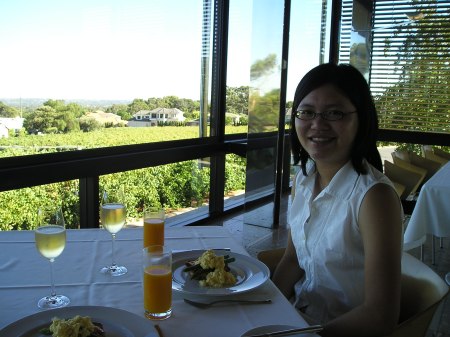 During my sabbatical year in South Australia, I remembered seeing vast parcels of Penfolds vines practically in every wine region: Adelaide Hills (even in the Lenswood sub-region), Langhorne Creek, McLaren Vale, Barossa Valley, Clare Valley, Padthaway, Coonawarra. Penfolds has always advocated multi-district blends for its reds, achieving a consistent “house style” year in year out, as exemplified by the following trio from 2006, an outstanding vintage in South Australia, on par with 1998 and 2004. Each displayed an impenetrable deep red foreboding a full-bodied, masculine, upfront style of wine. This was the best Koonunga Hill (paired with barramundi) I’ve ever had, showing great concentration of blackcurrant flavours with a richness and density not previously encountered from this label, without any trace of alcoholic heat. The blend of shiraz and cabernet was seamless (there is another Koonunga Hill blending cabernet with merlot, so look carefully at the label!). Really excellent for its price, even hauling itself from the plonk league. In contrast, the Bin 407 (with lamb loin), a straight cabernet sauvignon with notes of dark bitter chocolate, was steely, austere and really backward. Very dark and brooding, not revealing itself. Real sophistication kicked in with the Bin 389 (with caramelised duck breast), a 50:50 shiraz-cabernet blend in the Provencal tradition of Coteaux d’Aix. It was more open on the nose, the plummy ripe shiraz supported by firm cabernet structure, ending on a medicinal, liquered note with intense but well integrated tannins. It didn’t evolve much in the glass. In general, wines from the Bin series need plenty of bottle time, and I’m sure this 389 will age very well.
The final pair of wines was what everyone had come for: the Magill Estate single vineyard shiraz (paired with braised pork tenderloin), and the flagship Grange (paired with braised beef short-rib), both from the fabulous 2004 vintage. Tasting the former recalled the morning of 19 February 2004, the very first day of the 2004 harvest, when the missus and I had breakfast (expensive, for a new AC then) at the renowned Magill Estate restaurant, watching the rows of vines being harvested against the backdrop of Adelaide city lying below the gentle slope. This is the only day of the year when the winery’s restaurant is open for breakfast. This wine is a definite step up in quality from the Bin series, the aromas are more lifted, the tannins more velvety and sophisticated. Expansive on the mid-palate, showing great balance, focus and restraint. Great purity. It doesn’t have the unctuous quality of very ripe Barossa fruit, which is not a bad thing. This is a shiraz smack from the Magill district of Adelaide, and an excellent one.
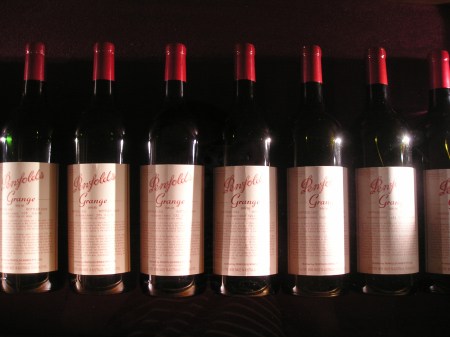 Finally, the 2004 Grange. Beautiful deep red. Much more open than I’d have imagined. Great entry, lovely fruit caressing the palate with its silky and velvety tannins, excellent structure, great depth, very “correct”, very cerebral (from Kieron, I agree), dovetailing to a cool and long finish without any trace of heat. A wine of obvious power and beauty, like a Ferrari in absolute control. Utterly sophisticated. A great Grange. Although the preceding Magill Estate shiraz was excellent, this Grange shows up the former’s deficiencies. That says a lot. I was quite speechless for several moments.
This is only the second time I’ve had a Penfolds Grange, the previous one being a 1992 that was rather unexceptional and lacking in complexity. But, as they will tell you at Penfolds, there is no such thing as a bad Grange. I was trying to think how this would compare with Henschke’s single vineyard Hill of Grace. The Grange has greater concentration and a more immediate feel, whereas I’d imagine the HoG is likely to show more finesse and layering, leaning towards the Old World (a recent 1995 comes to mind). Is this 2004 Grange worth the price of almost SGD500? Frankly, I’ve always felt that Penfolds wines are priced at a premium. It’s like dining at an expensive posh restaurant, when better food is available elsewhere for less. But I suppose it’s not a matter of cost. Acquiring this wine is akin to getting that Ferrari – it says a lot about that person than itself. I would, in my case, for the sake of remembering those wonderful days in Adelaide, witnessing the 2004 harvest in person.
 Ric's Wine Journal