Some Burgundy monopoles
My small group of blind tasters continued its foray, this time on a theme of Burgundy monopoles, either premier cru or grand cru. The private room of Il Cielo at The Hilton, Singapore, on the evening of 26 June 2018 had been impeccably organised by Nicholas for a group of six, each seat prepared with six glasses all properly tagged and numbered. Each bottle was popped on site and blinded with a sock. In turn, the line-up was re-shuffled by a restaurant staff such that the tasters were all double-blinded. All six wines were tasted simultaneously. It turned out all of us had brought reds, which was fine, though Paul had forgotten that the focus was on monopoles. No matter; that simply made things even more interesting. We decided that we would: i) firstly, identify our own wines; ii) pick out the non-monopole wine that Paul had brought; iii) identify each wine by producer and vintage. I felt confident enough to declare that No.5 was the wine I’d brought and that No.1 was the non-monopole, and I was correct on both counts. Interestingly, everyone else was of the same opinion as well. Paired with a delectable menu arranged by Nicholas, we were set for a most intriguing evening.

1. The first red was clearly a well-aged wine, evolved in colour to the point of duskiness with a soft fragrance of rose petals and aged tangerines with a further mild medicinal tone after some time, highly supple and juicy but clearly short and past its prime. Would not be possible to deduce its origin. Turned out to be a 1992 Domaine Dominique Laurent Chambertin Grand Cru, courtesy of Paul.
2. This wine showed some evolution at the rim with a deep bouquet that was highly perfumed, imparting a distinct feminine fragrance, displaying excellent detail on the delicious palate with a predominance of camphor and red fruits on a minerally base of ferrous elements, very seamless and subtly structured, fleshing out very well after some time. I’d entertained thoughts of a Prieuré Roch Le Clos des Corvées but should have stuck to my original hunch: the 2009 Domaine du Clos de Tart Clos de Tart Grand Cru, courtesy of Nicholas. Excellent stuff.
3. The third red was immediately recognisable to me, exuding an explosive brilliance of bright cherries from its clear depth of ruby, very fresh and clean on the palate with a forward balance, displaying good precision and concentration amidst traces of vanillin and smoke with velvety textures that are almost lush. I had no hesitation in calling this a 2016 Domaine Faiveley Clos des Corton Faiveley Grand Cru (though I’d thought it to be a 2012; courtesy of Benjamin). Excellent but Paul prefers an older style of burgundy.
4. This wine, also quite evolved in colour, was particularly striking in its soft gentle fragrance of fresh red fruits and cherries with a earthy minerally glow, quite full and open, highly supple and fleshy, carrying good weight and layered with plummy fruit with some exotic spice, seemingly youthful. Its lack of structure suggested a Côte de Beaune origin. Must be a Corton Clos de Meix. I was correct: a 2005 Domaine Comte Senard Corton Clos de Meix Grand Cru, courtesy of Alexandre.
5. The red that I brought produced quite an arresting bouquet of dark plums and dark cherries with a dash of earthiness, somewhat lean in profile, well-integrated and rounded, becoming richer over time though it doesn’t quite possess real inner detail. Those around the table seemed impressed. Did I hear someone hazard a guess of La Tâche? Very flattering indeed but no, I don’t think this is anywhere near. 2012 Domaine Jacques-Frederic Mugnier Nuits-Saint-Georges Clos de la Marechale 1er. Showing much better than ever before.
6. We all knew the final red would be a contribution from Thomas – he was last to arrive. But what was it? Very dark in colour, almost pruny on the nose with a bit of cedar, delivering well its promise of a full palate filled with stern minerals, well crafted and rounded but obviously still tight and quite intense. Definitely too dark and big to be from anywhere north of Vosne. Could be Corton but this one has more extraction. I thought aloud the Domaine Comte Armand Pommard Clos des Epeneaux 1er and was spot on….the 2005.
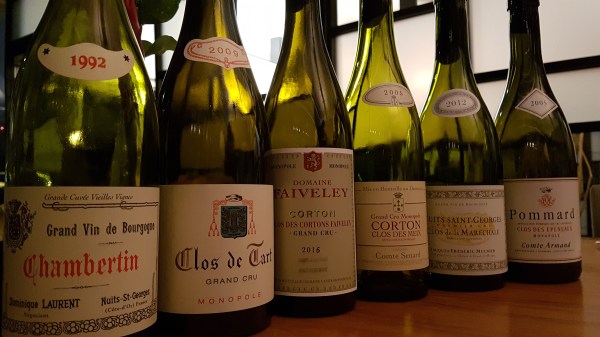
I must say I was really on good form that evening with my guesses but it isn’t always like that. Thank you everyone for your generous contributions.
Okay, this has nothing to do with wine though as it is San Francisco, a trip to Napa Valley would be in order and indeed I did drop by Harlan Estate. But that deserves another post. My primary concern was to attend the complete cycle of Richard Wagner’s epic masterpiece Der Ring des Nibelungen, my only second Ring cycle apart from a 2004 South Australian Opera production. Since the time of Wieland Wagner (the composer’s grandson) at Bayreuth in the 1960s, most productions have done away with literal translations of the work. Gone are the breastplates, armour, helmut, papier-mâché snakes and dragons. Symbolism now plays a great deal in most staging, whether by means of lighting or props or costumes, or a combination of various.

For this revival of a production that had previously been presented by the San Francisco Opera back in 2011, director Francesca Zambello would have you believe that the CEO sitting at the top of the next office tower looking down on you is a god. That’s right, this Ring is set in our time with plenty of steel and concrete. It is somewhat disconcerting to first encounter the gods in Das Rheingold dressed in business suits and popping champagne whilst preparing to ascend into Valhalla. It is all part of de-mystfying the gods, for they do increasingly fall prey to all the human vices of greed, power, lust, jealousy and sheer vanity as the story progresses, eventually losing their own power to change destiny, becoming no different from humans. If that is still too much to fathom, just think of Superman as Clark Kent.
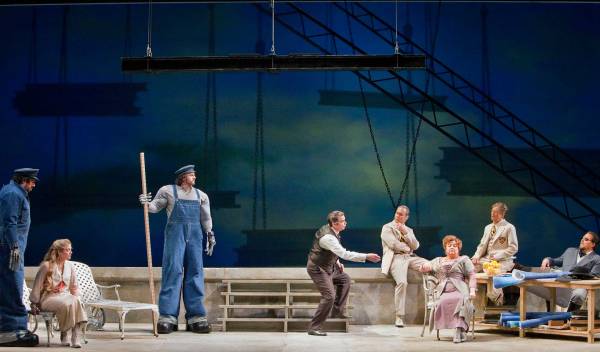
Das Rheingold: the gods with the giants
Nevertheless, things actually work out pretty well in this staging, marked by outstanding production values, great attention to detail, superb acting, singing and stage direction although some incongruity starts to creep in when it comes to Siegfried. A large lighted grid on the stage floor serves well to convey mood, ambience and various symbolic tones (powerful yellow for the Rheingold, intense crimson for fire, passion and hatred, and green for Siegfried’s forest) whilst facilitating Erda to rise from the earth and Alberich to disappear conveniently while he transforms into the gigantic serpent. It was good to note that important physical symbols to the story such as Wotan’s spear, Siegfried’s Notung and the cursed ring have not been adulterated, while the use of gold linen to symbolise the Rheingold hoard as well as Tarnhelm is a masterstroke. The magnificent contribution by the full-sized San Francisco Opera orchestra (not the San Francisco Symphony, utilising two harps rather than the specified six) under Donald Runnicles cannot be over-emphasised, an ensemble clearly held in high regard and affection, judging from the enthusiastic applause and cheers preceding each Act throughout the cycle. The acoustical qualities of the War Memorial Hall are quite exceptional as well, carrying the voices well above the orchestra with excellent clarity and balance. For all its modernisation, the San Francisco Opera’s Der Ring des Nibelungen is one that stays firmly rooted to tradition as it makes its triumphant return. All pictures of the staging here are taken from the San Francisco Opera Ring media webpage.

Das Rheingold: the subterranean Nibelheim
DAS RHEINGOLD. Performance of 12 June. This Prologue to Wagner’s epic is superbly staged. The opera orchestra begins reassuringly with the horns on good form in the long and difficult introduction while, on stage, restless large waves in ceaseless slow-motion are projected with an almost 3D effect onto the front screen. The watery effect is well carried onto stage when the curtain lifts with plenty of vapour in the air. A transluscent grid on the stage floor facilitates changing lighting patterns, most helpful in conveying the Rheingold’s brilliance. The Nibelheim subterranean scene is truly convincing in the old world style where Alberich (played to perfection by the German bass-baritone Falk Struckmann) sings and acts with plenty of conviction and power, reaching a thrilling climax as he utters the terrible curse on the Ring. The chorus of children play their part very well as Alberich’s slaves. The latter’s transformation into a gigantic serpent is achieved through the use of rear projection, but the imagery appeared very real and menacing. Equally good was the way he disappeared from stage in an instant, becoming a toad. Rich in velvety tone with remarkable depth and power of delivery, Struckmann in this role is practically on par with the legendary Gustav Neidlinger. Almost stealing the show as well was tenor Stefan Margita as Loge whose craftiness shone through in every line and gesture, especially at the end where he declines Wotan’s invitation to join the gods in Valhalla. American bass-baritone Greer Grimsley was excellent as Wotan, singing with great authority and precision though the voice is just slightly constricted in range with a touch of dryness. I liked as well that the two giants Fafner (Raymond Aceto) and Fasolt (Andrea Silvestrelli) really appear appropriately huge on stage, truly dwarfing everyone else. They must be walking on stilts. It is this sort of attention to detail that makes this production so enjoyable. At the end, the gods ascend into Valhalla via a gangway which was a bit of a letdown (surely it isn’t too difficult to transform it into a rainbow bridge?) with everyone seemingly going off on a cruise. Nevertheless, with all the major and minor roles (Ronnita Miller most memorable as the mysterious Erda) played to near-perfection, this Das Rheingold will take some beating.
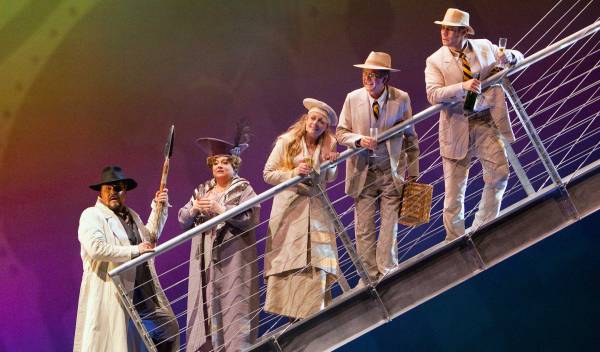
Das Rheingold: ascension into Valhalla
DIE WALKÜRE. Performance of 13 June. Save for Act 1, the setting is otherwise contemporary but it works very well. Combined with great staging and acting throughout with everyone on top vocal form, this is truly the most outstanding production of Walküre I’ve seen live (others were Adelaide 2004, La Scala 2010, Salzburg 2017, Bayreuth 2018 and Singapore 2020). Again the almost 3D front and rear projection is used to great effect. Siegmund’s (the outstanding Brandon Jovanovich) frantic dash through the jungle is unmistakable and his exhaustion upon arriving at Hunding’s hut is most convincing, unlike Peter Seiffert’s stumbling effort (overweight and too old) up the side of the stage at Salzburg in 2017. The interior of Hunding’s dwelling is most rustic though the World Ash Tree has been reduced to a limpid one-dimensional cardboard piece. The Salzburg tree is, by far, still the best but here I can see the director’s point of view: the tree actually plays no significant role apart from harbouring Notung. Hunding (Raymond Aceto who sang Fafner too) carries a hunting rifle but prefers to fight Siegmund using a cutlass – a gentlemanly gesture, in tune with his offer of hospitality to the stricken Siegmund perhaps? Whatever it is, it conveniently avoids straying away from what the audience expects of Siegmund’s Notung. The twins (Sieglinde brilliantly acted and sung by Karita Mattilda) sing superbly though Siegmund’s desperate cry of “Wälse!! Wälse!!” could do with greater piercing intensity. The acting throughout was most natural and Hunding leashing Siegmund before retiring to bed added further realism to Wagner’s soundtrack commentary. Hunding appeared to have been handed carte blanche to grope the ample Sieglinde as Siegmund delivered his great monologue. All the important nuances specified in Wagner’s libretto were observed: the faint recognition between the twins as they made initial eye contact, Hunding’s quizzical look when he first encounters a stranger in his house, the glint of Notung (very well done…how did the sword handle appear from the tree trunk?). The live flame in the fireplace did its symbolic work well, growing in intensity as the twins experienced their initial mutual attraction though, curiously, it died completely as they careened towards their passionate climax.
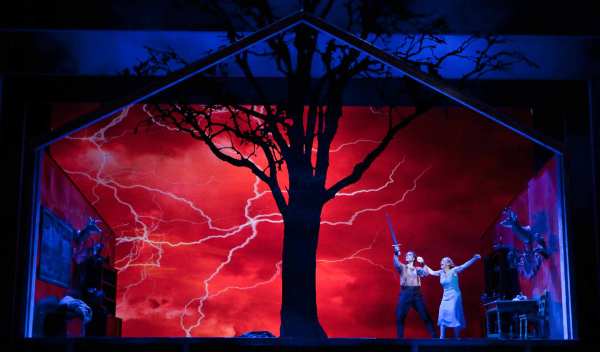
Die Walküre: Siegmund, Sieglinde and the World Ash Tree inside Hunding’s hut
The projections made it clear that Wotan’s Valhalla is an office building towering above the clouds looking down on a distant Manhattan-like skyline. Sure enough, Wotan, dressed in business suit, is at his office desk using his telephone. And reading the newspaper. Similarly, Fricka (mezzo-soprano Jamie Barton) appears very wifely and expensive-looking while Brünnhilde looks set for an afternoon shopping trip. What are we to make of this? I can only think of Superman in his guise as Clark Kent, that the immortal gods walk amongst us in our daily lives. Or is it implied that the gods are no different from humans in their behaviour. Probably both. Again, the relative simplicity of the stage setting works well without having to resort to Salzburg’s ambiguous ring motif with Wotan scribbling in chalk and the chair-carrying oxen. Wotan’s great monologue is delivered with conviction by Greer Grimsley though I feel Vitalij Kowaljow, the leading Wotan of the past decade, finds deeper range and expression in the same role (heard at La Scala 2010 and Salzburg 2017). In a real masterstroke, the fight between Siegmund and Hunding takes place in a dark litter-strewn forsaken area underneath a highway flyover, watched with quiet disdain by Fricka high above the stage. Astonishingly, two real dogs dashed across the stage as Hunding and his henchmen approached, adding further realism. The swordplay is more extended than most productions and Notung is shattered convincingly by Wotan from a distance, not unlike a Jedi wielding the invisible Force. Siegmund’s death throes is superbly portrayed, reaching a powerful emotional climax as the dying hero recognises that it is his own father who has allowed him to be slain while Wotan’s anguish at his own haplessness is absolutely palpable. Thereafter though, why does Wotan need to use both hands to break Hunding’s neck? Why not use the Force?
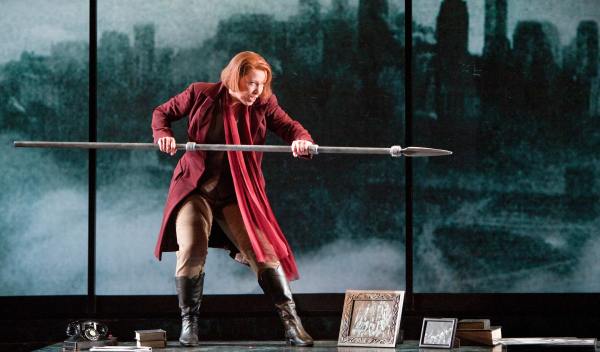
Brünnhilde in Die Walküre
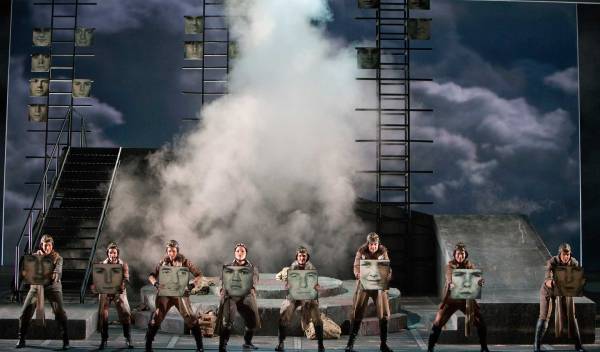
Die Walküre: Act 3, Ride Of The Valkyries
The Valkyries swoop down onto stage from parachutes at the start of Act 3 in full paratrooper gear. Undoubtedly a wonderful spectacle but, surely, these warrior goddesses do not require parachutes?? The action takes place on an industrial ramp and, quite innovatively, the Valkyries collect photo portraits of dead heroes instead of physically dragging dead bodies about as seen in the 1976 Patrice Chereau Bayreuth production. The Swedish soprano Irene Theorin, an eleventh hour substitute for the indisposed Evelyn Herlitzius as Brünnhilde, appeared to be conserving her voice, consistently outsung by Sieglinde in their duets and delivering her lines in a more slivery fashion with a slightly smaller tone but she was to come into her own in Siegfried and Götterdämmerung. The magic fire surrounding the perimeter of the ramp at the end was real and magnificent. All in all, this is a Walküre to die for, particularly in the all-important Acts 1 and 2.
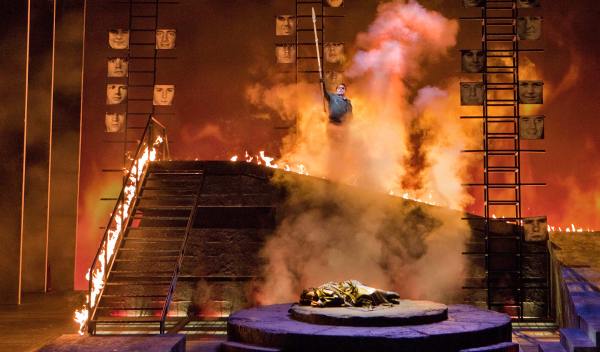
Die Walküre: Wotan surrounding Brünnhilde with magic fire
SIEGFRIED. Performance of 15 June. Act 1 opens in a waste land where Mime (tenor David Cangelosi) lives in a ramshackle caravan, forging swords in the open. This works well and, again, attention is paid to Wagner’s staging for Siegfried actually enters with a very lively black bear! The youthful-looking American tenor Daniel Brenna is utterly fitting as the brash idiotic fearless Siegfried. The sword-forging scene is absolutely magnificent as Siegfried goes through the technical steps of sword-forging whilst singing at the top of his lungs and still managing to hammer out the intricate dotted rhythm right on time, aided by great special effects that make the entire sword-forging highly believable. This scene alone would have been worth the ticket price. Thereafter, things began to unravel. The much-feared dragon turns out to be a ridiculous mechanical machine driven by Fafner, not unlike Dr No’s “dragon” in the Bond movie. Siegfried stabs his Notung into some opening in the machine and then the fatally wounded Fafner falls out of the door. And there is no Forest Bird. Rather, a young woman, like some kind of muse, takes over in a voice (Stacey Tappan, who also doubles as one of the Valkyries) that is too big and assertive for the role. This sort of artistic freedom is fine with me but why not adjust or update the libretto as well to fit what we see on stage? Since Wagner’s time, audiences have accepted that there ain’t gonna be any horse on stage so it is perfectly fine to see Grane being mentioned metaphorically. In Act 3, the industrial ramp where Brünnhilde lies has become appropriately dilapidated though the magic fire is still raging and supposedly has been raging for 20 years (the approximate time frame since the end of Walküre): why hasn’t anyone called the Fire Department? And when Siegfried and Büunnhilde wax lyrical about each other supposedly by the stream beside the latter’s rock, it is painful to see the singers having to imagine there is such a thing at the ramp. Since the start, Siegfried has always suffered a bit of ignominy, being squeezed between the ever-popular Walküre and the very-happening Götterdämmerung. While this production fares well (Act 1 is thoroughly superb), this opera will always run into interpretative problems with contemporary staging.
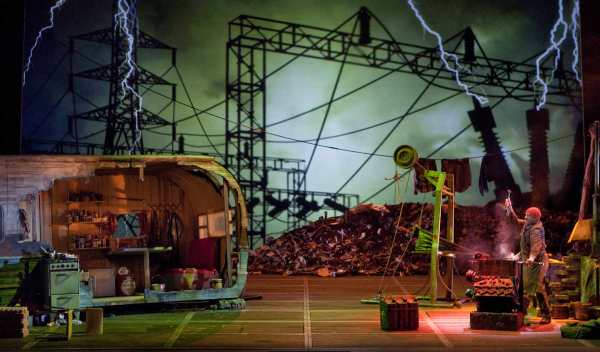
Siegfried: Mime’s home
GÖTTERDÄMMERUNG. Performance of 17 June. The three Norns in Act 1 are excellent; again the dynamic 3D projection of a complex electrical circuit supports the scene superbly. Ms Theorin as Brünnhilde begins this very long opera conservatively but she goes from strength to strength, still sustaining her vocals very well without any strain by the time she reached the Immolation scene. Siegfried was also in top form in a role that requires far more stage movement and acting detail than Brünnhilde in addition to a lot of singing. The staging is well conceived and highly imaginative: the Rhinemaidens lament by the river bank (presumably, since there was plenty of vapour and river bed junk) though Gunther’s HQ appears to be set in an industrial plant, somewhat Blofeld-like as there were plenty of armed henchmen that appeared in the double-wedding scene. It was also easy for non-Wagnerites to follow the plot’s intricate mid-section that involves Siegfried’s disguise as Gunther (American baritone Brian Mulligan who also doubled as Donner) and his inadvertent betrayal of Brünnhilde as every twist and turn is portrayed in exquisite detail, closely observing Wagner’s stage directions. Hagen’s tone (Andrea Silvestrelli) was a little too gruff at the start but it grew well into the role and his dream scene with Alberich is superbly conveyed (the front projection again important). Curiously, Hagen’s spear looked suspiciously like the same one Wotan wielded in Das Rheingold (the god switched to an all-steel spear in Walküre and Siegfried). The Immolation scene veered more on elegance rather than sheer outright power, the Immolation pyre appearing somewhat subdued compared with the magnificent magic fire of Walkure. While the staging became more abstract towards the end, the wonderful acting and singing carried the opera through such that one didn’t really feel the longueurs within, bringing a genuinely outstanding cycle to a deeply satisfying conclusion. The San Francisco Opera has every right to be very proud of its distinguished achievement. I was glad I made the trip.
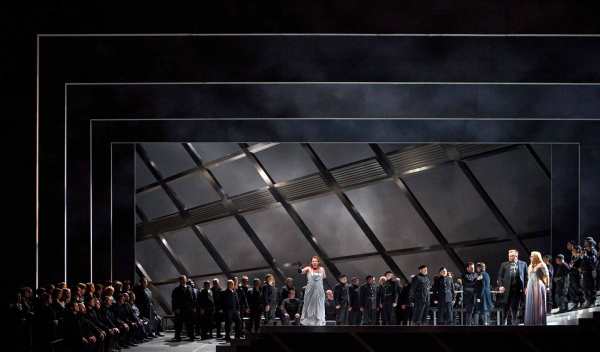
Götterdämmerung: double wedding scene

Curtain call. Die Walküre.
Ordre des Coteaux de Champagne Singapour 2018
By the good graces of Champagne Salon and the good guys from The Vintage Club, Singapore, yours truly was inducted as a Chevalier of the Ordre des Coteaux de Champagne at a lavish affair held at the grand ballroom of the Four Seasons, Singapore, on 24 May 2018. This Order was started back in 1650 (before Bach!) by a group of enthusiasts who were fond of champagne made from the three coteaux (hillsides) of Ay, Avenay and Hautvillers, hence the name. Things got severely disrupted by the French Revolution and it was not until 1956 that the association was re-born again through the efforts of those at Taittinger, Laurent-Perrier, Mumm and Mercier. Nowadays, the Order can boast of more than 4,000 members through various chapitres located worldwide, dedicated to the promotion of champagne. Not that champagne needs to be promoted any further, though I feel it is time that people start drinking champagne seriously on its own rather than gulping it down far too quickly as an aperitif.


The evening began with the intronization of new inductees, kicked off by a short fanfare from a pair of trumpeters. The Commandeur of the Ordre himself, none other than M. Antoine Roland-Billecart, had arrived in person to preside over the ceremony accompanied by no less than M. Bruno Paillard and other luminaries. The chevaliers and officiers of the Ordre certainly take themselves seriously enough but there was plenty of quiet good humour throughout, delivered in excellent English by Antoine Roland-Billecart himself who is never short of good quips. Following the ceremony was a champagne promenade and, here, I can assure readers that the much-vaunted 2008 vintage is certainly worthy of all the exultations that we have heard and read about. This was followed by a grand dinner where even the French Ambassador de Singapour His Excellency Marc Abensour was similarly honoured.

 2008 Pol Roger Brut Reserve. Deep tone of fresh clear citrus and gentle green fruits, displaying great zest, detail and definition. Slightly more forward in fruit balance with a bit of recessed minerals, opening up beautifully with lovely depth and perfumed fragrance with some early complexity without ever being yeasty. Confirms the excellence of the 2008 vintage.
Canard-Duchene Brut Cuvee Leonie. Very subtle and smooth for champagne, softly focused with very fine textures of yellow citrus and soft minerals very fine textures and understated intensity, tapering to a gentle finish.
Louis Roederer Brut Premier. Light luminous gold, displaying quite a unique bouquet of grassy elements, ginger and nutmeg with a good clean lift. Quite transparent on the palate in spite of its density of fruit, bearing down with searing intensity as it tapered to a dry finish.
Grand Siecle Grande Cuvee. This wine exudes a lovely complex earthy pungency with yeasty tones amidst a mild earthiness, displaying unique depth and presence with sharp focus, drawing a deeper streak of raw green fruits and minerals across the palate with great expanse, clarity and dry intensity, finishing with light textures of spice and ash. Excellent.

Lanson Black Label Brut. Full-bodied, carrying great intensity of lime and yellow citrus with a forward balance amidst smoky tones, displaying great presence and not too dry.
2007 Billecart-Salmon Brut. Smooth and subdued on the nose. Very clean, crisp and dry, evoking lime, white citrus and pomelo of lovely concentration, displaying great precision, linearity and expanse, finishing well.
2008 Delamotte Blanc de Blancs. Exuding a soft glow of yeasty tones and earthiness with a lovely depth, this wine is gentle on the palate, rounded with traces of walnut and almonds, striking an excellent balance with remarkable depth and layering as more of its glorious citrus emerged to the fore over time with great acidity and persistence. Superb. Reinforces the view that 2008 is the greatest ever for champagne since the start of the new millennium.
Bruno Paillard Rose Premier Cuvee, poured from magnum. Gentle and open, displaying good expanse with yeasty overtones, tapering to a deeper streak of grapefruit and dense citrus though not too dry, glowing with understated acidity, rounded and clean at its finish. Excellent.

2007 Salon, poured from magnum. Distinctly feminine. Effusive with delicate notes of green apples and green melons tinged with some earthiness, opening up with broad crystalline tones and lighter textures conferred by its fine gentle bubbles and understated minerals laced with traces of sweet amidst sublime acidity, very lithe, striking wonderful balance. Reflects well the vintage character. Excellent.
1999 Deutz Cuvee William Deutz. Well developed bouquet of gentle toast and almonds with a lovely spread on the open palate, displaying excellent presence, depth and proportion in spite of its seemingly lighter texture. Excellent.
Once again, many thanks to the great guys from The Vintage Club and to Didier Depond of Champagne Salon for the nomination, and to the elegantly beautiful Ms Nicola Lee, Commandeur of the Singapour Chapitre, for the superb organisation.

Bruno Paillard takes over as Commandeur from Antoine Roland-Billecart

Vosne-Romanée Aux Malconsorts 1er & Vosne-Romanée Les Gaudichots 1er & Montille 1er Christiane 2005, 2006, 2014
KG and Dr Ngoi hit upon the great theme centering on Les Gaudichots 1er for dinner at Yan, National Gallery Singapore, on 17 May 2018. While most people would salivate uncontrollably if given the chance to taste the great monopole of La Tâche, how would Les Gaudichots 1er fare at just a fraction of the price, given that a large part of La Tâche was once Les Gaudichots? Vic was tasked to delve into the history behind this unique area of Vosne-Romanée, and I can do no better than to reproduce his short but excellent monograph in full:
In the 19th century, Les Gaudichots was a large plot of vineyard adjacent to the original La Tâche vineyard (referred to as La Tâche Holy de Bevy). The owners of Les Gaudichots began to use the term ‘La Tâche’ to sell wines from Les Gaudichots, not only to benefit from the glamour of the ‘La Tâche’ name, but also because apparently many of the original title deeds had the name ‘Tâche Gaudichots’. Things came to a head in a lawsuit in 1932, where it was eventually ruled that the term ‘La Tâche’ could be used for wines from Les Gaudichots. In 1933 the original La Tâche Holy de Bevy vineyard was merged together with the majority of Les Gaudichots to constitute the 6-ha plot of La Tâche that we know today (owned by Domaine de la Romanée-Conti). A few small plots at the periphery of the original Les Gaudichots vineyard are now owned by a small number of producers. At the north-eastern corner, a couple of small plots were absorbed into La Grand Rue (a monopole owned by Domaine Francois Lamarche, maintaining its grand cru status). The remaining north-eastern fragments are farmed by Marchand de Gramont, producing a 1er Cru wine. At the western aspect of the original Les Gaudichots vineyard, there is a small plot largely owned by Domaine Forey (producing a 1er Cru wine), and a couple of tiny plots owned by Domaine de la Romanée-Conti (which has not produced a Les Gaudichots wine since 1929, and may possibly be used for their Vosne-Romanée 1er Cru). On the southern side, just below the original Les Gaudichots plot, is a fragment now owned by Domaine Dujac, the production of which is used in its Aux Malconsort 1er Cru wine. (Text by Dr Victor Lim)
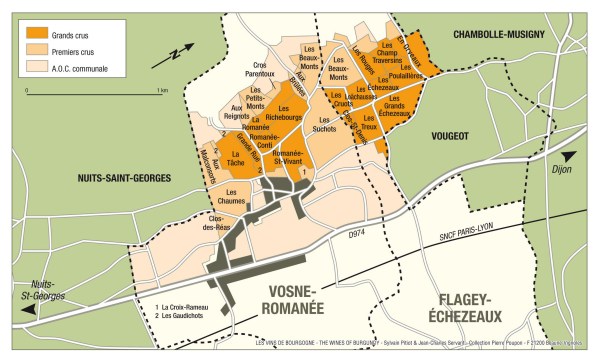
Image from http://www.bourgogne-wines.com
So, in short, most of what used to be Les Gaudichots is now the prohibitively priced La Tâche. The original Les Gaudichots has been splintered into three disparate tiny fragments (see above the three tiny plots labelled as “2” around La Tâche), meaning these wines are not easy to source. With the added intrigue that both La Grand Rue and Aux Malconsorts abut on La Tâche from the north and south, respectively, we have the ingredients of a great wine theme. Everyone rose to the occasion to source for the correct wines that included, as a sub-plot (literally!), a trio of Domaine de Montille’s Aux Malconsorts 1er Christiane. Most intriguingly, Montille has a small plot of Aux Malconsorts across the small lane that lie right next to the southern border of La Tâche . Does this make it as good as La Tâche ? On the backdrop of this tantalising theme and with Manager Shek on hand to see that the food and stemware were all up to the restaurant’s usual high standards, we were set for a most memorable evening.
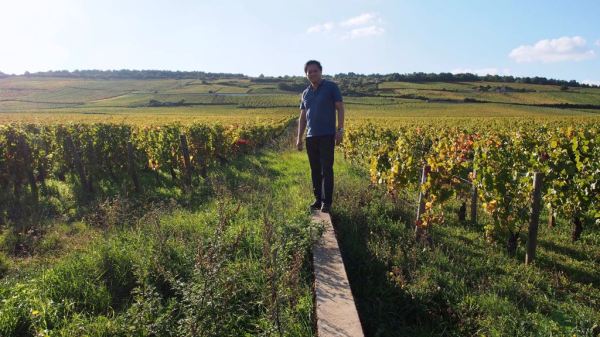
Dr Lim straddling the Aux Malconsorts of Dujac (left) and Aux Malconsorts Christiane of Montille (right)
2006 Champagne Dom Pérignon, courtesy of KG. Gentle yeasty pungency, softly focused with lovely delicacy, hinting at abundant lime, clear citrus and green melons. Quite minerally with distinct ferrous elements, imparting slightly stern steely demeanour on the palate, turning more delicious over time with emergent generous green apples. Highly supple and seamless with fine acidity, displaying excellent depth and finesse.
2007 Nicolas Potel Vosne-Romanée Les Gaudichots 1er, courtesy of KG. Dusky red. There is quite a lovely bloom of cherries and raspberries on the nose, rather fleshy and medium-bodied with understated acidity and mild saline minerals on the palate, gaining a bit of weight over time with a slight medicinal trace though its finish is smooth and subdued. A lighter style of Vosne-Romanée, probably reflecting the vintage characteristic.
2008 Domaine Forey Père et Fils Vosne-Romanée Les Gaudichots 1er, courtesy of LF. Darker in tone and colour, hinting at reasonably good depth of delicious dark currants, somewhat narrower in spectrum of dark red fruits with a leaner definition though very cleanly focused. More introspective in character, again a good reflection of the 2008 vintage.
2009 Domaine Forey Père et Fils Vosne-Romanée Les Gaudichots 1er, courtesy of MH. Dark in colour with a deep bouquet, displaying delicious depth of gorgeous ripe fruits and dark currants, silky smooth with velvety tannins marked by a distinct salinity, ample but subtly structured with excellent linearity. It shut down quite abruptly in the glass, becoming tightly intense before re-opening again with lovely depth and layering. Benefitting from the stellar vintage, this wine is still far from ready. Excellent.

1998 Nicolas Potel Vosne-Romanée Aux Malconsorts 1er, courtesy of Sanjay. Dusky red, as is usual from Potel, showing some evolution though it was rather reticent with just a dash of camphor. The palate, however, is quite full and glorious, infused with abundant raspberries and ripe wild berries with plenty of raw detail. Delicious, rounded and slightly racy, fleshy and seamless with superb acidity, finishing well. Excellent.
2012 Domaine Sylvain Cathiard Vosne-Romanée Aux Malconsorts 1er, courtesy of Hsiang Sui. This wine went through quite a bit of evolution in the glass, starting off with a peculiar funky earthy pungency with overtones of hot stones that I liked very much, definitely not corked. Darkish but subdued in tone initially, eventually developing more layering with a glycerine coat, delicious with understated intensity and supple tannins, displaying a deeper streak of dark currants. Needs a little more bottle age but probably coming out of an awkward stage.
2011 Domaine Francois Larmarche La Grande Rue Grand Cru monopole, courtesy of Vic. Deep ruby, exuding a delicious bouquet of dark cherries and currants, excellent in depth, richness and intensity, underscored with gorgeous acidity and superbly structured with exciting tannins. Excellent.

2014 Domaine de Montille Vosne-Romanée Aux Malconsorts 1er Christiane. Showing a very correct pinot tint, this wine is quite effusive in delicate red fruits of exquisite intensity, very finely detailed on the glowing palate, structured by exciting velvety tannins. Rounded, bright and spacious, displaying good linearity all the way to its lasting finish. Highly refined and elegant. Excellent now and likely to be outstanding in time to come.
2006 Domaine de Montille Vosne-Romanée Les Malconsorts 1er Christiane, courtesy of Dr Ngoi. Again very correct in pinot tint. Rather reticent and still primal on the nose, while the full-bodied palate is highly supple, tinged with tangerines at its core, still tightly coiled, gradually opening up with some lovely biting intensity, finishing with sharp focus but it took a great deal of coaxing. Best to lay down.
2005 Domaine de Montille Vosne-Romanée Les Malconsorts 1er Christiane, courtesy of CJ. Distinctly darker in tint and tone, proffering a delicious broad spectrum on the nose, highly supple and seamlessly structured with gorgeous acidity on the palate, boasting fabulous layers of rich dark cherries and blackberries, undoubtedly masculine yet understated in intensity, finishing with great persistence amidst traces of graphite.
2005 Molleux Foreau Vouvray Reserve, courtesy of LF. Deep color, exuding intense orangey flavours with overtones of aged peaches, cider and ember, tautly drawn across the palate with lovely acidity and tension whilst its sweetness remains rather understated. Excellent.
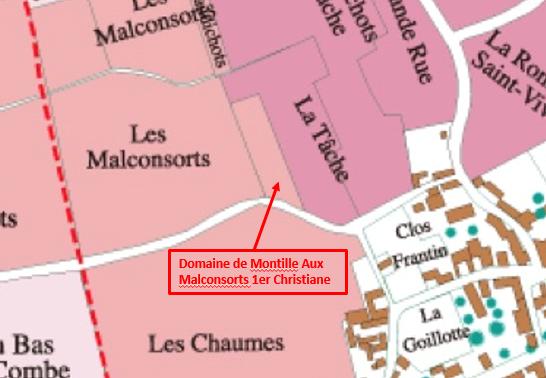
Image modified from http://www.thisyoungvino.com
Drinking along this theme revealed, to some extent, the subtle differences of the closely-neighbouring terroir. As KG pointed out, wines of Vosne-Romanée premiere cru higher up the Côte d’Or at the northerly aspect (eg. Cros Parantoux 1er) tend to be imbued with more power and masculinity, while Aux Malconsorts 1er at the southern end combine power with velvety textures. So is the Montille Aux Malconsorts 1er Christiane on par with D.R.C. La Tâche ? Not quite. Even Etienne Montille admits to that when I caught up with him in Hong Kong. As good as the Christiane is, La Tâche is more complete in itself. However, Etienne points out that, geographically, the plot of Christiane is clearly seamless with La Tâche as it shares with the latter a continuous gentle southerly downslope (when viewed from the north), whereas the Aux Malconsorts of Dujac slopes upwards after the dividing line, proving there is a fault line in the land at that point. Absolutely fascinating. My thanks to everyone for their generosity.

2007 Champagne Salon & 2008 Delamotte
I was privileged to be amongst the very first people in Singapore to taste the new releases of Delamotte and Champagne Salon at the biennale of the Ordre des Coteaux de Champagne at the Four Seasons, Singapore, on 24 May 2018. As readers may know, Delamotte is the sister estate of Salon, producing some 320,000 bottles annually while Salon only produces about 60,000. The 2008 vintage for champagne, just beginning to be released by a number of producers, has long been heralded as the greatest ever of the new millennium, so much so that Salon itself will only be released solely in magnum bottling. That certainly says a lot!

But, before that, as an overture we have the 2008 Delamotte Blanc de Blancs, poured from magnum this evening and served in a chardonnay glass. Exuding a soft glow of yeasty tones and earthiness with a lovely depth, this wine is gentle on the palate, rounded with traces walnut and almonds, striking an excellent balance with remarkable depth and layering as more of its glorious citrus emerged to the fore over time with great acidity and persistence. In spite of the fabulous intensity of fruit, this wine was never out of proportion, staying superbly balanced throughout its length. Really excellent.
 And while we await the 2008, the first bottle of 2007 Champagne Salon in Singapore was popped, poured from magnum and served in chardonnay glass as well. Immediately effusive on the nose with delicate notes of green apples and green melons tinged with some earthiness, it shut down a little like a shy debutante before gradually opening up with broad crystalline tones and lighter textures conferred by its fine gentle bubbles and understated minerals laced with traces of sweet amidst sublime acidity, very lithe on the palate, striking a wonderful balance. This is truly a distinctly feminine expression that is most apt for champagne and Salon has, once again, aced it perfectly.
Looking ahead, I can tell you as well that Champagne Salon will not be declared for 2009, 2010 and 2011. With all the anticipation building up to its 2008 release in a year’s time, after which we will all be starved, I’m afraid we will have to brace ourselves for the stratospheric prices to come. I must really thank all the guys at Vintage Club for this wonderful opportunity. Merci !
2011 Promontory, Harlan Estate 1993 2006
These are notes from a dinner at Imperial Treasure Great World City, Singapore, generously hosted by the great Dr S S Ngoi on 28 April 2018 to honour the visit of Don Weaver, Director of Harlan Estate, and his associate Francois Vignaud on their whistle stop. I have forgotten how tall Don is and it was really good to be able to welcome him back to Singapore again as memories of last year’s Harlan lunch at Tunglok remained fresh in my mind. Looking none the worse for wear despite his hectic tour of the Far East, Don had generously proffered the 1993 and 2006 grand vin of Harlan while Dr Ngoi had sponsored most of the remaining line-up. It is easy to dismiss some Napa wines as “upfront blockbusters” but, until one has tasted Harlan Estate, you won’t realise that Harlan has so successfully crafted wines of immense transparency, detail, linearity and precision with concealed power. These are wines of great sophistication and elegance, and the two vintages this evening, along with the 2011 Promontory, are testimony to the stylistic refinement of Harlan Estate. Thank you Don, Francois and Dr Ngoi for such a wonderful evening of great friendship, great food and stunning wines.
Champagne Veuve Clicquot Brut NV, courtesy of Dr Ngoi. Generous in smoky and yeasty overtones on the nose, while there is a fine expanse of complex clear citrus and soft cinnamon on the palate supported by stony minerals, producing good presence and intensity, tapering towards a bitter sweet finish of pomelo and lemons. Very fine.
2003 Domaine Henri Gouges Nuits-Saint-Georges La Perrière 1er. Notes of glue and lychee dominate with good depth on the nose, well-aligned with lifted concentration of longans, white flowers, paraffin, lemon and yellow fruits on the palate, rather dry and firm at its minerally finish. Would be hard-pressed to tell that this is made from 100% pinot blanc, not chardonnay, if I hadn’t known.
2001 Domaine Bonneau du Martray Corton-Charlemagne Grand Cru, courtesy of Dr Ngoi. Shut initially, just proffering a dash of tropical fruits and coconut though hinting at quiet intensity of fruit beneath. Took a while to hit its stride with an excellent fullness of white fruits with characters of rye and malt amidst stony minerals, displaying excellent linearity and early detail, dry but fleshy, finishing with overtones of hot gravel. Very fine.
2010 Domaine Henri Boillot Criots-Bâtard-Montrachet Grand Cru, courtesy of Dr Ngoi. Already showing some early complexity with a deep bouquet of oily diesel tones, this wine possesses a full presence with a dry intensity of rich white citrus supported by firm stony minerals, tightly coiled with early detail and definition, gaining in attractive oily richness over time. An excellent expression of the Chassagne aspect of Montrachet vineyards. Outstanding.
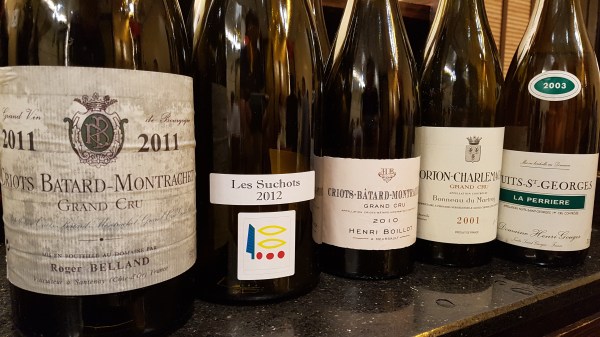
2012 Domaine Prieuré Roch Vosne-Romanée Les Suchots 1er PURE, courtesy of Dr Ngoi. This PURE bottling, where there is zero oxygen contact during bottling, possesses an incredible freshness in its lift bouquet of complex red fruits tinged licorice, tangerines and dark plums, very open and fleshy, its highly supple tannins imparting superb mouthfeel and persistence, showing well the highly unique Prieuré Roch character. It’s a huge privilege to be able to keep enjoying Les Suchots PURE ever so often, all courtesy of Dr Ngoi.
2011 Domaine Roger Belland Criots-Bâtard-Montrachet Grand Cru, courtesy of C J, poured from magnum. This wine exudes a great lift of white fruits and dense minerals in its lovely open bouquet, matched by a wonderful fullness of complex spices, mint and nutmeg on the palate with a trace of ferric sternness, highly fabulous in its intensity, depth and detail of fruit, finishing with great persistence. Two superb examples of Criots-Bâtard-Montrachet in a single evening surely cannot be too much of a good thing, and I simply can’t get enough of this.
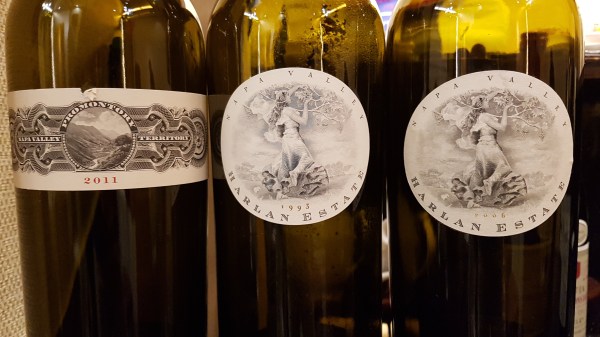
2006 Harlan Estate, courtesy of Don Weaver. Deep dark purple, exuding characters of cool blueberries, blackberries and violets, very ripe, full and fleshy without being overly extracted, covering the palate with a broad expanse of silky textures laced with exciting acidity amidst traces of sweet vanillin, highly generous and ample, seamlessly integrated with great linearity throughout its fabulous length which is always a hallmark of Harlan. Consistent with a previous tasting in March 2017 during Don’s last visit to Singapore. Superb now, and will be outstanding in time to come.
1993 Harlan Estate, courtesy of Don Weaver. With the benefit of significant bottle age, this wine has snapped into sharp focus, proffering a pointed earthy pungency from its glorious depth of dark rose petals and dark cherries, open with fleshy detail and very fine gritty tannins on a palate swathed in velvety textures, finishing again with superb linearity and glowing persistence. Beautiful, but still yet to peak, I think.
2011 Promontory, courtesy of Dr Ngoi. Promontory is a young label made by Harlan Estate since 2008 from a 900-acre plot in Napa Valley situated at an elevation of 500-1200 feet that features cool micro-climates with metamorphic rocks, comprising a blend of cabernet sauvignon with some malbec and petit verdot. Boasting deep dark tones and rich minerals, this wine exudes a lovely open hallowed glow of warm ripe raspberries and dark cherries amidst some mild earthiness, rich with creamy textures amidst spicy tones, yet amazingly transparent in spite of the concentration and density of fruit, imbued with great supple freshness, never overly extracted nor hedonistic. Superb.
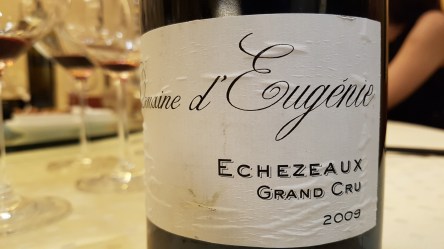 2009 Domaine d’Eugenie Échezeaux Grand Cru, courtesy of Winfred. Good colour, displaying some early evolution with an open full palate of cool ripe fruit, structured with supple pliant tannins and fine acidity, featuring darkish tones within a relatively narrow spectrum. Made with a modern feel but undeniably delicious, though it still needs plenty of time in the cellar.
2010 Château Guiraud, courtesy of Dr Ngoi. Notes of nectarine, ember and cider dominate on the nose and palate, gently structured with a lovely luminosity, already quite seamlessly integrated at this stage, rounded with excellent presence and finishing with great length.
2002 Penfolds St Henri Shiraz, popped and poured at Wah Lok, 05 Apr 2018. I’ve cellared this bottle for about ten years. Opague purple, proffering an enticing complex of toffee, mocha dark, chocolate and licorice camphor on the effusive nose, matched by a good attack of peppery spicy tones on the palate, full-bodied, structured with well-mannered tannins on a background of delicious dark currants, finishing with emerging notes of ferrous minerals. Excellent.
2007 Delamotte Blanc de Blancs, popped and poured at LF’s birthday bash, Pistacchio Grill, 06 Apr 2018. Imbued with strong minerally and ferrous tones amidst crisp citrus and bitter lemon that imparted some degree of sternness, displaying excellent presence and concentration of fruit with controlled intensity, finishing with sweet tannins. Quite excellent.
2006 Domaine Joseph Roty Charmes-Chambertin Grand Cru, courtesy of Vic, popped and poured at LF’s birthday bash, Pistacchio Grill, 06 Apr 2018. Displaying some evolution with earthy tones, medium-bodied, proffering gentle notes of raspberries and red fruits underscored by dark undertones with fresh acidity but missing in opulence and charm.
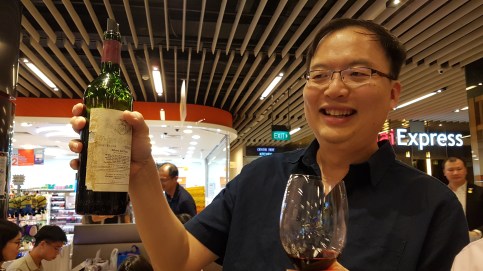 1968 Vega Sicilia Unico, popped and poured at LF’s birthday bash, Pistacchio Grill, 06 Apr 2018. Still remarkably full in colour, opening with distinct characters of earth and iron filings, very open and rounded with the distilled essence of red fruits, still amazingly fresh and layered with inner detail, going on to develop a lovely bloom of rose petals and camphor, finishing with great lift. Perfect for the birthday boy. Outstanding!
2003 Dominus, popped and poured at LF’s birthday bash, Pistacchio Grill, 06 Apr 2018. This wine displays a profound depth of structured red fruits and cherries, richly layered with chiselled detail and concentration, infinitely masculine, filled with glorious abundance, still yet to peak. Excellent.
1996 Domaine Louis Remy Chambertin Grand Cru, courtesy of Sanjay, popped and poured at LF’s birthday bash, Pistacchio Grill, 06 Apr 2018. Quite well evolved, exuding a powerful earthy pungency matched with delicious notes of camphor, rose petals, complex plums and orangey tangerines, perhaps a tad short.
2010 Domaine Etienne Sauzet Puligny-Montrachet Les Combettes 1er, courtesy of Sanjay, 07 April 2018 at Sofitel Sentosa. Clear golden hue, exuding a superb complex of dense diesel fumes, earth, concentrated white fruits and clear citrus, highly structured on the stern minerally palate with a hint of bitter lemon. Superbly layered with notes of white flowers in bloom, citrus, cinnamon and cool vanillin icing laced with crisp acidity, already developing some early complexity, finishing with a suggestion of fine white pepper. Simply outstanding.
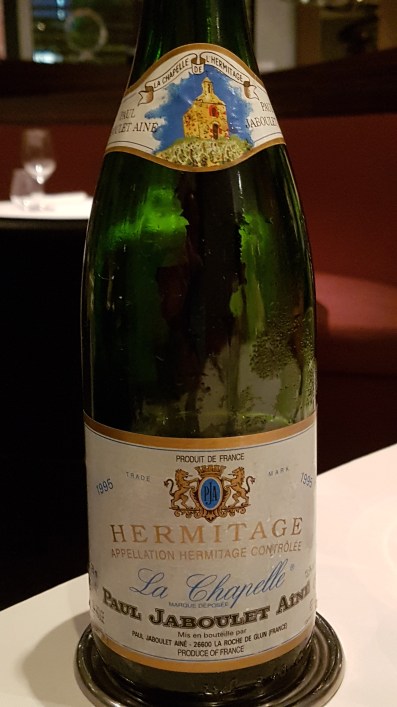 1995 Domaine Paul Aine Jaboulet Hermitage La Chapelle, popped and poured at Otto Ristorante, 14 April 2018. Earth, licorice, old leather and mild medicinal tones dominate on the nose, leading to a medium-bodied proposition of cool dark fruits and raspberries before evolving with further notes of camphor, redcurrants, plums and tangerines underscored by stern minerals, becoming more open and fleshy with time. Drinking well.
2015 Maison de Montille Saint Romain, popped and poured over a meal at home, 16 Apr 2018. This unassuming sleeper displays a rich presence of green fruits and melons with chalky undertones supported by understated crème, vanillin and icing, displaying fine acidity and intensity, very well balanced and integrated, finishing with excellent mouthfeel. Superb value.
1970 Coto de Imaz Riserva Privada, courtesy of LF at Yan, 20 Apr 2018. Good color. Obviously well-evolved, producing an effusive fragrance of aged mint tinged with earth, orangey tones and plums, still showing good acidity though the fruit is clearly receding. Still drinking well.
1968 Bodegas Marque de Murrieta Cadtillo Ygay Logrono, courtesy of LF at Yan, 20 Apr 2018. Sharper than the preceding wine with better definition on both nose and palate, exuding a highly lifted bouquet of camphor, rose petals and grapefruit, still rather rich in fruit quality and acidity, highly supple and seamless, finishing with traces of burnt. Excellent.
2006 Philipponnat Clos des Goisses, courtesy of Sanjay at Yan, 20 Apr 2018. Lovely bouquet of sensuous smokiness and yeasty pungency, quite gentle and placid on the palate with graphite minerals that imparted a slightly stern demeanour, quickly developing a dry searing intensity from the tight concentration of dense citrus and melons. Great potential.
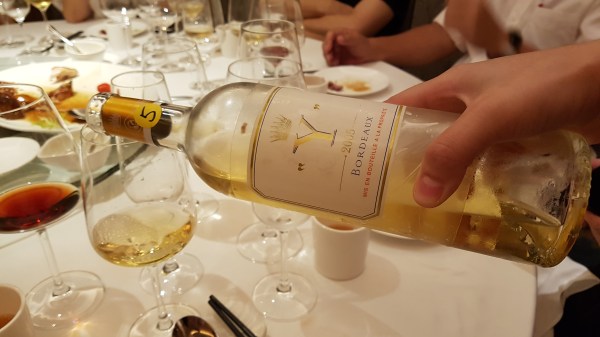
2005 Ch d’Yquem “Y” Ygrec courtesy of Sanjay at Yan, 20 Apr 2018. Luminous glow of tropical fruits, peaches and durians (yes!) with creamy textures and overtones of paraffin. Very rich, almost luscious, growing steadily in intensity as it sat in the glass. Still tight.
2014 Charles van Canneyt Charmes Chambertin Grand Cru, courtesy of Dr Ngoi at Yan, 20 Apr 2018. Excellent purity of red fruits on the nose and palate, displaying good concentration, layering and depth with early complexity, highly controlled in fruit intensity, very finely balanced with velvety tannins and crisp acidity that produced superb mouthfeel. Excellent.
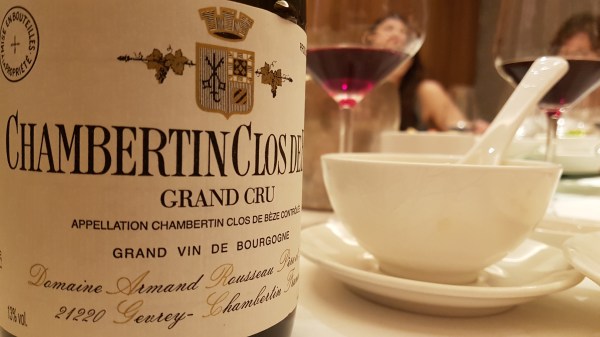
2002 Domaine Armand Rousseau Chambertin Clos des Beze Grand Cru, courtesy of MH at Yan, 20 Apr 2018. Very dark, displaying very tight concentration of dark cherries and raspberries with traces of vanillin on the nose and palate, exuding an air of cool nonchalance with quiet intensity, still remarkably youthful, structured with fleshy silky tannins, superbly integrated, very finely proportioned and balanced, tapering to a minerally finish. Not overtly opulent nor succulent, yet there is never any doubt that this wine has so much more in reserve, but simple contented to reveal a little at a time. A cool dark beauty, not showy at all. Outstanding.
1990 Ch d’Yquem, courtesy of Sanjay at Yan, 20 Apr 2018. Quite heavily tinted, proffering powerful aromas of aged apricot, nectarine, rye and malt, superb in concentration and intensity that excites the senses with its stunning complexity, leaving behind a stony minerally glow long after it has left the palate. Outstanding.
2001 Ch Lagrange, popped and poured at Otto Ristorante, 25 April 2018. Unexpectedly sullen at the start, rather unyielding with tough graphite tones within narrow confines. It took on a totally different character when it did finally open up after an hour, developing the classic hallowed glow of a maturing claret, fleshy with good depth of redcurrants and dark berries, laced with understated acidity that drew exciting tension across the palate, growing with intensity over time. Very fine.
2015 Domaine Bernard Defaix Chablis 1er, courtesy of host Hsiang Sui at the wedding lunch of Eryn & Seng at Capella, 29 Apr 2018. Delicious buttery and chalky tones topped with creme de la crème, highly generous, with further notes of icing whilst raw nutmeg and exotic spices traipse across the palate with delicate detail, only to lose a bit of focus towards its gentle finish. Very fine.
2013 Domaine Roger Belland Santenay Gravueres 1er, courtesy of host Hsiang Sui at the wedding lunch of Eryn & Seng at Capella, 29 Apr 2018. Dark plums and wild berries dominate on the nose, though somewhat tight and lean on the palate with earthy undertones and understated intensity.
2004 Mount Mary Quintet, popped and poured from magnum at the wedding lunch of Eryn & Seng at Capella, 29 Apr 2018. Lovely aromas of dark cherries and dark plums fill the nose whilst the fleshy palate displays good detail and precision layered with mild saline minerals, ripe wild berries, raspberries and dark currants, gently structured.
2013 Williams Selyem Foss Vineyard Russian River Vineyard, courtesy of LF at the wedding lunch of Eryn & Seng at Capella, 29 Apr 2018. Notes of cool ripe raspberries and dark cherries dominate on the palate with good lift and focused concentration, still primal in tone, yet to develop but it clearly holds great potential.
2010 Silver Oak Alexander Valley, courtesy of Sanjay at the wedding lunch of Eryn & Seng at Capella, 29 Apr 2018. Quite an unique lifted bouquet of heated stones and savoury curry, gentle and open with good concentration and definition of delicious dark currants structured with sublime acidity and supple tannins, gorgeously rich, fleshing out with supreme confidence. Superb.
2013 Sea Smoke Southing Pinot Noir, courtesy of LF at the wedding lunch of Eryn & Seng at Capella, 29 Apr 2018. Good colour, very clear and well-defined in its bouquet of ripe red fruits and dark berries, highly focused, showing very tight intensity and concentration though without the opulence and expanse. Needs further cellaring.
2001 Ch Rieussec, from a half bottle courtesy of host Hsiang Sui at the wedding lunch of Eryn & Seng at Capella, 29 Apr 2018. Effusive notes of apricot, ember, cider and sweet incense dominate in equal measure on the nose and palate, full-bodied and fresh with lovely acidity and beguiling presence. Still not quite ready if you are looking for complexity but it is so delicious now.
2003 Domaine Paul Aine Jaboulet Hermitage La Chapelle, decanted on-site at Gattopardo, 30 Apr 2018. Deep purple. Generous in aromas of fresh dark cherries, raspberries and blackberries. Highly supple and fleshy on the open palate, rounded with gentle herbal and medicinal overtones topped with balsam and licorice, finishing with a blaze of youthful intensity amidst a cool minty structure without any trace of its 14.5% alcohol.
These were the wines of Domaine Georges Comte de Vogue tasted at a dinner at Jade Palace, 13 Jan 2018, that took place after a masterclass (of the 2009 wines) presided by Jean-Luc Pépin, Commercial Director of the estate. The line-up was supposed to be 1999 but (as alluded to in my preceding post) as there were quite a few bottles that turned out to be corked, these were replaced by wines from other vintages. The stalwarts of 1999 are developing very well at a glacial pace, truly wines of character and substance though the real revelation that evening was actually the 2010 for burgundy red, truly a cut above 2009.
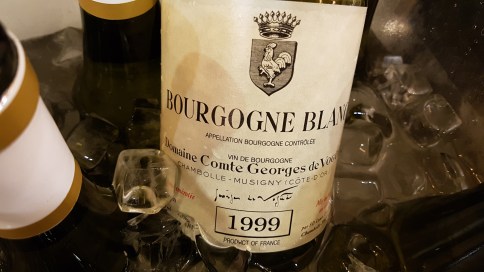
2009 Domaine Georges Comte de Vogue Bourgogne Blanc. Vinified in only 15% new oak, max. Gentle notes of dew and white truffles dominate on the nose with an unique trace of steamed kaya bread, whilst the palate is suffused with an oily presence, quite rich, verging on opulence as subtle characters of creme and soft complex minerals emerge over time, carrying tremendous drive to produce an exciting back palate before finishing with great persistence, thoroughly seamless throughout its length. Great stuff !
2004 Domaine Georges Comte de Vogue Bourgogne Blanc. With the added benefit of bottle age, the 2004, very lovely in colour, displays delicate tones in spite of its rich body of clear citrus, yellow fruit, peaches, melons and tropical fruits, superb in concentration and focus with fine intensity, the recessed chalk and minerals lending an aged feel of orange peel. Excellent.
2010 Domaine Georges Comte de Vogue Chambolle-Musigny. Having tasted the excellent 2009 just a few hours prior, the 2010 raised the bar further, proffering a superb lift of soft red fruits, plums and earth that led to a medium-bodied fleshy palate with plush textures, oozing with gentle acidity and supple tannins that delivered great verve, detail, elegance and understated power. This may be a village but what a complete wine, outstanding in every way, proving as well the superiority of 2010 over 2009.
 1999 Domaine Georges Comte de Vogue Chambolle-Musigny 1er. Beautiful colour, showing some evolution, exuding a deep generous bouquet with an exuberant lift of complex red fruits and red currants that produced a ripe, opulent fleshy palate of great succulence amidst traces of tangerines and earthy minerals, topped with great acidity though a tad short. Excellent, nevertheless.
1996 Domaine Georges Comte de Vogue Chambolle-Musigny 1er Les Amoureuses. Still deep in colour, from which arose a dense solid core of fleshy ripe dark fruits brimming with quiet intensity, solidly structured and layered but still tight after all these years, eventually softening after some time as it broadened with generous sweet tannins though still undoubtedly masculine, reflecting well its vintage characteristic.
1999 Domaine Georges Comte de Vogue Bonnes-Mares Grand Cru. Ever the extrovert, this wine is highly exuberant, proffering lifted tones of red fruits, dark plums, camphor and tangerines with bold presence as its excellent depth and concentration of fruit took grip, displaying excellent linearity as well though it still came up a little short at the finish.
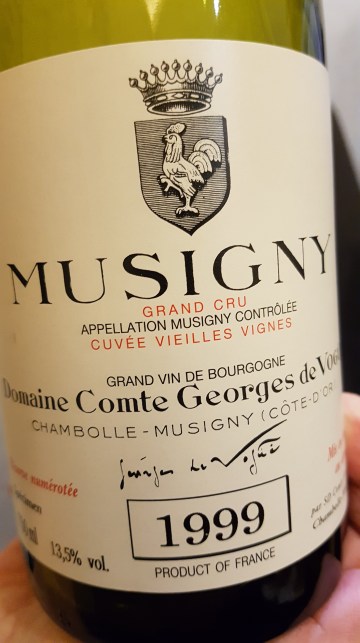
1999 Domaine Georges Comte de Vogue Musigny Grand Cru. Superb colour, exuding a deep intense bouquet of ripe dark fruits, blackberries and camphor, richly layered with great concentration of glorious fruit that evoked cedar, cinnamons and some earth, very fleshy and balanced, cloaked in velvety sweet tannins. Slow to evolve, this wine is still remarkably youthful with plenty of power held in check. Outstanding.
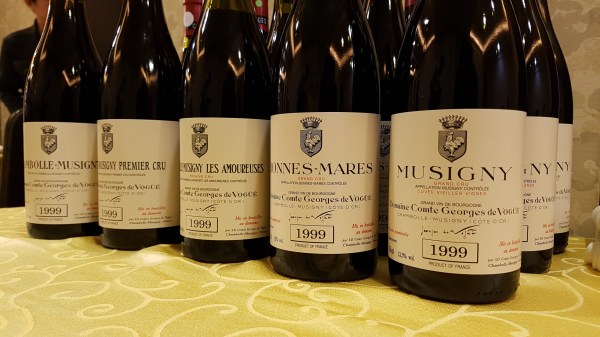
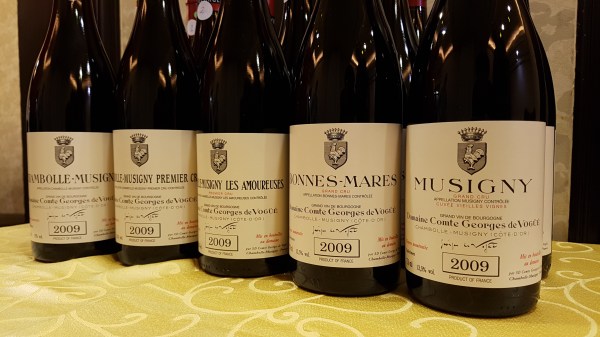
2009 Domaine Georges Comte de Vogue
In what is becoming a serious tradition, Alvin Seah of Domaine Wines would host Jean-Luc Pepin, Commercial Director of Domaine Georges Comte de Vogue, in Singapore every January. This year’s event on 13 Jan 2018 at Jade Palace consisted of a masterclass of the wines of 2009 followed by dinner. Needless to say, it was a great success, the 2009s all drinking very well with plenty of well-proportioned fruit, detail and acidity, powerfully structured as one would expect from this esteemed producer. The tasting (and subsequent dinner) was marred by a few faulty bottles, not enough to spoil the party but worrisome enough considering they all occurred within the same sitting, not to mention the fact that these things are still happening even for recent vintages. It is really time for major producers to seriously consider alternative closures. Tradition is great, but if it cannot guarantee that these wines will remain impeccably bottled, then it’s time to move on.

2009 Domaine Georges Comte de Vogue Chambolle-Musigny. This village hails from a 1.8 ha plot sitting on Comblanchien limestone, and usually the first wine of this domaine to be bottled. The 2009 exudes a superb intense bouquet of lifted rosy fragrance matched by an attractive earthy pungency, full-bodied, delivering very fine acidity, concentration and depth of fruit with dark spicy tones. Still youthful, yet to develop.
2009 Domaine Georges Comte de Vogue Chambolle-Musigny 1er. I hadn’t realised, but Jean-Luc was quick to point out that, since 1995, the domaine has self-consciously declassified all young vines (arbitrarily stipulated as below 25 years) of Musigny Grand Cru as premier cru. In other words, each time you pop a Chambolle-Musigny 1er, you are actually drinking a young Musigny Grand Cru! Indeed it shows, as this superb example of 2009 exudes lovely deep aromas of rose petals and red fruits from its purplish tint, stuffed with cool ripe fruit infused with graphite minerals that imparted tremendous verve and vigour in spite of its slightly stern demeanour, better in depth, layering and definition over time, displaying subtle intensity with well-integrated acidity as it tapered to a quiet lengthy finish. Excellent but priced at a premium.
2009 Domaine Georges Comte de Vogue Chambolle-Musigny 1er Les Amoureuses. From soils of 99% limestone, this perennial favourite proffers a deep bouquet of dark cherries, red fruits and raspberries from its deep purple abyss, highly lifted, coiled with dark plums and tangerines of substantial power, depth and freshness, almost masculine in its structured tone though it mellowed considerably after some time, turning more velvety and feminine before receding back into its shell. Unlike the openly flirtatious Les Amoureuses of Robert Groffier, this is a mystic beauty not to be trifled with. Excellent.

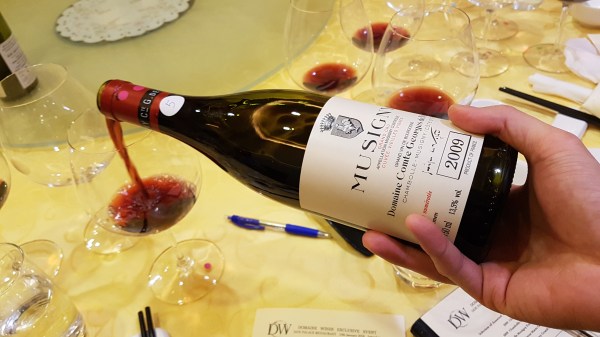
2009 Domaine Georges Comte de Vogue Bonnes-Mares Grand Cru. From a sizeable 2.7 ha, this wine proffers a lovely exuberance of warm ripe strawberries, red fruits and preserved cherries with a faint streak of vanillin, excellent in concentration and bold masculine power with superb linearity underscored by a deep minerally streak, structured with pliant tannins. A warm extrovert that everyone loves to hang around with but this chap also knows how to behave, sitting in the glass with quiet intensity when left alone. Absolutely true to its terroir characteristic. Superb.
2009 Domaine Georges Comte de Vogue Musigny Grand Cru. Owning 7.2 ha of this hallowed plot and 100% of neighbouring Le Petit Musigny, Comte de Vogue has always been the point of reference for Musigny. From soils that contain more clay than limestone, this pinnacle of Musigny exudes a superb lift of earthy minerals and smouldering ember marked by some early complexity, medium-bodied, fleshy but subtly layered with glorious dark fruit and sweet tannins amidst highly-understated acidity, impeccably proportioned. Possesses that extra added dimension on top of great finesse and elegance without being showy. Outstanding.
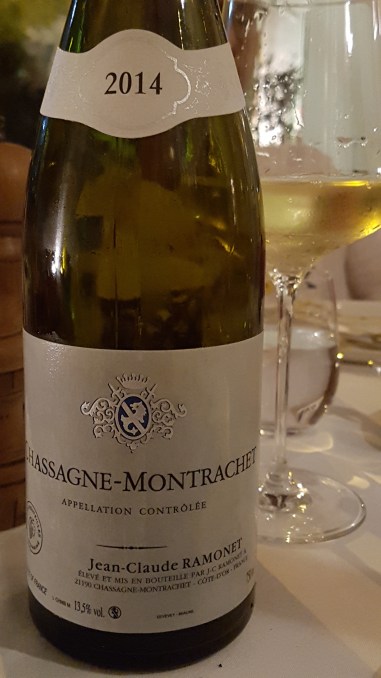
2014 Domaine Jean-Claude Ramonet Chassagne-Montrachet, popped from the list of Ma Cuisine, Singapore, 02 March 2018. Lovely glow of white flowers in bloom with overtones of vanillin, displaying fine concentration of fruit with crème and stony minerals that reflected well the terroir of Chassagne, growing in weight and expanse with fine detail and biting intensity though without the richness and layering of the best of Ramonet, finishing with echoes of white pepper amidst early complexity that produced excellent mouthfeel. Very fine.
2014 Otazu Bond, popped and poured at Asia Grand on 03 March 2018 to celebrate M’s great success. This limited edition magnum (only 150 bottles globally), blended by yours truly at Bodegas Otazu, boasts generous aromas of smoke and mocha tinged with licorice that matched very well with the broad savoury expanse of barbequed meat, sweet dark currants, ripe wild berries and mild cedary characters amidst spicy peppery tones on the palate, excellent in weight and concentration, supported by a rich earthy base without any heaviness, rounded with good balance, finishing with structured sweet tannins. This wine is only just beginning to turn the corner.
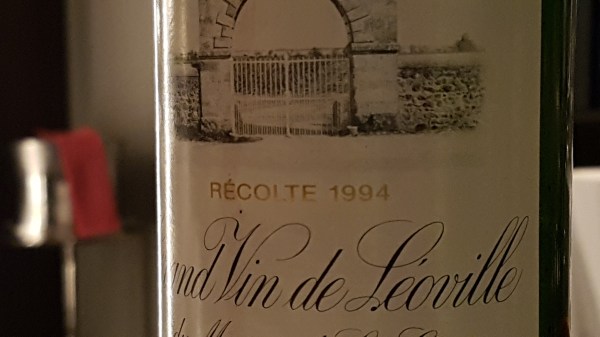
1994 Ch Leoville Las-Cases, popped and poured at Otto Ristorante, 06 Mar 2018. After shaking off some bottle stink, this wine exudes a powerful earthy pungency with overtones of forest floor and cedar, carrying a deep streak of ripe raspberries and dark cherries with a rounded plummy tone on the palate. Medium-bodied, fleshy with fine intensity of fruit and sharply delineated acidity, displaying good transparency but lacking in opulence and charm which is quite typical of the vintage.
2001 Ch Sociando Mallet, decanted on-site at Braci, 8 Mar 2018. Tasted blind. Deep garnet red. Reticent at first, proffering only dark berries, graphite and bitter earth, utterly shorn of fat. It began putting on weight rapidly after some time, developing really excellent concentration with gentle biting intensity that grew in power and depth as it sat in the glass, showing good length and linearity although it remained rather tightly focused within a narrow spectrum of flavours, still youthful. I’d read somewhere that the 2001 Sociando Mallet resembled a First Growth in its youth in blinded tastings. Well…not quite, but it definitely belongs amongst the classified growths. Very fine.
2000 Ch Palmer, courtesy of Nicolas Laurent, decanted on-site at Braci, 8 Mar 2018. Tasted blind. Very deep dark core with just a hint of rim evolution, exuding a sharp earthy pungency that complements beautifully the great expanse of fleshy savoury palatal succulence, displaying superb integration between its well-defined acidity, tight svelte tannins and rich dark plummy fruit, rounding off with a dryish velvety feel as it finished with superb length and precision. Barely evolved, this is a wine for the ages. I guessed correctly. What a masterpiece!
2001 Ch Rauzan-Segla, courtesy of Alexandre Olmedo, decanted on-site at Braci, 8 Mar 2018. Tasted blind. Slight vegetal traces on the nose, but the palate displays lifted tones of ripe dark fruits of excellent depth and richness, quietly intense, structured with great opulence and length with finely-chiselled ferrous minerality that tapered towards its glowing finish with a hint of gunsmoke amidst sweet gentle tannins. Rauzan-Segla has seldom tasted so good. Superb!
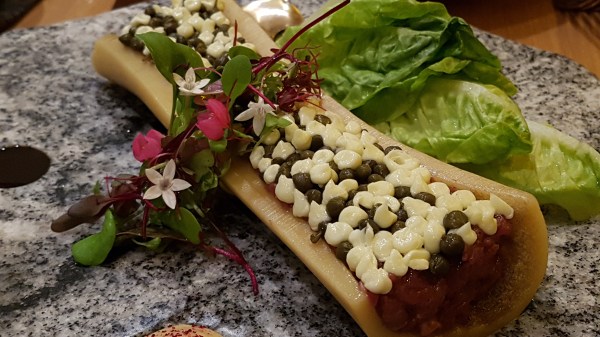
2004 Ch Pichon Longueville Baron, popped and poured over dimsum at Imperial Treasure Teochew ION, 11 March 2018. Lifted Pauillac signature, glowing with aged plums and dried Chinese tea leaves. Expectedly opulent, opening up well to reveal rich deep tones of dark currants and blueberries, superbly ripe and delicious, seamlessly structured with highly detailed tannins and understated streak of bright minerals. Excellent.
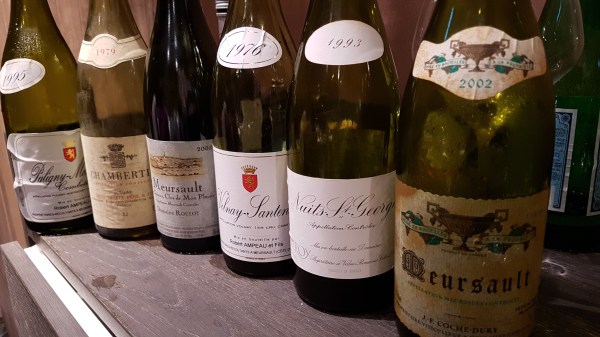
1979 Domaine Louis Trapet Pete et Fils Chambertin Grand Cru, courtesy of Robert Kwok at La Cala, 12 Mar 2018. Pale vermilion, this wine has evolved most beautifully, evoking bright red fruits and sweet plums with traces of lychees and glycerin, still imbued with abundant fresh acidity that imparted great suppleness and tensile intensity, staying par for the course without fading away. Lovely!
1995 Domaine Robert Ampeau Puligny-Montrachet Les Combettes 1er, courtesy of LF at La Cala, 12 Mar 2018. Lovely golden hue with a certain restraint on the nose though it is quite ample and well developed on the medium-full palate where aged creme and chalky minerals dominate in an easy laissez-faire manner before being gradually overwhelmed by a growing intensity of gentle tropical fruits, turning a little sappy and luscious. Probably at its best.
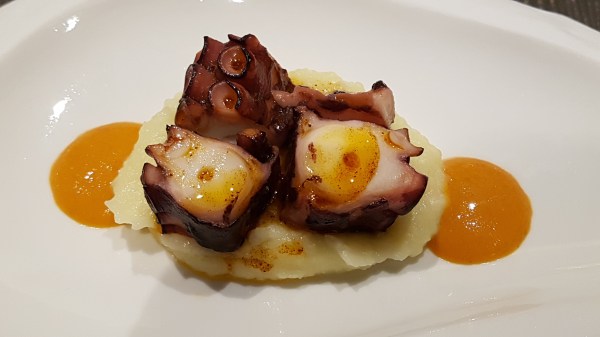
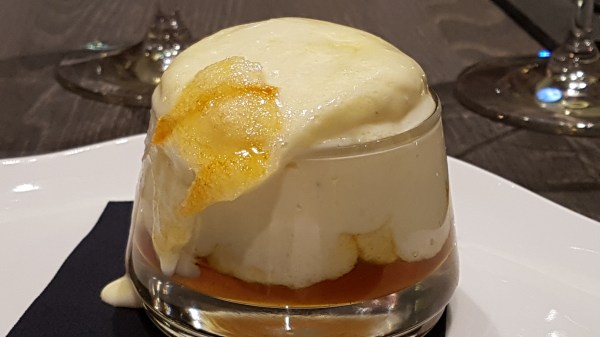
2002 Domaine Coche-Dury Meursault, courtesy of Robert Kwok at La Cala, 12 Mar 2018. This wine bears all the classic hallmarks of a Coche-Dury: reticent at first, eventually developing more of crystalline tones on the nose and palate with a soft focus, rather gentle and delicate in spite of its fullness, proffering superb definition, depth and detail, gently layered with understated intensity, finishing with great linearity and persistence. Brilliant.
1976 Domaine Robert Ampeau Volnay-Santenots, courtesy of LF at La Cala, 12 Mar 2018. Showing a well-evolved vermilion, this medium-full wine is still oozing with bright plummy fruit underscored by a deeper streak of dark fruit with herbal tones and licorice, utterly seamless, exuding brilliant intensity from its fresh acidity. Quite amazing.
1993 Domaine Leroy Nuits-Saint-Georges, courtesy of Robert Kwok at La Cala, 12 Mar 2018. This wine is imbued with excellent tone and purity of fruit that exude great aromatic fragrance, layered with earthy textures and tangerines at its core, producing fine gritty detailed tannins that shouts out the unique terroir character of this under-rated commune, very open and lovely in its suppleness and controlled intensity, finishing with great persistence. Outstanding.
2004 Ch Bernadotte, popped and poured at Ka Soh. Full-bodied, exuding dark plums and fresh black currants, expressing supple tannins with excellent presence and intensity marked by earthy minerals and great acidity without any burliness or vegetal tones, becoming softer and more feminine over the course of dinner. This is the best bottle of 2004 Bernadotte thus far, and I’ve gone through quite a number over the years. Excellent.
1987 R Lopez Heredias Vina Tondonia, at La Barca, 21 Mar 2018. Dark murky red with pungent musty old medicinal aromas, distinctly faded on the palate where only bare traces of old plums and tangerines remain.
2009 Maison Roche de Bellene Richebourg Grand Cru at La Barca, 21 Mar 2018, courtesy of Kenny. Red fruits and cherries dominate on the nose and palate, showing good purity. Medium-full, rounded and supple with crisp acidity, quite rich and forward in balance but lacking in real depth and layering, turning a tad spicy at the finish.
2001 Beringer Cabernet Sauvignon Private Reserve at La Barca, 21 Mar 2018. Deep garnet red, exuding a rich bouquet of black currants, dark plums and dark cherries. Nicely rounded with warm ripe fruit, highly supple, showing good detail amidst seamless structured tannins against a backdrop of slight dusty textures, positively glowing at the finish. Excellent.
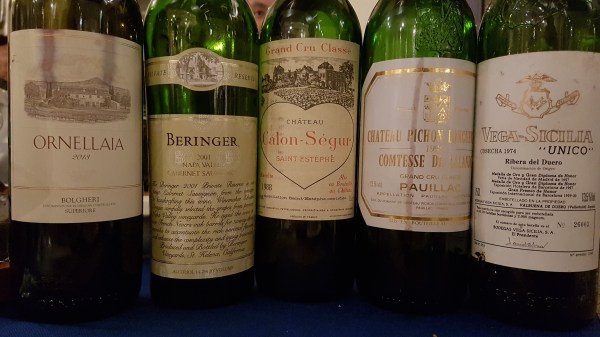
2013 Ornellaia, courtesy of Hiok at La Barca, 21 Mar 2018. This cabernet-based Bordeaux blend cultivated in Tuscan soils exudes a powerful earthy pungency amidst overtones of ripe dark berries and blackcurrants, distinctly masculine in its stern uncompromising structure that inevitably lends an air of aloofness before mellowing to some degree over time as its tannins took on sweet velvety textures with peppery tones topped with traces of graphite, finishing strongly. Excellent, but best to lay down for another decade.
1995 Ch Pichon Longueville Comtesse de Lalande (courtesy of John) at La Barca, 21 Mar 2018. Deep crimson, exuding a superb glowing pungency and lovely earthiness in its complex bouquet, medium-full, stuffed with excellent concentration of ripe dark berries laced with very fine subtle tannins and seamless supple acidity that produced near-opulent textures, imbued with a bit of the classic Pauillac dryness as it turned more feminine over time. Highly seductive. Quite outstanding, yet nowhere near its peak.
1988 Ch Calon Segur, courtesy of KP at La Barca, 21 Mar 2018. This wine exudes red fruits with some lovely earthy pungency, medium-bodied, displaying good transparency and purity with great suppleness though the fruit is set a little backward, developing a deeper minerally streak over time that imparted a darker overall tone. Could do with greater fullness, though. Very, very fine, nonetheless.

1974 Vega Sicilia Unico Riserva, courtesy of Kenny at La Barca, 21 Mar 2018. Still remarkably dark in color, proffering a nose of sweet dark fruit and small ripe wild berries, still amazingly good on the palate where the fruit is still very lively with good presence, great transparency and deftness, enhanced by crisp acidity that enhanced further detail and delineation, finishing with a spicy minty trail. Excellent. What a privilege!
2010 Weingut Vollenweider Wolfer Goldgrube, courtesy of Jonny at La Barca, 21 Mar 2018. Highly attractive bouquet of faint diesel tones and nectarine, saturated with dense tropical fruits on the open palate that boasts truly gorgeous acidity and fabulous intensity of ripe pineapples and lychees, beautifully layered, lingering with great persistence long after its finish. Superb.
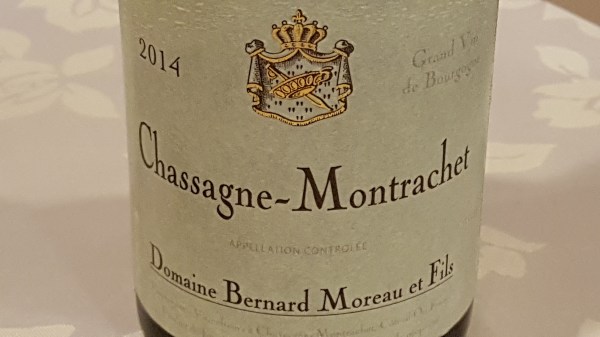
2014 Domaine Bernard Moreau et Fils Chassagne-Montrachet, popped and poured on 29 Mar 2018 at Famous Kitchen. Shy at first, revealing only restrained notes of cool icing and vanilla. Took an hour to blossom with floral notes complemented by delicate chalky tones amidst traces of white pepper, excellent in concentration and intensity, finishing with sharp precision. A gross over-achiever. Great buy.
 Ric's Wine Journal