2007 Peter Michael Ma Belle Fille & 1999 Chateau L’Evangile
These notes were taken from a customised dinner at Garibaldi on 20 July 2011, the final instalment of a series of serious dining that month. I’d deliberately kept the wines simple, just an exquisite chardonnay and a Bordeaux red that ought to be drinking well. We began with an identical pair of 2007 Peter Michael “Ma Belle Fille” chardonnay, purchased some time ago from Asia Pacific Fine Wines. 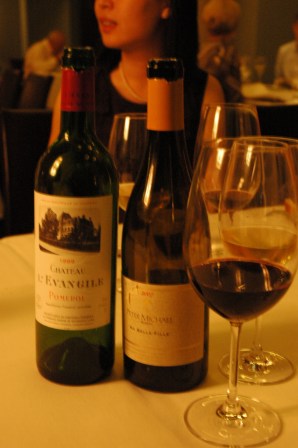 Light golden, opening with creamy floral notes, highly complex. The minerality was rather subdued on the palate, less flinty than expected for a young chardonnay, but notably heavier and deeper at the rear. With time, it became lighter in texture, opening up with layers of craggy minerality and a splash of tropical fruits, melons and pineapples, greater in intensity, superb in delineation, eventually developing a slightly opague sheen. However, as excellent as this was, I still don’t think you could mistake it for a Montrachet Grand Cru, which is infinitely more profound in depth and expression.
We followed with an identical pair of 1999 Ch L’Evangile, from a half-dozen that I’d brought in from Bordeaux Index, London. Rather deep in color still, with a very impressive bouquet of red and dark berries, well-extracted and suitably dense with a touch of soy and the inimitable glow of aged claret giving off notes of dry leaves, herbs and mushrooms. Not a great vintage, of course, but I always believe every wine has an optimum drinking plateau that’s capable of providing a good experience. This wine is a good example at this stage.
2004 Leeuwin Estate Art Series chardonnay, at Jade Palace, 2 July 2011. Popped and poured. A bit underwhelming initially. But after warming up to the right temperature with 60 minutes of airing, one appreciates the remarkable balance between the lavish flavours of peach, lime sorbet, melons, green citrus and the clean minerality that can stand up to any Puligny-Montrachet premier cru, perhaps just missing the last ounce of depth that only a true Burgundy can summon. Excellent.
2000 Les Pagodes de Cos, a bottle presented to me by PS some 5 years ago, then drunk with PS after work on 4 July 2011. Deep impenetrable red with an early hint of evolution towards the rim. Already quite impressive on the nose when it was initially decanted, but the real quality kicked in an hour later as the initial impression of forest-floor gave way to an abundance of dark fruits, sweet plums, cassis, anise and soy that emerged from the cool ripe fruit, weighty and bold, remarkably complex, so much so that, if served blind, you won’t even realise that you’re drinking “only a second wine”. Quite superb.
2001 Ch Sociando Mallet (courtesy Jessica) at Prive, 8 July 2011. Aired briefly in bottle. Deep ruby with some early signs of evolution. Soft at the edges, fleshy, plenty of blackcurrants, dark cherries, cedar, laced with bit of sweetness. But the most impressive thing about this wine is the bouquet, a gorgeous and complex blend of fruit and minerals amidst a powerful glow of earthy pungency – I could keep nosing it the whole day. If blinded, you may have thought it’s a First Growth under your nose. Excellent.
2006 Fontanafredda Barolo (courtesy of Ben), at Morton’s Steakhouse, Mandarin Oriental Hotel, 8 July 2011. Popped and poured. A lighter shade of red, with predominant notes of red cherries and raspberries, gaining weight very nicely after an hour, along with some spicy tannins. Not bad at all.
2007 Ch Les Carmes Haut-Brion, a half-bottle at Etoile, 5 July 2011. Surprisingly good. Deep vermilion, quite open with notes of dark cherries, chocolate, a dash of citrus laced with a tinge of sweetness and just a hint of the earthiness of Pessac-Leognan, the solid bed of well-extracted fruit gaining weight over time. Just lacking in charm and layering. 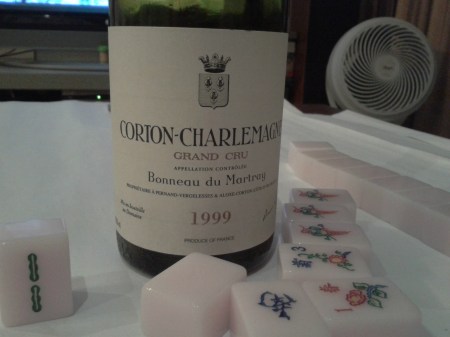 Nevertheless, a very good accompaniment to any meal.
1999 Bonneau du Martray Corton-Charlemagne Grand Cru, from a case imported from a London merchant by KP. The first bottle at Jade Palace on 18 July 2011 was distinctly corked (much to my embarrassment as I’d specially brought it along for PS’s benefit), the wine itself awkward in every way. KP was kind enough to open another bottle the next evening on the 19th, when we met for mahjong. I didn’t recognise it as a BdM initially, for KP had served it blind and it’d seemed to me more like a village white, the green citrus and understated minerality failing to make an impact, not helped by the opague accentuated finish. It opened up nicely after warming up in the glass, the honeyed melons and caramelised layer of fine minerality eventually appearing, gaining in complexity towards the finish but, somehow, it doesn’t quite possess the unmistakable stamp of BdM’s Corton-Charlemagne, missing in definition and delineation, somewhat unresolved.
2003 Ch Rieussec, a half-bottle at Jade Palace on 18 July 2011. Clear golden, lowish in acidity and laden with intense notes of nectar, apricot and vanilla, rather heavy with sweet incense at this stage of evolution, finishing with a bit of steeliness. Only SGD70, off the restaurant list.
2005 Ch Malartic-Lagraviere, 15 July 2011 at Bedrock Bar & Grill. Decanted on site and drunk over an hour. Compard to a previous tasting in 2008 when it had just been bottled, this wine seemed to have shed most of its vanilla coat, more open and rounded at the edges, soft with accessible notes of red cherries and raspberries tapering to a more concentrated, heavier finish dominated by glycerin. Probably needs another 3-5 years to sort itself out better, but it’s good value if you can find it for under SGD100.
2003 Ch Pouget (courtesy Jessica), 25 July 2011 at Jade Palace. Decanted on-site. I must admit I’ve not heard of this Margaux estate before, let alone taste it, but it’s absolutely lovely. Deep glowing red. 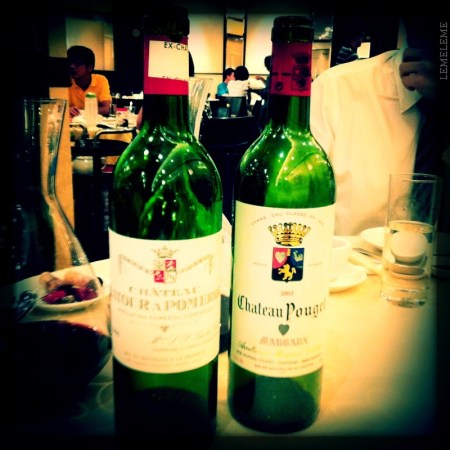 Bouquet of violets and blueberries with forward notes of fresh red fruits, soft and rounded, settling down quickly into a supple, highly homogenous wine of medium-bodied density and concentration, suitably feminine with imperceptible tannins. Quite excellent, really.
1988 Ch Latour-a-Pomerol, at Jade Palace, 25 July 2011. Decanted on-site. Reticent at the beginning and almost nondescript on the palate, but it opened up after 30 minutes with a fairly powerful glow of mature sweet berries that was replaced after some time by notes of tea-leaves, slightly dry, whilst gaining greater intensity, power and concentration, the tannins having receded completely. Perhaps not the last word in profundity nor complexity in spite of the age, consistent with most wines of this vintage, but at least it doesn’t harbor any such pretension. Excellent, considering I paid less than SGD150.
Chateau Margaux 1985 & 1999
PS and I hosted an exclusive private dinner at Au Petit Salut, helmed by the ever reliable Karl, on 22 June 2011 for some close friends, spouses included, to mark our respective career milestones. As PS would be bringing a 1985 Ch Margaux, I decided to match it with a 1999. Before all that, we began with a 1996 Henriot Cuvee Des Enchanteleunes (courtesy PS) that was very lovely with plenty of perfumed smoky fragrance, complex yet subtle in minerality, coupled with excellent presence and balance in the mid-body that’s typical of this outstanding vintage for Champagne. It was difficult to compartmentalise the wine, truly a case where the whole is greater than the sum of its parts. Superb.  The 2002 Domaine Louis Jadot Meursault les Charmes 1er Cru (courtesy Kieron) that followed was clear golden with a generous bouquet of apples, white roses and citrus laced with sweet tropical fruits, somewhat earthy with a mild musty pungency on the palate, supported by stony minerality. It developed greater depth over time, becoming more buttery, broadening and gaining weight, highly complex at the finish.
The 1999 Ch Margaux was very lovely, deep ruby in color with an earthy pungency punctuated by the floral fragrance of violets and roses, well replicated on the palate where blueberries and dark cedar dominate, perfectly balanced against the salty minerality, framed by tightly-knit tannins, finishing with a bit of burn. A wine of great finesse and elegance in spite of its concentration and depth. Compared to the 1999 Ch Palmer, also possessing similar traits with a tad more exuberance, the 1999 Ch Margaux is more understated in power, where less is, indeed, more. Superb.
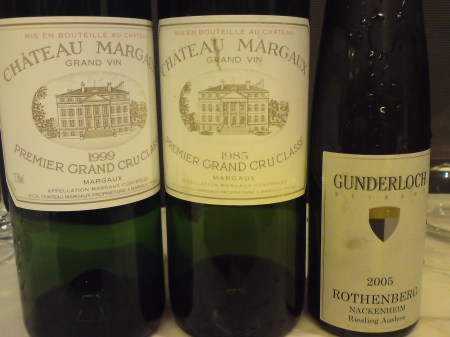 The 1985 Ch Margaux (courtesy PS), equally deep in color but a tad more evolved, exhibited a highly developed glow of blueberries and violets on the bouquet and palate that still retained wonderful ripeness and freshness even after a quarter of a century, underscored by a trace of sweetness. Very similar to the 1999 in style, but as a fully mature wine at its peak, I fancy it possessed more power and precision, fully developed and infinitely complex with a salty note of minerality in the mid-body. Perhaps not quite as complete a wine as the 1983, but it is the epitome of finesse, elegance and refinement. Outstanding.
We ended the evening with a 2005 Gunderloch NP Riesling Auslese Gold Kap (courtesy PS). Clear golden with a placid bouquet of apricot and nectar but concentrated with an explosion of colors of tropical fruits on the mid-palate, the subdued acidity allowing the lovely complexity to shine. A glorious end to a lovely evening.
Notes from America: 2002 Silver Oak, 2006 Dominus
I always make it a point to drink only American wines whenever I find myself in the States, such is the abundance of good wines made in the USA. My only gripe is that prices have risen over the past decade, and that the wine service in most American steakhouses, while efficient, lack refinement – don’t expect your wines to be automatically decanted, the pour level is way too high for each glass (but of course…so that the customer is obliged to open another bottle), the stemware highly variable. The following wines were all drunk off the restaurant list during a brief trip to San Diego, CA.
2007 Arrowhead Saralee’s vineyard viognier, at Blue Point restaurant, San Diego on 24 June 2011. Light golden. If I hadn’t been told, I’d have thought this to be a chardonnay, such was the expansive spread of stony, flinty minerality on the palate, rich with the floral fragrance of white flowers and tropical fruits, creamy and buttery, generously layered. The greener notes from the ripe viognier developed only much later, adding further depth to the wine. Quite superb.
2002 Silver Oak Alexander Valley cabernet sauvignon, USD120 (before taxes) from the list at Blue Point restaurant, San Diego on 24 June 2011. Popped and poured. Deep red with generous notes of violets and red berries, supported by a bed of darker fruits, promising a big wine. Instead, what came across was highly elegant and supple with early secondary nuances emerging from its depths without any tannic or alcoholic astringency, ending in a mild spicy finish. Excellent.
 2006 Dominus, at Chianti, San Diego, 25 June 2011. Priced almost at cost at USD175, the vintage listed was for the 2001. However, as the restaurant had run out of that, they offered us the 2006 with a 10% discount, which we gladly accepted. Popped and poured. Deep dark red, highly prodigious on the nose with red and dark berries as well as orange peel and kumquat along with a deeper note of soy, smoke and sweet incense, promising a great deal of complexity ahead. It certainly lived up to that on the palate, revealing excellent layering and depth, with a distinct sense of terroir seldom found in other run-of-the-mill Californian cabernet even at this primary stage of the wine. Excellent.
2009 Caymus Conundrum, at Truluck’s (supposedly the best restaurant in San Diego, but the stemware is woeful), 26 June 2011. Made from a blend of various white grapes that are not identified at all on the label. Languid dull golden. Generous bouquet of sweet fragrance, the underlying greenish note reminding one of the fresh morning dew dripping off white flowers, with notes of vanilla and sweet melons, rather grassy but undoubtedly attractive. Impressive as well on the palate, fairly broad and expansive with an illusion of fizz, tapering to a peculiar finish of tropical fruits with a mild pungency, reminding me of durians.  Made for easy drinking but much, much more substantial than your usual quaffer. Very good.
2008 Duckhorn merlot, at Truluck’s. Deep ruby red. Forward characters of red fruits coated with glycerin and vanilla, with a substantial degree of petroleum-like fullness in the mid-body. A bit four-square and straightforward but it’s drinking quite well. A good accompaniment to the outstanding centre-cut beef fillet.
Notes in brief (June 2011): 1990 Cos Labory, 1994 Cos D’Estournel, 2006 Sylvie Esmonin “Clos St-Jacques”…
2005 Ch La Tour Carnet, at Foo House on 02 June 2011. Popped and poured. Deep purple. Compared to a previous experience 3 years back, this is a lot more open, fleshy and less woody. Nevertheless, one can’t help but notice the relatively high level of extraction, bringing about more raisiny notes with echoes of licorice, the ripeness imparting greater warmth to the fruit, the absence of the typical Medoc toughness and greeness probably the result of the winemaker’s preference for longer fruit hang and extraction. Needs another 5 years to sort itself out, at least.
2005 Lacoste Borie, at Moomba. Decanted on site, and drunk over the next hour. Dark red, producing a high-tone minerality on the bouquet that gradually opened up to reveal more of blueberries, blackcurrants and a dash of red fruits, fleshing out over time, nicely integrated and elegant. Very good indeed. Only SGD42 from the recent Caveau sale.
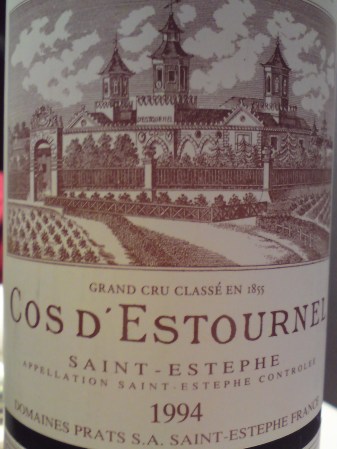 1994 Ch Cos D’Estournel, at Imperial Treasure T3 on 9 June 2011 with the wifey on the occasion of our anniversary. Opened on site and drunk over the next 90 minutes. Dark purple, impressing at once with the St Estephe terroir of gravel, heated stones and high toned-minerality coming through with arresting aromas of great fragrance, suggesting a wine of great breadth and depth. However, it didn’t quite turn out this way on the palate initially, being more reticent and less immediate with more than a hint of rusticity, but it developed very well over time with food, the well-extracted fruit gaining in concentration and intensity even if it didn’t quite plumb the depths nor achieve the sophistication of Cos in its best years. Nevertheless, this is still a very good traditional Cos, before it became too “international”.
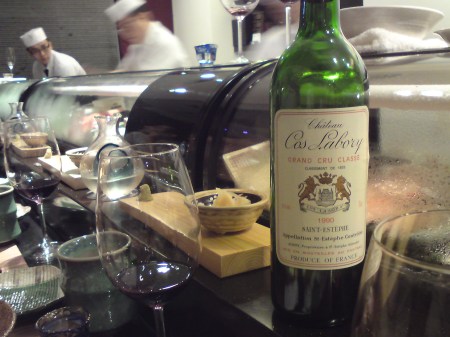 1990 Ch Cos Labory, at Hinoki on 15 June 2011. Aired in bottle for two hours. An evolved dull dusty red, producing a prominent glow of orange and dried preserved fruits on the nose, and other notes of aged Bordeaux that defies proper description. Medium-bodied, smooth, the fruit still relatively tightly-knit, holding on with good concentration, coated with velvety tannins. Not the last word in depth nor complexity. But at only SGD115, nobody is complaining.
2007 Mr Riggs Piebald shiraz-viognier, over a wagyu steak at Jaya Grocer, Empire Shopping Centre, Kuala Lumpur. Popped and poured. Very deep, impenetrable purple. Notes of warm ripe shiraz with other characters of raisins and blackcurrants, heavy in texture with some aromas of fortified spirits, the 5% viognier producing a mild floral lift. Fairly broad and even on the palate. Good stuff for fans of Aussie reds.
2006 Ch Corbin, a half-bottle at Prive on 17 June 2011. Ruby red. Significantly brighter in color and taste compared to the 2004 vintage, with primary notes of raspberries, red fruits, glycerin, vanilla and almonds. Not much depth, but decent.
2006 Sylvie Esmonin Gevrey-Chambertin 1er Cru “Clos St-Jacques” (courtesy LW), at Ben’s BBQ. Popped and drunk, much under suboptimal conditions in the sweltering heat of a balmy evening, 17 June 2011. Dull dusty red. The initial notes were totally off but after chilling it to a more appropriate temperature, it began opening up with the classic Chambertin flavours of red cherries and raspberries, layered with some saccharine, fairly substantial in the mid-body (some call it “fat”), moderate in length. I fancy this wine is capable of leaving a far better impression if properly aired in advance and drunk under optimal conditions. Will reserve judgement.
2007 Ch Les Carmes Haut Brion, my second half-bottle of this wine in as many months, from a half-dozen bought during the recent Caveau sale, but this was corked, unfortunately.
Singapore Airlines Business Class (June 2011)
As I had alluded to before, the best way to enjoy the trappings of Singapore Airlines’ Business Class travel is to fly on one of its long-range non-stop flights, typically between Singapore and New York or Los Angeles, especially on the Boeing 777ER or the Airbus A345. The wining and dining begins at the Silver Kris lounge at Changi Airport T3, where the current wine selection seems to have improved significantly:
2010 Yalumba Unwooded chardonnay. From the remaining half of an opened bottle. Pale. Lots of lime and citrusy flavours but somewhat hollow in body with inadequate fruit to match the crisp acidity, although it seemed better after some food, expanding more on the mid-palate.
2009 Penny’s Hill Cracking Black shiraz. From the last third of an opened bottle. A big wine, deep red with notes of dark cherries, ripe red apples, anise and vanilla laced with a tinge of sweetness at the edge without the usual licorice nor medicinal aromas, generous in body giving the impression of decent depth, peppery and spicy at the finish. Managed to appear more sophisticated than it is. A very well-crafted McLaren Vale shiraz.
2008 Rubio San Polo Montalcino. From the last third of an opened bottle. Deep red, highly attractive on the nose with generous notes of red and dark berries, possessing that easy balance and elegance on the palate that’s unmistakably Old World as opposed to the sculpted New World of Penny’s Hill. Tend to fade a little at the finish but it’s a very good table wine. I’ll happily drink these two reds with every meal.
On board SQ38 to LAX, I sampled the entire range on offer:
Champagne Bollinger Special Cuvée NV. Attractive complex glow of toasty oak, complemented by peat, almonds and echoes of apricot and mandarin orange. Highly attractive on the nose, although it felt somewhat superficial on the palate – too straightforward. One would have expected more depth and development.
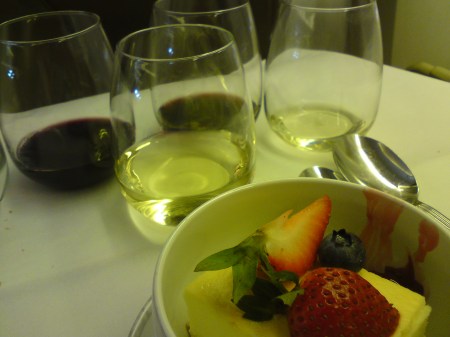 2008 Cuvaison chardonnay, Napa Valley Carneros. Surprisingly good! Medium-toned crystalline minerality. More creamy and buttery on the palate than suggested from its bouquet. Generously concentrated.
2008 Dr Loosen Riesling Kabinett, a perennial feature on board SQ Business Class, and it’s not difficult to understand why. Luminous pale. Rather vague bouquet. There’s plenty of fruit but it eludes characterization, something of a mix of yellow melons, a hint of honey, some tropical fruits. Medium-bodied with appreciable sweetness. Better defined on the palate where pineapples dominate, with a touch of bitter citrus and understated acidity, becoming highly perfumed later. Some people tend to be snooty about the ubiquitous Dr Loosen, but it held up well to scrutiny.
2007 Château Paloumey. I had my doubts about this initially, but the actual tasting blew me away, showing just how much negative bias may be created just by knowing the identity of the wine. Dark red with lifted aromas of dark fruits, graphite, preserved dates and traces of vanilla, a case where the slight oakiness contributes to the wine, rather than detract from it. Medium-full with excellent mouthfeel and concentration, dominated by brighter, fresher flavours rather than the dour greenness one normally associates with Haut-Medoc wines. I enjoyed it.
2007 Tenuta al Castiglioni. This Toscana is rather fruit-forward and considerably lighter in texture than the preceding Bordeaux. A tad simple and lacking in depth.
How about the wines at the Star Alliance lounge at Tom Bradley International Terminal at LAX? Of course, it isn’t exactly a 100% SIA lounge, and it shows – decidedly cheap-looking. The 2009 Estancia chardonnay from Monterey County, supposedly one of the best-value whites in this month’s Wine Spectator magazine, was decent – substantial notes of chalky minerality with the usual butter and cream, more intense on the palate than nose. The 2009 Rutherford Vintners chardonnay from Napa was less chalky, more of green melons laced with a fair level of sweetness. The 2009 Silver Ridge cabernet sauvignon was far too simple, just a touch of earth without any structure. The 2009 Laurier cabernet sauvignon from Alexander Valley was much better, stuffed with chewy red fruits and licorice, fairly linear right to its finish.
Haut-Brion: 1999, ’98, ’95, ’88 & 1986
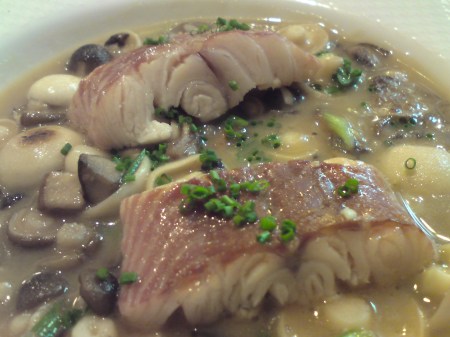 The self-proclaimed group of elitist diners – better known as Bacchus – met only for the second time this year at Les Amis on 7 June 2011 (sans Danny who was away) to give Kieron a proper send-off before he leaves for sabbatical. As per our usual arrangements, being on first -name basis with the right people at the restaurant, we dined very comfortably in its private room adjacent to the kitchen (the very same room that still held memories of that wonderful lunch 3 years ago with the Directors of Bordeaux Index London – ’85 Cos & ’96 GPL, if you really must know), with a menu of customised items not to be found in the restaurant’s usual menu to match the Haut-Brion vertical that was about to unfold.
As usual, we had a white to start things off, a 1994 Domaine Leflaive Batard-Montrachet Grand Cru (courtesy Kieron). Pale, with a bouquet of stern stony minerality, peaches and a hint of apricot, somewhat light and tentative on the palate. 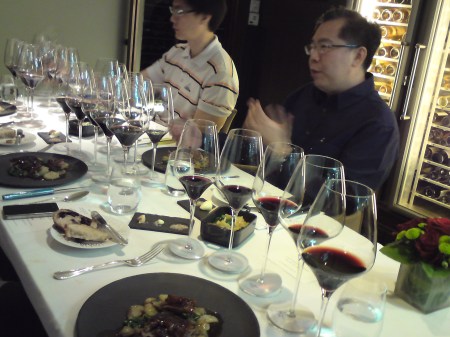 It became more weighty with time, developing a caramelly sheen, substantially richer with more fat in the middle but still lacking the intensity, depth and concentration of Leflaive in the best years.
We drank the Haut-Brion in two flights. The first began with a 1999 Ch Haut-Brion (courtesy Vic) which excelled on the nose, where the deep purple wine gave off lovely notes of red fruits, raspberries and blueberries and a hint of medicinal aromas. However, the medium-bodied wine was clearly missing in layering and charm, even though it gained in intensity over time. Still, one can appreciate that this is a very fine wine, but the lack of dimension renders it rather four-square in character. This was tellingly shown up by the 1998 Ch Haut-Brion (courtesy Hiok), a vintage that favoured Graves. Although its bouquet was less exuberant, the 1998 was significantly richer and deeper, glowing with deep layers of intense fruit that has yet to evolve, the wine becoming more accentuated and weighty with time, framed by structured supple tannins indicating that the wine is still far from maturity. Don’t touch any of this, not for even 10 years. 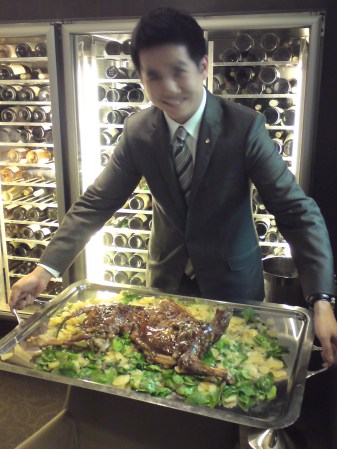 The 1995 Ch Haut-Brion (courtesy Kieron), a deep impenetrable red with some bricking at the rim, had, by far, the most developed nose of the night, the classic signature kumquat of this estate combined with some cinnamon and orange peel in a powerful complex. Medium-full with great concentration, quite velvety and sexy, full on the finish, mellowing beautifully over the course of dinner. Superb.
The 1988 Ch Haut-Brion (courtesy LF), on this occasion, was a lot more substantial and livelier than I remembered from a previous tasting at Iggy’s in December 2007. Bright cherry red, very lively on the nose with a forward impression of red fruits, more mellow with less intensity on the palate than promised from the bouquet, becoming appreciably richer over time, developing more layers of smoky sweet incense. Excellent. And, finally, the 1986 Ch Haut-Brion, probably the third time I’ve had this over the past 8 years but it is always such a pleasure to re-visit this wine. Still holding up very well and remarkably similar to the previous tasting in August 2006. Deep ruby with effusive earthy pungency. One appreciates that it has mellowed somewhat over the past 25 years, but this wine is still rather full-bodied, possessing great layering and concentration, slightly backward (typically of 1986s), topped by sexy lithe tannins dancing across the palate, immeasurably complex with a liquered note at the finish. Still unbelievably youthful. At current prices of about SGD600+, it may still be considered a relative bargain. Outstanding, but only one other bottle remaining in my cellar.
As this dinner goes to show, there’s no such thing as a bad or poor Haut Brion. For long, it has remained the bargain basement of the First Growths, but from the recent pricing trend, I fear no longer so. Better snap up the real bargains while they last. Oh…and lest I forget, in true Bacchus fashion, we ended dinner with a 2000 Disznoko Tokaji Aszu 6 Puttonyos, a bottle specially meant for Kieron with the compliments of Les Amis!! So you see, it really pays to dine with the right people. Clear golden with rich intoxicating flavours of peaches, apricot and honey, possessing excellent depth supported by superb acidity, a hedonistic pleasure for the olfactory senses for all time, bringing dinner to a truly outstanding conclusion.
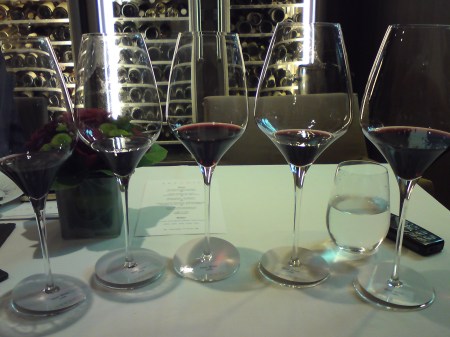
1982 Ch Clerc-Milon
Elegance isn’t something normally associated with Ch Clerc-Milon, being usually more stern and vegetal, requiring years to turn the corner. On this occasion, however, the 1982  (decanted with delicate care on site at Bedrock Bar & Grill and drunk over a long lunch on 11 June 2011 with the wifey celebrating our anniversary), still displaying a deep purple in spite of all its 29 years, is obviously fully matured, the wood and tannins having dissipated totally. Typically for this estate, the bouquet is somewhat underwhelming, but the purity of fruit is quite excellent, the wine medium-bodied, glowing with decent acidity and depth, though lacking in layering of the best ’82s, completely seamless and linear and fairly lengthy. Thoroughly enjoyable with the excellent sirloin steak. Only SGD168 from French Wine Cellars.
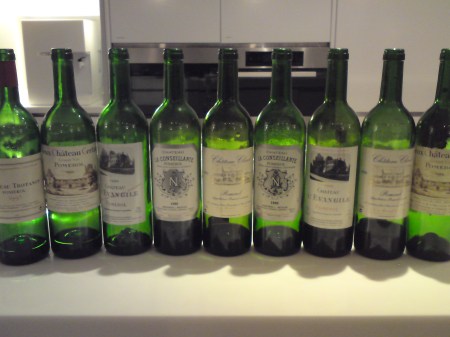
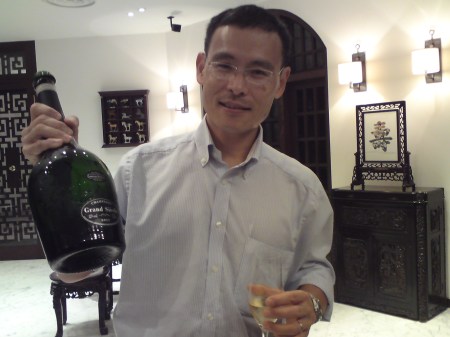 I found this mega tasting-cum-dinner at Lien Villa on 12 April 2011 – consisting of wines entirely from Pomerol – difficult to write. Perhaps it’s because of their nature, being so varied and unpredictable without any firm distinguishing feature, that made it difficult to pin them down. For sure dinner was a great success – how can it not be at this most outstanding of private dining venues (see Sept 2010), with dinner prepared on-site by the kitchen staff of Saint Pierre, helmed by its general manager and sommelier Gabriel Danis. A theme of 1995 and 1998 Pomerol, restricted to the top estates, had been declared in advance but as usual, there were a couple of variations here and there. We left Gabriel to blind the wines and serve them in flights of three in accordance to his own preference. We unveiled the wines after each flight. Needless to say, I got them all wrong and so, instead of leading readers blindly, I’ll just list all the wines in the order drunk.
A magnum of Champagne Laurent-Perrier Grand Siecle NV (courtesy of Chris) preceded the first flight – light clear golden with attractive aromas of toasty walnut set against the lively citrus at the rear. Not much depth but it is really smooth with excellent balance and concentration. 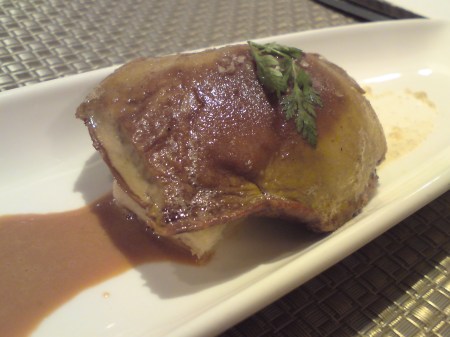 We opened the actual tasting with a 1995 Château Trotanoy (courtesy of Chris). Dull purple; rather dense and sharp on the nose. More open on the palate with predominant red fruits producing some accentuation in the mid-body, soft at the edges, minty, long with lovely balance and layering, though it doesn’t plumb the depths. The 1990 Vieux Château Certan (courtesy of David) was distinctly more evolved in color and character, almost burgundian with notes of orange peel, cinnamon and red fruits, wonderfully ripe with great purity and some sweetness trailing at the edges. Mellow and very harmonious, finishing with moderate length. Very classic. Superb. In contrast, the 1995 Château L’Evangile (courtesy of Ed) was absolutely deceiving – very dark at the core with plenty of vanilla, glycerin and concentration of ripe fruit in the mid-body that gave no hint of its 16 years, finishing long. Yet to unfurl its glories, but the potential is great.
The second flight of wines were appreciably more forward in character. The 1998 Château La Conseillante (courtesy of Hiok) was big, bold and slightly medicinal, still dense and primal even after all these years, well structured and framed by velvety supple tannins but decidedly short, rather atypical for this much-admired estate. The 1995 Château Clinet (courtesy of Kieron) that followed, showing a beautiful clear red, was similarly tight and sappy in spite of the abundance of red and black berries, clearly possessing huge potential yet to be unleashed but already highly elegant at this stage. 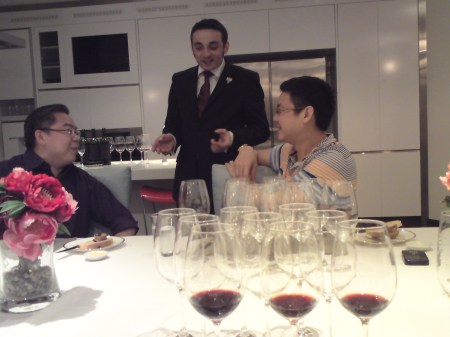 The 1995 Château La Conseillante (courtesy of KP) still retained a dark red core, giving off earthy barnyard aromas. Steely on the palate with good concentration, somewhat vegetal, developing more forward fruit characters with time but I wished it had more development.
We began the final flight with a 1998 Château L’Evangile (courtesy of Vic) that promised to be a big wine from its deep dark appearance, and it certainly was. Dense, almost jammy, loaded with glycerin and vanilla even after all these years, behaving as if it was a current release. Lush, rich, voluptuous but short and still unevolved. The 1998 Château Clinet was similarly big, dense and jammy with prune-like characters and graphite minerals. An intense effort, but the wine seemed to fall off the cliff at the finish. Worthy of anchoring the entire evening’s line-up, however, was the 1986 Vieux Château Certan (courtesy of PS). Still dark red in color, but it is obviously fully mature on the palate, soft with a lovely balance of red fruits and sweet raspberries, still remarkably fresh and lively. A superb end to a delectable evening of excesses. My sincere thanks to everyone for their generosity, not least the Lien estate.
 2007 Egon Muller Scharzhofberger Riesling Kabinett, a half-bottle over dinner at Ming Kee. Pale lime in color, with characters of citrus, lime, melons and trailing notes of tropical fruits with moderate sweetness, supported by flinty minerality that became broader and firmer over time, eventually developing a lasting bitter-sweet finish. Very good.
1998 Domaine de Chevalier, over dinner at Imperial Treasure ION, 2 May 2011. Popped and poured, showing a dull dark purple core. A whiff of earthy barnyard aromas greeted the nose initially before it settled down, giving off a minerally sheen. Seemingly hollow at first, but it rapidly gained weight over time and with food, fleshing out into a rounded body of smooth blueberries and dark berries with cedar and sweet mulberry appearing, displaying good depth and concentration, supported by firm but pliant tannins, classic in poise and structure, ending in a moderate finish. It may not quite possess the lush opulence of the great vintages, but Domaine de Chevalier always remains true to the terroir of each vintage without resorting to any gimmickry manipulation. This is drinking well now, and will hold for several more years.
 2000 Ch Branaire Duluc-Ducru, private dining at Au Petit Salut on 3 May 2011. Aired in bottle for 20-30 minutes, drunk over the next 90 minutes. Deep garnet core. An evolved bouquet of predominantly dark berries with some red fruits without the graphite tone. Medium-full. Rather atypical for a Saint-Julien, missing much of the usual ferrous minerality, being much more generous with rich ripe fruit, fleshy and rounded, already displaying some secondary nuances characterised by a heavier vein of licorice, plum, orangey citrus and cinnamon, not quite seamless as yet, eventually developing a mildly tannic and stern finish over time. A wine still early in its development, and probably will only hit its drinking window 10 years down the road. My key impression was that this is a “heavy” wine, compared to, say, Gruaud-Larose of the same vintage, which is much more open and layered. My only bottle.
2000 Ch La Dominique, at Etoile on 6 May 2011. Popped and poured. Dark red with a fair tinge of brown. Quite a powerful bouquet of ripe warm fruit, rather heavy with notes of licorice, soy, plum and kumquat, fully replicated on the palate with density and richness without the outright lushness and opulence of Monbousquet from the same vintage. It’s big, but well-proportioned. Already well integrated and developing secondary nuances, but clearly still far from full maturity, which will probably require another 15-20 years. Obviously not your traditional Saint-Emilion, but still able to distinguish itself from New World cabernet. I enjoyed it.
2004 Il Poggione Brunello di Montalcino, at Imperial Treasure T3 on 11 May 2011. Popped and poured. Bright clear ruby red. Predominantly of red fruits, brandied cherries and a hint of plum, no doubt from the sangiovese. Medium-bodied, fairly soft and accessible. 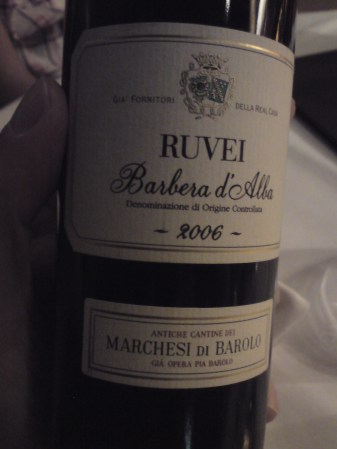 Compared to a previous tasting some nine months ago, I thought this contained a slightly heavier alcoholic trace. Perhaps best to let my two remaining bottles rest another 2-3 years.
2006 Marchesi di Barolo Barbera d’Alba Ruvei, a half-bottle (SGD60++) bought off the restaurant list of La Strada on Mother’s Day. A Piedmont red, deep in color. Fairly intense intially, with rich ripe flavours underpinned by a firm alcoholic bed. After 45 minutes, and with food, it became fairly broad with more red fruits and currants to the fore, quite fresh and inviting, the nebbiolo giving off some plummy character with decent body and depth, slightly sweet and spicy. Does its job well.
2005 La Fleur de Bouard (courtesy of LW), at Etoile on 18 May 2011. Popped and poured. Deep purple. Violets and ripe dark berries, slightly raisiny on the nose. Medium-bodied with very good concentration and a rather peculiar earthy finish of dry dusty tannins. Enjoyable.
2006 Penfolds Koonunga Hill Shiraz-Cabernet, popped and poured at a happy hour event on 19 May 2011. Surprisingly open and highly approachable, fairly soft, rounded and fleshy, displaying excellent concentration of fruit at just the right level of extraction. Possesses a very natural feel. I’d previously said (in 2009, when I first tasted this wine during a Penfolds dinner at Saint-Pierre) that this would turn out to be a truly great QPR. It’d certainly lived up to its promise.
 2003 Cullen Diana Madeline, popped and poured at a happy hour event on 19 May 2011. Deep purple. Again much more open than a previous bottle tasted six months ago. Fleshy with excellent concentration, displaying a true cabernet quality with appropriate dryness as well as some leafy, tobacco character. Very attractive.
2004 Oliver’s Taranga HJ reserve shiraz, a highly-rated wine (Winestate Magazine’s Wine Of The Year) from McLaren Vale, popped and poured at a happy hour event on 19 May 2011. Deep impenetrable purple. Immediately bolder in style, lush with blueberries, blackberries and raisins supported by a mild plummy lift. Smooth, structured and sophisticated without any alcoholic trace. Has finally turned the corner, compared to a previous tasting some two years ago. Excellent.
2004 Ch Leoville Poyferre, at Saint-Pierre on 20 May 2011. Popped and poured. Clear bright red. Quite open in body and highly accessible with notes of red fruits, blueberries and a hint of bitter chocolate. Medium-bodied and fleshy. Developed a rather stern, somewhat bitter and metallic finish after an hour, and with food. On the whole, it’s drinking quite well but it’s perhaps better to allow it another few more years to come round.
2005 Les Hauts de Smith, my last bottle, a Imperial Treasure T3 on 25 May 2011. Popped and poured, deep purple in color. Very lovely on the nose, rather complex with violets, ripe blueberries amidst earthy minerally notes, slightly sweet. Disappointing on the palate, however. I’d expected it to be quite open, but here it’s rather stiff and dense, sharp on the mid-palate without much disernible layering, leaving a trail unresolved alcohol. Certainly not what I knew this wine was capable of.
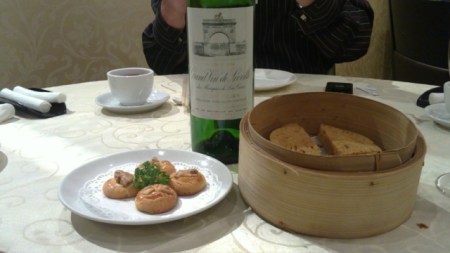 1994 Ch Leoville Las-Cases, at Jade Palace on 28 May 2011 with the family. Double-decanted for 2 hours prior. Deep red. Unmistakably Saint-Julien on the nose with plenty of stern minerality and graphite. Although the vintage was less than favourable, the fruit is far from drying out, still rather concentrated and sharp in the mid-body but lacking in charm and layering, somewhat one-dimensional and austere, ending in a dry finish that’s quite appropriate for this estate’s terroir. Certainly quite different from a previous bottle opened at Kome two years ago, which was more open, engaging and evolved. Will it improve? I don’t think I’m in any hurry to pop my remaining 3 bottles.
2007 Ch Les Carmes Haut-Brion, a half bottle after work on 30 May 2011. Dark purple. Surprisingly weighty (in spite of the poor growing season) with blueberries and blackcurrants, laced with a tinge of sweetness and afterglow of fresh vanilla and reasonably ripe fruit. Soft and medium-bodied without any jarring edges, ending with reasonable length but clearly lacking in richness and density. Meant for early drinking.
2000 Ch Calon Segur, courtesy of Vic at his new condo on 31 May 2011. Decanted for over an hour and served blind. Fairly deep purple with a slightly lighter rim. Rather shy initially; you really have to stick your nose right inside the glass to appreciate the cool ripe fruit, wonderfully fresh on the palate, medium to full-bodied, grippy, rounded and very harmonious. Doesn’t possess the dryness of Pauillac nor the sterness of St-Julien nor the earthy aromas of Graves nor the clayey tone of St-Estephe, which led me to think it was likely to be a classified Margaux, being a tad feminine although I wouldn’t go as far to say that it’s perfumed. Looks like history is repeating itself, for this was exactly what I fell into when I mistook the 1990 Montrose for a 1990 Margaux (see April posts). Excellent.

