Marea & Picholine, New York.
The Michelin-star dining continued the next day 03 April 2012 right after that superb dinner at Per Se. After having spent the morning re-acquainting myself with the Metropolitan Museum’s wonderful collection of the Impressionists, I walked down Fifth Ave around the perimeter of Central Park to Marea, a chic and elegant 2 Michelin-star establishment to meet Kieron and some of the usual suspects who had, coincidentally, flown in from Singapore. 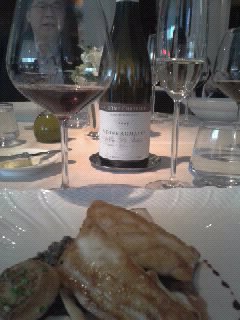 We had two wines over a 2-course lunch, starting with a Ruinart Blanc de Blancs NV that exuded crisp citrus, smoky with plenty of almond and other nutty overtones that resonated well on the palate, weighty but surprisingly open and mellow with none of the acerbic dryness. A good choice.
YS had his eye on a 2007 Jerome Chezeaux Vosne-Romanee “Les Suchots” 1er Cru, which was aired in bottle. This wine displayed a beautiful clear ruby, just a shade heavier than usual that corresponded to the powerful glow of red fruits and cherries, a big and weighty pinot that’s still tight. It opened up rapidly, becoming less dense in the mid-body with greater transparency that revealed a deep vein of surprisingly ripe and rich fuit, carrying the weight of a Vosne-Romanee. Honest and unassuming. Still primal, but it is certainly approachable if given time. Very fine.
Less than four hours later, I took a walk down Broadway Ave to West 64th St to meet Kieron again for dinner at Picholine, a charming one-star establishment with a mixture of modern and traditional European decor, the kind that serves traditional Italian fare with a modern makeover. As the list of wines-by-the glass and half bottles was rather modest, we decided to go “local”, the only choice of white by-the-glass that seemed decent was the 2008 Heitz Chardonnay, which was a bit of a disappointment, the wine dominated by stony minerality that obscured the fruit significantly, assertive and steely towards the finish without much of the aromas one expects of chardonnay.  For the red, we picked what was thought to be a gem, the 2009 Bergstrom Cumberland Reserve, a half bottle priced at USD58. This Oregon pinot was promising, displaying lifted aromas of bright red fruits and ripe cherries with a mild sheen of glycerin, carrying decent concentration and weight though somewhat simple and straightforward on the whole without the sense of terroir, lacking in true complexity although one may forgive those shortcomings in view of its youth. A satisfying start to a night at the Metropolitan Opera across the road (Anna Netrebko in the title role of Massenet’s Manon).
Comparing these two restaurants, I’d say Marea has the distinct edge – modern, fuss-free, staff who know the preferences of their regular clients inside out, food that is well-thought out and executed, whereas Picholine seems a little tired looking. It’s still very good, of course, but the dining experience didn’t seem special, and the wine list could do with greater breadth
Per Se, New York.
 As part of my grand plan to end my week-long holiday in New York City with a bang, Kieron had arranged for me to amass dining experiences worth 10 Michelin stars over 48 hours, beginning with dinner at the 3 Michelin-star Per Se at Time Warner Center on 02 April 2012. But as we had the whole evening to ourselves, we began first with a half bottle of 2009 Domaine de Montille Beaune 1er Cru Les Sizies at the bar of A Voce, itself a stylish modern one Michelin-star establishment within the same building, already filled with the chic and the elegant in spite of it being a Monday evening. Popped and poured, the wine noticeably darker and heavier for a pinot, rather intoxicating at the first pour with notes of raspberries, blackcurrants and blueberries, somewhat dense and tight in the mid-body, and short. It opened up after some time with further coaxing, unwinding into a wine of substantial fullness and minerality that extended into the finish, nicely rounded at the edges without any sign of greeness often associated with Beaune although a hint of rusticity remained. Very nice on its own, though perhaps lacking in distinctive terroir. A promising start to the evening ahead.
Having polished that off, we went up a couple of floors to Per Se, a spacious restaurant luxuriously anointed in thick carpeting and wood paneling with soft lighting bouncing off its high ceiling, offering a lovely view of Columbus Circle and Central Park South. Whilst perusing through the menu and e-wine list, which came in the form of an iPad, we began with a glass of Jose Dhondt Brut Blanc de Blancs NV, perhaps slightly drier and less overtly complex than the R Dumont Solera Reserve Brut NV I had a few nights prior at 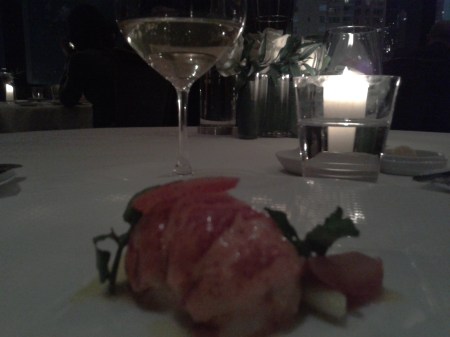 The Lincoln Ristorante, but it was still quite lovely and open with lively citrus and understated minerality, with traces of toast and other nutty flavors, weightier towards the finish but well-balanced.
Naturally, one doesn’t expect the wine list to come cheap, but the selection of half-bottles was decent in breadth and pricing, although the majority comprised recent vintages 2007-2009. After careful consideration, we picked a couple of gems: a 2007 Jean-Marc Morey Chassagne-Montrachet “La Bergerie” 1er Cru and a 2004 Roagna “Paje”, each half-bottle around the USD100 price point. The white offered notes of vanilla and fresh citrus, enhanced by some crystalline minerality, well-balanced on the palate although I felt it was underwhelming on the whole. But after we’d made it past the starting courses of oysters, caviar and lobster, the wine suddenly seemed to recover with a broad expanse of creme de la creme, gaining substantial weight and depth with a hint of caramel and complexity creeping in towards the finish that belies the so-called weak vintage. 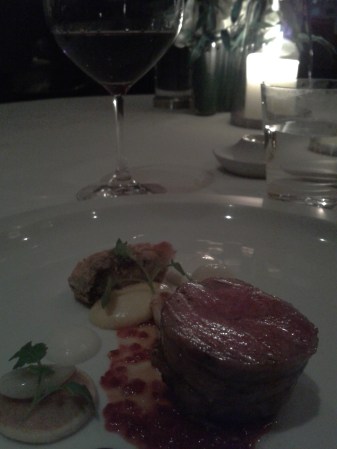 I suppose it goes to show that there’s always an optimal drinking window for any wine, and I think this burgundy is approaching that soon.
The Babaresco proved to be a most astute choice, pretty stunning in power, weight and depth, offering a lovely blend of red fruits and darker berries in the background, fleshy and rounded, obviously benefiting from the outstanding vintage and significant bottle age, gelling together over time, developing deeper layers of glorious ripe fruit with a fair degree of complexity amidst an emerging earthy tone. Excellent. This is an estate to watch out for and stock up.
And what about the food so far? In spite of the privilege of having dined at many top restaurants around the world, I don’t think I have, until this very evening, encountered one where the lengthy chef’s menu is presented in such a logical manner, where not only are the flavours of each course remarkably balanced, they merged so effortlessly and seamlessly as one progressed from course to course, our fresh palates at the end of dinner a testimony to the culinary perfection, so much so that we felt compeled to finish dinner with a 2005 Heymann-Lowenstein “Uhlen Roth Lay” Erste Lage Auslese Gold Kapsule. At USD120, this superb riesling possessed an intensity and concentration of nectar, tangerine citrus, apricot and tropical exotica that were seamlessly blended and layered within the complex minerality. Powerful yet subtle, wonderfully balanced where the whole far exceeds the sum of its parts, where exactly the same may be said of the entire menu, outstanding in every way.
The entire dinner was just a shade above USD500 per head. That’s a lot of money, no doubt. However, I’m reminded that the same amount only bought me a set lunch and a half-bottle at the one-star La Tour d’Argent in Paris three years ago (see post in July 2009), whereas here one gets the full three-star works with plenty of wine, helmed by sterling service without the stuffiness. Certainly, no restaurant in Singapore can yet match up. 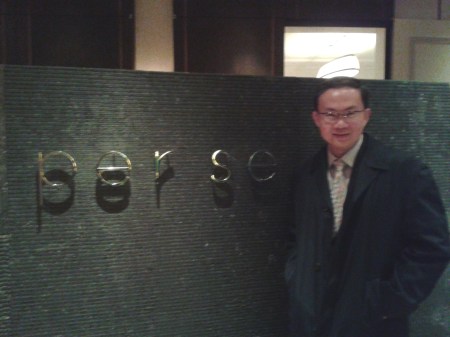 Hence, if one looks at it this way, it’s no surprise, really, that New York is ranked a lowly #47 on the 2012 Economist International Unit’s “World’s Most Expensive Cities”, compared to #9 for Singapore and #6 for Paris. This is truly prime dining in New York at a distinct bargain. I cannot recommend it highly enough, provided you can get a seating. Is there any restaurant to match it? Watch out for my post on Eleven Madison Park.
From the New World
These are just some random tasting notes when I visited New York and Boston last week…
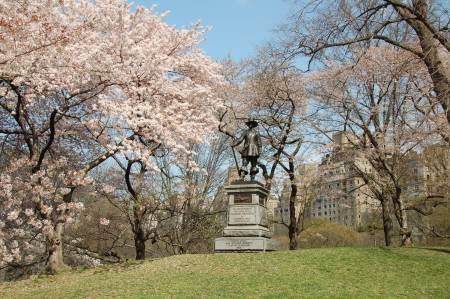 2008 Domaine Serene Yamhill Williamette Pinot Noir, off the restaurant list (courtesy Kieron) of the Loeb Boathouse within Central Park, 28 March 2012. Popped and poured. Darker and heavier than usual for pinot, as expected from this Oregon source, dominated by notes of raspberry and red cherries, powerful and a touch too assertive and sharp without settling down, way too straightforward, not developing any further. Needs more bottle time, probably.
2010 Cobblestone, a chardonnay from Monterey County, at Carnegie Hall, 28 March 2012. Flinty with a fair bit of green notes, slightly steely at the finish with a touch of smoke, unable to hide the fact that it’s a straightforward wine.
2006 Robert Mondavi cabernet sauvignon, a half bottle at USD32 off the restaurant list of the world famous Peter Luger Steakhouse in Brooklyn, 29 March 2012. It’s basically nothing more than an old-styled German beer hall with wooden tables and chairs. Yes, the steak is truly excellent, as is the gigantic steamed broccoli, but I suspect what prevented it from getting more than one Michelin star is the curt and perfunctory service from career waiters, the miserable stemware, the brash American way of wine service, and the presence of salt and pepper dispensers on each table. Fine dining it certainly isn’t and oh…bring plenty of cash because plastic ain’t accepted at all. How about the wine? Surprisingly, it turned out to be quite excellent. Deep in color with attractive notes of red and black currants, cedar, violets, fleshy and medium-full, framed by supple tannins with eventual notes of dark chocolate appearing. A great accompaniment to my only meal for the day. Highly satisfying.
Louis Roderer Premier Brut NV, ridiculously expensive at USD19 and served in a plastic flute (which I deem as an unacceptable practice) at the Metropolitan Opera, 29 March 2012. At this price, you’d expect it to perform, but it was one-dimensional with an overload of lime and cutting citrus, far too dry for my taste, lacking in depth and character. Disappointing.
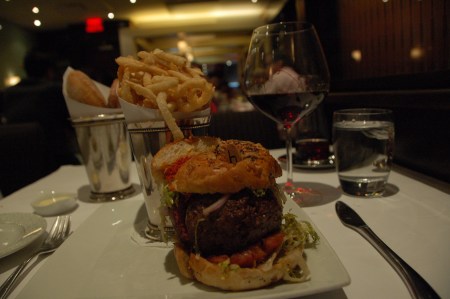 2007 Mongeard-Mugneret Vosne-Romanee, a 250ml carafe at db Bistro Moderne, 30 March 2012. Rose-scented, highly fragrant with notes of red cherries and ripe strawberries, very good concentration without the heaviness, slightly salty in the middle. Lovely balance. Drinking well, a wine that defies the negativity surrounding this vintage. Perfect lunch accompaniment with the db Original Classic burger, which tastes a lot better (fresher and juicier) than its reincarnation in Singapore.
Robert Dumont Solera Reserve Brut NV, 30 March 2012, at The Lincoln Ristorante, a classy new establishment at Lincoln Center. Pricey at USD24 a glass, but it’s worth every dime. Made in a solera fashion comprising 20 vintages, this champagne has great body and depth, wonderfully complex, yet open and transparent, capturing one’s attention with its complex citrus, pomelo, toast and a dash of smoke supported by fine crystalline minerality, tapering to a tangy gripping finish that lasts and lasts. A most astute recommendation by the sommelier, Bryan Burnett.
1999 Roagna la Rocca e la Pira, a half bottle at USD100 at The Lincoln Ristorante, 30 March 2012. Decanted on site, displaying a rose-tinted red. This single vineyard Barolo from Piedmonte is already incredibly complex at the first pour, rose-scented with an utterly seamless blend of red fruits, dash of plum, earth, leather and cinnamon, medium-bodied with lovely depth, concentration and purity of fruit, ensuring superb definition with just a slight spicy accentuation at the close. Very very lovely. The perfect prelude to an evening with the New York Philharmonic.
2010 Canyon Road cabernet sauvignon, as an aperitif at Union Oyster House, Boston, 01 April 2012. Dominated by undergrowth and other green notes amidst musty tannins. Forgettable.
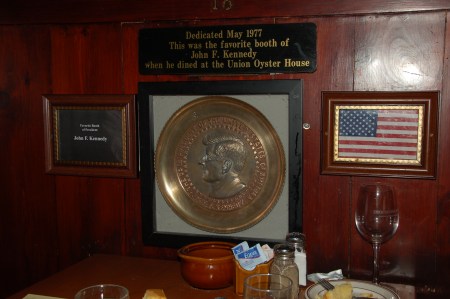 2011 Whitehaven sauvignon blanc, over fresh oysters, scallops and pan-seared haddock whilst seated at President John F Kennedy’s favorite booth at Union Oyster House, 01 April 2012. As expected, quite an abundance of limey citrus and stony minerality laced with cutting acidity, fresh and vibrant, taking on a creamy coat after some time, tapering towards an austere finish. Most reasonable at USD34 off the wine list. Good stuff.
The above is, by no means, a complete representation of my time in the Big Apple…watch out for my experiences at Per Se, Picholine, Marea and Eleven Madison Park, all within a space of less than 48 hours.
1988 Chasse-Spleen, courtesy of KP at a chance meeting at Jade Palace, 2 March 2012. Beautiful evolved red, still reasonably deep in color. Most attractive bouquet of a beautifully aged mature claret, glowing with notes of dried leaves, mushrooms, tobacco, dark chocolate, toffee and ash, with just the right level of dryness on the palate, yet retaining excellent body and acidity, the tannins, of course, having melted away totally. Excellent.
2005 La Tour Carnet, a bottle kept in my office for the past 2-3 years, over a lovely meal of braised short ribs at Otto, 7 March 2012. Popped and poured. Dense ruby in color, exuding enticing aromas of sweet blueberries, raspberries and blackcurrants that were well replicated on the palate. Soft and accessible with chewy, unobtrusive tannins without any trace of wood nor its tell-tale vanilla. Compared to two previous tastings, first in 2008 shortly after its release where it was extremely woody and another last year where it was still a bit shut, it seemed to have emerged from its shell. Excellent.
2004 Domaine Faiveley Chambertin Clos de Beze Grand Cru, over lunch at La Barca, 9 March 2012. Decanted on site. Somewhat restrained on the nose, offering moderate notes of raspberries, blueberries, kirsch, redcurrants, mild salty minerality, earth and a dash of smoke, all nicely balanced, but the the parts somehow doesn’t quite add up to the sum. Having paid good money for a first division grand cru, one would have expected more power, stuffing, lushness and opulence, but I find that the wines of Faiveley seem consistently reluctant compared to real top-flight producers like Armand Rousseau. Disappointing. Better drink-up, if you’ve got any.
2010 Joseph Drouhin Cotes de Nuits village, just a 250 ml carafe from the restaurant list over a nice dinner of beef cheek at Bistro du Vin, 10 March 2010. Don’t expect too much, even though it hails from 2010 – rather lightweight with the usual predictable red fruits and a dash of tangerine citrus, neither remarkable in body nor depth. A wasted effort.
2002 Penfolds Bin 389 shiraz cabernet, over a simple but delicious Hainanese pork chop at Foo House, 11 March 2012. This is a bottle that I’d stored for quite a number of years, telling myself that I’d only open it at 10 years from vintage. Aired in bottle for over an hour. Dark inky red, the dense plummy shiraz fruit tinged with sweetness, coated with finely-knit velvety tannins, framed by the sterner cabernet structure that’s slightly dryish. A wine just entering its drinking window, and will probably need another 5 years to mature, at least. Very good. Penfolds is expensive nowadays, no thanks in part to the unfavourable currency exchange.
2005 Leeuwin Art Series Chardonnay, over dinner at Capri, 17 March 2012. Popped and drunk over the next 90 minutes. Lovely with an abundance of cream and butter amidst other notes of toast and walnut, supported by a firm bed of delicate minerality, weighty, expansive and reasonably deep, increasingly livelier as dinner wore on although its complexity isn’t on the same cerebral level as a true Burgundy.
2007 Tignanello, at Gattopardo on 20 March 2012 as part of Restaurant Week. Decanted on-site and drunk over the next 90 minutes. This is simply quite glorious, even at this youthful stage. Deep clear ruby. Already soft and accessible, offering initial notes of cool ripe blackberries and raspberries and sweet dark chocolate with some background plummy fruit, no doubt contributed by the sangiovese component, while the cabernet sauvignon imparted a pliant supple structure. The sweetness grew in proportion with further aeration, the wine opening up to reveal substantial layering with other notes of cedar and violets appearing, while the plumminess disappeared, eventually gelling into quite a seamless whole, yet retaining excellent definition. This is absolutely superb.
2004 J J Prum Graacher Himmelreich, over a lovely dinner at Vic’s place, 24 March 2012. Popped and poured. A full-scale assault on the nose and palate with an abundance of rich tropical fruits, peaches, lychees and zesty tangerine citrus providing an illusion of fizz, expansive, complex and laced with more than a tinge of sweetness, layered and lively at the finish. Fantastic, considering this is just a kabinett. Would have been perfect with pan-fried foie gras. Absolutely superb.
2001 Beringer Private Reserve cabernet sauvignon, over a dinner of roast beef at Vic’s place, 24 March 2012. Popped and poured, which allowed us to observe its evolution in the glass. This is showing much better than a previous tasting a couple of years ago where it was flat. This wine is loaded with top-drawer fruit at the right level of ripeness, offering notes of blueberries, dark red cherries, violets and cedar, framed by an unmistakable cabernet structure. It softened within 30 minutes, taking on a velvety texture with a coat of fine tightly-knit tannins, the quiet intensity beneath shielded by a predominance of emerging red fruits, complex enough in the middle, yet it’s clear this wine has yet to peak. Excellent, based on this tasting note.
1994 Ch L’Evangile (courtesy of Vic), decanted for at least 2 hours, over a dinner of roast beef at Vic’s place, 24 March 2012. Dark impenetrable red, although there’s the unmistakable hint of early evolution at the rim. One is struck by its remarkable fragrance, dominated by notes of roses, red cherries, raspberries amidst a slightly darker tone of minerality beneath, displaying excellent concentration and density, yet soft and supple with superb mouthfeel, the red fruits growing in strength and sweetness with each sip. As we’d tasted it blind, I was drawn to think that it was a Margaux. Outstanding.
2010 Privilege chardonnay, at the Star Alliance Gold Lounge, Changi Airport T3, 26 March 2012. Pale, dominated by chalky minerality with just enough fruit to cover it. Lively, but simple and straightforward.
2010 Ch L’Hospitalet, at the Star Alliance Gold Lounge, Changi Airport T3, 26 March 2012. Dominated by an opague overwhelming sense of earth and dense forest floor, straightforward and firm with a fair degree of alcoholic trail. I’m sure the better wines of Languedoc don’t taste like this.
2000 Grosset Polish Hill, 1986 Chasse-Spleen, 1990 Pape Clement, 2000 Beausejour Becot & 1988 Rieussec
A theme of “mature wines”, whatever that means, was mooted for an impromptu dinner called at short notice on 13 March 2012 at Jade Palace. We started off with a 2000 Grosset Polish Hill riesling that Prof M Horowitz had presented to me back in 2010, which I’d carried back from Adelaide. I’ve never had such an aged riesling before, and was rather apprehensive about how it’d fare. But I needn’t have worried, for it lived up to its reputation as Australia’s best riesling. Time had imbued upon it a dull golden hue that exuded effusive aromas of diesel fumes and other petroleum-like quality, supported by a halo of stony minerality that was entirely consistent with the character of a superb riesling. It came across initially as being somewhat lightweight (not to be confused with thinness) although the fruit within was still fresh and lively, ending in a slightly austere and steely finish. 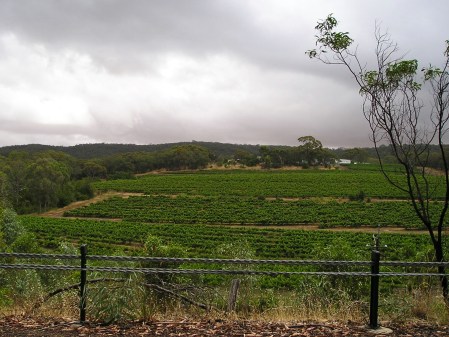 The bouquet grew in depth and complexity over time, absolutely captivating in its creaminess and buttery character, far outstripping its impression on the palate and it was only until the end of dinner that the latter managed to match up in weight and complexity. Superb.
We drank the three reds simultaneously. The 1986 Ch Chasse-Spleen (courtesy KP) was initially dry and dusty, medium-bodied and obviously soft with overtones of undergrowth and fruit that threatened to recede. However, it gained in weight and intensity after some time, developing some intensity amidst lively acidity before settling into a very lovely mature claret. Not at all backward. At its drinking best. Wonderful.
The 1990 Ch Pape Clement (courtesy John) was the second time we’re having the exact same wine at the same restaurant with the same group of people in less than six months. Deep, clear lively purpple, absolutely glowing with an abundance of mulberry and the classic terroir of Pessac-Leognan, characterised by notes of tangerine citrus and kumquat amidst deeper notes of ripe blueberries, deep and seamless with superb focus and delineation, the passage of time having imparted further notes of leather and some tobacco. One could argue that it has yet to peak in spite of all the had gone on before. Great stuff.
The final red, a 2000 Beausejour Becot (courtesy Hiok), as expected from its deep dark impenetrable red, was saturated with notes of soy and plenty of raspberry and redcurrant in the background, fresh, lively and deep, barely showing a trace of its twelve years. Clearly one for the long haul and I don’t expect any kind of development anytime soon. Best to forget about it for the next ten years, at least. The 1988 Ch Rieussec (half bottle) that brought up the rear was a disappointment. Dull deep golden with a relatively thick swathe of preserved peach and jackfruit, almost port-like in texture, lacking in verve and acidity and not much of apricot.
Rockford Basket Press 1999-2006
Rockford of Barossa Valley enjoys a solid and loyal following, with Andrew and myself having assembled a vertical of the Basket Press Shiraz year after year since our sabbatical in Adelaide, South Australia. 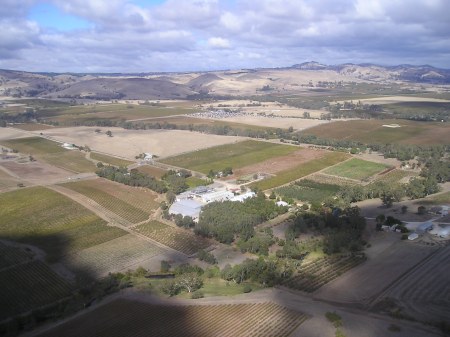 Hence, when Andrew decided to host a vertical at his place on 22 January 2012, I contributed a bottle of the 2006 and made sure I showed up. All the wines had been carefully decanted, but as I arrived late, I found the wines had been aired for well over 3 hours, and basking at room temperature that was far too warm for any kind of wine tasting, which I’m sure adversely affected the perception of these wines.
2006: Deep red, slight bricking at the rim. Loaded with vanillas, dark and red berries with aromas of enamel and glycerin from this outstanding vintage. Plenty of power, but very well-managed, with some hint of forest floor emerging over time. Supremely integrated with velvety tannins, but still tight.
2005: Deep red. Aromas of preserved fruit and sweet vanilla, noticeably less intense on the palate than anticipated from the bouquet. More open with a deeper vein of medicinal and herbal characters, austere and rather short at the finish. Awkward at this stage. I’m not sure how this will develop over time. Needs to be re-visited.
2004: One of the most outstanding vintages of all time. However, you wouldn’t have been able to tell based on this bottle. Deep red with a vermillion core. Rather shut at this stage. Sullen, undifferentiated, dominated by distinct greeness and ferrous minerality, linear and straightforward with fruit that doesn’t seem to be holding up well. Needs to be re-visited.
2003: Deep red. More fruit forward and assertive with notes of bitter chocolate and medicinal characters, no doubt well-integrated but still unable to hide the scars of a terribly hot growing season, the traces of burnt clearly evident. Short.
2001: More evolved in color than any of the above. Still remarkably tight and tense, rather plummy in character but the fruit is just at the right level of ripeness, displaying good delineation with a trace of liquer at the finish, although when I came back to it again, the fruit seemed to be rather elusive, the alcohol seemingly having taken over. Hmmmm….
1999: In contrast, this wine still seemed remarkably youthful in color, giving off a lovely plummy glow although there is a dominance of medicinal aromas. Intense and concentrated, almost jammy. I’m not sure if it will open up.
As one may surmise, the results were rather unflattering, no doubt in part due to the suboptimal tasting conditions. I’m in the midst of arranging a ten-year vertical of the Basket Press (save for the 2000 which I’m missing)…so watch this space.

Off-Year Bordeaux…
All too infrequently, Bacchus met again, sans Kieron, on 6 February 2012 at Chao Shan, the most renowned Teochew restaurant in Singapore. It’s small, cramped, crowded and noisy – the perfect recipe for great-tasting food. Just remember to bring your own stemware. 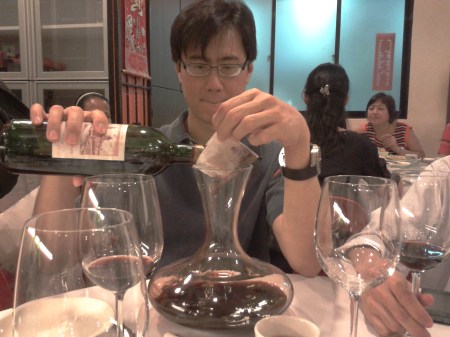 After several consecutive dinners that succeeded each time in setting record prices for wine and food, we felt an austerity drive was in order without sacrificing food quality, hence the choice of venue and wine theme. All wines were mostly popped on-site and aired in bottle.
We began with a 1988 Ch La Conseillante (courtesy KP) that was dirty red with an evolved rim, exuding a powerful herbal glow, still displaying good density with forward notes of orangey citrus. Well integrated and still very fine. Next up was a 1983 Ch Cos D’Estournel (courtesy Hiok), again dirty red, evolved almost to the point of transluscency. Muted on the nose, the sweet menthol overhang on the palate unable to disguise the flat residual fruit, lacking in definition and terroir. A wine that’s clearly fading, on its last legs.
The next pair of St-Julien wines fared much better. The 1994 Ch Leoville Las-Cases appeared to be at its peak, very well integrated and seamless, displaying remarkable depth and decent layering without any sign of drying out, just lacking in the intensity that this estate is well capable of in great vintages.  Of the three or four examples of this wine I’ve had over the past 5 years, the current bottle was clearly the best, a far cry from the mediocre impression I had from a previous bottle last year. Very good. 1998 could hardly be considered weak, but that was all Danny could do to match the theme, but we’re not complaining, not when we’re offered a Ch Ducru Beaucaillou that was every bit as good as one would expect from this estate – dark, deep and considerably heavier than any of the preceding wines although, surprisingly, it was medium-full on the palate, seamless and open, much more mellow and relaxed compared to a previous bottle off the restaurant list of Saint Pierre in 2007, a wine just entering its drinking window, yet to develop any clear secondary nuances. Excellent stuff.
Vic produced an oddity in the form of a 1995 Solaia but, again, no complaints at all about straying off theme when one is greeted by accentuated aromas of perfumed red fruits lined by fine velvety tannins, lifted and grippy, combining power with elegance. This was the perfect prelude to the 1993 Ch Haut Brion (courtesy Uncle Hsu), displaying a lovely clear purplish tint with notes of kumquat and other orangey citrus, utterly seamless and elegant, remarkably decent in depth and layering, reminding me very much of the 1994 Haut Brion, just missing in weight and opulence but it went very well with the food. It goes to show that off-years can be rewarding, and that’s where your smart money should be.
A glorious month of mostly superb wines…enjoy….
2006 Ch du Gravillon, from St-Emilion, at Imperial Treasure T3, 2 Feb 2012. Popped and poured. Surprisingly good, fairly soft, medium-bodied, imbued with a natural balance of mulberries and raspberries against a background tone of darker fruits, fleshing out with further aeration. Feminine and elegant. Quite lovely, I must say.
2009 Joseph Drouhin Chablis 1er Cru (courtesy Ben), at Jade Palace, 2 Feb 2012, with Prof W Young. Popped and poured. Muted on the nose, but quite lively on the palate with lifted tones of green melons and a hint of tropical fruit, more fruity than usual for a young Chablis, the minerality noticeably subdued. Seemed to fade a little over time but very agreeable, nonetheless.
2001 D’Arenberg Dead Arm shiraz, at Jade Palace, 2 Feb 2012, with Prof W Young. My penultimate bottle, decanted on site for an hour. Still showing an impenetrable red, quite open on the nose with a sense of warmth, no doubt a quality of the ripe fruit from the combination of old vines and arid soil, imparting notes of plums and licorice on the palate, not too dense, sprinkled with smoky tannins and a hint of forest floor. It opened up further over time, the fruit emerging more to the fore, the note of licorice more evident, the tannins more assertive, yet its poise and balance remained. Still rather youthful. Keep.
2009 Domaine Moreau Chablis 1er Cru “les Vaillons”, at Imperial Treasure, One Degree 15 Marina, Sentosa, with the Mayo Clinic faculty, 3 Feb 2012. Aired in bottle for an hour. Pale yellow with lifted aromas of white flowers, lime and citrus imbued with fine chalky minerality and crisp acidity without being too cutting. hasn’t quite developed any definite complexity yet, of course, but it’s good stuff, nonetheless.
2009 Bethel Heights Estate pinot noir (courtesy Bill Young, who brought 8 bottles from USA), at Imperial Treasure, One Degree 15 Marina, Sentosa, with the Mayo Clinic faculty, 3 Feb 2012. This wine from Oregon, USA, is one of the best New World pinot noir I’ve had, displaying the correct pinot tint, maintaining a lovely poise and delicacy, possessing great elegance, if not the ultimate degree of finesse. Powerful on the nose with perfumed aromas of red cherries, raspberries and a hint of varnish and charred wood. I don’t think you’ll mistake it for an Old World pinot, lacking the effortless grace and complexity of the best, but it’s still a very good pinot.
2005 Ch Lalande Borie, at Imperial Treasure, One Degree 15 Marina, Sentosa, with the Mayo Clinic faculty, 3 Feb 2012. Aired in bottle close to 2 hours. One would have expected the 2005s to be big or shut down, but this wine was open, ultra-smooth, soft and accessible, yet structured. Notes of ripe dark berries with a hint of blueberries and raisins dominate, medium-bodied and low in acidity, opening up with further aeration to yield some cedar, tinged with some sweetness, although it didn’t quite possess the ferrous minerality of Saint-Julien. Drinking very well. This estate is always well worth seeking out in outstanding vintages.
2009 J J Christoffel Erden Urziger Wurzgarten spatlese, at Lih Ming’s residence, 5 Feb 2012. Pale, not as sweet as one would have expected for a spatlese, which is a good thing. Notes of green melons, tropical fruits and sweet citrus dominate, well-balanced without being over-saturated. I like it this way. Yet on another occasion, 18 Feb 2012 at Punggol Choon Seng Seafood where it was paired with some simple Chinese cuisine, this wine was noticeably fuller in body and tone, displaying greater depth and intensity without overblowing the sweetness. Very classy.
1961 Trouillard Elexium Brut Cuvee Speciale Leong See Odd, specially labeled for Dr Leong, at his residence, 5 Feb 2012. Pale golden, yeasty with notes of malt, slightly toasty, lively without being too dry, reasonable depth though rather lightweight. Quite lovely.
1996 Ch Angelus, at Lih Ming’s residence, 5 Feb 2012. Decanted for an hour. Dull dusty red, rather woody and musty initially, framed by dusty tannins. This blew off after some time, revealing more of ripe dark berries laced tinged with sweetness, along with some cedar, soft and rounded, the acidity having receded quite significantly. Still quite backward and not entirely settled, even at this stage. Will reserve judgment.
1996 Ch Cos D’Estournel, at Lih Ming’s residence, 5 Feb 2012. Decanted for an hour. Somewhat woody as well, but it morphed quite rapidly into quite a lovely mature claret dominated by flavours of sweet dark cherries and violets, supported by firm minerality, well delineated and seamless with quite a bit of fat on the mid-palate. It got better and better with each sip, quite alluring in a dark manner, Cos as we knew it before it became too “international”. Much more successful than the Angelus. Quite excellent.
2005 Lacoste Borie, at Gourmet Plus, 8 Feb 2012. My last bottle from a half-dozen, and the most impressive tasting note of this wine, by far. Popped and poured, immediately exuding rich fragrant aromas of ripe blueberries and raspberries. Soft and fleshy on the palate, replete with a good deal of layering and minerality, slightly salty, that left a lasting impression. Proves that you cannot really go wrong with a reputed estate (this is the second wine of Ch Grand Puy Lacoste) in an outstanding vintage. Worth getting more.
2000 Ch D’Angulet, over lunch at Etoile, 14 Feb 2012, one of four bottles freighted in from Bordeaux Index last week. Popped and poured. Dark red with initial notes of dark berries, cedar and dense undergrowth, still relatively tense across the palate in spite of time, and rather earthy as well, characteristic of this Margaux estate on the inner side, away from the Gironde. It quickly opened up and morphed into a seamless wine of excellent concentration, its limestone minerality gaining in prominence over time, soft at the edges underlined by a trace of sweetness, fleshy and elegant with fine tannins, a wine just entering its drinking window. On another occasion on 29 Feb 2012 back at Pepenero where the wine was popped and poured, it seemed a lot more relaxed and soft, albeit with greater restraint on the nose and lesser intensity on the palate. Very good.
 2002 Domaine Nicolas Potel Charmes-Chambertin Grand Cru, at a Valentine’s Day dinner at Capri, 14 Feb 2012. Aired in bottle and drunk over 90 minutes. Slightly darker in tone for pinot, which is typical of this producer. Rather muted on the nose, dominated by a prominent salty tone on the palate amidst other notes of red fruits and cherries, settling down into an easy wine of quiet moderate intensity, displaying good depth and integration, soft but full in the mid-body with easy tannins and subdued acidity. Almost reaching full maturity, I’d say, and will hold for many more years. Excellent.
2000 Pierre Peters “Les Chetillon” Brut Cuvee Speciale, over a lovely home-cooked meal at Anton Cheng’s residence, 20 Feb 2012. Popped and poured. It’s been almost 18 months since I last had this, and it’s still every bit as good. Highly enticing aromas of malt, toasty oak, pomelo, dried citrus amidst the fragrance of white flowers with just the right level of dryness, sparkling with lively acidity, displaying excellent body and a tranparent crystalline tone. Excellent.
2002 Trevor Jones Wild Witch Reserve dry grown shiraz (courtesy of Andrew Wong), at Anton’s residence, 20 Feb 2012. Decanted on-site. This comes from an elevated plot close to Lyndoch, which is the southern gateway to the Barossa Valley. Absolutely superb. Deep ruby red, producing lifted aromas of ripe red berries, raspberries and blueberries, remarkable for its absolute purity without the usual alcoholic or medicinal grip, beautifully balanced, rounded and supple, layered with a lovely persistence. Elegance isn’t something normally associated with Aussie shiraz, but that’s exactly what this wine is all about. Absolutely wonderful.
2006 Sylvie Esmonin Clos St Jacques 1er & 2005 Mount Mary pinot noir
I returned to Absinthe for its superb degustation menu on 22 Feb 2012 with Hiok and the delectable Pearlrie, on a mini-theme of pinot noir.
2006 Sylvie Esmonin Gevrey-Chambertin Clos St Jacques 1er Cru, paired with the opening courses of Iberico ham, scallops and pan-fried foie gras. Double-decanted for an hour, and aired further in bottle for almost 2 hours. Slightly heavier in color and tone for a pinot. Not wildly exuberant on the nose, but it’s really quite lovely on the palate, lit with cherries and ripe strawberries, soft and supple, slightly salty with a mild biting intensity amidst a deeper vein of dark currants and subdued tannins, opening up eventually, becoming a medium-bodied seamless wine of great purity and elegance, persistent in its finish. 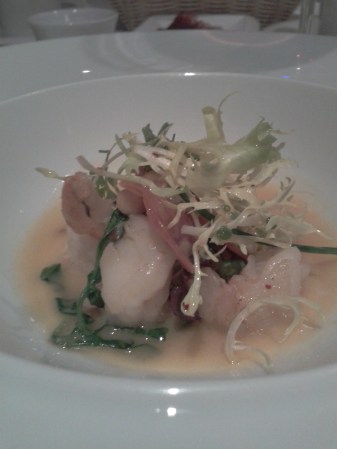 Most persuasive and feminine. Definitely ready for drinking. Excellent.
2005 Mount Mary Pinot Noir (courtesy Hiok), paired with the excellent rack of lamb. It struck me I’ve never really had a Mount Mary pinot noir before. Aired in bottle on-site for about 45 minutes. Displaying the same pinot tint as the Sylvie Esmonin above, but with more exuberant aromas of cherries and raspberries that seemed riper and sweeter, complete with a suggestion of oiliness and of nail varnish, highly aromatic, matched by a medium-bodied wine of excellent tone and weigh, although it is noticeably less complex compared to the Burgundy. It developed a more salty tone over time, managing even to gain a bit of complexity, but so did the Burgundy which stayed ahead the whole time. Nevertheless, it’s very good, setting the stage perfectly for us to close the evening with a generous dose of No.4 Havanas.
1995 Armand Rousseau Clos de la Roche
I returned, after a considerable period of absence, to Les Amis with Ben and some folks from Societe-Generale, 10 Feb 2012. Timothy sat us down at our usual Chef’s Table and got us started with a bottle of Bruno Paillard NV. I have immense respect for this estate, and it certainly didn’t disappoint.  Very, very lovely from the first pour, open with an abundance of roasted cashews, toasty oak, pine, malt and yeast, beautifully balanced and alluring with fine acidity, a case in point where the bubbles add further to the complexity of the wine rather than detract from it, the complex minerality leaving a lasting impression. Highly sophisticated, quite the perfect counterpoint to the generous portion of duck foie gras. Excellent.
For the red, I decided to pair the wagyu beef with a 1995 Armand Rousseau Clos de la Roche Grand Cru, the only bottle remaining in the cellar. This showed an evolved pinot tint with lifted aromas of roses, red cherries, fig and lacquer, still displaying good saturation and concentration in spite of its years, obviously having mellowed with time, displaying great purity of fruit, layered with a substantial mid-body (not so much of oiliness nor salty minerality), highly elegant with understated power. A wine at its peak, and will continue to hold for years to come. We were all impressed. Glorious.

